

Mars chalice
Echinophyllia aspera
Mars chalice is a chalice coral listed as Echinophyllia aspera. Chalice corals grow as an encrusting plate of tissue over a thin skeleton, spreading outward from the frag in a low sheet and following the shape of the rock beneath. Raised eyes dot the surface, each one a mouth set in a small bump, and the edge of a healthy colony runs thin and clean as it advances. The Mars name follows the rusty red-orange surface this morph carries, a planetary red that glows at the growing margin and around the eyes under blue light.

The entry lists intermediate care, low light, medium flow, bottom placement, moderate aggression, and moderate growth. The original notes specify medium indirect flow and space from aggressive neighbors. Place the frag low, on flat rock at the bottom of the tank or on a stable base, with the surface facing up and room for the plate to spread. Low light suits this morph and holds the red surface at full depth. Strong light can wash the color pale and draw the tissue tight, while very deep shade dulls the surface and stalls the edge.
Medium flow should arrive indirectly and move across the whole plate. The current needs to lift detritus off the surface, where waste settles around the eyes and irritates the tissue into recession. A direct jet can lift and tear the thin growing edge, the most fragile part of the colony. Broad movement that reaches every side without aiming at the plate is the pattern to set.
Feeding supports color and growth. The eyes open at night and when food reaches the water, and the colony takes fine meaty offerings, small LPS foods, and broadcast feeding that settles across the surface. Offer small amounts once or twice a week with flow lowered, and let the tissue draw the food in. Light supplies part of the energy, and fed colonies hold a richer surface and advance the edge more steadily. Clear away food the colony leaves, because leftovers sit directly on thin tissue.
Aggression is listed as moderate, and chalice corals fight at night. A settled chalice can extend sweeper tentacles after dark that reach beyond the plate and sting a neighbor, while the thin edge is itself easily burned by a stronger coral. Leave a clear ring of space on all sides, judged by nighttime reach in both directions, and keep aggressive LPS well outside that ring. Damage usually shows first as a receding patch at the edge nearest the fight.
Growth is listed as moderate. The margin advances as a thin film over new rock, the plate thickens behind the edge, and new eyes form across the surface with time. Stable alkalinity, calcium, and magnesium carry the skeleton under the tissue. An edge that stops advancing, eyes that stay shrunken, or color washing out usually point first to light level, then to waste sitting on the surface, then to a recent sting or chemistry swing.
Common pitfalls include placing the frag in bright light because the red looked strong in a photo, gluing it where sweeper-bearing neighbors can reach it, and setting it in a spot where detritus rains onto the plate daily. Start low in low light, keep indirect flow moving over the surface, and space for the night.
Field notes — what keepers report
- Light reports split on how much red a colony holds. Keepers in low light describe the deepest red surface and a clean advancing edge, while keepers who placed a piece higher describe a paler, washed surface that colored back slowly after a move down. Both sides describe the answer arriving over weeks.
- Edge reports carry the handling lesson. Keepers describe thin growing edges chipped by rock contact or torn by a direct jet, and other keepers describe untouched edges advancing steadily for seasons in calm, indirect flow. Reports treat the margin as the part of the colony to protect first.
- Sweeper reports cut both ways. Keepers describe a chalice damaging a neighbor overnight at a distance that looked safe by day, and other keepers describe a chalice edge receding after a stronger LPS reached it first. Spacing for nighttime reach, in both directions, is the shared practice across both kinds of report.
Field Notes
Related species
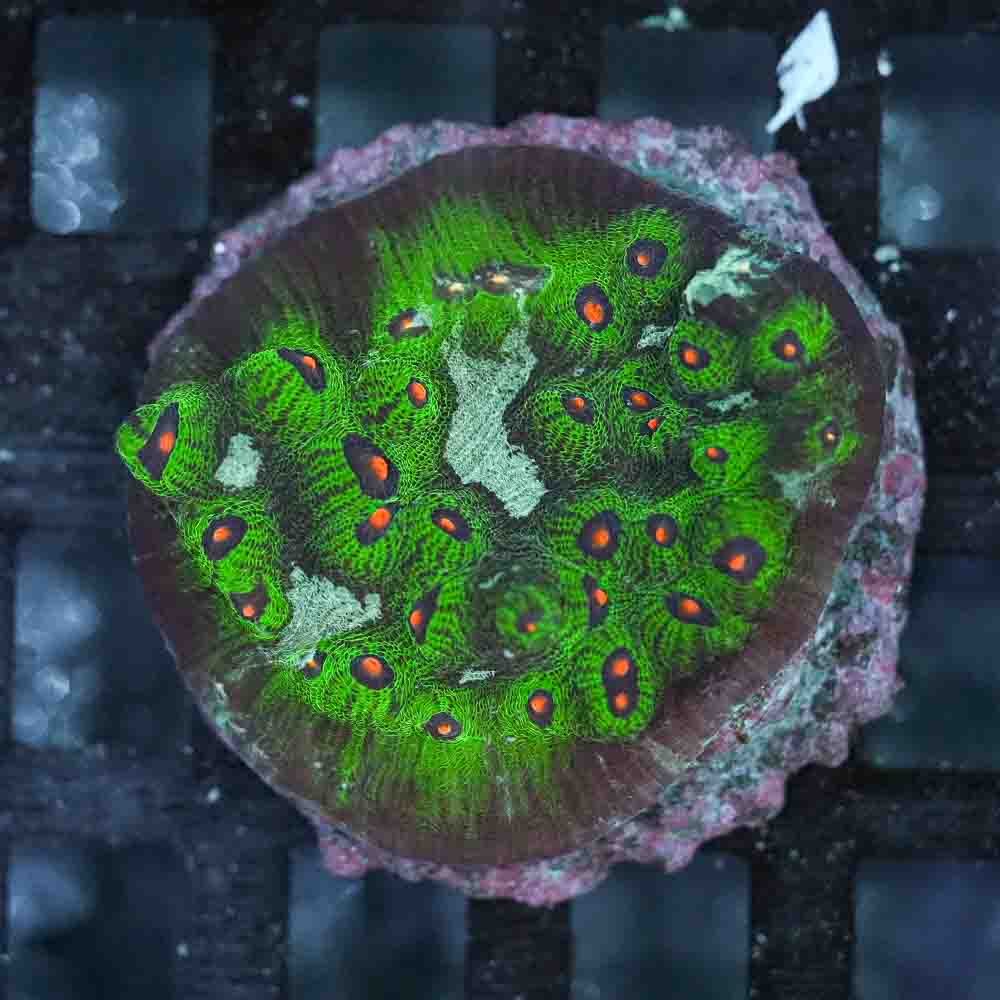
Avatar chalice
Echinophyllia aspera
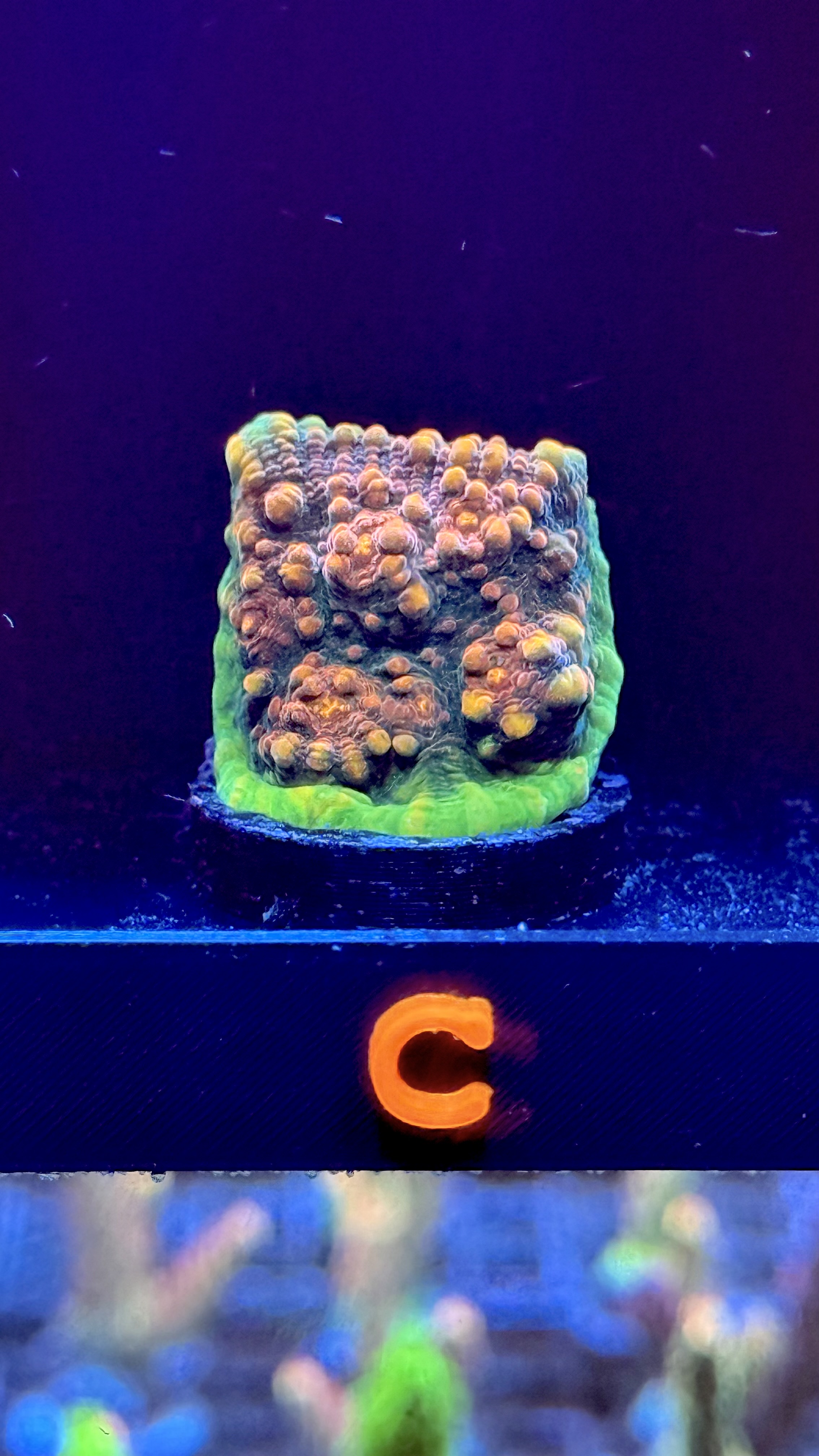
WWC Area 51 chalice

Citrus Orange Short Polyp Goniopora

Confetti Grafted Goniopora

Lava lamp goniopora
Goniopora sp

Pink Goni
Goniopora sp
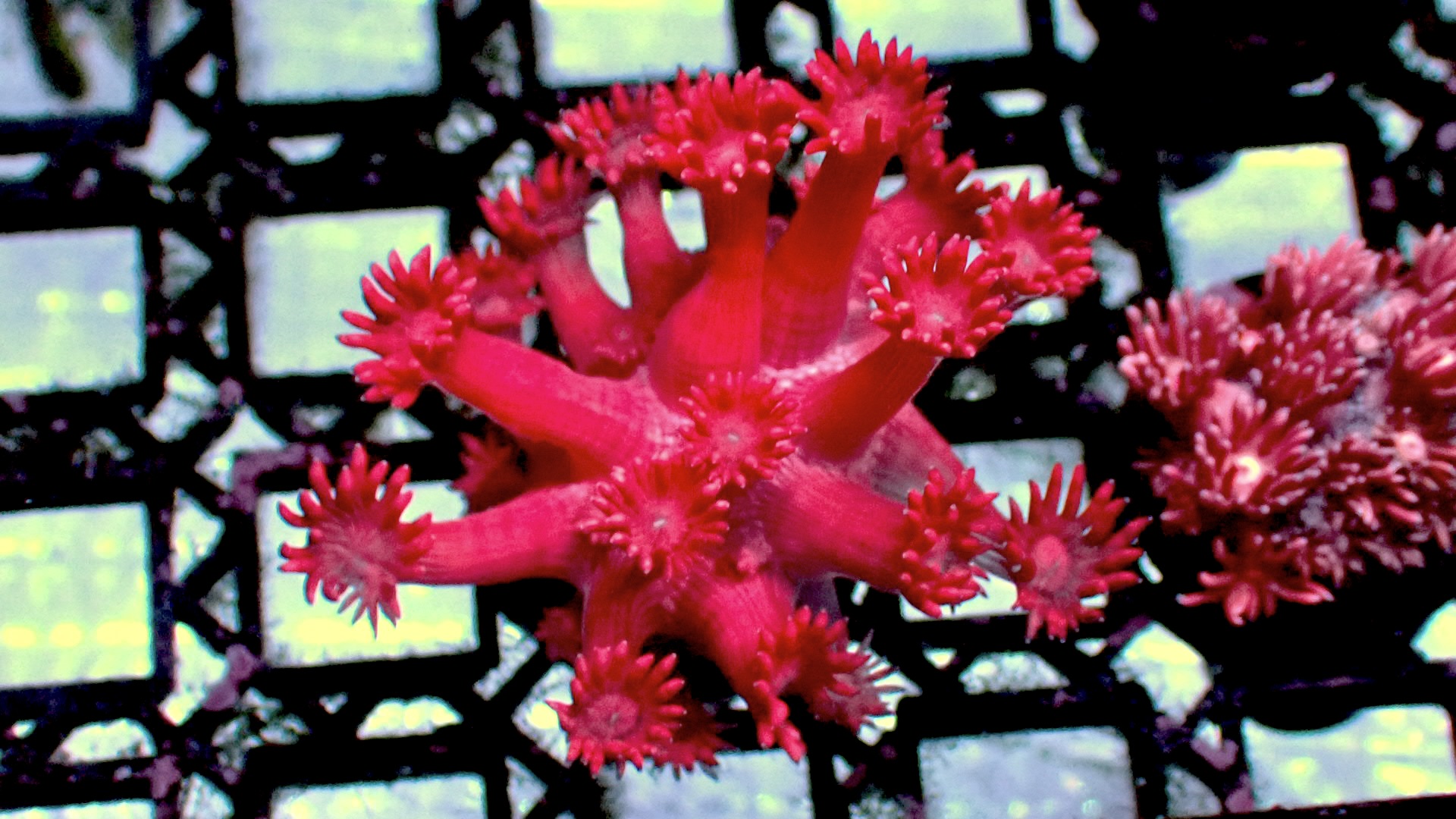
Red goniopora
Goniopora sp
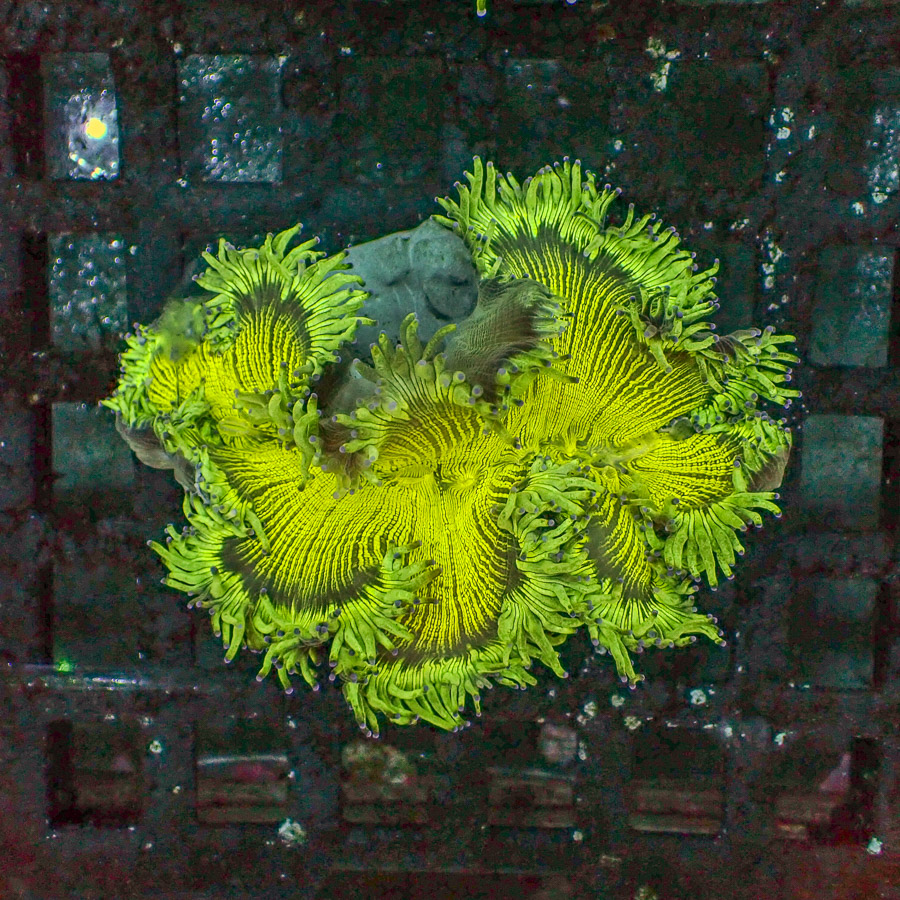
Elegance coral
Catalaphyllia jardinei


Love this species? No tank needed.
Reef art from the shop — for the wall, not the tank.


Get notified when Reef To Go has Mars chalice in stock or up for auction. One email when it's in — no spam.