

Miami hurricane chalice
Echinophyllia aspera
Miami hurricane chalice is a long-kept named chalice listed as Echinophyllia aspera. The colony forms an encrusting, fleshy crust over rock, with raised texture across the surface and each mouth set in a clear corallite. The classic pattern this name carries is a teal to green body with contrasting pink to orange eyes, a combination that made the morph one of the benchmark chalices in the hobby. A settled colony low in the tank reads as a field of bright eyes across a cool-toned crust.
The entry lists intermediate care, low light, medium flow, bottom placement, moderate aggression, and moderate growth. Place the frag low on flat, stable rock, with the surface facing up and room for the margin to run. Low light holds the teal body and keeps the eyes bright. Strong light can fade the body toward pale tan, shrink the tissue, and dull the eyes. Many successful colonies live in partial shade at the bottom. Judge any move by color and tissue fullness over several weeks.
Medium flow should reach the colony indirectly and keep the surface clean. Waste settling into the texture irritates the flesh, and recession often starts under a covered patch. Sand drifting across a bottom-placed chalice does similar harm, so a spot with gentle movement above the colony, clear of sand spray from neighbors or livestock, works best. Avoid a direct jet, which can press tissue and keep one edge retracted.
Feeding supports the color keepers value in this morph. The mouths accept fine meaty foods and small LPS offerings, often extending after lights dim. A small offering once a week or so, spread across several mouths with flow lowered briefly, supports growth and recovery alongside light. Remove food the colony leaves, because leftovers resting on chalice tissue can damage the patch beneath them.
Aggression is listed as moderate, and the nighttime picture decides spacing. Chalices send out sweeper tentacles after dark that reach well past the margin. Leave clear space on all sides, wider than the daytime footprint suggests, and keep other LPS outside that ring. Give the colony protection in return, since a sting or a lost contact fight can start recession that takes a long time to seal.
Growth is listed as moderate for a chalice. The edge advances over rock, new eyes appear near the margin, and the crust gains thickness over months in a settled spot. Stable alkalinity, calcium, and magnesium carry the skeleton under the flesh. Eyes dulling across the whole colony, tissue thinning at the margin, or color shifting pale usually point first to light level, then to a sting or a recent chemistry swing.
Common pitfalls include placing this morph under bright light because the colors look strong in a sale photo, letting detritus or sand sit on the surface, and trusting daytime spacing at night. Start low, keep indirect flow moving over the crust, and space for the sweepers.
Field notes — what keepers report
- Color reports for this morph are detailed. Keepers in low light describe the teal body and bright eyes at their strongest, while keepers who ran the coral higher describe a faded, washed pattern that took a long time to return after a move down. Reports agree the morph shows its best contrast away from the bright zone.
- Longevity reports lean positive for settled colonies. Keepers describe Miami hurricane colonies held for long runs as a low, wide crust that kept adding eyes, and frags of it circulating widely, which fits its benchmark status. Reports also describe losses after rough shipping or a bright, sudden placement, with slow fading rather than a fast crash.
- Feeding reports split on how much it matters. Keepers who feed describe fuller tissue and steadier margin growth, while keepers who rely on light alone describe healthy colonies growing more slowly. Both sides agree on small offerings and clearing leftovers, because food left on the surface causes more harm than a skipped feeding.
Field Notes
Related species
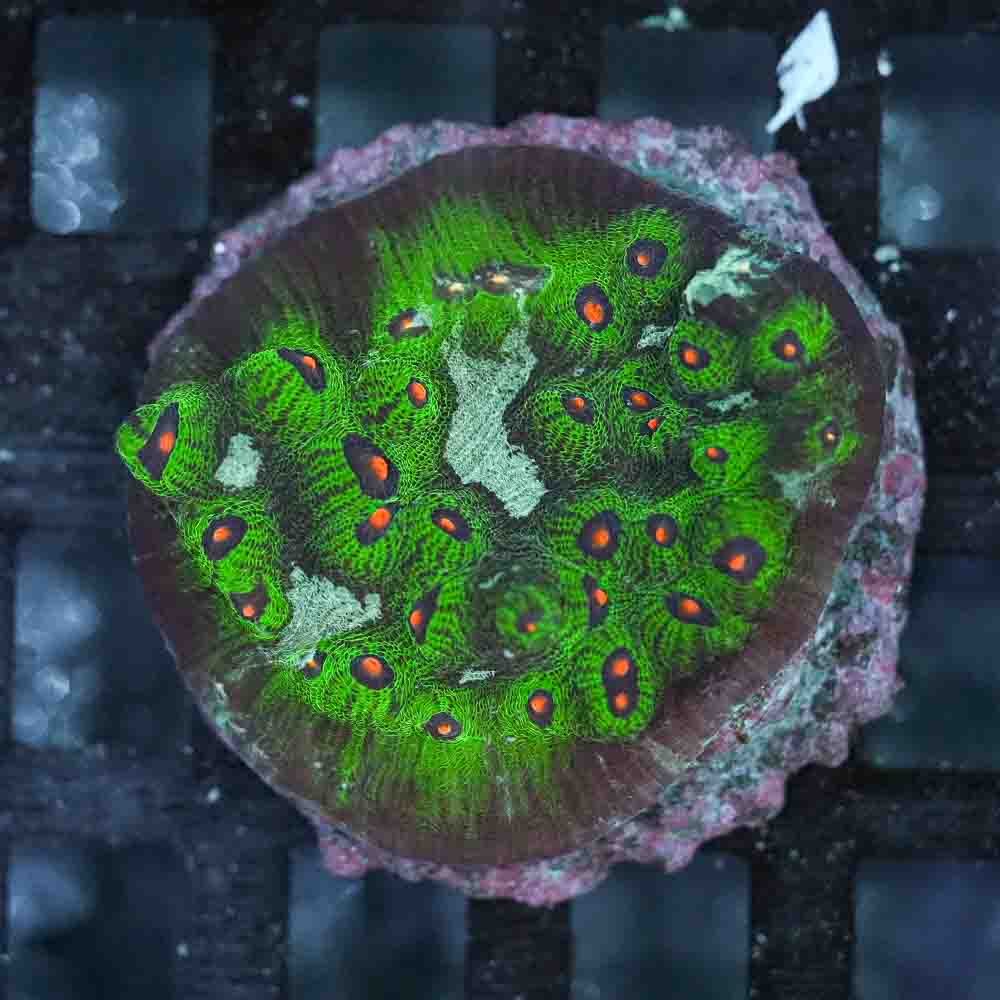
Avatar chalice
Echinophyllia aspera

Mars chalice
Echinophyllia aspera
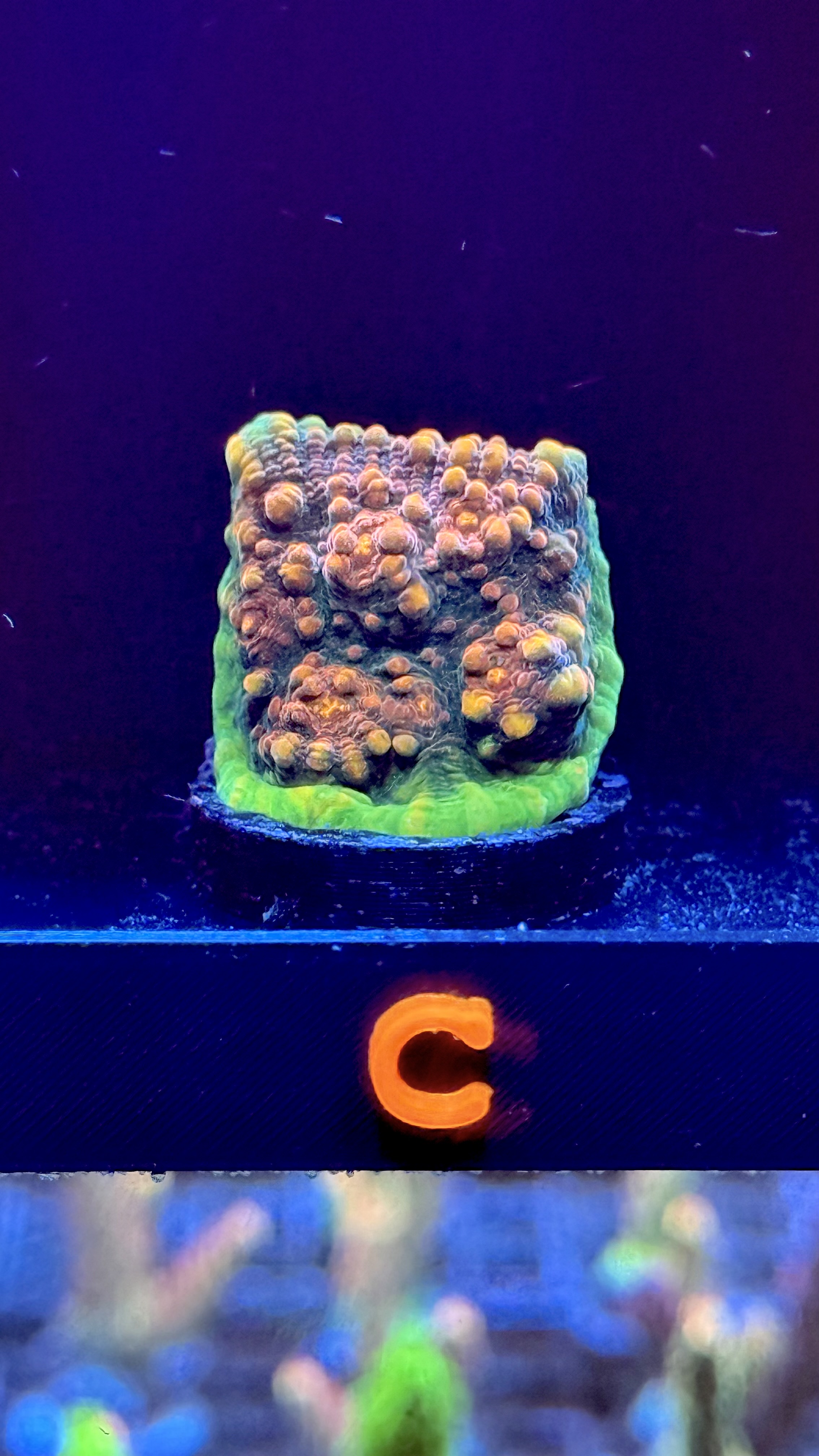
WWC Area 51 chalice

Citrus Orange Short Polyp Goniopora

Confetti Grafted Goniopora

Lava lamp goniopora
Goniopora sp

Pink Goni
Goniopora sp
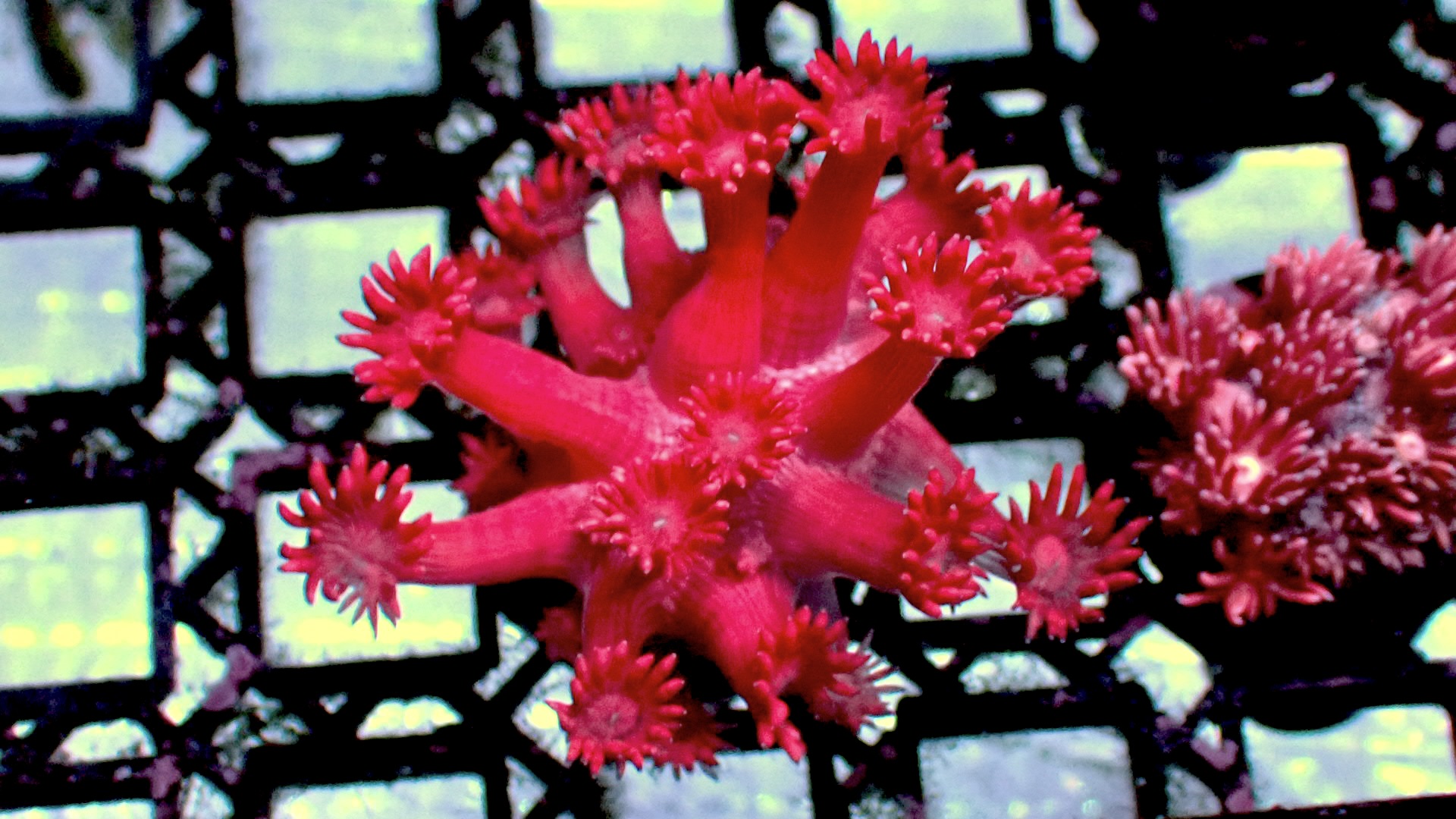
Red goniopora
Goniopora sp


Love this species? No tank needed.
Reef art from the shop — for the wall, not the tank.


Get notified when Reef To Go has Miami hurricane chalice in stock or up for auction. One email when it's in — no spam.