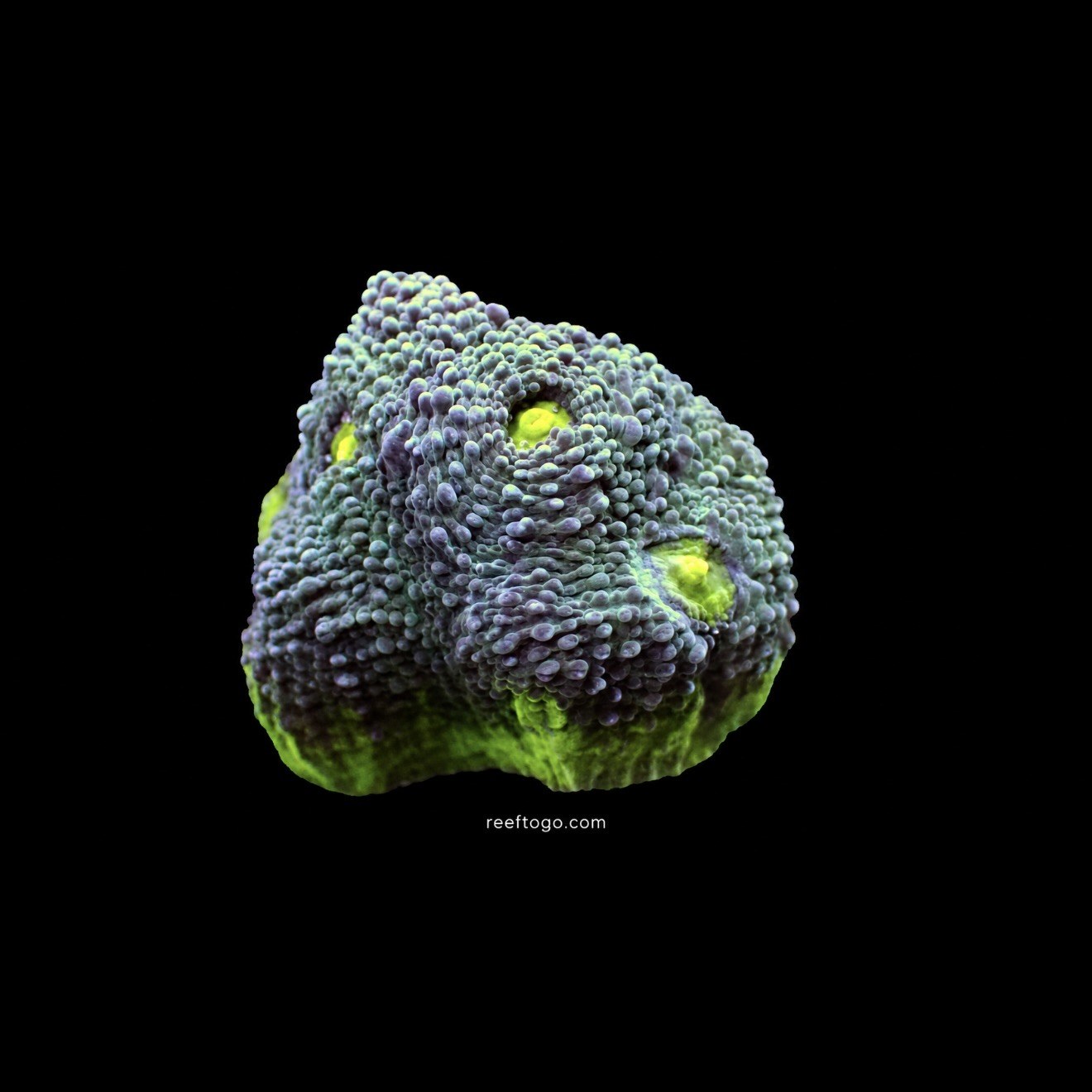
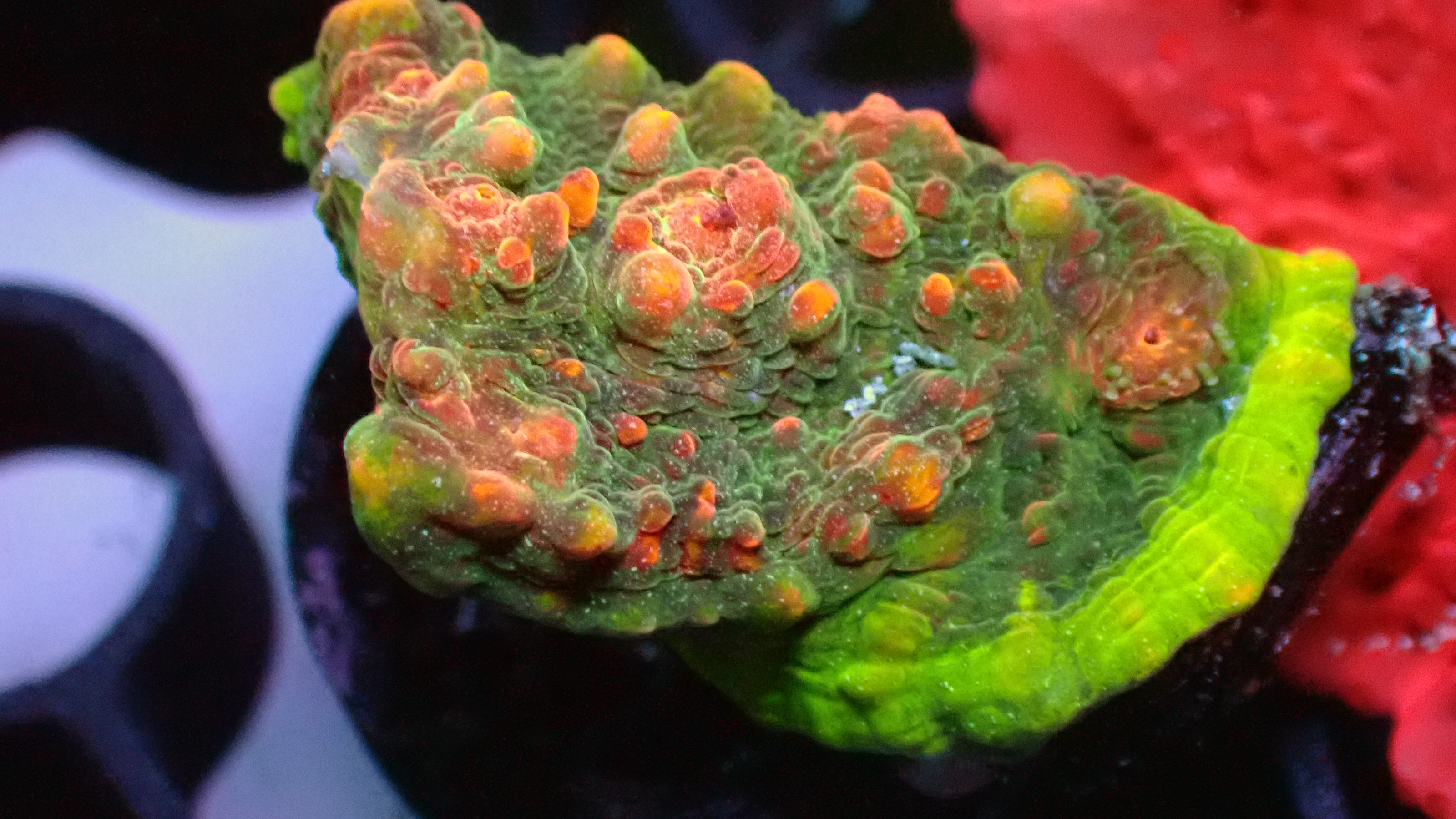
Blue boobie chalice
Echinophyllia sp.
Care facts
- Care
- Intermediate
- Light
- Medium
- Flow
- Moderate
- Place
- Middle
- Space
- Aggressive
- Growth Rate
- Moderate
Gallery
A coral with a nighttime surprise! Blue Boobie Chalice looks like a little living plate. After dark, its feeding and stinging tentacles put on a different show. Give this colorful chalice a steady home, a roomy ledge and space from its neighbors.

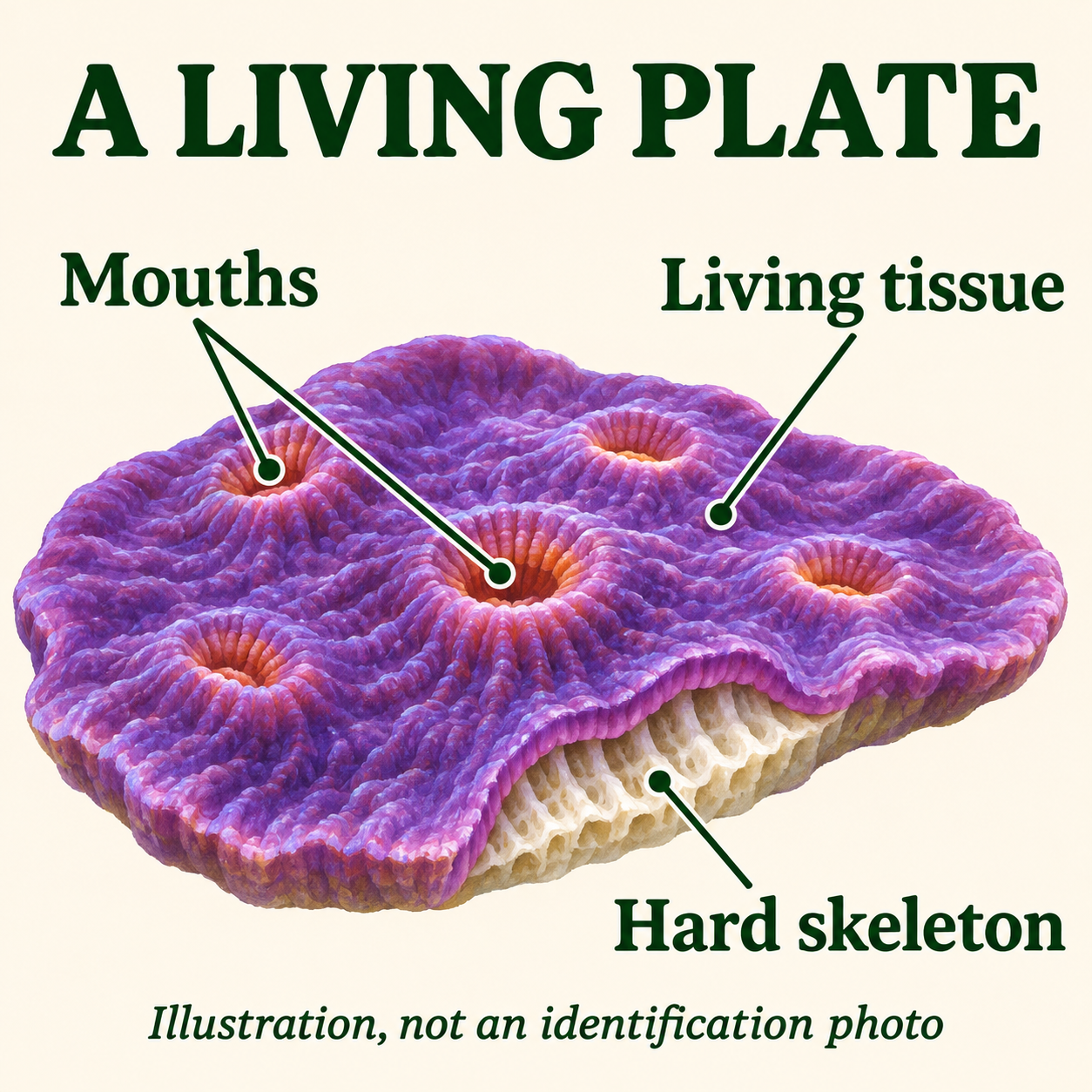
A living plate of mouths
1. The eyes are mouths! The raised centers across a chalice are living mouths, not spots painted on a rock. Soft tissue covers a hard skeleton. Blue Boobie is a named aquarium morph, not a scientific species name. Its scientific label is Echinophyllia sp.
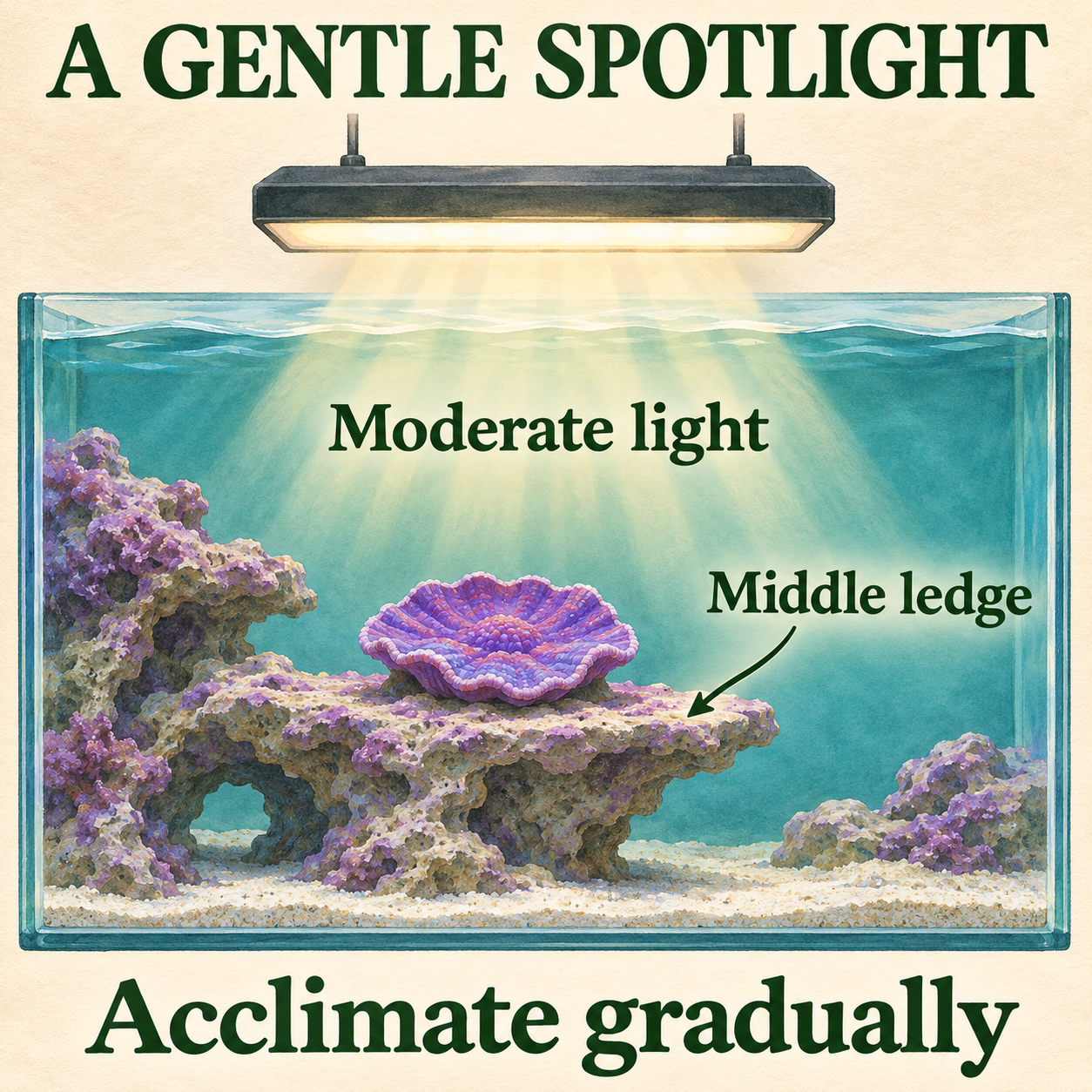
Find a gentle spotlight
2. A ledge beats a spotlight blast. Start with moderate light on secure middle rockwork. Acclimate gradually rather than moving straight into a bright hotspot. Judge the actual light at the coral, not height alone. Leave room for the plate to spread.
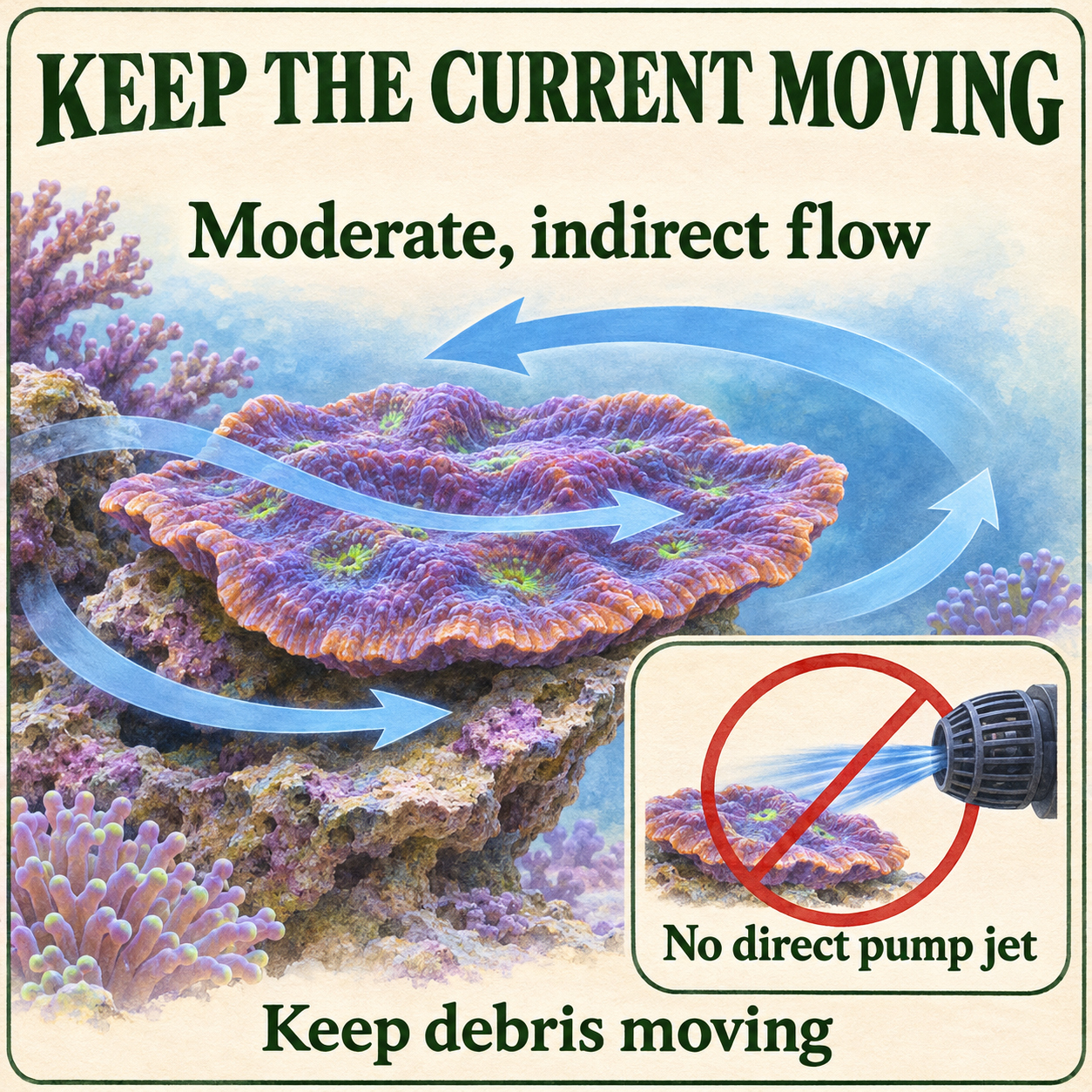
Keep the current moving
3. Sweep past, not straight at it. Use moderate, indirect flow. Aim the pump past the coral so water moves across its surface without a hard jet striking the flesh. Keep settled waste from collecting on the plate. Check the flow again as the colony grows.
Feed the little mouths
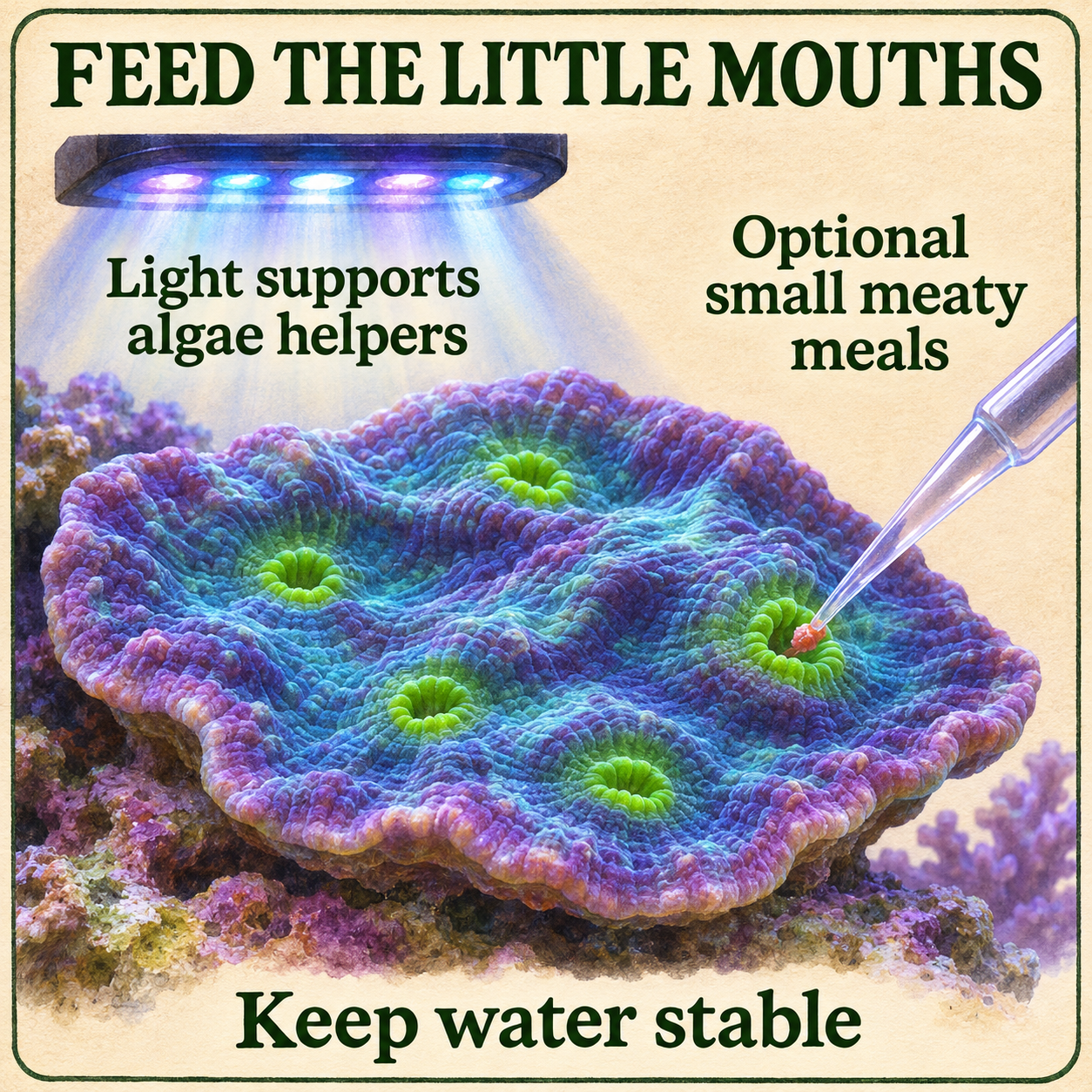
4. Sunshine has tiny helpers. Algae inside the tissue share energy made with light. Offer small portions of fine meaty food when the mouths respond. Keep meals modest and remove leftovers. Test salinity, alkalinity, calcium and magnesium regularly. A growing skeleton needs a steady supply of building materials.
Give the night shift room
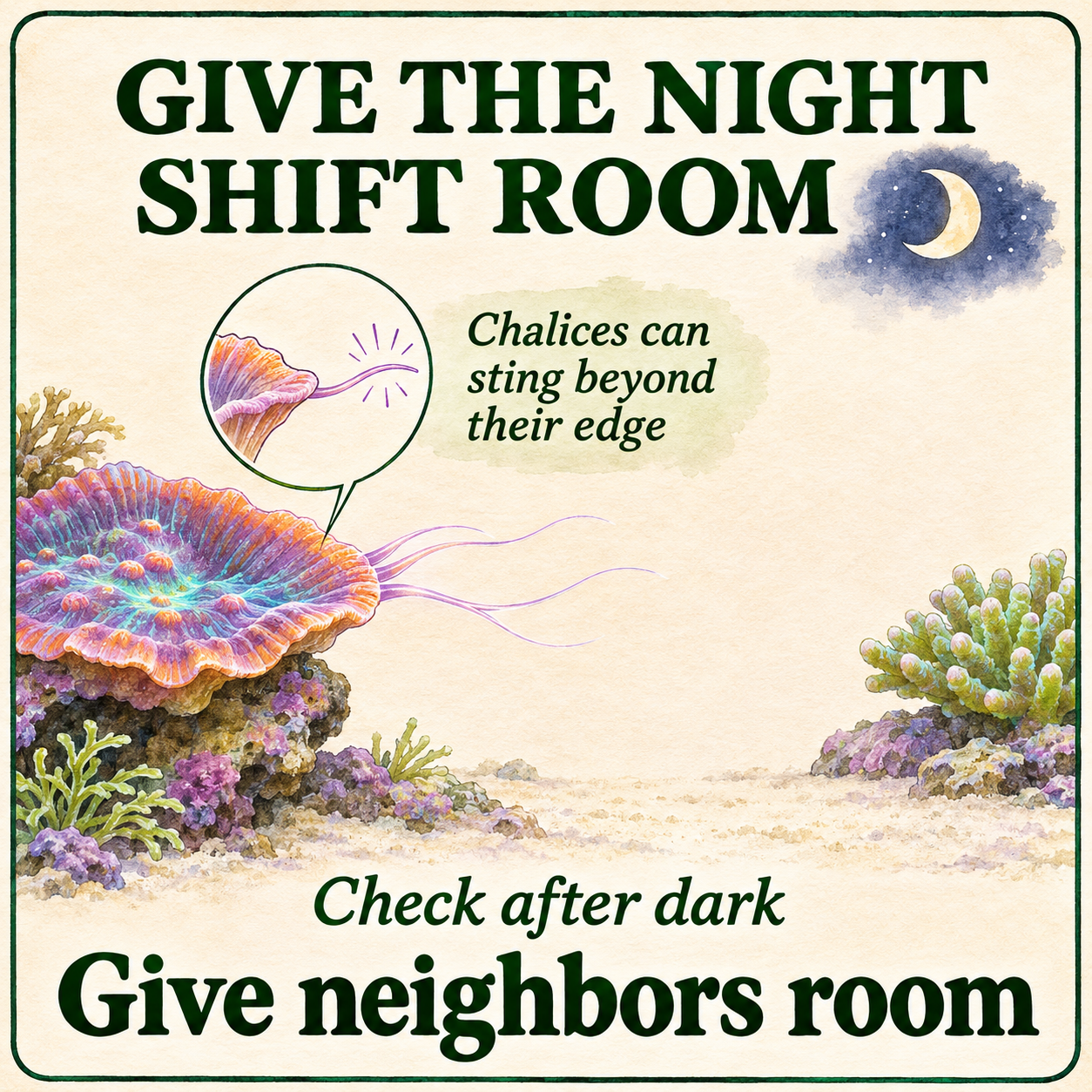
5. Pretty does not mean peaceful. Keep neighboring corals clear of the chalice and its extended stinging tentacles. Check after dark, not only under daytime lights. A fixed three-inch gap is not a safety guarantee. Widen the space as either colony grows or tentacles reach farther.
Field notes — what keepers report
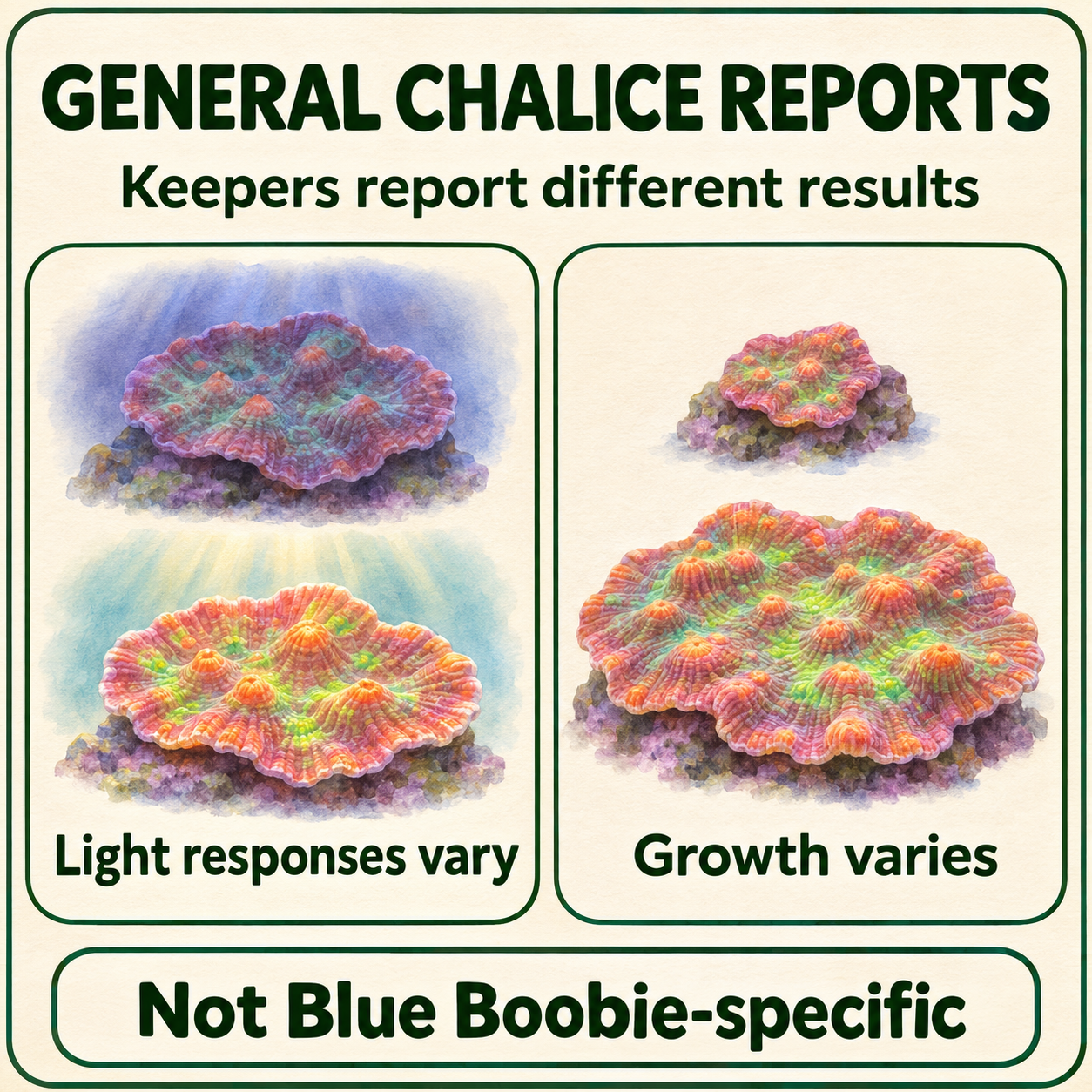
6. General chalice reports, not Blue Boobie-specific reports. Some keepers describe success in low light. Another reports strong growth in brighter light with good flow. Growth stories vary too: two frags stayed on their plugs for a year or more, while another gained about an inch in five months. One keeper reports nighttime sweepers several inches long. Watch your own colony rather than copying someone else's timetable.
Make room for the living plate. Start gently, keep conditions steady and check the tank after dark. A little daily observation beats constant moving, heavy feeding or chasing a promised growth rate.
Field Notes
Related species
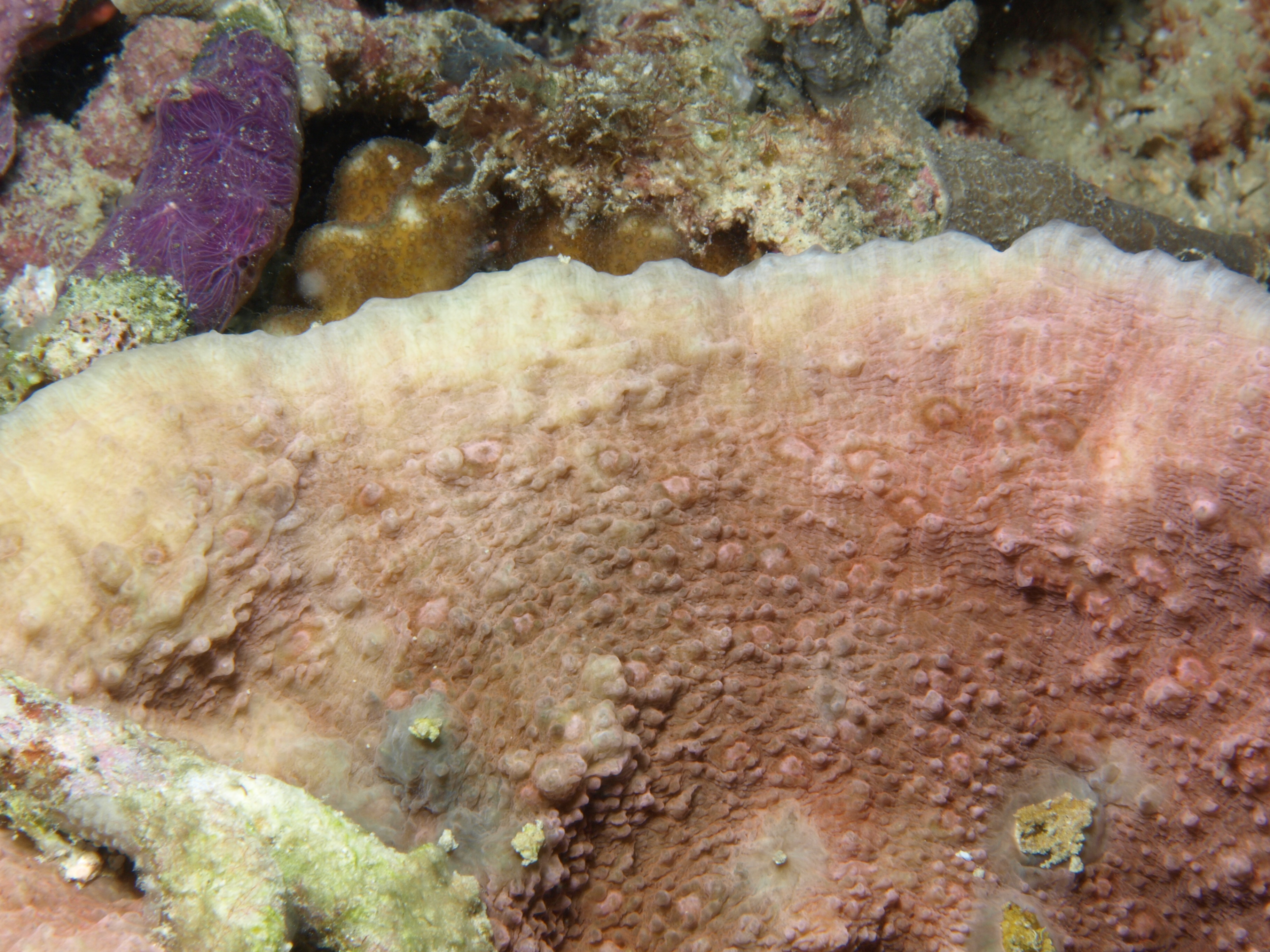
Chalice Coral
Echinophyllia glabra
Same genus

Echinophyllia Chalice
Echinophyllia tarae
Same genus
Area 51 chalice
Echinophyllia sp
Same genus

Avatar chalice
Echinophyllia aspera
Same genus

Dragon ball chalice
Echinophyllia aspera
Same genus

Mars chalice
Echinophyllia aspera
Same genus

Miami hurricane chalice
Echinophyllia aspera
Same genus

Raja Rampage Chalice
Echinophyllia sp.
Same genus