Blue zing birdnest
Seriatopora sp.
Gallery
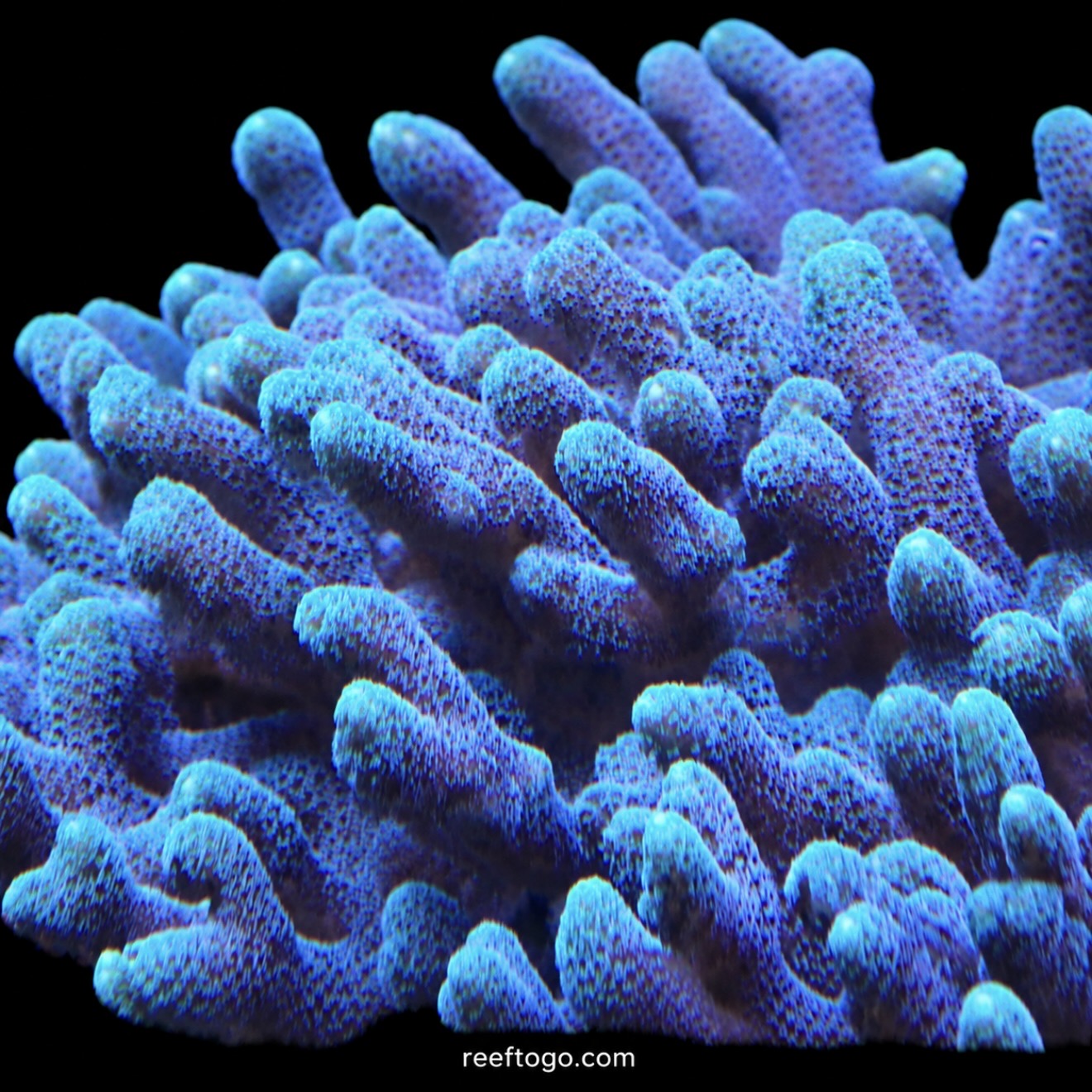
Blue Zing makes a nest without a single twig. Its thin branches fork and fill in until the colony looks woven. Leave room for that shape from day one. The middle of a big nest needs moving water just as much as the tips do.

A nest made of coral
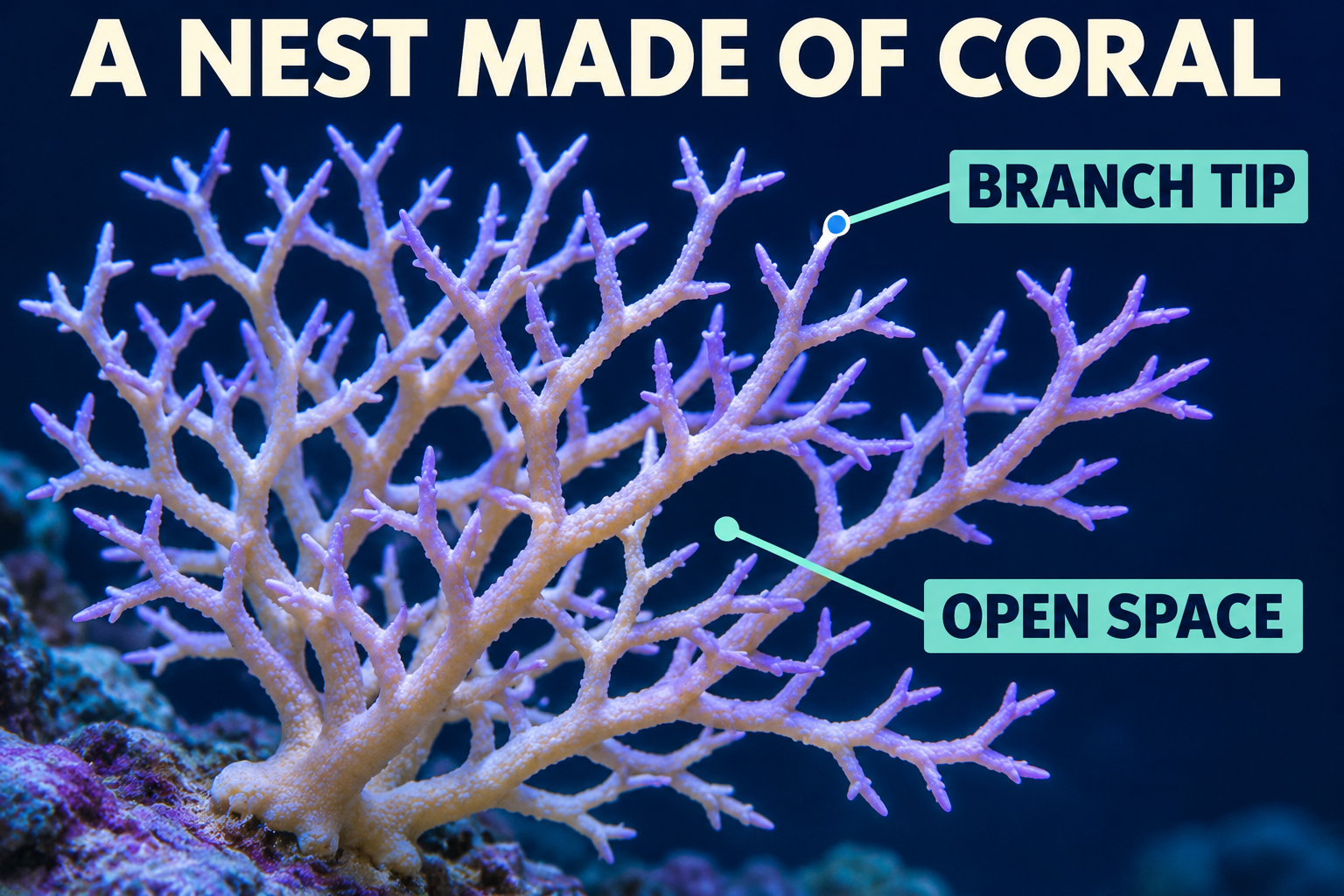
1. Watch a tip fork. This stony coral grows outward into fine branches covered in tiny polyps. Look for new forks and room between them. Blue Zing is the trade name, not a species ID.
2. Think past the frag plug. Give the fast-growing branches space on all sides. Peaceful doesn't mean it should touch its neighbors. Leave room to see the base and center as the colony fills in.
Work up to bright light
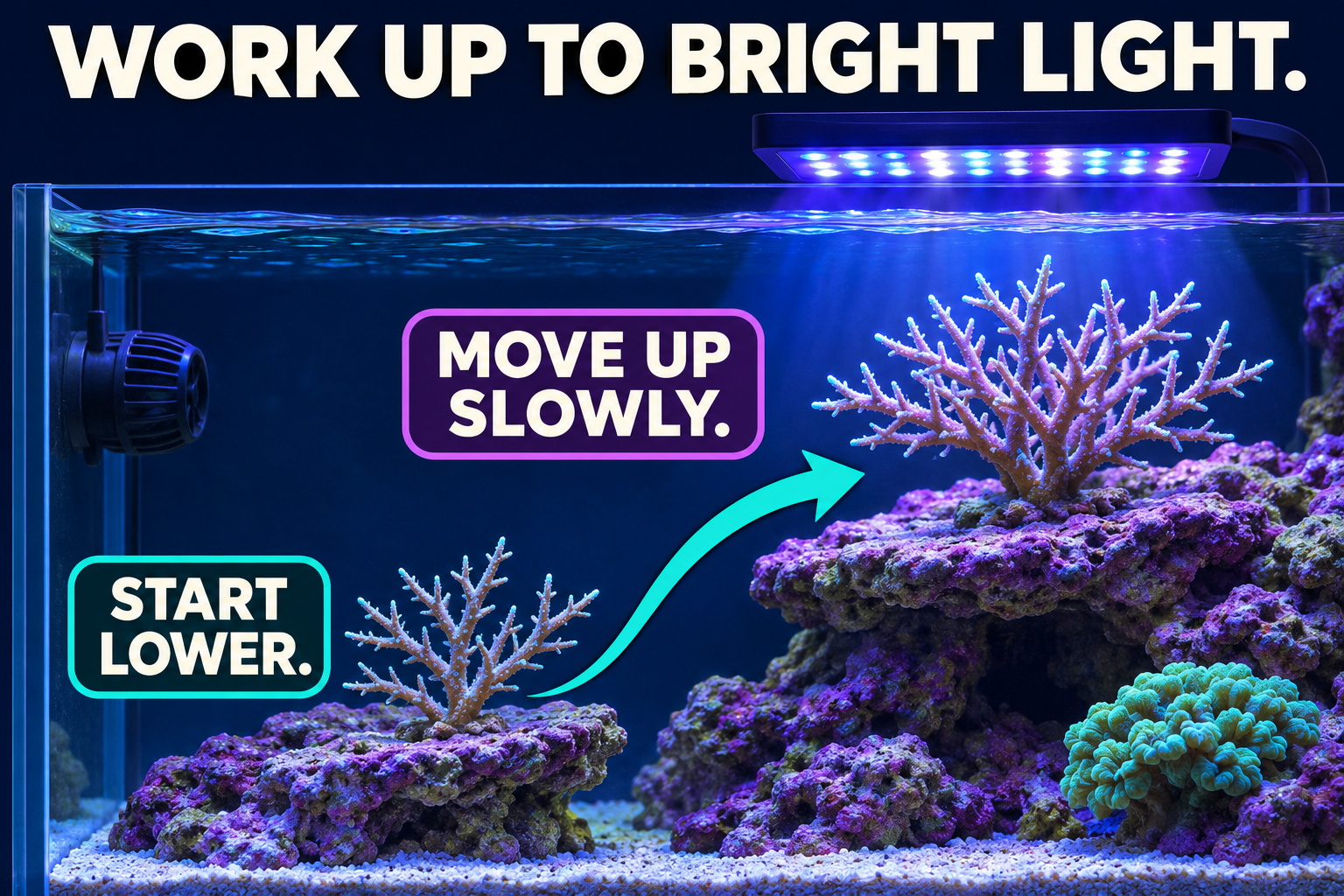
3. Start a step down. High light is the goal for this line, not the first stop for a new frag. Begin lower if it came from dimmer light, then work toward the top in small steps.
4. Watch the tissue, not the dial. Check the tips and lower branches between moves. If the tissue pales after a light increase, pause and compare with your last photo before turning the lights up again.
Move water through the nest
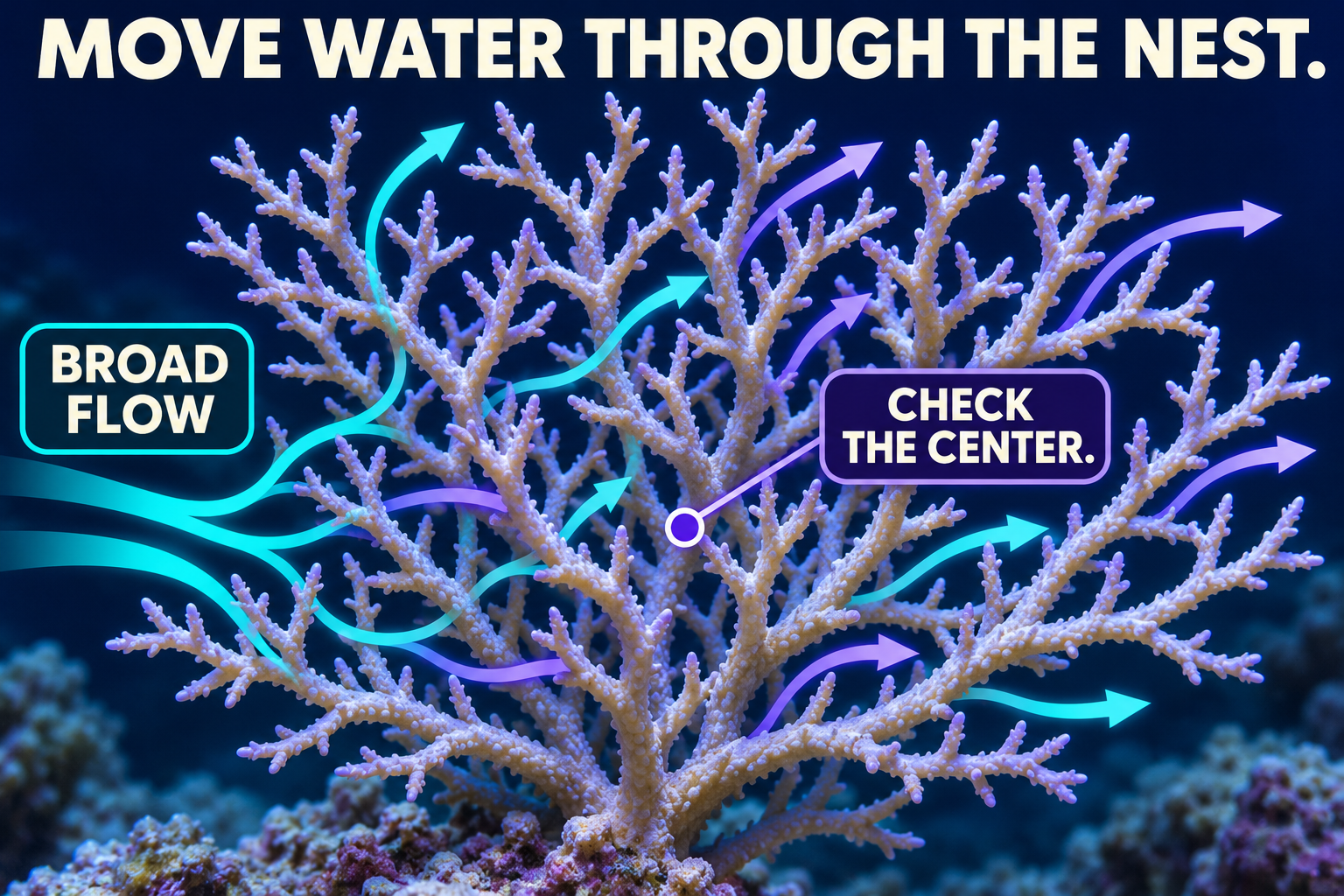
5. Go broad and varied. Give it strong water movement from changing directions. The current should reach into the branches, not hit the colony with one close pump jet.
6. Check the center. Look between the branches for settling grit. If the same pocket keeps filling up, redirect flow and check again. Don't blast the tissue or wait for a weekly cleanup to fix a dead spot.
Keep the water steady

7. Test before you chase a number. Keep temperature and salinity steady. Track alkalinity as the colony grows, and keep calcium and magnesium in balance. Look for trends before you change your dosing.
8. Keep feeding optional. Start with steady light and water. A small amount of fine coral food is optional. Skip a fixed feeding schedule and don't let food settle inside the nest.
Check a white patch
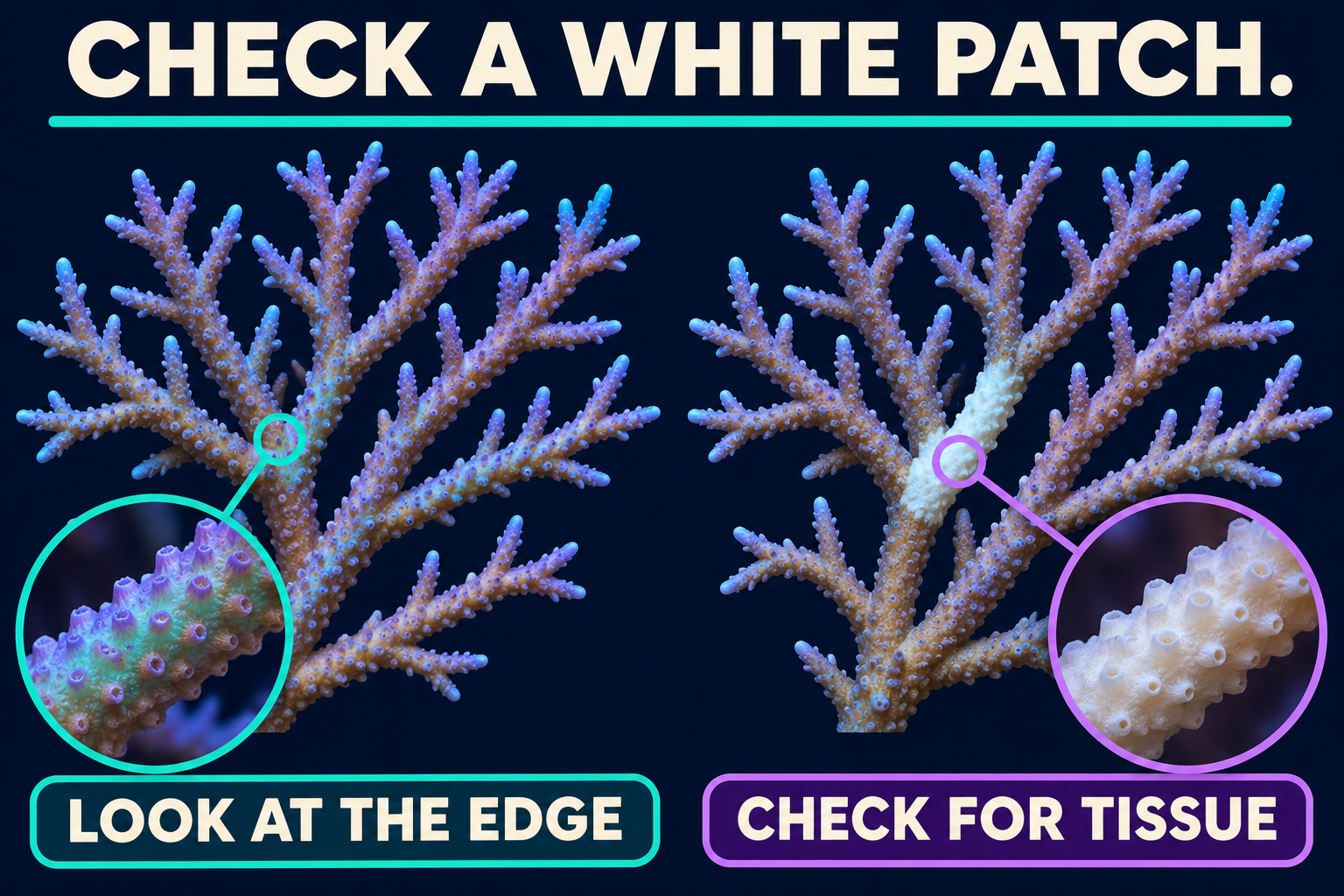
9. Look for tissue first. A pale tip or shaded patch isn't automatically tissue loss. Look for a living layer and compare with an earlier photo. Bare skeleton with a receding edge needs a closer look right away.
10. Check the basics promptly. If bare areas spread, review recent changes to temperature, salinity, alkalinity, flow and light. Look for contact or debris around the patch. Don't start cutting just because a branch is white.
Field notes — what keepers report
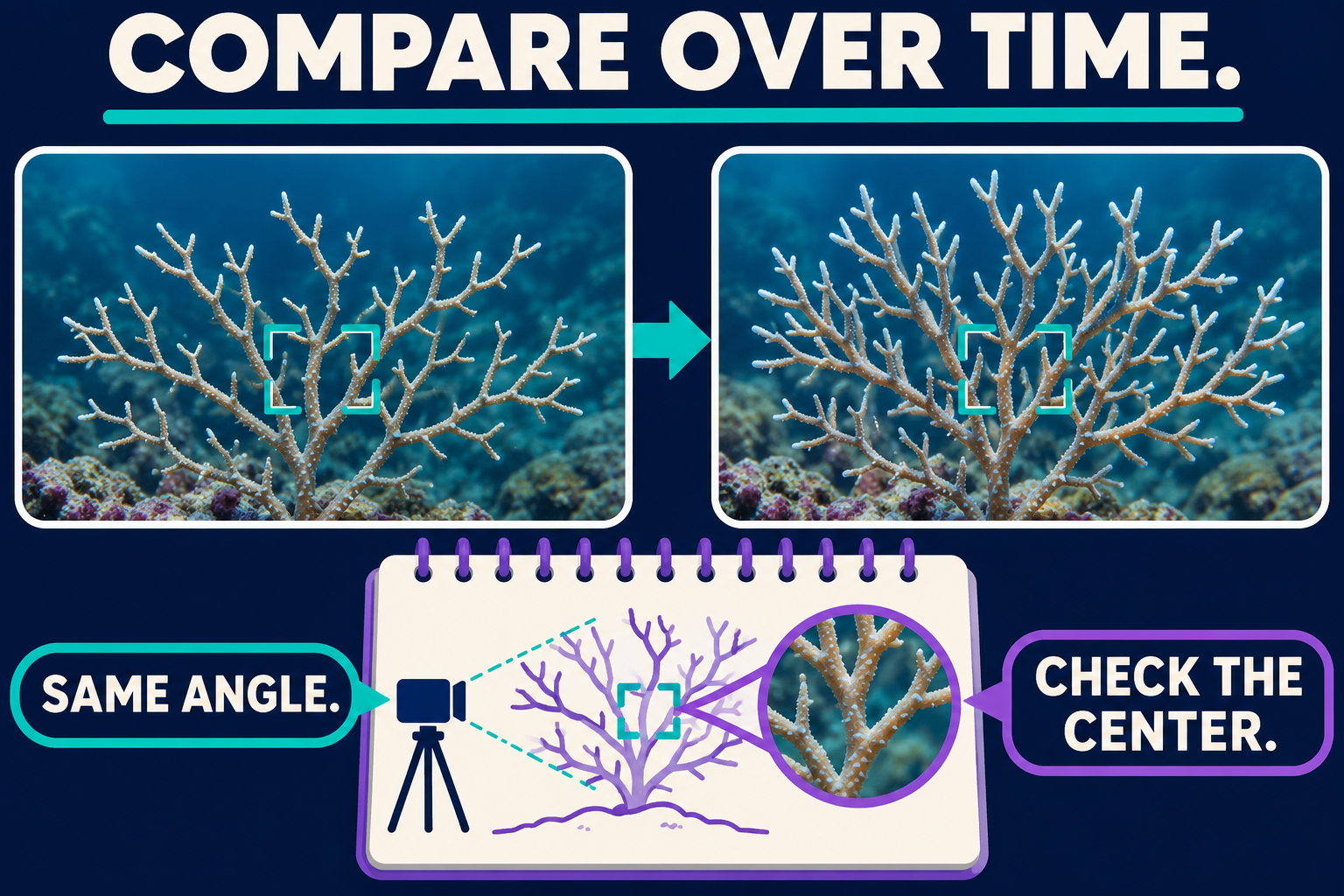
11. The center told two stories. One keeper saw a small dead patch inside a dense green birdsnest. Another had grown big colonies and found that many pale centers still had living tissue that regained color when exposed to better light.
12. High isn't right for every nest. One keeper grew a green birdsnest near the bottom. Another got good polyp extension under bright LEDs by raising the light slowly. A third saw their birdsnest close up after a light increase. These are other birdsnests, not verified Blue Zing colonies. Use your own frag's response to pace the move upward.
Give Blue Zing a roomy perch, strong moving water and a patient start under the lights. Then check the places you don't see from the front. A clean, living center tells you more than bright tips alone.
Field Notes
Related species

Bird's Nest Coral
Seriatopora hystrix
Same genus

Caliendrum Seriatopora
Seriatopora caliendrum
Same genus
Green Birdsnest Coral
Seriatopora caliendrum
Same genus
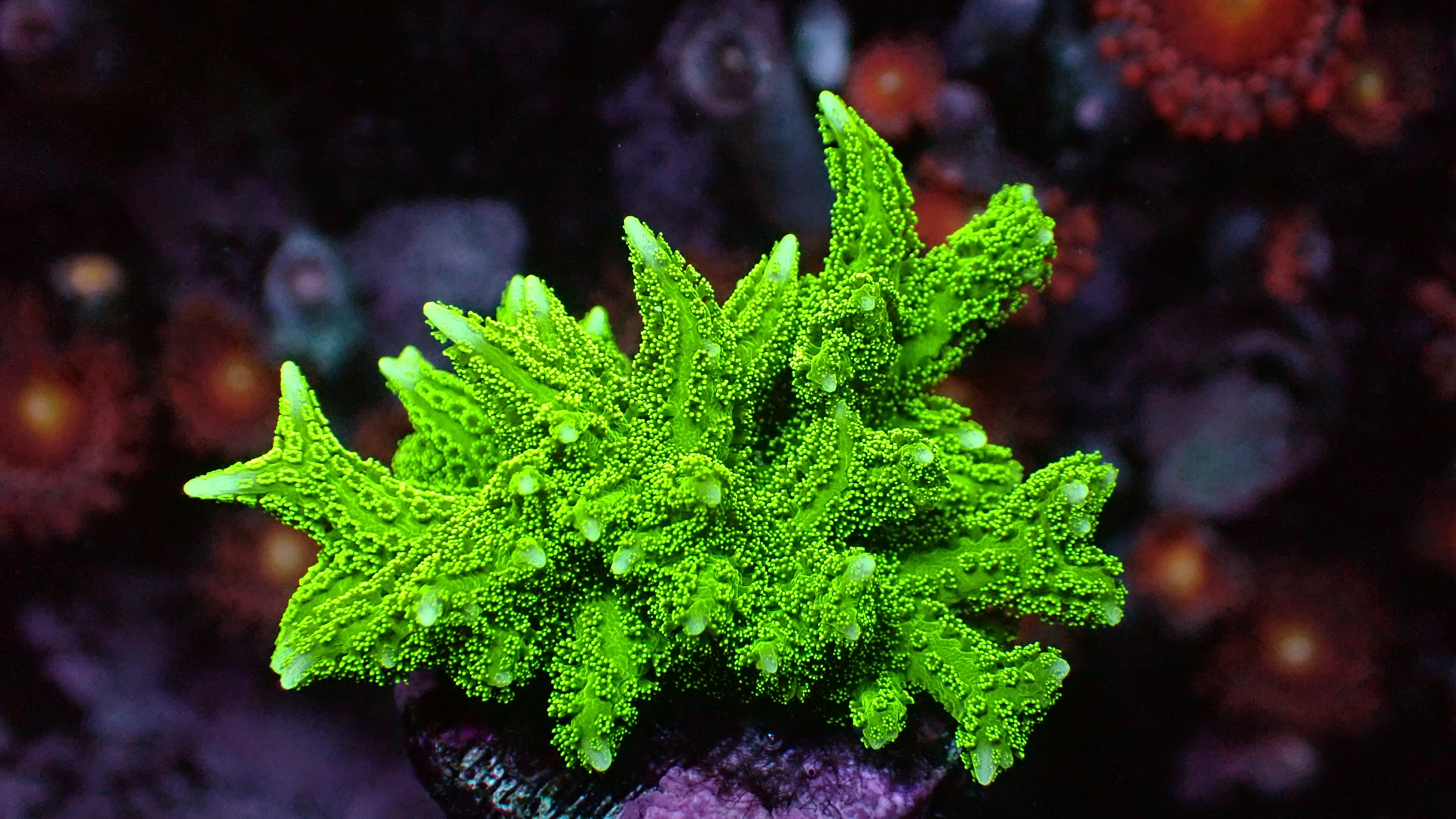
Jade birdnest
Seriatopora sp.
Same genus
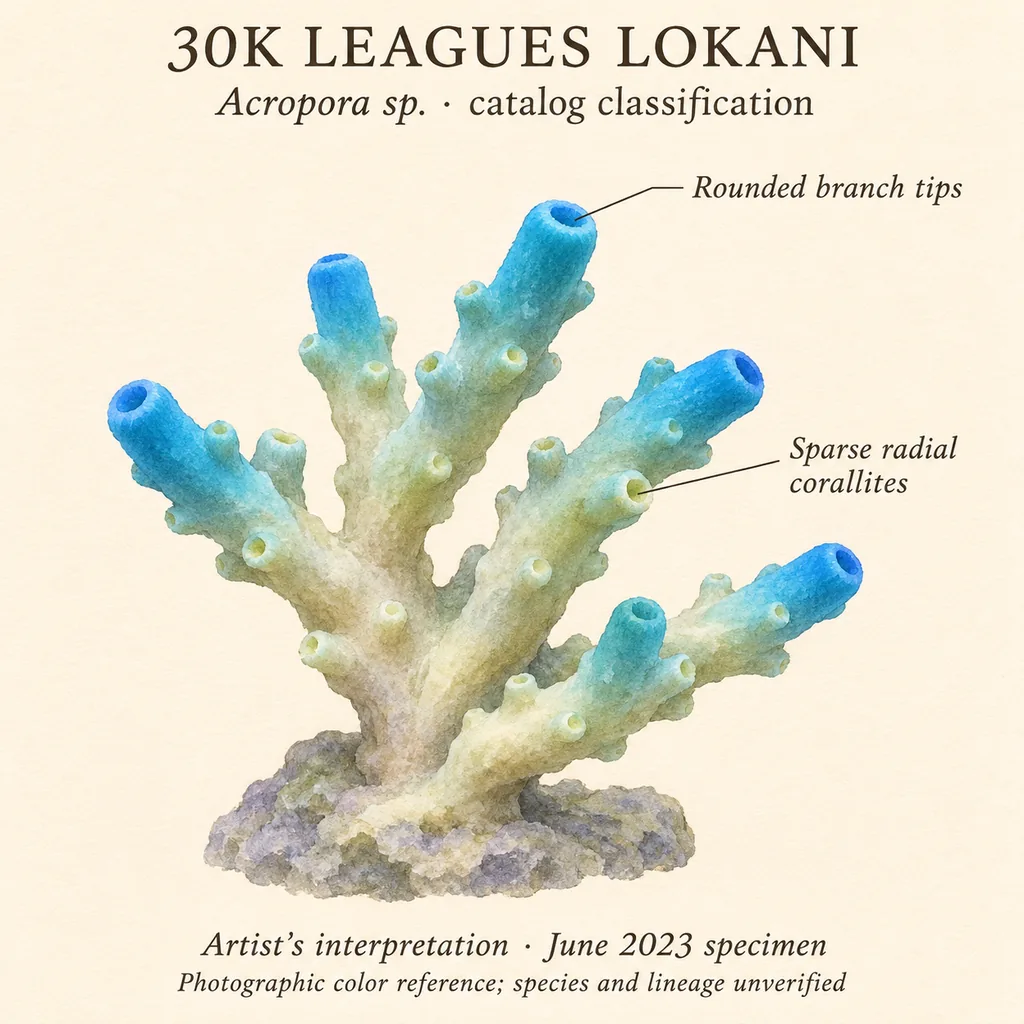
30K Leagues Lokani
Acropora sp.
Similar care · SPS
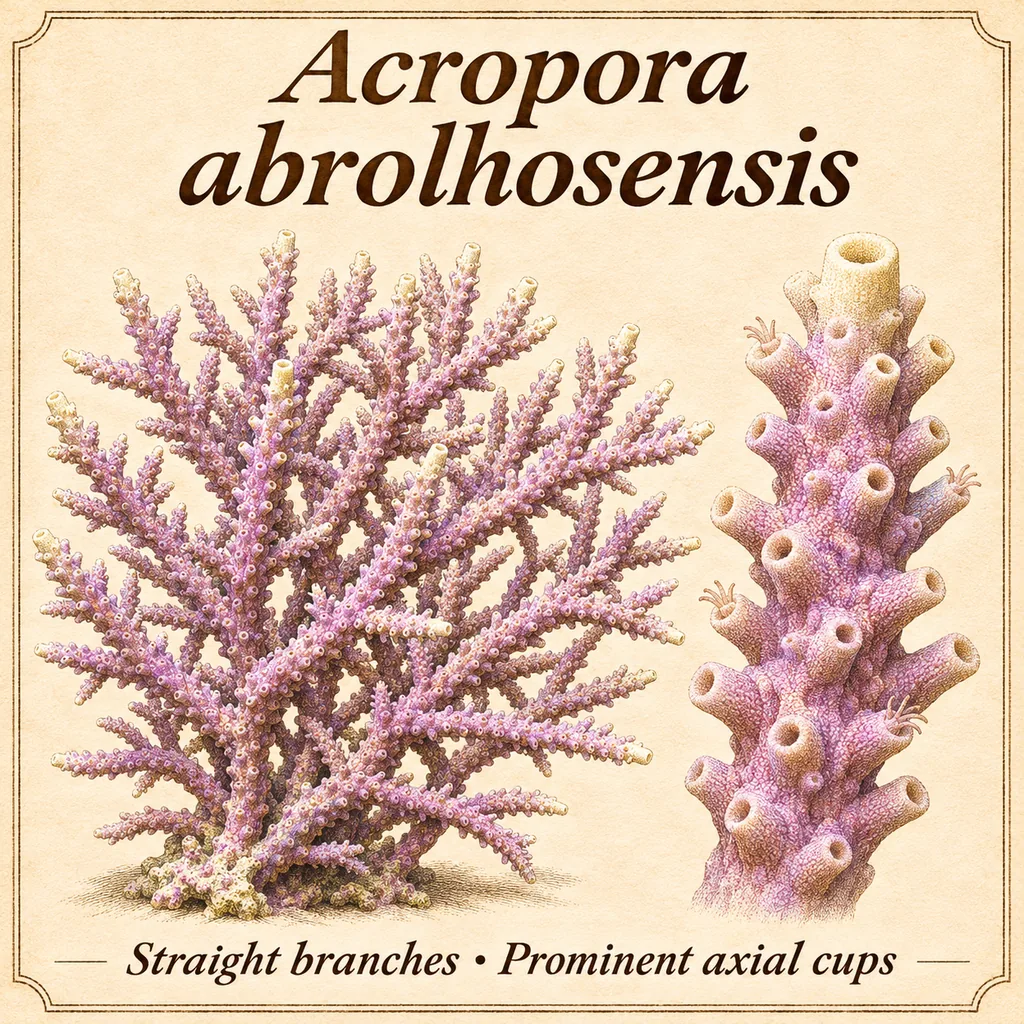
Acropora abrolhosensis
Acropora abrolhosensis
Similar care · SPS
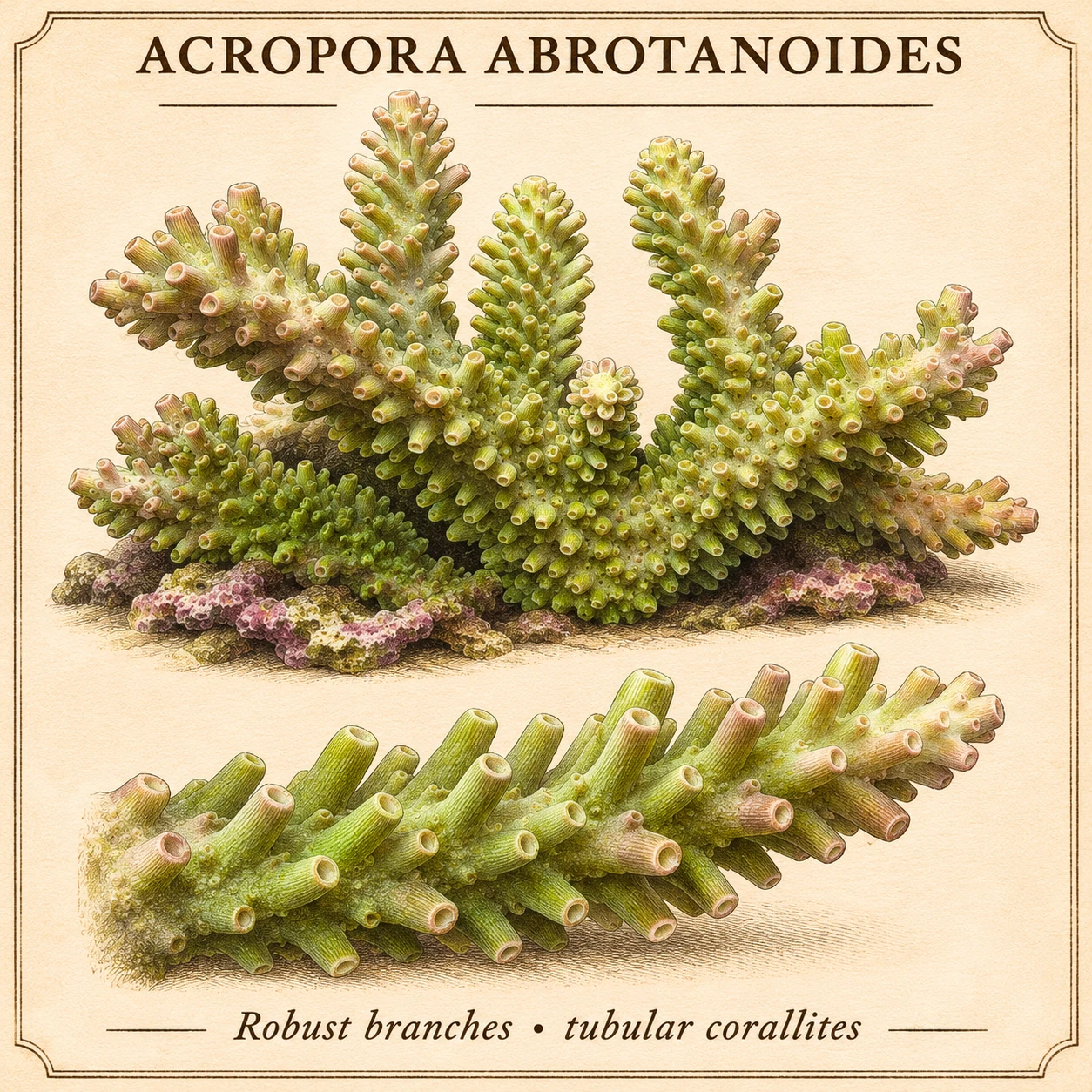
Acropora abrotanoides
Acropora abrotanoides
Similar care · SPS
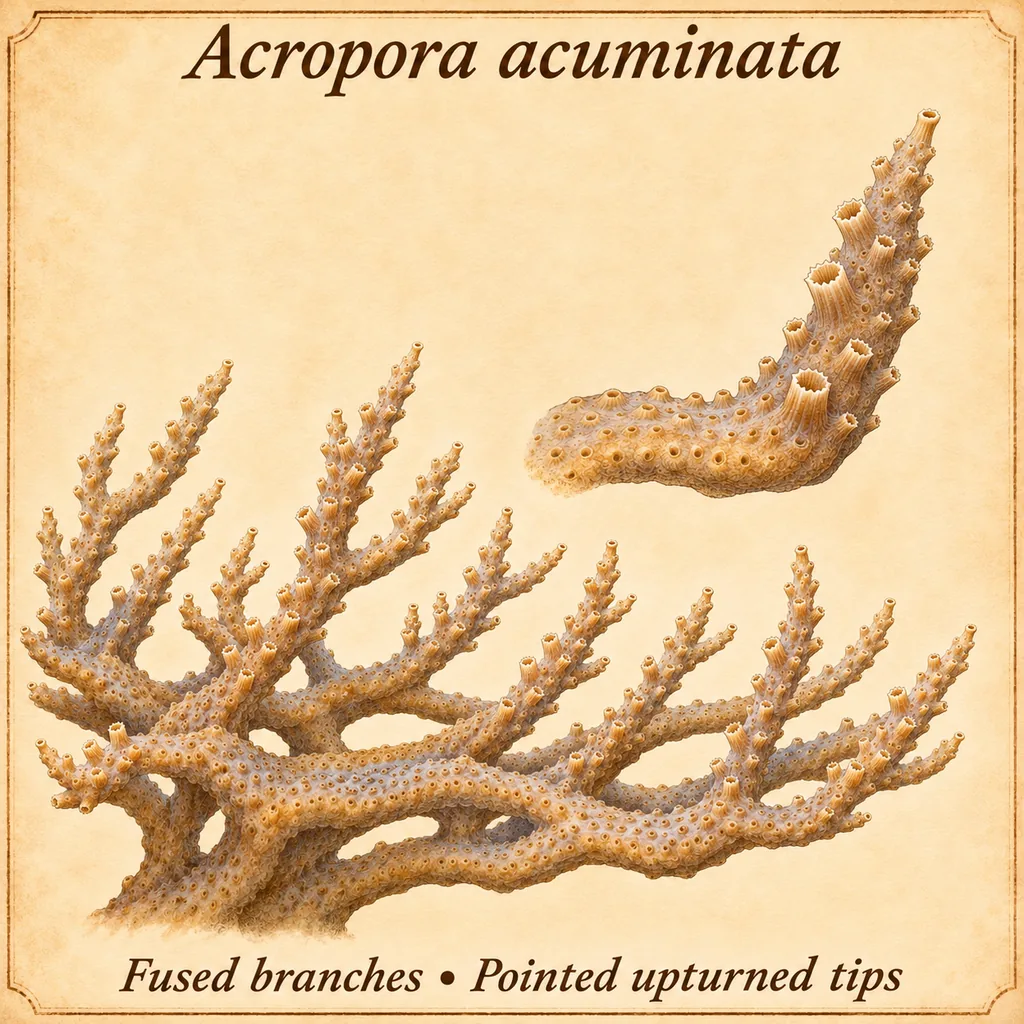
Acropora acuminata
Acropora acuminata
Similar care · SPS