

Candygram hammer
Fimbriaphyllia paraancora
Candygram hammer is a hammer coral morph listed as Fimbriaphyllia paraancora. Hammer corals grow fleshy polyps on a branching skeleton, each polyp ending in the flattened, hammer- or anchor-shaped tips that give the group its name. A settled colony waves as a cluster of soft heads, the tips packed together and swaying as one mass in gentle current. The candygram name is a trade label for this color form, and the colony is grown for the display of a healthy hammer in motion at the middle of the tank.
The entry lists beginner care, medium light, medium flow, middle placement, moderate aggression, and slow growth, with the original notes calling for tentacle clearance. Place the frag in the middle of the rockwork with the skeleton secured firmly and the polyps facing open water. Medium light at a middle placement holds full extension through the day. A hammer kept too low stretches and pales, while a sudden jump in light can keep the heads drawn in, so raise light in stages and judge extension over a full week.
Medium flow should arrive as a gentle, changing surge. Hammer tentacles want to drift and sway, and a steady one-direction stream presses tissue against the skeleton and can tear flesh at the rim of a head. Still water lets waste settle into the branching base. Secure the skeleton well, because a growing colony gets top-heavy and a fall almost always lands on the polyps.
Feeding supports tissue health and head division. The polyps take small meaty foods such as mysis and finely chopped seafood offered into the tentacles, with flow lowered briefly so the food stays in place. Offer small portions about once a week and spread them across heads. Light supplies much of the energy, and fed colonies tend to hold thicker flesh at the head rims and divide more steadily. Clear away food that drifts off rather than leaving it in the base.
Aggression is listed as moderate. Hammer corals can extend longer sweeper tentacles beyond the resting polyps, most often after dark, and those sweepers carry a real sting. Give this morph clearance on all sides, with six inches the safe working figure for an LPS with sweeper reach, judged by nighttime reach rather than the daytime footprint. Hammers can usually sit near other hammers, while unrelated LPS are safer kept at a distance. Protect the colony in return from stronger stingers, because a hammer that loses a contact fight heals slowly at the injured head.
Growth is listed as slow. Heads divide at the mouth, daughter heads form along the branches, and the colony widens over seasons in a settled spot. Stable alkalinity, calcium, and magnesium carry the branching skeleton. A head staying retracted for days, flesh receding at a rim, or tissue lifting from a stalk usually traces back to flow, a recent chemistry swing, or a pest check worth doing.
Common pitfalls include placing the colony in a direct stream because the frag looked sturdy, crowding it by its frag size, and mounting it loosely so it topples as the heads gain weight. Start in the middle of the rockwork under medium light, keep gentle surging flow moving, space for the night, and use a mount that cannot move.
Field notes — what keepers report
- Extension reports track flow closely. Keepers describe long, relaxed tentacles under gentle, changing movement, and shorter, tighter heads under a steady stream aimed at the colony. A calmer, less direct pattern is the first change described when a hammer stays partly closed.
- Settling reports divide on speed. Some keepers describe new hammers opening fully within days in a stable tank, while others describe a head that stayed sulky for weeks after shipping and then extended with no single change credited. Both sides advise against repeated moves during that settling window.
- Feeding reports lean positive and stay modest. Keepers who offer small meaty pieces on a routine describe fuller tissue and steadier head division, while keepers who rely on light and broadcast feeding alone describe healthy colonies that grow at the listed slow pace. Small portions are the shared practice, because leftovers foul the base.
Field Notes
Related species
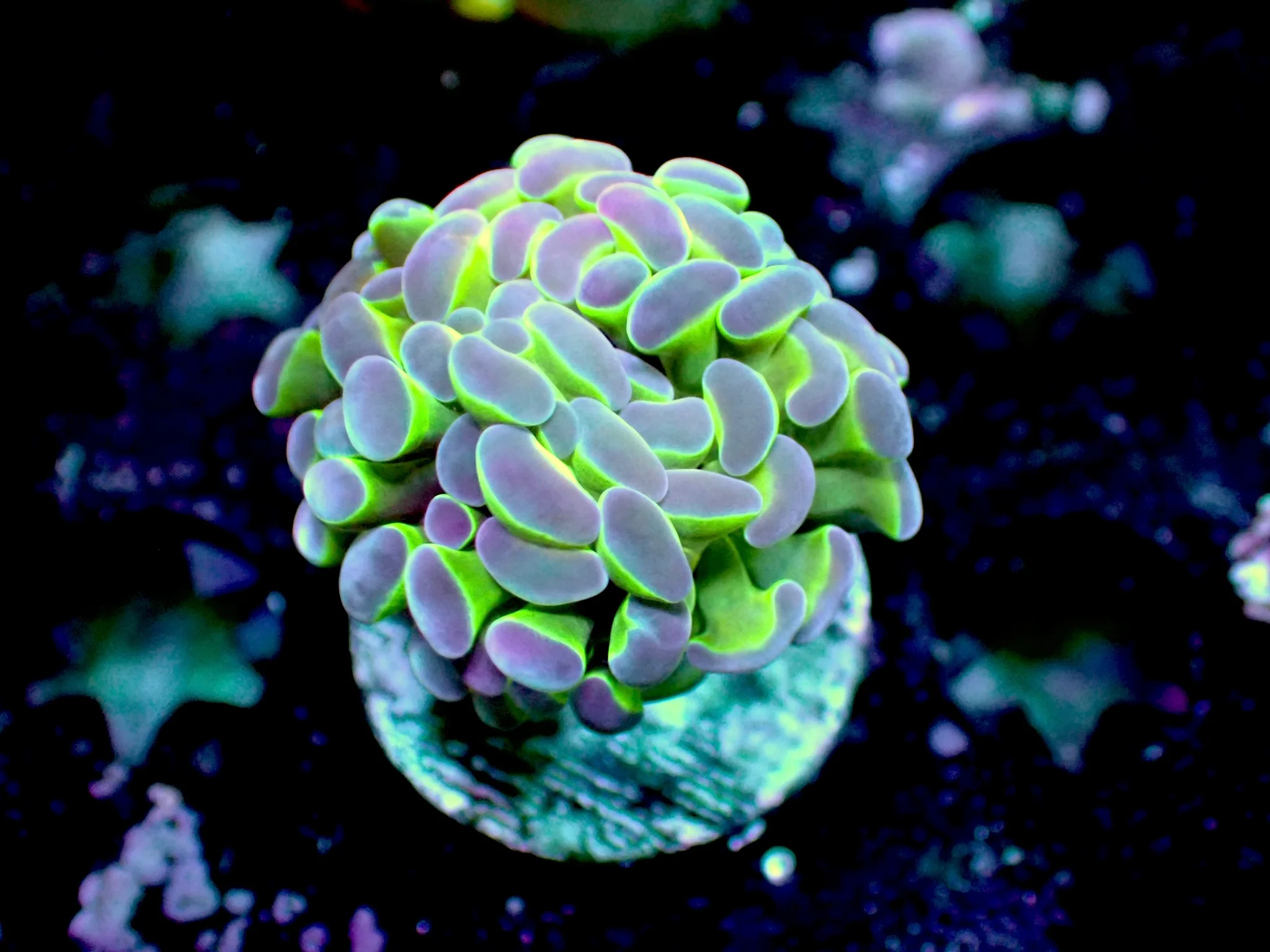
Hologram hammer
Fimbriaphyllia paraancora
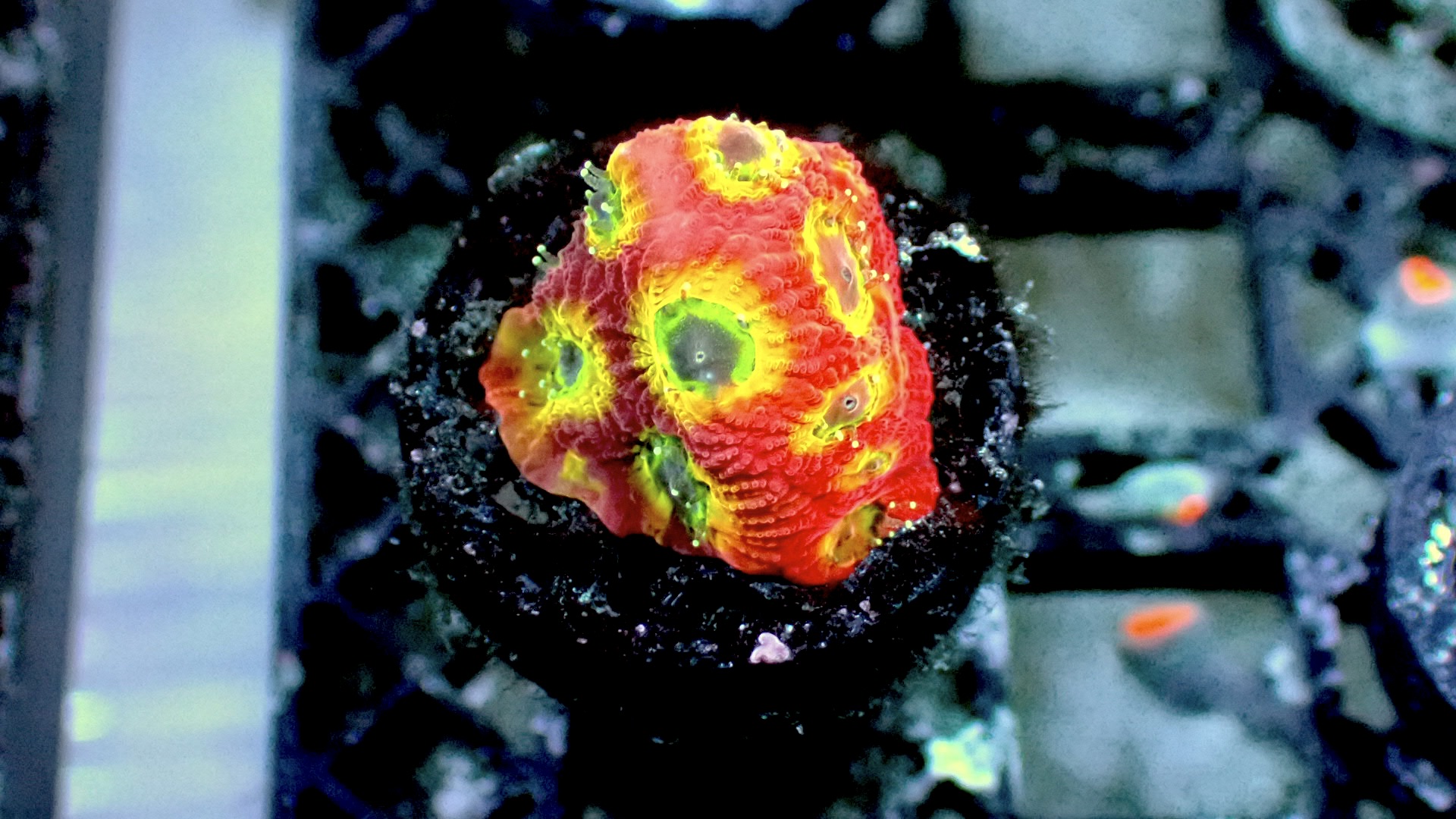
Lemon lime favia
Favites sp
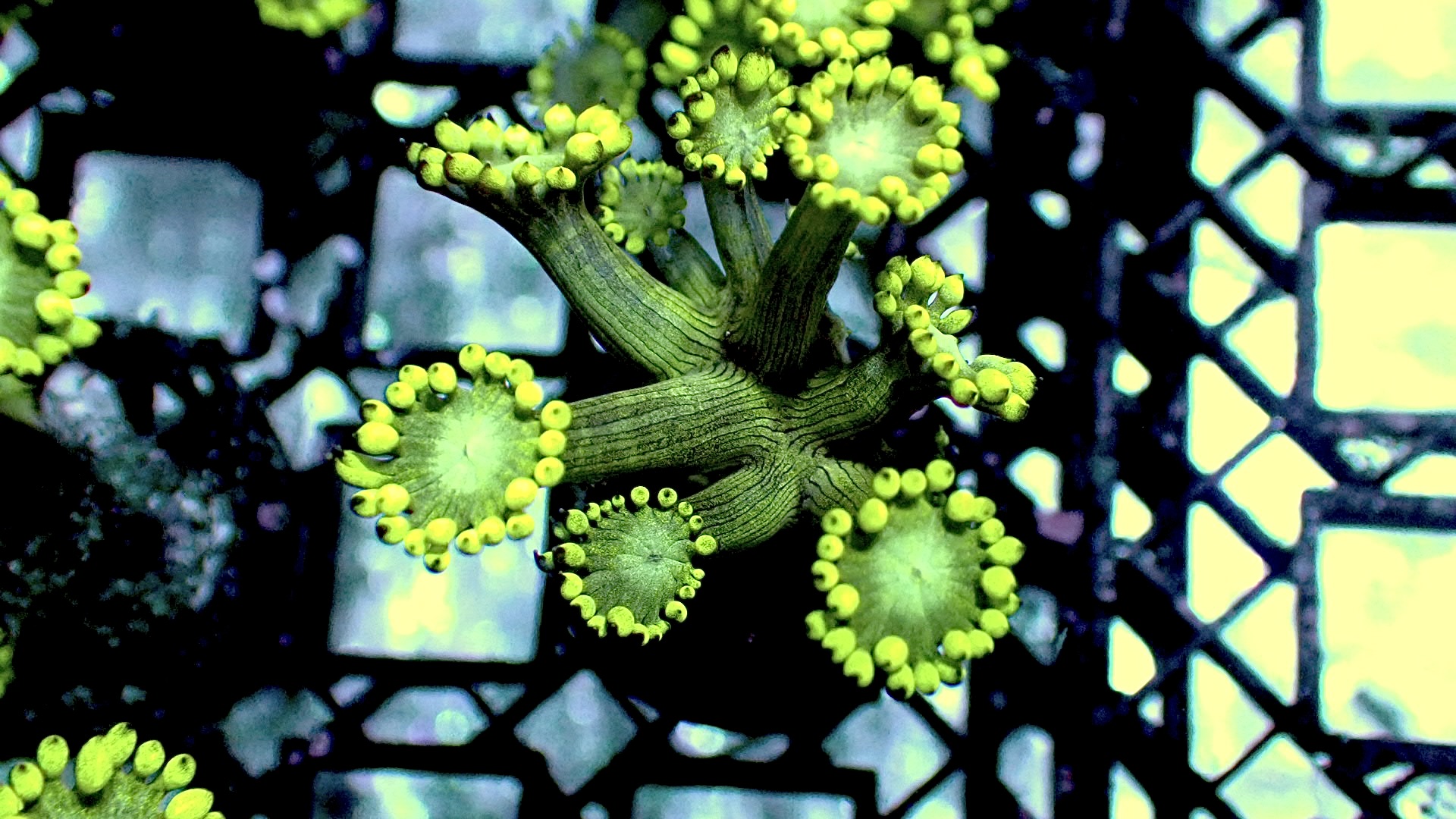
Bulbasaur goniopora
Goniopora sp

Citrus Orange Short Polyp Goniopora

Confetti Grafted Goniopora
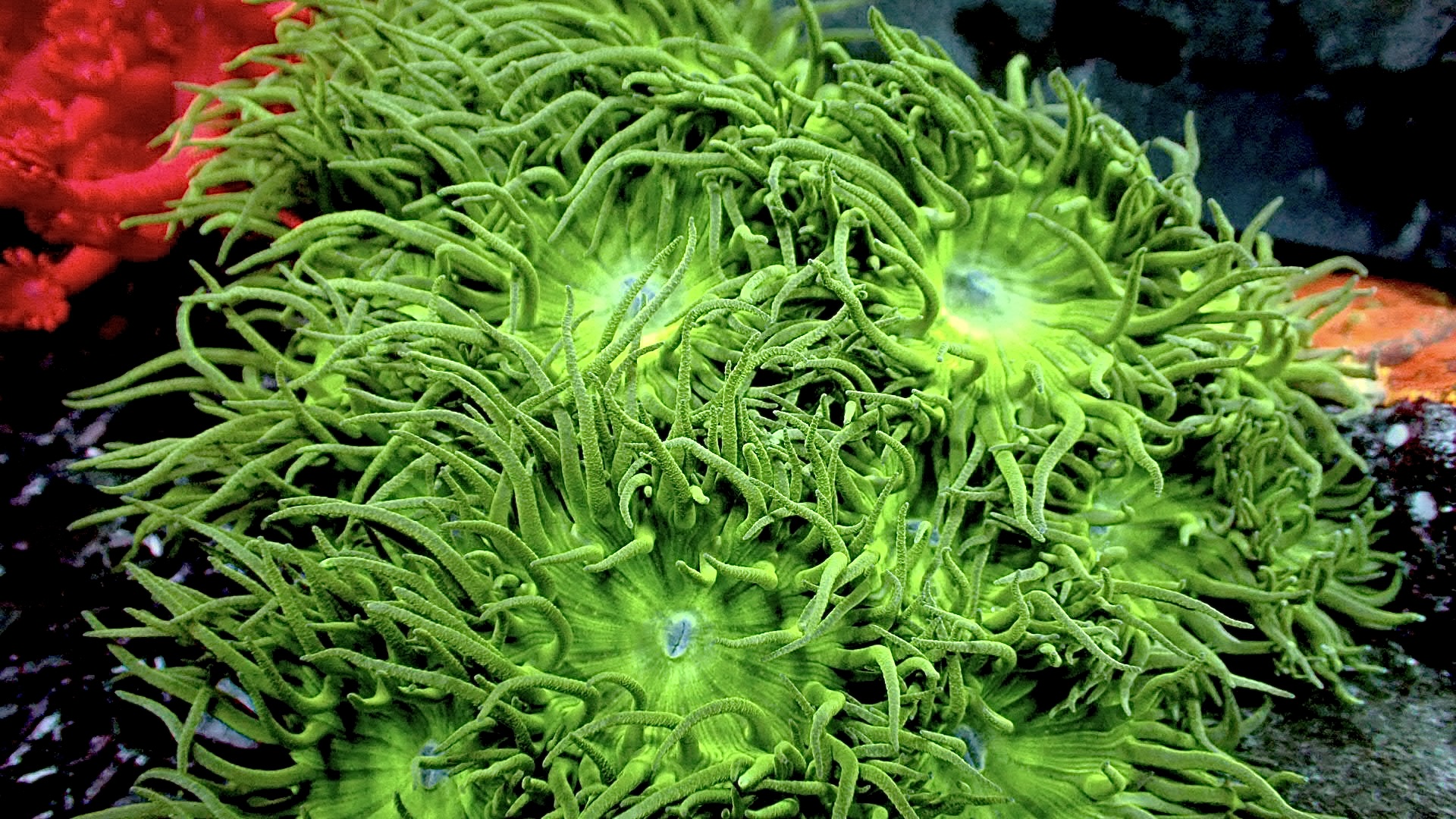
Duncan coral
Duncanopsammia axifuga
Green Bay zoas
Zoanthus sp

Lava lamp goniopora
Goniopora sp


Love this species? No tank needed.
Reef art from the shop — for the wall, not the tank.


Get notified when Reef To Go has Candygram hammer in stock or up for auction. One email when it's in — no spam.