Bubble Coral
Plerogyra sinuosa

Care facts
- Care
- Intermediate
- Light
- Low-Medium
- Flow
- Low
- Place
- Low
- Space
- Aggressive
- Origin
- Indo-Pacific
- Growth Rate
- Slow
Gallery
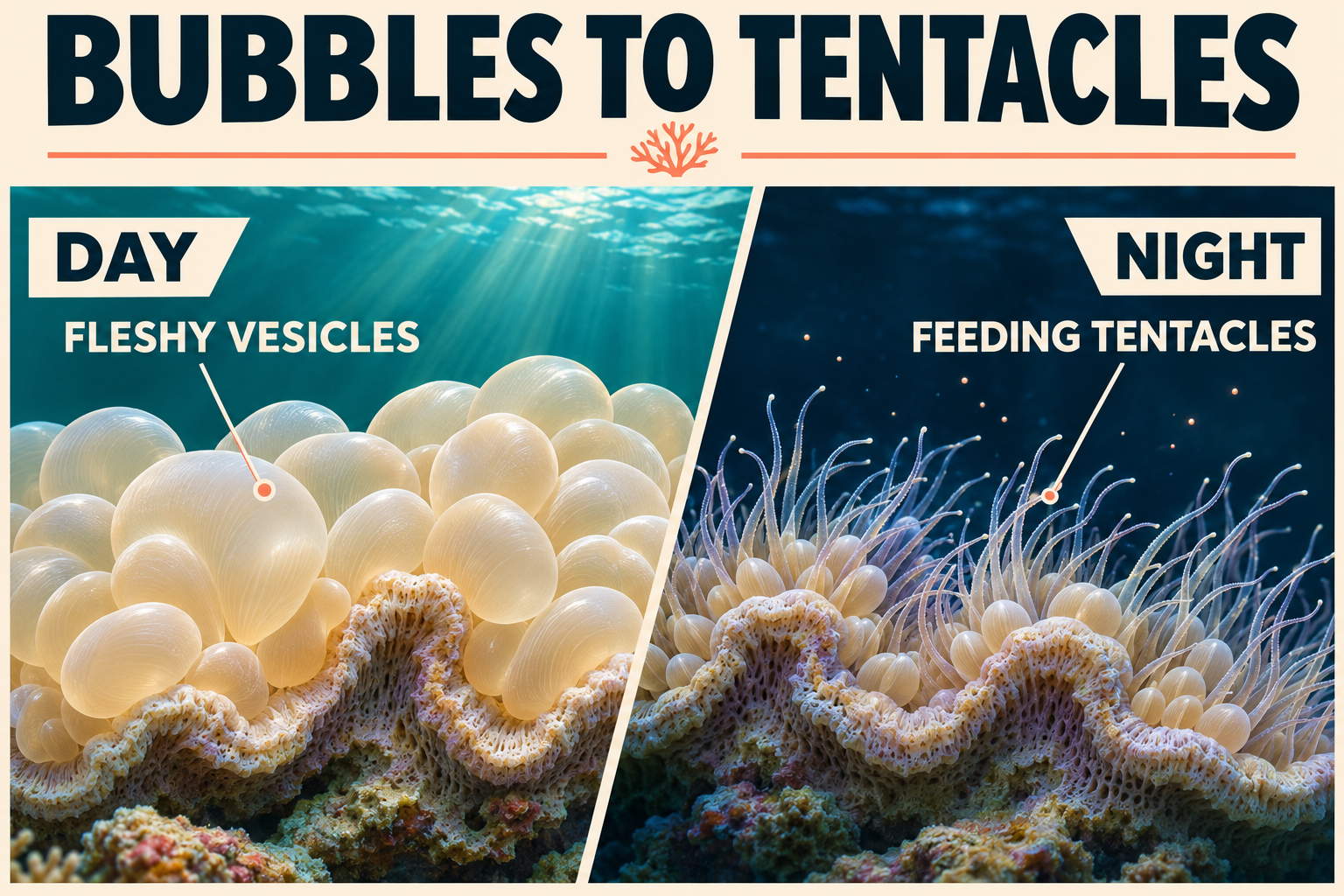
Those bubbles aren’t full of air. They’re living tissue, and they swell like bunches of grapes over a hard skeleton. Come back after dark and the same coral has a whole new look.
History
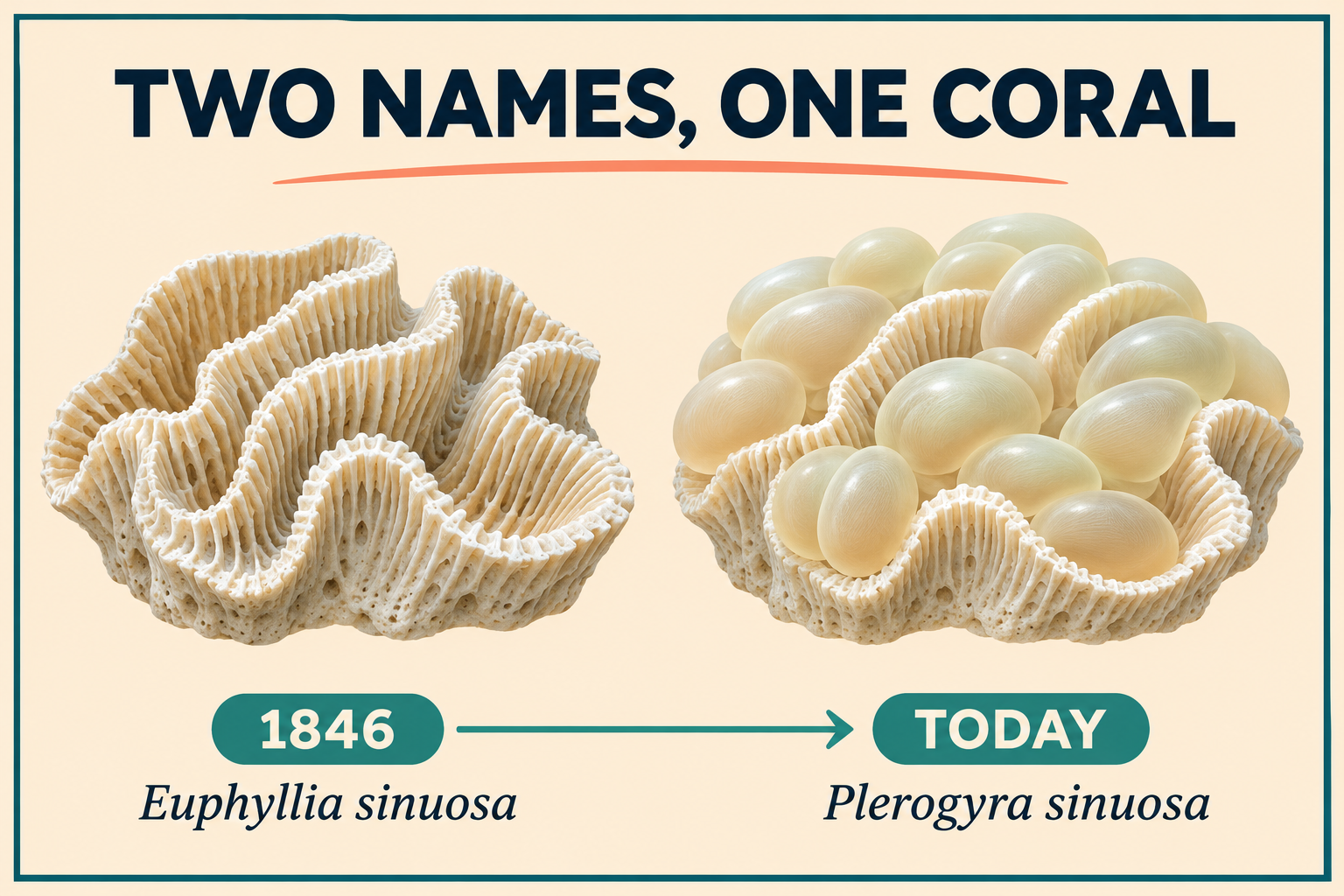
1. A name from 1846. James Dwight Dana first described this coral as Euphyllia sinuosa. Today it’s Plerogyra sinuosa. The name sinuosa means wavy, just like the channels in its skeleton.
2. The nickname is easy. “Bubble Coral” comes from those swollen, grape-sized pockets of tissue. Don’t mix it up with Pearl Bubble Coral. That’s Physogyra lichtensteini, a different species with smaller bubbles.
In the wild
3. From the Red Sea into the Pacific. Bubble Coral lives across the tropical Indo-Pacific, including the Red Sea, Southeast Asia and reefs in the western and central Pacific. It turns up from shallow lagoons to reef slopes tens of meters down.
4. Take the quiet spot. Look beneath ledges and on sheltered reef walls, where light is softer and waves lose their punch. Big colonies also grow out in the open where cloudy water dims the sun.


Light and flow
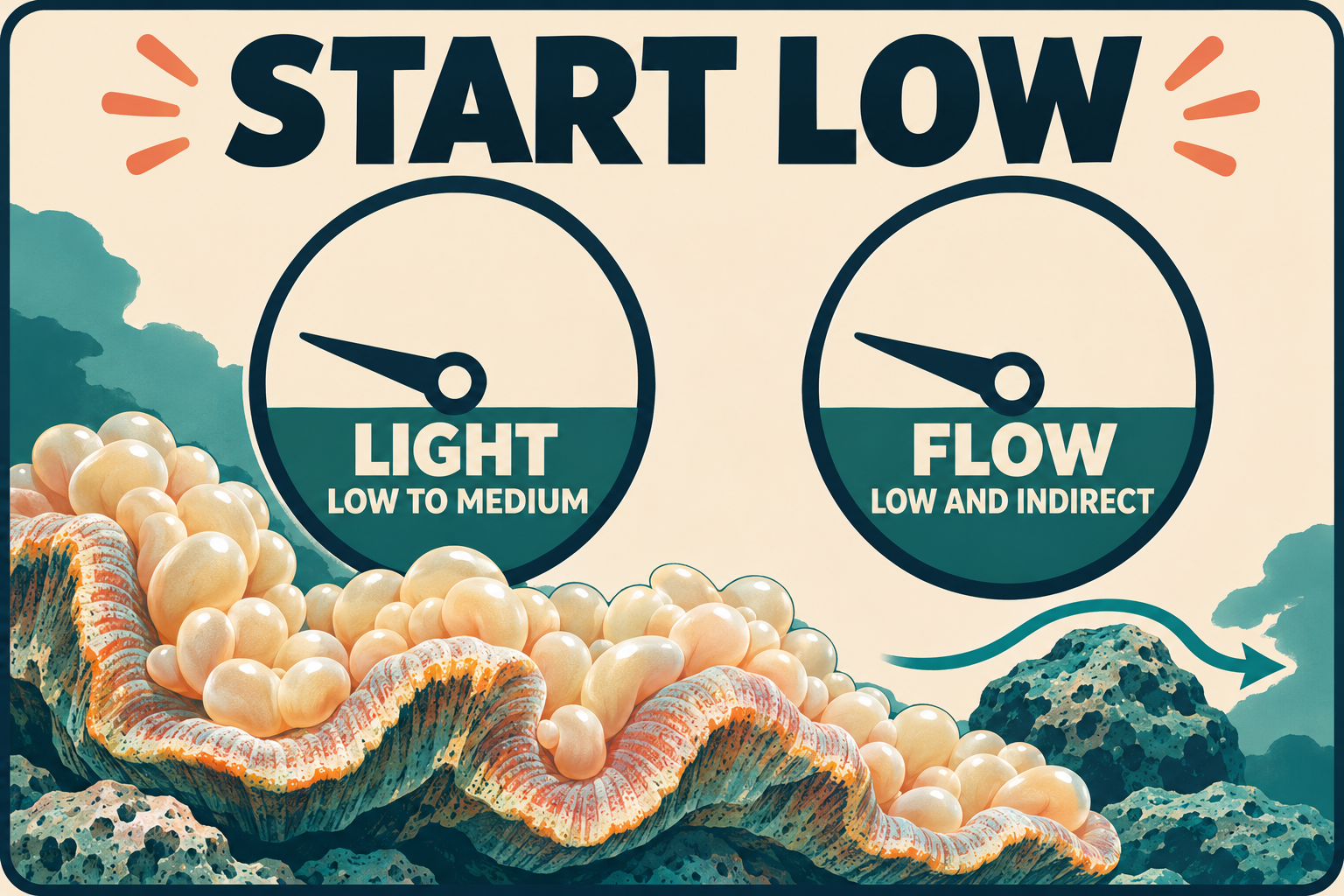
5. Ease into the light. Start at the low end of low-to-medium light. Give a new colony time to settle before raising the light in small steps. Judge how it opens over several days, not one afternoon.
6. A sway, not a shove. Aim for low, indirect flow. Let water slip around the colony without pinning the bubbles down or leaving waste to pile up around the base.
Placement and neighbors
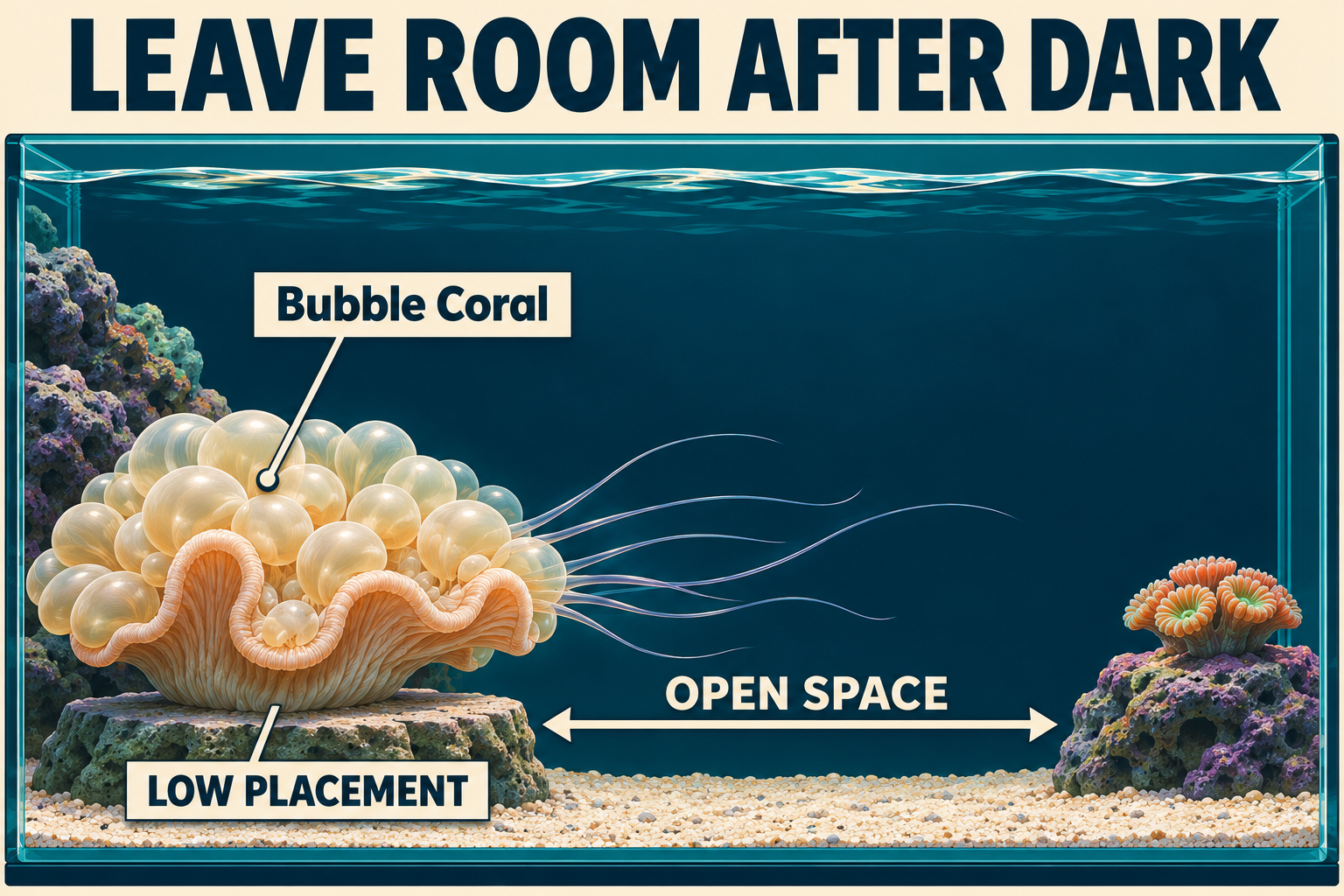
7. Set it low and steady. Put the coral on a stable low ledge or a solid base near the sand. Keep sharp rock and shifting sand away from the soft bubbles. Lift the colony by the skeleton, never by the flesh.
8. Measure after dark. Sweeper tentacles sting other corals well beyond the daytime outline. Start with six inches of clear space from expanded tissue to the nearest neighbor. Check after lights-out and widen the gap if the sweepers get close.
Feeding and water
9. Dinner after dark. Tiny algae inside the bubbles turn light into food. After dark, feeding tentacles catch passing prey. When they’re out, offer a tiny portion of thawed mysis and let the tentacles take it. Don’t push food into the bubbles.
10. Steady water, steady skeleton. Keep salinity and temperature steady. Test alkalinity and calcium, which the coral uses to build its skeleton. Feed small portions and remove leftovers before they foul the water.
Field notes — what keepers report
11. Growth runs on different clocks. One keeper’s bubble coral ate eagerly and still grew slowly. Another saw a colony roughly double in size in a year. Compare photos taken at the same time of day so a big puff of tissue doesn’t fool you.
12. Shade changes the look. One keeper saw larger bubbles in lower light and smaller ones in brighter light. Another tried extra feeding for a colony that stayed tentacled and didn’t see the bubbles return. Feeding more wasn’t the fix in that tank.
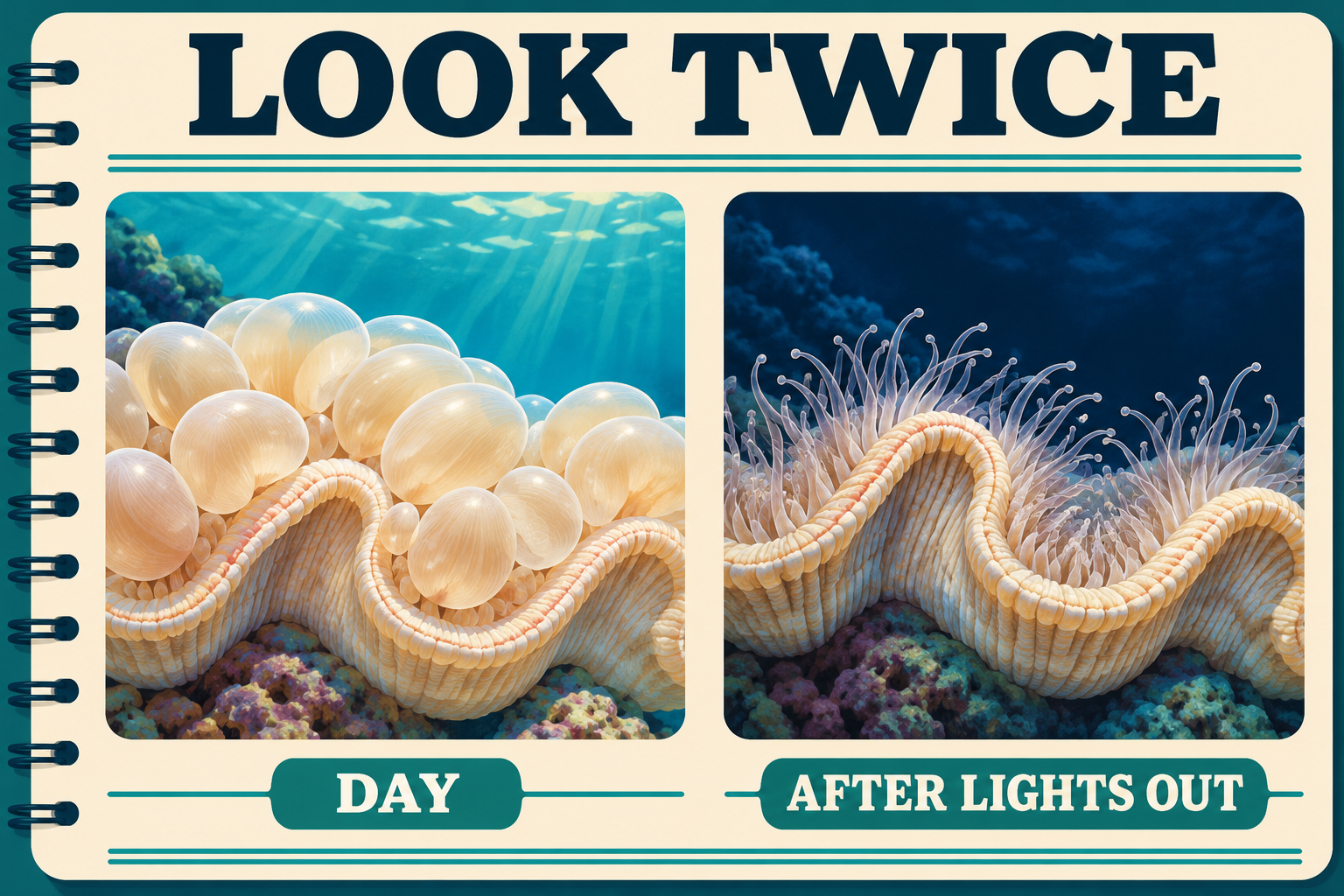
Give Bubble Coral a calm corner and enough room to stretch after dark. Compare the same spot during the day and after lights-out. A partly deflated colony can still have living tissue between the bubbles. It’s like getting two reef displays in one.
Field Notes
Related species
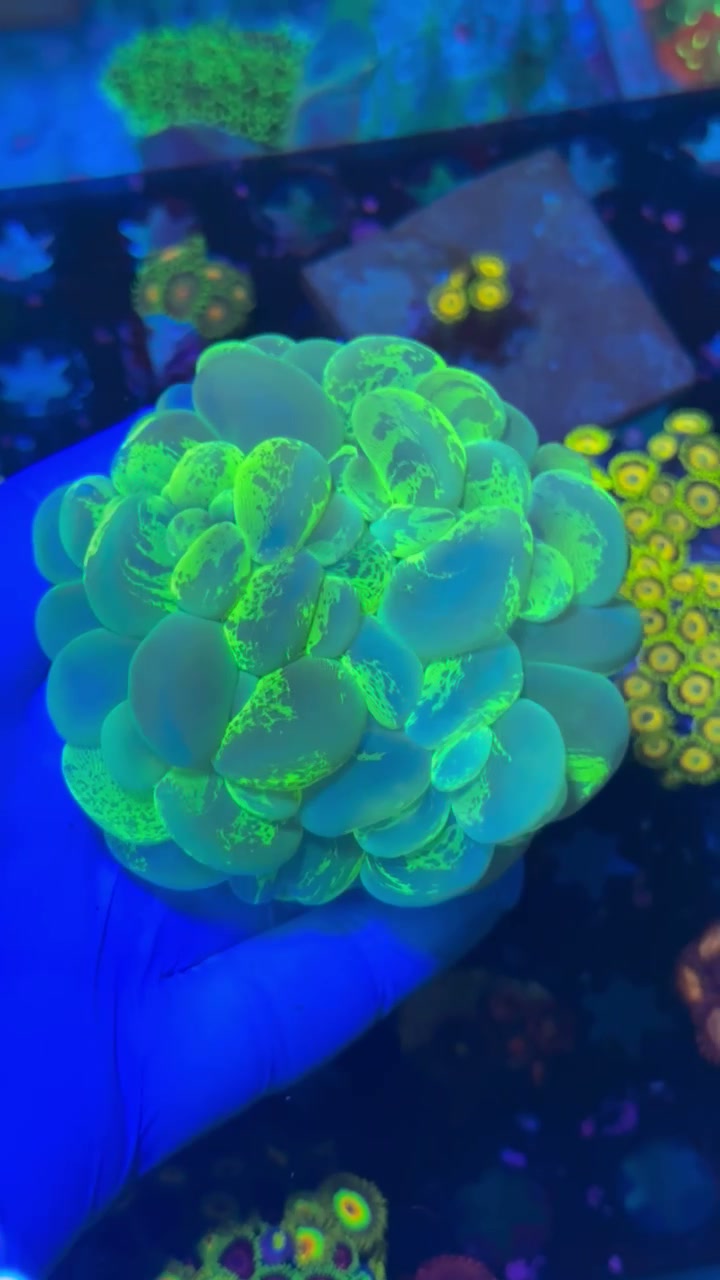
Splatter bubble coral
Plerogyra sinuosa
Same genus
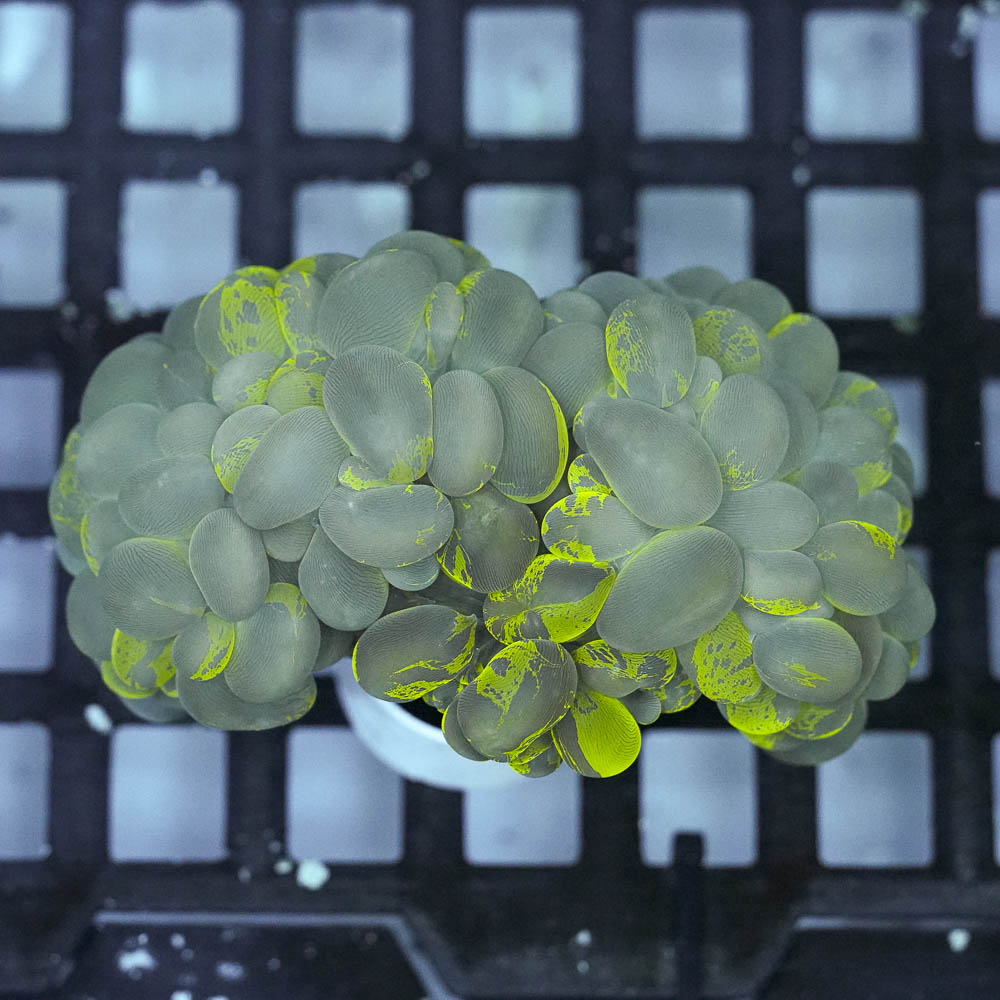
Cat’s eye bubble coral
Plerogyra sinuosa
Same genus
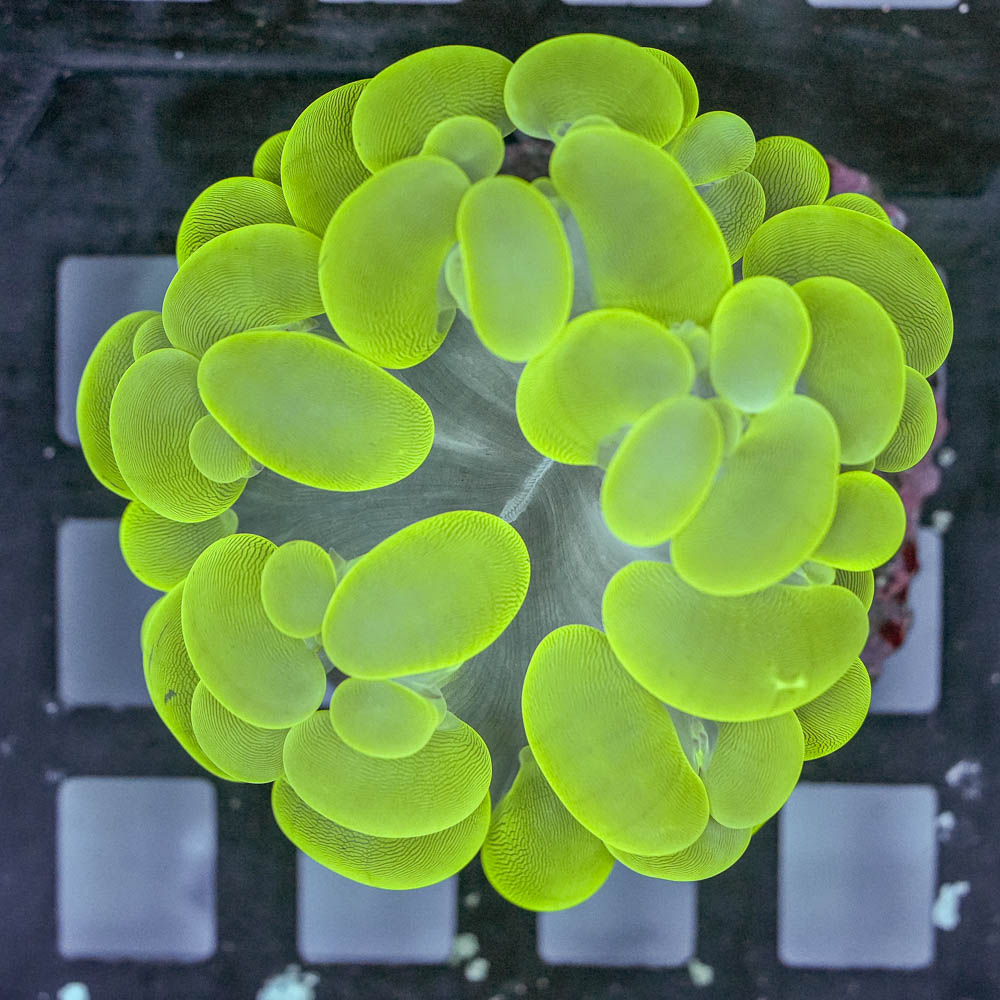
Green bubble coral
Plerogyra sinuosa
Same genus

Acanthastrea Echinata
Acanthastrea echinata
Similar care · LPS

Echinophyllia Chalice
Echinophyllia tarae
Similar care · LPS

Pearl Bubble Coral
Physogyra lichtensteini
Similar care · LPS
Acanthophyllia
Acanthophyllia sp.
Similar care · LPS
Anemone Coral
Heliofungia actiniformis
Similar care · LPS