Acanthastrea Echinata
Acanthastrea echinata
Care facts
- Care
- Intermediate
- Light
- Low-Medium
- Flow
- Low
- Place
- Bottom
- Space
- Aggressive
- Origin
- Indo-Pacific
- Growth Rate
- Slow
Gallery
Videos
Acanthastrea echinata can grow into a patchwork of thick, fleshy polyps. Give it time, steady conditions and room of its own. Even a small frag can damage a nearby coral. Finding the perfect light setting will not make up for poor spacing.

Plan for intermediate care, low-to-moderate light and low-to-moderate indirect flow. Treat it as aggressive. A secure lower spot is often a sensible place to start. Plan around slow growth, while remembering that each colony and tank can behave differently.
These care labels are practical starting points. They are not limits proven by experiments on this species. This guide brings together identification references, aquaculture experience and reports from home reef tanks. Where research does not give a species-specific answer, the care steps are cautious guidance rather than proven rules.
Identity, anatomy and natural habitat
Know which “acan” you have.

The accepted scientific name is Acanthastrea echinata (Dana, 1846). It is a stony coral in the family Lobophylliidae.
It is different from the coral often called an acan lord. That coral is now named Micromussa lordhowensis. A. echinata did not move into Micromussa with it. Older care guides and shop labels may call both “acans,” so check which animal a source is discussing.
WoRMS, a marine-species naming reference, lists them separately. A 2016 study of Micromussa and Homophyllia explains the name changes. Names such as “Orange Crush” are trade names for marketed colors or lineages. They are not extra recognized species.
What the body is like.
Corals of the World describes colonies that spread over a surface or build a thick, solid shape. In the wild, they usually stay under a metre across.
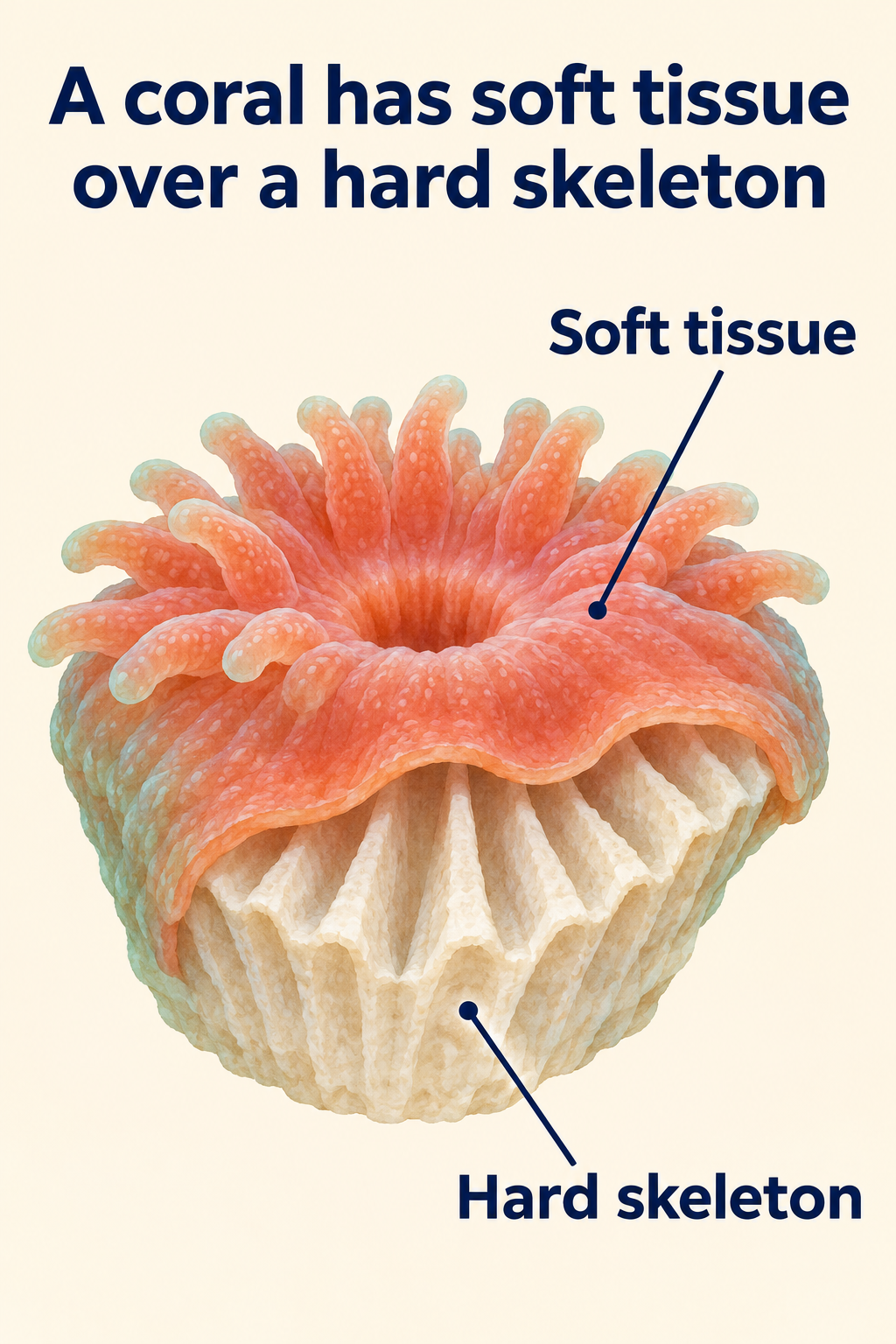
Each polyp sits over a skeletal cup called a corallite. These cups are round and have thick walls. Some share walls; others are more clearly separated. Inside each cup are ridges called septa. They run inward and have noticeable pointed teeth.
Thick living tissue covers that hard skeleton. It often forms rings of folds, giving an open colony its padded appearance. This also explains why squeezing a polyp can hurt it: soft tissue is being pressed against sharp parts underneath.
Colors vary. Brown, grey and green forms occur, as well as brighter ones. Close relatives and some Favites can be confused with this species, especially when looking only at a skeleton or a photograph. A picture alone should not turn an uncertain identification into a definite one.
Where it lives.
A. echinata occurs widely across the Indo-Pacific. It does not come from just one kind of dim, sheltered habitat. An Australian government fisheries assessment records it in several settings, including crevices on exposed reef crests and cloudy water.
That assessment also describes it as a hermaphroditic broadcast spawner. This means it produces both eggs and sperm and releases reproductive cells into the water.
The range of habitats is a reason to be cautious about calling every specimen a “deep-water coral.” It does not mean a newly shipped frag can handle any tank setting overnight. Its collection history, previous light, shading, acclimation and local water clarity still matter.
Handle the base, not the flesh.
Hold the plug or exposed skeletal base. Avoid pressing the tissue against the pointed skeleton beneath it. Supplier records and photographs under neutral light can help with identification. Keep an uncertain specimen labeled as uncertain.
Section sources: [1] and [2] for accepted names; [3] for the name changes; [4] for anatomy, appearance and similar corals; [5] for habitat and reproduction.
Lighting, placement and acclimation
Start gently and use the coral's history.
Low-to-moderate light is a cautious starting description, not a proven limit. Tidal Gardens reports using relatively low light for its Acanthastrea. In its care categories, low means 30–50 PAR and medium means 50–150 PAR. Those are commercial aquaculture categories, not a tested best setting for every A. echinata.
PAR is a measure of light available for photosynthesis. A light meter can tell you more about a particular spot than its height in the tank can.
If the frag's lighting history is unknown, a measured starting spot around 50–100 PAR is a conservative working range used in this guide. The full unit is µmol photons m⁻² s⁻¹. That range follows the low-to-moderate approach. It is not a minimum requirement or a guaranteed safe upper limit.
A healthy frag already used to a known setting may do better starting close to that setting. There is no need to force it into a generic range just because a guide lists one.
Ask the supplier about:
- Measured light intensity.
- The type of light fixture.
- How long the lights run each day.
- Where the coral was placed.
“Under LEDs” or “on the bottom” does not give enough detail to match its previous conditions.
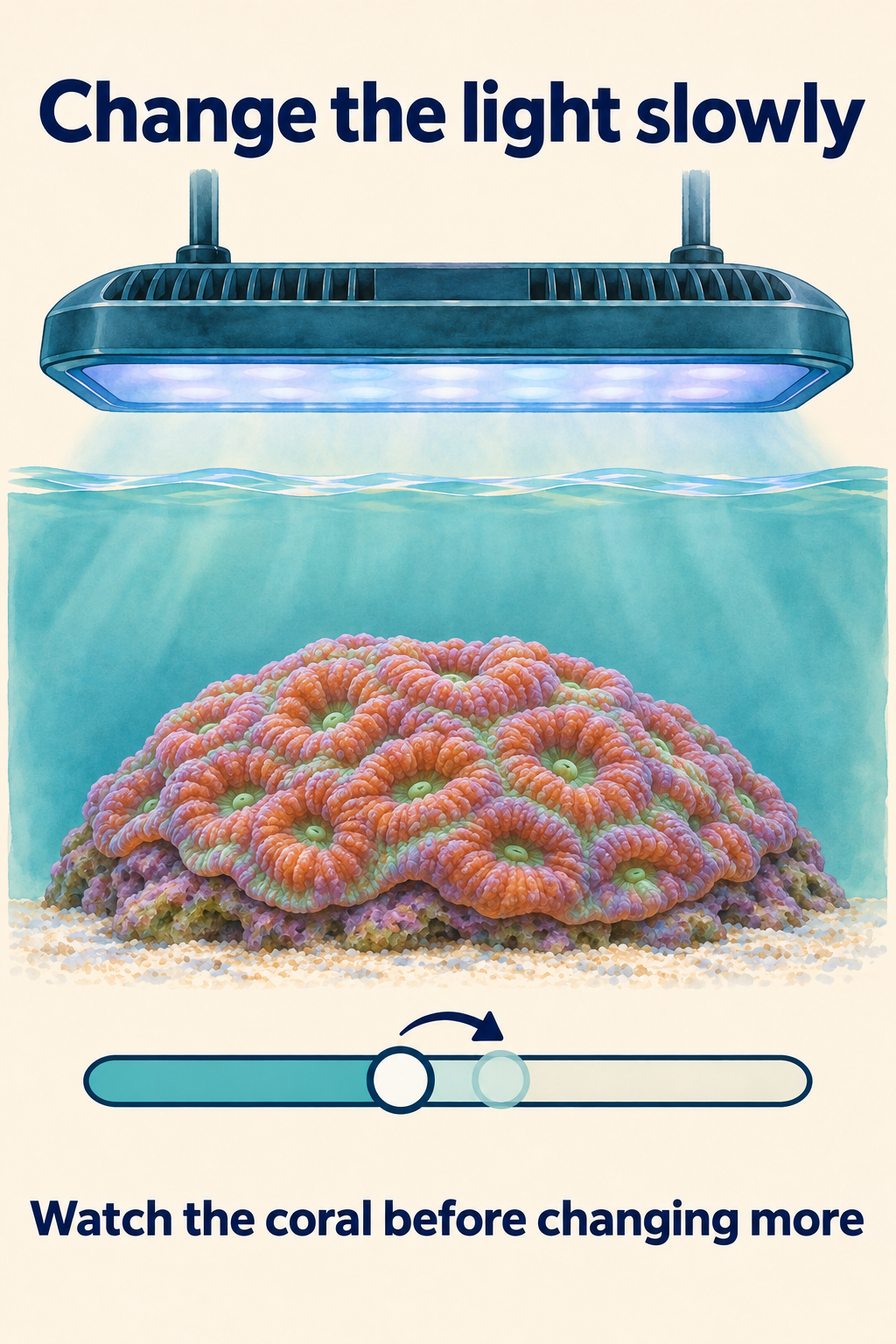
Make one change at a time.
Adjust light gradually and watch the response. Avoid raising intensity, extending the lighting period and changing flow all at once. Give yourself several days of observations before changing another variable.
A pale, damaged or recently shipped frag may need a different pace from an established fragment that is feeding well. Take photos under consistent conditions. Otherwise, a camera exposure change can look like a change in the coral. No single acclimation schedule guarantees success.
Choose a stable spot.
“Bottom placement” is shorthand for planning. A lower rock, tile or separate island can work if it gives the coral suitable light and flow.
Keep living tissue away from rubbing sand, settling sediment and sharp contact with glass or rock edges. Burrowing fish or active sand-moving invertebrates can make a sandbed spot unsuitable even when the light is right.
A frag that tips over every few days will struggle regardless of its light reading. Support the base securely. Do not cover living tissue with glue.
Section source: [6] for Tidal Gardens' lighting categories. The 50–100 PAR starting range and acclimation steps remain cautious guidance, not a species-tested optimum.
Flow and water chemistry
Move water around it without flattening it.
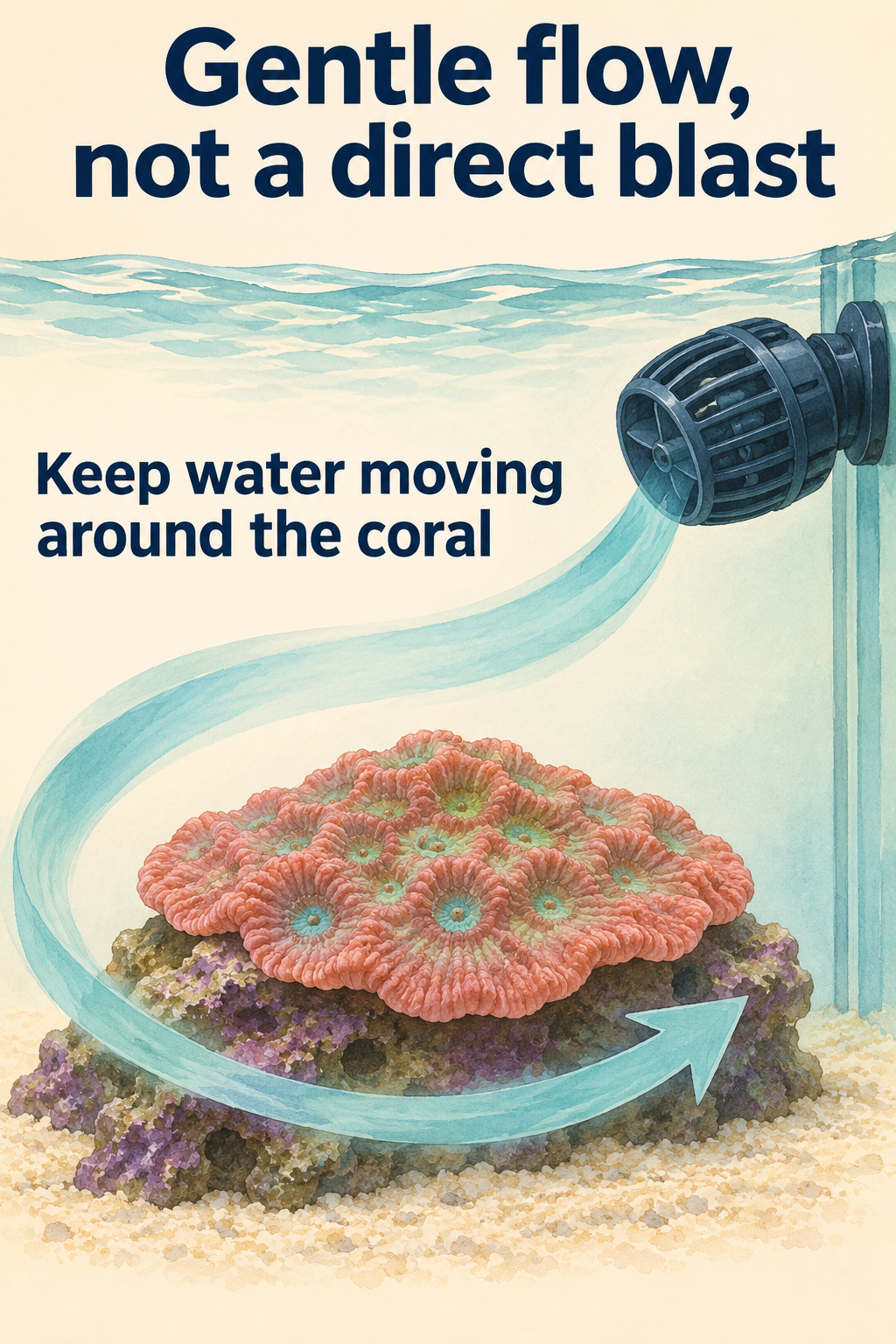
Aim for low-to-moderate, indirect flow. Water should move around the colony without pushing its flesh against the skeleton or constantly carrying food away.
Tidal Gardens reports less expansion when flow is too strong. It does not give a measured flow limit. Your tank's total turnover rate cannot tell you what this coral feels behind a rock or directly in front of a pump.
Use normal reef parameters and keep them steady.
There is no special echinata water recipe established by the sources here. Randy Holmes-Farley's general reef guidance gives useful reference points:
- Salinity: approximately 35 ppt.
- Alkalinity: choose a steady value within 7–11 dKH.
- Calcium: natural seawater is near 420 mg/L.
- Magnesium: natural seawater is near 1,280–1,285 mg/L.
- Temperature: a practical setpoint near 25–26°C fits within his general reef guidance and leaves room to manage equipment through seasonal changes.
These are general reef references, not requirements tested specifically on A. echinata. A broad acceptable range is not a reason to swing rapidly between its endpoints.
Choose reasonable targets and hold them reliably. Do not rush to dose just because one reading is slightly off your preferred number. Confirm a surprising result, check the units and inspect the dosing equipment before making a large correction.
Watch alkalinity use closely in a growing stony-coral tank. Dose for measured demand across the system. The size of this one frag or a generic bottle schedule cannot tell you how much the tank needs.
Watch nutrient trends, not just a single number.
The sources used here do not establish nitrate or phosphate targets tested for this species. This guide does not invent them.
Do not deliberately drive nutrients below measurable levels just to get a “clean” test result. The coral's ability to eat also does not make waste buildup harmless. Follow test trends alongside feeding, algae growth and how the whole tank is doing.
If nutrients need adjustment, change food input and waste export in a controlled way. Avoid moving suddenly from one extreme to the other.
Keep the everyday checks simple.
Replace evaporated water with suitable freshwater. Check salinity calibration and match replacement saltwater before water changes.
Recheck flow near the colony after pump maintenance. A pump may now push water differently. Avoid both lasting deposits of sediment and a jet that pins the tissue flat.
Section sources: [6] for the response to strong flow; [7] for general reef-water guidance.
Feeding, energy and growth
Light helps, and the animal can catch food too.
A. echinata contains symbiotic algae that use light. The coral and algae exchange resources. The animal can also capture food.
Research on other corals shows that feeding can affect how they cope with stress, but species respond differently. In a bleaching and recovery study, Grottoli and colleagues found different feeding responses among Montipora and Porites. That study did not test a feeding schedule or a rescue treatment for A. echinata.
See whether this coral actually eats.
Target feeding is a reasonable part of aquarium care. Tidal Gardens recommends feeding meaty foods. That does not prove a specimen will fail without direct feeding. A coral in a well-fed fish tank may catch food without anyone aiming it at the polyps.
On the other hand, putting food somewhere in the aquarium does not prove this colony swallowed any of it.
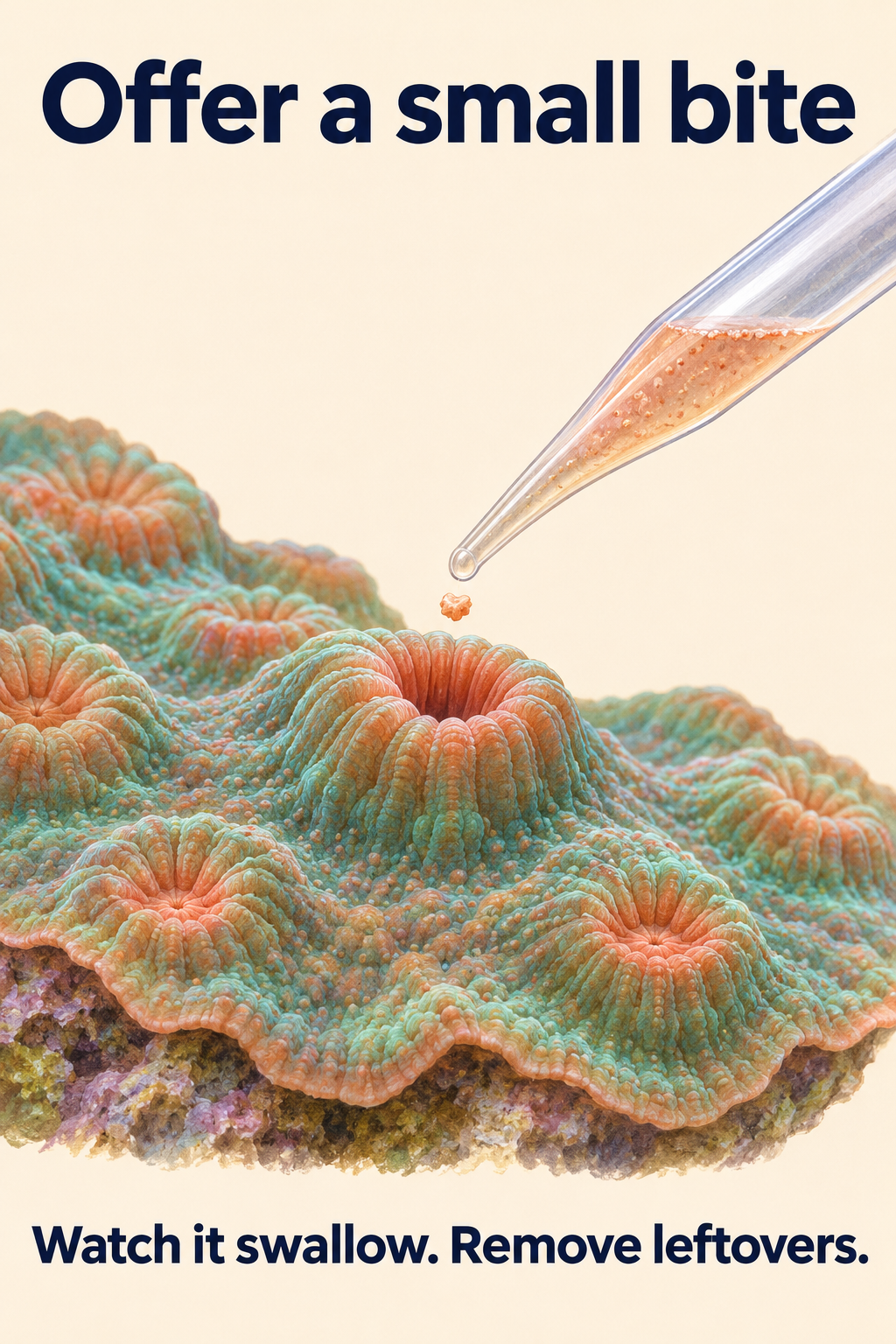
Offer a small amount of suitably sized marine food when the coral shows a feeding response. Finely divided mysis or another small meaty preparation can work. Avoid pieces so large that they sit on the coral for a long time.
Use a pipette gently near a receptive polyp. Do not blast food into its mouth. Watch for capture and swallowing. Food stuck in mucus is not proof that it has been eaten.
Remove obvious leftovers. Do not force food into a closed or injured polyp.
Start with modest meals.
One or two small feeding sessions each week is a workable starting routine in an established tank. It is not a proven requirement for this species.
Adjust based on whether the coral eats, how it looks over time and how well the tank handles the extra food. More food is not automatically better.
If fish steal every portion, try feeding them separately first or supervise the coral's meal. A temporary feeding cover can help in some setups. It must not rub the tissue, prevent enough water exchange or be forgotten in place.
If you reduce flow briefly for feeding, turn it back up afterward.
Measure growth over time.
Look for new tissue and mouths over weeks and months. A colony looking puffier for a few hours is not the same as growth.
Slow growth is the planning category for this entry. Individual colonies and systems can still grow at different rates.
Section sources: [6] for aquaculture feeding practice; [8] for feeding research on other coral species and its limits.
Aggression and space planning
Give it room before there is a problem.
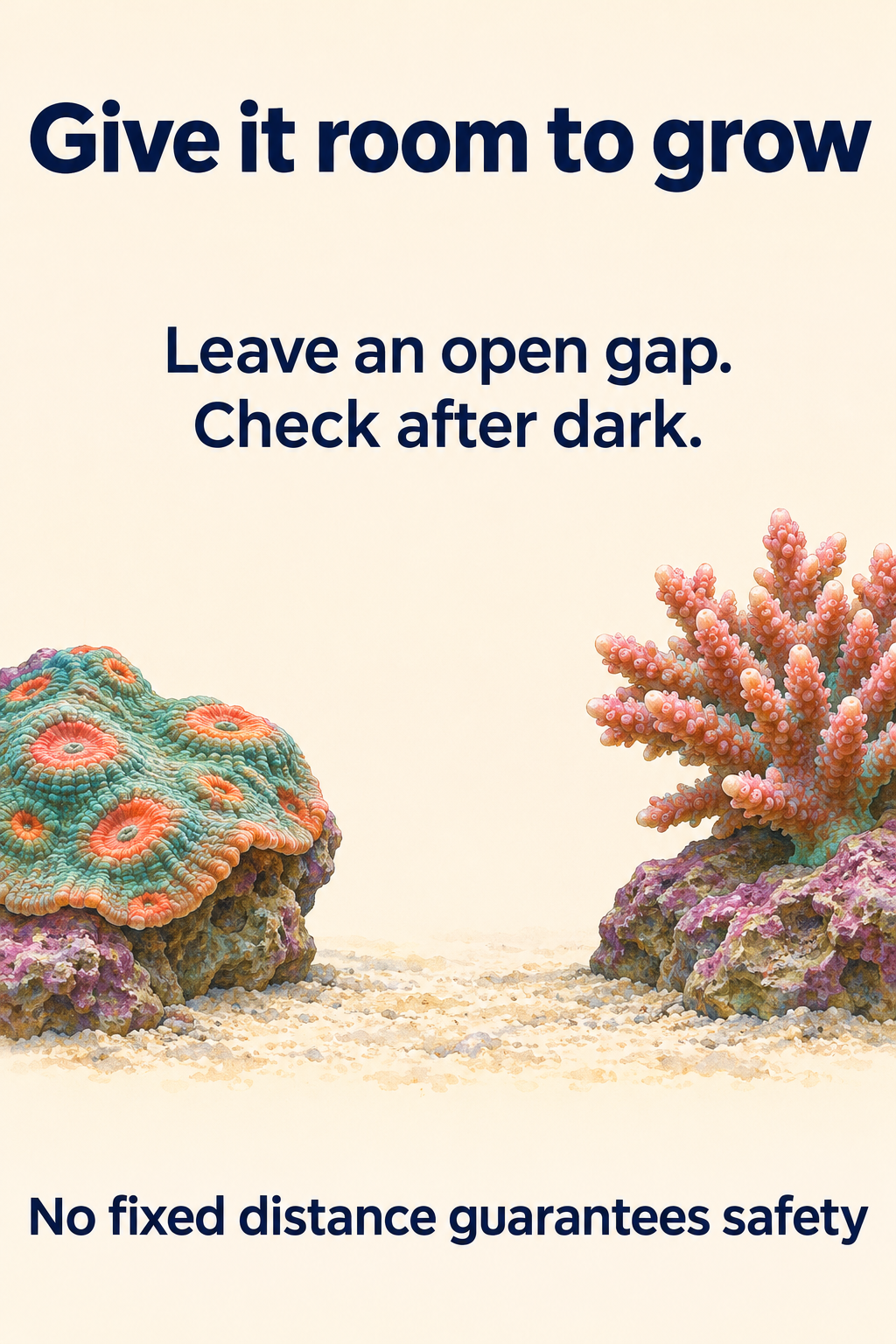
Aggression is the main placement concern. Do not make a touching “acan garden” just because the corals look alike or once shared a genus name. An established echinata can damage nearby corals before you notice the interaction.
That risk includes other stony corals and other colonies sold as acans. It is not limited to corals that look delicate.
The white threads are not just long tentacles.
Ordinary feeding tentacles, specialized sweeper tentacles and mesenterial filaments are different structures.
Mesenterial filaments are digestive structures linked to tissue inside the coral. Some corals push them out onto another organism and digest its tissue outside their own body. Calling them extra-long tentacles misses that distinction.
General coral-warfare writing describes this method of attack. Keepers have also reported filament attacks by A. echinata. The photographed example in the Reef Builders review is A. pachysepta, however. That photograph must not be relabeled as echinata.
No fixed gap is guaranteed safe.
The sources here do not establish a safe distance in inches or centimetres. Reports of damage at a particular distance come from individual tanks. Colony size, currents, identification and what the keeper could see all affect the report.
Use those stories as a warning to leave room, not as a precise measuring rule. Start with a generous open space around the colony and leave room to widen it. Measure from the fully expanded tissue, with future growth in mind. The frag plug's diameter is not the coral's long-term space requirement.
Separate corals if an attack is suspected.
Move them apart promptly and photograph the injury. Tissue loss on the side facing a neighbor is a useful clue, but it does not prove the cause on its own.
Check both animals. An aggressive coral can still be injured by another species.
Do not rely on activated carbon, extra food or lower nighttime flow to make contact safe. None is an established substitute for physical separation.
A movable rock island can make future moves easier. It does not block filaments. Check after dark and after feeding, including neighbors down-current. Increase the space as the colonies grow. Moving a coral is better than letting repeated injuries continue.
Section sources: [9] for coral attack methods and the photograph's species; [10] for keeper reports about A. echinata. These sources do not establish a universal safe gap.
Health, pests and problem solving
Learn its normal pattern first.
Once the colony has settled, take a baseline photo. Note any skeleton already exposed and its usual expansion and feeding pattern.
A fresh cut edge is different from tissue that is newly pulling back. Brief contraction can follow handling or feeding. Persistent decline, spreading bare skeleton, loose tissue or a polyp that keeps collapsing deserves a closer look.
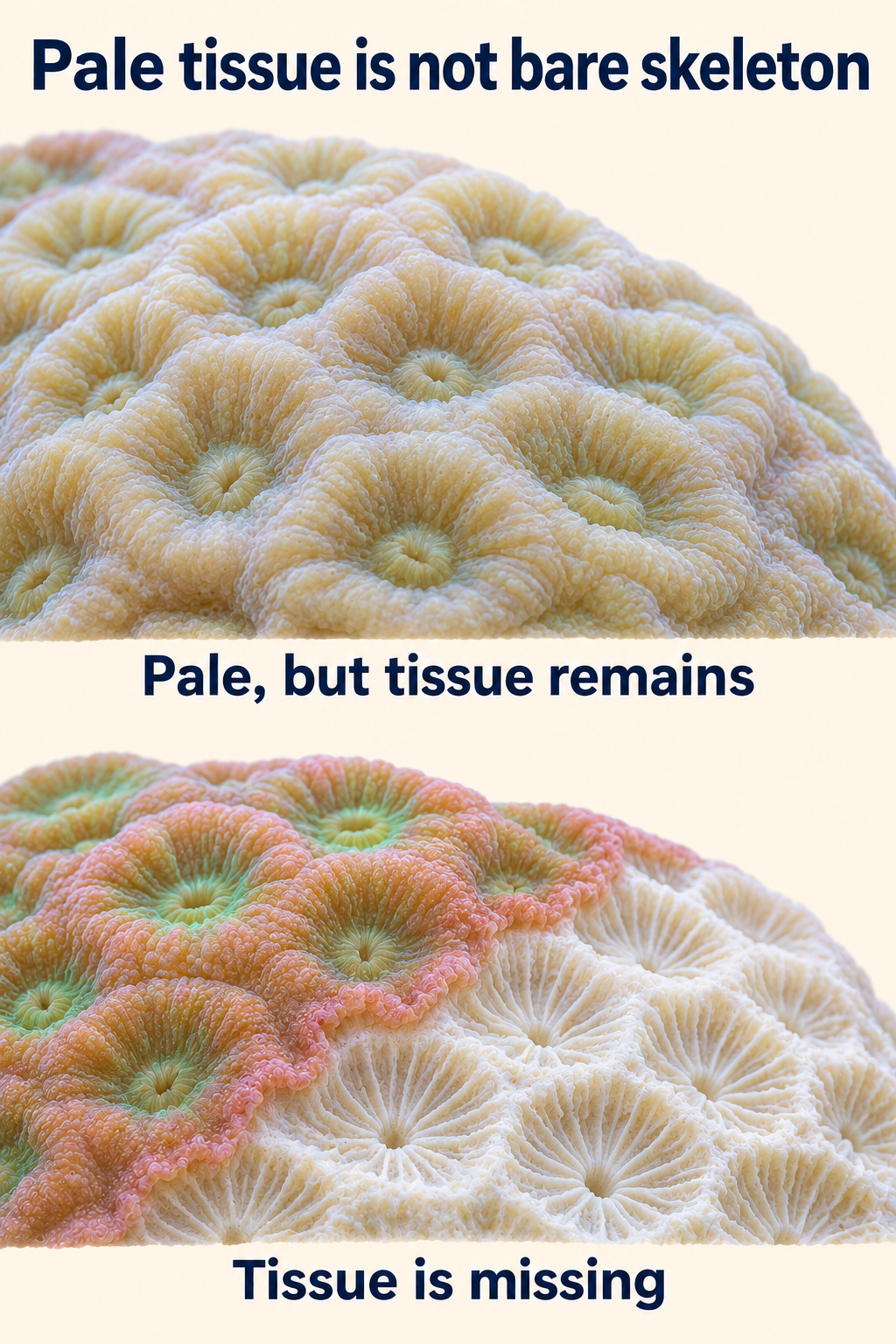
Pale tissue and bare skeleton are different.
A bleached coral may still have living tissue covering the skeleton, but that tissue looks unusually pale. Recession leaves skeleton uncovered.
Look under neutral light. Heavy blue light can make white areas glow and make the difference harder to see. Color alone cannot tell you the cause.
An injury, sudden light change, temperature stress, salinity problem, grazing animal or infection can call for very different responses.
Check what changed.
Start with checks you can make without adding another treatment:
- Verify temperature and salinity.
- Review the alkalinity trend.
- Check dosing and top-off equipment.
- Look for a pump aimed at the colony.
- Check for sand landing on it repeatedly.
- Make sure the frag is not loose and rubbing against rock.
- Look for a neighbor close enough to reach it.
Inspect after dark too. Some interactions are easy to miss during the day. When the coral's condition allows, address one likely cause at a time. Changing everything at once makes it harder to learn what helped.
Watch the animal near the coral before blaming it.
Inspect the tissue edges, underside of the plug and nearby rock for hitchhikers or signs of grazing.
A worm, small crustacean or snail near damaged coral is not automatically the cause. Some arrive because there is already damaged tissue or trapped food. Fish and shrimp can also irritate a coral while stealing food.
Photograph the organism and record what it does. That gives more useful information than simply calling it a pest.
Use dips carefully.
Quarantine and close inspection help reduce risk with new additions. A commercial coral dip may deal with some unwanted organisms when used according to the label and the coral's compatibility. It does not replace observation. Do not assume it removes all eggs or every pathogen.
Do not mix strong chemicals yourself, use aquarium medicines at random or make freshwater exposure the default treatment for a fleshy stony coral. Keep treatment water out of the display.
Act promptly on spreading tissue loss.
If tissue is disappearing rapidly, isolate the coral where feasible, especially if decaying material is spreading through the water.
Gather photos, a timeline and recent test results for an experienced coral-health specialist or aquatic veterinarian.
Brown material, mucus or white threads do not identify a particular infection on their own. White digestive filaments can also appear during competition or stress. Their meaning depends on what else is happening.
Do not treat a disease name, antibiotic course or dip as a confirmed answer without enough evidence.
Evidence note: these are cautious observation and problem-solving steps. They do not diagnose an illness or establish a species-specific treatment.
Propagation and responsible sourcing
Start with a healthy, settled colony.
Fragging is possible, but it injures the coral. Begin with a healthy donor that is established in its tank.
Do not cut a newly arrived colony, one losing tissue or one declining for an unknown reason just because a small piece is valuable. First check that it is holding its tissue and feeding. Make sure the recovery tank can provide clean, stable conditions.
The sources used here do not establish a guaranteed healing time or minimum frag size.
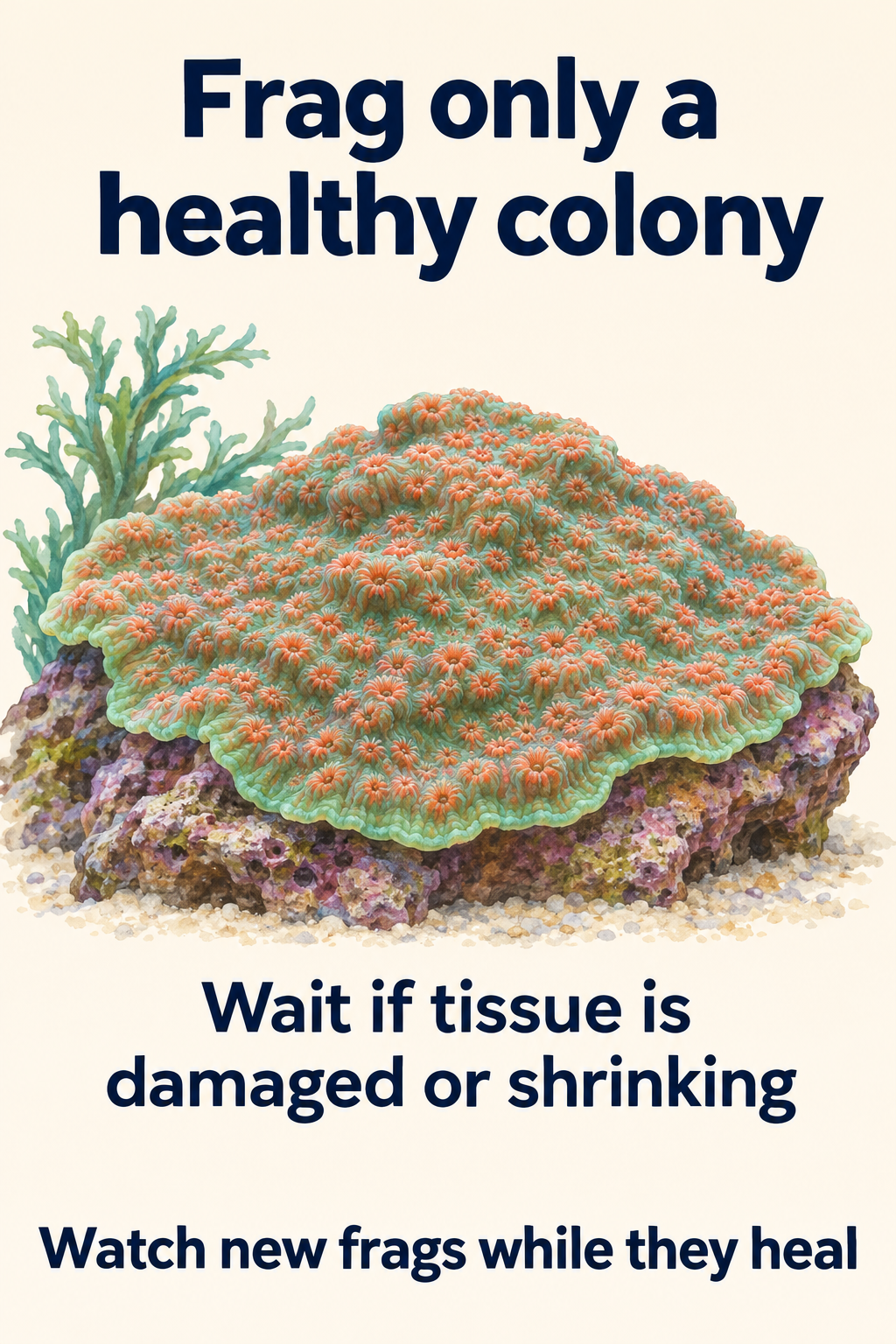
Plan a controlled cut.
This coral has a substantial skeleton. It needs a more controlled approach than a brittle branching coral.
The Washington DC Area Marine Aquarist Society's propagation sheet separates massive and encrusting corals from branching forms. It favors saws for clean cuts. It warns that hammer-and-chisel methods give less control and can damage the edges.
That is general advice based on growth form, not an experiment on cutting A. echinata.
Plan the cut around the visible structure. Keep mouths intact and preserve as much healthy connected tissue as practical.
Use suitable clean equipment and follow the saw manufacturer's safety instructions. Protect your eyes and hands. Limit crushing and heating, and do not let the animal dry out while handling it.
Keep cutting debris out of the display. Attach the frag by its skeletal base without coating living tissue in glue. Set it securely so it cannot tumble or rub against something while healing.
Let the frag recover before passing it on.
Protect new frags from intense light and direct flow while still allowing water to move around them. Inspect the cut edges.
A frag briefly opening or inflating does not prove it is stable enough to sell or trade. Favor healed, honestly described captive-grown stock. Aquaculture still does not guarantee a coral is free of pests.
Check where it came from.
Wild-coral trade and export are regulated. The rules depend on where you are, where the coral came from and what you are doing with it.
The Australian fisheries assessment discusses CITES processes for that fishery. It is not a permit guide for buyers in every country. Check current requirements with the relevant authorities before importing or exporting.
Never release unwanted coral, fragments or associated organisms into natural waters. Before buying, plan for the colony's eventual size and aggression as well as how the frag looks today.
Section sources: [11] for general cutting advice by growth form; [5] for the Australian fishery and trade context. Neither establishes a guaranteed healing time or minimum frag size.
Field notes — what keepers report
Reports from home reef tanks can show problems that a short care card leaves out. They are still individual experiences, not controlled tests.
The coral's identification may be uncertain. Light measurements may be missing. The keeper may have changed several things at once. The accounts below are useful reasons to watch closely, but they do not prove a cause or set a universal limit.
Low light and flow worked for some, but aggression was a problem.
In a November 2017 Reef2Reef discussion, DSC reef reported success with low-to-medium light and low flow. The keeper described stronger aggression than typical acan lords and specifically mentioned mesenterial filaments.
Another participant, 3mm3, reported damage to nearby corals and eventually sold the specimen to keep more peaceful animals. Their comments about spacing describe their own tanks. They are not tested clearance rules.
Slow growth and color changes need context.
In a November 2018 Reef Central thread, sde1500 described an Orange Crush as slow-growing, with new polyps visible. The coral was heavily shaded.
The keeper reported that it became more purple during a period they called high nutrients, then returned to orange. That account does not prove the nutrient level caused the color change.
The opening post in that same thread also contains a naming error. It is a useful reminder to check scientific names against a reliable naming reference rather than copying a forum introduction.
A struggling colony did not lead to a clear diagnosis.
In an August 2023 Reef2Reef thread, Katze reported a colony that had stayed contracted for about a month and was showing skeleton. The keeper had then moved it to a reported 100–120 PAR and medium flow. High nitrate was also reported.
Other participants suggested possible causes. The discussion did not establish a diagnosis or show recovery.
It therefore does not prove that 100–120 PAR caused the recession, that nitrate was responsible or that a particular change cured the coral.
What to take from these reports.
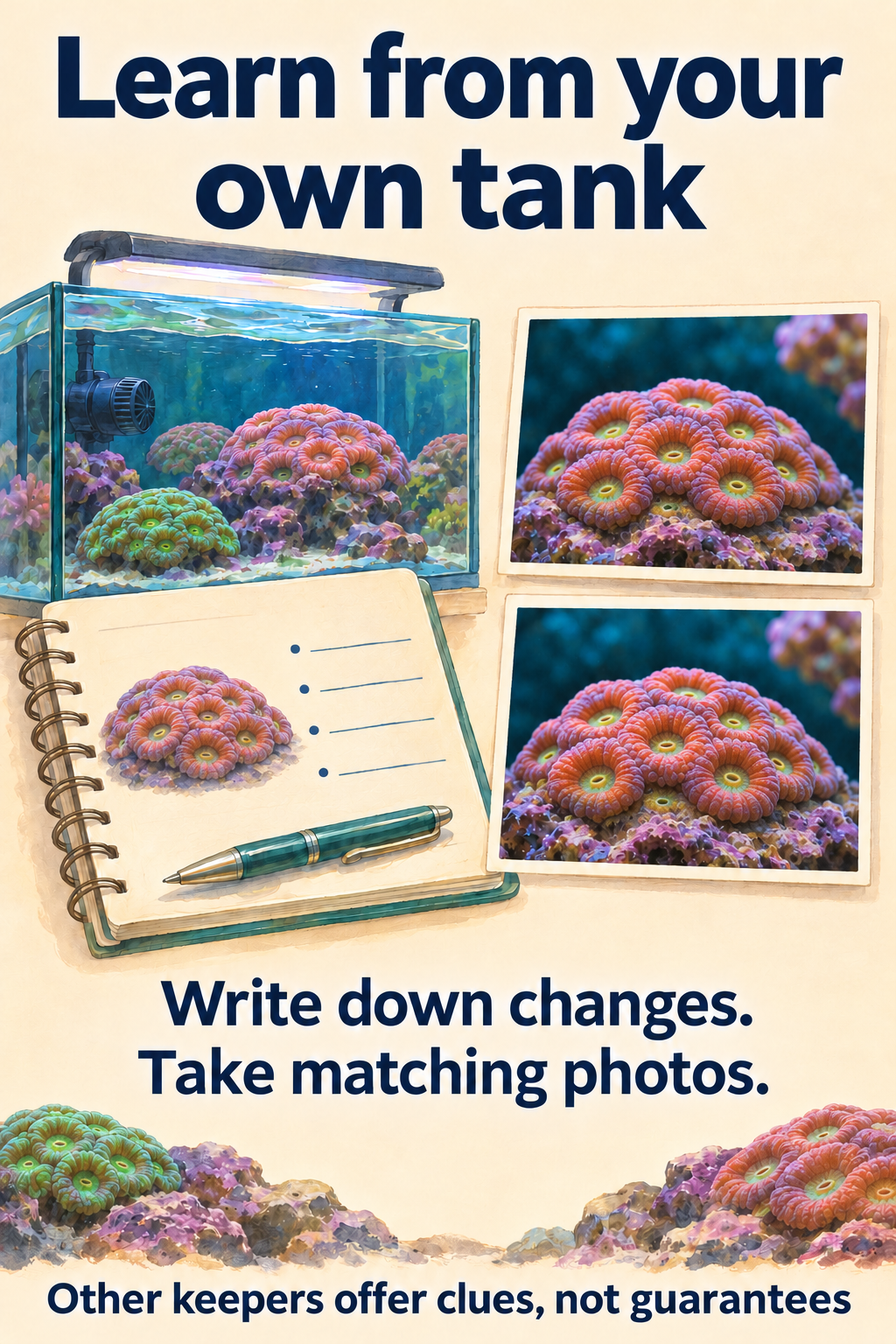
Give the colony time to settle. Leave more space than its starting frag size suggests. Keep notes and photographs so you can track changes. Avoid turning one keeper's experience into a rule for every tank.
Intermediate care remains a fair description. Keeping reef water stable is only part of the work. You also need to manage aggression, protect the fleshy tissue and recognize when a normal change is becoming a decline.
A. echinata suits a patient keeper who can give it a deliberate place in the tank. It is a poor choice for the last small gap between established corals.
Section sources: [10] for the 2017 keeper discussion; [12] for the 2018 slow-growth and color account; [13] for the 2023 recession report and its unresolved outcome.
Sources and evidence
- [1] WoRMS: A. echinata: https://www.marinespecies.org/aphia.php?id=207384&p=taxdetails
- [2] WoRMS: M. lordhowensis: https://www.marinespecies.org/aphia.php?id=886929&p=taxdetails
- [3] Arrigoni and colleagues, 2016: https://repository.naturalis.nl/pub/619236
- [4] Corals of the World species account: https://www.coralsoftheworld.org/species_factsheets/species_factsheet_summary/acanthastrea-echinata/
- [5] Australian coral fisheries assessment, pages 46–47: https://www.dcceew.gov.au/sites/default/files/documents/nt-aquarium-expert-advice-2022.pdf
- [6] Tidal Gardens husbandry notes: https://tidalgardens.com/stock-cool-runnings-acanthastrea-echinata.html
- [7] Holmes-Farley: reef aquarium parameters: https://www.reef2reef.com/ams/optimal-parameters-for-a-coral-reef-aquarium-by-randy-holmes-farley.79/
- [8] Grottoli and colleagues, 2006: https://www.nature.com/articles/nature04565
- [9] Coral warfare review: https://reefbuilders.com/2024/10/14/the-first-rule-of-coral-fight-club-is-coral-warfare-at-a-glance/
- [10] A. echinata keeper discussion: https://www.reef2reef.com/threads/acanthastrea-echinata-care-questions.334010/
- [11] WAMAS propagation sheet: https://www.wamas.org/forums/uploads/WAMAS_Fragging_Sheet_Fall_2022.pdf
- [12] Reef Central: Coral Spotlight: https://forums.reefcentral.com/threads/coral-spotlight-acanthastrea-echinata.2012824/
- [13] Reef2Reef: colony in recession: https://www.reef2reef.com/threads/acan-echinata-1-month-overview-coral-in-recession.1000471/
Field Notes
Related species
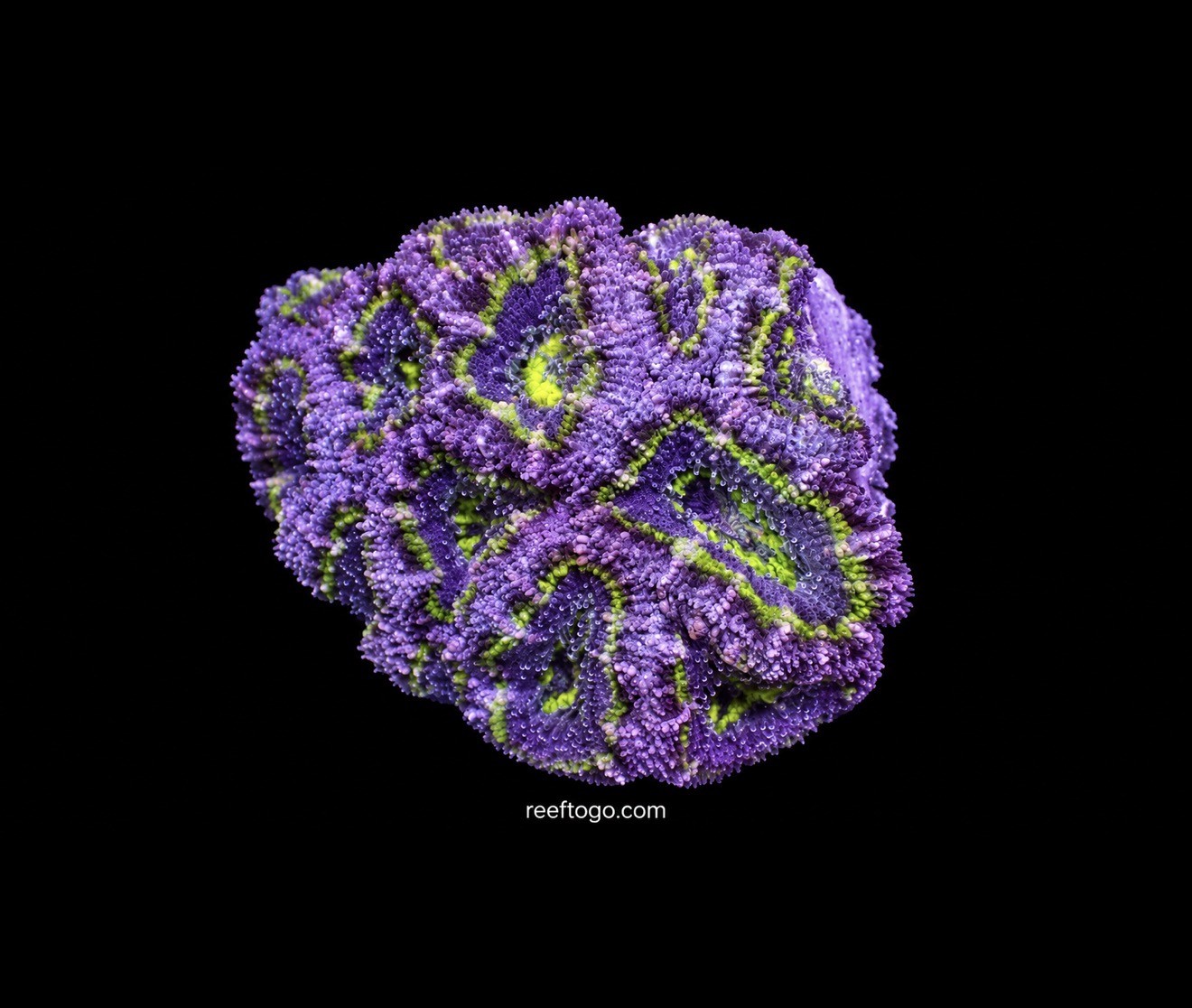
Purple acan
Acanthastrea sp
Same genus

Blue rim acan lord
Acanthastrea lordhowensis
Same genus

Charged Lithium war coral
Acanthastrea sp
Same genus

Starry Cup Coral
Acanthastrea echinata
Same genus

Bubble Coral
Plerogyra sinuosa
Similar care · LPS

Echinophyllia Chalice
Echinophyllia tarae
Similar care · LPS

Pearl Bubble Coral
Physogyra lichtensteini
Similar care · LPS
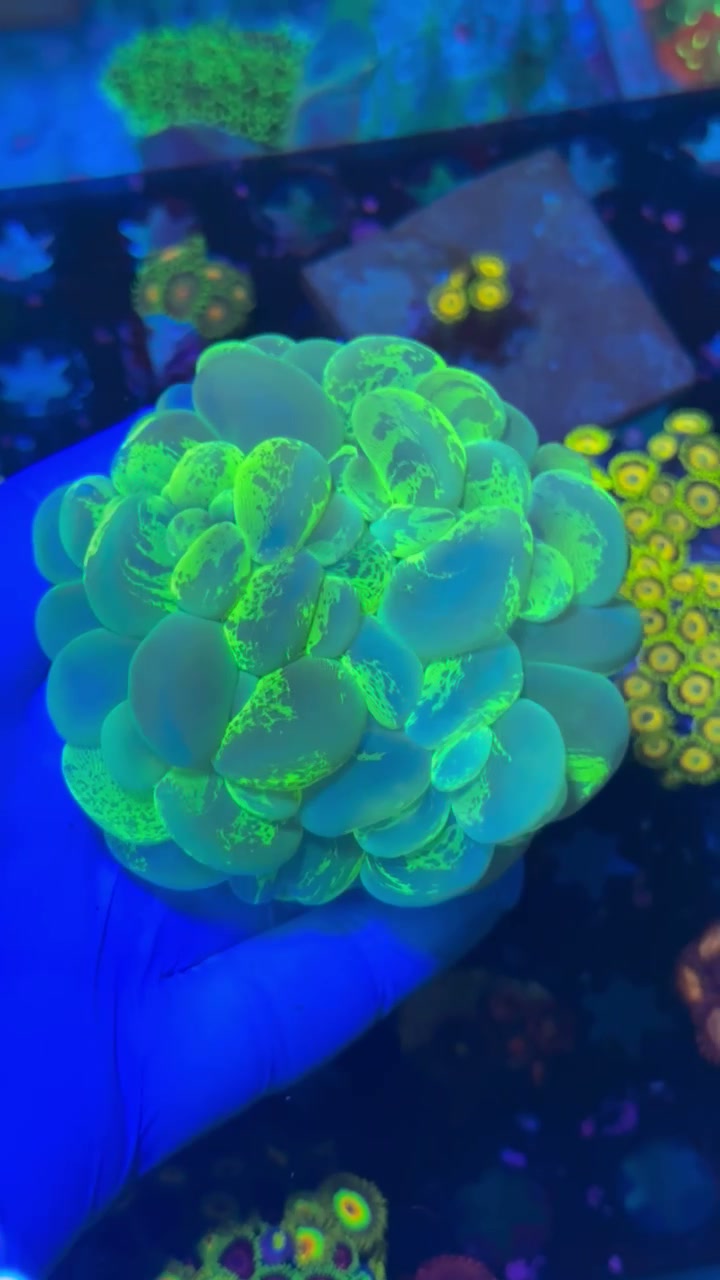
Splatter bubble coral
Plerogyra sinuosa
Similar care · LPS