Pearl Bubble Coral
Physogyra lichtensteini

Care facts
- Care
- Intermediate
- Light
- Low-Medium
- Flow
- Low
- Place
- Low
- Space
- Aggressive
- Origin
- Indo-Pacific
- Growth Rate
- Slow
Gallery
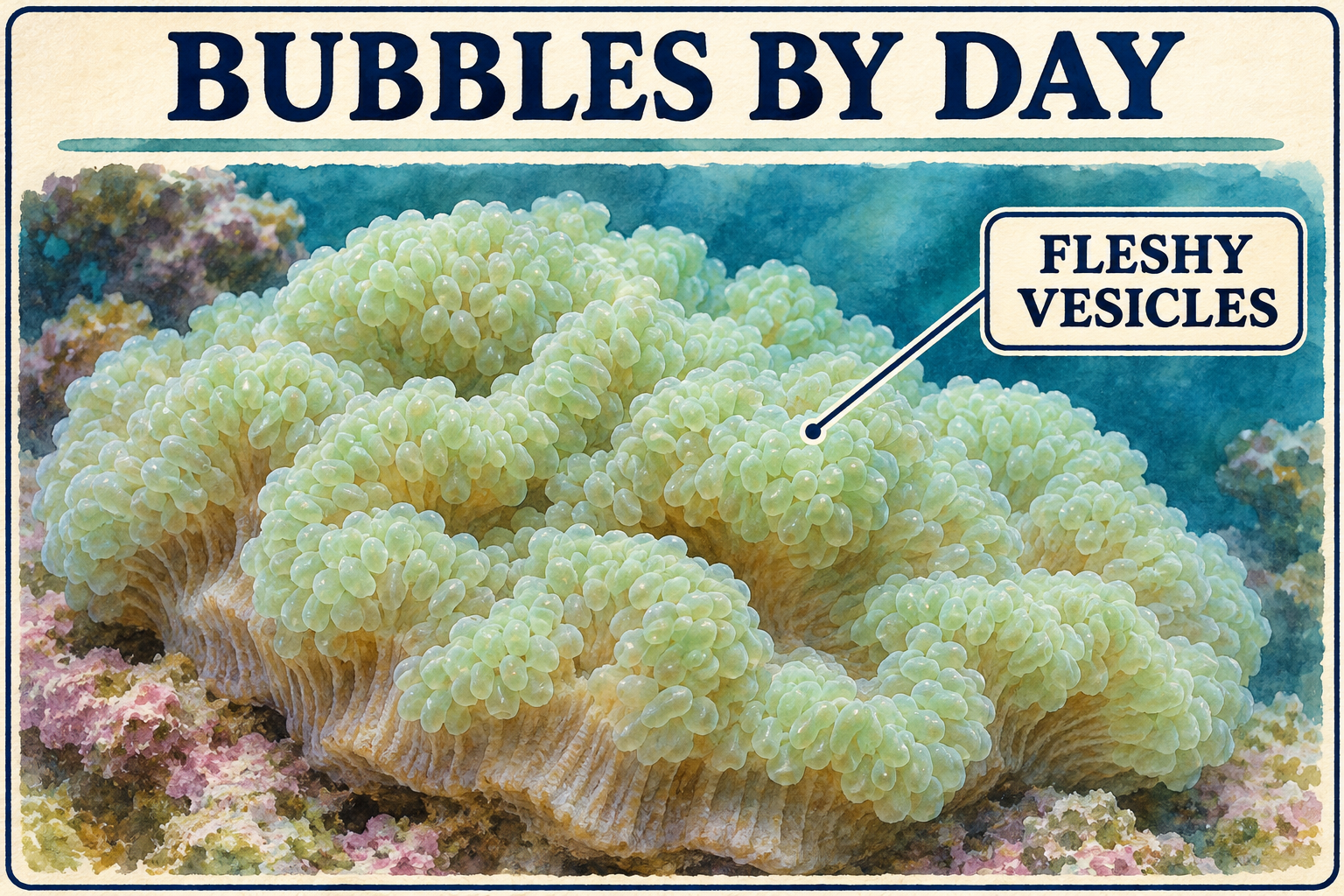
By day, Pearl Bubble Coral looks like a pile of tiny grapes. After dark, the bubbles pull in and long tentacles steal the show. Give it a sheltered spot and enough space for both looks.
Bubbles by day
1. No air inside. Those little pearls are soft parts of the coral called vesicles. They swell over a hard skeleton during the day. When the tissue draws in, the hard ridges underneath become easier to see.
2. Tiny grapes, not big balloons. Pearl Bubble Coral packs lots of little vesicles together. The common Bubble Coral belongs to a different genus and usually has bigger bubbles.
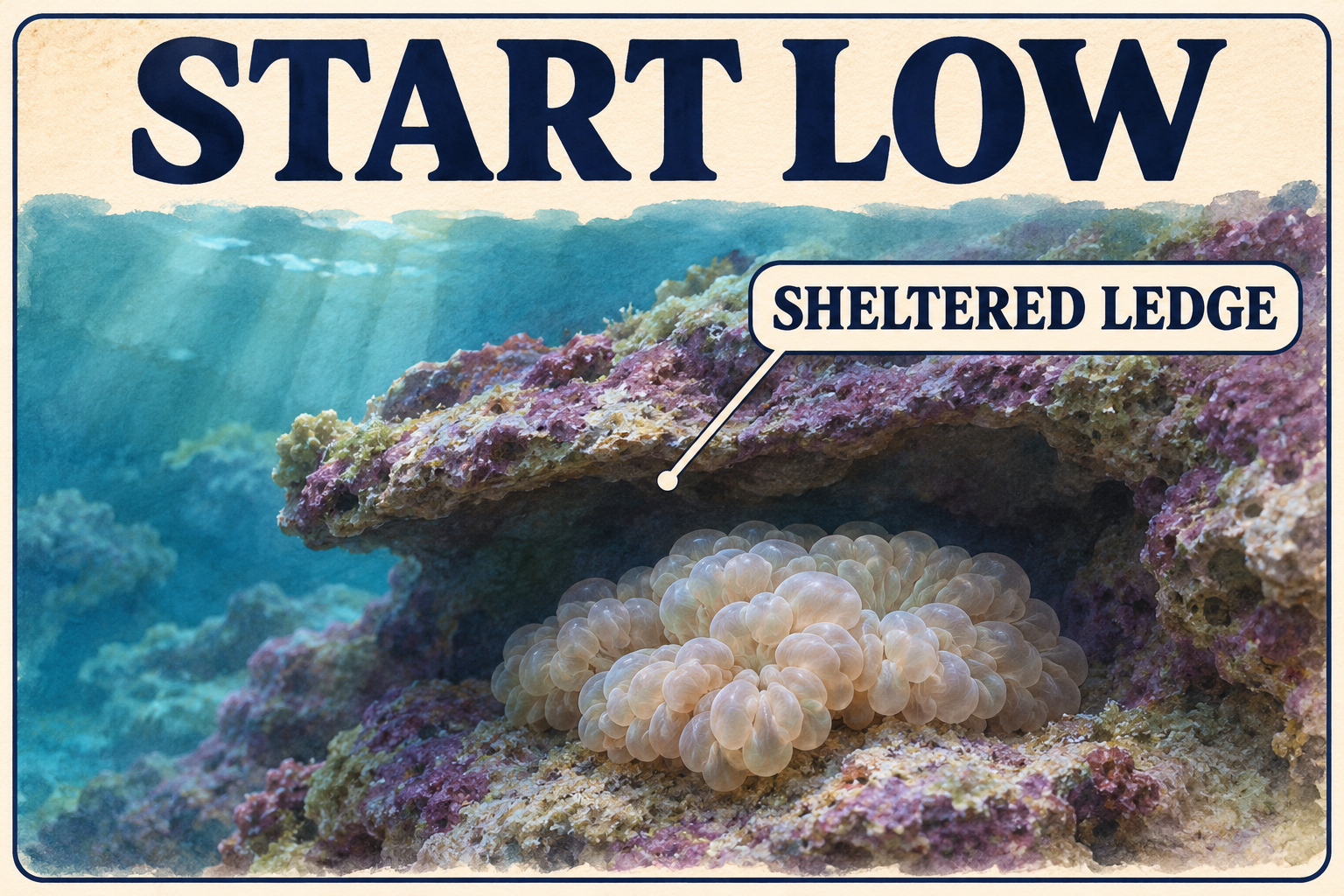
Start on a sheltered ledge
3. A little shade goes a long way. On Indo-Pacific reefs, this coral grows in sheltered spots such as crevices and beneath ledges. Start low in the tank with low to moderate light, not in a dark cave.
4. Give the base a firm seat. Set it on stable lower rock where it can't tip or rub against a sharp edge. If you move it, support the hard base and keep the puffed tissue underwater.
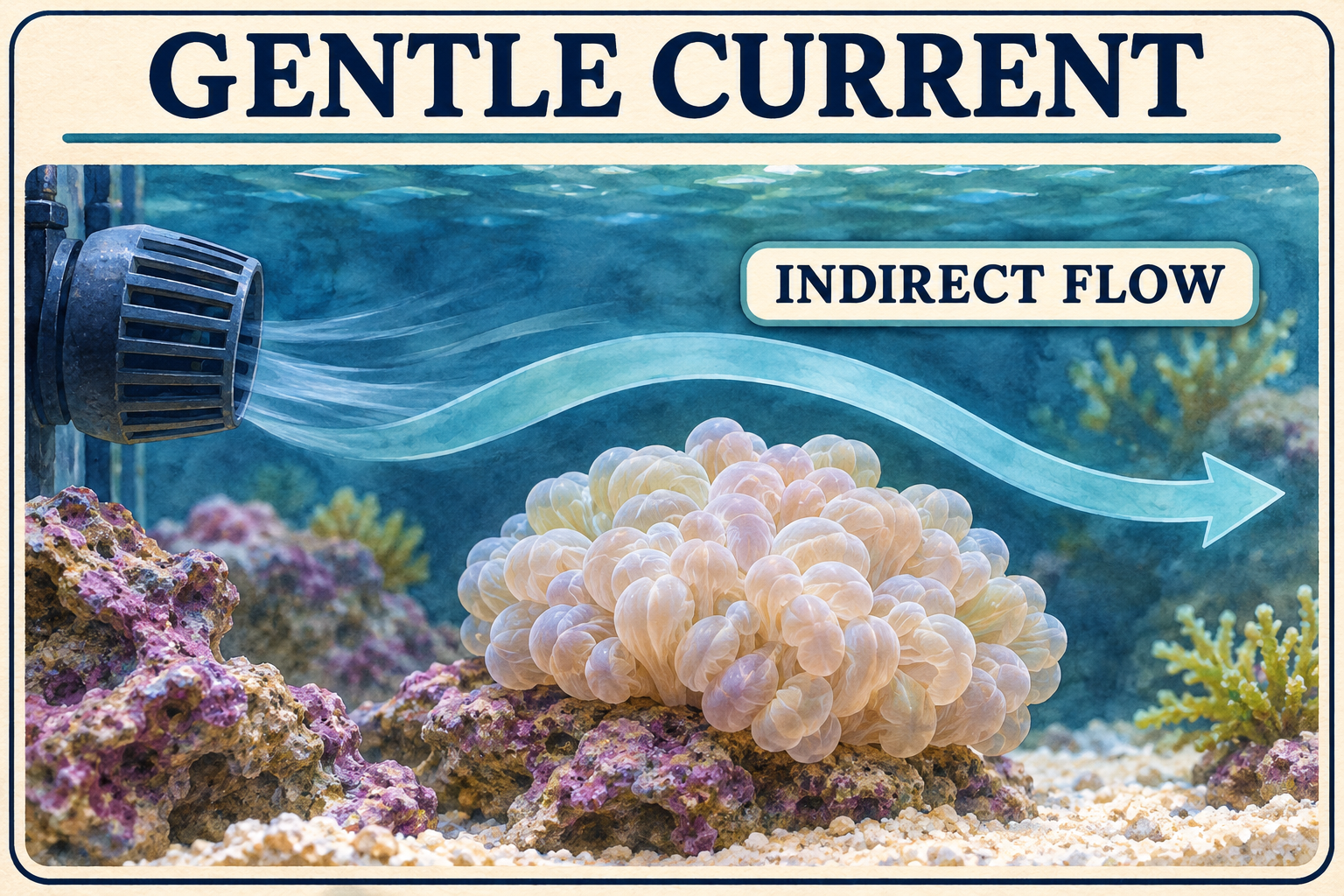
Let the current drift by
5. Think ripple, not flap. Start with low, indirect flow. Aim the pump past the colony. The vesicles should move gently, not whip back and forth.
6. Keep the low spot clean. Move enough water that grit doesn't pile up on the coral. If sand keeps blowing onto it, redirect the pump or shift the coral to a nearby sheltered spot.
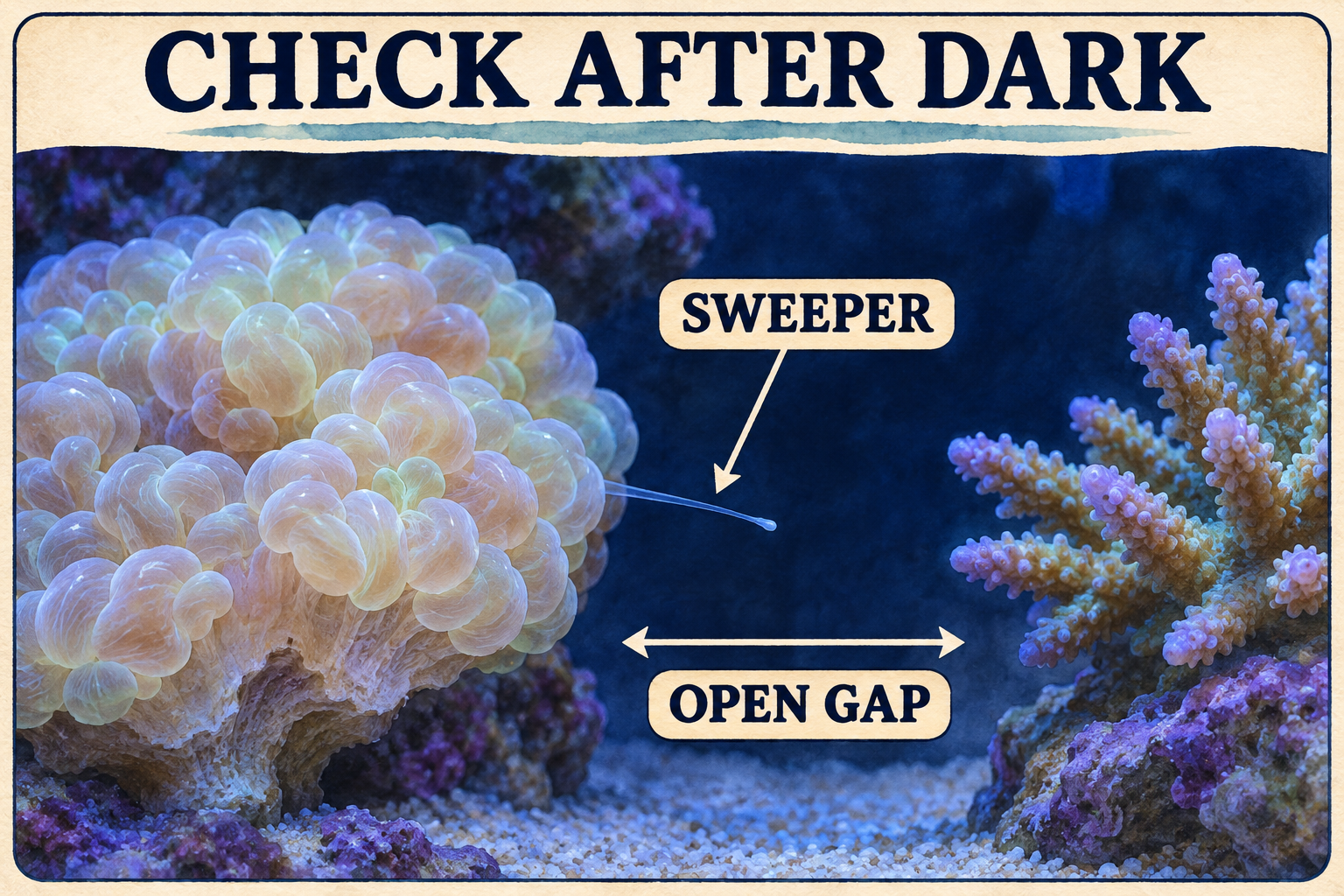
Make room after dark
7. Long arms need a long gap. Sweeper tentacles can sting other corals, even when the daytime bubbles look nowhere near them. Leave open space, especially downstream.
8. Check when the lights go out. Watch where the longest sweepers reach. If they get close to a neighbor, widen the gap. Check again as either colony grows.
Offer one small bite
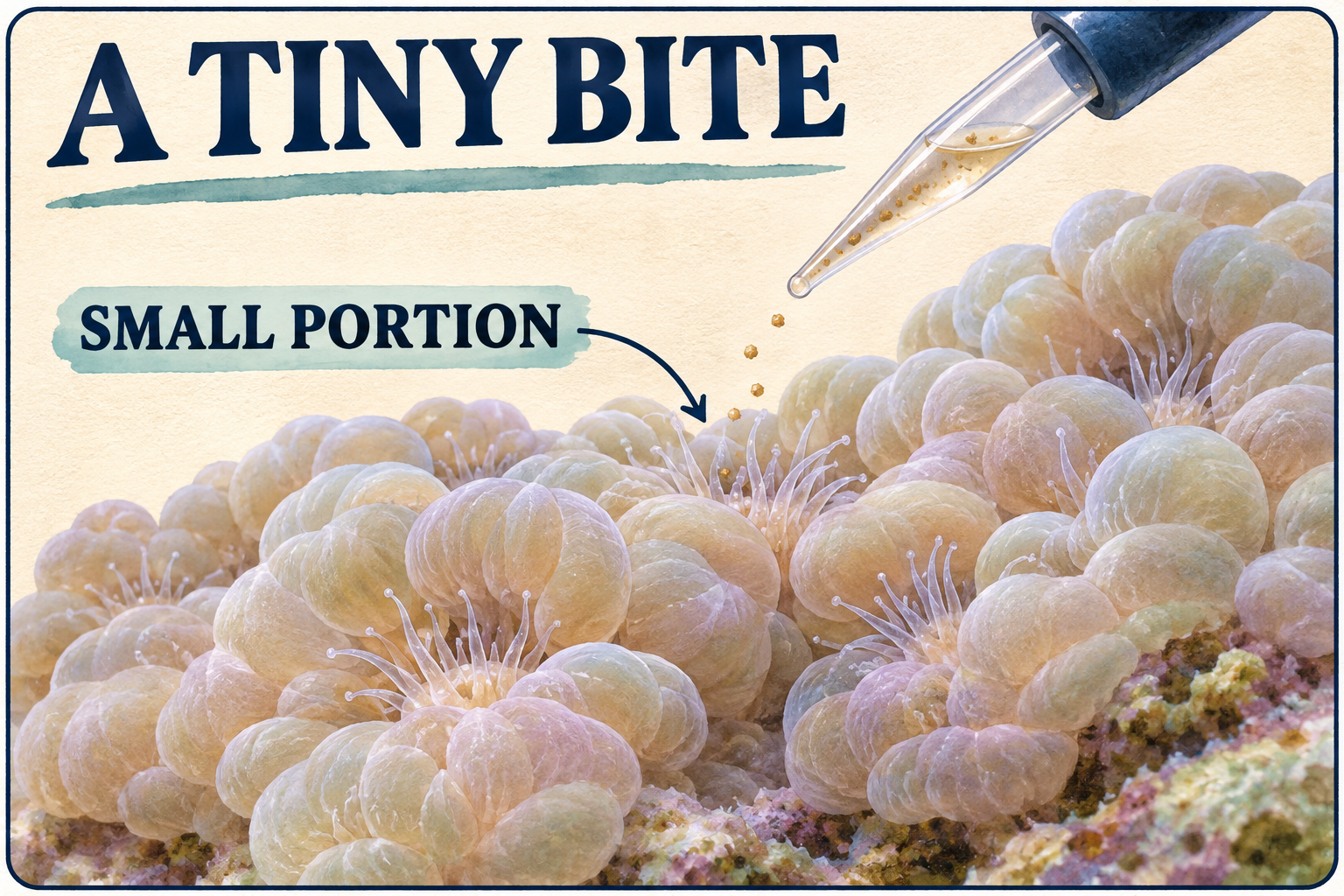
9. Wait for the feeding tentacles. Offer a tiny piece of thawed mysis or finely chopped marine food when the feeding tentacles are out. Set it gently in reach without touching the soft tissue.
10. Skip the big meal. Light helps feed this coral through tiny algae living in its tissue. Extra food is optional. Remove anything it doesn't take and avoid filling the tank with leftovers.
Field notes — what keepers report
11. Different spots, different looks. One pearl bubble keeper saw fuller extension after moving from the sandbed with low flow to mid rock with more current. Another kept a pearl bubble for years in flow that rocked it gently, and saw its long tentacles mostly at night.
12. Feeding habits differ too. One keeper saw a small pearl bubble take a piece of shrimp. Another fed mysis occasionally when the colony was small, then went years without target feeding. Treat these as tank observations, not a feeding schedule.
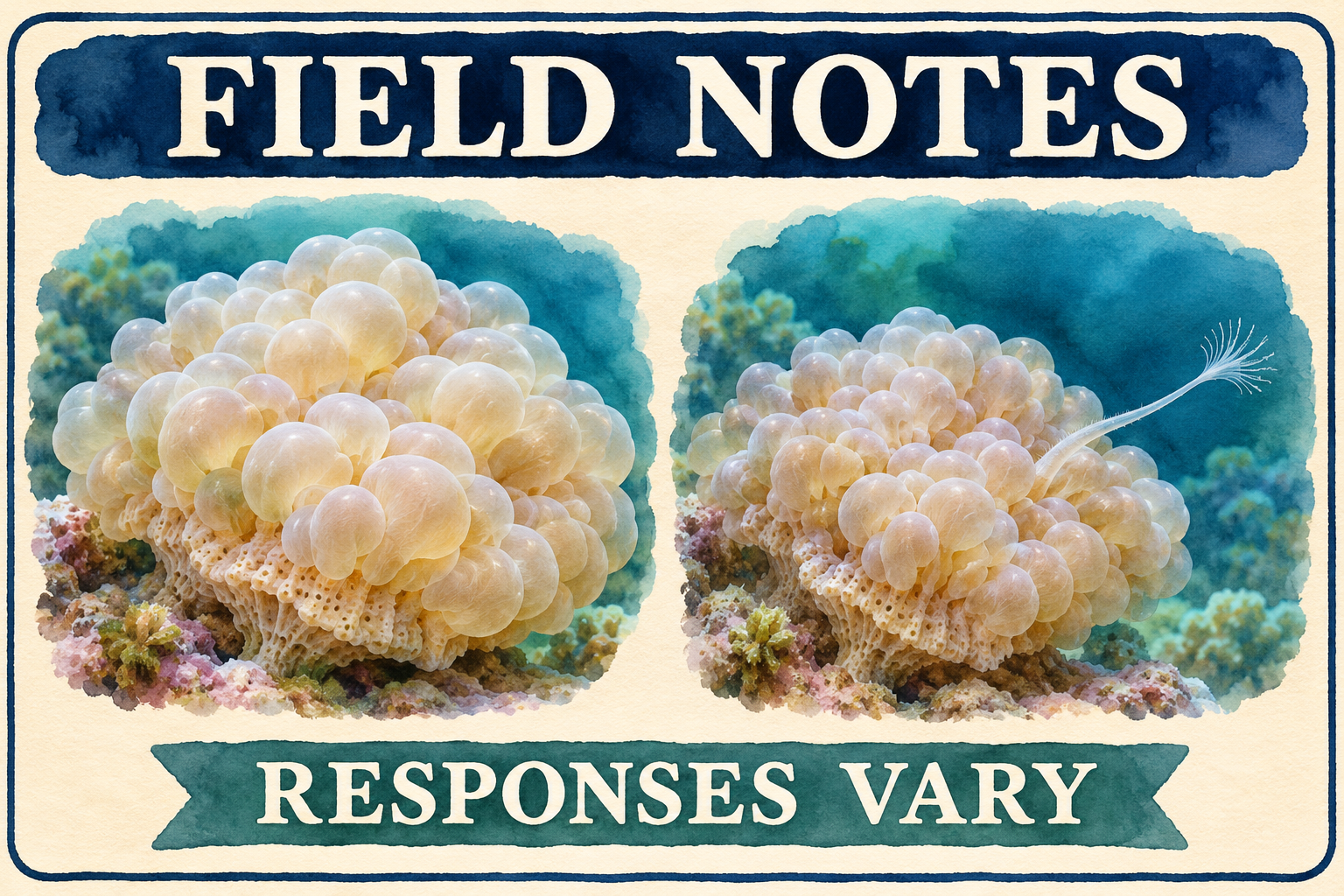
Give the pearls a gentle current and their own patch of reef. Once they're settled, take one more look after dark. That's when you'll see how much space they really use.
Field Notes
Related species

Acanthastrea Echinata
Acanthastrea echinata
Similar care · LPS

Bubble Coral
Plerogyra sinuosa
Similar care · LPS

Echinophyllia Chalice
Echinophyllia tarae
Similar care · LPS
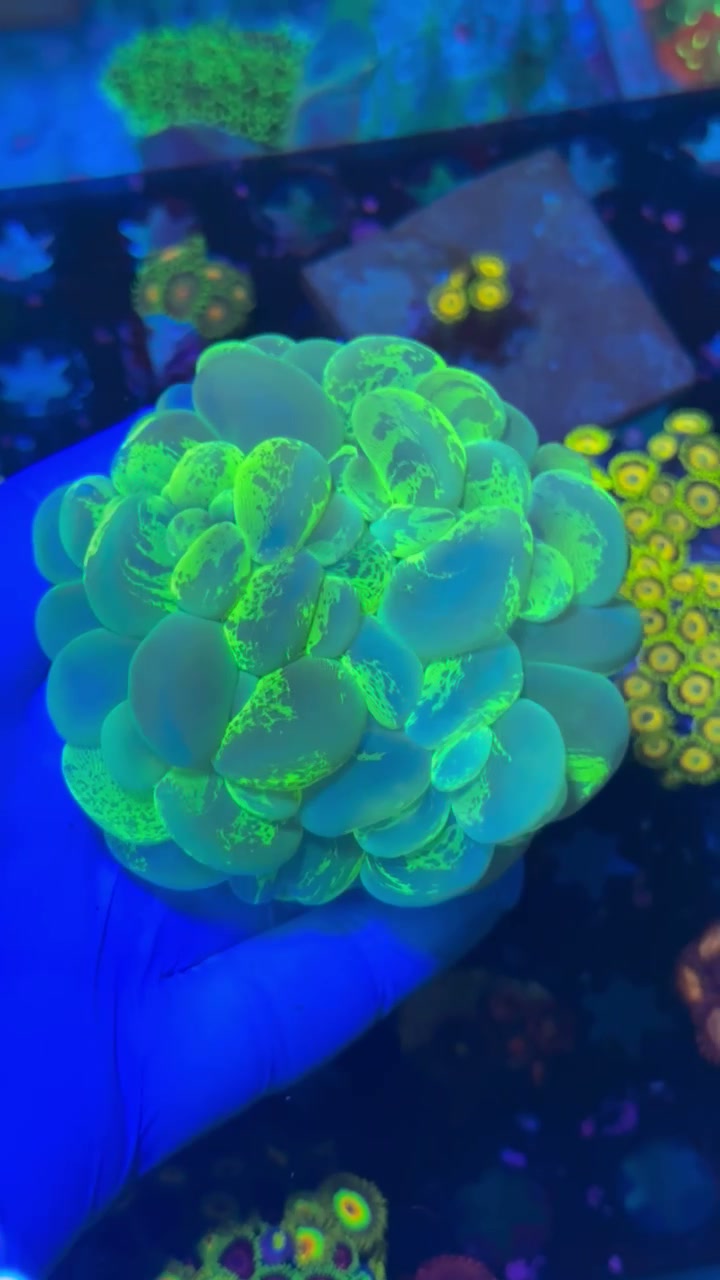
Splatter bubble coral
Plerogyra sinuosa
Similar care · LPS
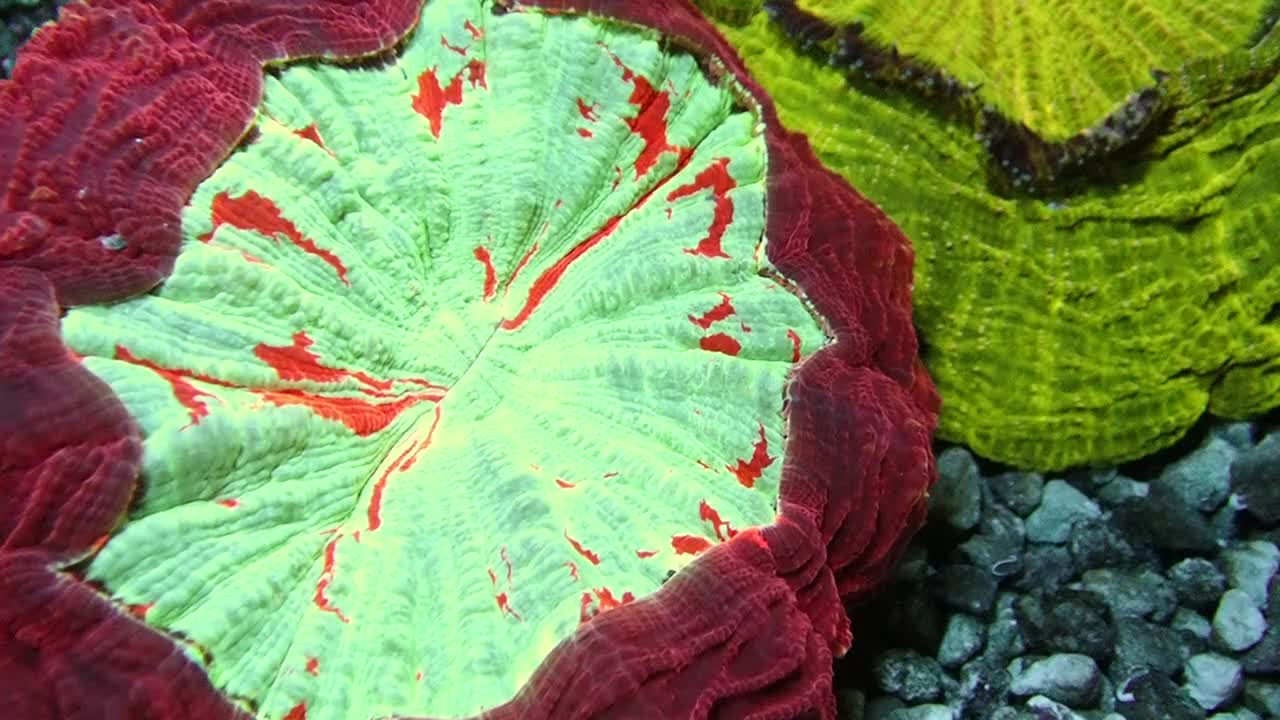
Acanthophyllia
Acanthophyllia sp.
Similar care · LPS
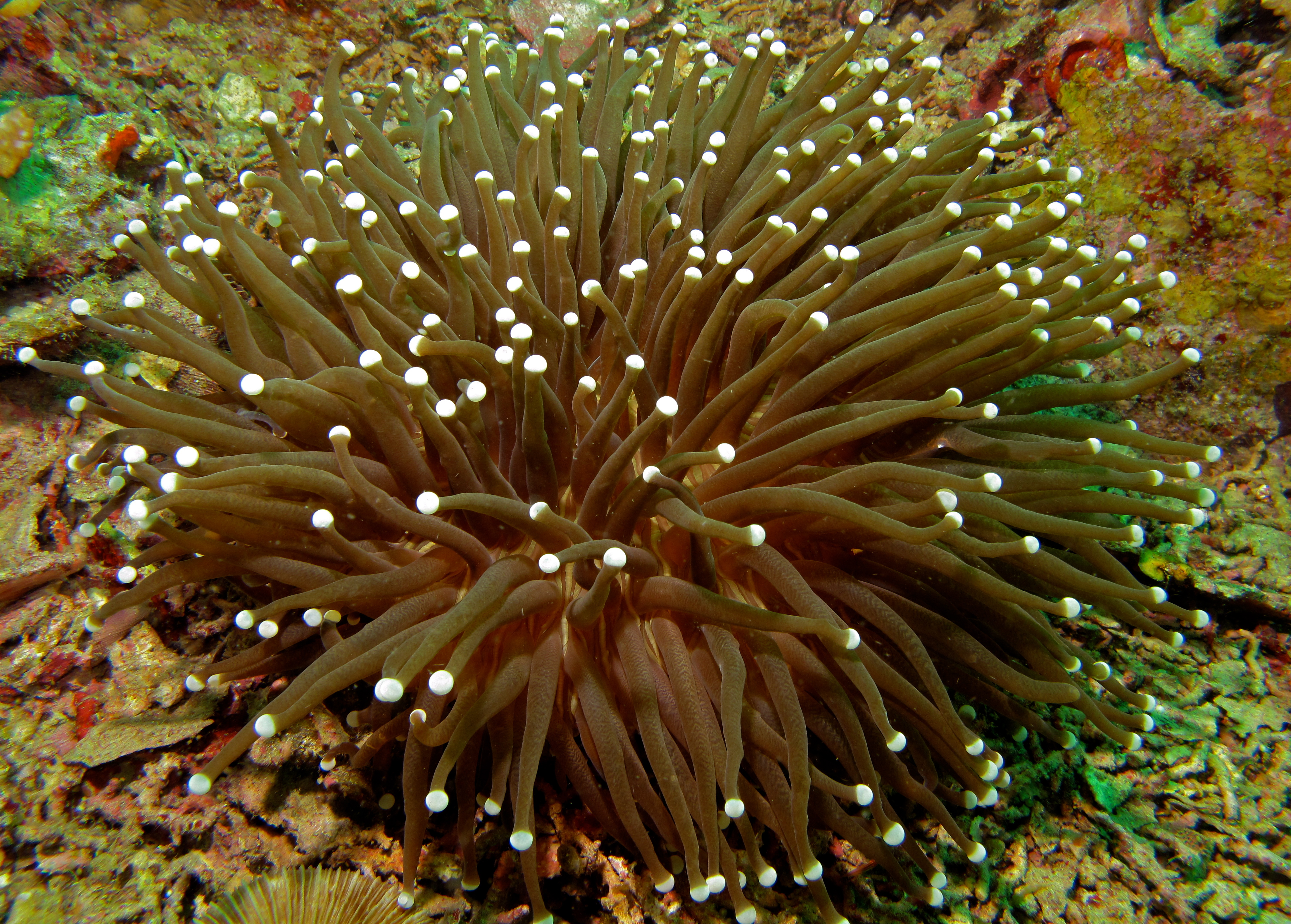
Anemone Coral
Heliofungia actiniformis
Similar care · LPS
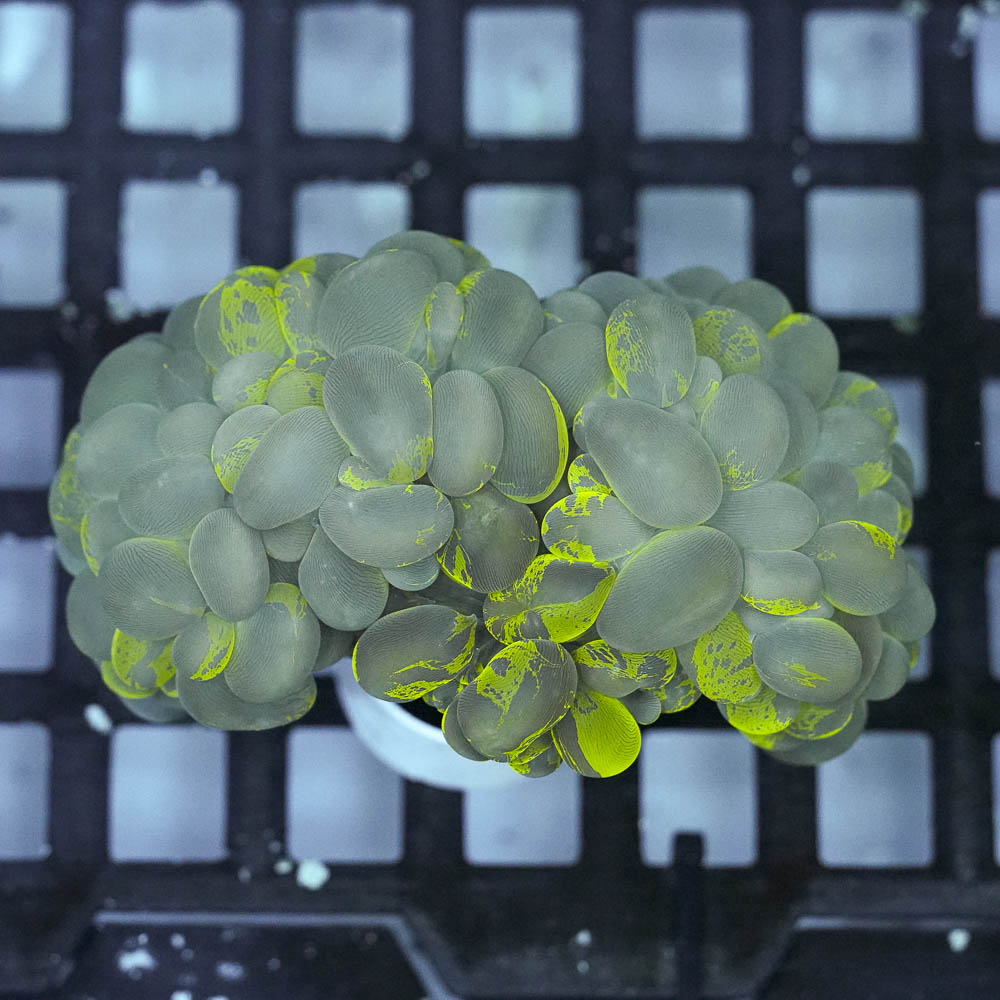
Cat’s eye bubble coral
Plerogyra sinuosa
Similar care · LPS

Cynarina Button Coral
Cynarina lacrymalis
Similar care · LPS