Echinophyllia Chalice
Echinophyllia tarae

Care facts
- Care
- Intermediate
- Light
- Low-Medium
- Flow
- Low
- Place
- Low
- Space
- Aggressive
- Origin
- Indo-Pacific
- Growth Rate
- Moderate
Gallery
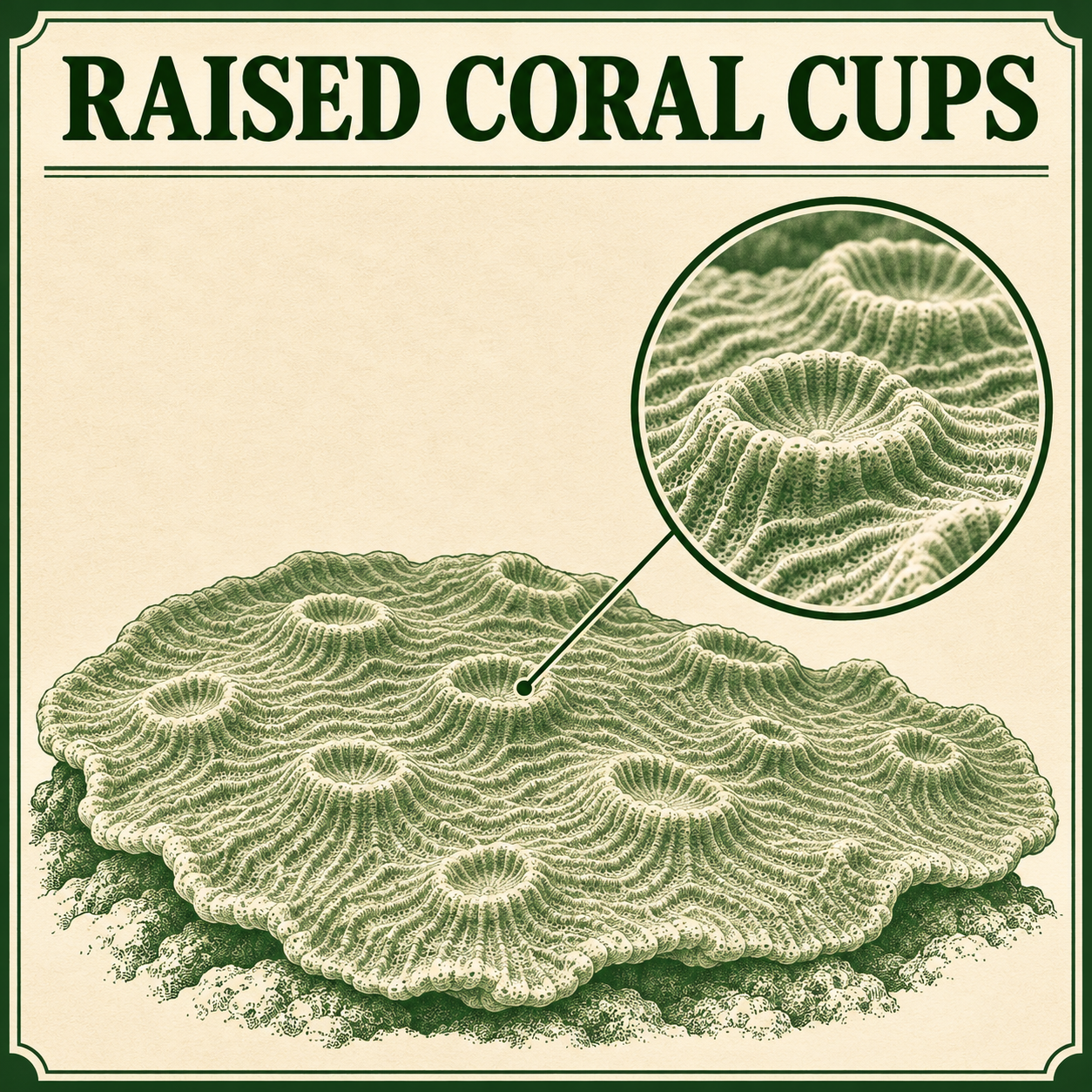
This chalice builds cups instead of branches! Each cup holds a polyp, and one can tower above the rest. Echinophyllia tarae was first described from the Gambier Islands in French Polynesia. Give it a low, stable spot and room of its own.
Cups in the skeleton
1. One cup stands out. The hard cups that hold coral polyps are called corallites. This species often has a large raised cup near the center. Smaller cups sit around it.
2. Old skeleton, new home. On sheltered reefs, this chalice grows over hard surfaces, including pieces of dead coral. Some colonies hug their base. Others grow into thick knobs.
Start with soft light
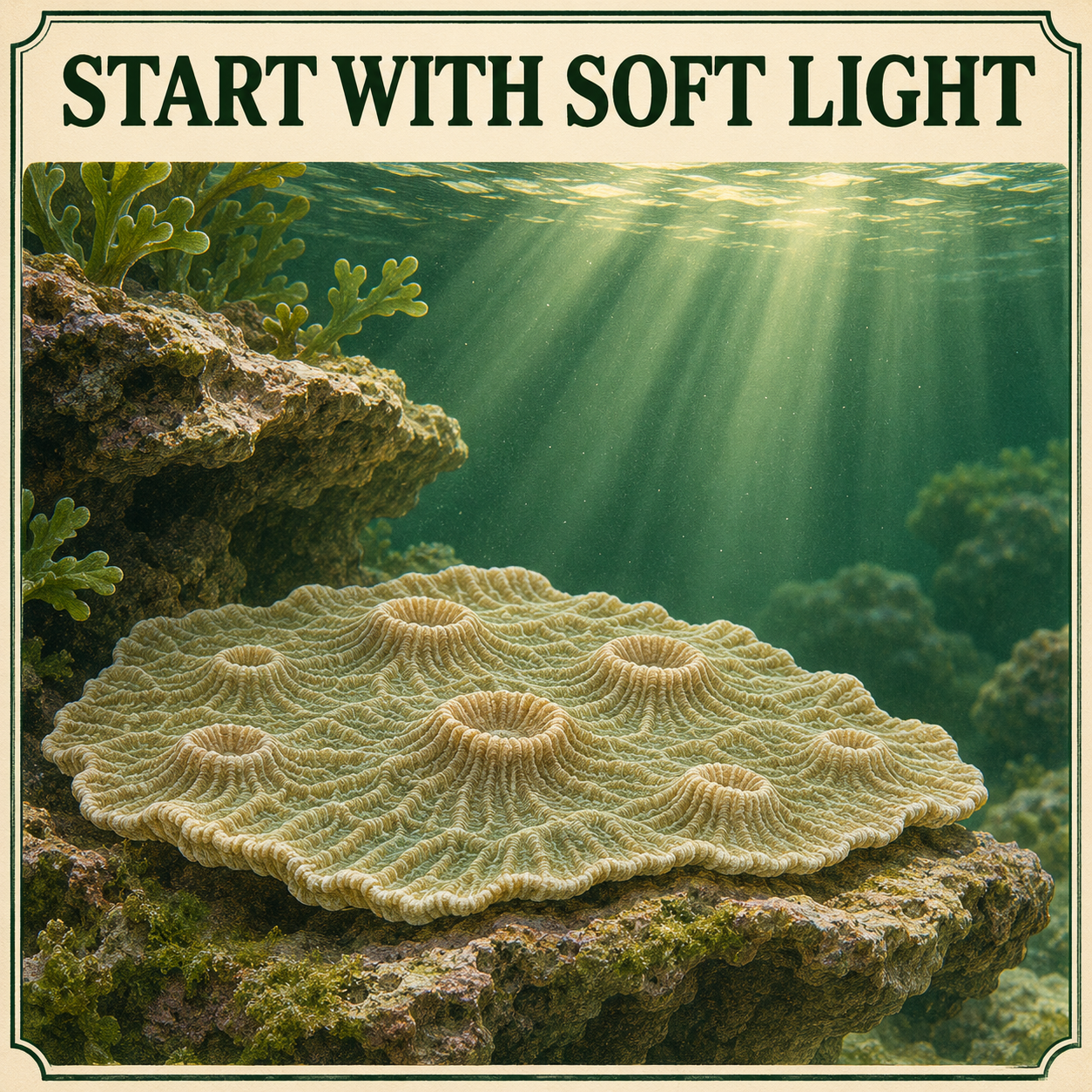
3. Skip the spotlight. Start in low to moderate light. Give the coral time to settle before increasing it. Avoid making a big jump straight into the brightest part of the tank.
4. Judge the coral, not the shelf. A low shelf can still be bright under a powerful lamp. Compare the tissue and color under the same light each time. If it pales, check water conditions as well as lighting.
Give it a gentle current
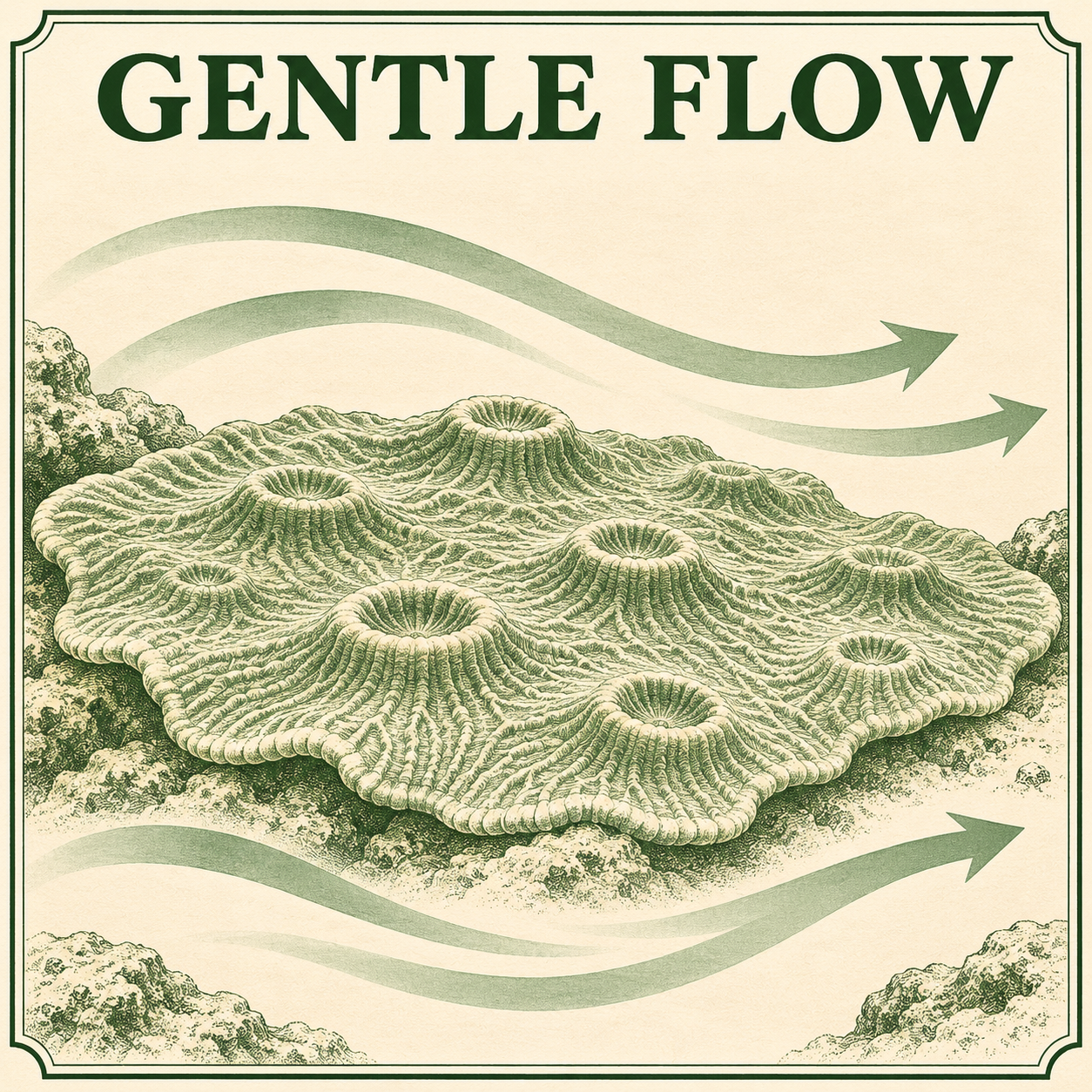
5. Move water across the surface. Aim for gentle, indirect flow that carries loose debris away. A pump jet should not hit the tissue directly. Adjust the direction if dirt keeps settling in the same spots.
6. Keep the base steady. Use a stable lower rock ledge. Leave the living edge clear of shifting sand, and make sure a snail or a cleaning tool won't knock it over.
Leave room for neighbors
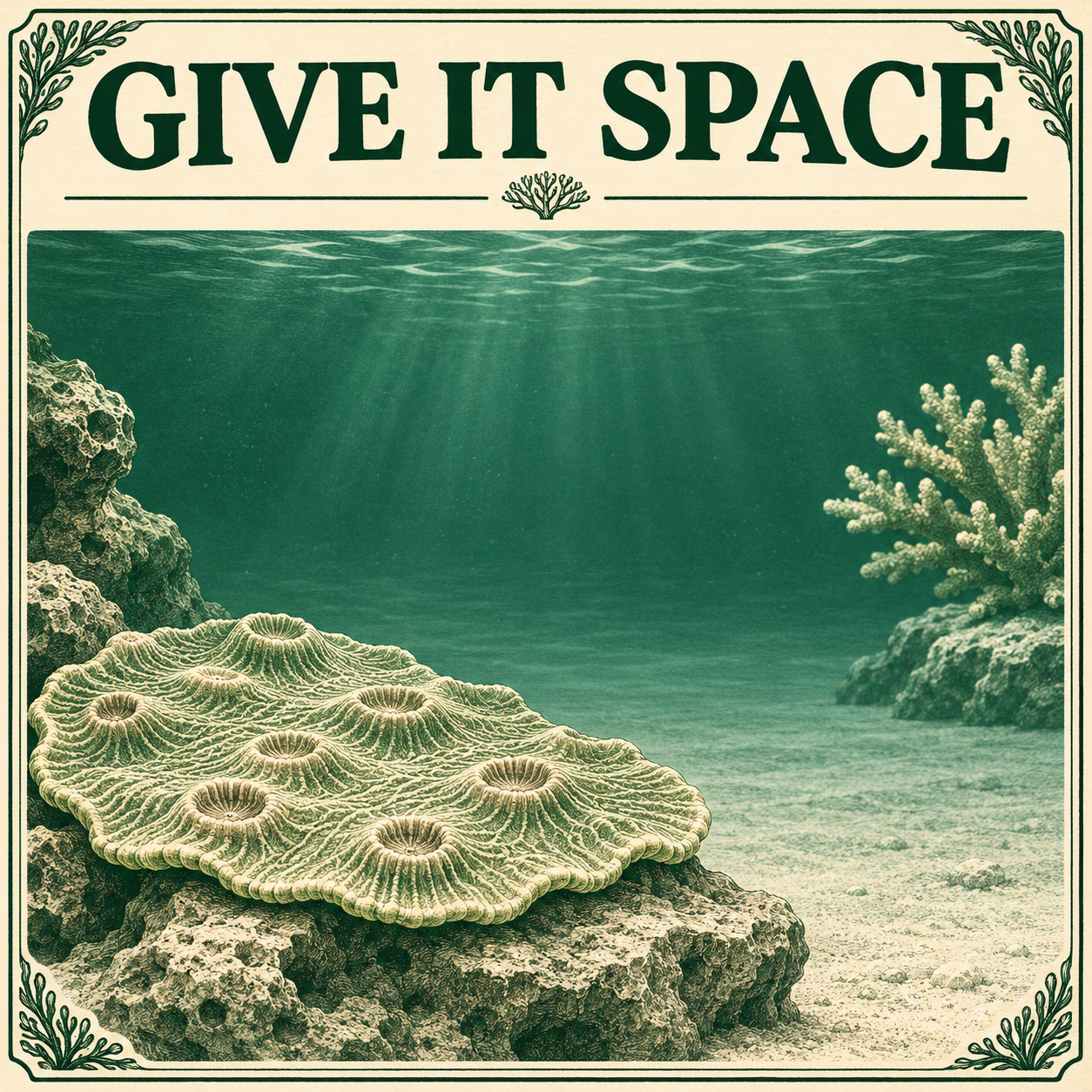
7. Plan for the night shift. Give this chalice open space. Some aquarium chalices reach beyond their daytime outline with stinging tentacles. Check after lights out instead of judging the gap at noon.
8. Watch the growing edge. Leave room for the colony to spread along the rock. Check gaps as both neighbors grow. Don't use a fixed distance as proof that contact can't happen.
Keep the water steady
9. Test before you tweak. Keep salinity and temperature steady. Track alkalinity and calcium, and make small changes based on what you measure.
10. Offer a small bite. When the polyps show a feeding response, try a little fine coral food. Start with a small amount. Don't leave a pile of food on the tissue.

Field notes — what keepers report
11. Not everyone sees sweepers. In general chalice reports, one keeper had not seen their coral send out sweepers. That was an observation, not proof that the colony couldn't sting.
12. Other tanks tell a different story. Another keeper reported a chalice stinging the tips of a nearby Acropora. Neither account confirms Echinophyllia tarae. Give your colony room and watch what it does in your tank.
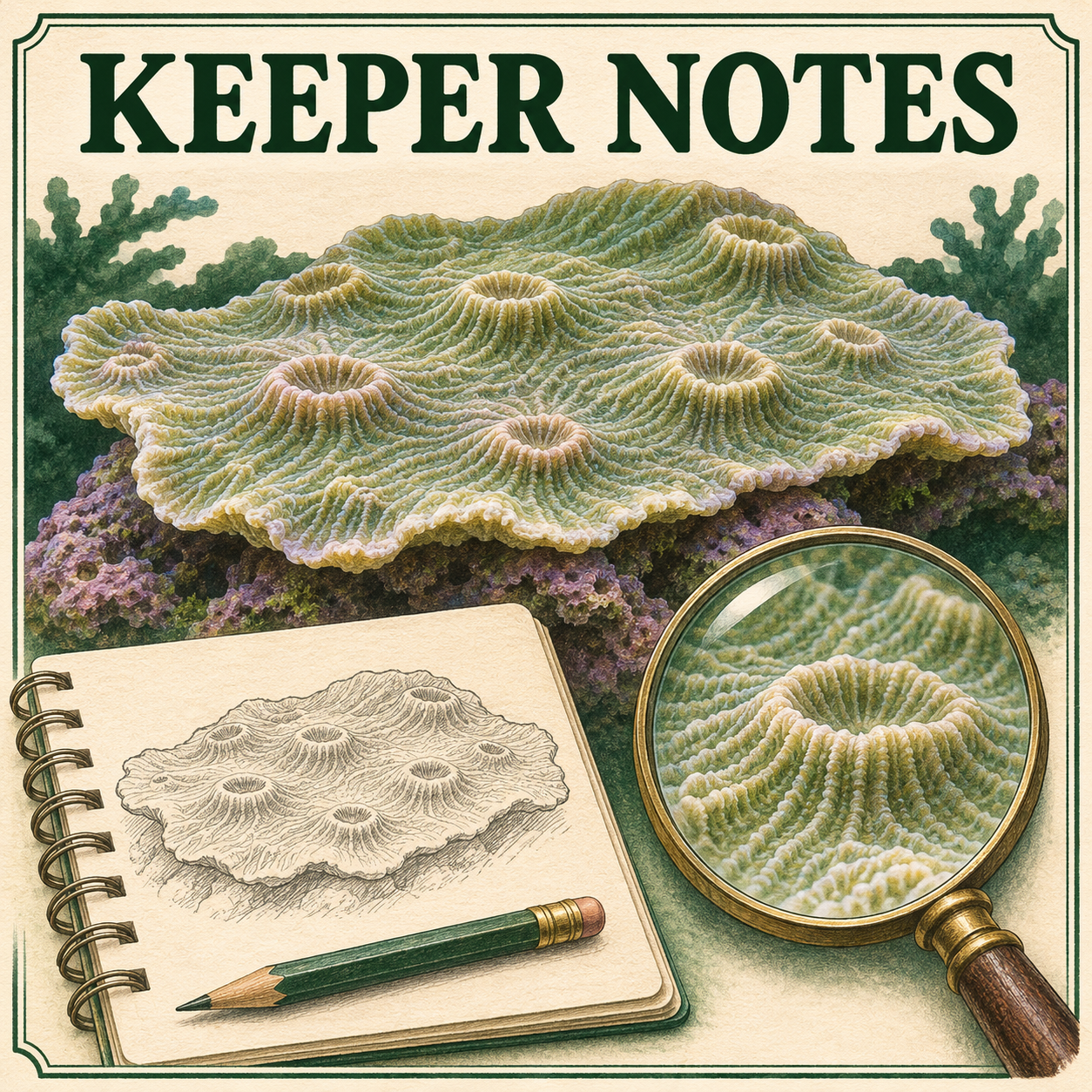
Take your time with this little reef builder. A secure base, soft light, gentle current and room to grow are better starting points than constant adjustments. Watch the living edge and let the coral settle.
Field Notes
Related species
Area 51 chalice
Echinophyllia sp
Same genus
Blue boobie chalice
Echinophyllia sp.
Same genus
Chalice Coral
Echinophyllia glabra
Same genus

Space invader chalice
Echinophyllia sp.
Same genus
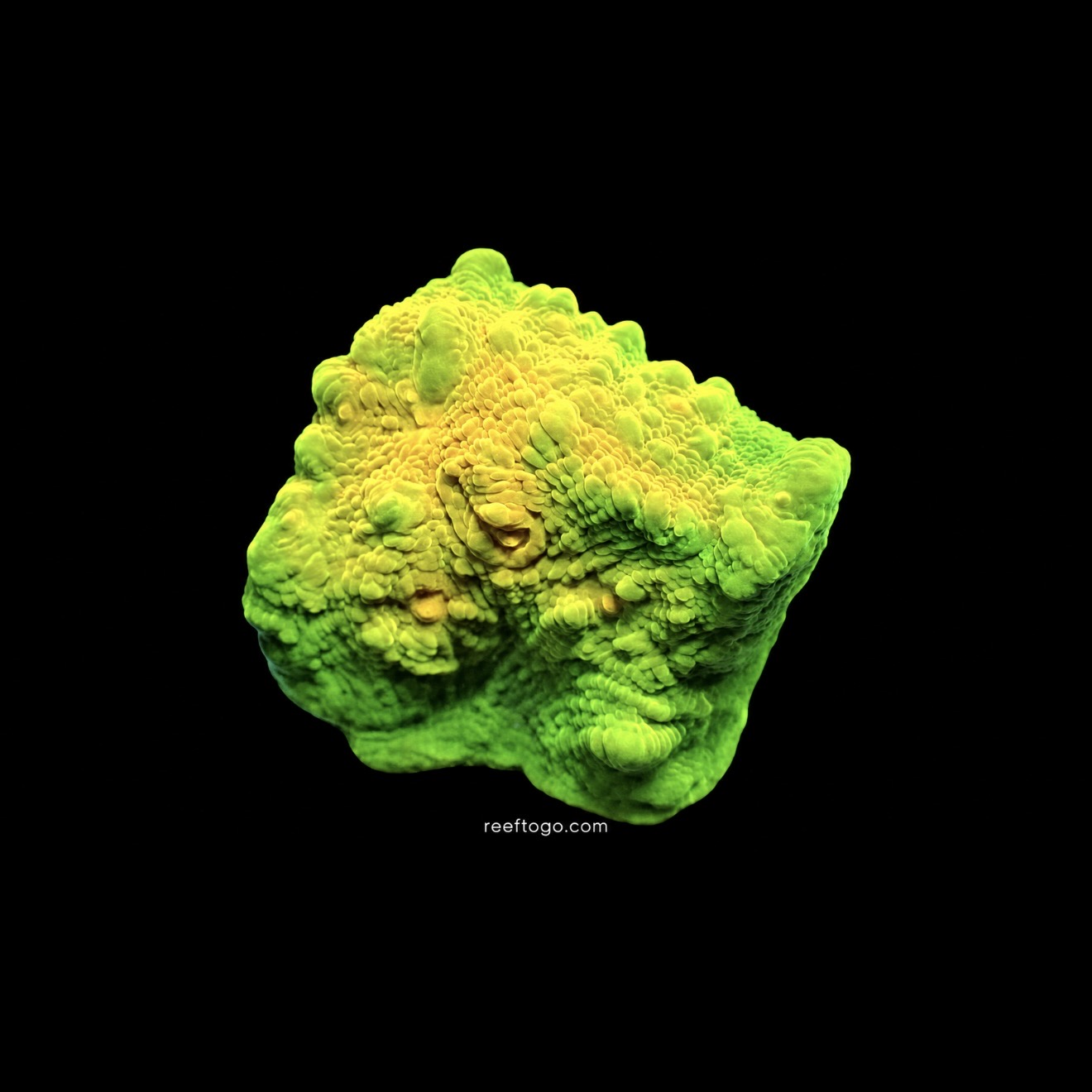
Yellow lambo chalice
Echinophyllia sp
Same genus
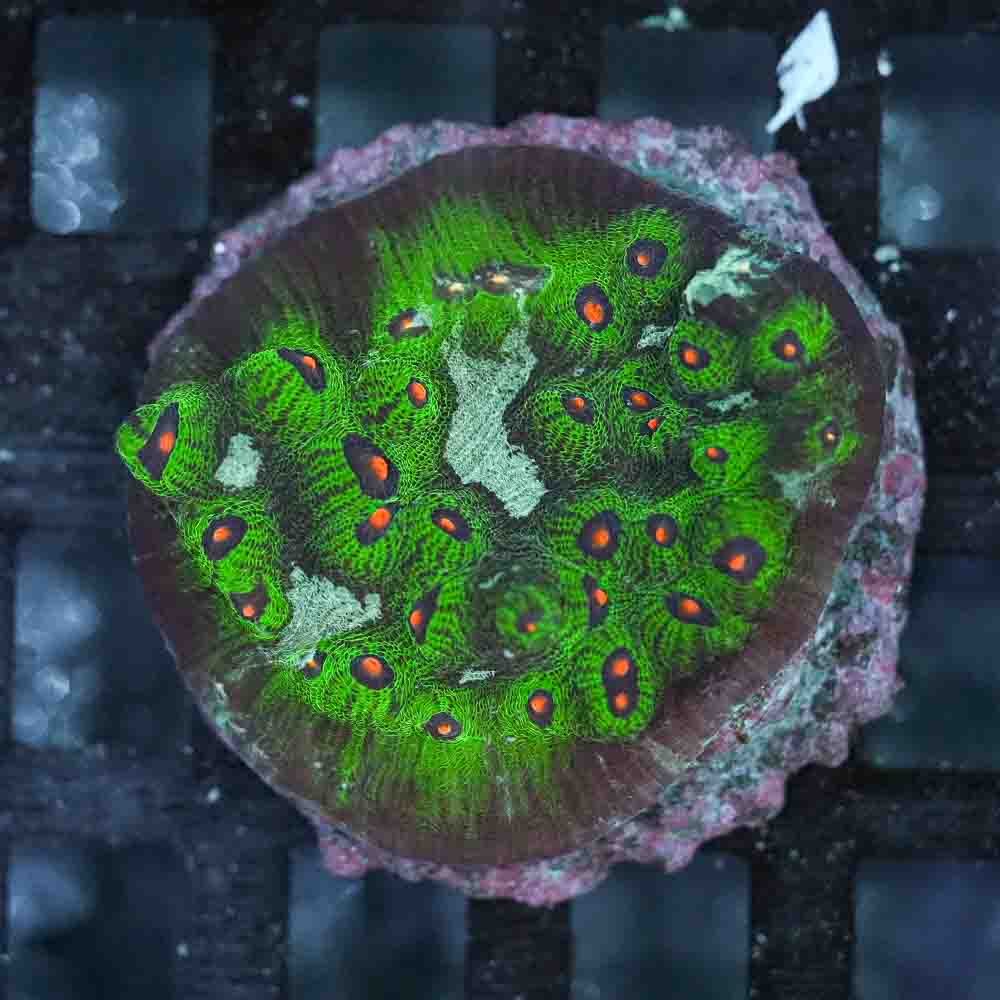
Avatar chalice
Echinophyllia aspera
Same genus

Dragon ball chalice
Echinophyllia aspera
Same genus

Mars chalice
Echinophyllia aspera
Same genus