Chalice Coral
Echinophyllia glabra
Care facts
- Care
- Intermediate
- Light
- Medium
- Flow
- Low-Med
- Place
- Bottom
- Space
- Aggressive
- Origin
- Indo-Pacific
- Growth Rate
- Moderate
Gallery
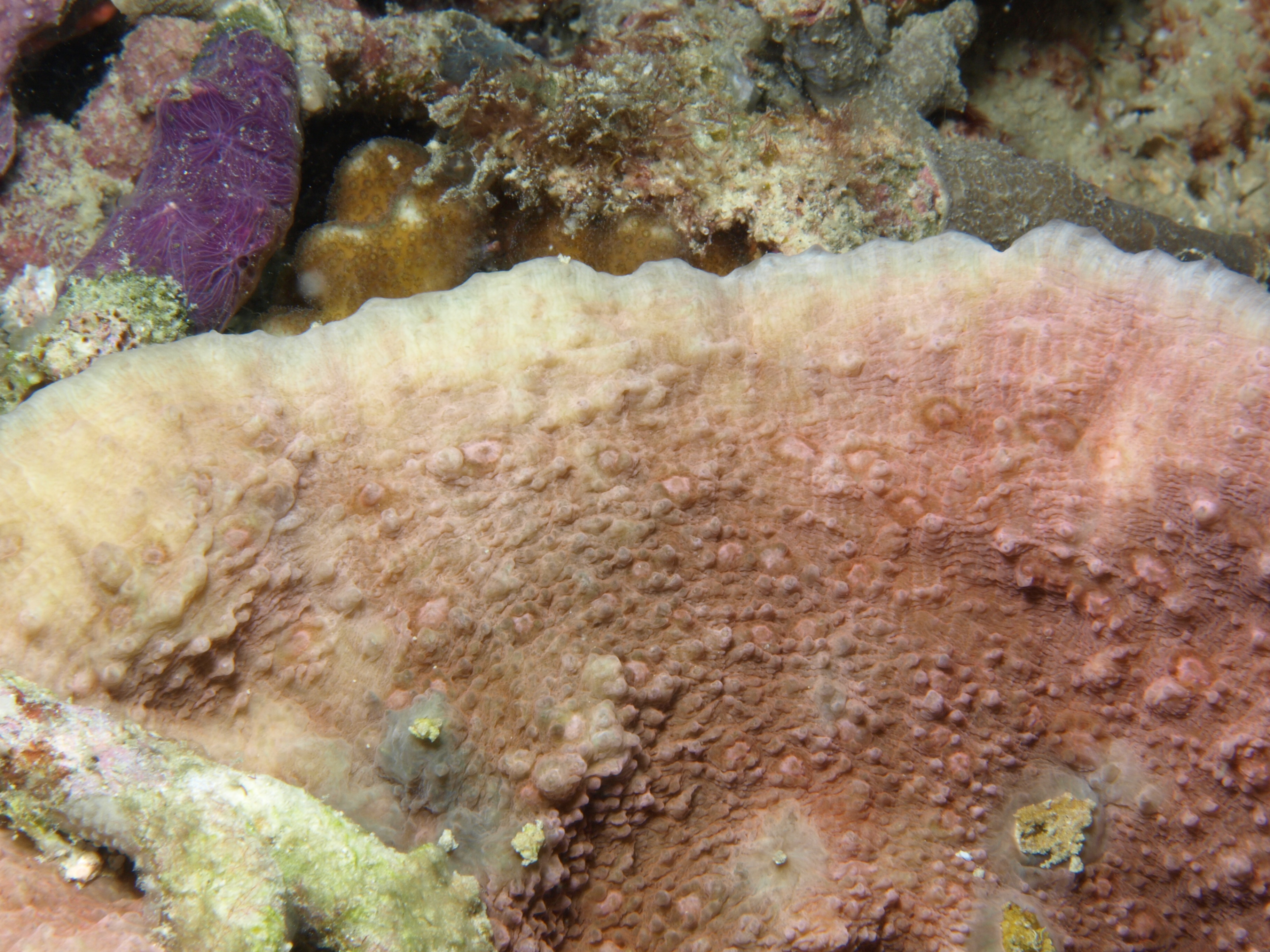
A living plate with a rowdy streak! Chalice Coral spreads into thin folds dotted with little mouths. Give this reef builder its own patch of rock, gentle circulation and room to grow. Its accepted name is Echinophyllia glabra, also known as Oxypora glabra.
A plate full of mouths
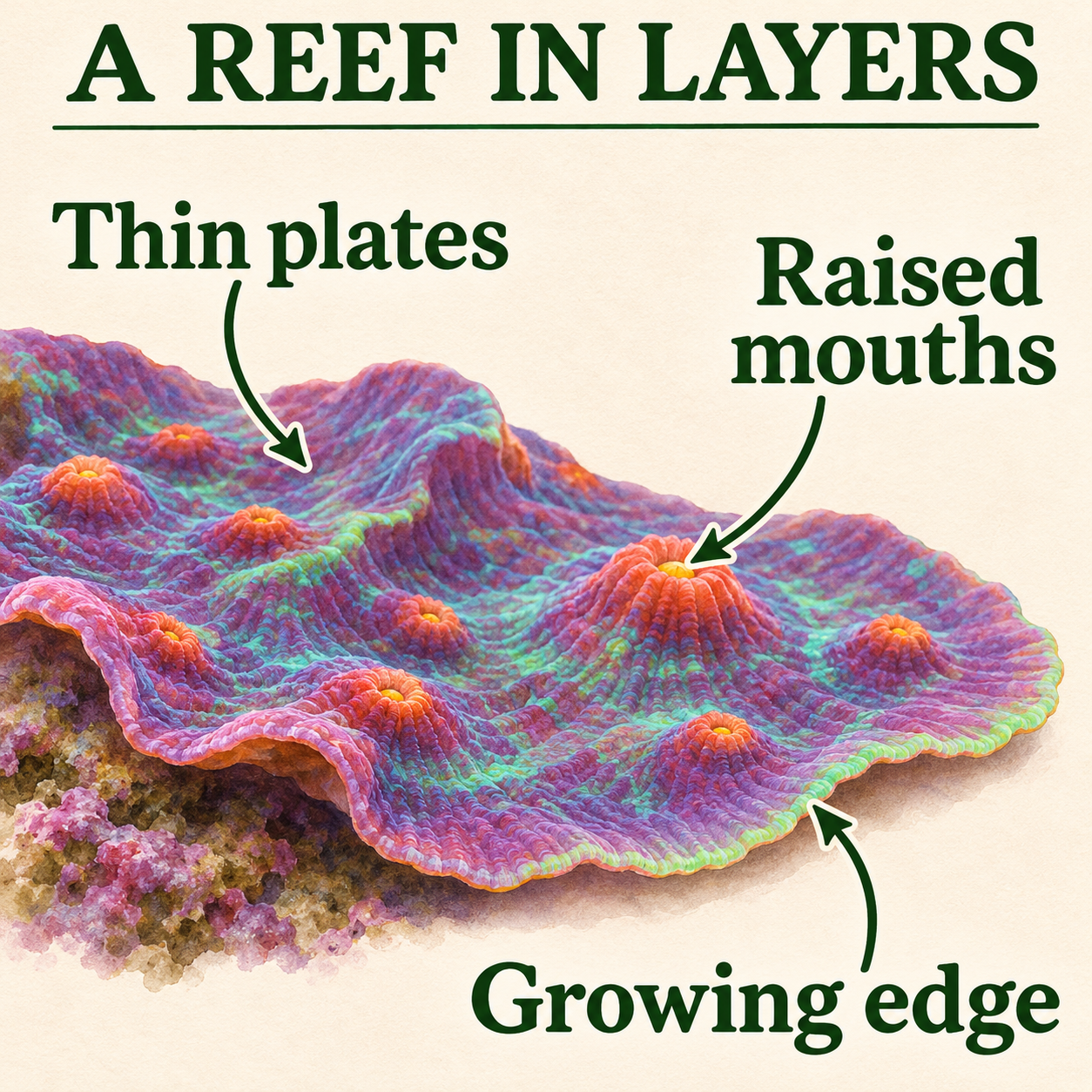
1. Built like a ruffled dish. Thin plates spread across rock and curl into folds. The edges look ragged, not neatly cut. Those bumps across the surface are corallites, the tiny skeletal homes around the polyps.
2. Not every chalice is this coral. Chalice is a hobby name shared by several kinds of coral. This page covers Echinophyllia glabra, not every bright frag sold as a chalice.
3. A sheltered reef home. This species lives on protected reef slopes in the Indo-Pacific, including shallow water. A plate shape does not automatically make a coral a deep-water specialist.
Find a gentle starting spot
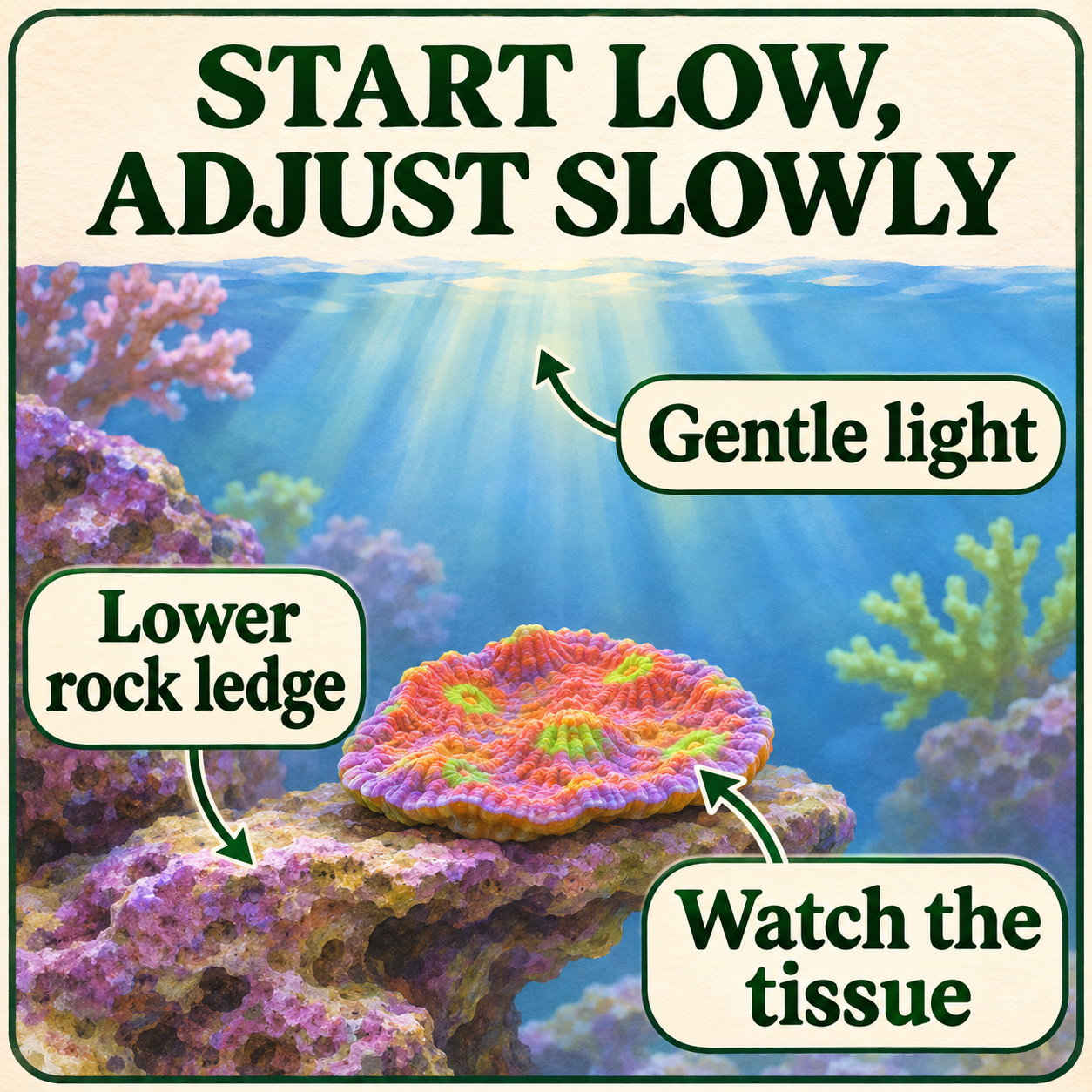
4. Start on lower rockwork. Set the frag on a secure lower ledge. Keep its living edge clear of sand and rough surfaces. Bottom placement means the lower part of the tank, not a buried coral.
5. Turn the lights up slowly. Use medium light and acclimate gradually. Sudden intense light can bleach chalices. Watch the tissue and color after each small adjustment instead of chasing a color with more light.
6. Keep a steady home. Hold salinity, temperature and alkalinity steady. Test before correcting, and make measured changes. Repeated moves and big swings are not a growth shortcut.
Let water sweep past
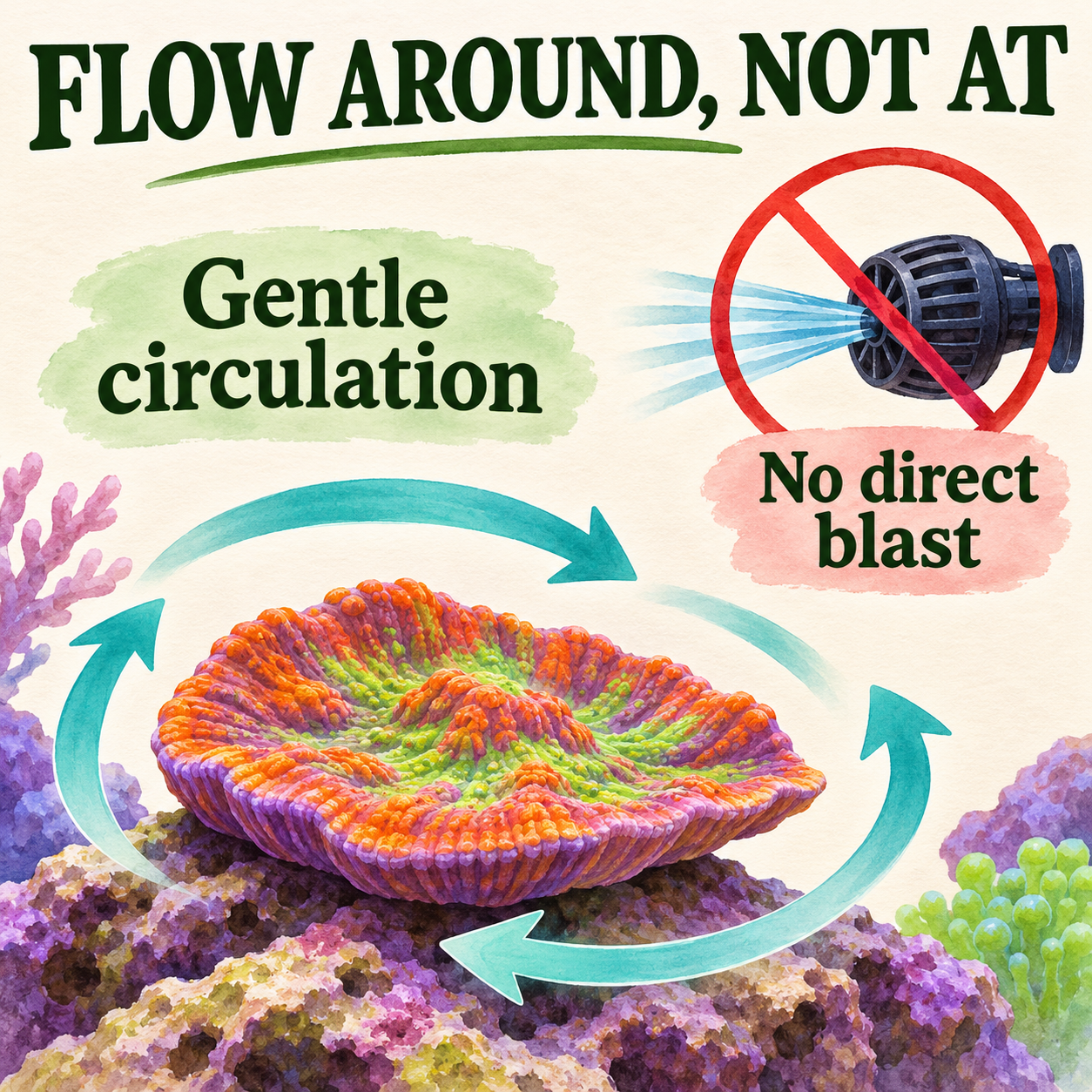
7. Circulation, not a pressure washer. Use low to medium indirect flow. Water should carry away settling waste without blasting one spot on the tissue.
8. Watch the pockets. Folded plates can catch debris. Check the dips and the space behind the frag. Adjust circulation if waste keeps collecting there.
9. Protect the growing edge. Mount the coral securely. A wobbling frag can scrape against its support. Leave room around the rim as the plate spreads.
Give the neighbors space
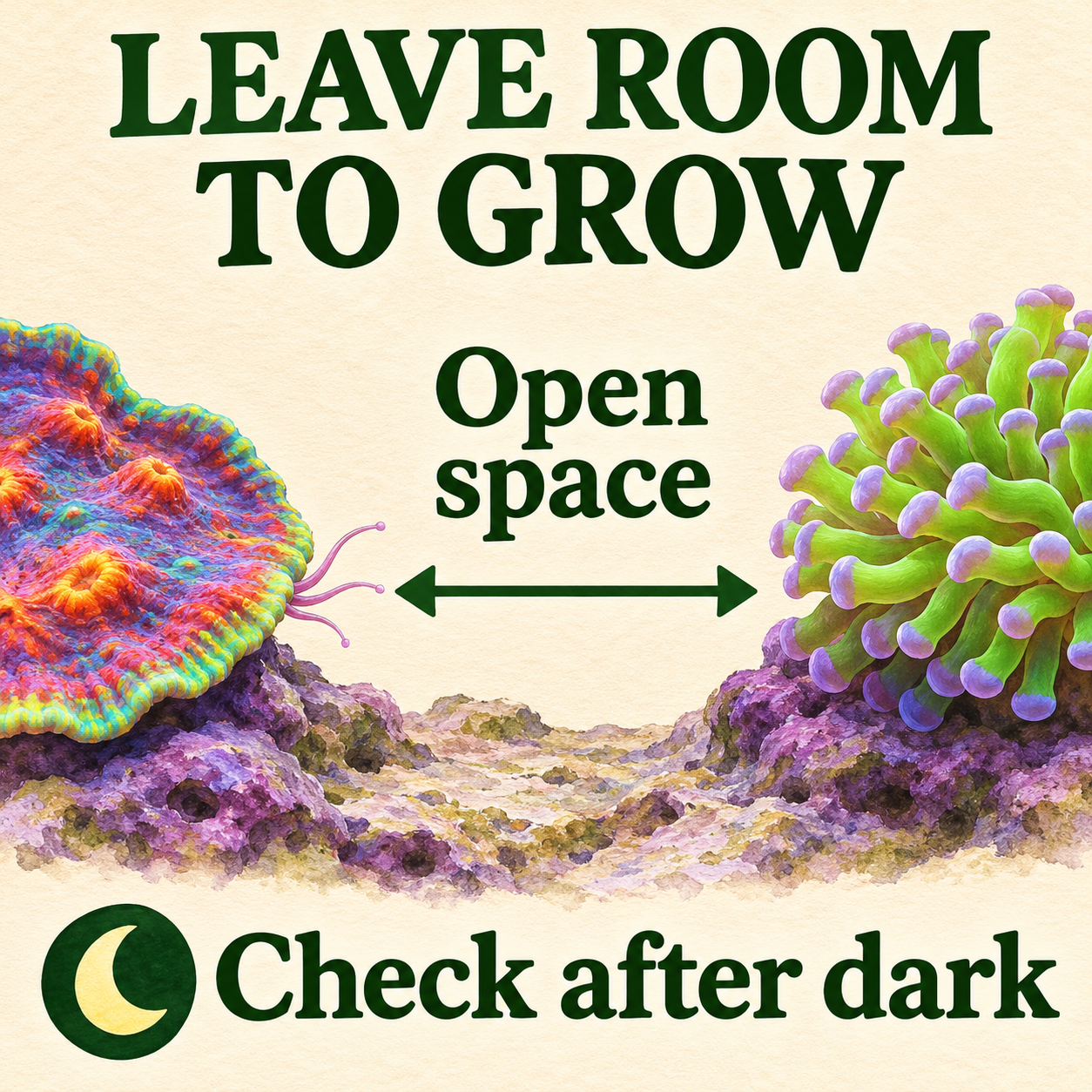
10. Beautiful does not mean peaceful. Chalices can sting nearby corals. Keep living tissue from touching a neighbor and leave an open buffer around the colony.
11. Check after lights out. Look for extended tentacles at night. Move neighbors beyond their reach. A daytime gap is not proof that the night shift is safe.
12. Plan for a bigger plate. Recheck spacing as both colonies grow. Leave room above and beside the chalice so the plate does not crowd another coral or grow into equipment.
Feed small, keep it clean
13. Light pays part of the food bill. Photosynthetic partners inside the tissue provide energy. Small meaty foods add another food source for the polyps.
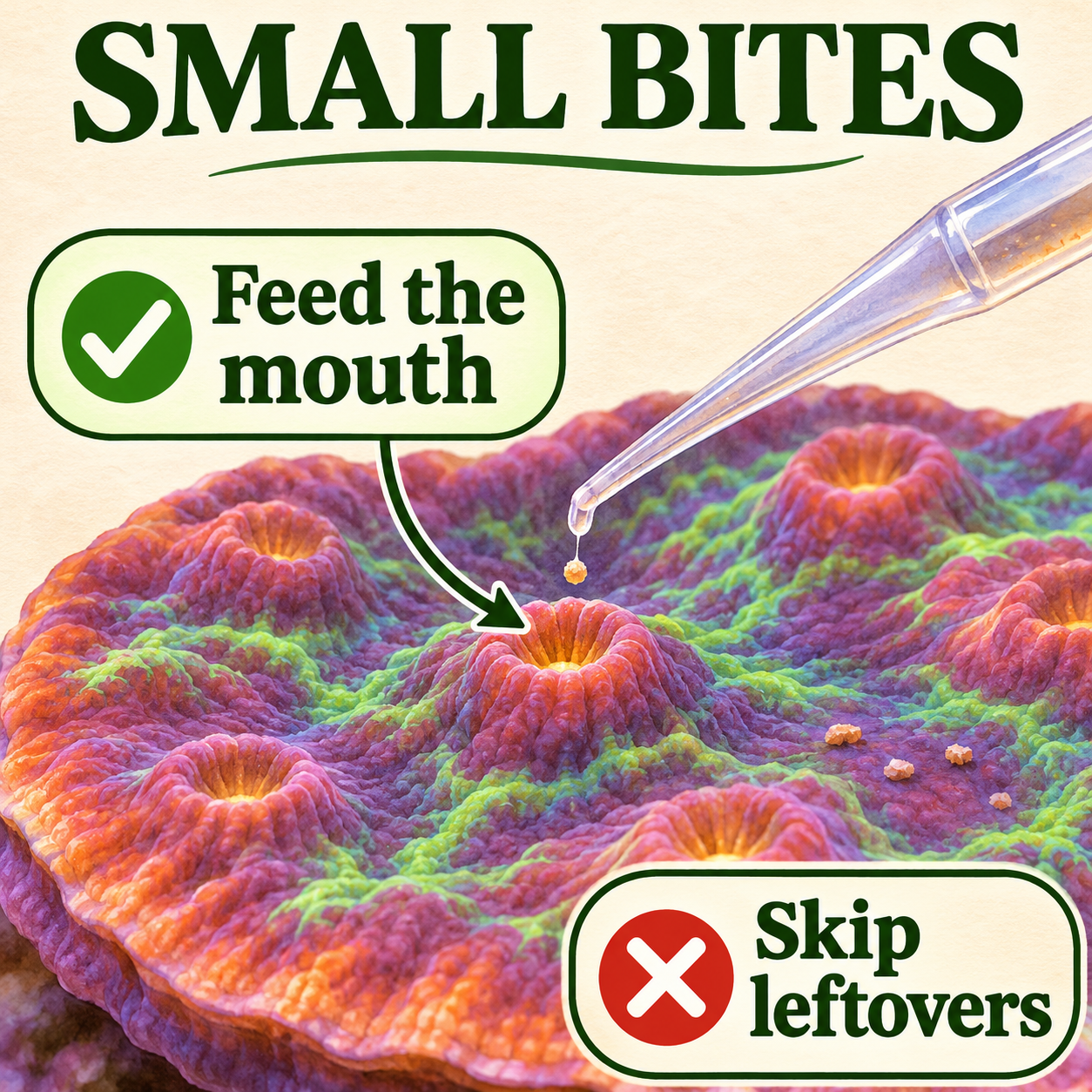
14. Offer a little bite. Use a pipette to place a small amount of fine coral food near a mouth. Do not press the tip into the tissue or bury the coral in food.
15. Less waste, better routine. Watch whether the coral takes the food. Remove leftovers and keep filtration working. Extra food is not a promise of faster growth.
Field notes — what keepers report
16. General chalice reports: two speeds. Some keepers describe chalices that barely change for months. Others show clear growth over several months. These are mixed chalice reports, not verified Echinophyllia glabra growth records.
17. General chalice reports: light experiences differ. Some keepers report good growth under low to medium light. Another describes expansion under bright light. These are different corals in different tanks, not a reason to turn your lights up overnight.
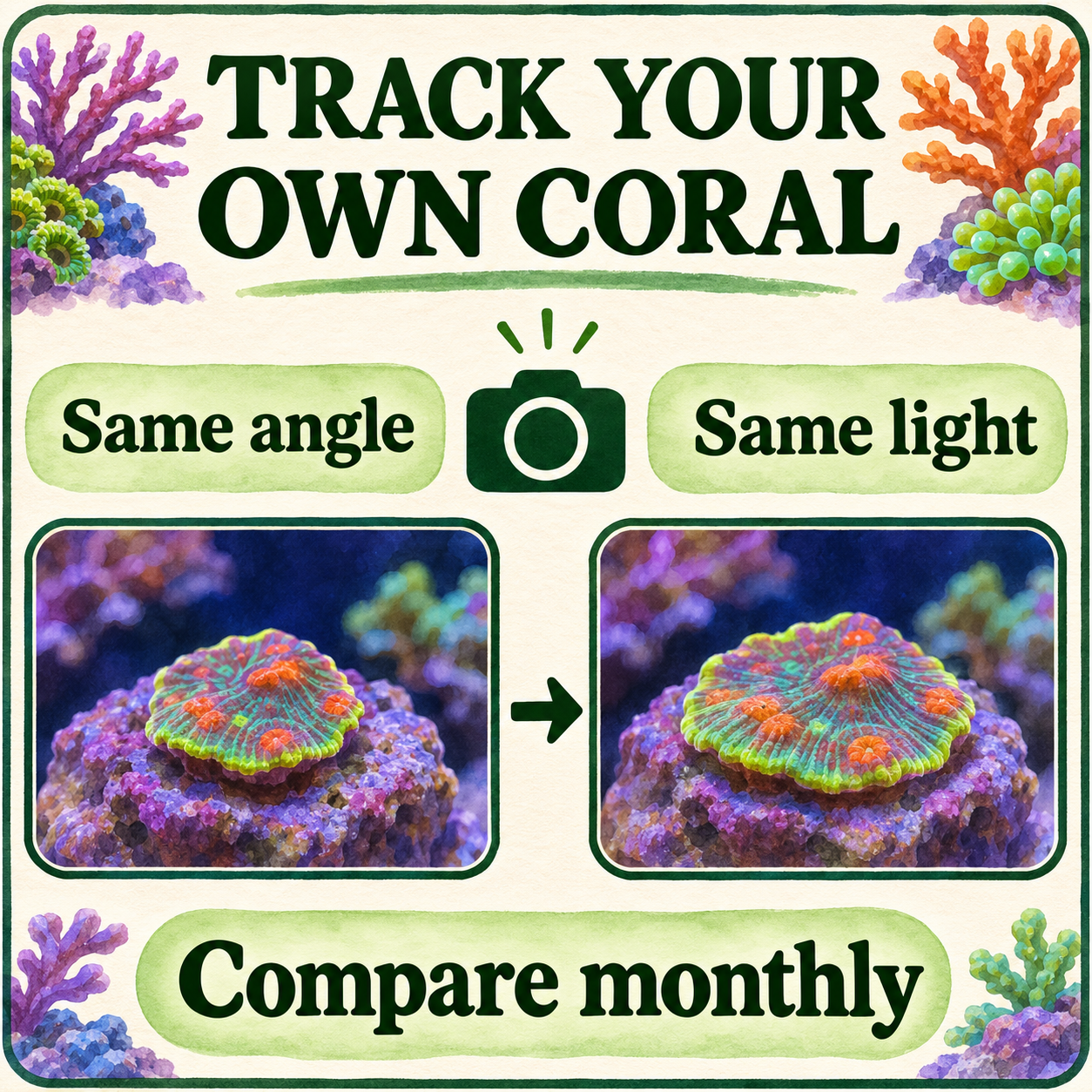
18. Make your own before and after. Photograph the same colony from the same angle under the same light each month. Track the edge and mouths alongside your water tests. Compare your coral with itself, not a seller photo.
Give the plate a steady home, a gentle current and its own breathing room. Then watch those tiny mouths and the growing rim. A healthy chalice is worth more patience than fuss.
Field Notes
Related species
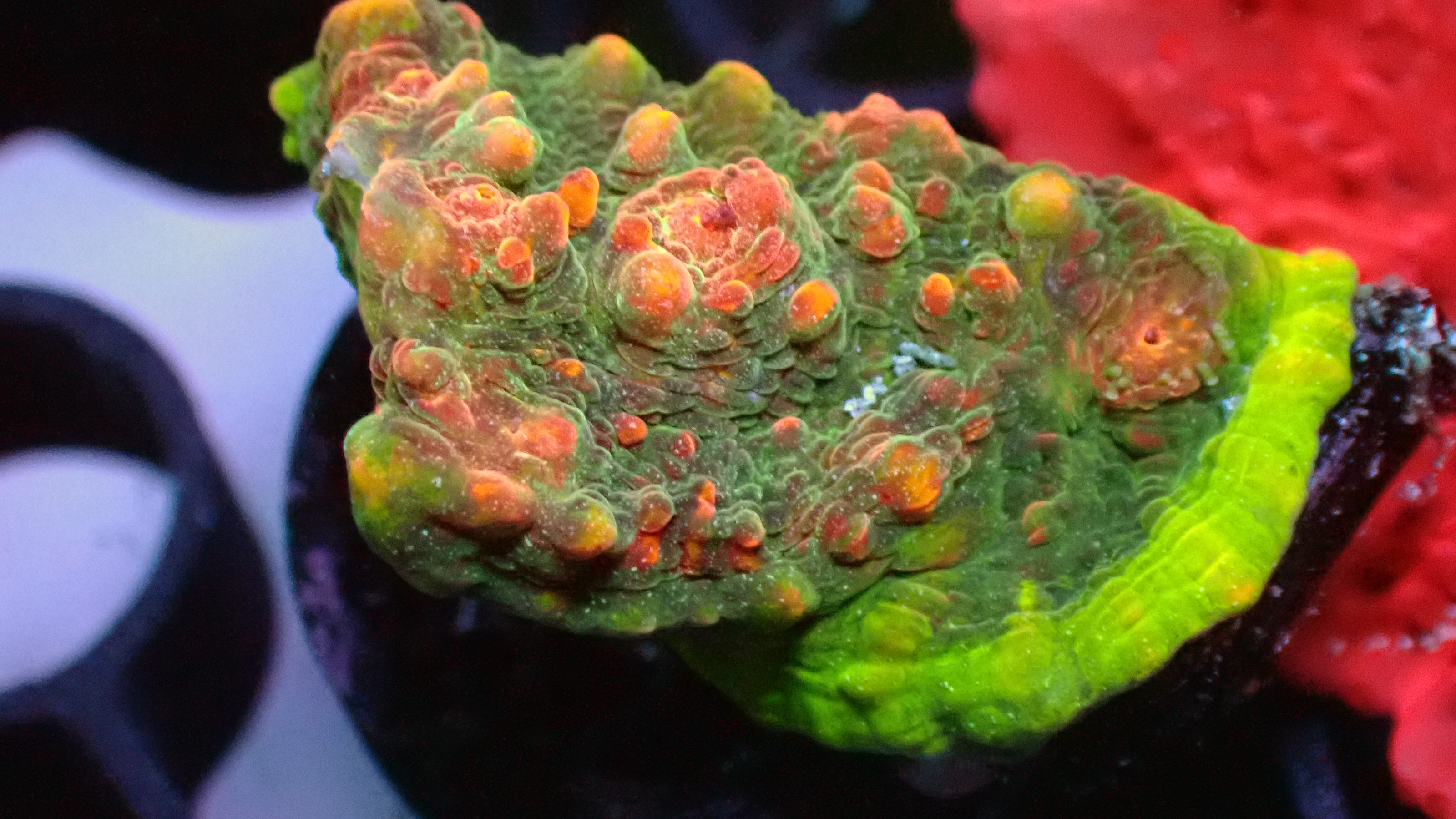
Area 51 chalice
Echinophyllia sp
Same genus
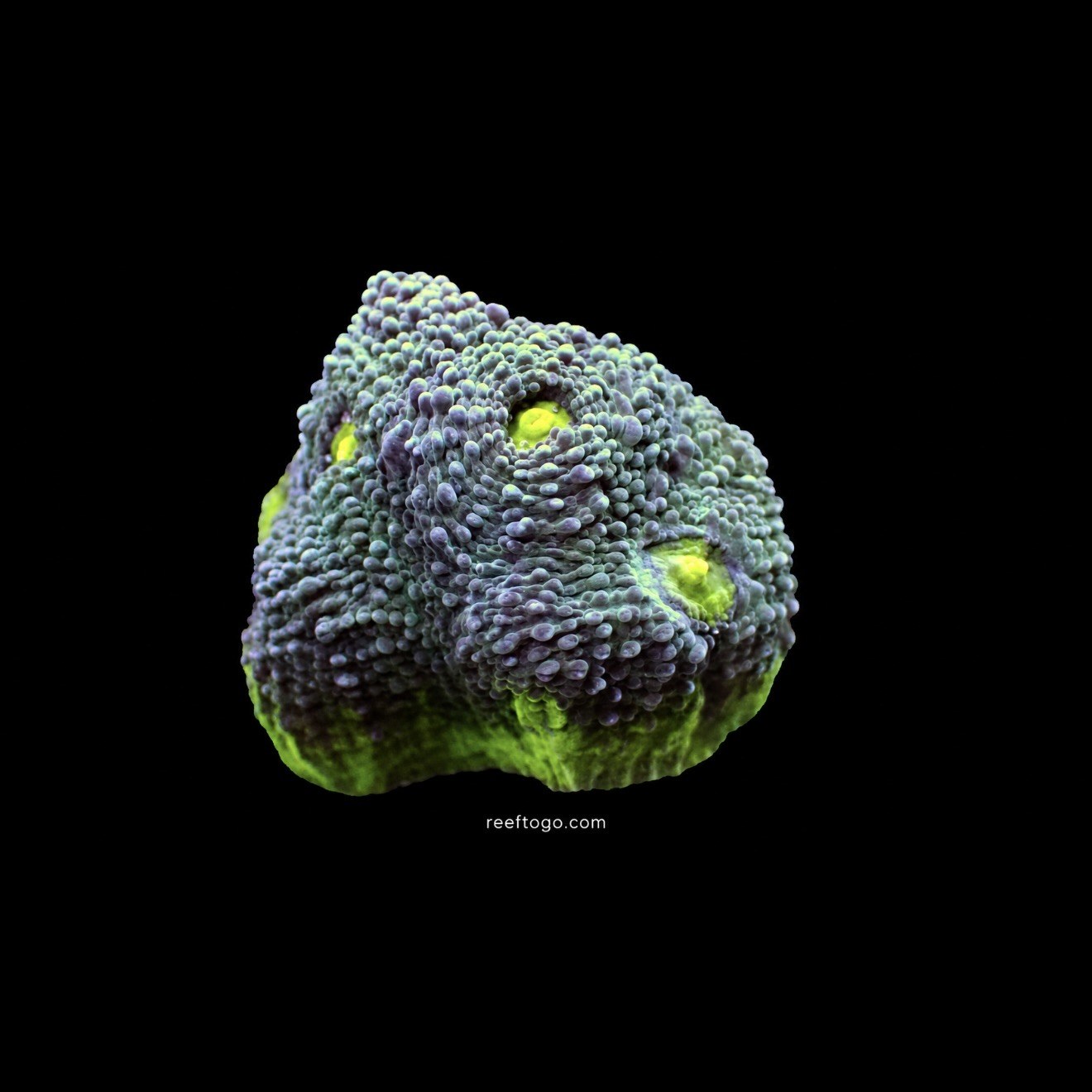
Blue boobie chalice
Echinophyllia sp.
Same genus

Echinophyllia Chalice
Echinophyllia tarae
Same genus

Raja Rampage Chalice
Echinophyllia sp.
Same genus
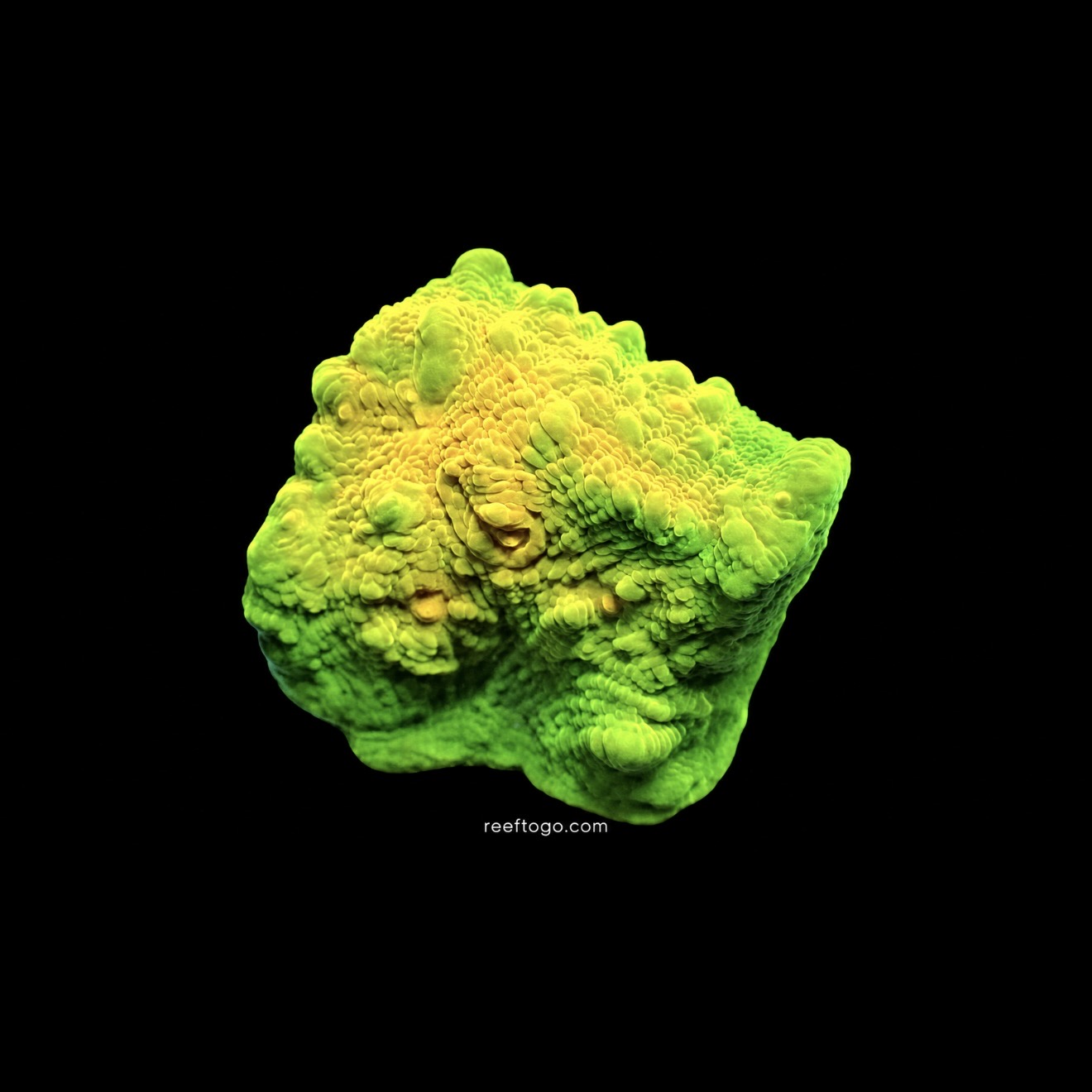
Yellow lambo chalice
Echinophyllia sp
Same genus
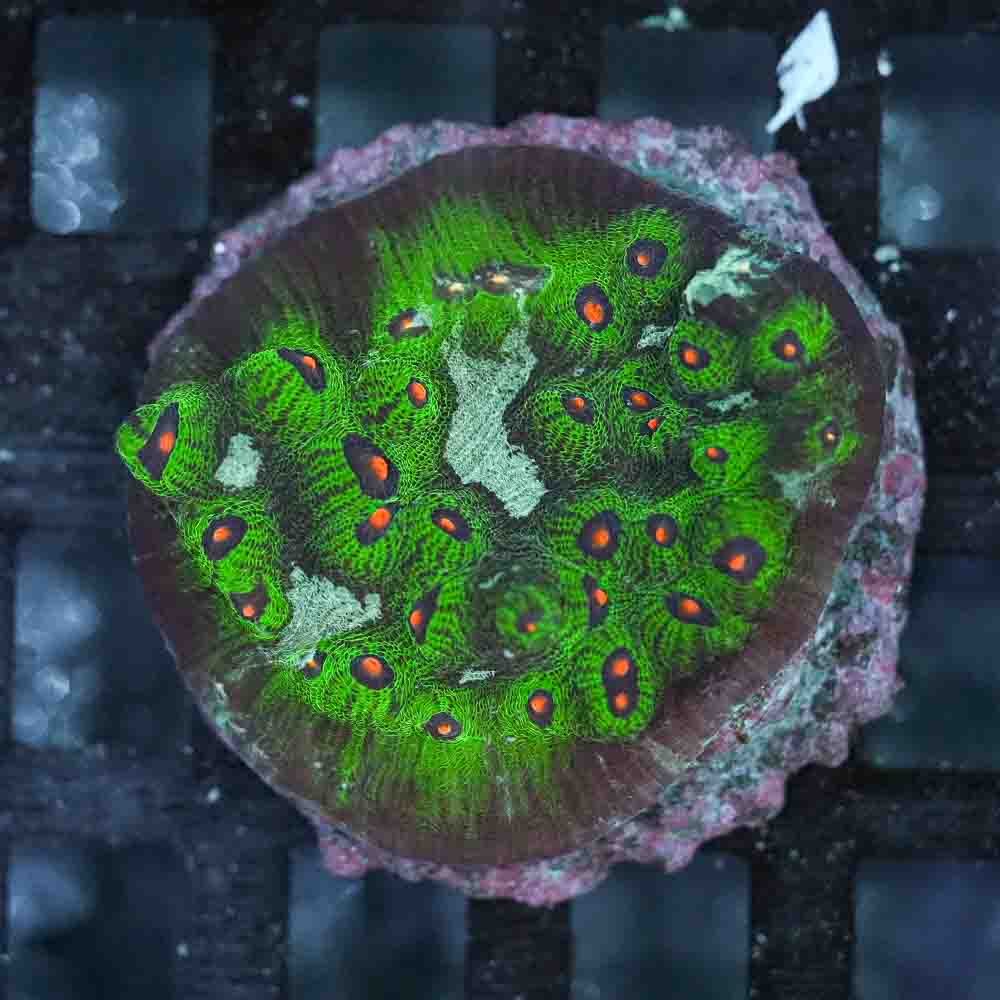
Avatar chalice
Echinophyllia aspera
Same genus
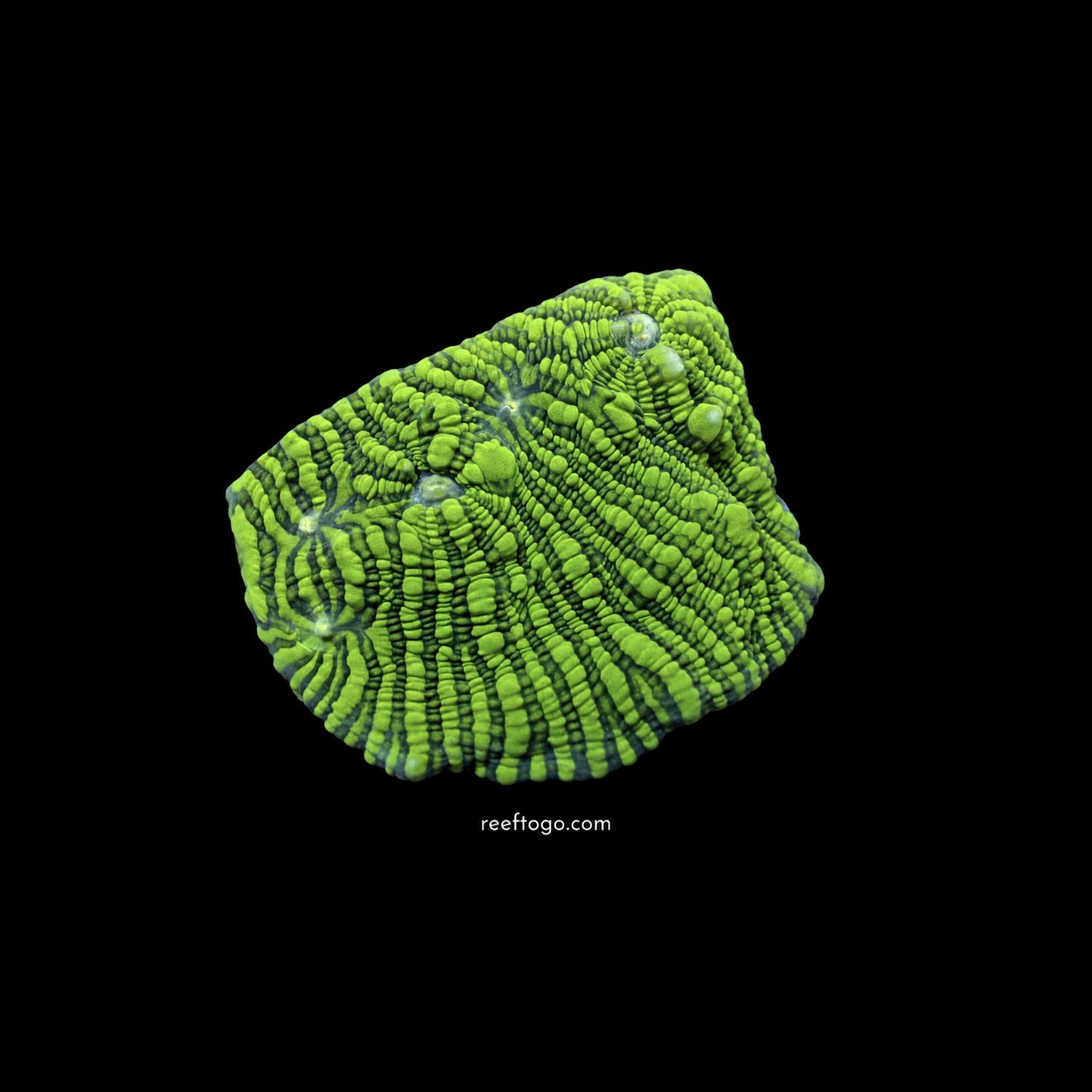
Convict chalice
Echinophyllia sp
Same genus

Dragon ball chalice
Echinophyllia aspera
Same genus