
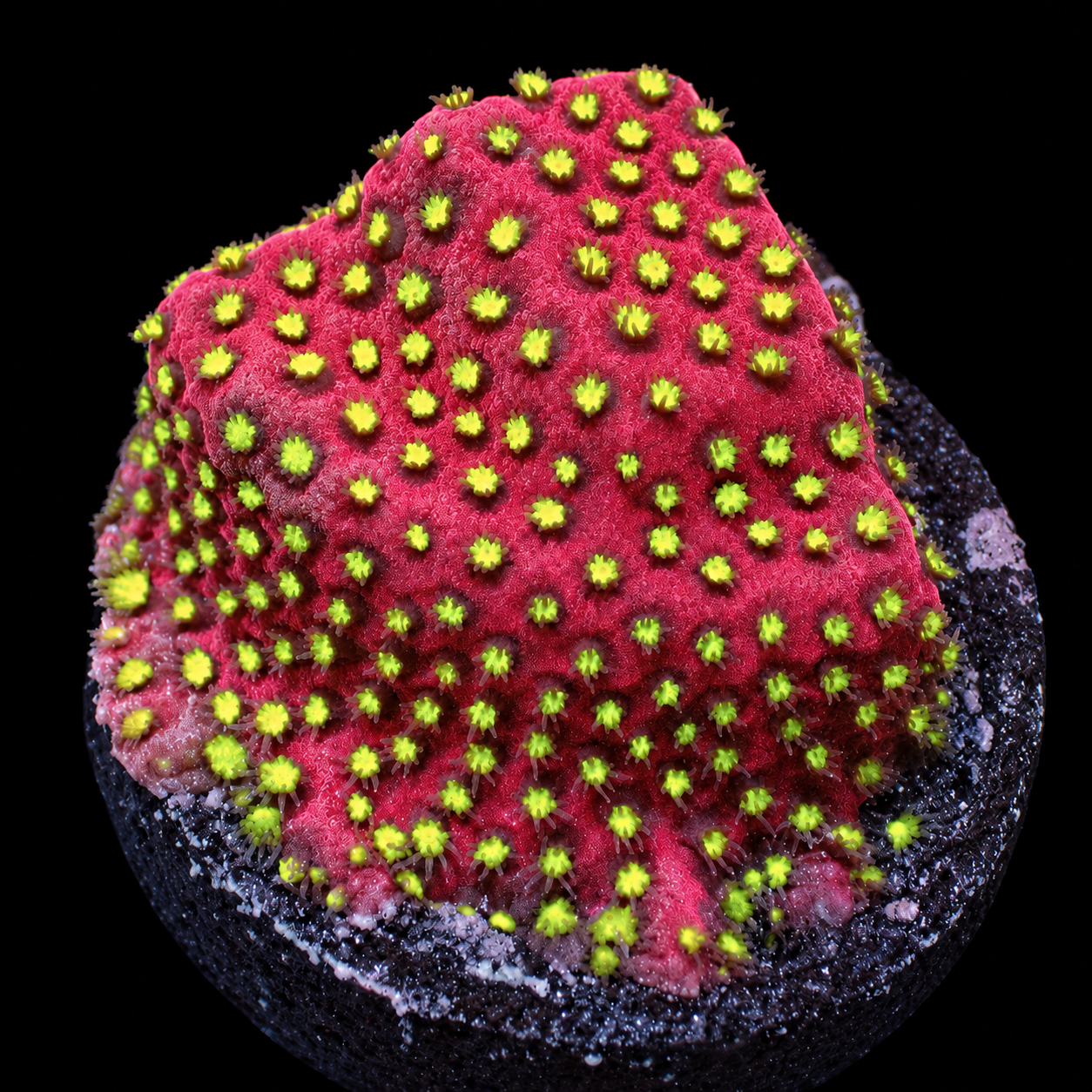
Electric daisy stylocoeniella
Stylocoeniella sp.
Electric daisy stylocoeniella is an encrusting SPS listed as Stylocoeniella sp. The colony spreads as a crust over rock, and each tiny polyp sits in a neat corallite with short tentacles that give the surface a flower-like pattern at close range. A settled crust reads as a field of small daisy polyps across the rock face, and the electric name follows the bright polyp color that glows against the body of the crust under blue light.

The entry lists intermediate care, high lighting at the medium to high range in its notes, medium flow, middle placement, peaceful behavior, and moderate growth. Place the frag in the middle of the rockwork on a solid rock face with room for the crust to run. Medium to high light holds the bright polyps and drives steady encrusting. A colony kept in deep shade may dull and stall at the edge, while a sudden jump in light can pale the crust, so raise light in stages and judge the result over weeks.
Medium flow should move across the whole face and clear the corallites. The textured surface holds detritus between polyps when flow runs weak, and waste sitting on the crust invites algae at the growth edge. Flow does not need to be harsh for this SPS. It needs to reach every part of the face, including the lower margin. A fixed jet can keep one patch retracted, so broad, varied movement is the better pattern.
Feeding is indirect and modest. The small polyps take fine particulate food from regular broadcast feeding, and light supplies much of the energy. Stable alkalinity, calcium, and magnesium carry the encrusting skeleton, and this coral answers steadiness more than chasing. Nutrient levels that swing hard can dull the polyps and slow the edge, while a stable tank with present nutrients supports clean growth.
This coral is listed as peaceful, with short tentacles and no sweeper reach worth planning around. Spacing is a growth question. The crust advances over the rock it touches and can grow up to the base of a neighbor and over a shaded margin. Leave open rock around the frag for the colony to claim, keep it off the main face planned for slower encrusters, and watch the meeting edge, because direct contact at a growth front usually favors the advancing crust.
Growth is listed as moderate. The edge extends first as a thin film over new rock, polyps fill in behind it, and the crust thickens and gains texture with time. A settled colony shows a clean advancing margin and polyps extended across the face. An edge that stalls, cups filling with waste, or color washing out call for a check of light level, flow across the crust, and chemistry steadiness.
Common pitfalls include shading the frag under an overhang and waiting for color that needs more light, letting detritus settle into the polyps, and mounting it on a small rubble piece the crust outgrows. Give it solid rock in the middle of the rockwork, moving water, and light in the upper range, then leave the edge alone to run.
Field notes — what keepers report
- Light reports split on where the sweet spot sits. Keepers in stronger light describe the brightest polyps and a faster edge, while keepers at the middle of the range describe equal color with slower, thicker growth. Both sides describe dulling in genuine shade, and recovery after a slow move toward more light.
- Encrusting reports praise the coverage habit. Keepers describe stylocoeniella sheeting over rock faces and holding ground in mixed SPS company, and other keepers describe trimming plans once a crust neared a prized frag. Planning the face at placement is the shared lesson.
- Feeding reports split on value. Keepers who broadcast fine foods regularly describe plumper polyps and a quicker margin, while keepers who feed little describe healthy crusts growing at a slower pace. Both sides agree waste left sitting on the surface does more harm than a missed feeding.

Field Notes
Related species

Bubblegum digitata
Montipora digitata
Exosphere zoanthids
Zoanthus sp

Aculeus Acropora
Acropora aculeus
Anacropora
Anacropora gracilis

Caliendrum Seriatopora
Seriatopora caliendrum

Digitifera Acropora
Acropora digitifera

Finger Porites
Porites cylindrica

Florida Branch Acropora
Acropora florida
In the shop now

Similar picks from the shop

Love this species? No tank needed.
Reef art from the shop — for the wall, not the tank.


Get notified when Reef To Go has Electric daisy stylocoeniella in stock or up for auction. One email when it's in — no spam.