Anacropora
Anacropora gracilis
Gallery
A little stick splits into two. Then those branches split too. Soon you've got a briar patch made of coral. This Anacropora has fragile branches and blunt tips. Give it somewhere firm to grow, and leave space between the forks for water to move.
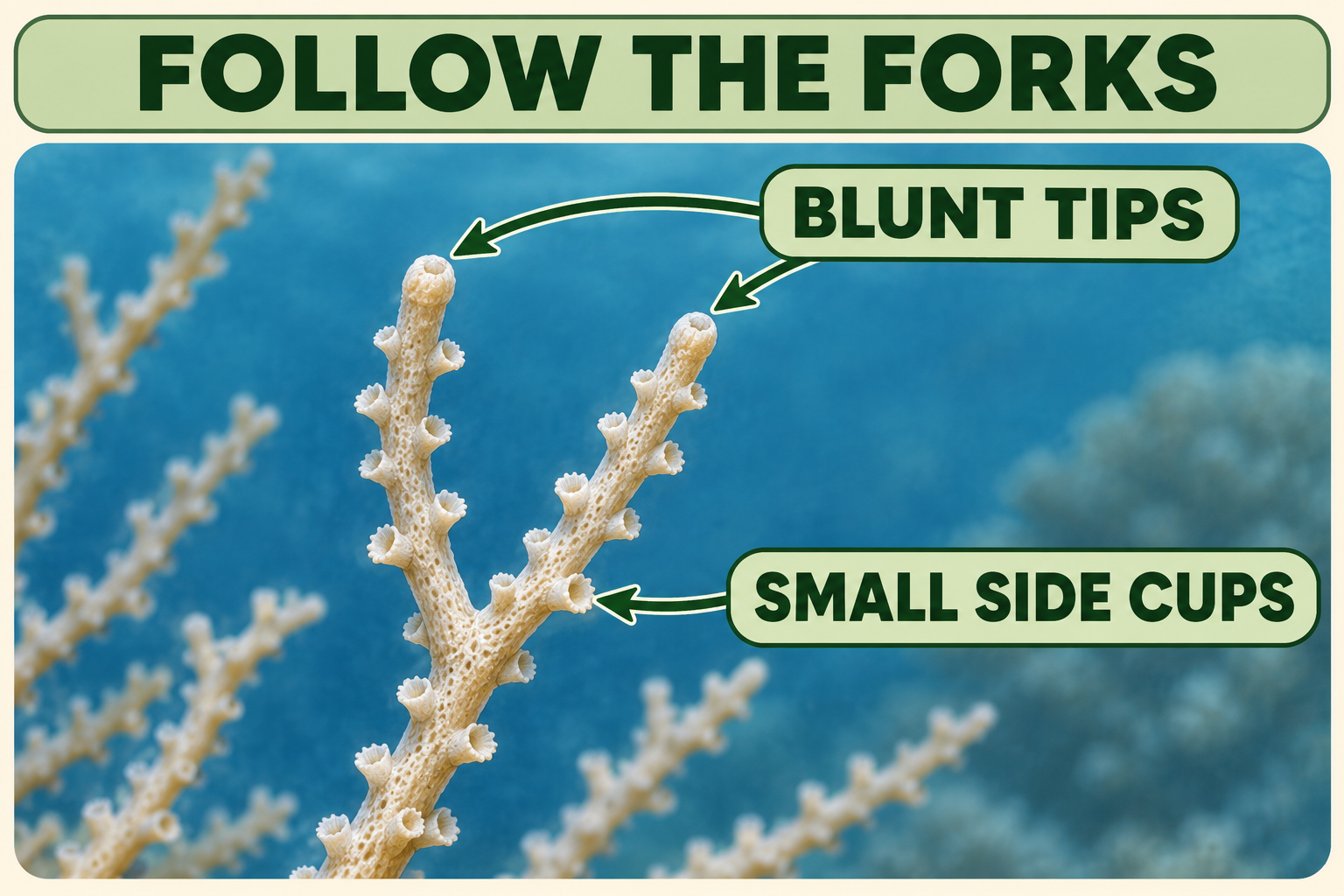
Follow the forks
1. Look past the tips. The tiny hard cups that hold the polyps sit along the branches. Anacropora lacks the big, dedicated tip cup that marks an Acropora branch.
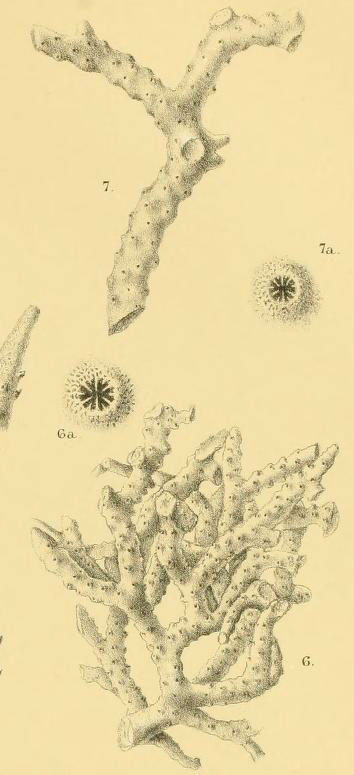
2. Old names, same species. Anacropora gracilis and Anacropora solida are older names now grouped under Anacropora forbesi. The old skeleton drawing shows specimens labeled with both names.
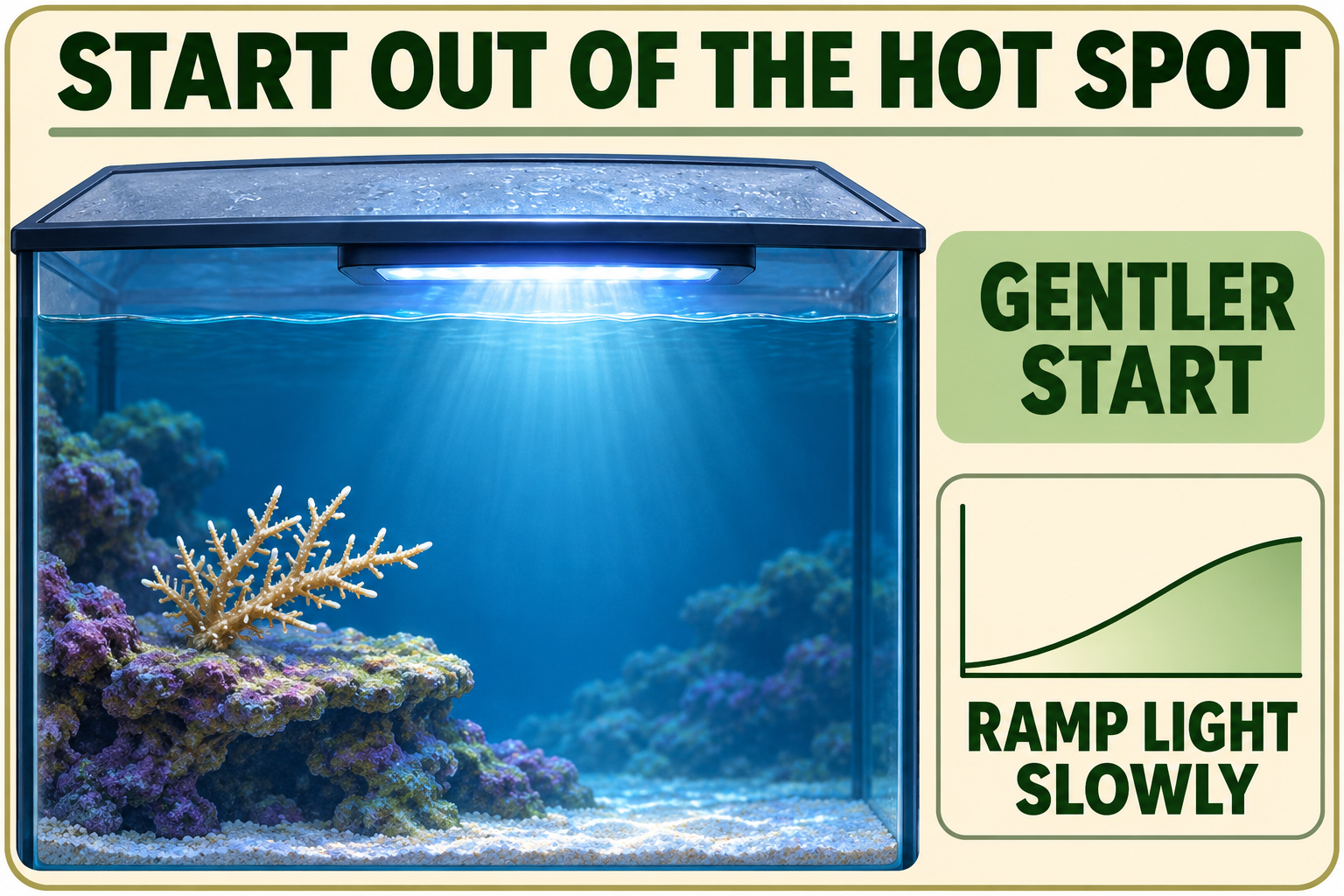
Start out of the hot spot
3. Give the frag an easy landing. Pick a spot with moderate light for the first stretch, or match the light it was already growing under. Raise the light in small steps as it settles.
4. Let the tissue guide you. If the whole branch starts to pale after a move, stop ramping the light. Check the light and water before changing another setting. Don't move it into a brighter spot just to chase color.
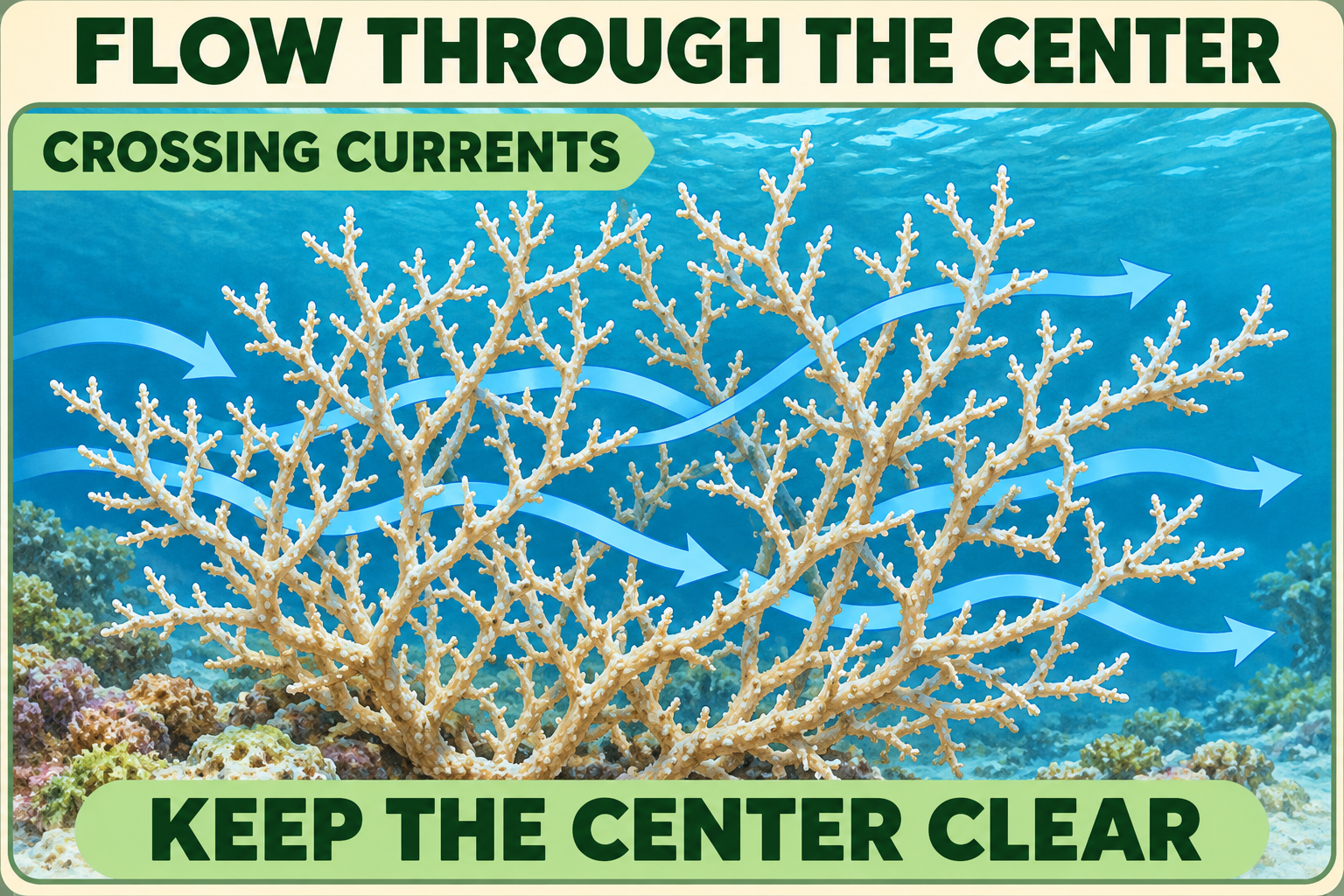
Keep the center moving
5. Move water through the forks. Start with moderate, changing flow. Aim the pump past the coral so water moves between its branches without a narrow jet hitting the tissue.
6. Check again as it fills in. A thick patch of branches slows water in the center. If grit collects there, try a new pump angle. Increase flow gradually if the center still doesn't clear.
Protect the fragile branches
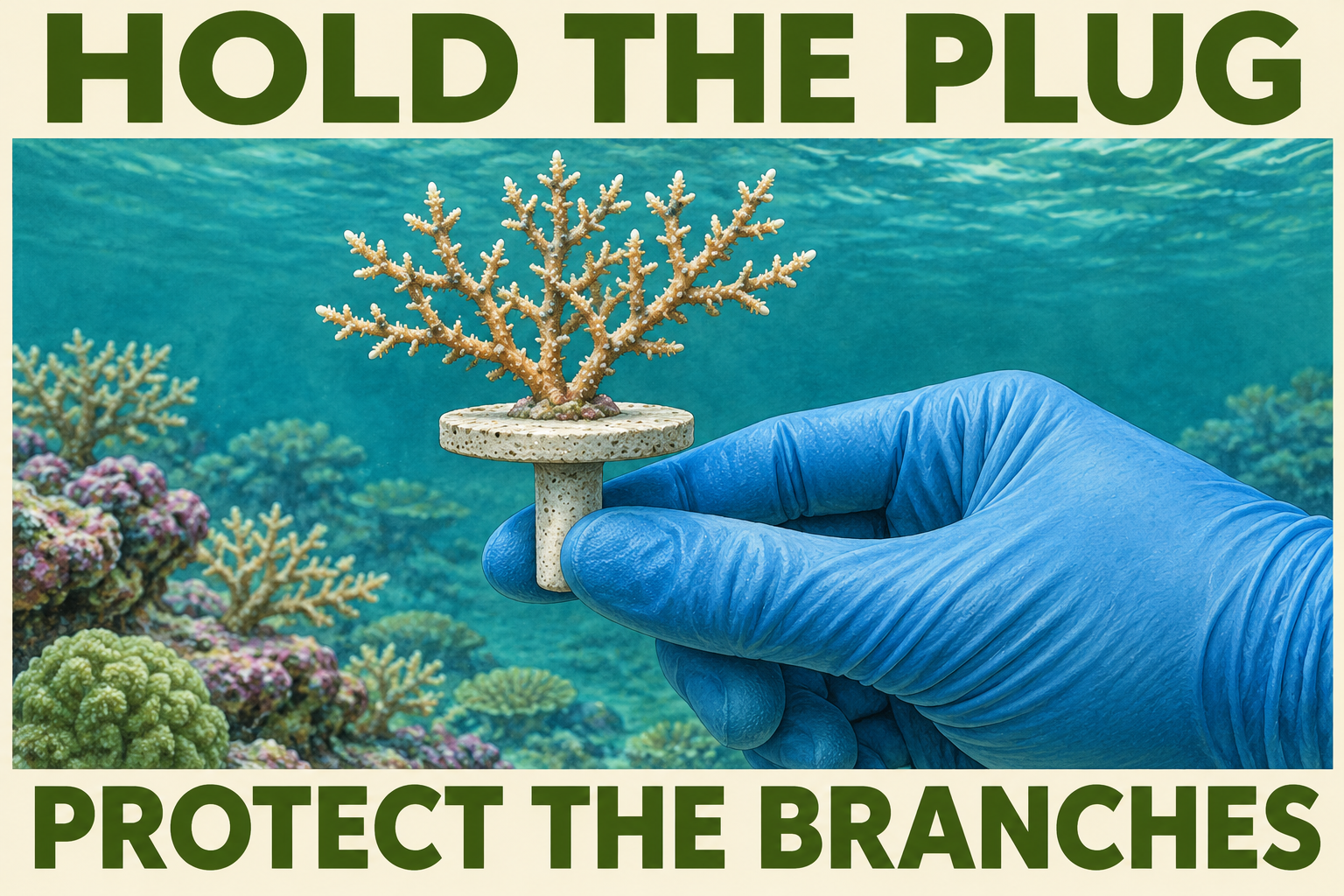
7. Move it by the base. Grip the plug or mounting rock instead of the brittle branches. Set it on a stable ledge that leaves space for your cleaning tools.
8. Think beyond the frag. Leave open water for the forks to spread. Keep stinging corals well away and don't let branches grow into a neighbor.
Keep water steady
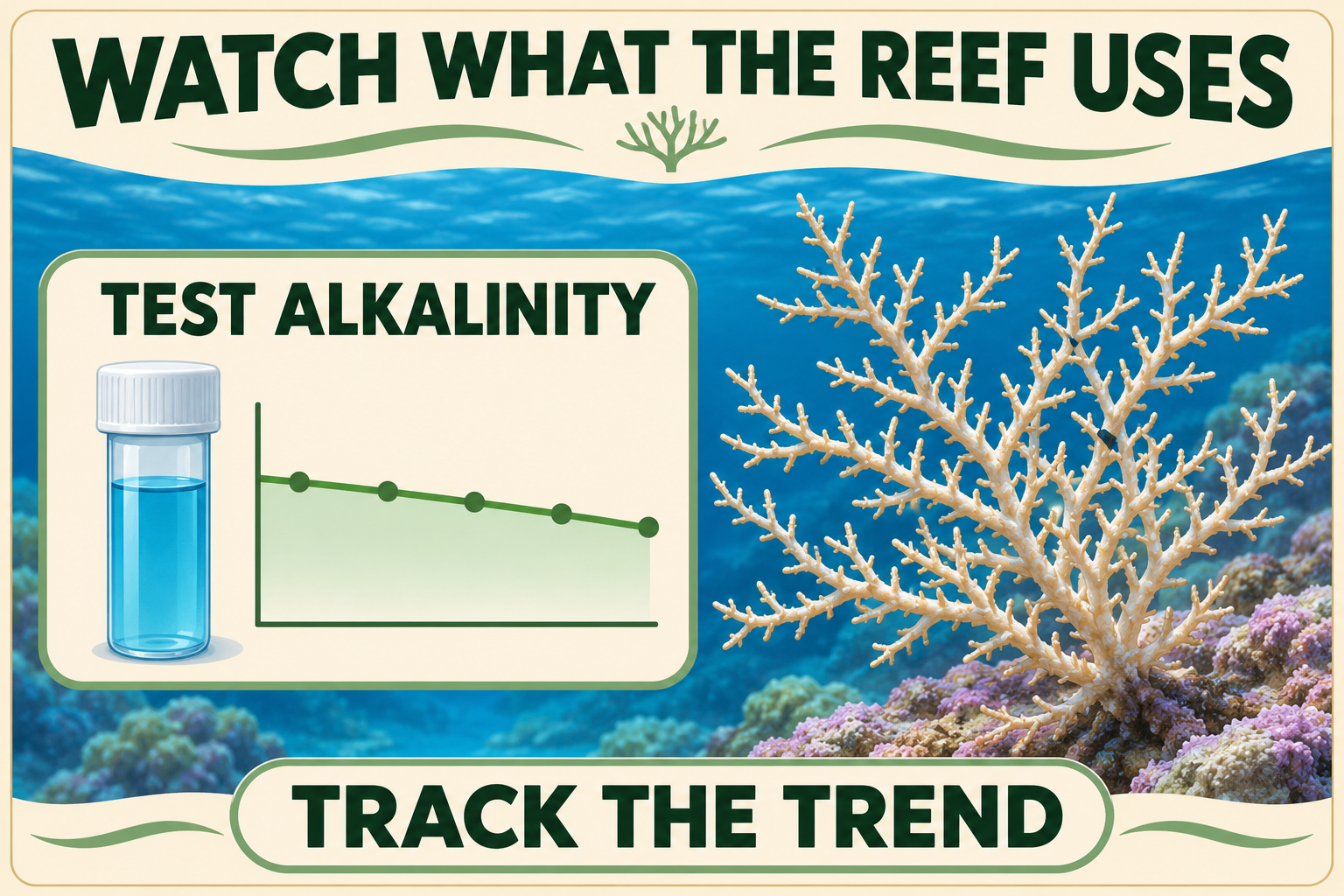
9. Track what your tank uses. Test alkalinity and calcium regularly. As a colony adds skeleton, the tank's needs can change. Use repeated measurements before adjusting the dose.
10. Stick to a steady routine. Keep salinity and temperature steady. Light supplies energy through algae in the coral. Fine coral food is optional; keep it light and don't let uneaten food pile up.
Field notes — what keepers report
11. Bright light, quick growth. One keeper of a coral identified as A. forbesi reported rapid growth under strong LEDs. That's a tank report, not a light target for every new frag.
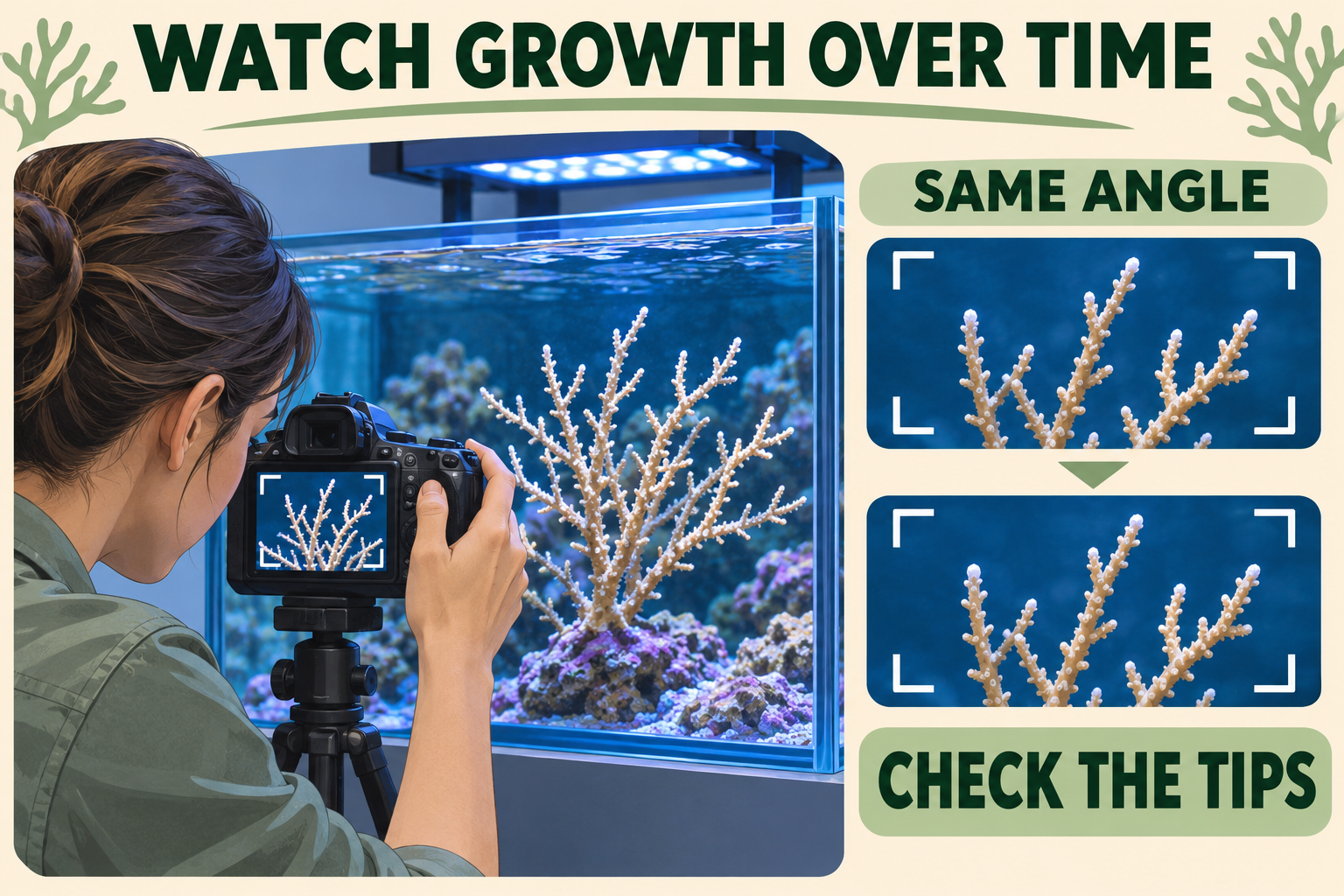
12. A gentler start in another tank. A keeper of a named Anacropora frag reported slow early growth and poor response to strong flow. That was a trade-form report, not a confirmed A. forbesi. Take repeat photos under the same light so you can see how your own frag responds.
Set the plug firmly, let water through the forks, and give the frag time to settle. The next little branch is worth waiting for.
Field Notes
Related species

TNT anacropora
Anacropora sp.
Same genus
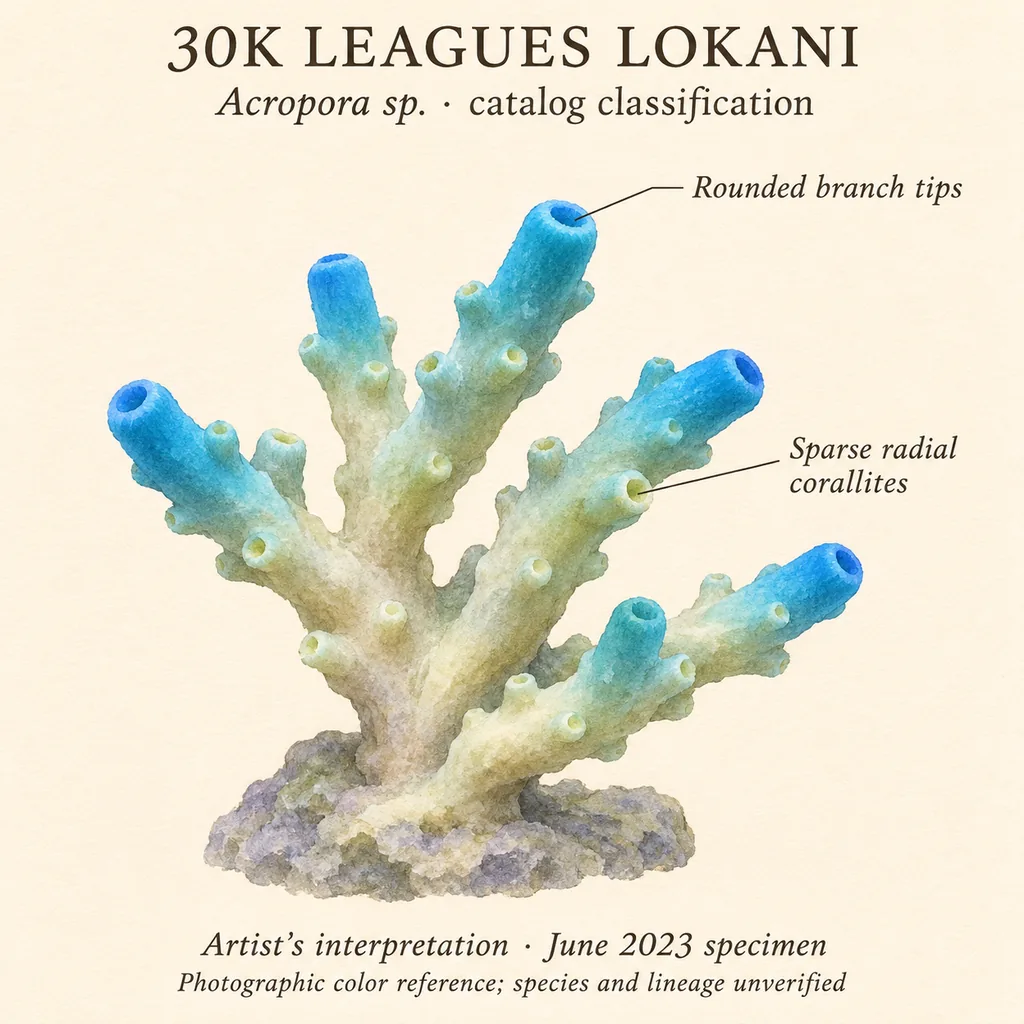
30K Leagues Lokani
Acropora sp.
Similar care · SPS
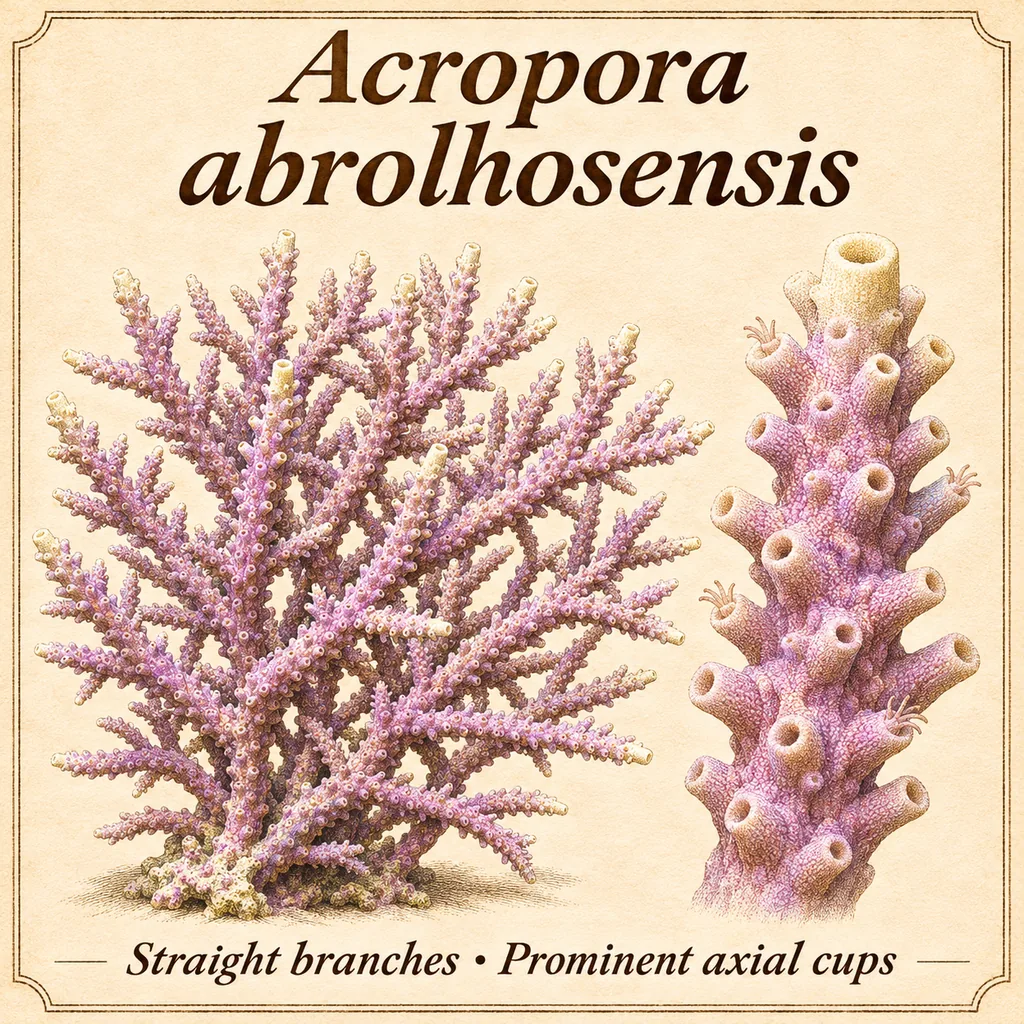
Acropora abrolhosensis
Acropora abrolhosensis
Similar care · SPS
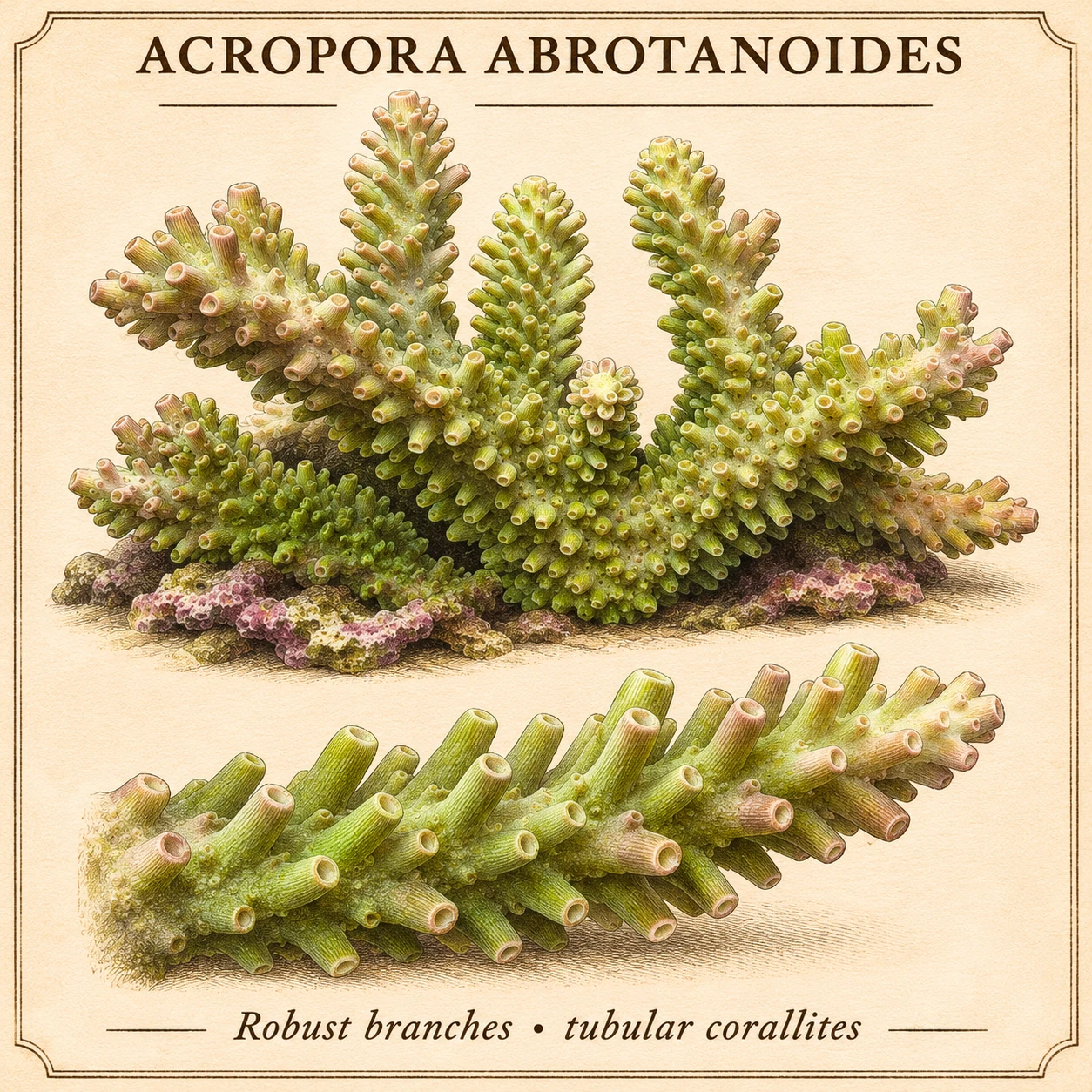
Acropora abrotanoides
Acropora abrotanoides
Similar care · SPS
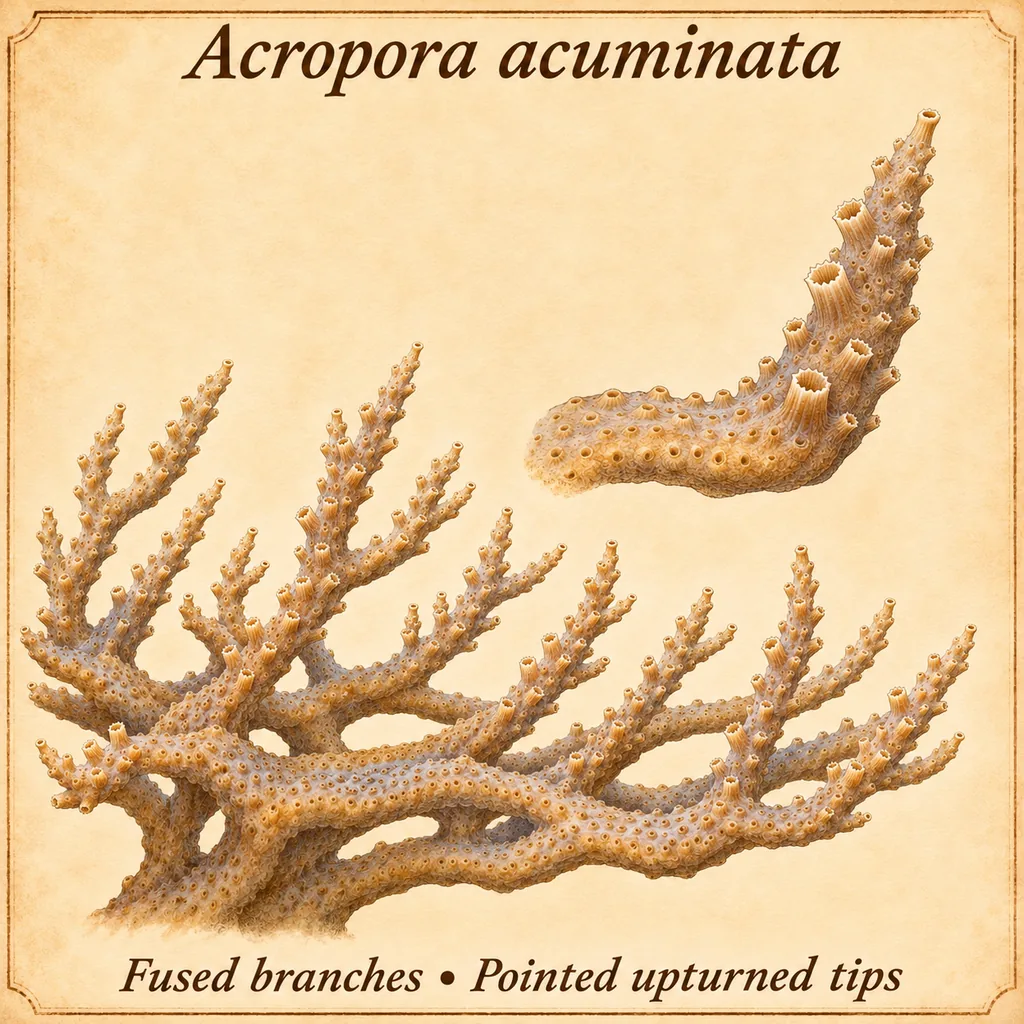
Acropora acuminata
Acropora acuminata
Similar care · SPS
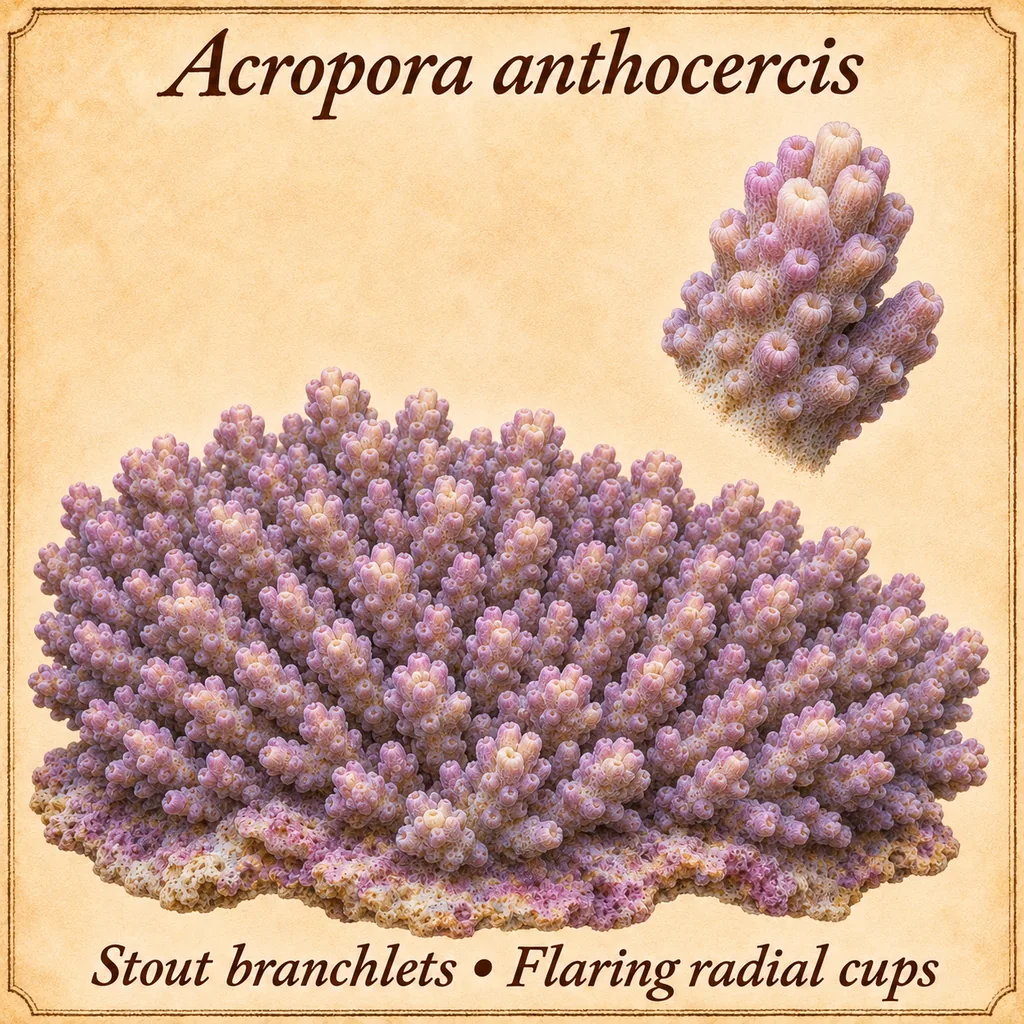
Acropora anthocercis
Acropora anthocercis
Similar care · SPS
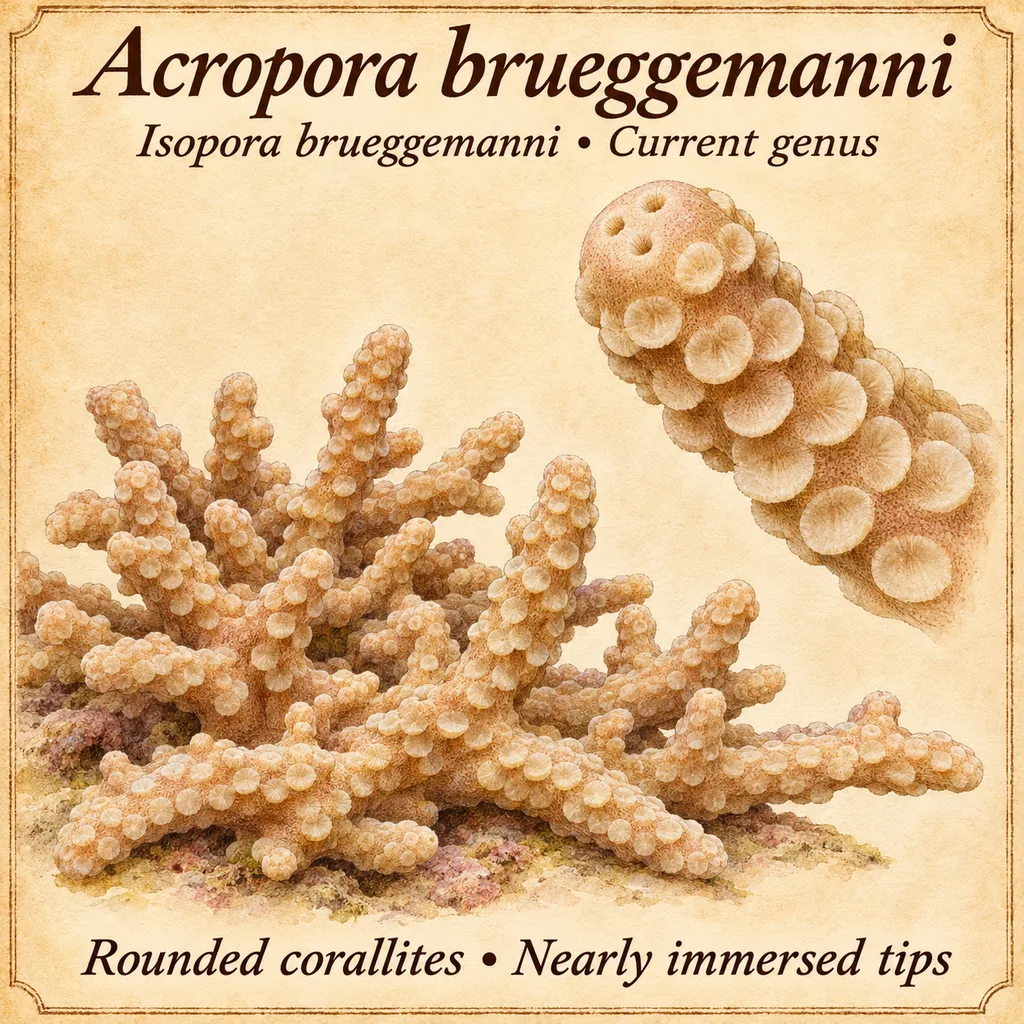
Acropora brueggemanni
Acropora brueggemanni
Similar care · SPS
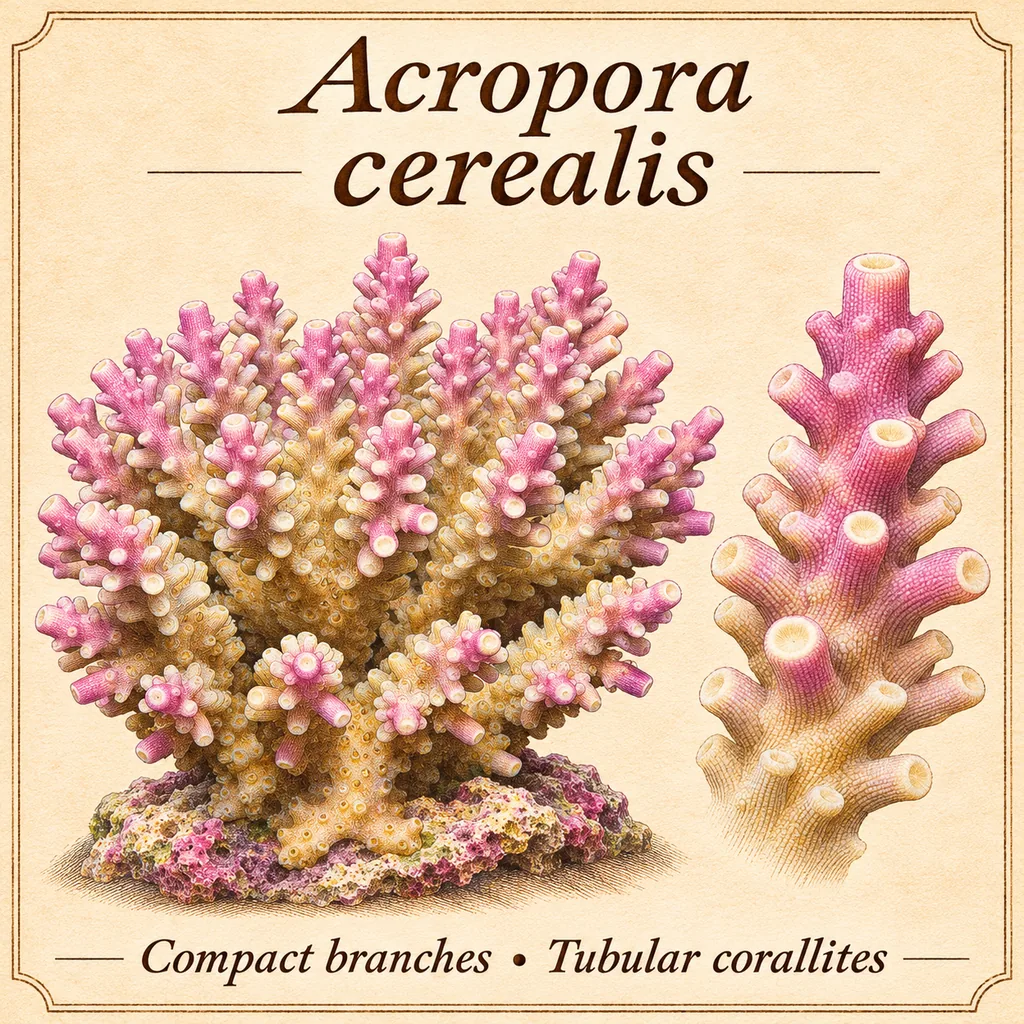
Acropora cerealis
Acropora cerealis
Similar care · SPS