Care facts
- Care
- Intermediate
- Light
- High
- Flow
- High
- Place
- Mid
- Space
- Peaceful
- Growth Rate
- Moderate
Gallery
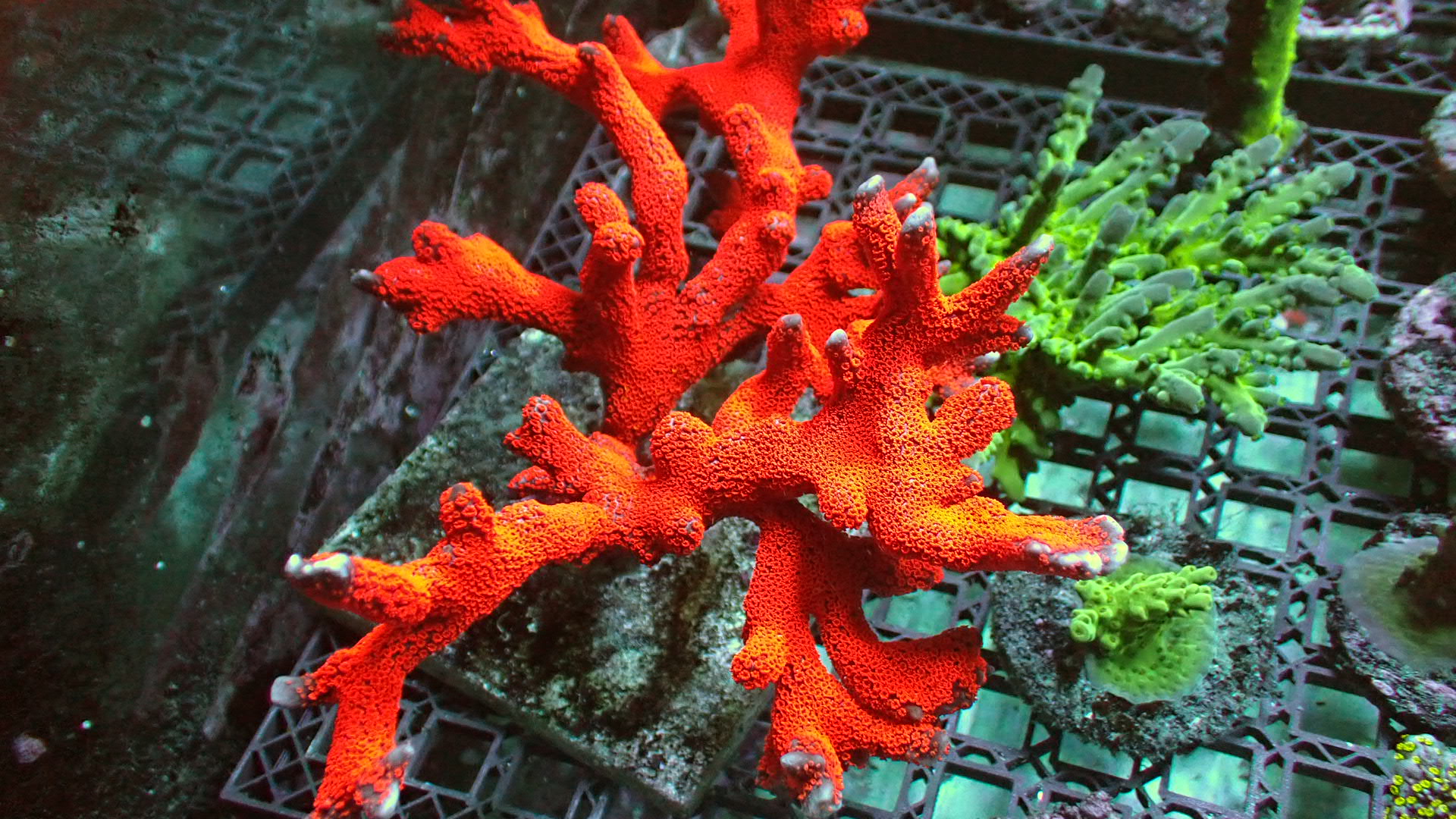
Bubblegum digitata is a named form of Montipora digitata, a branching SPS coral that grows upright, finger-like branches from an encrusting base. The bubblegum name comes from the bright pink polyp color that covers the branches when the coral is settled and well lit. New growth tips often look paler than the older branches, and polyp extension is a quick daily read on how the piece is feeling.
Care basics
The entry lists intermediate difficulty, high light, high flow, mid placement, peaceful behavior, and moderate growth. Give it a strong, bright position in the middle to upper rockwork where random flow moves across the branches from changing directions. Steady flow keeps detritus from settling between the fingers and helps the branches grow thick rather than thin and stretched.
Color in this coral follows stability. Alkalinity, calcium, and magnesium need to stay in range with small swings, because digitata reacts to alkalinity drift with pale tissue and withdrawn polyps. Nutrient levels matter as well. Very clean water can wash the pink out to a dull tan, while heavy nutrients can brown the tissue and slow growth.
Feeding and spacing
Feeding is mostly indirect. The polyps are small and take fine particulate food from the water column, so broadcast feeding a mixed reef suits this coral better than heavy target feeding. Most of its energy comes from light. A light dusting of fine coral food once or twice a week is plenty, and excess food only feeds algae between the branches.
Leave room around the base. Digitata encrusts outward before it branches upward, and that encrusting edge can creep over neighboring frag plugs. The peaceful rating means it loses most fights, so keep stinging LPS and aggressive neighbors far enough away that nothing can reach it at night. Fast-growing montipora nearby can also shade it as colonies fill in.
Growth and fragging
Growth is moderate and steady once the base has encrusted. Branches thicken, fork, and add new tips through the bright season of a stable tank. Common pitfalls are placing a fresh frag straight into the strongest light, letting alkalinity swing while chasing color, and mounting the piece where a powerhead blasts one side only. Acclimate to high light over a week or two and the coral usually rewards patience with strong polyp color.
Field notes — what keepers report
- Keepers report that the pink polyp color comes and goes with tank stability. Some describe the coral holding strong color for months, then fading after an alkalinity swing or a lighting change, with color returning slowly once numbers settle again. The shared advice is to change one variable at a time and wait weeks before judging the result.
- Branch shape gets mixed reports. Keepers in high, random flow describe short, thick fingers, while keepers in gentler flow describe longer, thinner branches on the same named coral. Both sides treat shape as a flow record rather than a health grade, as long as tissue stays full and polyps stay out.
- Encrusting surprises come up often. Keepers describe the base spreading under and around a frag plug and onto the rock, sometimes reaching a neighbor before the branches look large. The common fix is early spacing and trimming the encrusting edge back before contact happens.
Field Notes
Related species

Confused Rainbow Montipora
Montipora sp.
Same genus

Orange monti cap
Montipora capricornis
Same genus
Tubbs Stellata Montipora
Montipora stellata
Same genus

Aequituberculata Montipora
Montipora aequituberculata
Same genus

Leaf Plate Montipora
Montipora capricornis
Same genus

Monasteriata Montipora
Montipora monasteriata
Same genus

Neon Green Montipora Spongodes
Montipora spongodes
Same genus

Tubbs blue digitata
Montipora digitata
Same genus