Favia Brain Coral
Dipsastraea pallida
 ▶ Video
NPS - Larry Basch · Public domain · source
Photo: NPS - Larry Basch, [Wikimedia Commons](https://commons.wikimedia.org/wiki/File:Dipsastraea_pallida,_Samoa.jpg), public domain.
Gallery
Videos
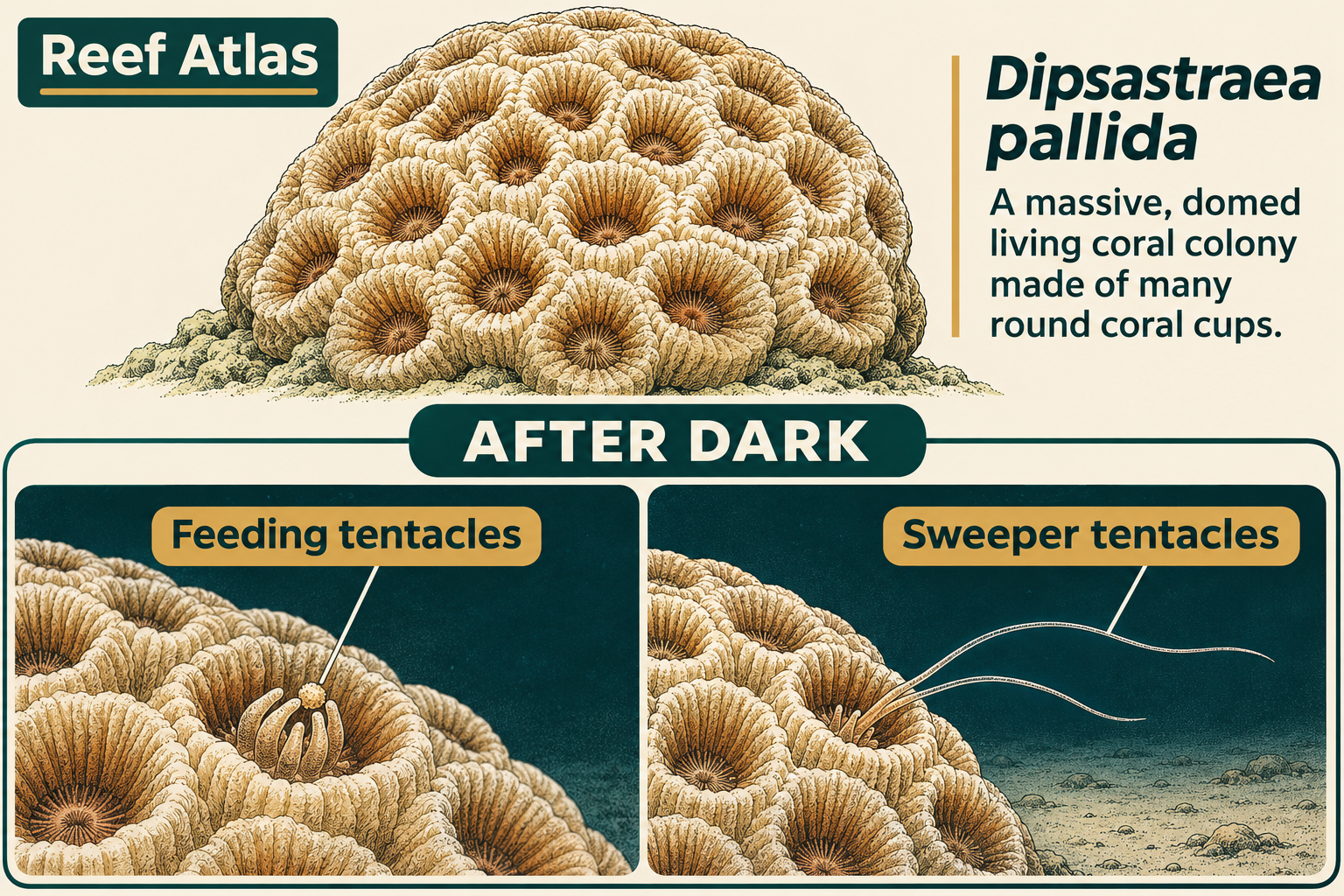
A Favia brain coral looks like a little hillside covered in mouths. Each mouth sits in a round stony cup. Give the colony a quiet hour after lights-out and you get a different show: small feeding tentacles open, and long sweepers can reach into the dark.
History
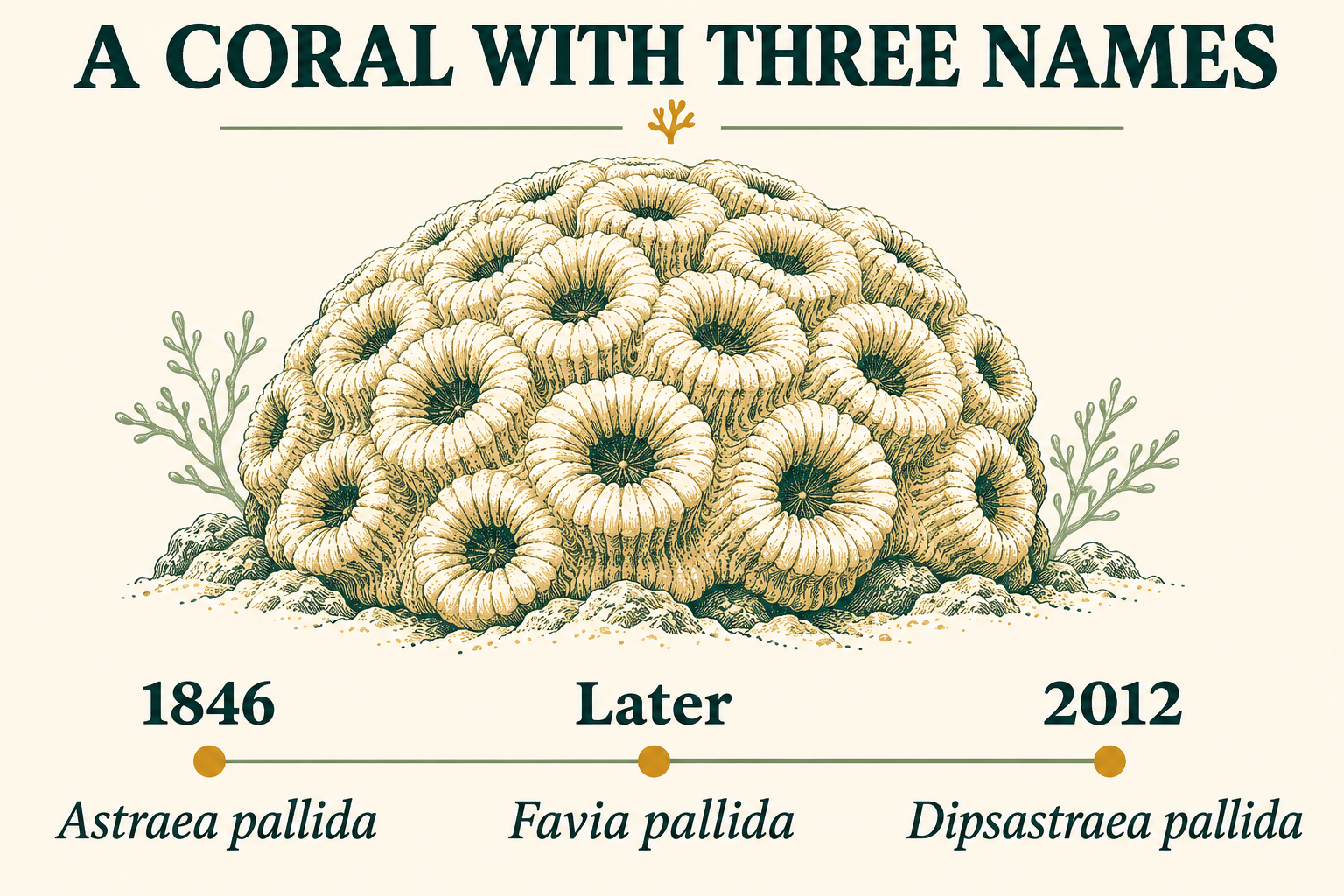
1. Read the old label. James Dwight Dana described this coral in 1846 as Astraea pallida. It later went by Favia pallida. In 2012 it moved to Dipsastraea pallida, the accepted name today.
2. Favia stuck. Reef keepers still call several kinds of closed brain coral “Favia.” Think of it as a shop name. Use Dipsastraea pallida when you want to look up this exact coral.
In the wild
3. Find it behind the reef. This coral lives on tropical reefs from the Indian Ocean to the Pacific, including American Samoa. It often grows along back-reef margins. Colonies grow in shallow water, including at depths of 1 to 11 meters. Light fades down the slope, and current changes from spot to spot.
4. The cups tell a story. A colony builds a rounded mound. Its cups pack closely together in shallow water and sit farther apart in deeper water. Look for darker centers inside pale rings.

Light and flow
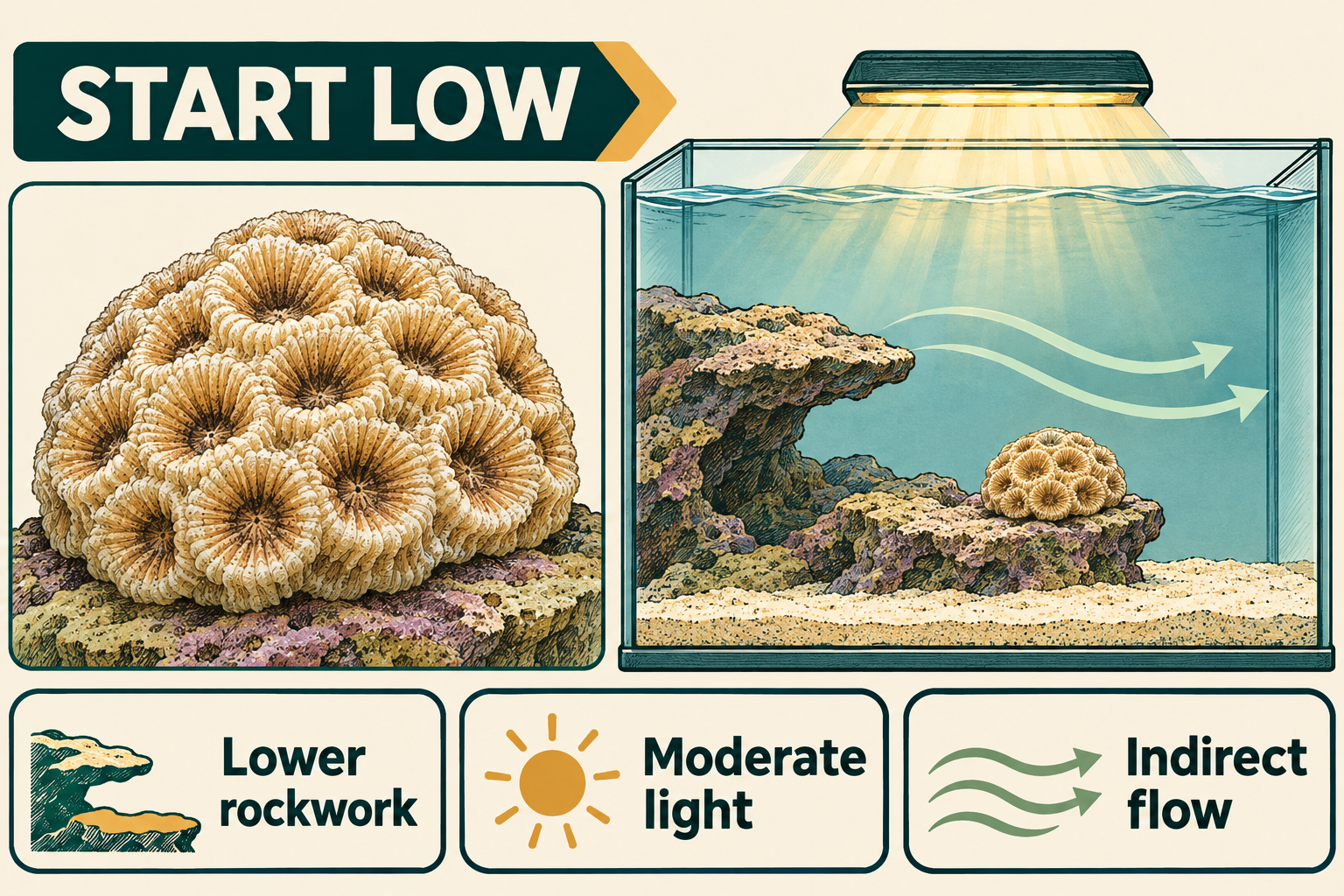
5. Start near the bottom. Set the frag on steady lower rockwork. Acclimate it in softer light first. About 50 to 100 PAR is a useful starting band for Favia-type frags.
6. Send the current past it. Aim for medium, indirect flow. It should sweep away loose grit without pushing the flesh tight against one side. Shift the pump or frag if debris collects in the cups.
Feeding and space
7. Offer a little bite. Try a tiny piece of thawed mysis when the feeding tentacles open. A small weekly meal is plenty to start. Remove scraps that sit on the coral.
8. Check who can touch whom. Leave open space around the colony. After lights-out, check the reach of the longer stinging sweepers in the actual current. Move neighbors beyond that reach and check again as the coral grows.
Water and growth
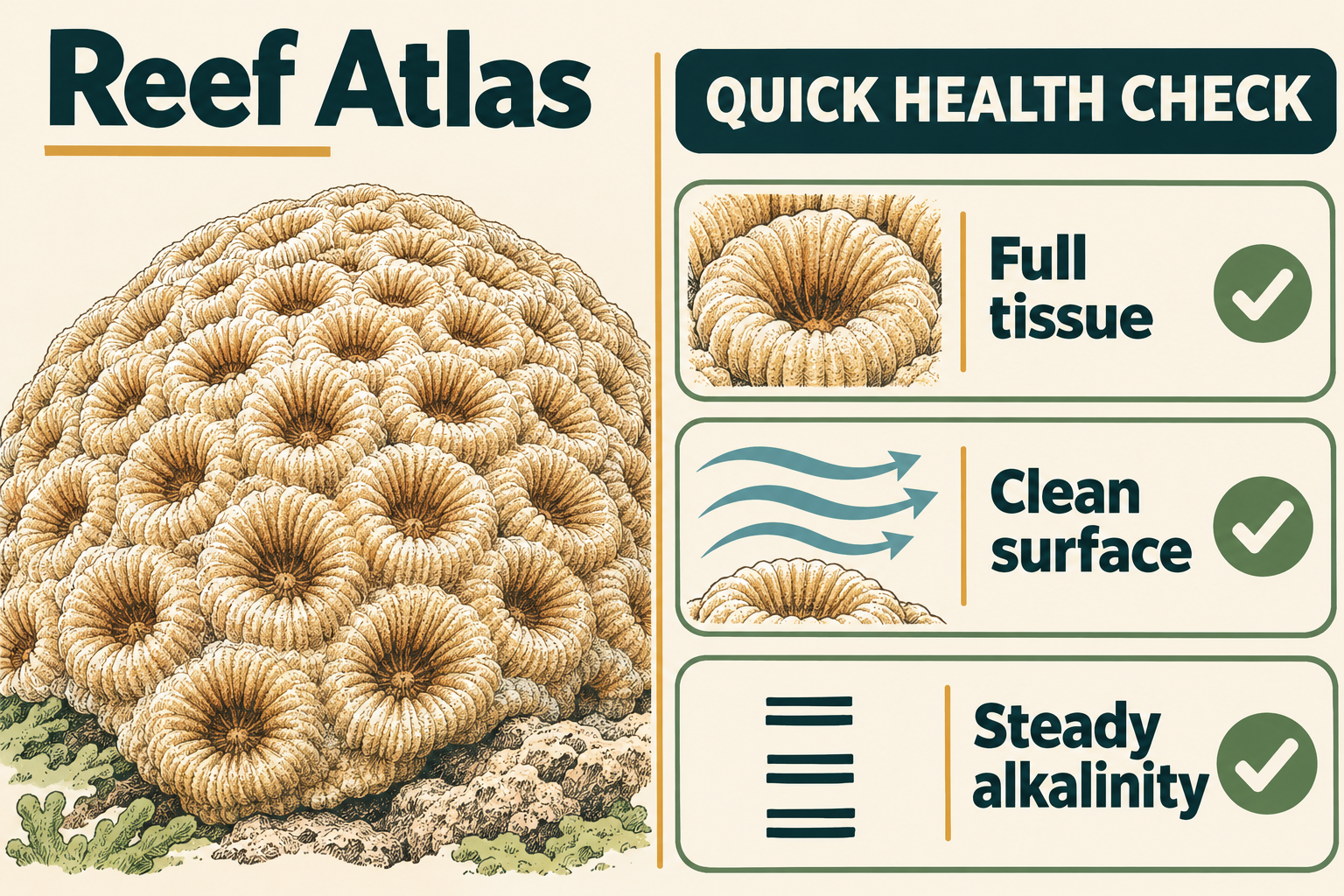
9. Keep the tank steady. Give this stony coral a cycled, stable reef. Test alkalinity and calcium. Keep salinity and temperature steady and make corrections a little at a time.
10. Watch the rim. Photograph the same edge once a month. New tissue and fresh cups show progress. If you see bare skeleton where tissue covered it before, check for grit, stings, and recent changes in water, light or flow.
Field notes — what keepers report
11. Find the right patch of light. Some keepers get good results in softer light on the sand bed. Others grow Favia-type corals on low rock in more open light. Start gentle and watch how the flesh looks before you move the frag.
12. Dinner and darkness get different reactions. Some colonies put out tentacles as soon as fish food hits the water. Others wait for the lights to dim and stay closed at feeding time. Look at both times before you change the setup.
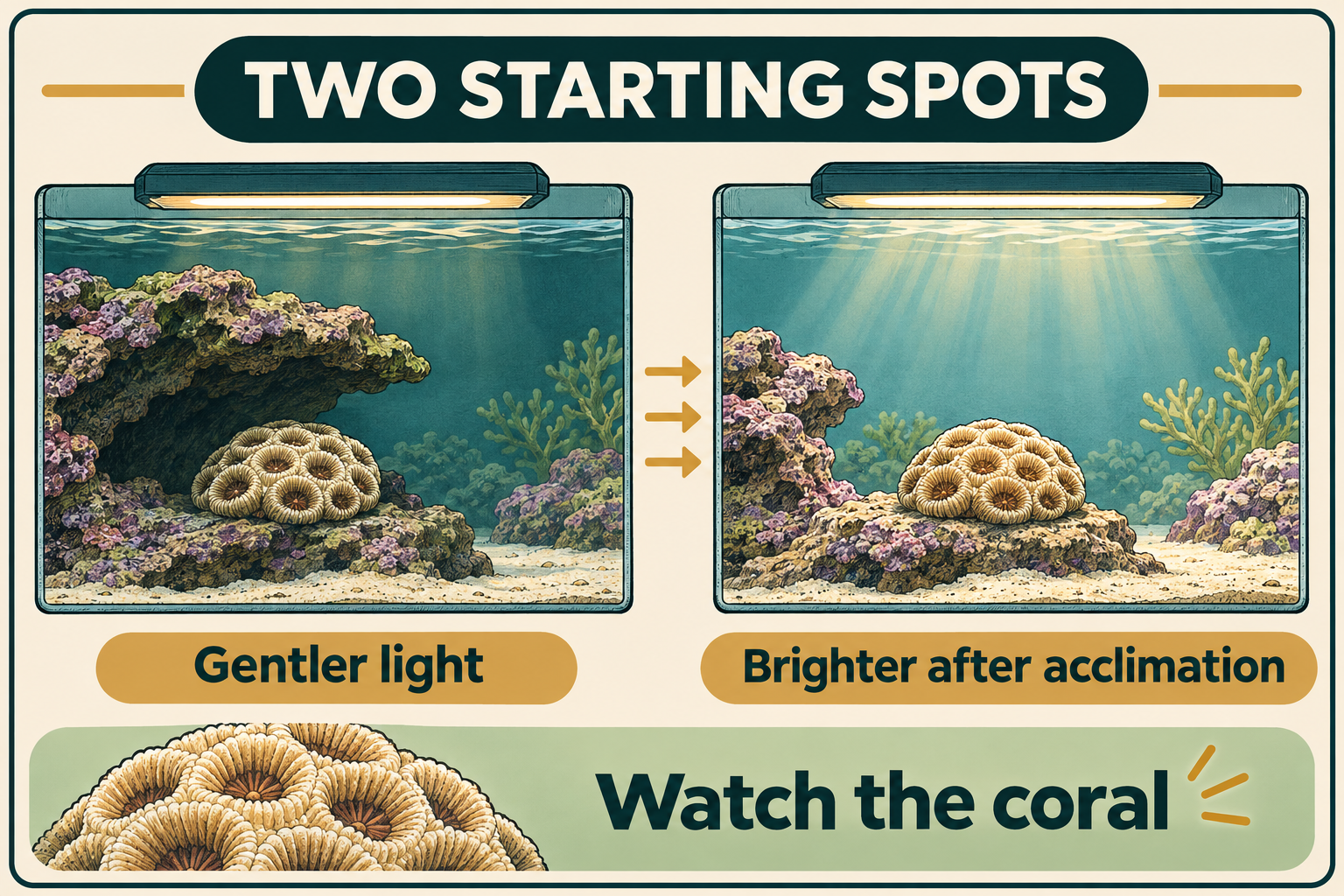
Let it settle low, then get to know one little cup. Look at it in daylight and again after dark. Those two views tell you how it is eating, growing, and using the space you gave it.
Field Notes
Related species
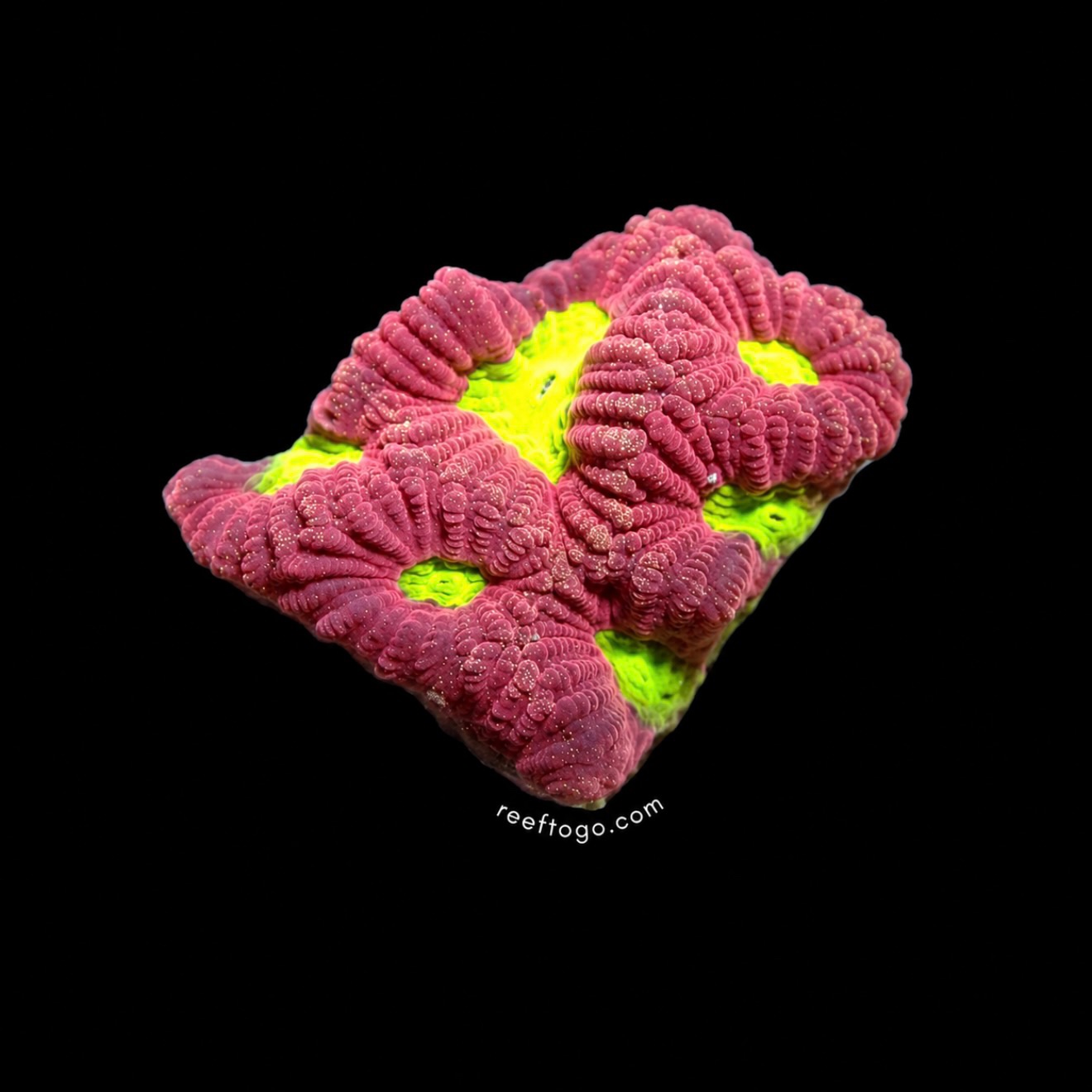
Metroid Dipsastraea
Dipsastraea sp.
Same genus

Sector 001 favia
Dipsastraea sp
Same genus
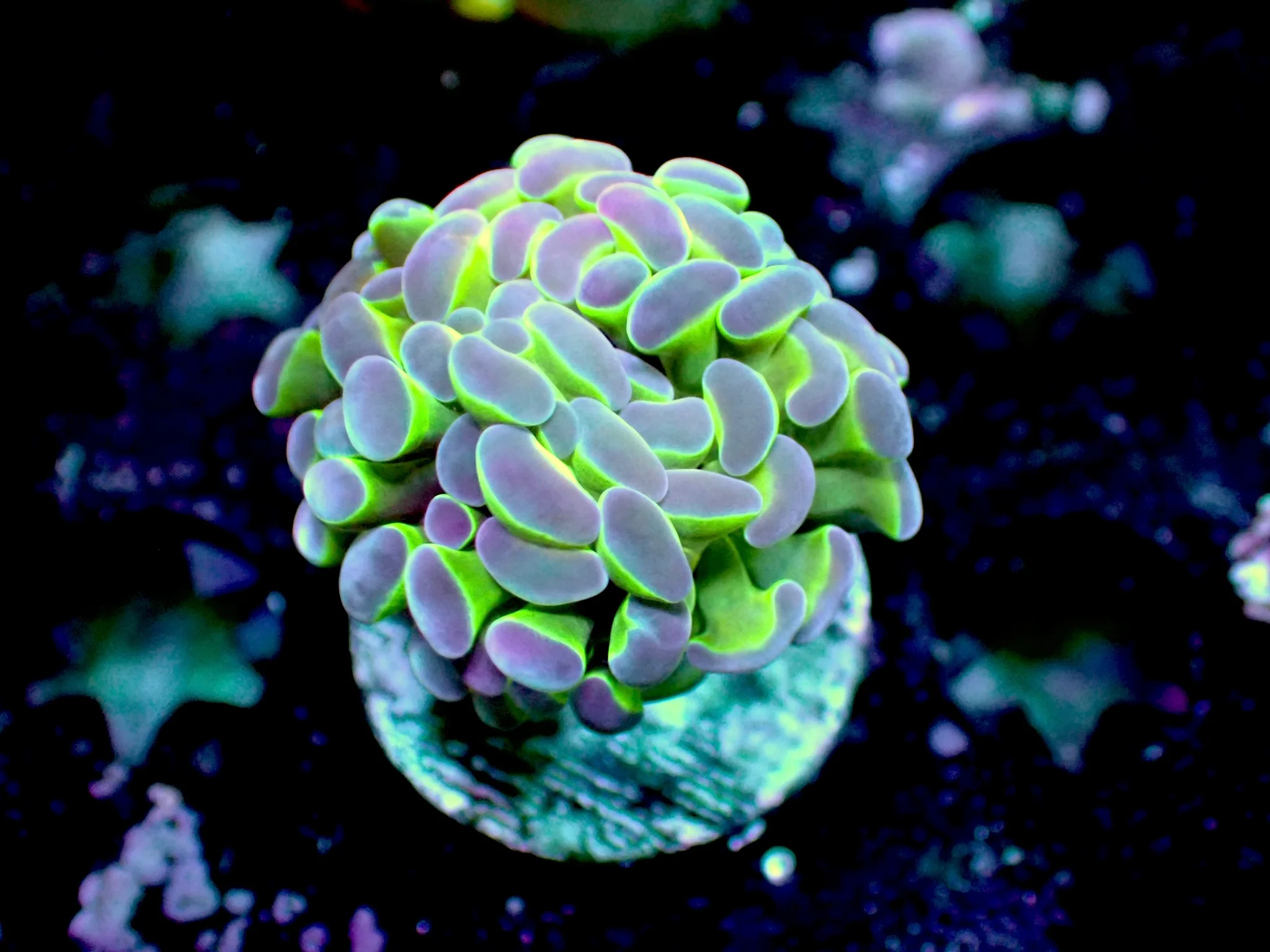
Hologram hammer
Fimbriaphyllia paraancora
Similar care · LPS

Brain Coral
Platygyra daedalea
Similar care · LPS

Candygram hammer
Fimbriaphyllia paraancora
Similar care · LPS
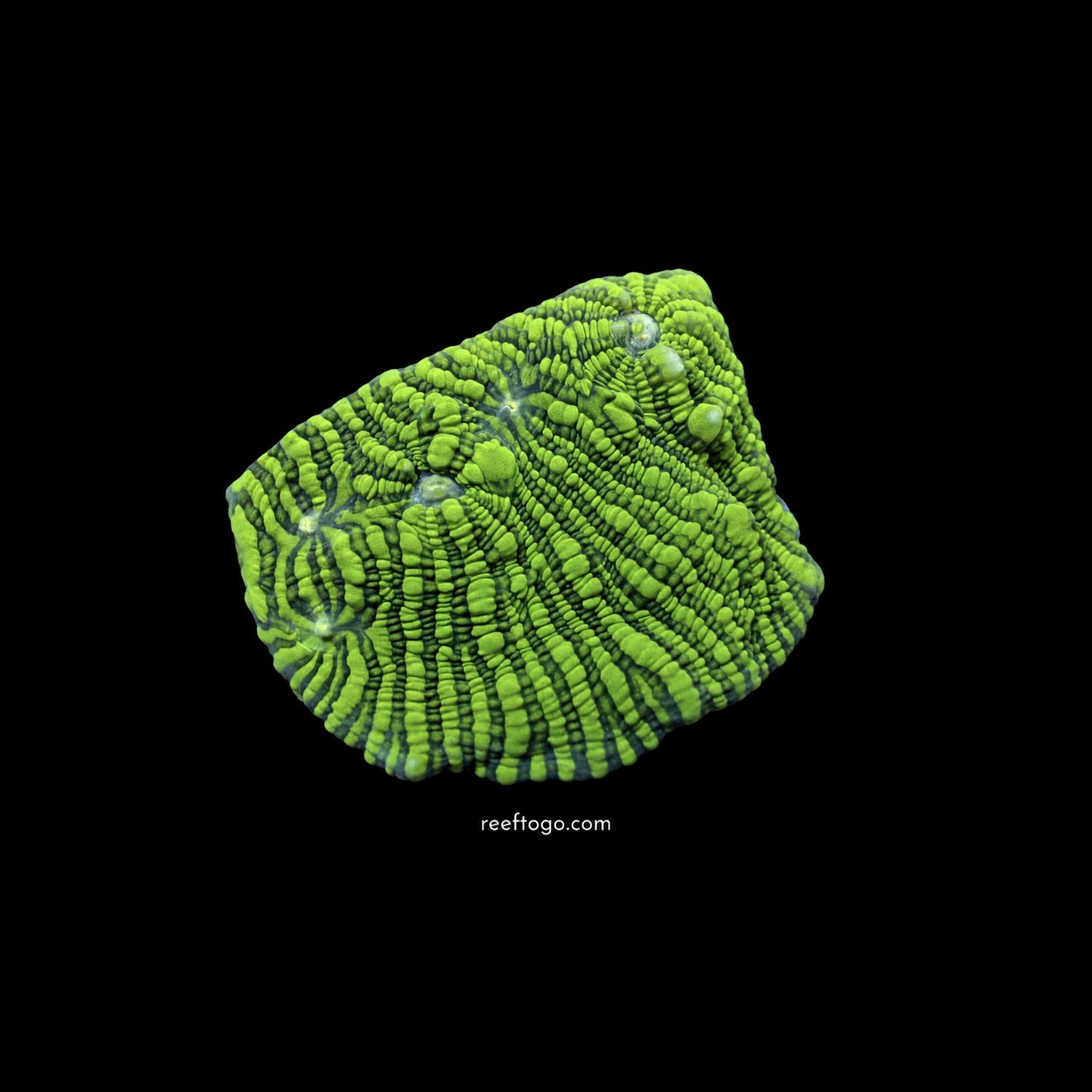
Convict chalice
Echinophyllia sp
Similar care · LPS

Dragon soul favia
Favia sp
Similar care · LPS

Edwardsi Brain Coral
Goniastrea edwardsi
Similar care · LPS