

Dragon soul favia
Favia sp
Dragon soul favia is a high-contrast named form of Favia, listed as Favia sp and kept among the favia and brain corals, a group of LPS that grows as a crust of separate, raised polyps over a heavy skeleton. Each polyp carries its own mouth, the walls between polyps are shared, and the tissue swells well beyond the skeleton when the colony is settled. The dragon soul name follows the pairing keepers look for in this morph: dark, wine-toned walls and valleys set against bright glowing centers, so a settled colony reads as a field of lit eyes in dark tissue.

The entry lists beginner care, medium light, medium flow, bottom placement, moderate aggression, and moderate growth. Place the frag low on stable rockwork or on a flat base near the sand bed, with the polyps facing upward. Medium light at a bottom placement protects the contrast. Strong light can wash out the centers and keep polyps drawn in through the day, and deep shade can dull the dark tones, so judge any move by how fully the polyps inflate over a week before shifting again.
Medium flow should move gently across the colony. The current needs to clear waste from the grooves between polyps without pressing tissue against the skeleton. Direct flow can open recession where flesh meets skeleton, and still corners let detritus settle into the colony, which irritates the tissue and invites algae along the margins. A broad, calm pattern that still lifts debris away during maintenance gives the fullest inflation across the whole group.
Feeding supports color and fullness in this coral. The polyps extend feeder tentacles, often after the main lights dim or when food reaches the water, and they will take small meaty foods such as mysis, finely chopped seafood, or LPS pellets. Offer food once or twice a week with flow lowered for a short window, spread across several polyps rather than loaded onto a single mouth. Light supplies much of the energy, so feeding supports growth and recovery, and uneaten food left in the grooves should be cleared away.
Favias extend sweeper tentacles at night that reach well beyond the daytime polyps, which is why the aggression is listed as moderate. Give the colony clear space on all sides, several inches from other corals, and judge the spacing by the nighttime reach rather than the daytime footprint. Keep stronger LPS clear as well, because favia tissue that loses a contact fight recovers slowly. Leave room for new polyps to form around the edge without pressing into a neighbor or a rock wall.
Growth is moderate for a favia. New polyps bud around the margin, the crust thickens over the skeleton, and the colony widens steadily over months in a settled spot. Stable alkalinity, calcium, and magnesium support that growth. Tissue pulling back between polyps, centers fading across the whole colony, or a margin receding at one edge usually trace back to light that is too strong, a sting received overnight, or a chemistry swing.
Common pitfalls include placing the frag under bright light in pursuit of stronger contrast, mounting it loosely so it tips face-down into the sand, and crowding it against corals that its nighttime sweepers can reach. Support the skeleton from below, start low and calm, and let daily inflation guide any adjustment.
Field notes — what keepers report
- Color reports split by light level. Keepers in medium, blue-leaning light describe bright centers held against deep, dark walls, while keepers who placed the coral higher describe washed, pale tissue that recovered after a move back down. Both sides treat slow acclimation as essential for keeping the contrast.
- Sweeper reports are a recurring warning. Keepers describe damage to a neighbor placed within daytime reach that happened overnight and showed only the next morning. Other keepers report no incidents at all once several inches of clear space were left. Spacing for the nighttime reach is the shared practice.
- Feeding reports lean positive. Keepers who target-feed describe fuller polyps and steadier growth at the margin, while keepers who rely on light and broadcast feeding alone describe healthy colonies that grow more slowly. Reports agree that smaller offerings, cleared if uneaten, work better than heavy meals left in the grooves.


Field Notes
Related species
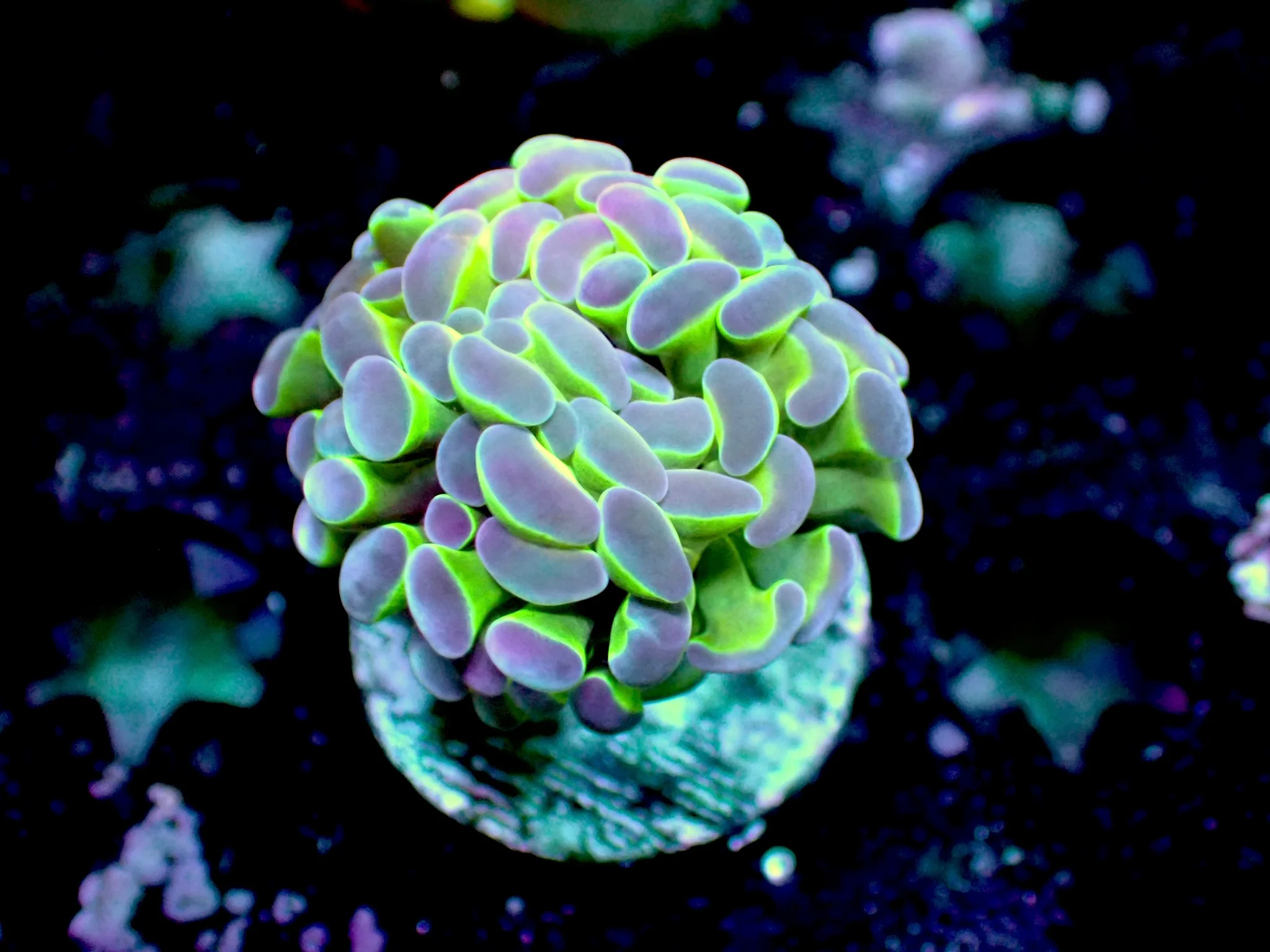
Hologram hammer
Fimbriaphyllia paraancora
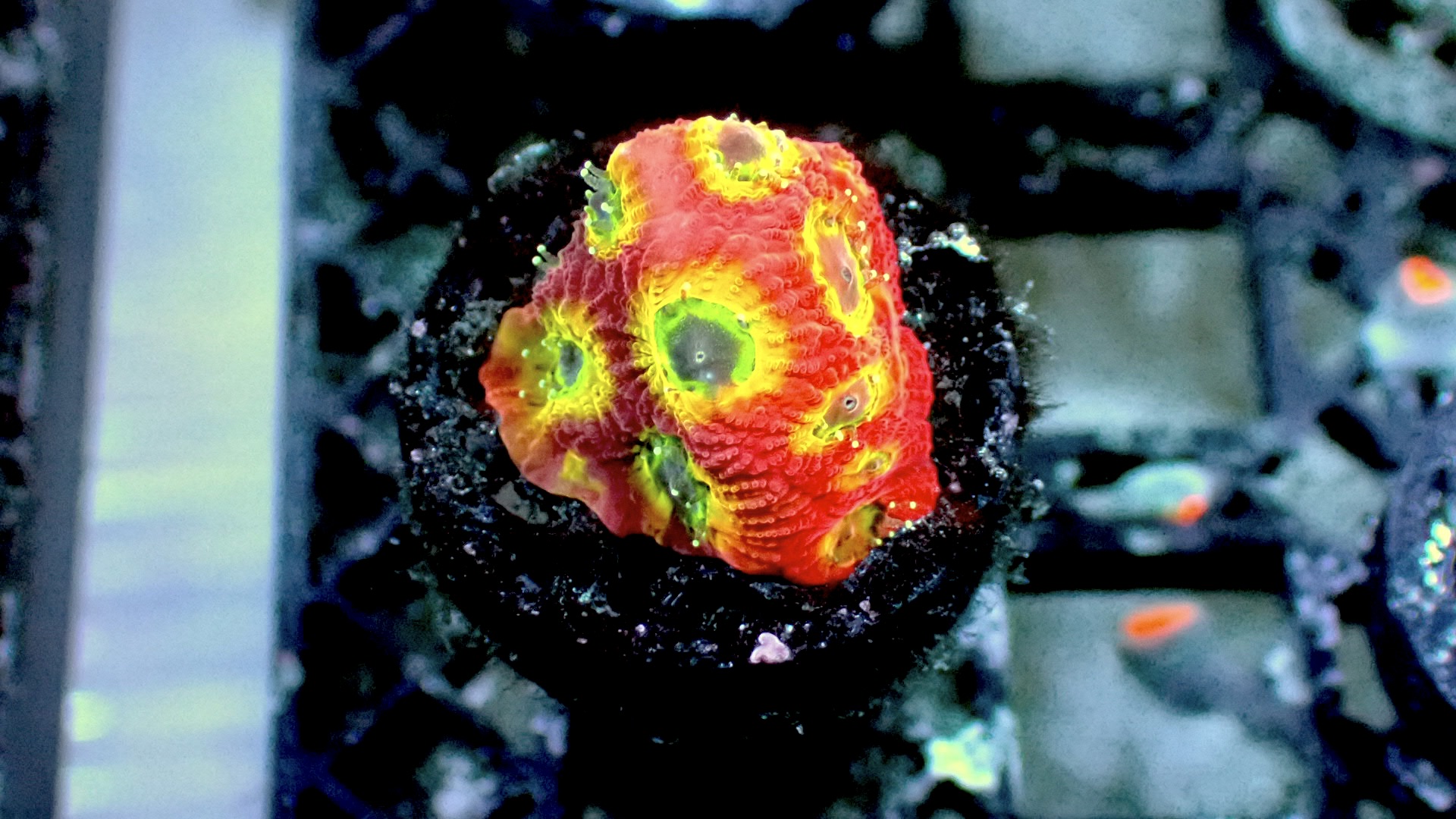
Lemon lime favia
Favites sp

Bulbasaur goniopora
Goniopora sp

Citrus Orange Short Polyp Goniopora

Confetti Grafted Goniopora

Duncan coral
Duncanopsammia axifuga
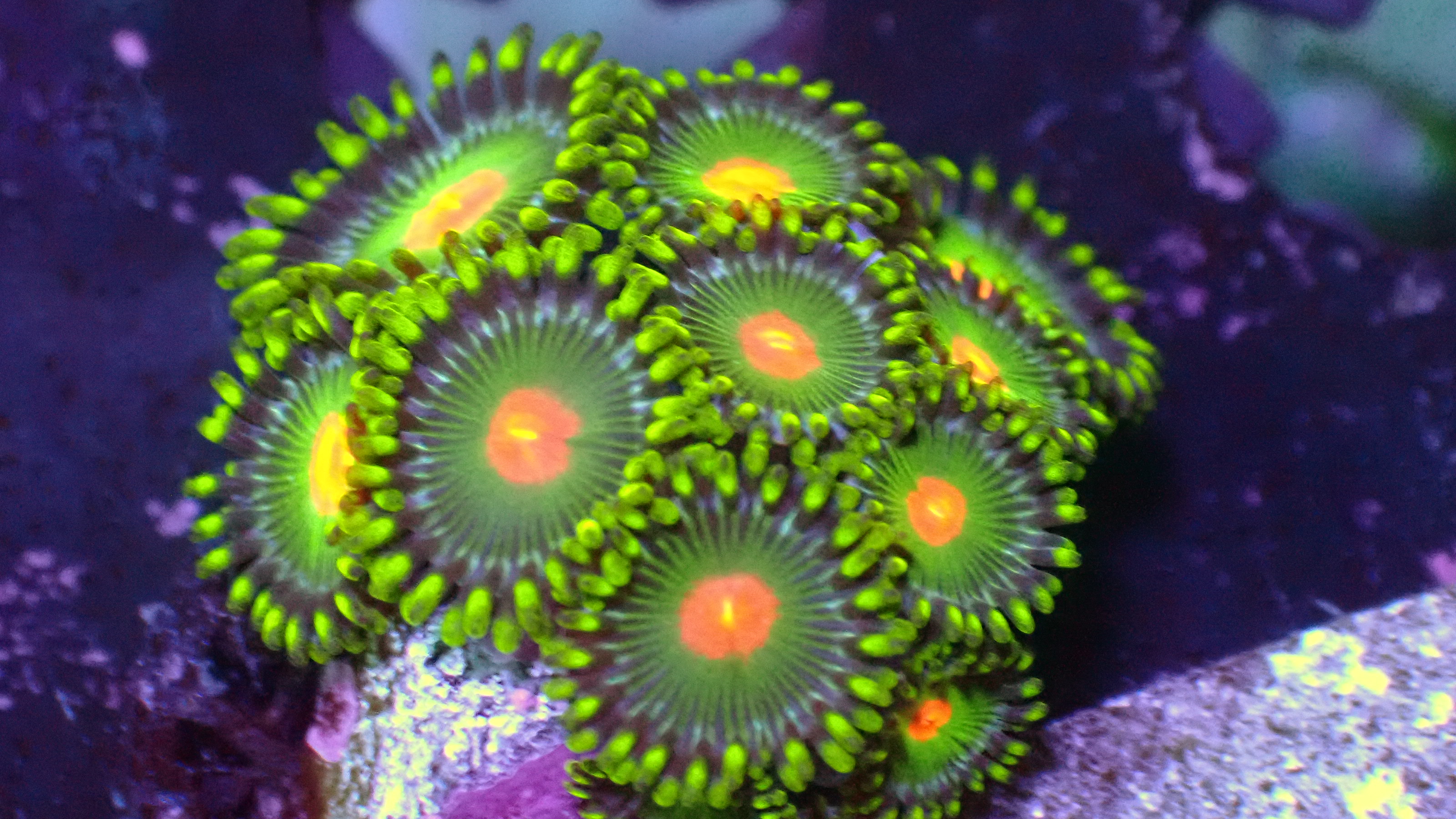
Green Bay zoas
Zoanthus sp

Lava lamp goniopora
Goniopora sp
In the shop now

Similar picks from the shop


Love this species? No tank needed.
Reef art from the shop — for the wall, not the tank.


Get notified when Reef To Go has Dragon soul favia in stock or up for auction. One email when it's in — no spam.