Brain Coral
Platygyra daedalea

Diego Delso · CC BY-SA 4.0 · source
Gallery
The maze on this coral is alive. Follow one groove and you'll pass a whole row of tiny mouths, all tucked between stone ridges. After dark, some tentacles reach much farther than you'd guess. Give this brain coral a low, steady spot and leave room to see what comes out when the lights go down.
History of the coral
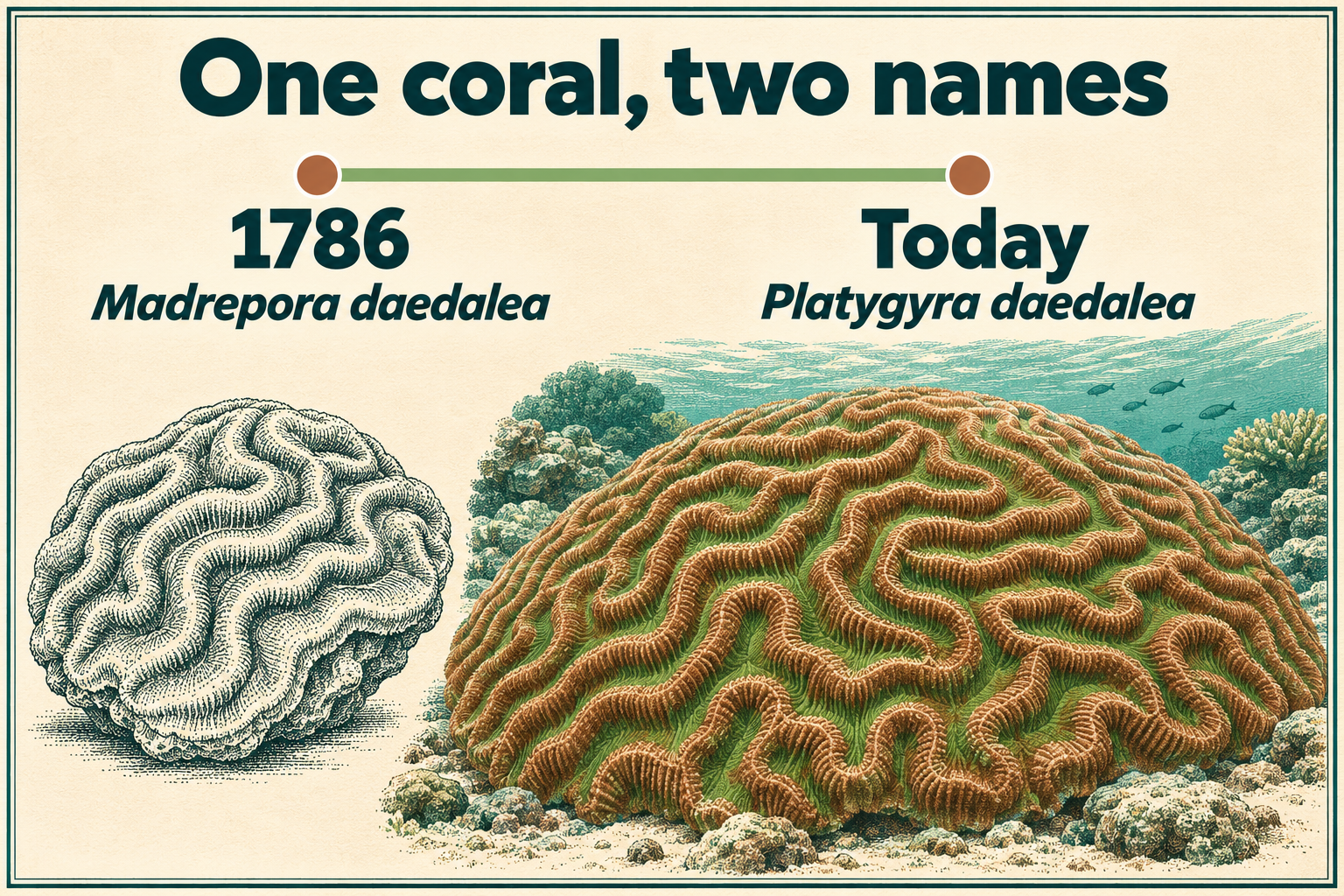
1. A maze with a long paper trail. In 1786, John Ellis and Daniel Solander's work recorded this coral as Madrepora daedalea. Today it goes by Platygyra daedalea. The name changed. The winding valleys are still the first thing you notice.
2. Brain coral is a nickname, not an ID. Lots of unrelated corals look like brains. Even close relatives can fool you. Platygyra lamellina usually has thicker walls and rounder little teeth on the ridges. Look at the structure, not just the color or the name on a frag plug.
How they live in the wild
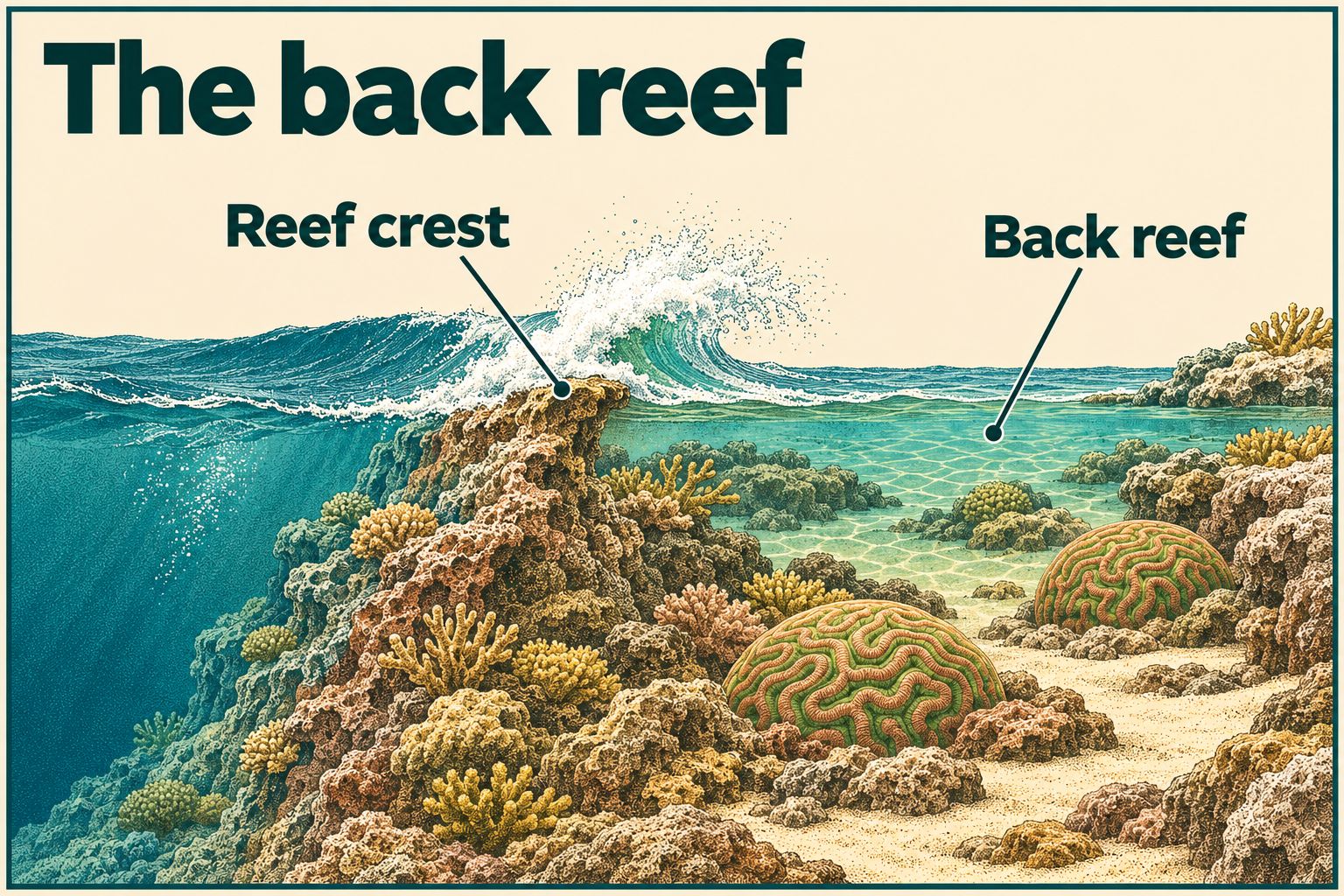
3. Look behind the reef crest. This coral lives across tropical Indo-Pacific reefs, from the Red Sea through the Indian Ocean to the western and central Pacific. It's especially common along back reef margins, on the sheltered side of the crest, but it lives in other parts of the reef too.
4. There are two ways to get dinner. Tiny algae inside the tissue turn sunlight into sugars that help feed the coral. The polyps can also grab small food drifting by. A colony is one shared mound, but it has many mouths.
Read the maze
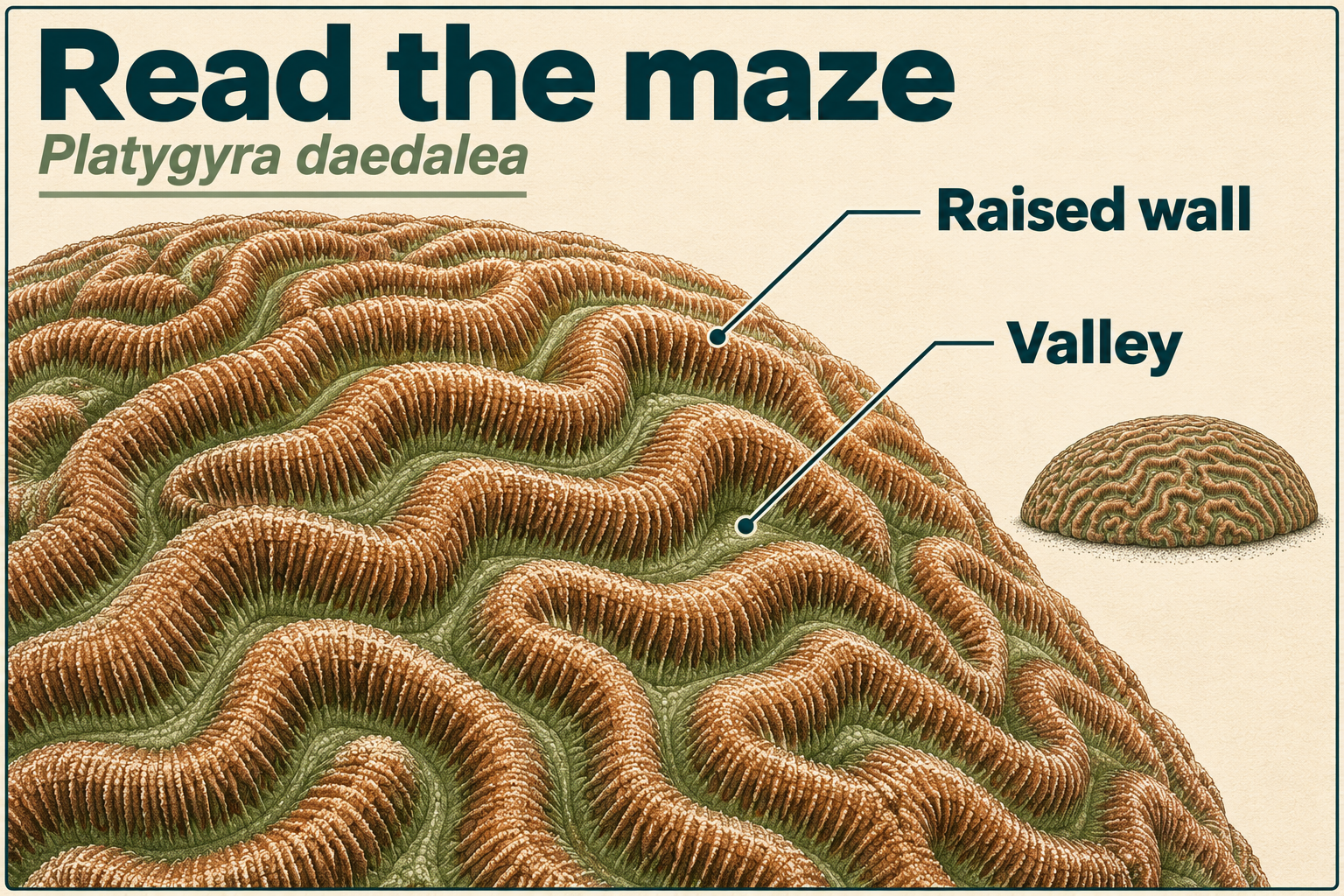
5. Trace the valleys. The colony usually builds a stout mound. Its mouths sit in winding valleys separated by raised walls. Look closely and you'll see little skeletal teeth sticking out along the sides of the valleys. Those jagged edges are part of the pattern.
6. Watch the rim, not the calendar. This coral builds its skeleton slowly. Take a photo under white light from the same angle every month. Look for an intact, fleshy edge and new tissue spreading over the rock or plug. Comparing pictures works better than guessing day to day.
Light, flow and placement
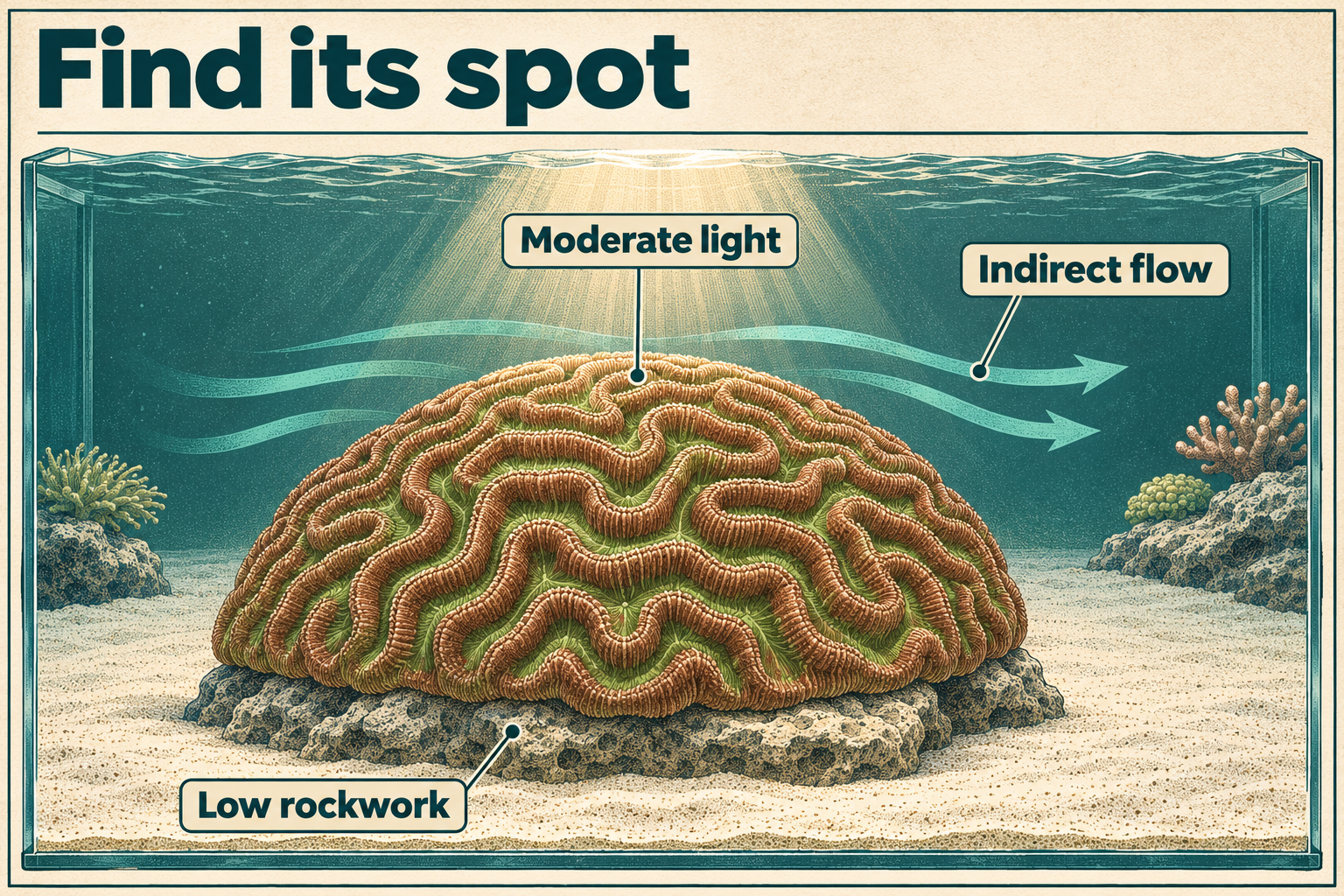
7. Start low and bright enough. Pick stable rockwork near the bottom where sand won't pile onto the coral. Start with modest light and work toward moderate light as it settles. Don't move a new frag from a dim tray straight under the brightest part of your fixture.
8. Sweep the grooves with water. Use medium, indirect flow. Watch a few fine food particles cross the surface. You want enough movement to keep debris from settling into the valleys without a narrow jet hammering the tissue. Adjust one pump at a time.
Feeding and neighbors
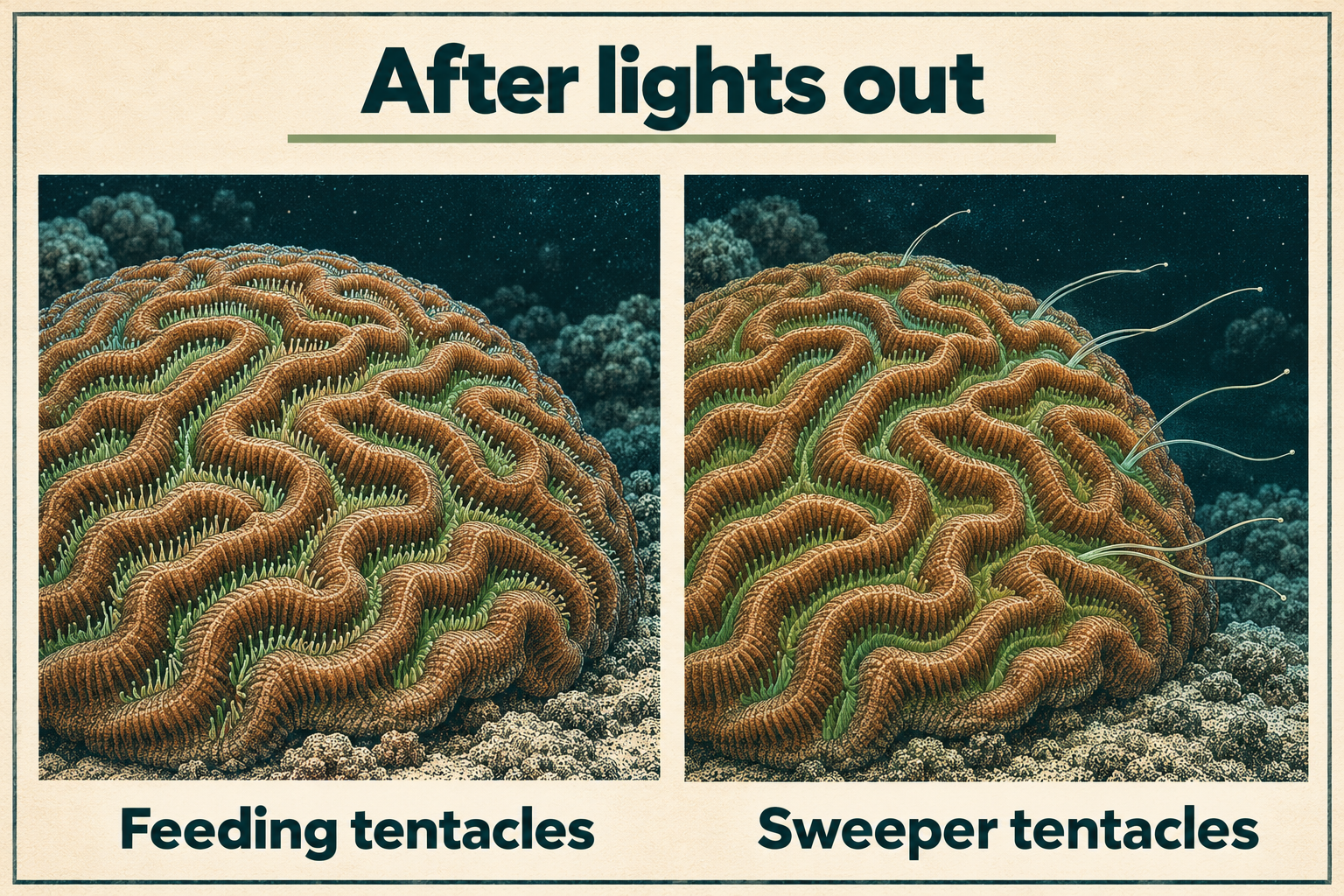
9. Feed the short ones. If the short feeding tentacles are out, offer a small bit of fine meaty food, like finely chopped mysis. Ease the flow briefly if food blows away, then restore it. Start with a tiny portion and remove leftovers. The coral doesn't need a fixed feeding day.
10. Leave room for the long ones. Sweepers can reach well past the edge and sting a neighbor. Check after lights out, including on the down-current side, and leave more space than the daytime outline suggests. Move a neighbor if a sweeper reaches it. Check again as the colony grows. A quiet first night doesn't tell you how far it will reach later. Even a colony on its own can grow sweepers.
Field notes
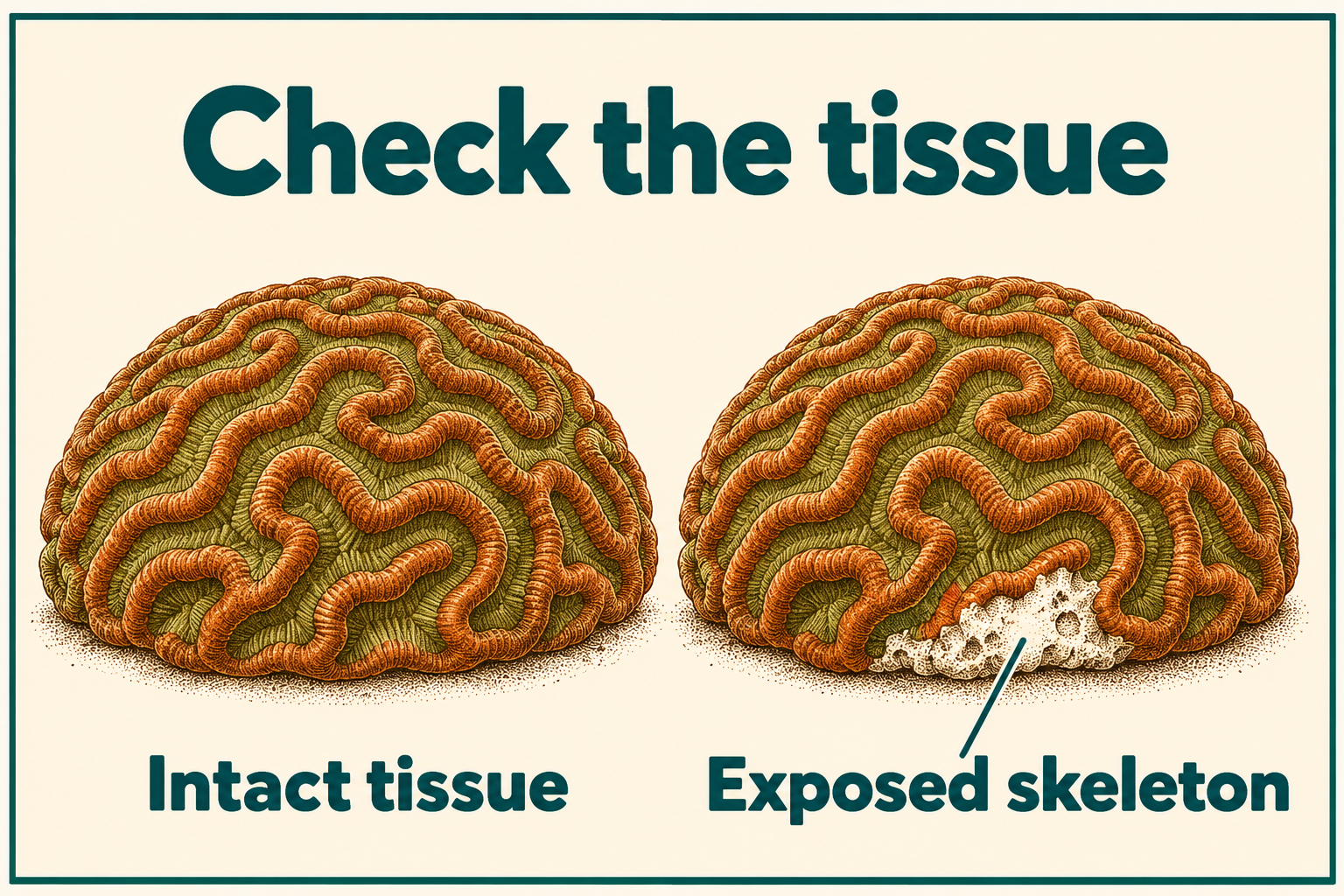
11. A white patch is a clue, not a diagnosis. Pale tissue can still cover the skeleton. A bare chalky patch means tissue is missing. Photograph the edge and check for a nearby stinger, buried sand, a direct jet, or recent changes in light or water. Don't assume the alkalinity is wrong and start dosing on sight.
12. Check the basics before chasing a fix. Keep temperature and salinity steady. Track alkalinity and calcium so you know what the reef actually uses. If a bare patch spreads, log the changes and act on what you find rather than changing everything at once.
Set this coral where you can see both its valleys and its edges. By day you get the maze. After dark you get to see how much of the tank it really uses.
Field Notes
Related species

Hard Brain Coral
Platygyra lamellina
Same genus

Brain Maze Coral
Platygyra lamellina
Same genus
Hologram hammer
Fimbriaphyllia paraancora
Similar care · LPS

Candygram hammer
Fimbriaphyllia paraancora
Similar care · LPS
Convict chalice
Echinophyllia sp
Similar care · LPS

Dragon soul favia
Favia sp
Similar care · LPS

Edwardsi Brain Coral
Goniastrea edwardsi
Similar care · LPS

Favia Brain Coral
Dipsastraea pallida
Similar care · LPS