Palytoxin safety
Some zoanthids and palythoas can contain a potent toxin. Wear sturdy waterproof gloves and eye protection, minimize handling, and keep colonies submerged when possible. Never boil, steam, pressure-wash or scrub colonized rock under running water. Keep other people and pets away during handling. If exposure is suspected, seek urgent medical advice and tell the clinician about possible palytoxin exposure.
Sources: CDC: palytoxin exposure · OATA: avoiding palytoxin poisoning
Gallery
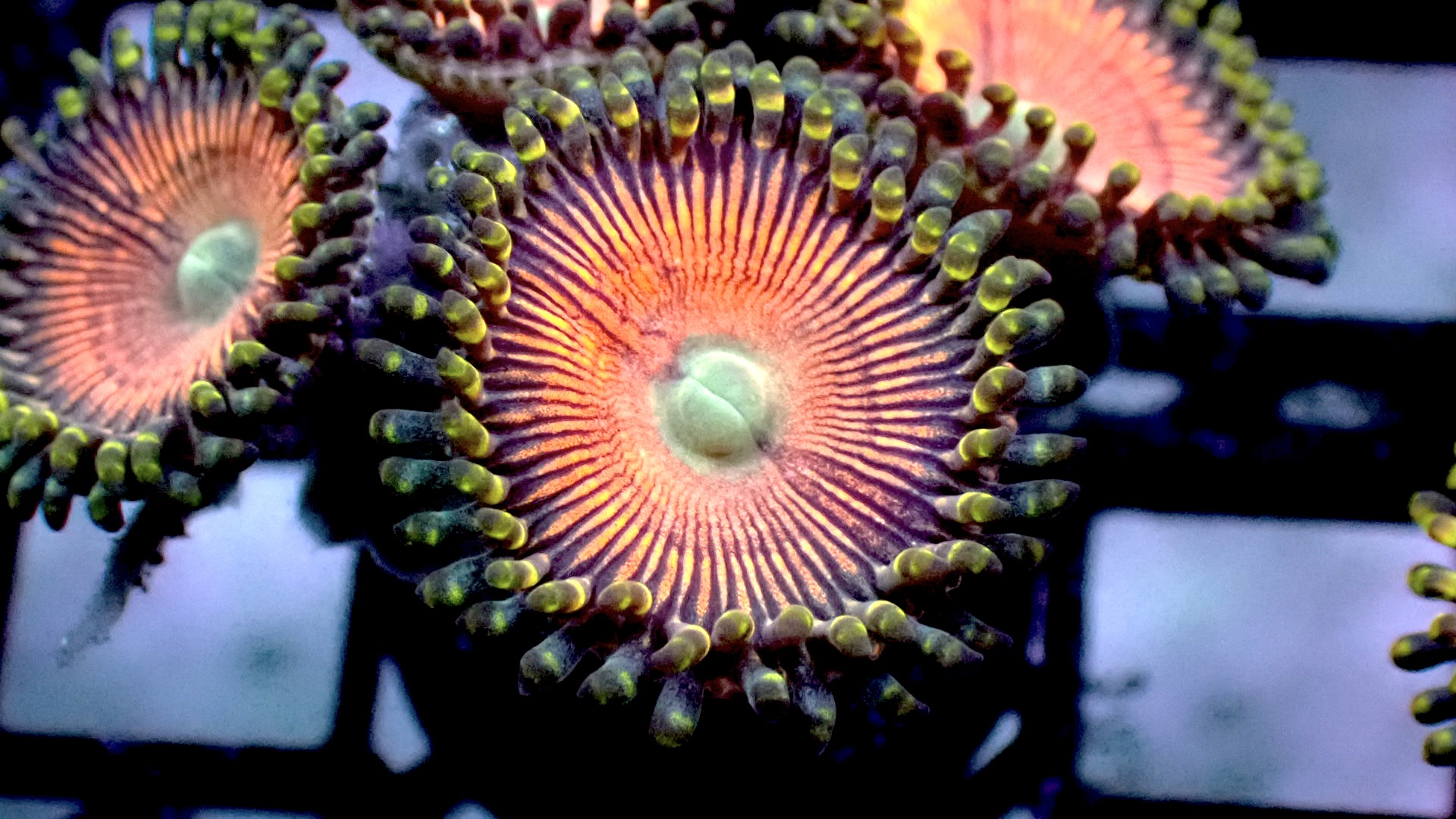
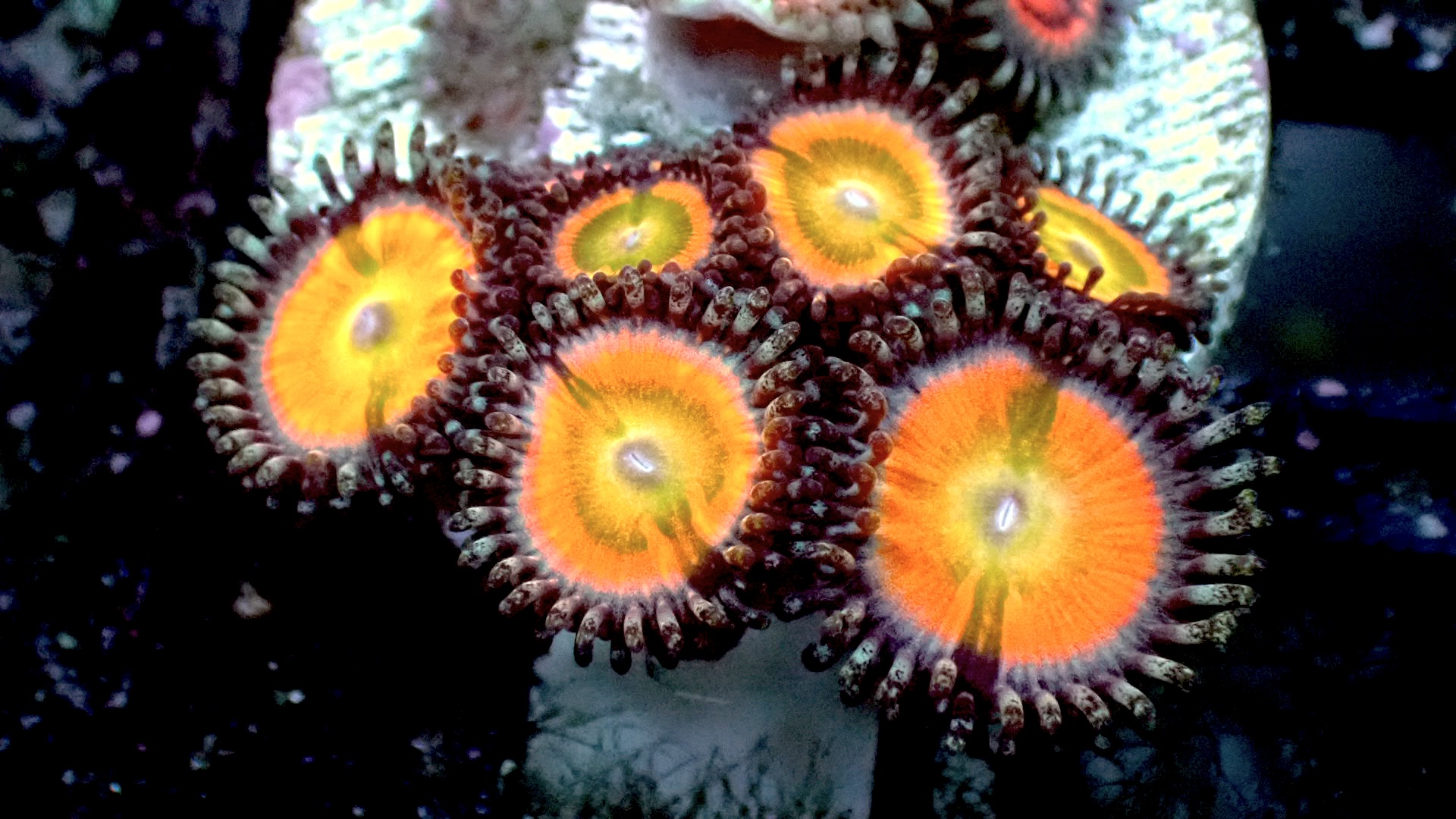
RTG Peaches Zoanthids are a warm-toned collector morph from Reef2Reef lineage — peachy orange to salmon coloration with a distinct warm glow under white-shifted lighting that's less common in the typically neon-dominated zoa palette.
Mid-tank placement with medium light and moderate flow; the warm coloration shows best under balanced lighting with reasonable white contribution rather than pure blue, which is worth knowing if you're dialing in your light spectrum for shows or photography.
Growth is moderate which makes them manageable colony keepers, but RTG morphs have a following in the trade and any pest problem on a valuable colony is a trading liability — dip quarantine before adding anything new to the system.
Feed weekly with a fine broadcast food and let the flow distribute particles to the polyps; RTG Peaches is a reliable colony builder with consistent nutrition and is a good morph to frag and share once you've established a healthy mat.
Field Notes
Related species

Blueberry Haze Zoas
Zoanthus sp.
Same genus

Burning Willow Zoas
Zoanthus sp.
Same genus
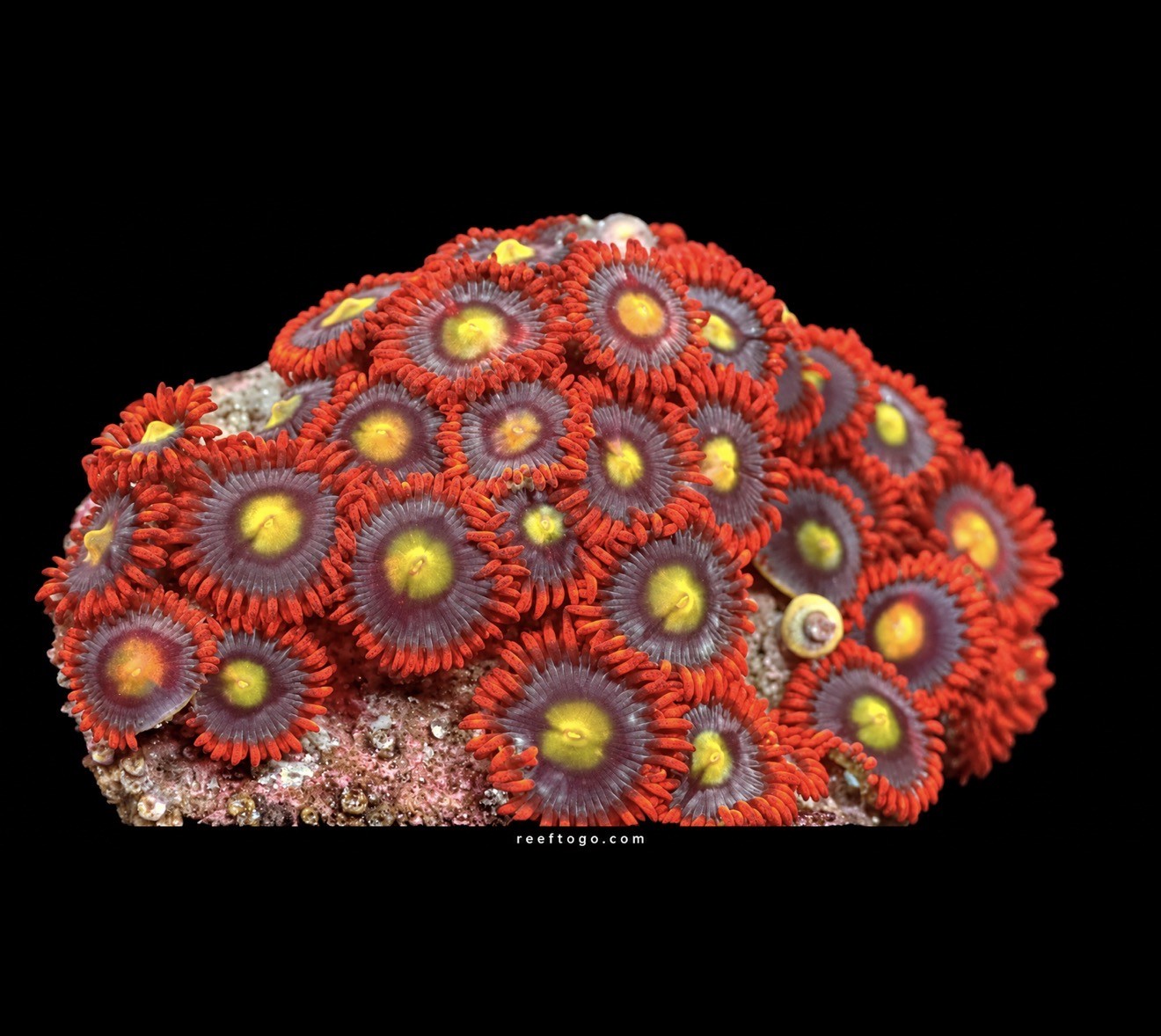
Fire and ice zoanthids
Zoanthus sp
Same genus
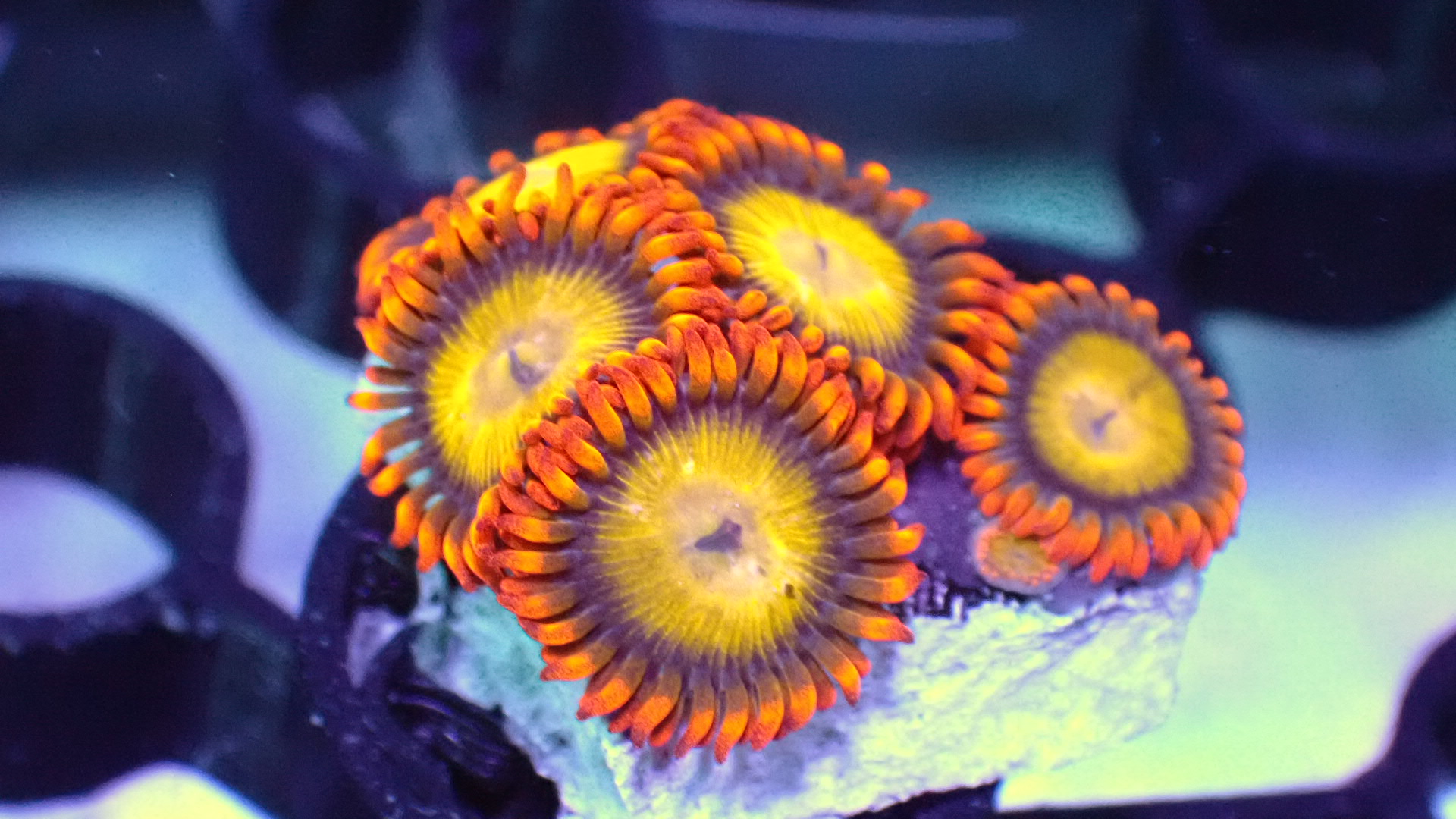
Mandarin zoanthids
Zoanthus sp
Same genus
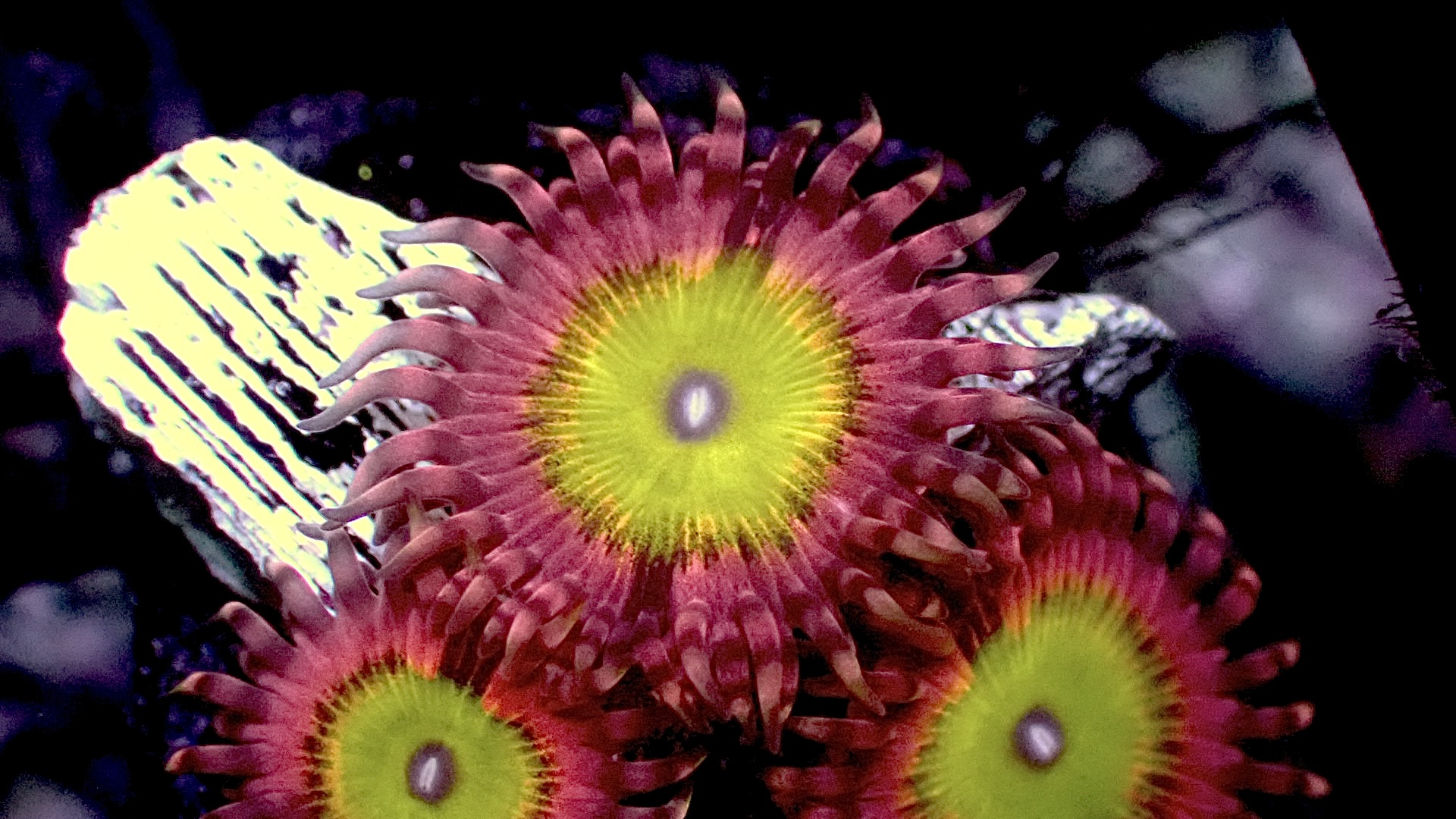
Pink hippo zoanthids
Zoanthus sp
Same genus

Purple Heart zoas
Zoanthus sp
Same genus

Radioactive dragon eyes
Zoanthus sp
Same genus
Rainbow infusion zoanthids
Zoanthus sp
Same genus