Pink hippo zoanthids
Zoanthus sp
Palytoxin safety
Some zoanthids and palythoas can contain a potent toxin. Wear sturdy waterproof gloves and eye protection, minimize handling, and keep colonies submerged when possible. Never boil, steam, pressure-wash or scrub colonized rock under running water. Keep other people and pets away during handling. If exposure is suspected, seek urgent medical advice and tell the clinician about possible palytoxin exposure.
Sources: CDC: palytoxin exposure · OATA: avoiding palytoxin poisoning
Gallery
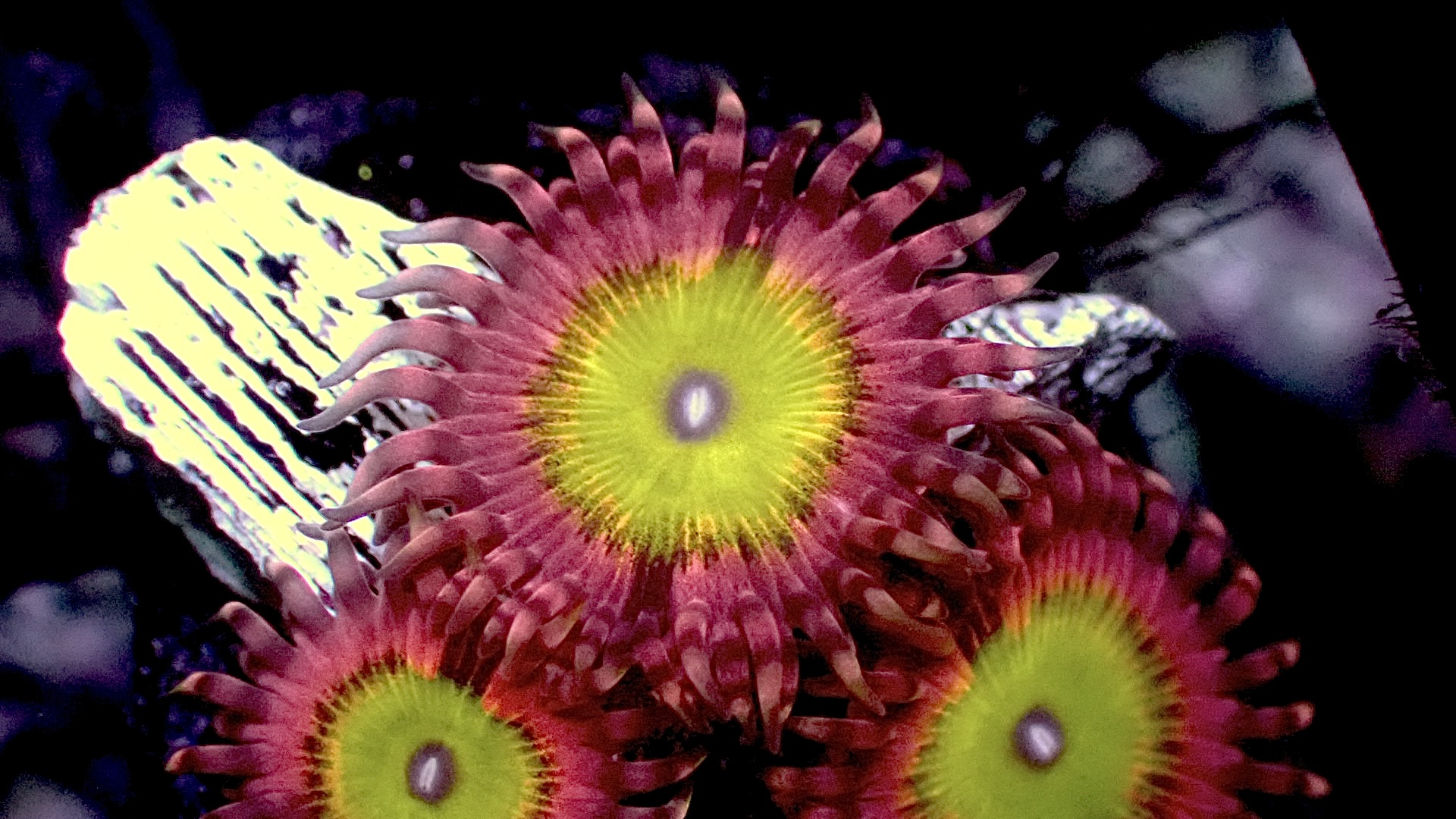
Pink Hippo Zoanthids are a collector-grade zoa morph with dusty rose and cream coloration that stands out from the standard neon zoa palette — they photograph well and hold their color across a wide range of lighting conditions.
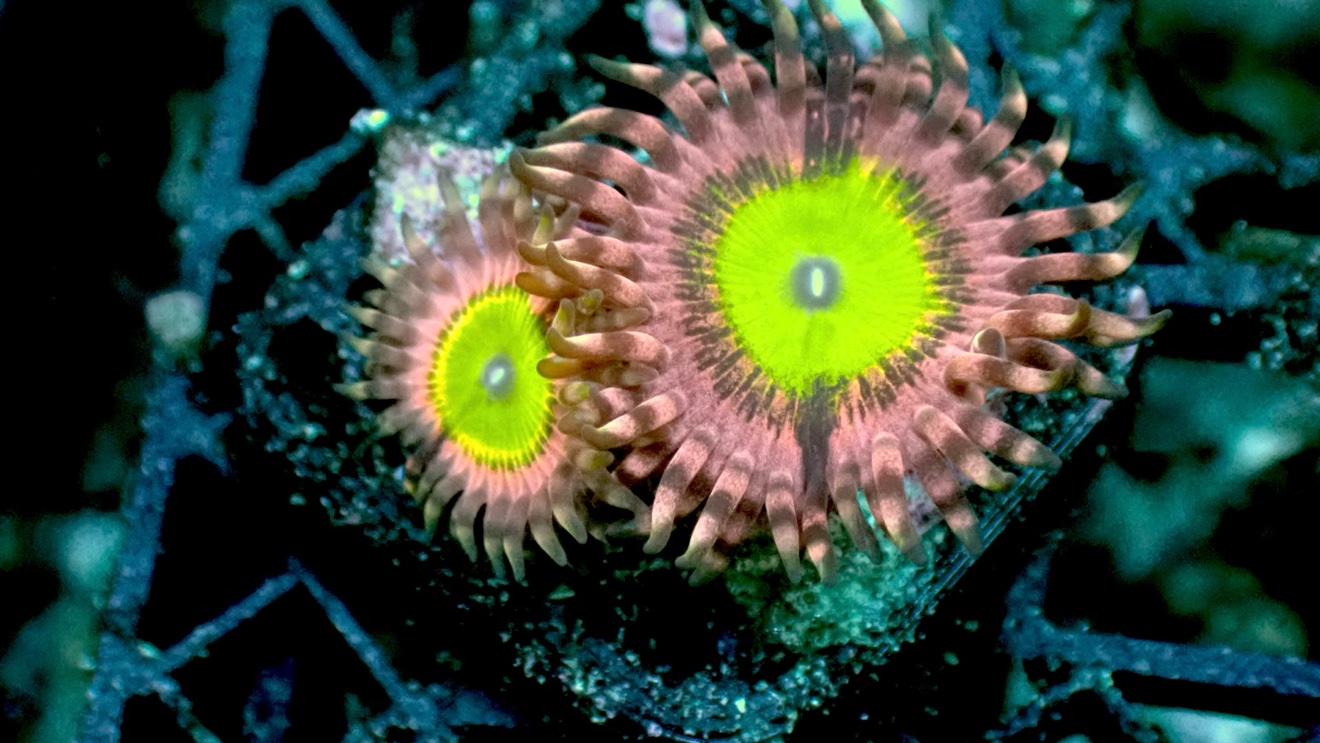
Bottom placement with medium light and moderate indirect flow; like most zoanthids they're adaptable but will show their best color at medium PAR rather than blasted with intensity.
Growth is slow for a zoa which means patience, but it also means they won't carpet-bomb your rockwork and smother neighbors — that said, any zoanthid can become an encrustation problem over years, so place them where you can control spread.
Feed the colony with fine zooplankton or coral foods weekly and let the flow deliver particles to the polyps; zoanthids are opportunistic feeders and regular nutrition speeds up what is otherwise a slow grower.
Field Notes
Related species

Blueberry Haze Zoas
Zoanthus sp.
Same genus

Burning Willow Zoas
Zoanthus sp.
Same genus
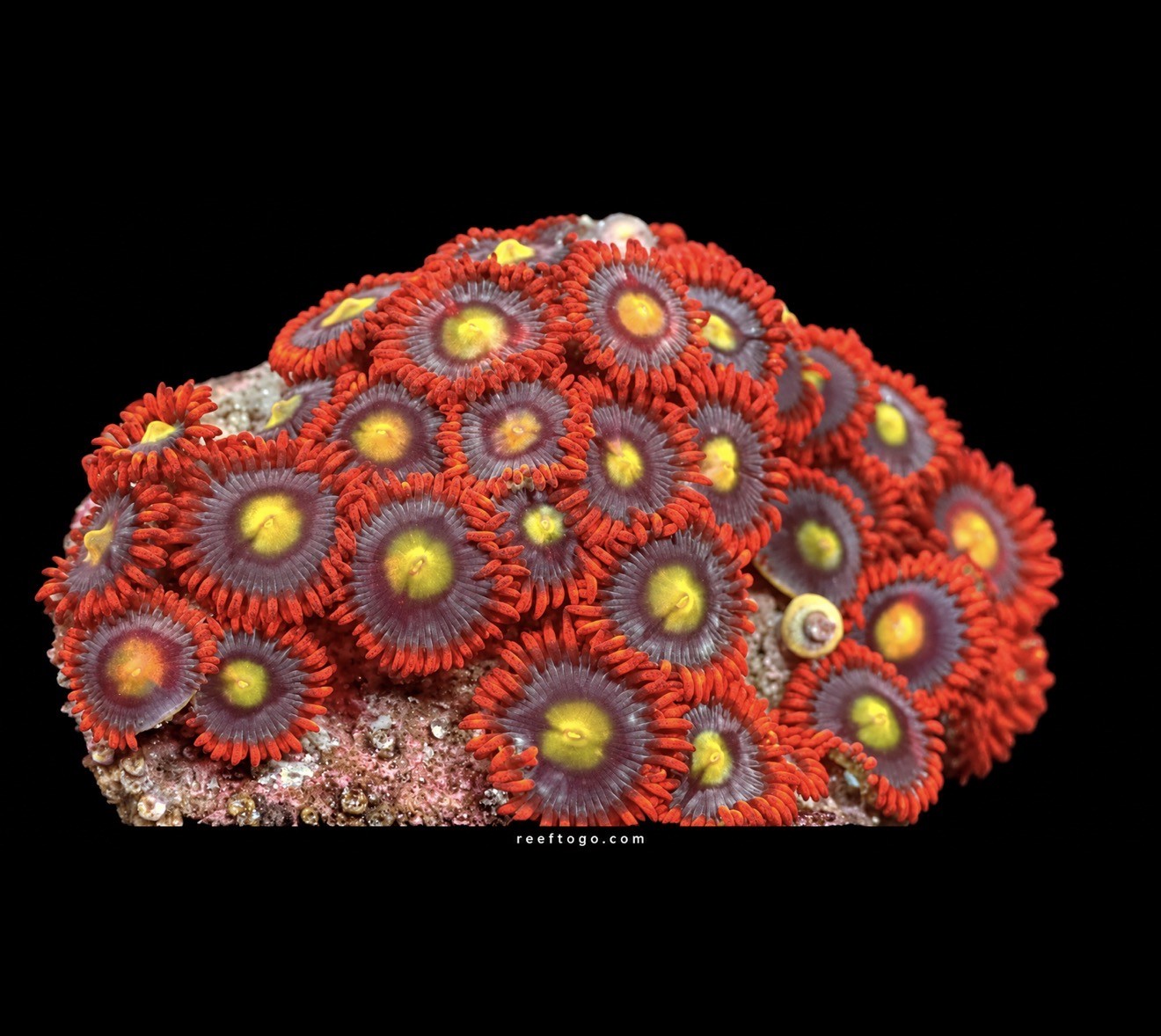
Fire and ice zoanthids
Zoanthus sp
Same genus
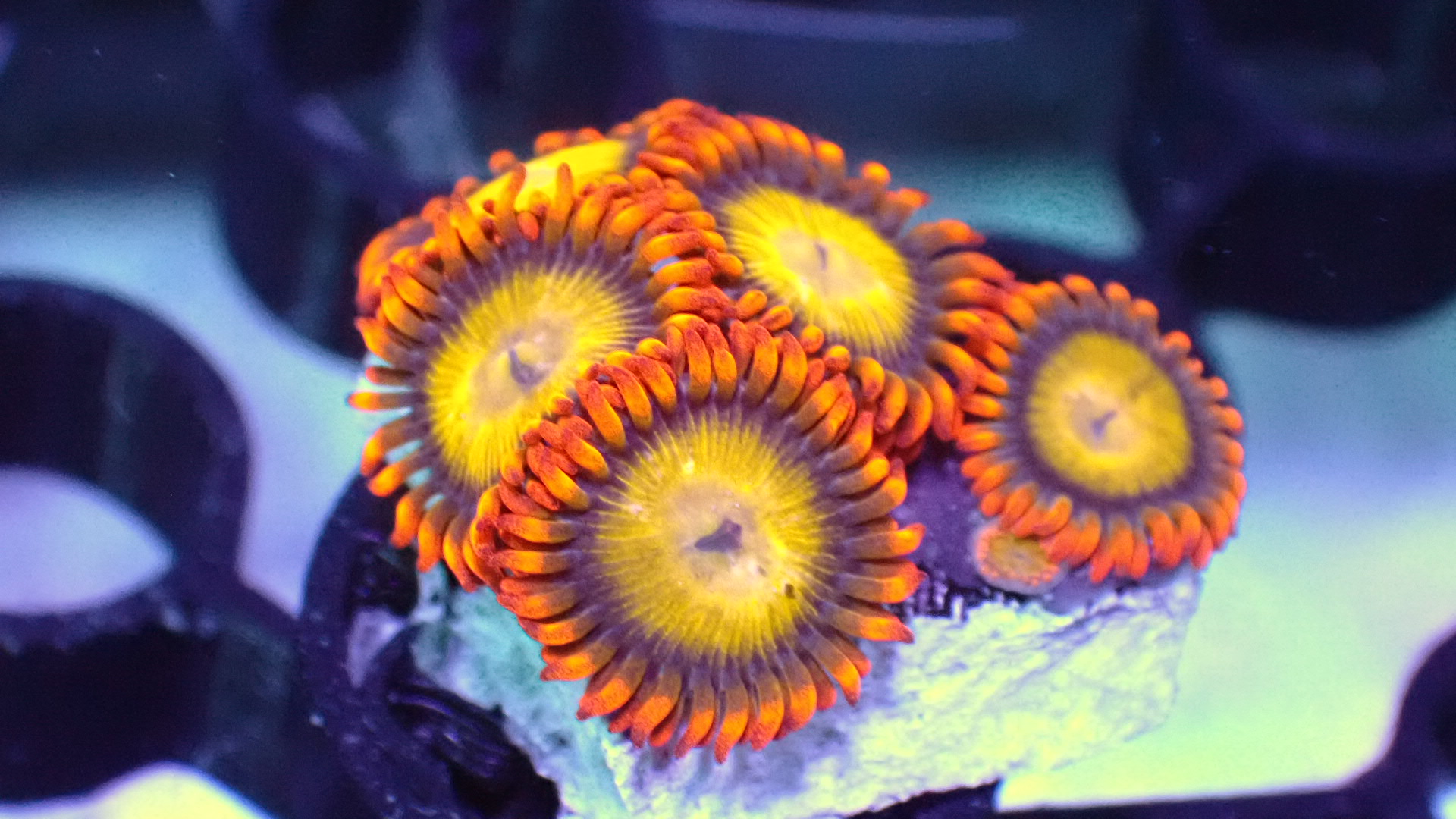
Mandarin zoanthids
Zoanthus sp
Same genus

Purple Heart zoas
Zoanthus sp
Same genus

Radioactive dragon eyes
Zoanthus sp
Same genus
Rainbow infusion zoanthids
Zoanthus sp
Same genus
RTG peaches zoanthids
Zoanthus sp
Same genus