

Purple Heart zoas
Zoanthus sp
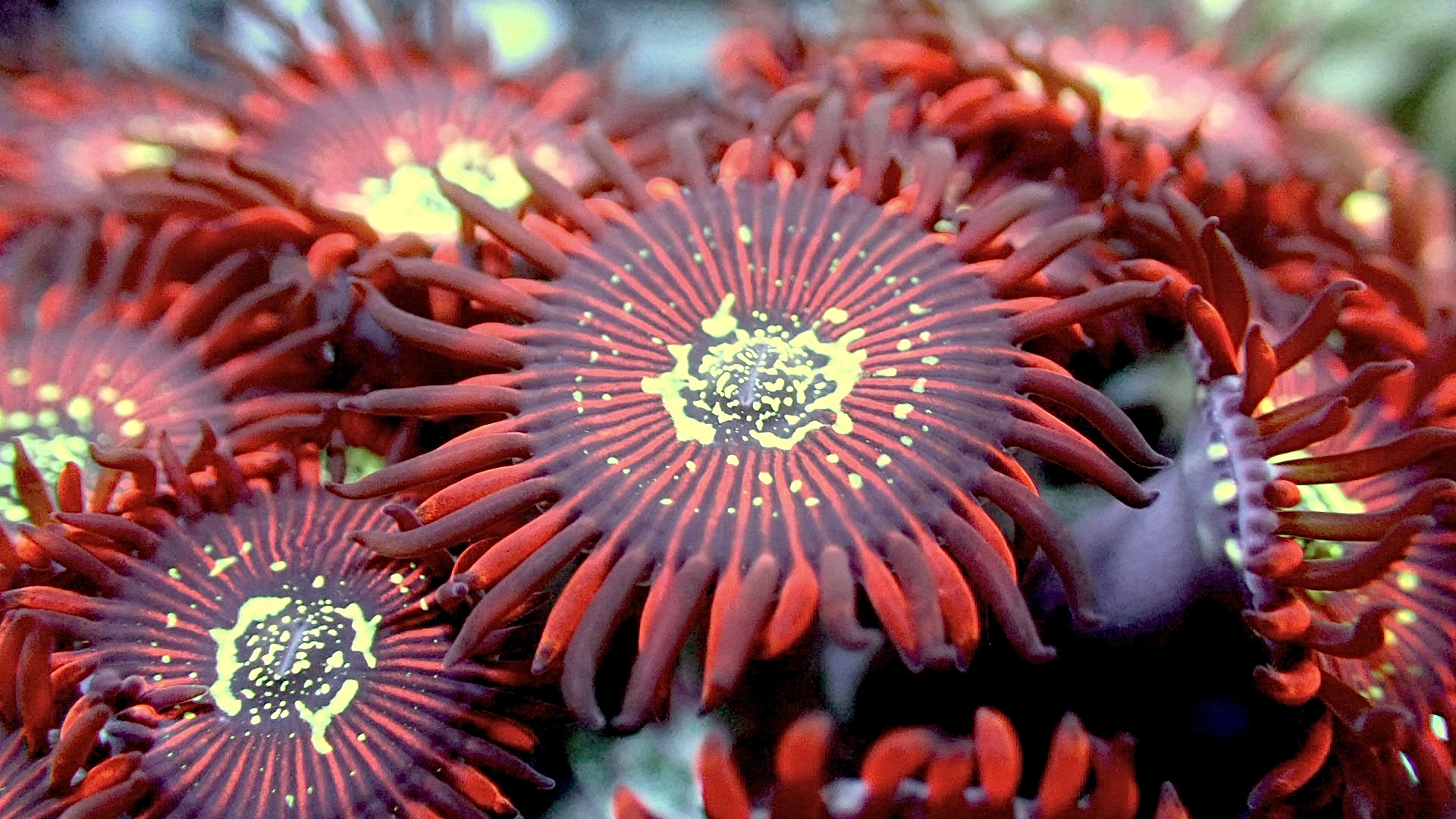
Purple Heart zoas is a zoanthid morph listed as Zoanthus sp., kept for the deep purple color its polyps carry. The colony grows as a low mat of connected polyps spreading over rock, each polyp opening as a round disc ringed with short lashes. Settled polyps sit close to the mat and open wide and flat through the day. The purple heart name follows the rich purple face of each polyp, a tone that deepens under blue light and gives the whole colony a dark, velvety look at the bottom of the tank.

The entry lists beginner care, medium light, medium flow, bottom to middle placement, peaceful behavior, and fast growth, with the original notes giving the colony two inches of space. Place the frag low, at the bottom or the lower middle of the rockwork, on solid rock with room for the mat to run. Medium light at a low placement holds the purple tone full and even. Polyps in deep shade stretch upward and lose color, while polyps pushed high into strong light too quickly can close and fade at the face.
Medium flow should move across the mat and lift waste away from between the polyps. Detritus settling into a zoanthid mat is a common cause of polyps closing in patches, and a gentle current keeps the surface clean. A direct stream can hold one side shut, and still corners invite film. Broad movement that stirs the lashes without pressing the polyps flat is the balance to aim for.
Feeding runs through the tank routine. The polyps take fine particulate food from regular broadcast feeding, and light supplies much of the energy. Purple Heart zoas do well in tanks with present, steady nutrients, and a very clean system can slow a fast grower down to a crawl. No target feeding routine is required, and food piled onto the mat does more harm sitting there than a missed feeding ever does.
This morph is listed as peaceful. Spacing follows the entry's two inches, judged against spread rather than sting. A fast-growing mat can reach a neighbor's base within a season, crowd slower polyps, and grow over shaded edges. Give the colony a rock it can own, keep stinging corals outside the two-inch ring, and lift or trim the advancing edge before the mat climbs onto a frag that cannot move.
Growth is listed as fast. New polyps bud along the margin, the mat thickens as polyps fill in, and a small frag can become a full colony faster than most zoanthids in a stable, fed tank. Polyps closing in one patch, stalks stretching tall, or a mat edge that recedes usually point first to film or pests on the colony, then to light, then to a nutrient level that has drifted very low.
Palytoxin caution: zoanthids can carry palytoxin. Wear gloves when handling the colony, keep it away from broken skin, wash hands well afterward, and never boil, steam, or pressure-wash zoanthid rock, because heat and spray can carry the toxin. Frag or clean the colony outside the display where possible, and keep rinse water away from sinks used for food.
Common pitfalls include parking the frag in a sand trap where the mat edge gets buried, skipping the dip on arrival, and giving a fast mat no room so it overruns its neighbors before anyone notices. Start low on clean rock with two inches of clearance, dip and inspect first, and check the edge monthly.
Field notes — what keepers report
- Color reports center on light level. Keepers at medium light describe the deepest purple and wide, flat polyps, while keepers who kept the morph low in shade describe paler faces on stretched stalks that colored up after a gradual move. Both sides describe the change taking weeks rather than days.
- Growth reports confirm the fast listing. Keepers describe small frags covering a plug and spilling onto the rock within a season, and other keepers describe deliberately isolating the colony on its own rock to keep the spread in check. Planning the rock at placement is the shared lesson.
- Closure reports follow a familiar pattern. Keepers describe a patch of closed polyps traced to detritus or a pest on inspection, and recovery after a dip and a move into cleaner flow. Keepers also describe whole mats closing for a day or two after a move and reopening without intervention, so a settled colony earns a short watch before drastic steps.
Field Notes
Related species
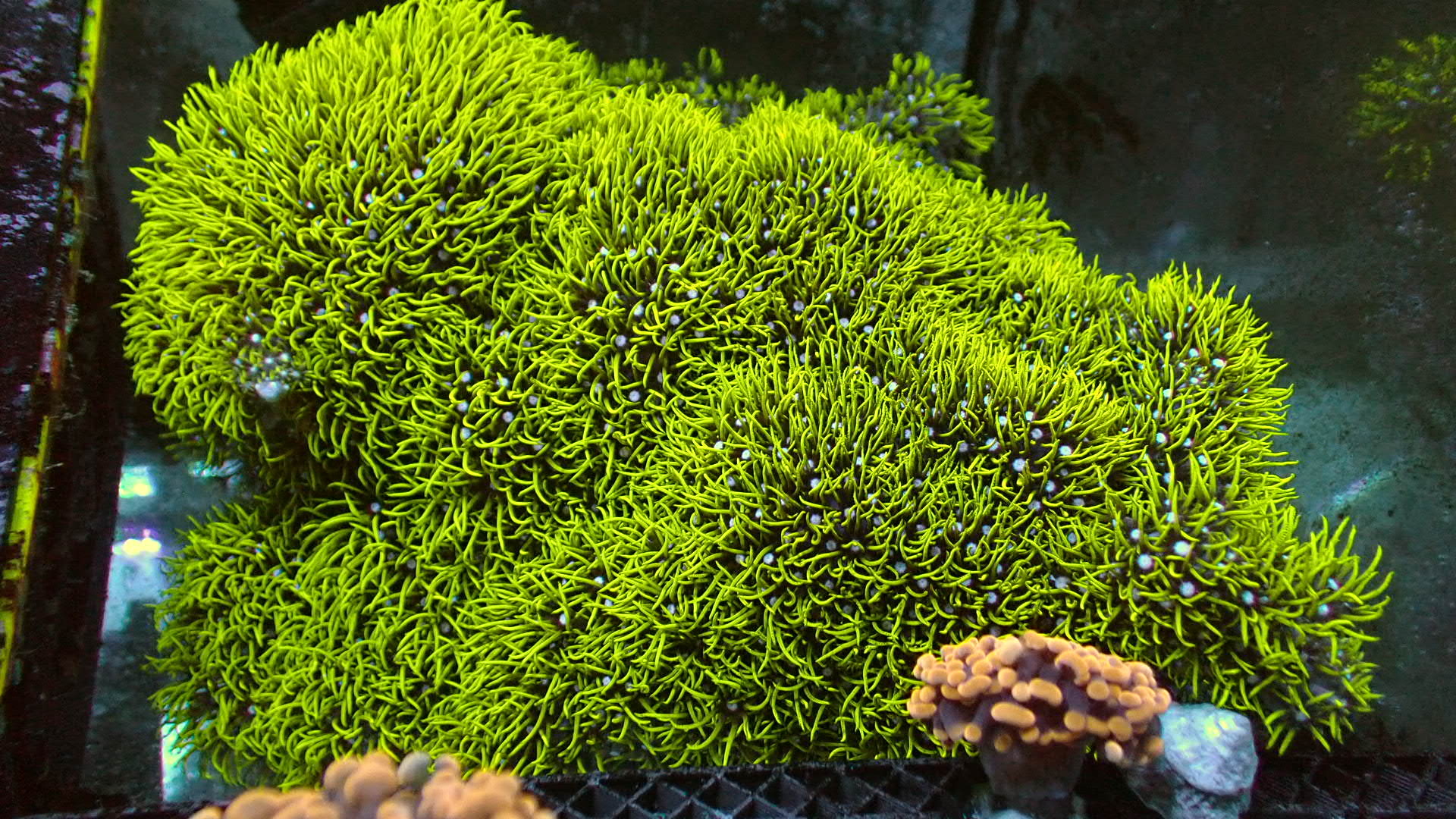
Green star polyps
Pachyclavularia violacea

Lunar eclipse zoanthids
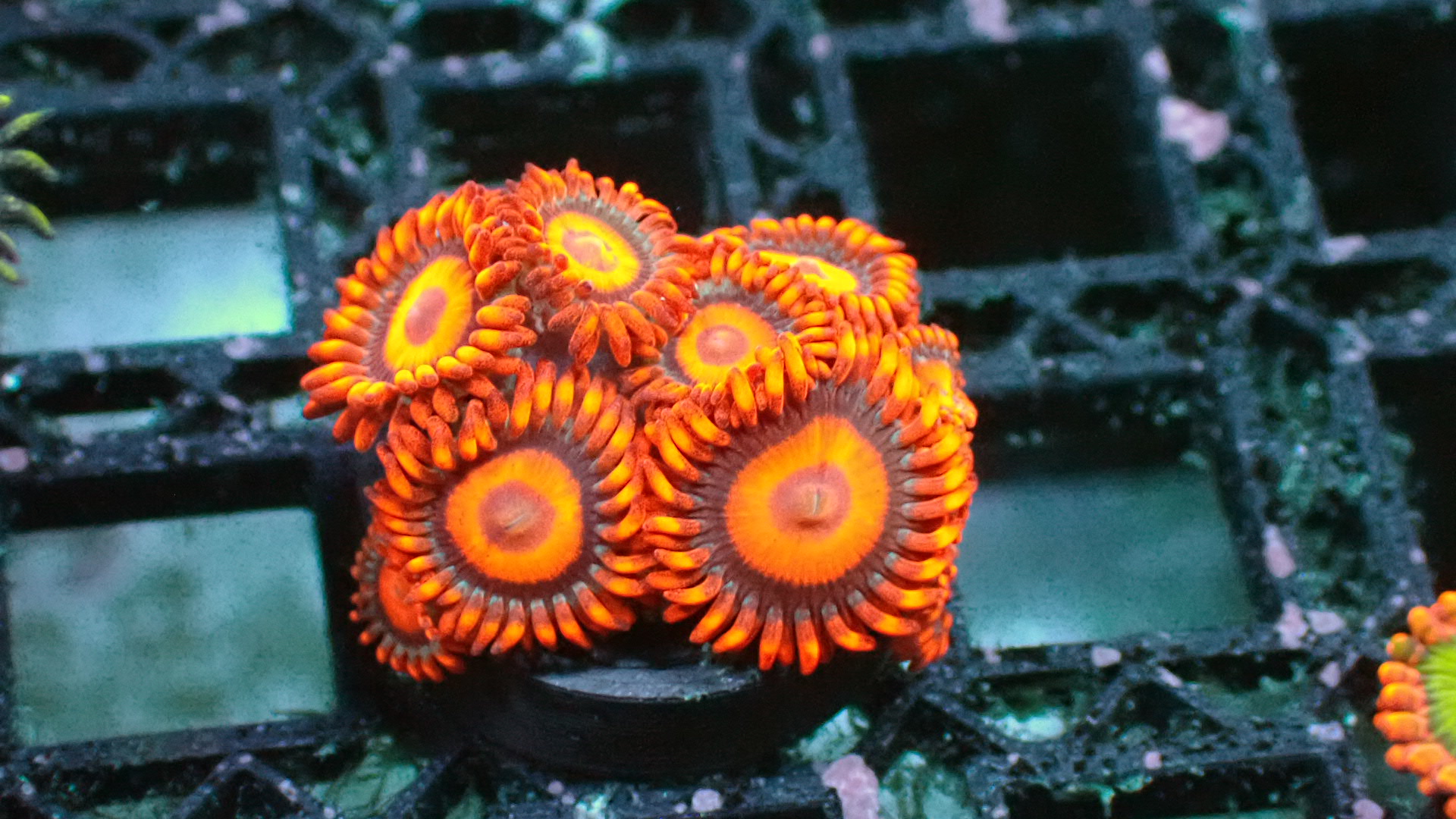
Orange oxide zoanthids
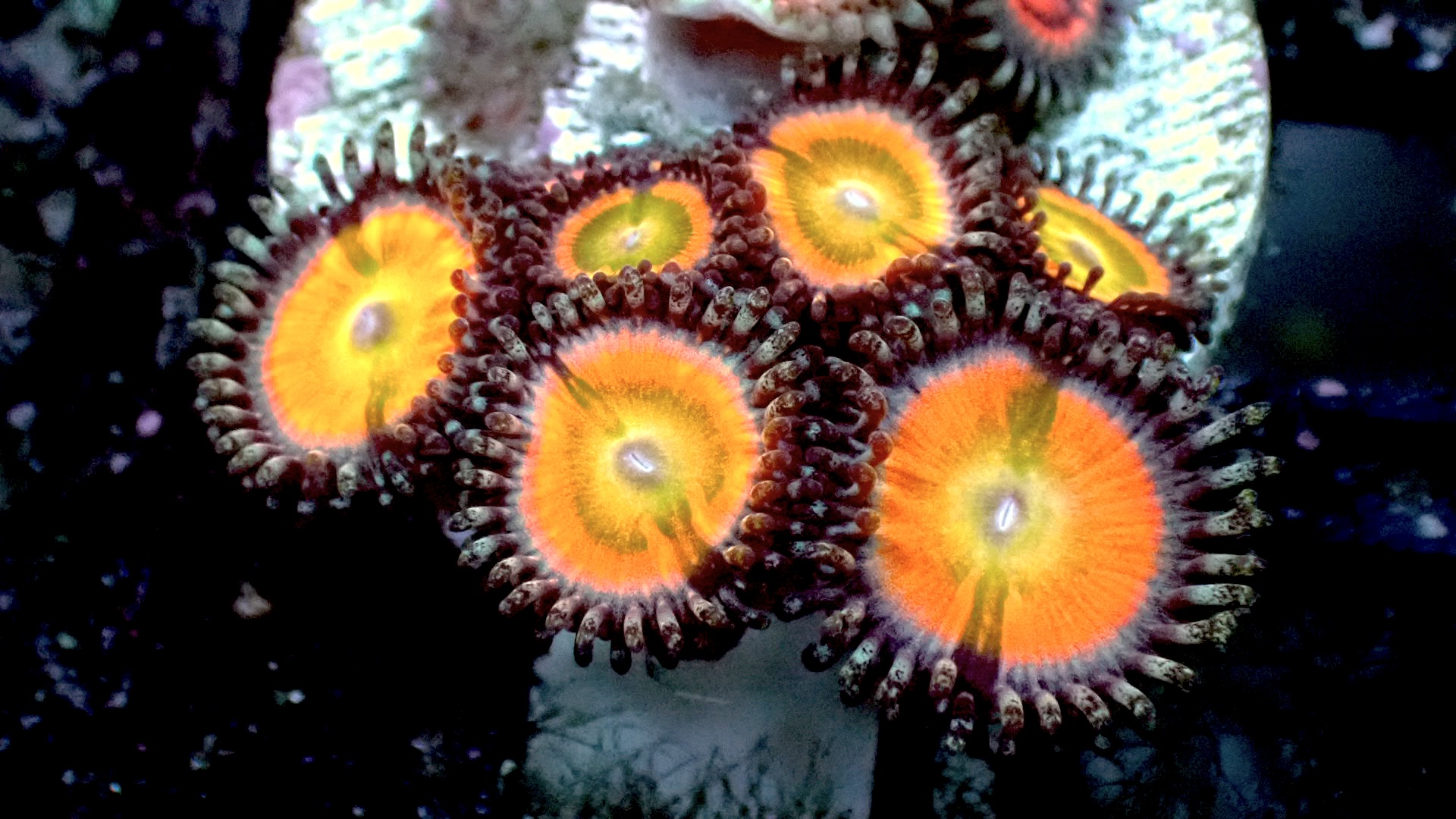
Rainbow infusion zoanthids
Zoanthus sp

Sunny d zoanthids
Zoanthus sp
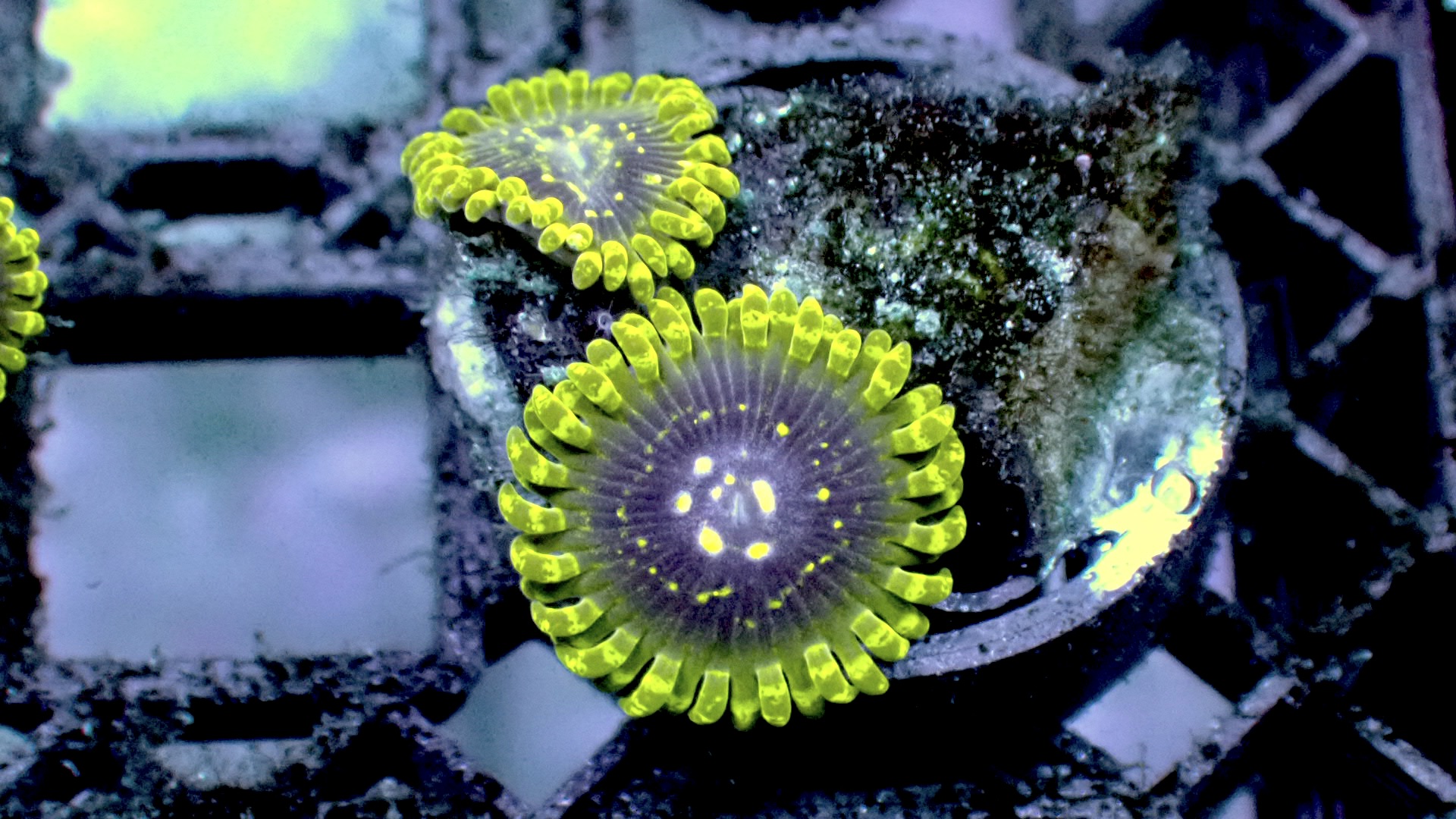
Exosphere zoanthids
Zoanthus sp
Magician zoanthids

Duncan coral
Duncanopsammia axifuga


Love this species? No tank needed.
Reef art from the shop — for the wall, not the tank.


Get notified when Reef To Go has Purple Heart zoas in stock or up for auction. One email when it's in — no spam.