Fire Coral
Millepora dichotoma
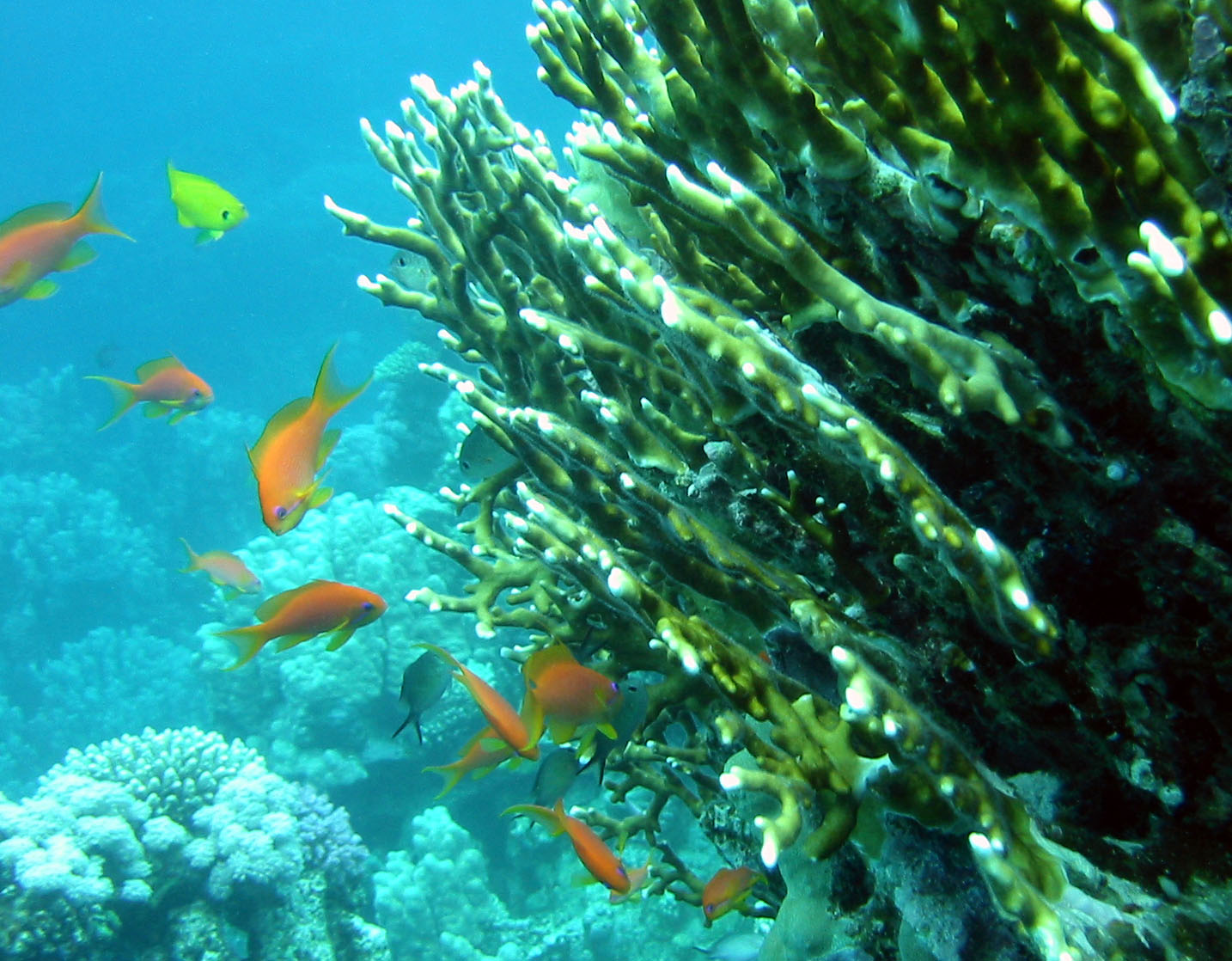
Photo2222 · CC BY-SA 3.0 · source
Care facts
- Care
- Advanced
- Light
- High
- Flow
- High
- Place
- High
- Space
- Aggressive
- Origin
- Indo-Pacific
- Growth Rate
- Fast
Gallery
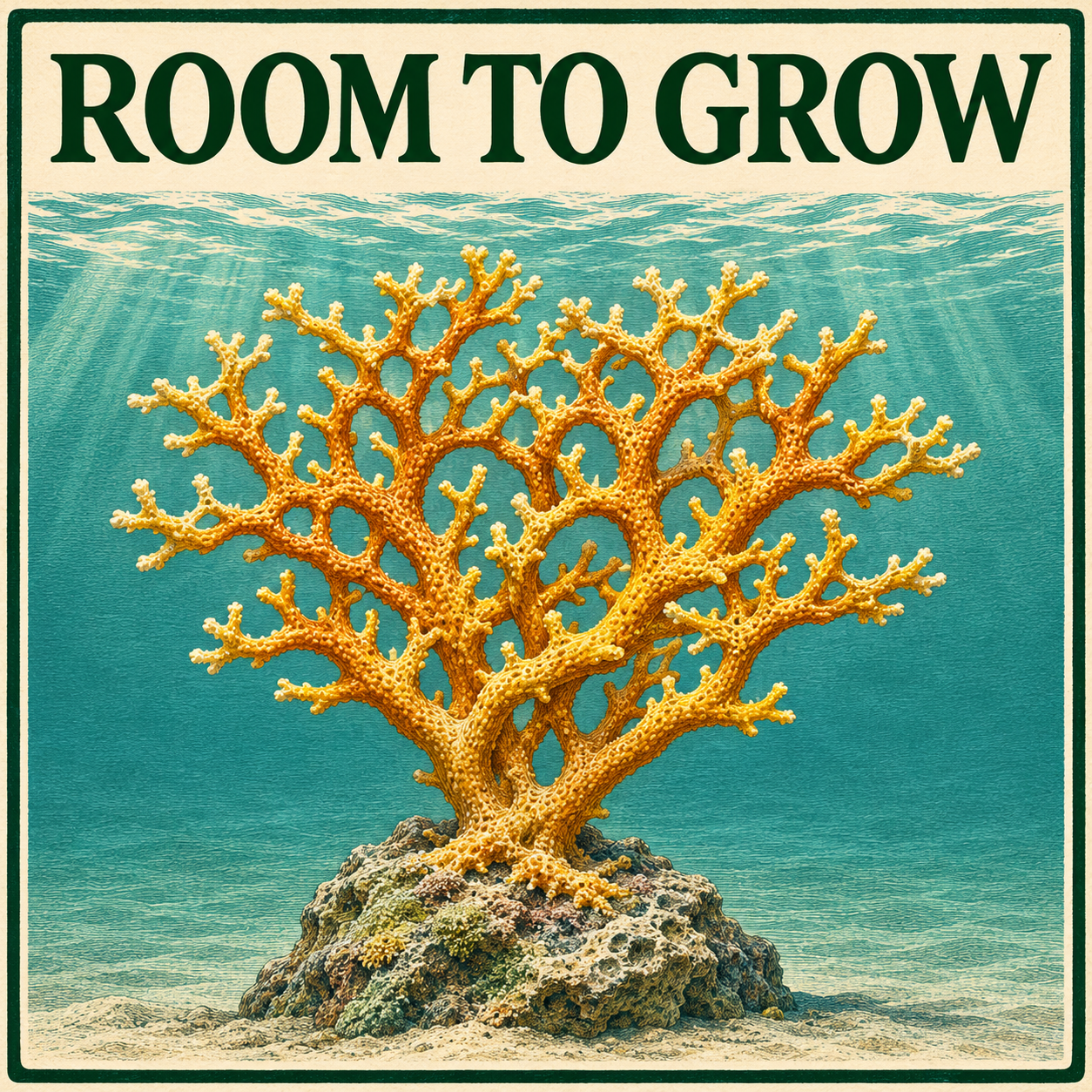
Fire coral builds a hard reef skeleton, but it belongs to a different group from true stony corals. It's a hydrozoan, a relative of jellyfish. Its tiny stinging cells pack a punch: look, but never touch with bare skin.
A reef builder in disguise
1. A living net. Millepora dichotoma builds a hard skeleton with forked branches that can join into a mesh. That shape gives net fire coral its other name.
2. Tiny jobs, one colony. Look closely without touching. Small pores in the skeleton house different kinds of polyps. Some feed, while others help catch prey with stinging cells.
Bright light and moving water
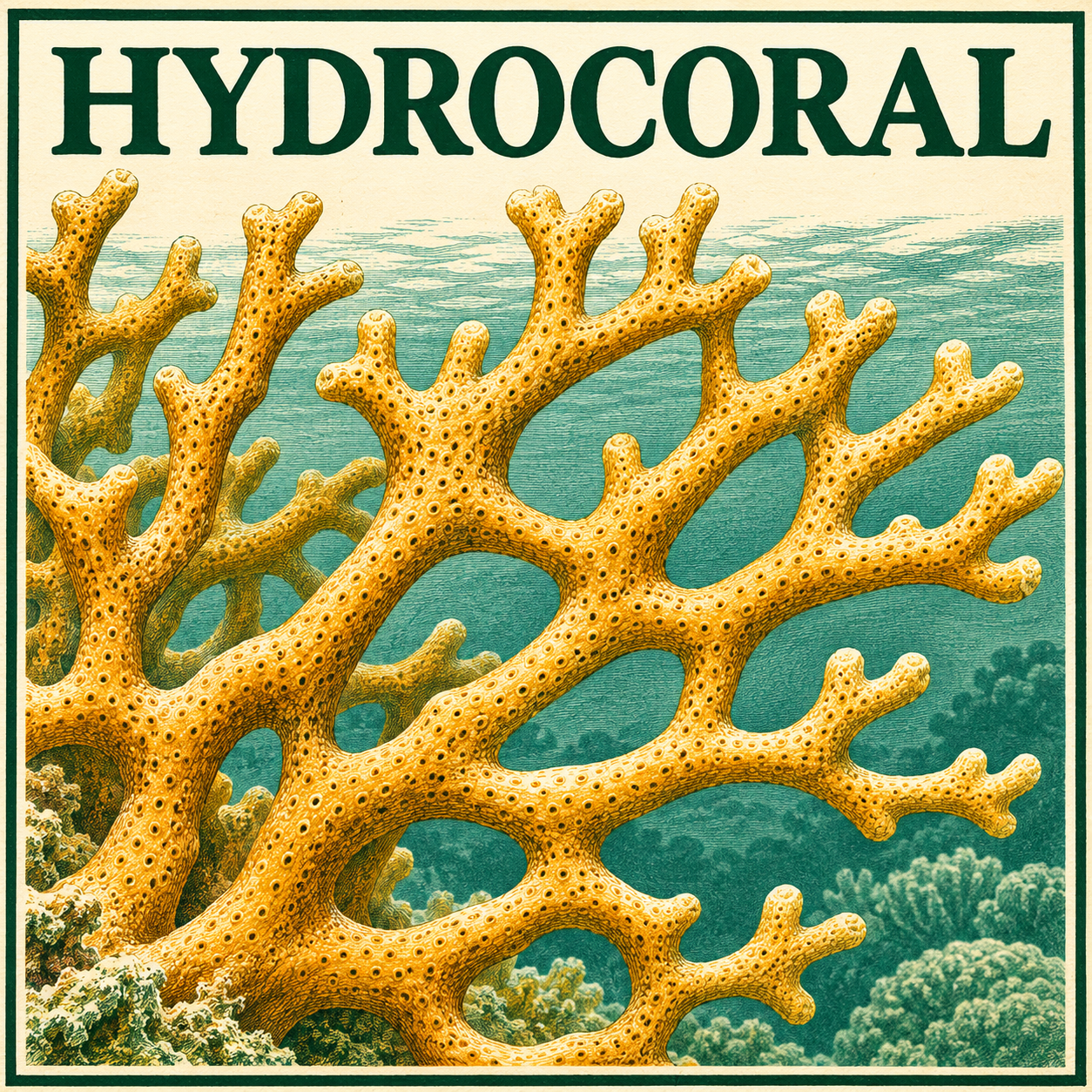
3. Work up to bright light. The colony hosts algae that use light to make food. Start from its previous light conditions and increase light gradually. Height alone doesn't tell you how bright a spot is.
4. Flow around the branches. Give it strong, changing circulation. Aim for water that moves around and through the colony, not a narrow jet pointed at one patch.
Keep the reef steady
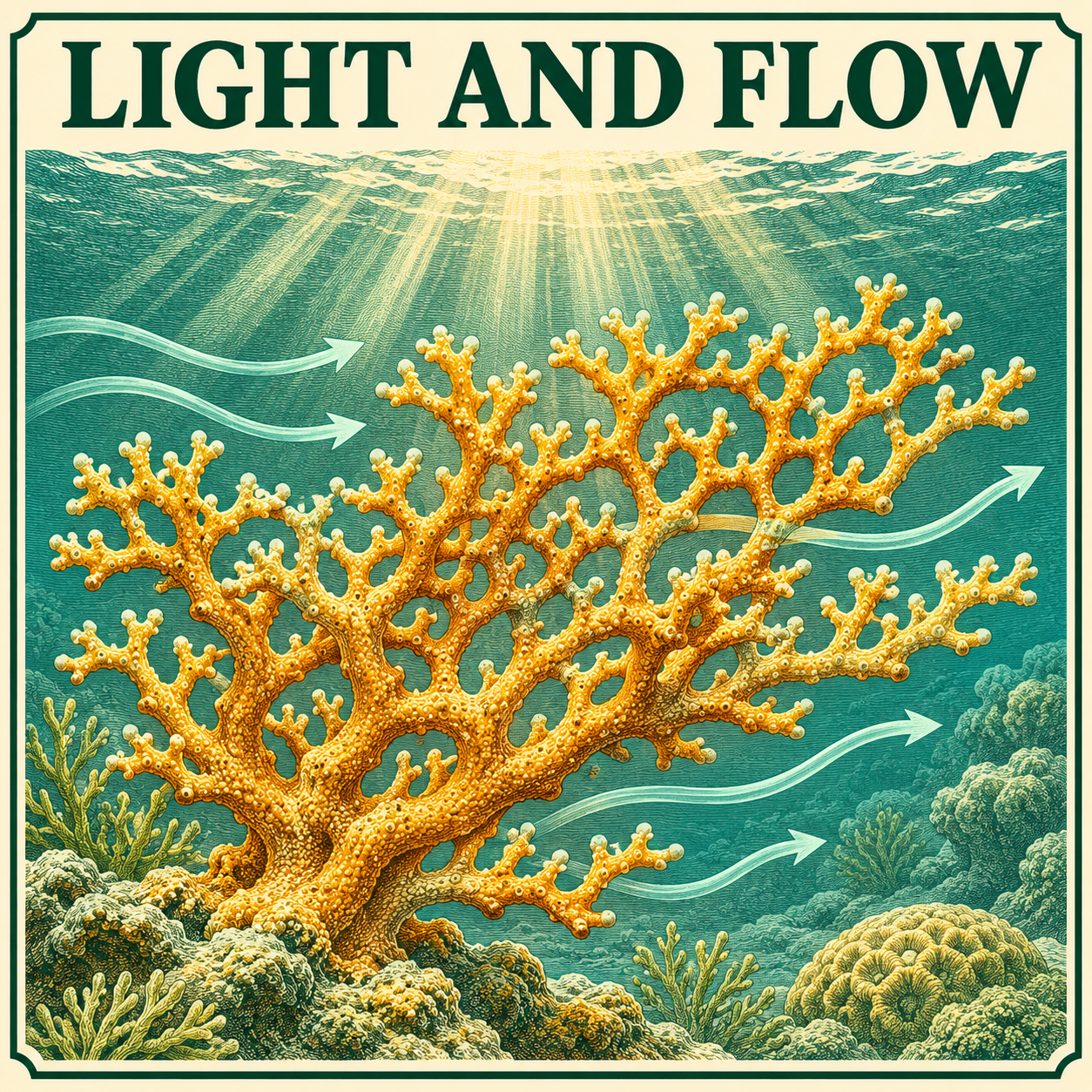
5. Use an established tank. Keep temperature and salinity steady. Test alkalinity and calcium, and make adjustments based on the results rather than guessing.
6. Read the whole colony. Take photos in the same lighting to track changes. If tissue recedes or the colony pales, check water, lighting and circulation before changing multiple things at once.
Leave space for growth
7. Give it its own rock. Choose a stable rock with open space around it. Keep branches away from neighbors, and leave a clear path for the tools you use to clean the tank.
8. Watch the growing edge. Check where the colony meets the rock and where branch tips point. Recheck the gaps as it grows. A gap that works today won't last forever.
Keep hands out of reach
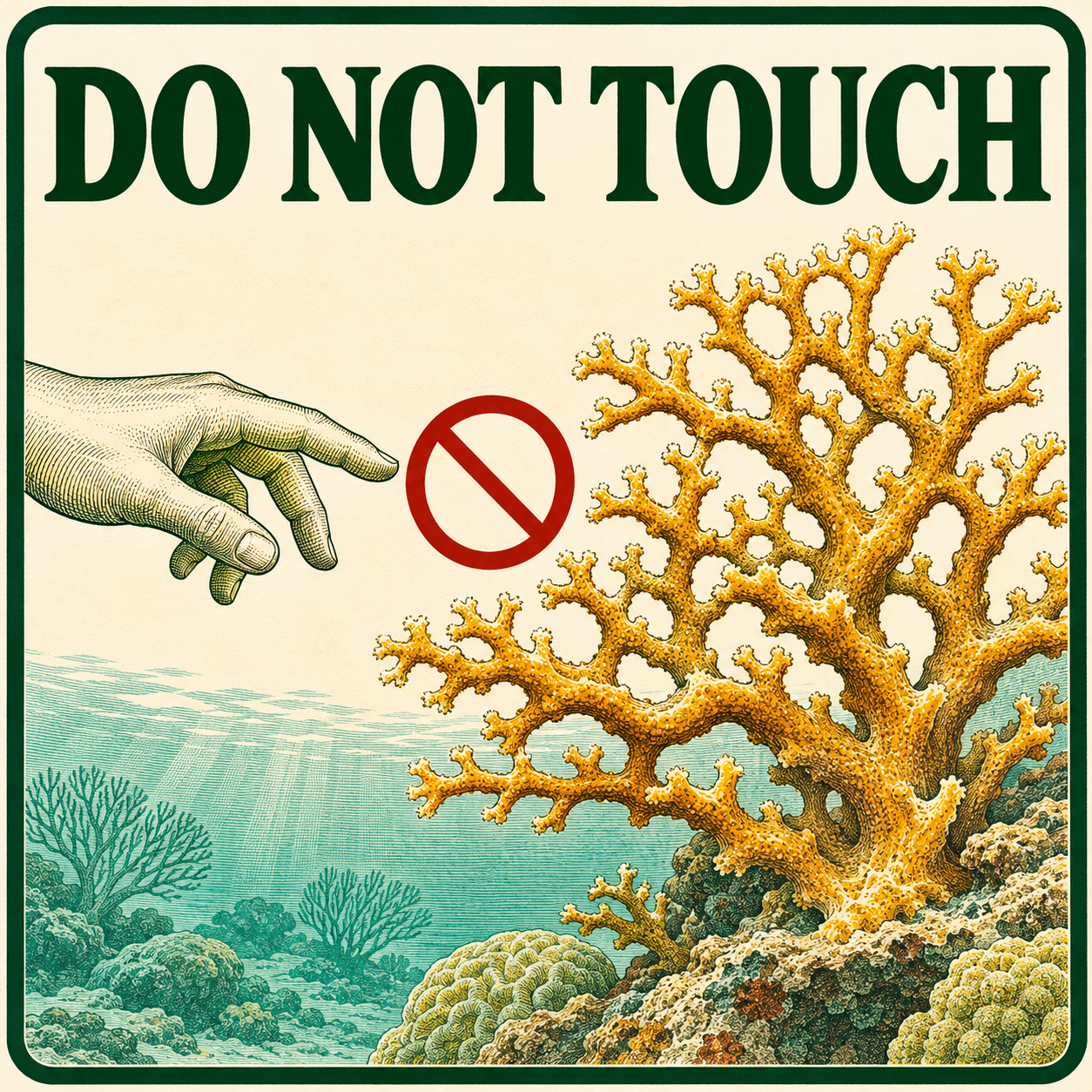
9. Tools first, skin clear. Use long aquarium tools and keep bare hands and forearms away from the colony. Tell anyone who helps with the tank where it sits. Don't test how much it stings.
10. Take a sting seriously. Burning, redness and blisters can follow contact. Get medical advice for an open wound or symptoms that worsen. Call emergency services right away for trouble breathing.
Field notes — what keepers report
11. One grows slowly, another takes off. In general fire coral reports, one keeper described small hitchhiker colonies that grew slowly. Another described fast growth in a branching colony. Neither account confirms the species as Millepora dichotoma.
12. One brush tells you very little. The first keeper didn't notice a sting. The keeper with the branching colony reported itchy redness after contact on thinner skin. Neither experience predicts what the next sting will do.

Enjoy the net of branches from outside the glass. Give it light, steady water and its own space. If you can't service the tank without getting close to the colony, choose a different animal.
Field Notes
Related species
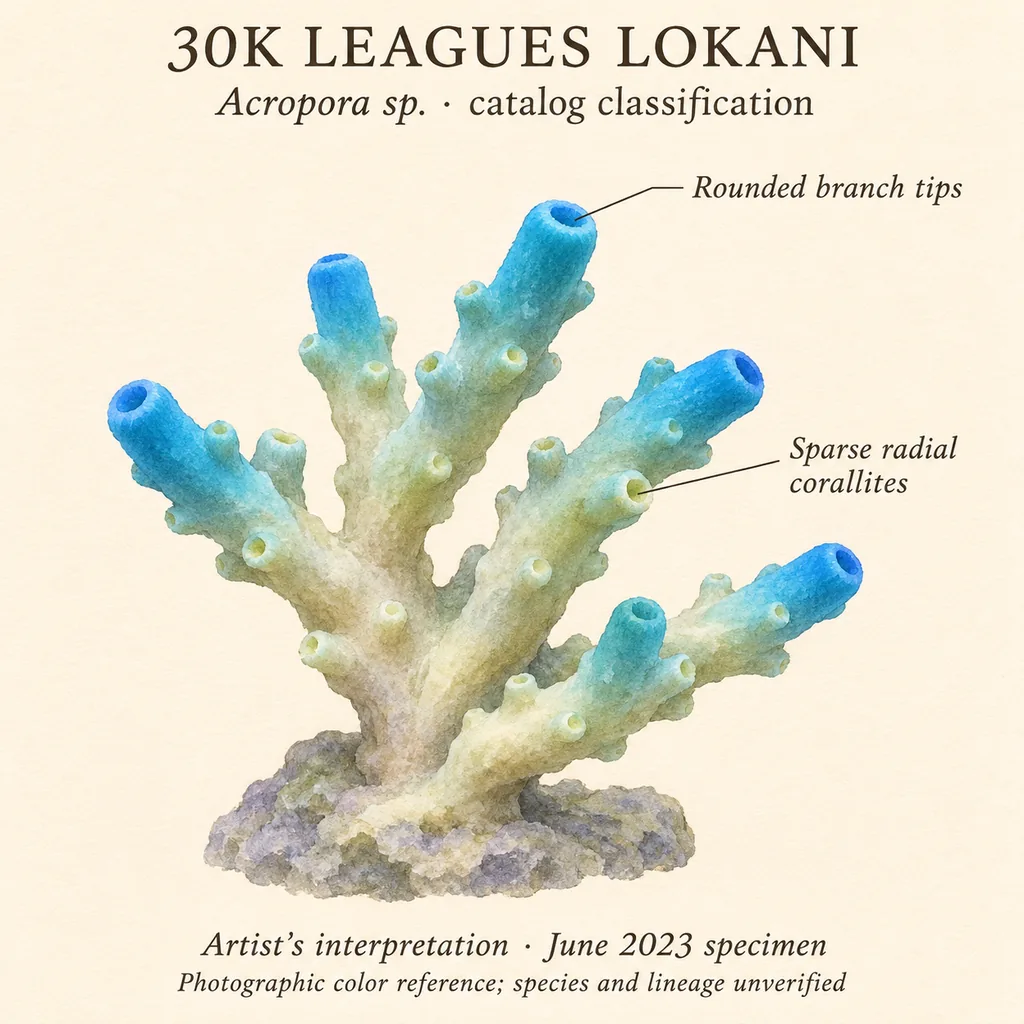
30K Leagues Lokani
Acropora sp.
Similar care · SPS
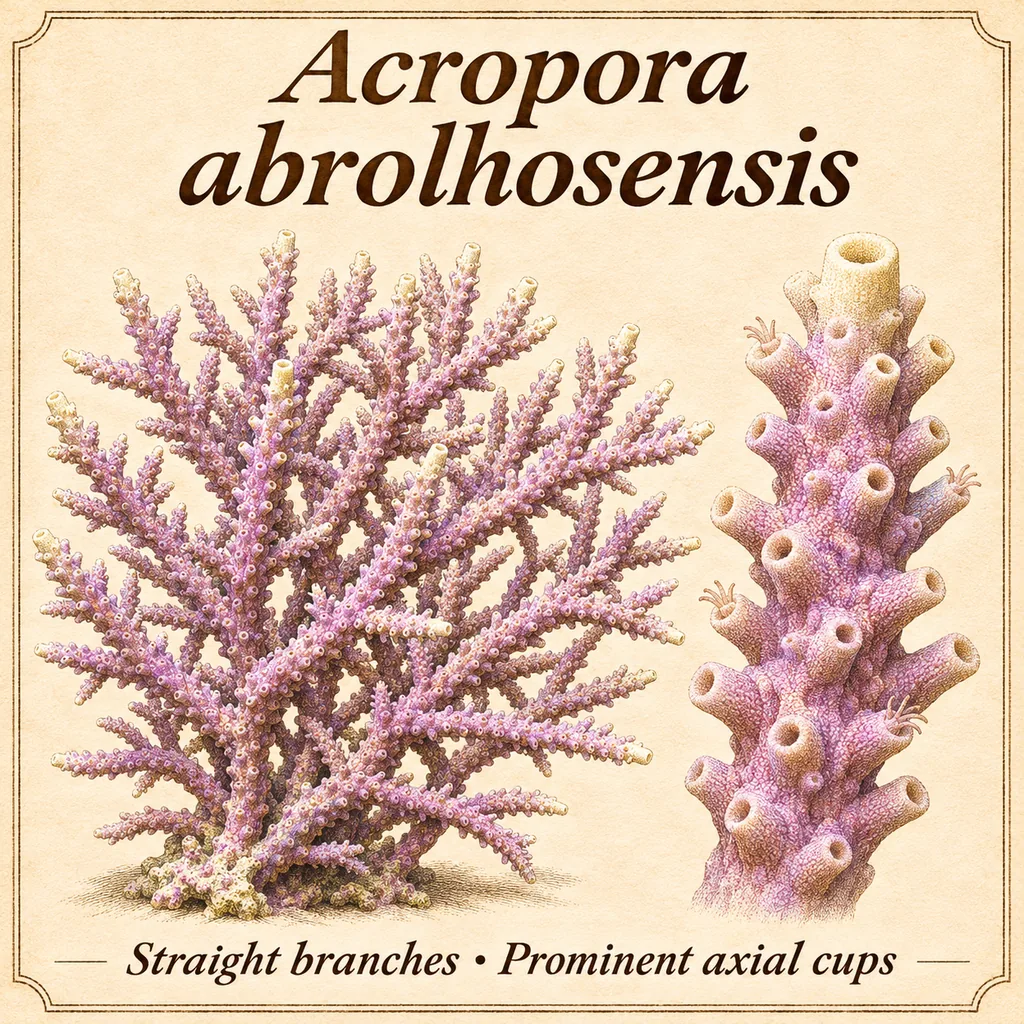
Acropora abrolhosensis
Acropora abrolhosensis
Similar care · SPS
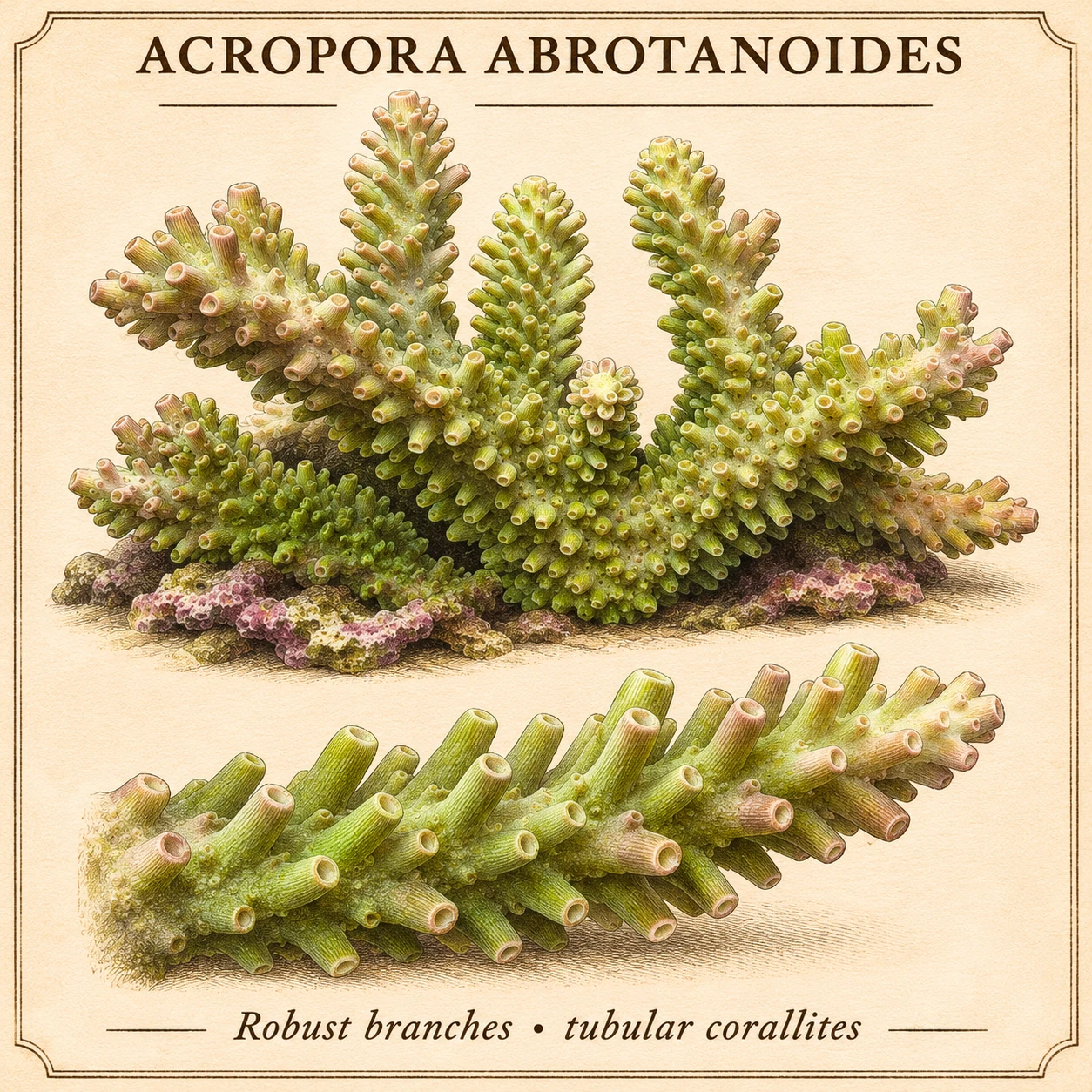
Acropora abrotanoides
Acropora abrotanoides
Similar care · SPS
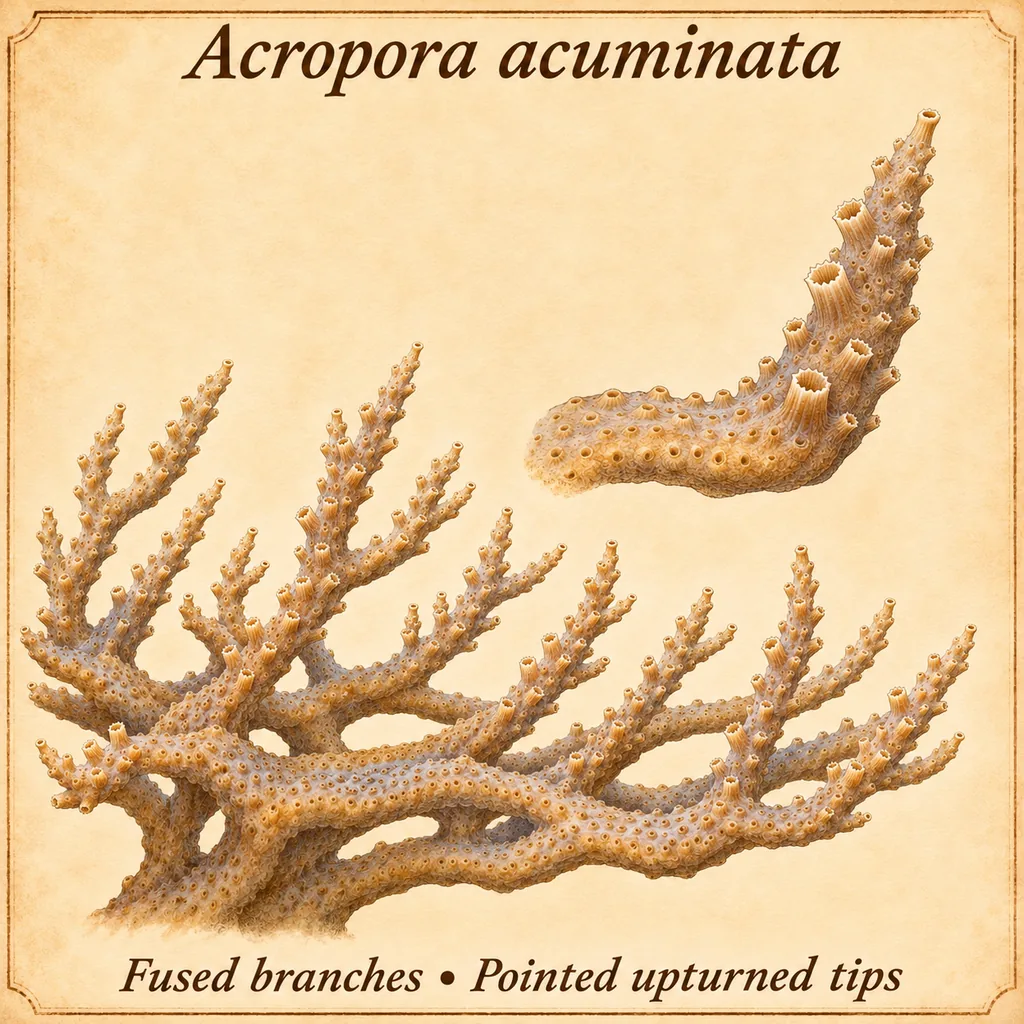
Acropora acuminata
Acropora acuminata
Similar care · SPS
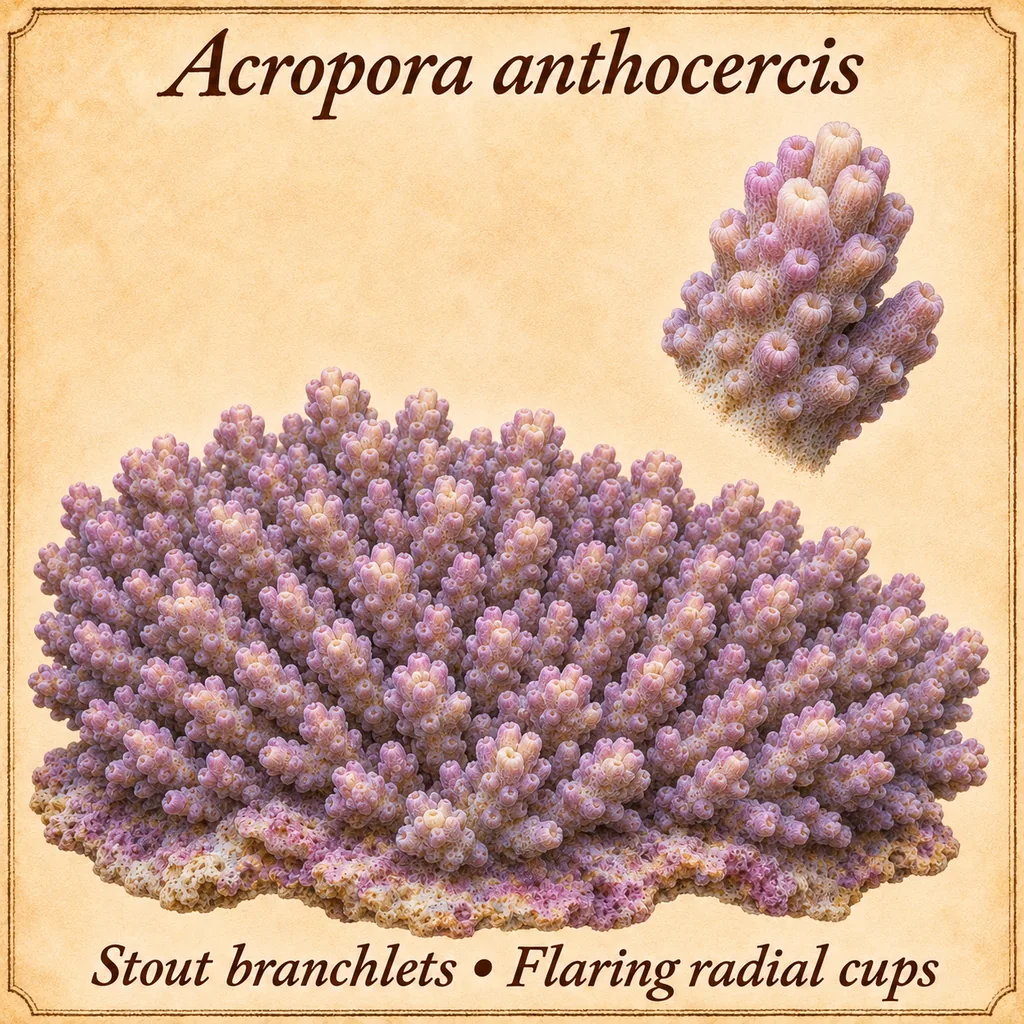
Acropora anthocercis
Acropora anthocercis
Similar care · SPS
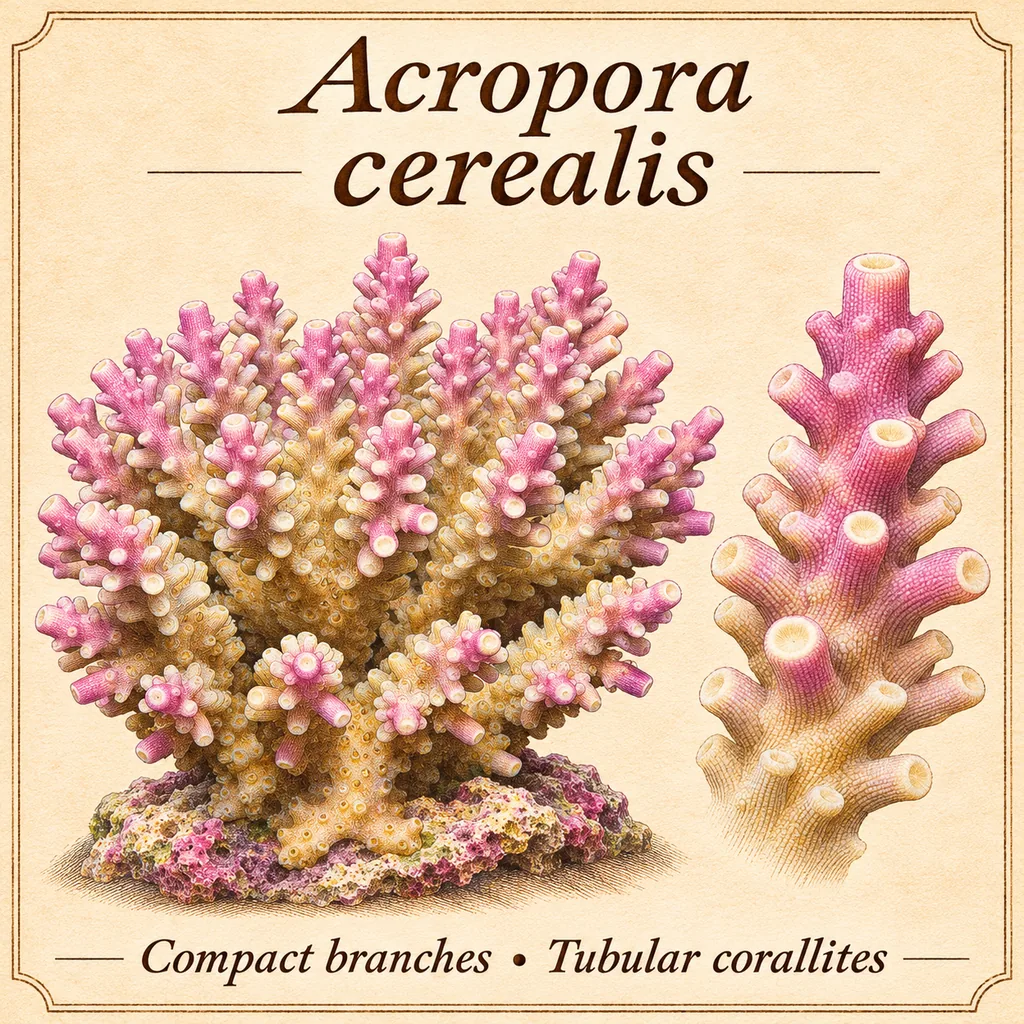
Acropora cerealis
Acropora cerealis
Similar care · SPS
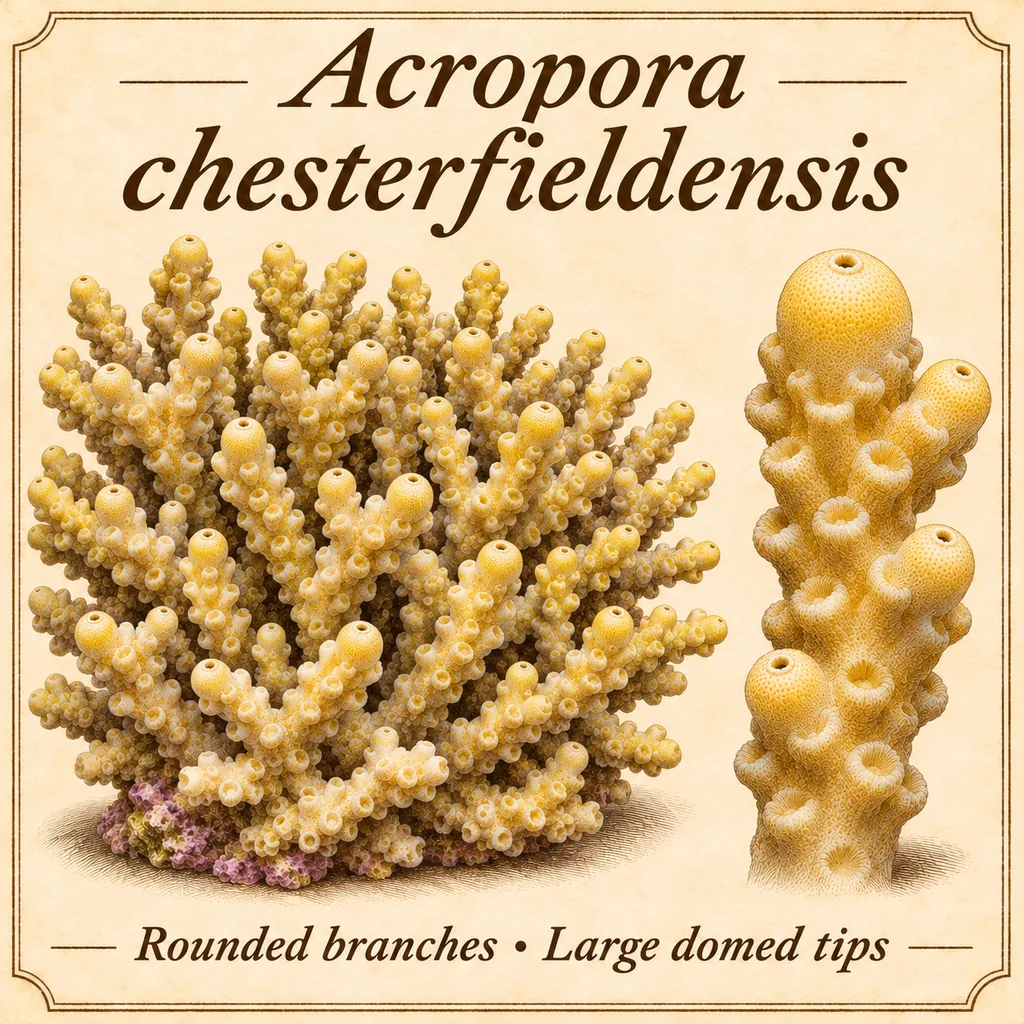
Acropora chesterfieldensis
Acropora chesterfieldensis
Similar care · SPS
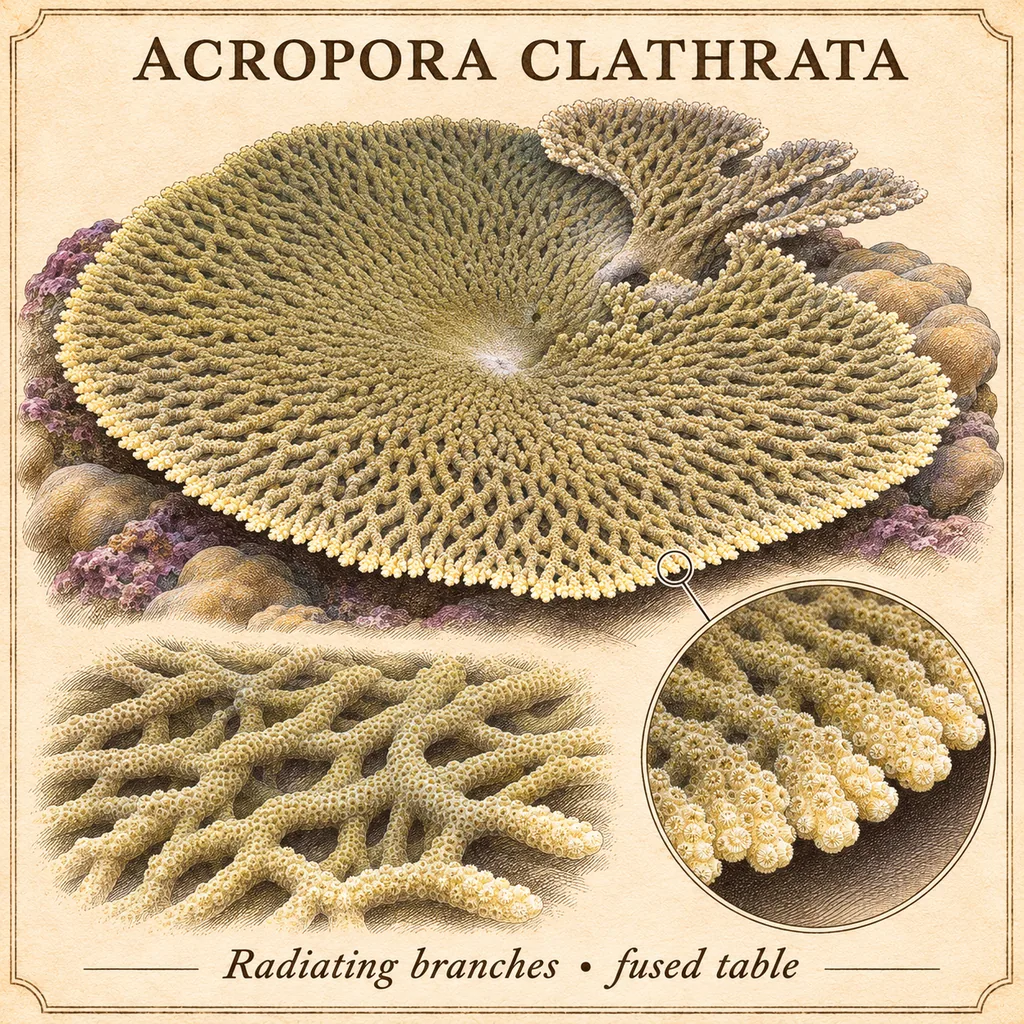
Acropora clathrata
Acropora clathrata
Similar care · SPS