Florida Corallimorph
Ricordea florida

Nhobgood (talk) Nick Hobgood · CC BY-SA 3.0 · source
Care facts
- Care
- Beginner
- Light
- Low-Medium
- Flow
- Low
- Place
- Bottom
- Space
- Semi-Aggressive
- Origin
- Caribbean
- Growth Rate
- Slow
Gallery
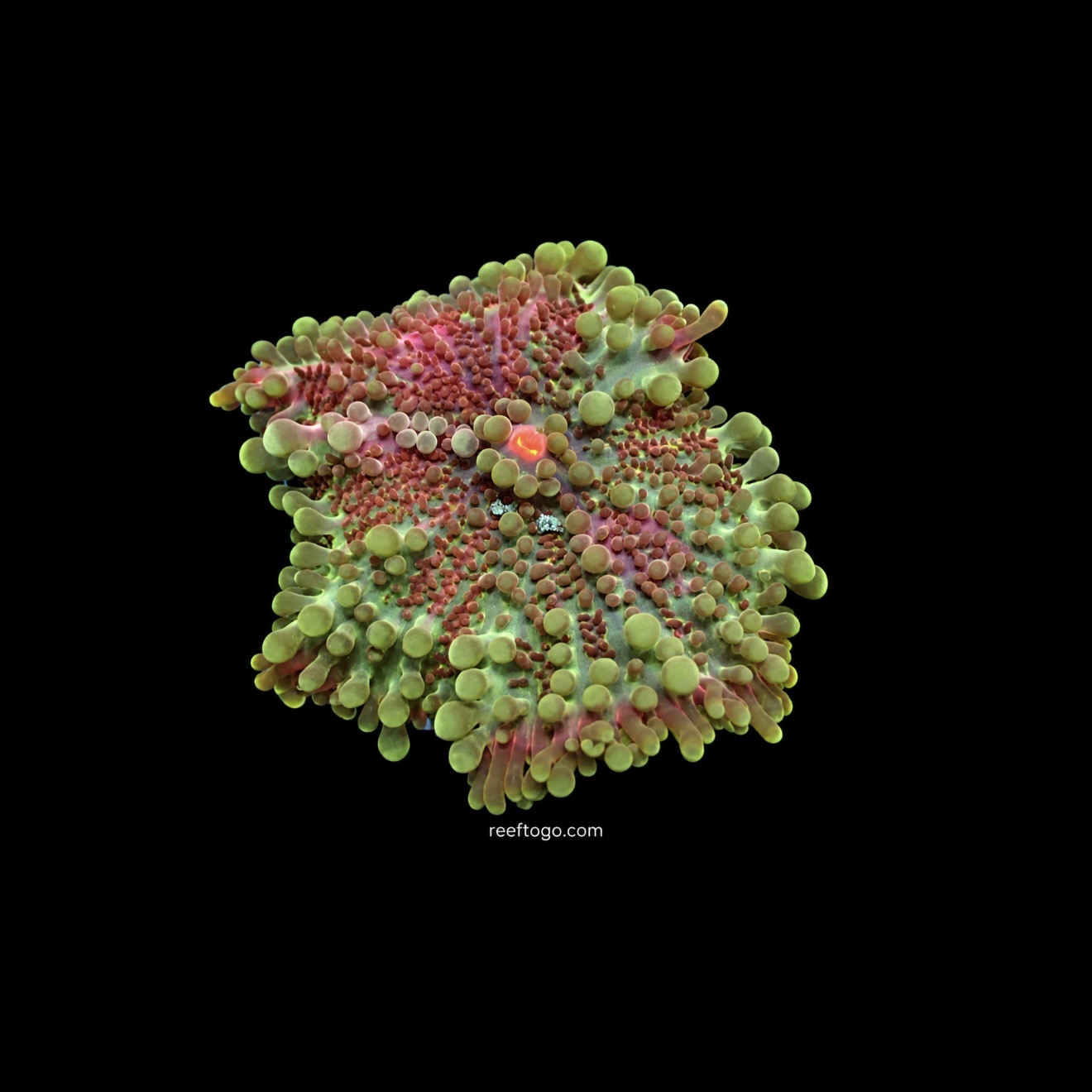
A living cushion that can make copies of itself! A Florida corallimorph looks like a tiny patch of colorful bubbles. It is an animal with a mouth, soft tissue and a talent for cloning. This Caribbean mushroom brings a whole world of small details to the lower reef.
Bubbles with a job
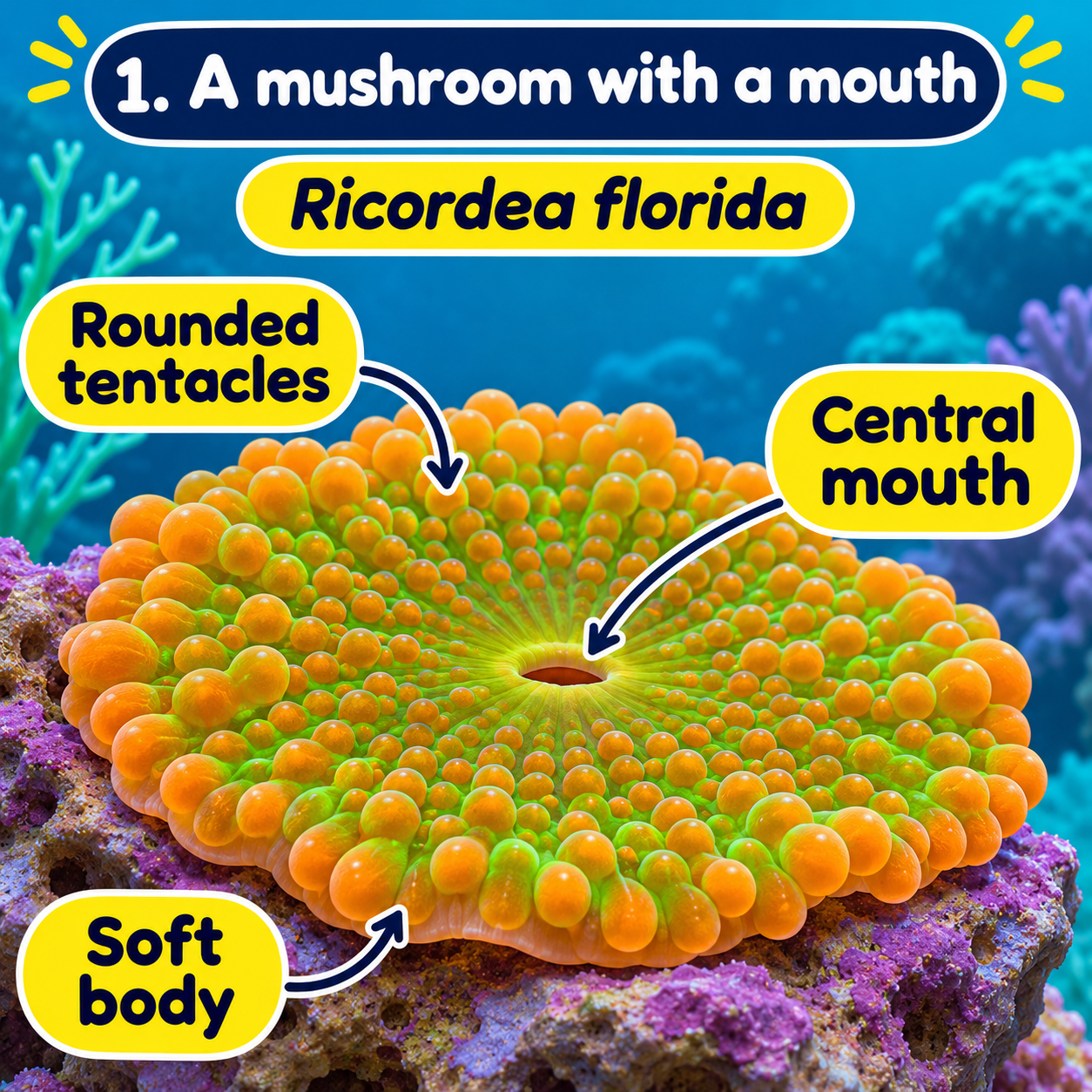
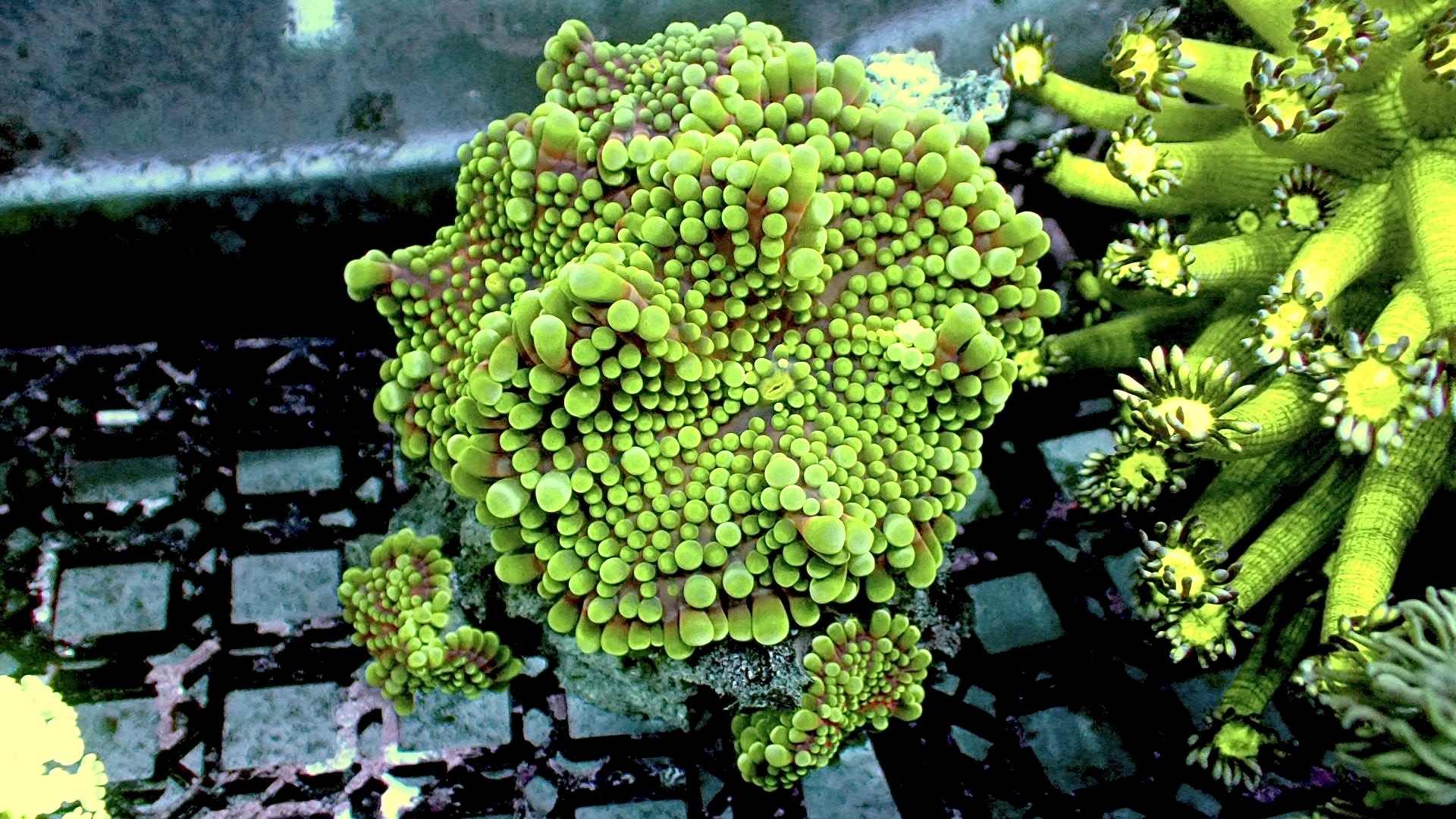
1. Meet the tentacles. The rounded bumps on Ricordea florida are short tentacles. Its fleshy disc has no hard skeleton. The area immediately around the mouth is usually clear of those bumps. Its Pacific cousin, Ricordea yuma, usually has tentacles on the raised mouth area too.
A sheltered seat
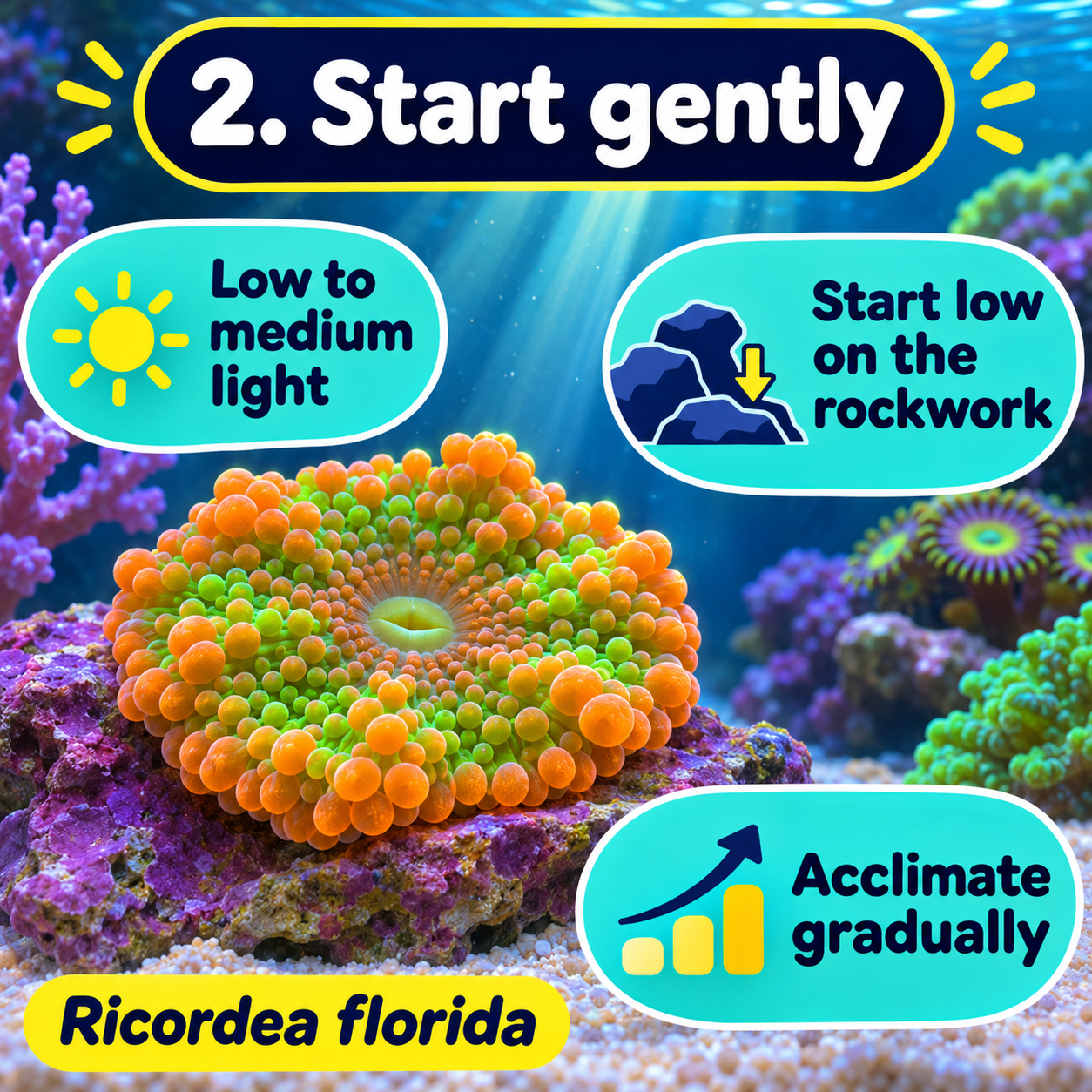
2. Start with softer light. Set the attached rock or plug low in the tank, where the disc stays clear of drifting sand. Begin with low-to-medium light and make increases gradually. Give the mushroom time to settle instead of moving it each day. Keep temperature and salinity steady.
Keep the current kind
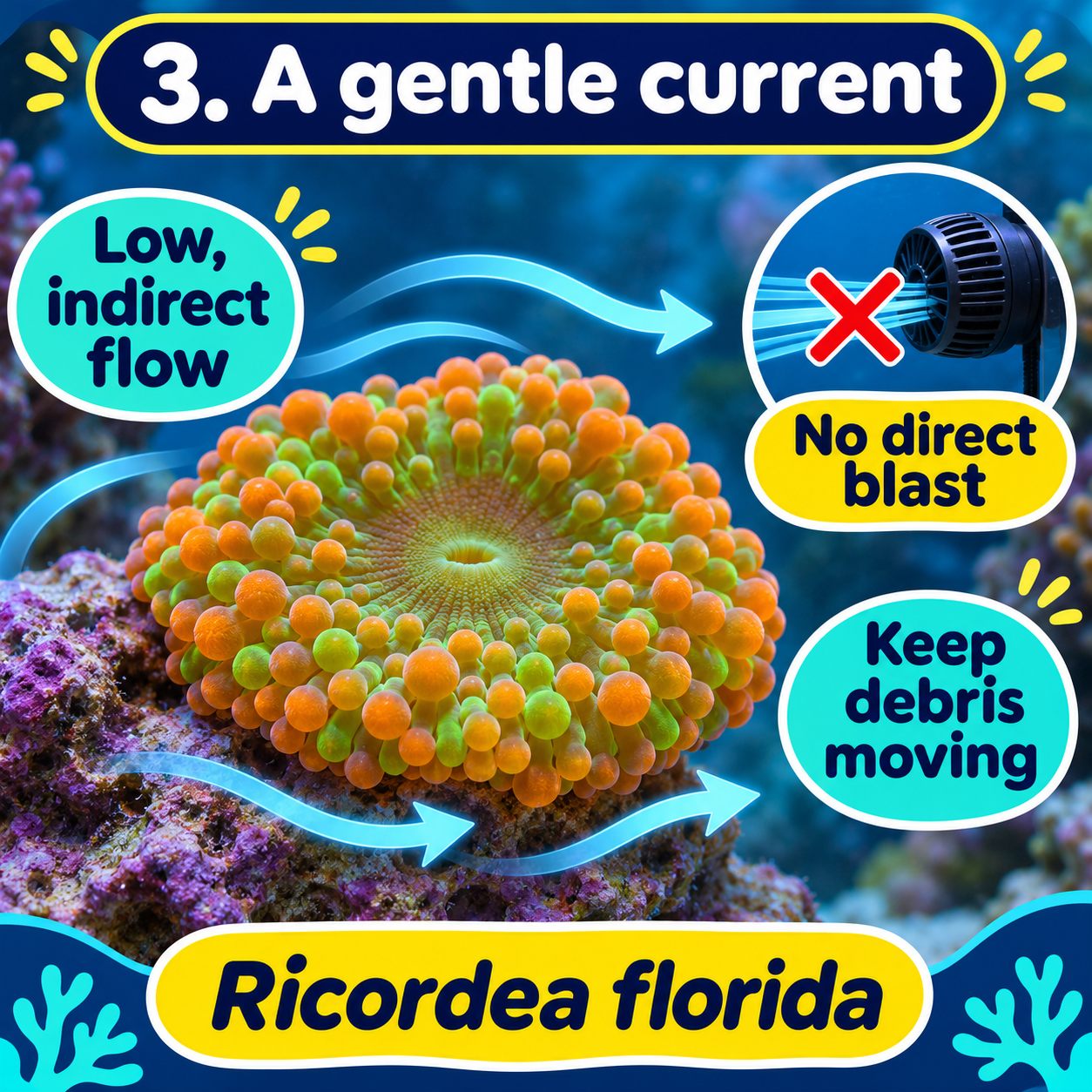
3. A gentle wash works. Choose low, indirect flow that carries loose debris away without folding the disc or lifting its edge. Keep it out of a pump's direct jet. If a polyp detaches, place it with small rubble in a sheltered low-flow spot so it can attach again.
Sunshine and a small snack
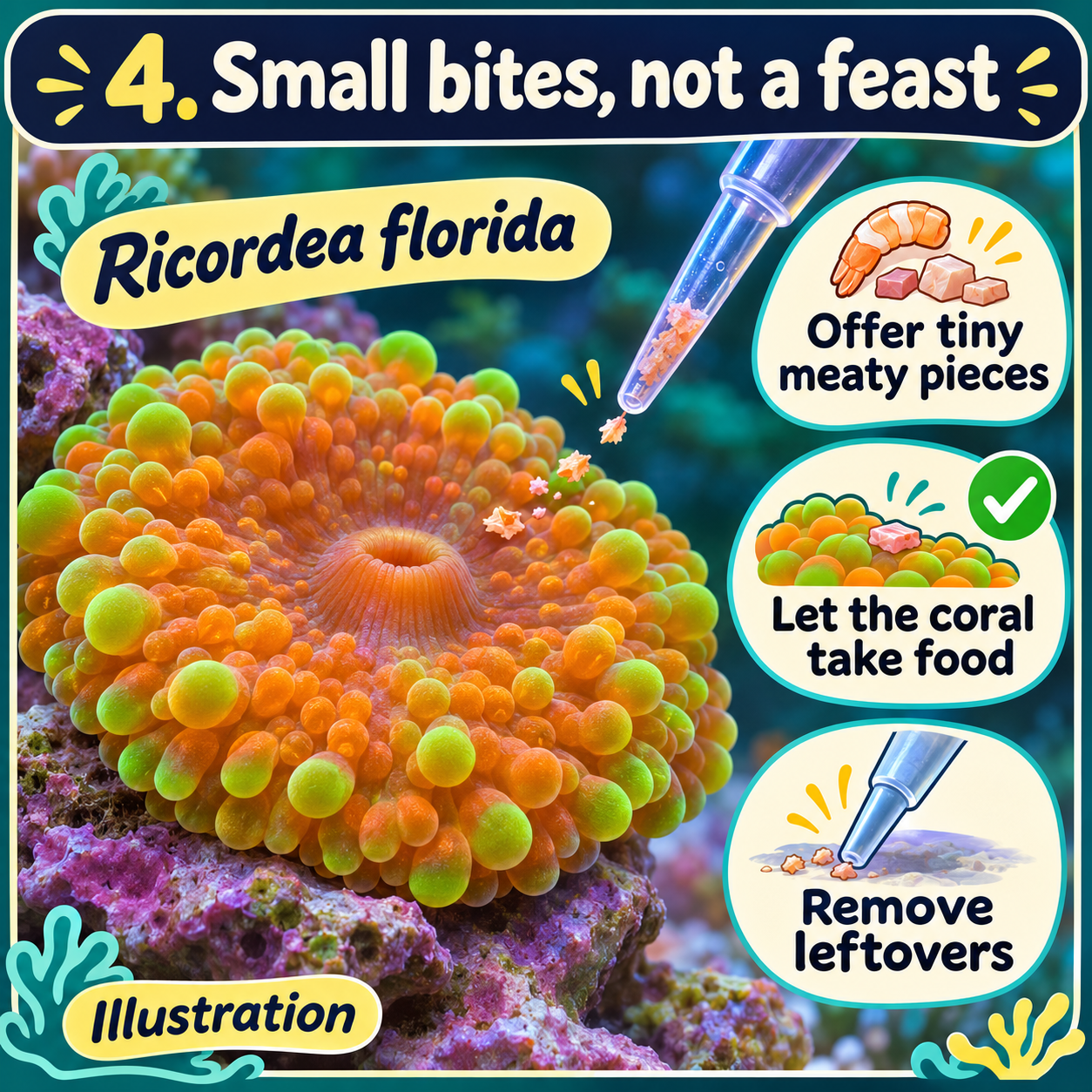
4. Feed a tiny mouth. Algae living inside the tissue share energy made with light. Offer a small piece of meaty food as an extra meal. Let the disc move the food toward its mouth without pushing it in. Remove uneaten food rather than leaving a pile to decay.
Make space for more mouths
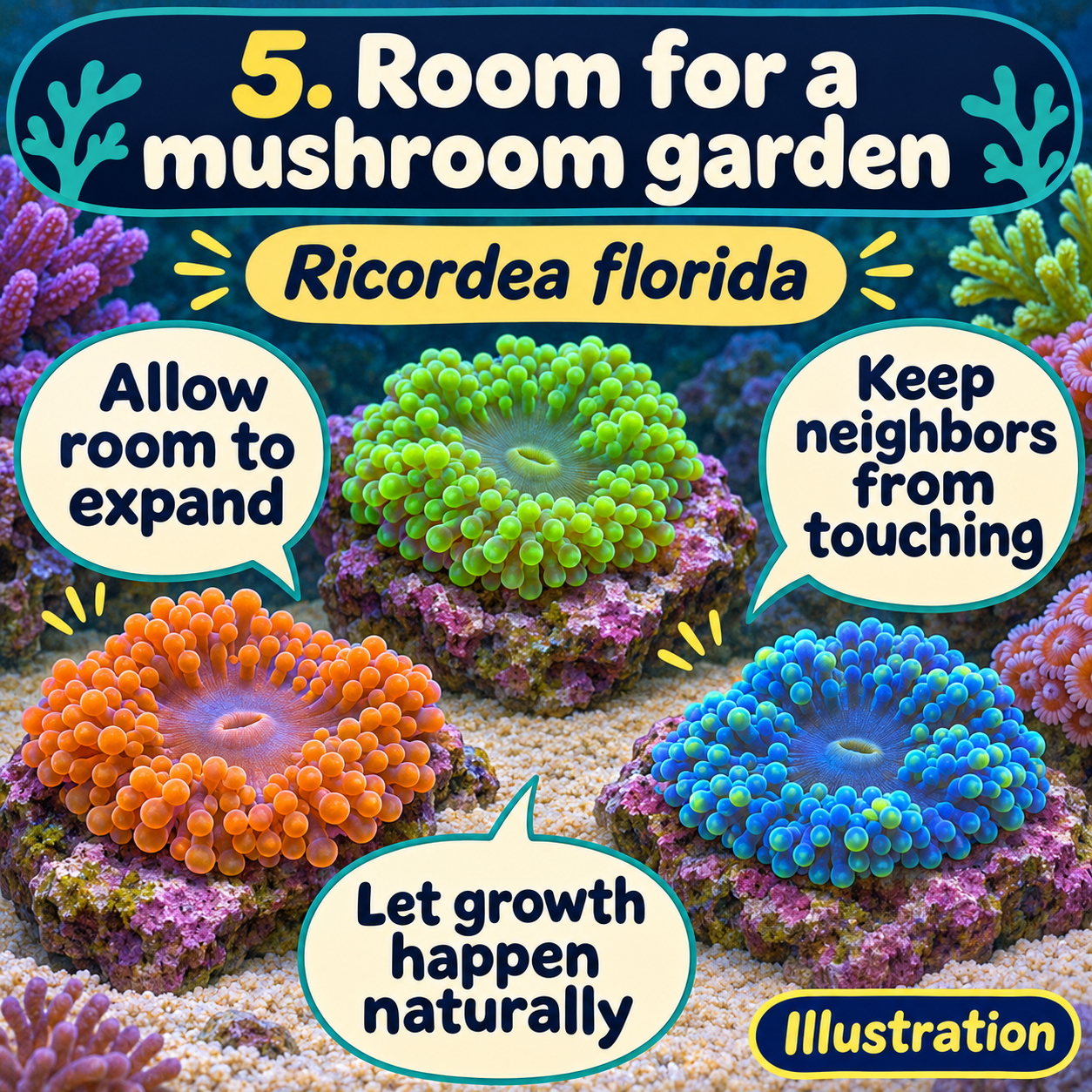
5. Let the garden grow. A polyp can develop extra mouths and slowly split into new individuals. Natural cloning also happens through budding and pieces of the foot. Expect patient growth, not a fixed splitting schedule. Leave space around fully open discs and keep neighboring stinging corals out of contact.
Field notes — what keepers report
6. Same species, different results. Florida ricordea keepers report success with low light and indirect flow; others see better expansion in stronger, deflected flow. One keeper reported frequent splits, while another saw size growth without a new mouth for six months. Watch your own polyp over time. More pump power or food is not a shortcut to a healthy colony.
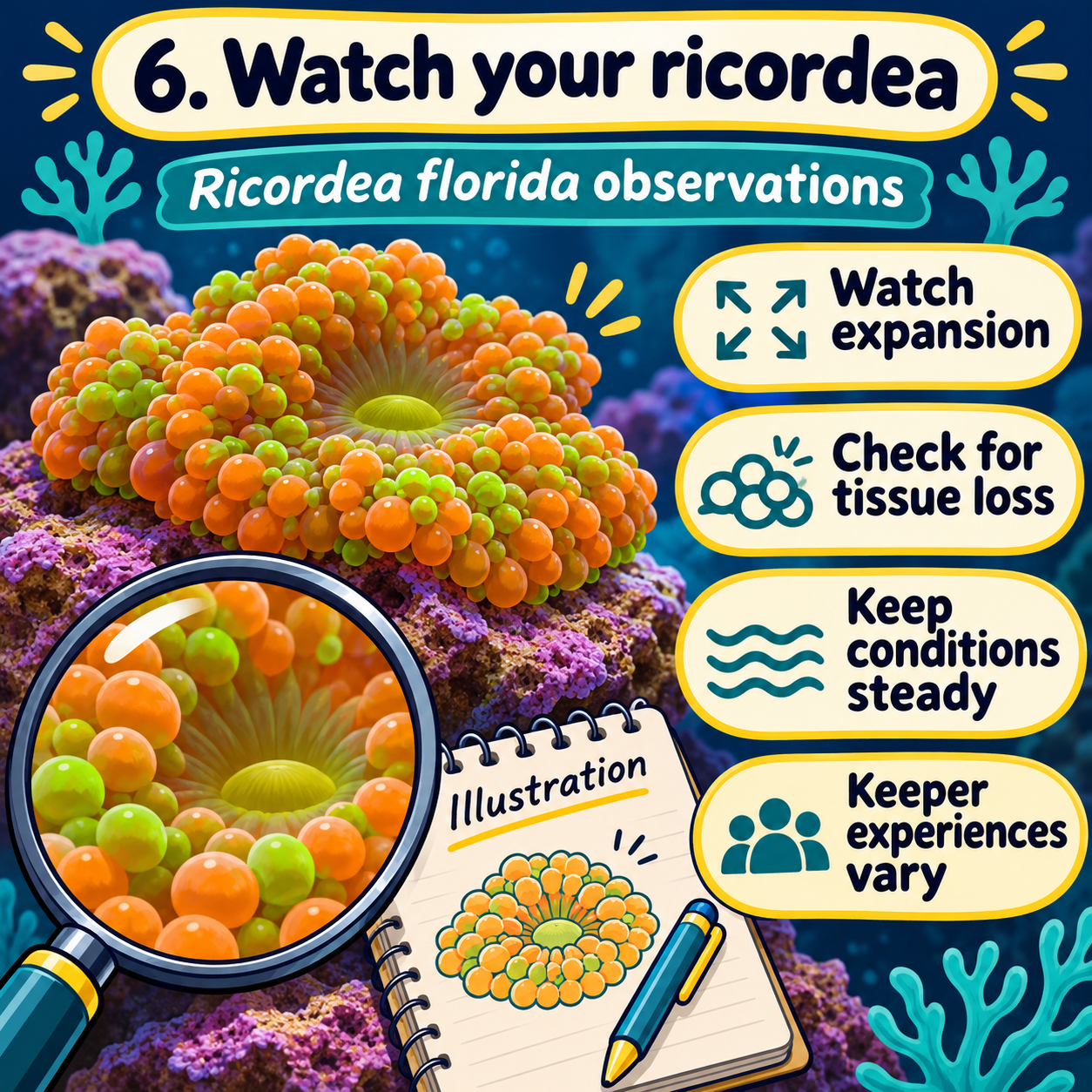
Small changes, patient watching. Give this living cushion a stable place, gentle current and room to open. A few quiet minutes watching its disc, mouth and tentacles will teach you more than chasing a growth deadline.
Field Notes
Related species

Ricordea Yuma
Ricordea yuma
Same genus

Blueberry Yuma
Ricordea yuma
Same genus

Green Ricordea florida
Ricordea florida
Same genus
Gurple Yuma mushroom
Ricordea yuma
Same genus

Mellow Yellow Yuma
Ricordea yuma
Same genus
Orange Yuma Ricordea Mushroom
Ricordea yuma
Same genus

Pink blush Ricordea florida
Ricordea florida
Same genus
Rose Ricordea Yuma
Ricordea yuma
Same genus