Fused Staghorn Coral
Acropora prolifera

Mark Eakin, NOAA · Public domain · source
Photo: NOAA Coral Reef Watch/Mark Eakin, [Wikimedia Commons](https://commons.wikimedia.org/wiki/File:Acropora_prolifera.jpg), public domain.
Gallery
Two iconic Caribbean corals make one surprising hybrid. Fused Staghorn grows in tight bushes or low, spreading fans. Look close and you’ll see branches that grow together, like fingers joining at the tips.
History
1. Two parents, one coral. Fused Staghorn is a natural cross between staghorn (Acropora cervicornis) and elkhorn (Acropora palmata). Lamarck described it in 1816. DNA confirmed the cross in 2002.
2. Follow the branches. Some colonies bunch up like shrubs. Others spread in wider, flatter fans. The branches can join as they grow, giving the coral its name.

In the wild
3. Look to the Caribbean. Fused Staghorn lives on tropical western Atlantic reefs, including the Bahamas, southern Florida and the Caribbean. The living colony in the photo grew near Lee Stocking Island in the Bahamas.
4. Sun close to the surface. Some colonies grow in less than a meter of water. Sunlight hits hard there. Water movement varies between sheltered patches and sites that feel the full push of waves.

Light and flow
5. Ease into bright light. In an established Acropora display, start a newly moved coral below its final light level. Step up slowly toward bright upper rockwork. Watch for paling after each change.
6. Give the water room to turn. Use strong, changing flow that reaches between branches. Point powerheads past the colony so water moves around it from different directions. Avoid a fixed jet hitting one patch.

Water and feeding
7. Keep a steady reef. Check temperature, salinity and alkalinity often. Track calcium and magnesium as the colony builds skeleton. Change one thing at a time so you can see what helped.
8. Feed the reef lightly. Light powers the algae living in the coral’s tissue. Normal fish feeding brings small particles through the water. Keep nutrients measurable and skip heavy spot feeding.

Growth and space
9. Leave room for branches. A growing colony can shade itself and its neighbors. Give it clear space on a secure ledge. Recheck the water movement around its base as the branches fill in.
10. Look underneath. Use a flashlight to check the inner branches and the base. New tissue over rock is a sign of growth. If tissue is pulling back, check for shading, trapped debris and recent changes before adjusting the setup.

Field notes — what keepers report
11. Fast in one place, slower in another. Fused Staghorn can put on branches quickly in ocean nurseries. Growth and survival vary by site. Use photos of the same branch to track change over time.
12. More flow has a limit. Acropora growers improve circulation when branches start blocking it. Some reef keepers see color fade after turning pumps up too far. Make small changes and watch the whole colony.

Leave wild Fused Staghorn on the reef. If you get a chance to see it in the water, look for those little bridges between branches. They’re the detail that makes this coral stand out.
Field Notes
Related species
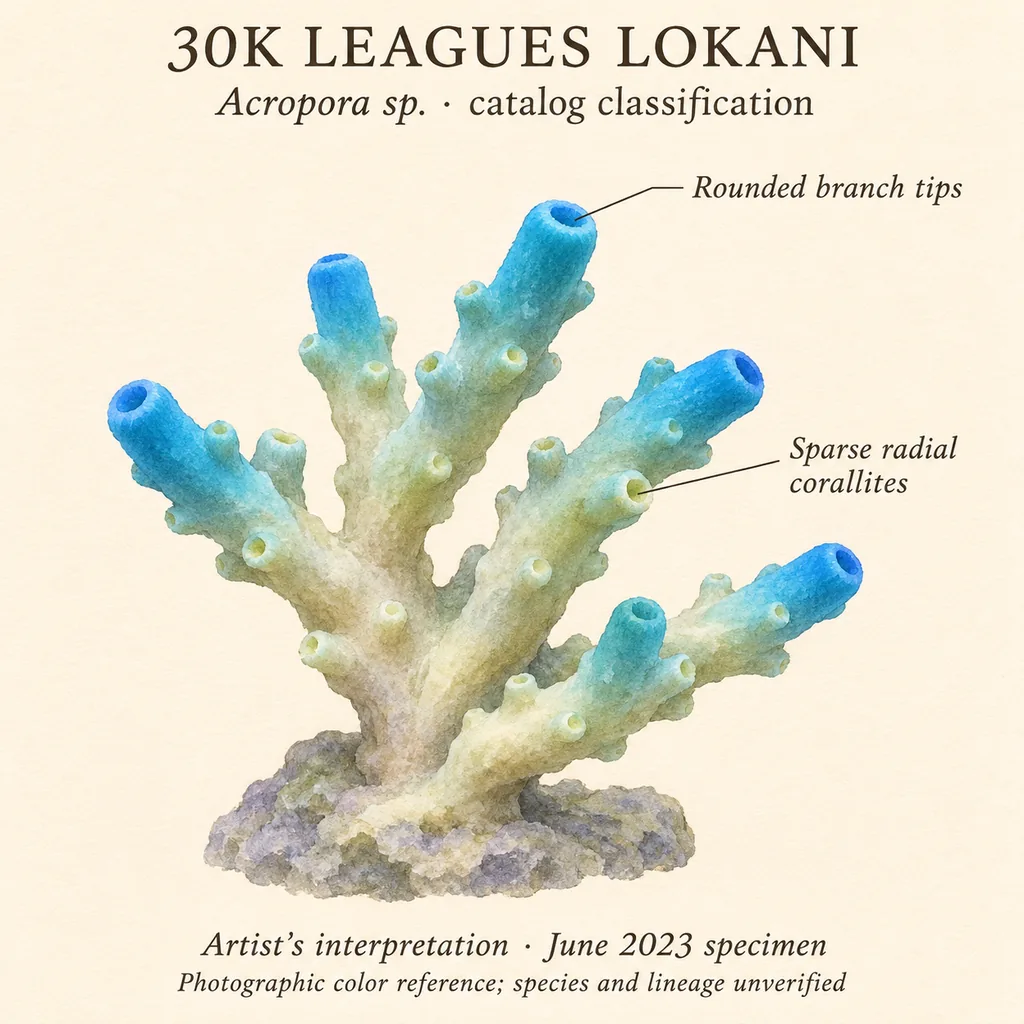
30K Leagues Lokani
Acropora sp.
Same genus
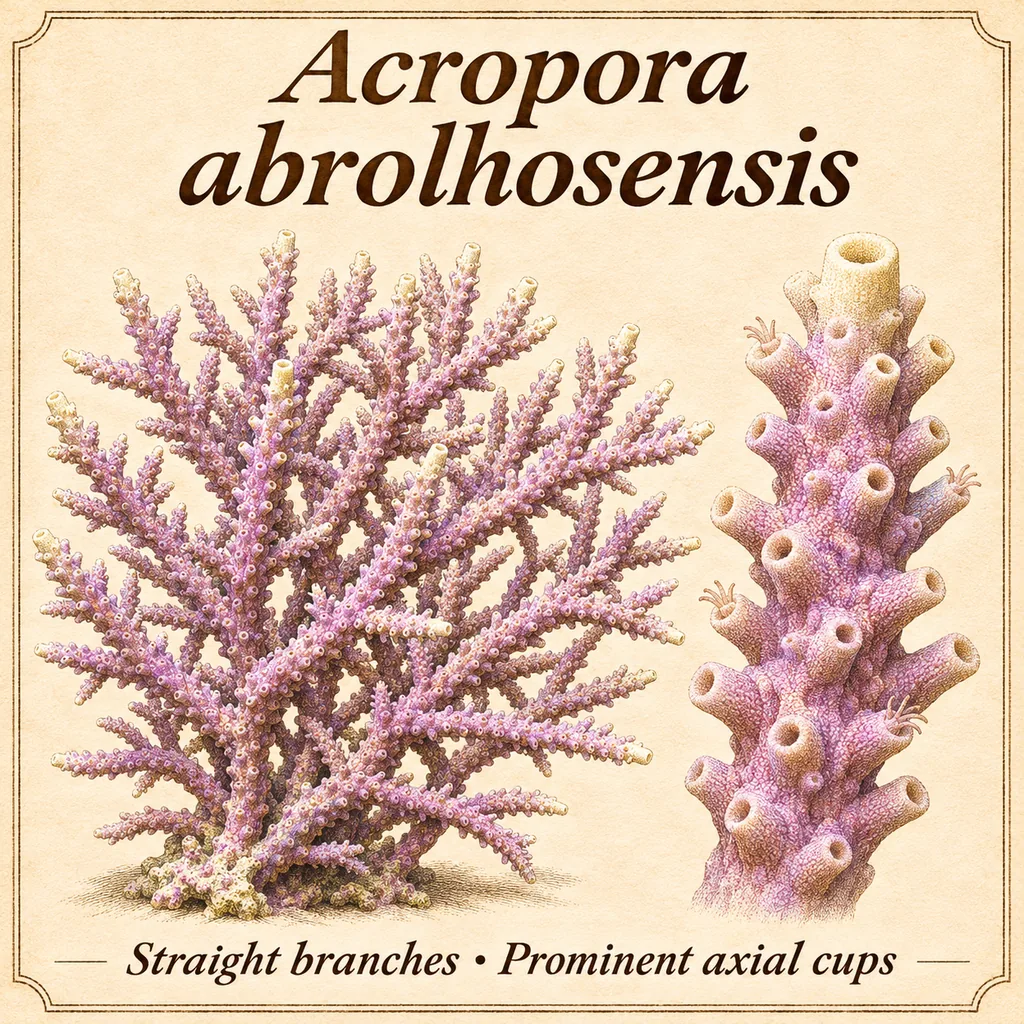
Acropora abrolhosensis
Acropora abrolhosensis
Same genus
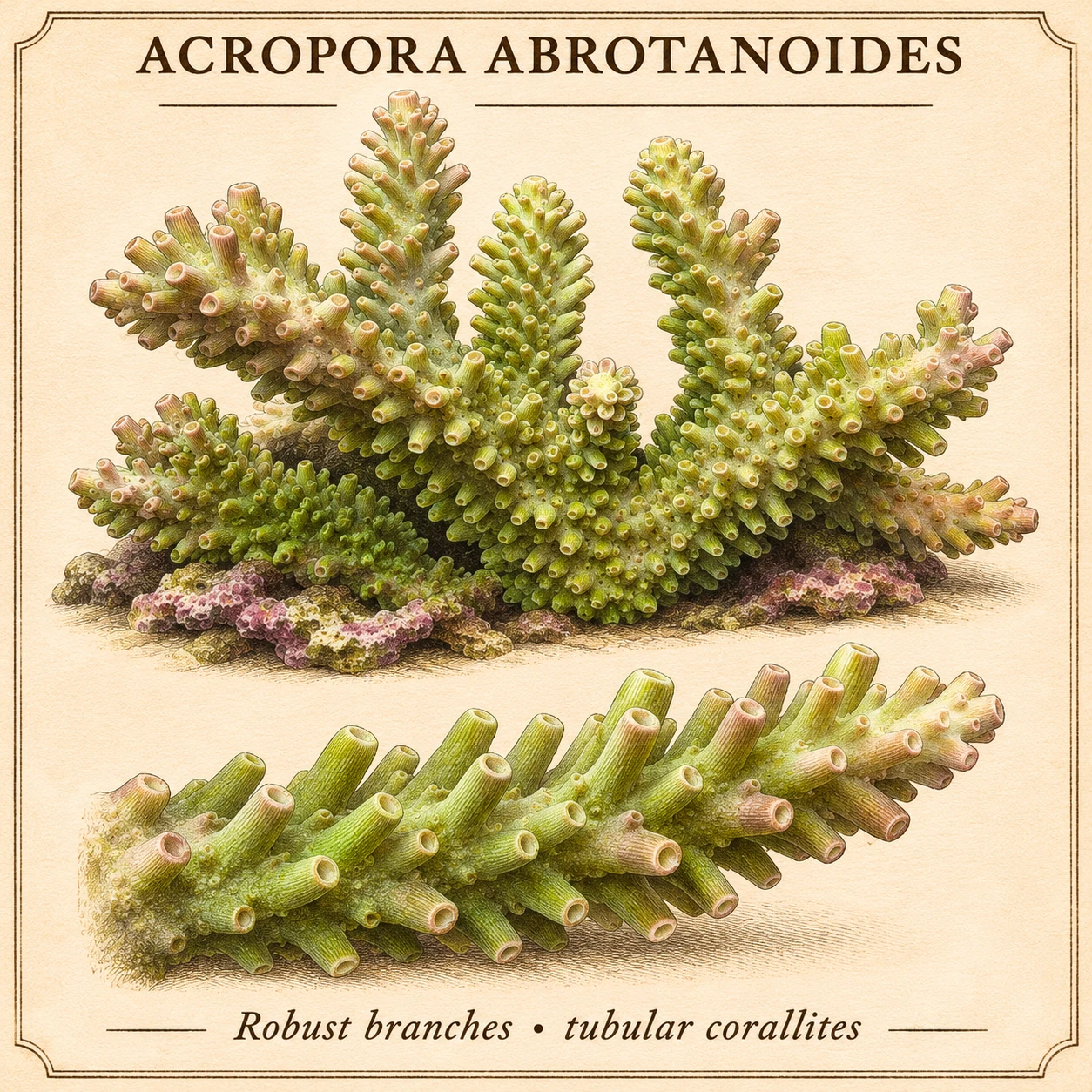
Acropora abrotanoides
Acropora abrotanoides
Same genus
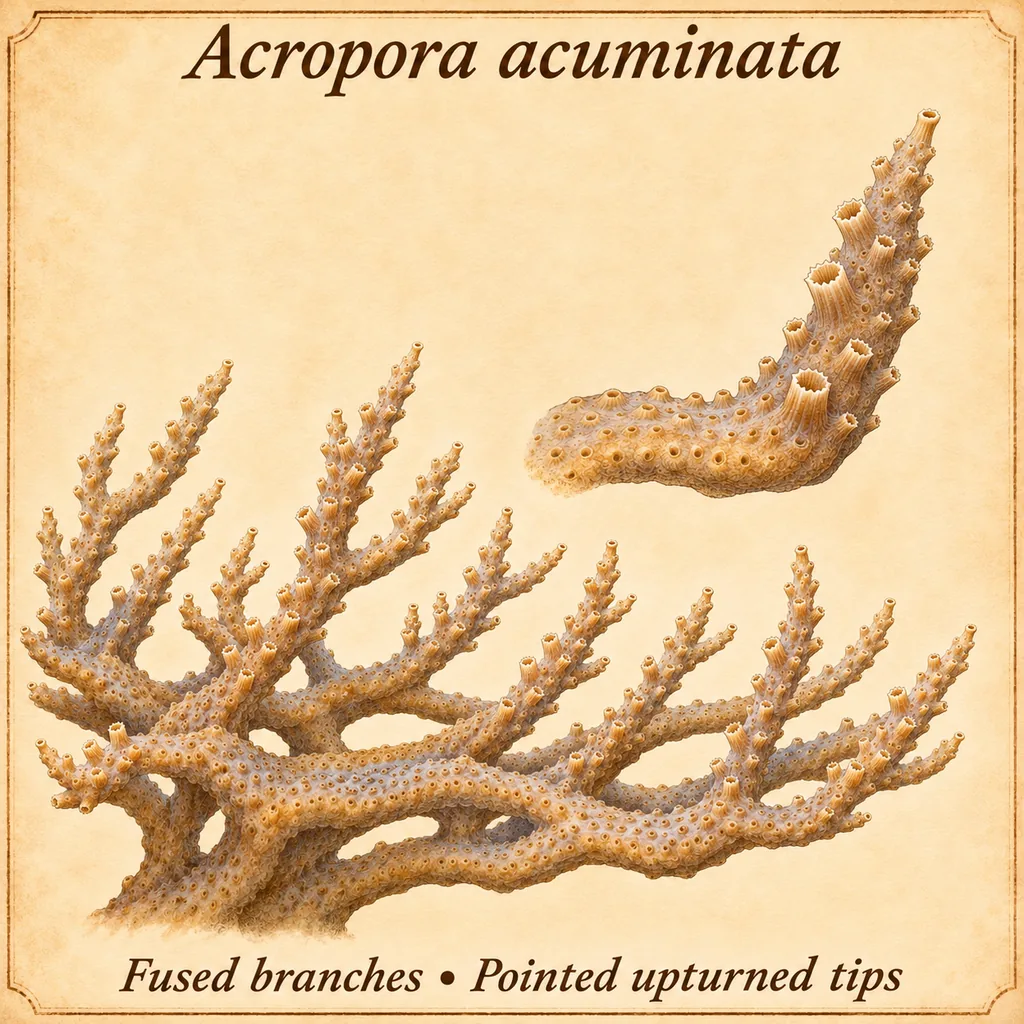
Acropora acuminata
Acropora acuminata
Same genus
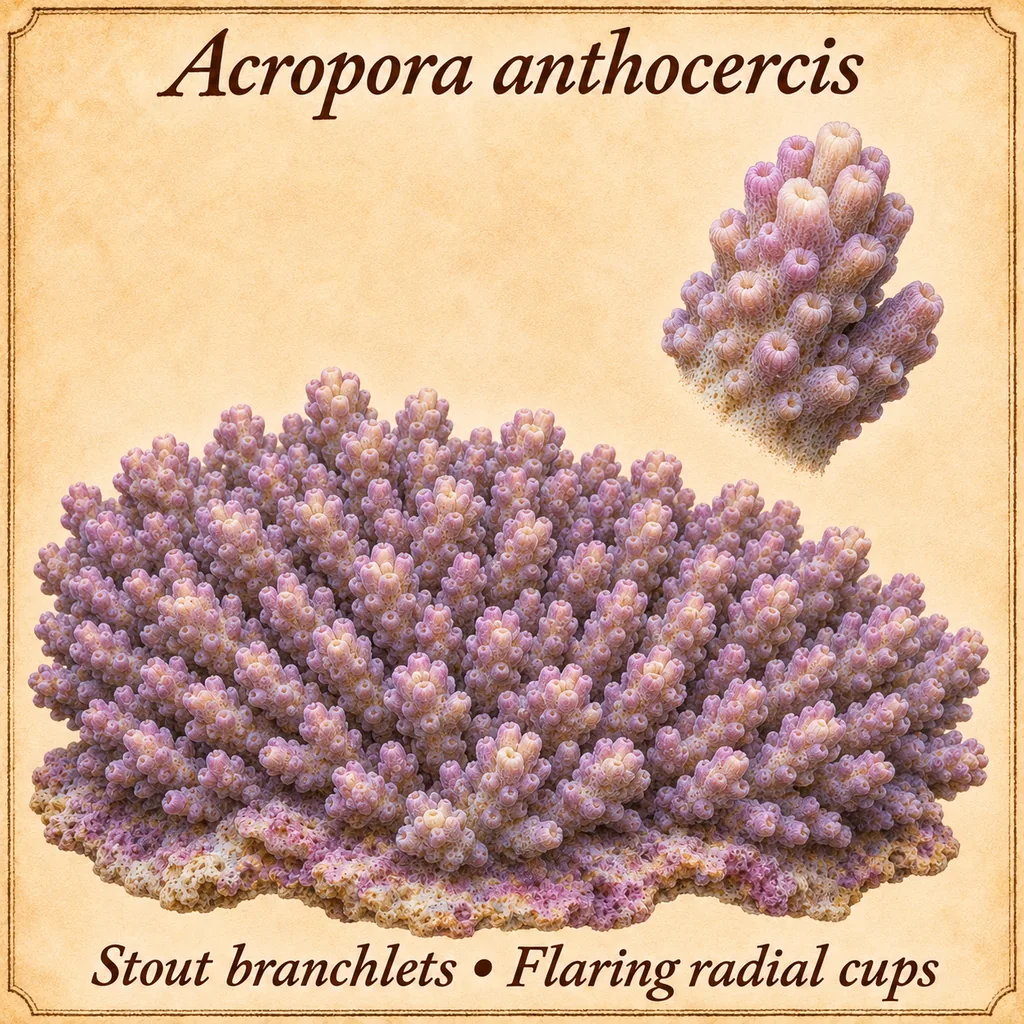
Acropora anthocercis
Acropora anthocercis
Same genus
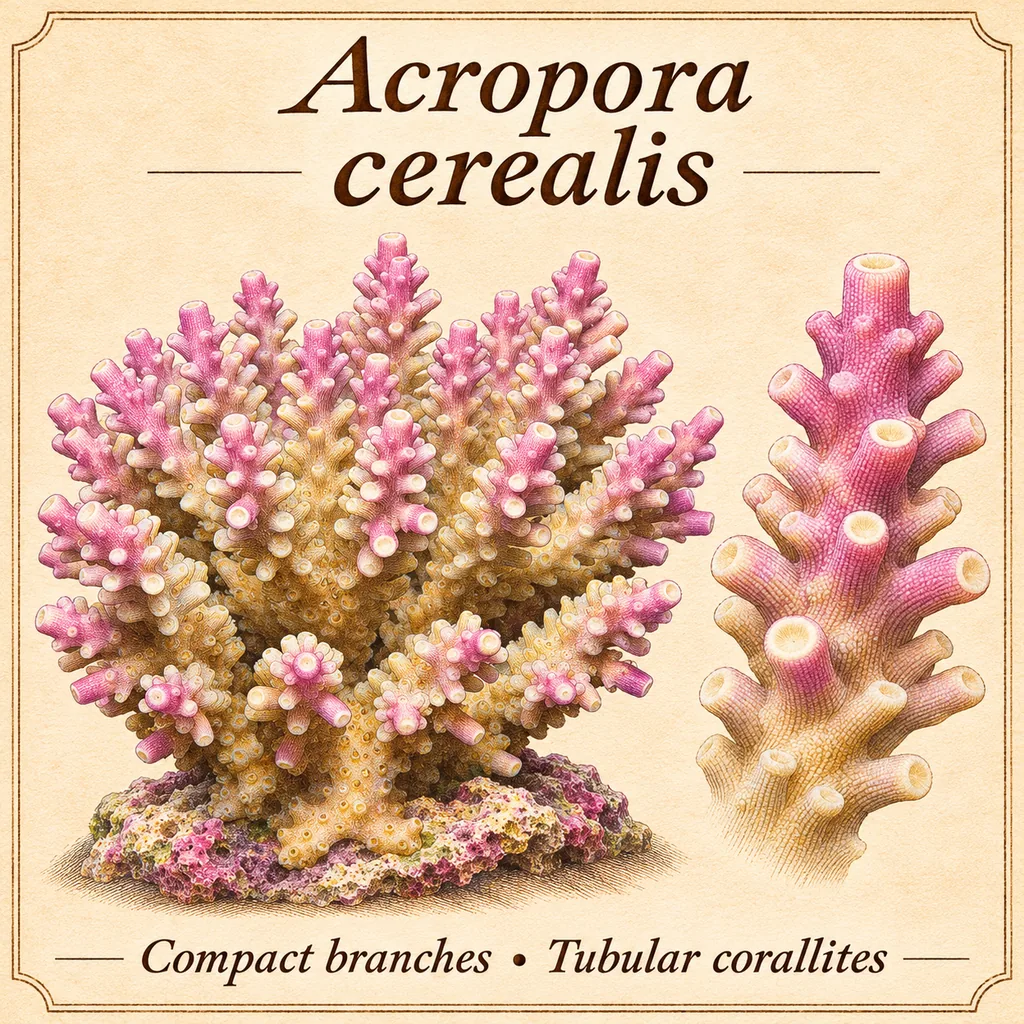
Acropora cerealis
Acropora cerealis
Same genus
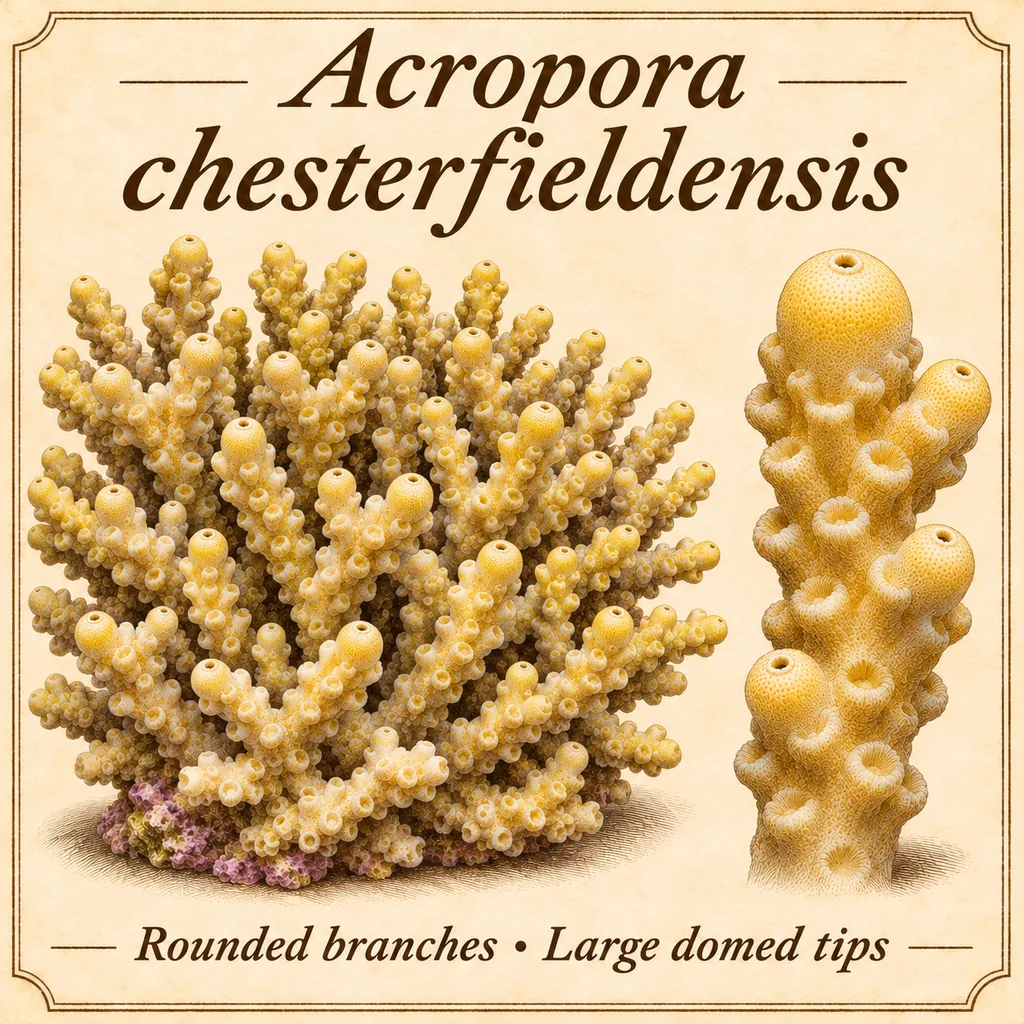
Acropora chesterfieldensis
Acropora chesterfieldensis
Same genus
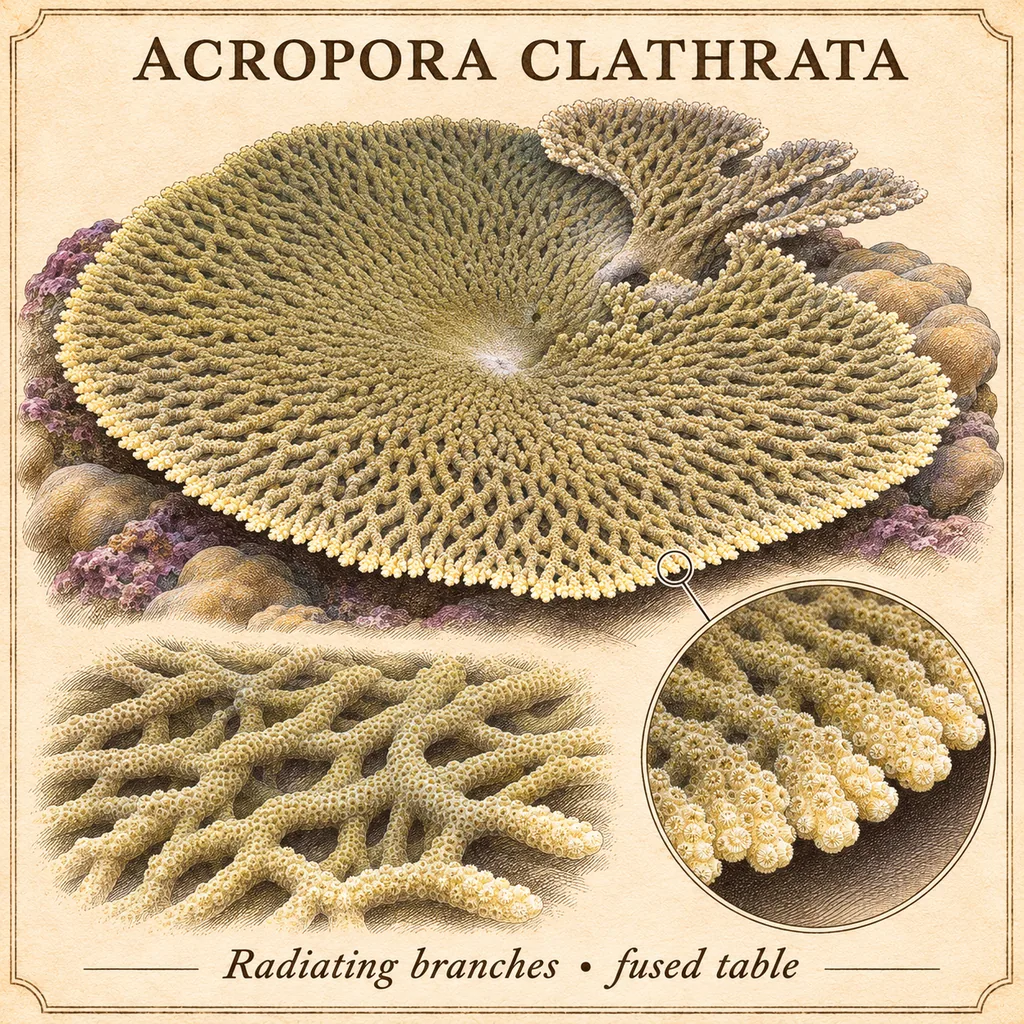
Acropora clathrata
Acropora clathrata
Same genus