Gemmifera Acropora
Acropora gemmifera

MDC Seamarc Maldives · CC BY-SA 4.0 · source
Photo: MDC Seamarc Maldives, Wikimedia Commons, CC BY-SA 4.0. Source: https://commons.wikimedia.org/wiki/File:Acropora_gemmifera_Maldives.JPG
Gallery
Meet the coral that looks like a tiny city of fingers. Gemmifera Acropora packs thick, stubby branches into a tight, bumpy mound. Each branch ends in a pale tip. Each tip is a growth point. The whole colony glows blue, brown, cream, or purple in good light. It is a showpiece. It is also a challenge. Give it bright light, strong flow, and steady water, and it rewards you with fast color and clean growth.
History of the Coral
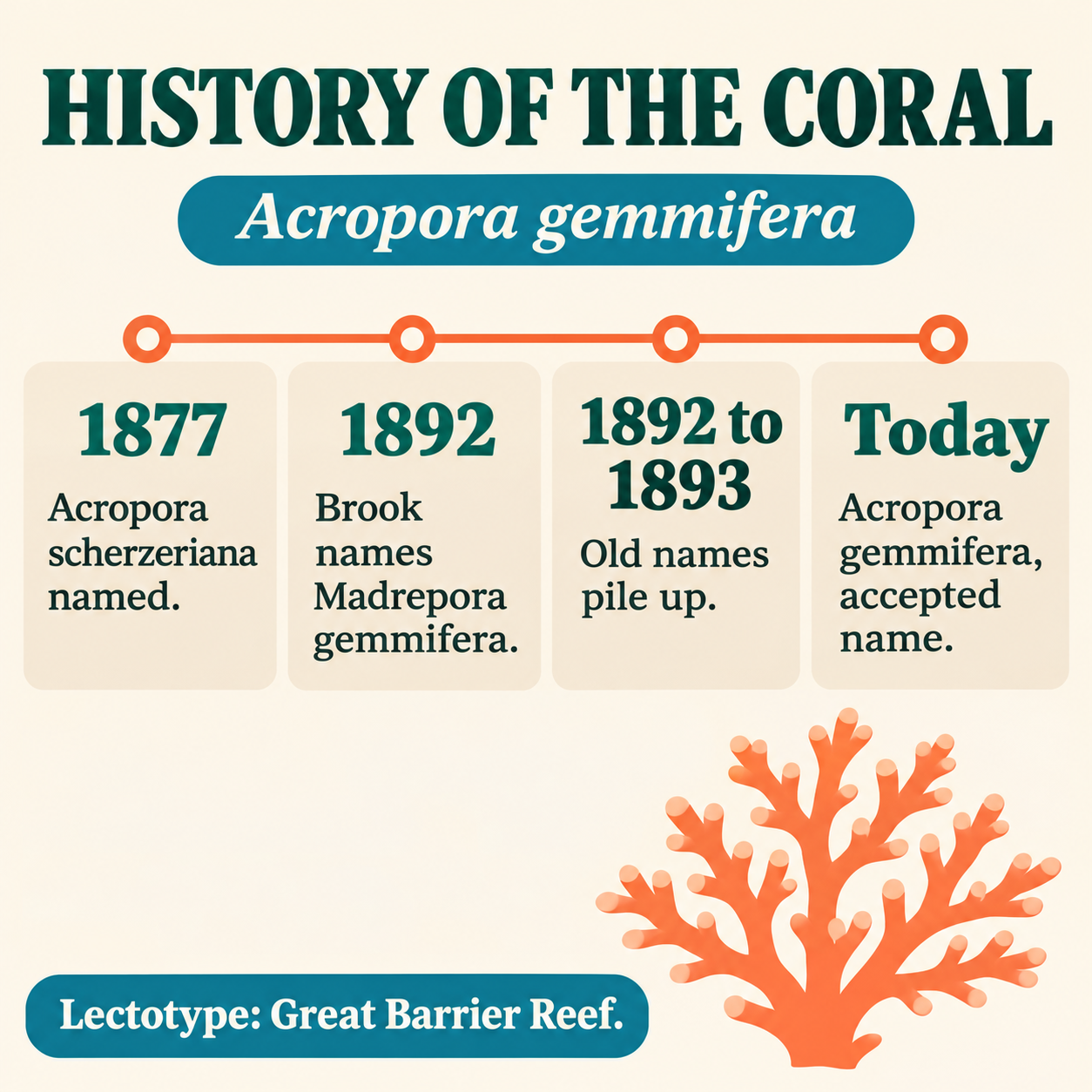
A name from 1892. Brook described this coral in 1892 as Madrepora gemmifera. The name later moved to Acropora gemmifera. The species name gemmifera points to buds. Look close and you see why. New polyps bud along every branch.
A lectotype from the Great Barrier Reef. The reference specimen ties the name to the Great Barrier Reef. That anchor keeps the name steady while other old names fall away. Old names include Acropora scherzeriana and Madrepora australis. Today they are synonyms. One name. One coral.
A staghorn with staying power. Acropora is the biggest reef building genus on Earth. Gemmifera is one of its tough shallow water members. It has ridden waves, heat, and storms on exposed reef flats for a very long time. That wild toughness is your clue. Copy the shallow reef and this coral thrives.
How They Live in the Wild
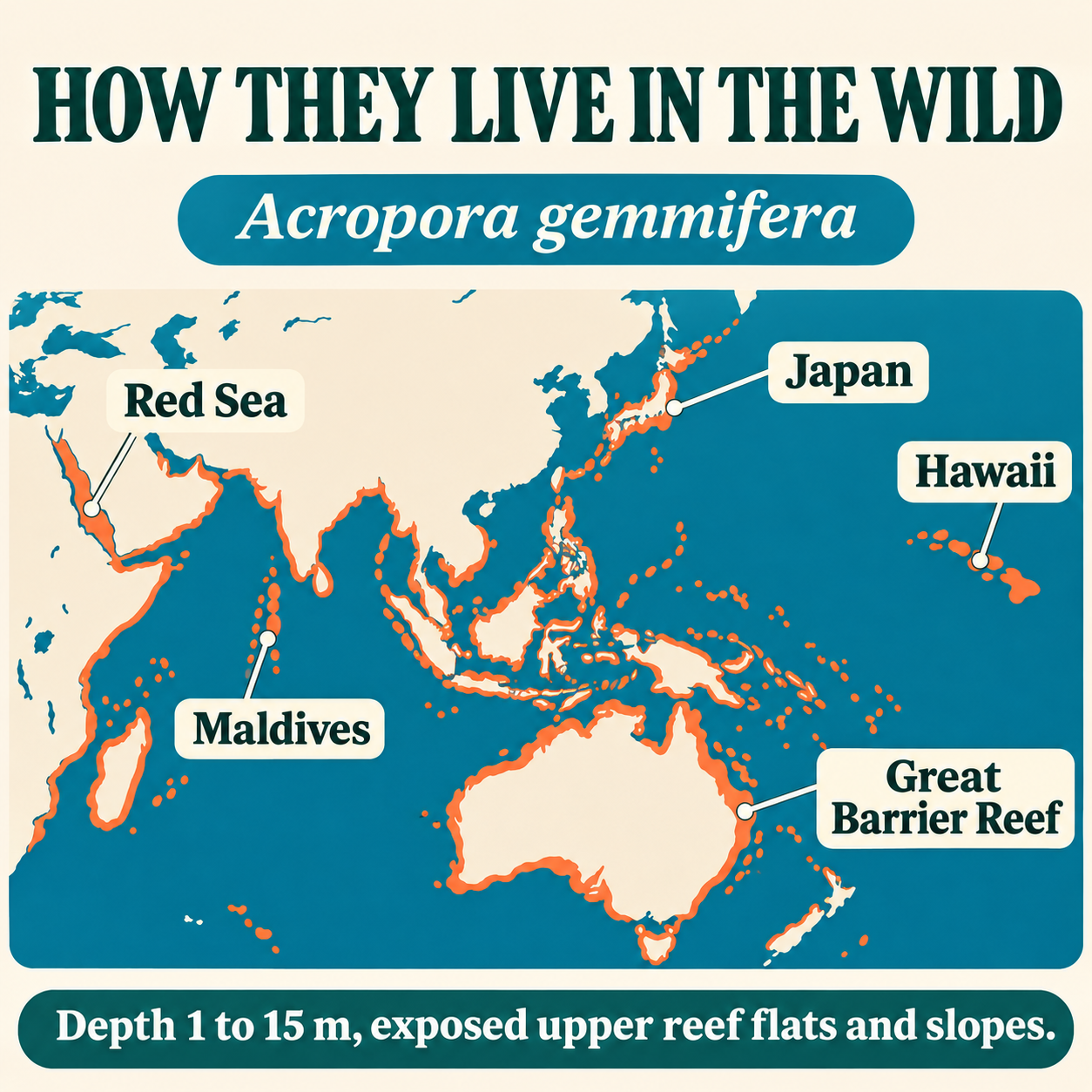
Sun first, shade never. Wild colonies live on exposed upper reef flats and slopes. They sit in 1 to 15 m of clear, sunlit water. Waves wash them all day. Light is strong. Flow is strong. Nothing is still.
A map as big as an ocean. This coral ranges from the Gulf of Aden and the Red Sea, across the Indian Ocean, through Southeast Asia and Australia, to Japan, the central and western Pacific, and northwestern Hawaii. One species. Two oceans. Countless reefs.
Built for the wash zone. Thick branches resist surge. Tight spacing sheds sand. Pale tips mark new growth after every good season. Color shifts with light and depth. Blue, brown, cream, and purple are all normal. White or blue tips are normal too.
Lighting
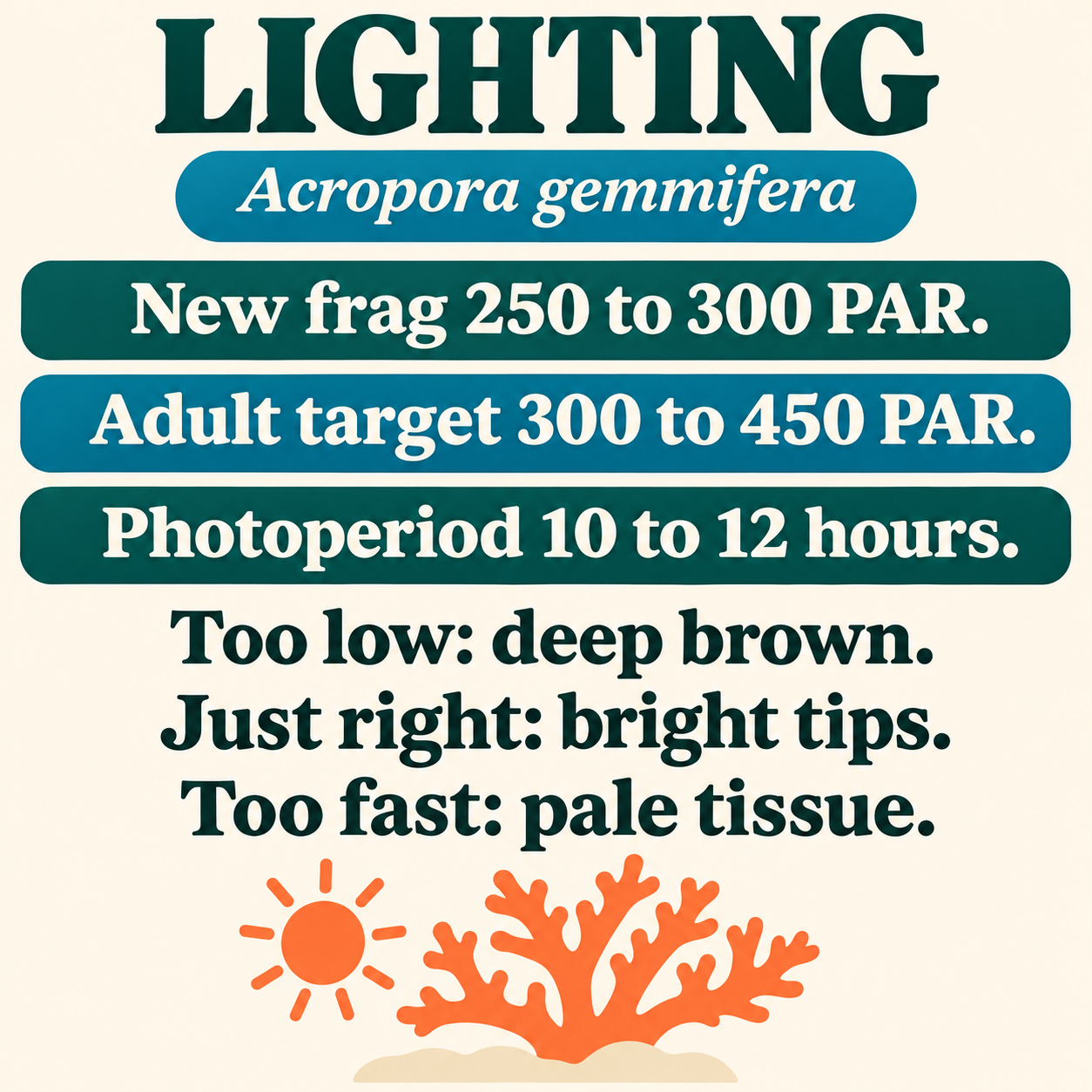
High light is the rule. Put this coral under high light. PAR 300 to 450 is the target for a healthy adult colony. Start new frags at 250 to 300 and raise light over two to three weeks. Watch color. Pale tissue means too much light too fast. Brown tissue means too little light.
Color is your light meter. Bright tips and clean color mean the light is right. Faded tips mean move it up or raise the light a little. Deep brown means move it up slowly or raise intensity. Change light in small steps. Never jump PAR by 100 in one day.
Keep the photoperiod steady. Run 10 to 12 hours of light each day. Keep the schedule the same every day. Corals love routine. A stable clock helps zooxanthellae feed the coral all day long.
Flow and Placement
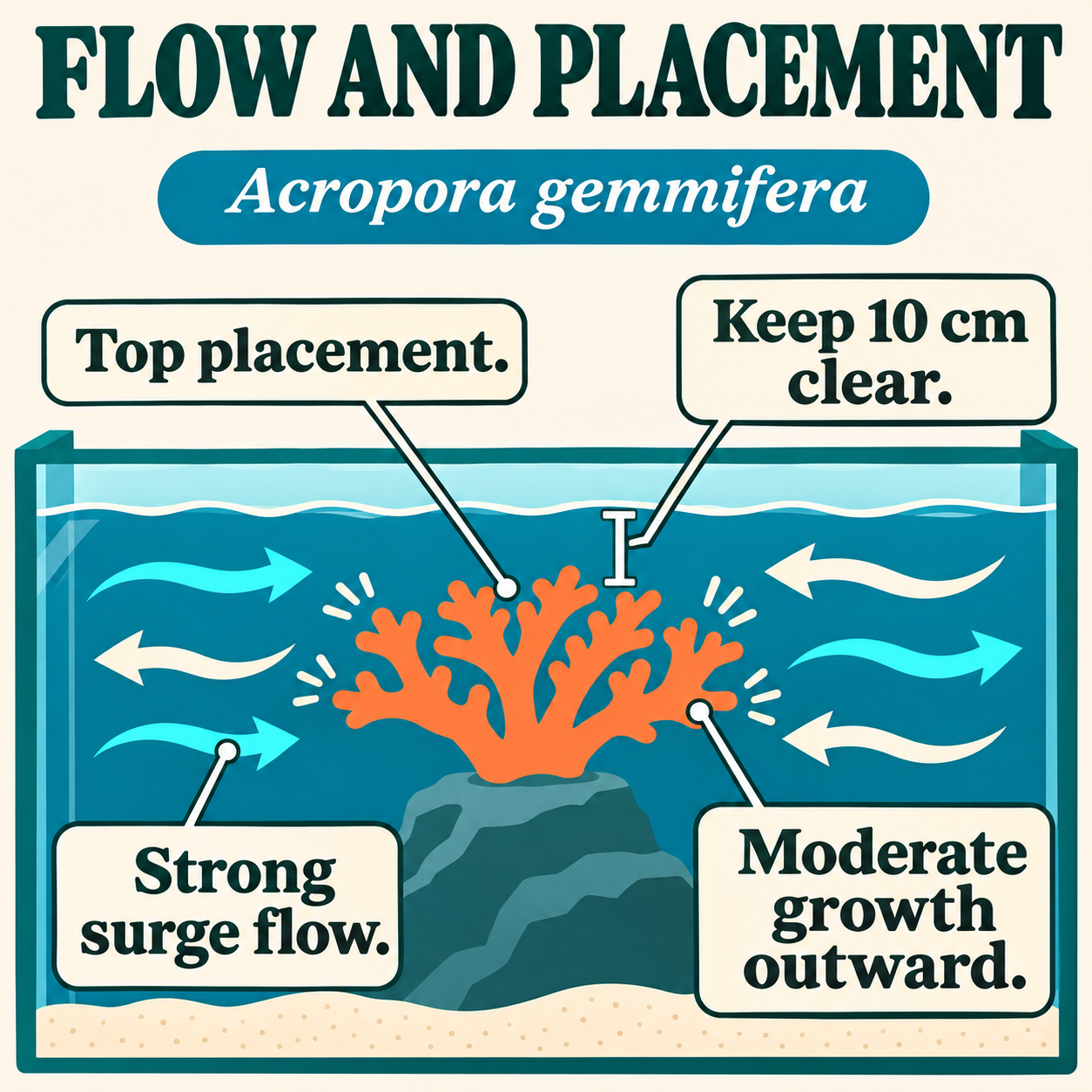
Top of the tank. No debate. Place this coral at the top. Top placement puts it in the brightest light and the strongest flow. It also keeps it clear of sand and shade. Give it room to grow outward. Keep neighbors at least 10 cm away.
Surge beats a single jet. Aim for strong, multidirectional flow. Surge style flow is best. It lifts waste off the branches and feeds every polyp. Avoid one hard jet aimed straight at the colony. That strips tissue and stalls growth.
Moderate growth, steady shape. Growth is moderate. New branches thicken first, then lengthen. Prune only when branches touch a neighbor. Mount frags on a plug or rock with the cut base secure. A wobbly frag never grows well.
Water and Food
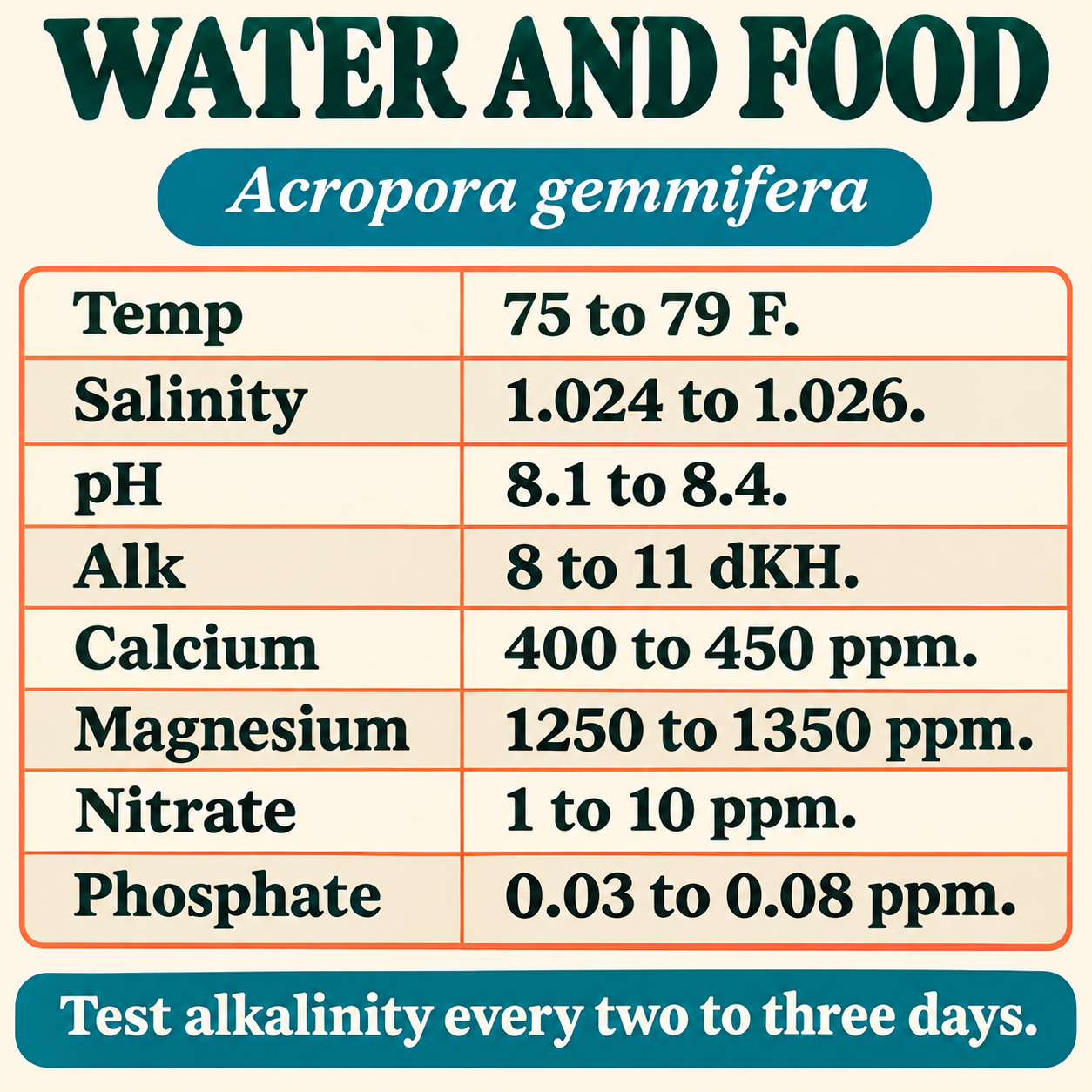
Steady wins every time. Keep temperature 75 to 79 F, salinity 1.024 to 1.026, and pH 8.1 to 8.4. Keep alkalinity 8 to 11 dKH, calcium 400 to 450 ppm, and magnesium 1250 to 1350 ppm. Test alkalinity every two to three days. Small, steady dosing beats big, rare corrections.
Clean, not sterile. Keep nitrate 1 to 10 ppm and phosphate 0.03 to 0.08 ppm. Zero nutrients starve this coral. High nutrients fuel algae and tissue loss. Tissue recession starts at the base and moves up when nutrients spike. Hold the line. Do not chase zero.
Feed light and feed small. This coral eats light first and food second. Target feed small zooplankton sized foods once or twice a month. Turn flow down for 15 minutes while you feed. Then turn flow back up. Good chemistry matters more than any single feeding.
Pests and Safety
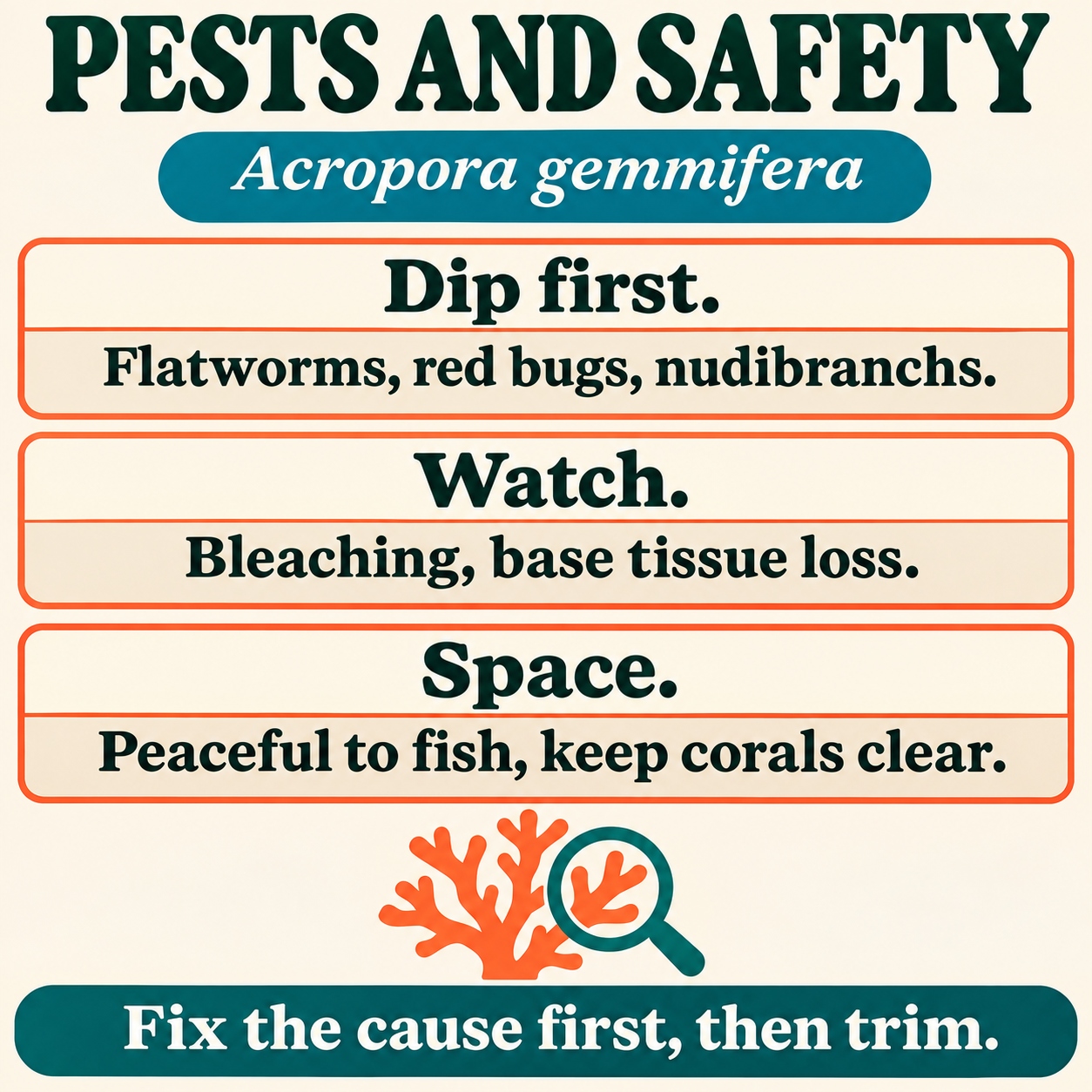
Dip every new frag. Dip new corals before they touch your tank. Look for Acropora eating flatworms, red bugs, and nudibranchs. Check branch bases and shaded undersides. Quarantine when you can. One skipped dip can cost a whole colony.
Watch for bleaching and base loss. Heat, sudden light jumps, and alk swings cause bleaching. Tissue loss at the base points to nutrient spikes, low flow, or pests. Act fast. Fix the cause first. Then trim dead tips with clean tools.
Safe for hands, careful with neighbors. This coral is peaceful toward fish and most tank mates. It still stings nearby corals with sweeper reach and fast growth. Keep space around it. Wash hands after handling frags. Wear eye protection when you cut branches.
Field notes
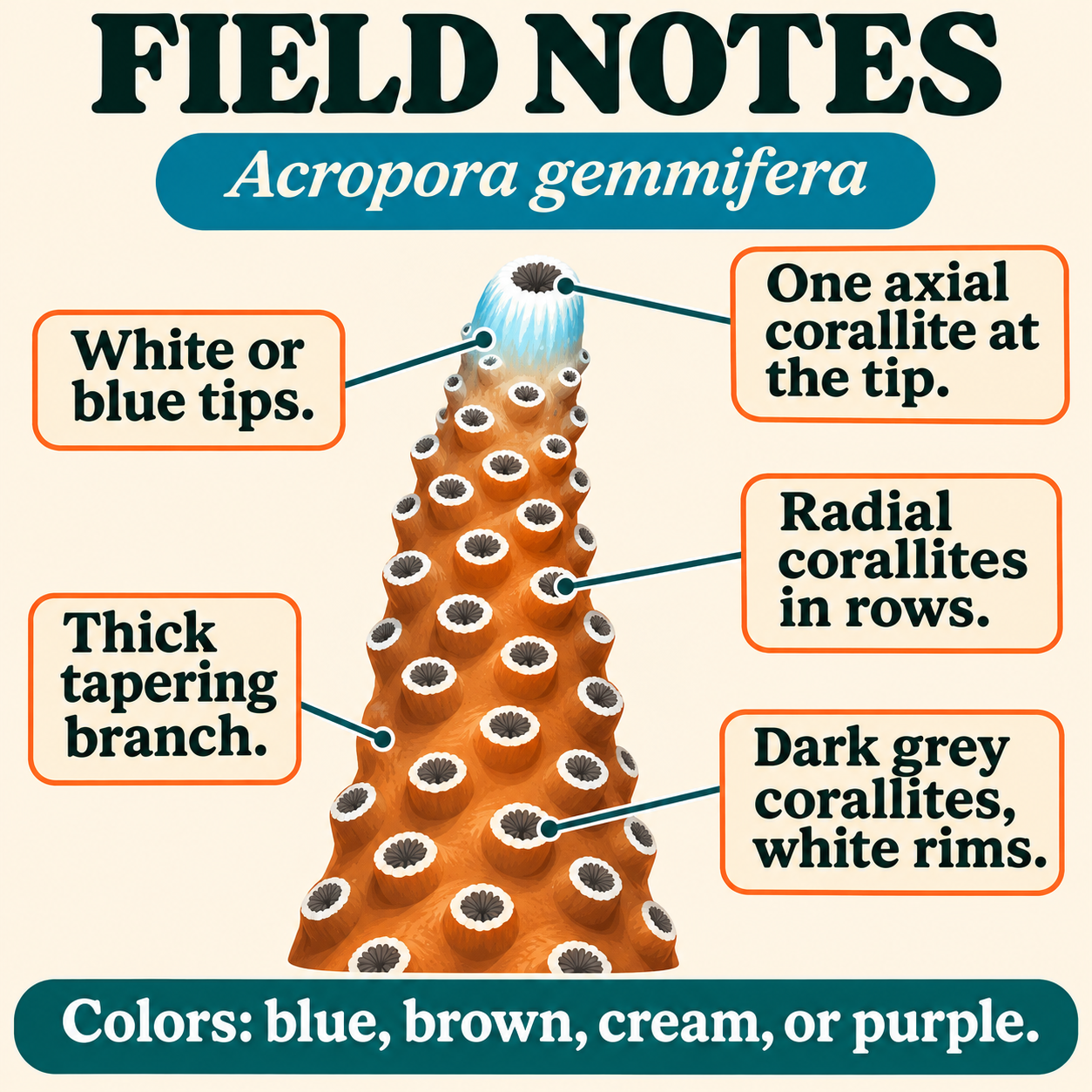
Fingers, not twigs. Identify this coral by thick, tapering, finger-like branches. Each branch has one small axial corallite at the tip. Radial corallites sit in neat rows down the sides. That row pattern is the giveaway.
Bumps are the fingerprint. The surface looks bumpy and almost cushion-like up close. Corallites are dark grey with white rims. Indian Ocean colonies can show yellowish axial corallites. That color twist is normal, not a different species.
Check the wild clues at home. Compare your frag to the hero photo. Look for the same dense mound, the same pale tips, and the same rowed corallites. Match all three and you have the right coral. Match only one and keep looking.
Start at the top, blast it with light and flow, and hold your water steady. That is the whole secret. Gemmifera Acropora is an advanced coral, but it is not a mystery. It tells you what it needs with color, tips, and growth. Listen to it, keep it stable, and it will turn a bright corner of your tank into a little piece of reef flat.
Field Notes
Related species
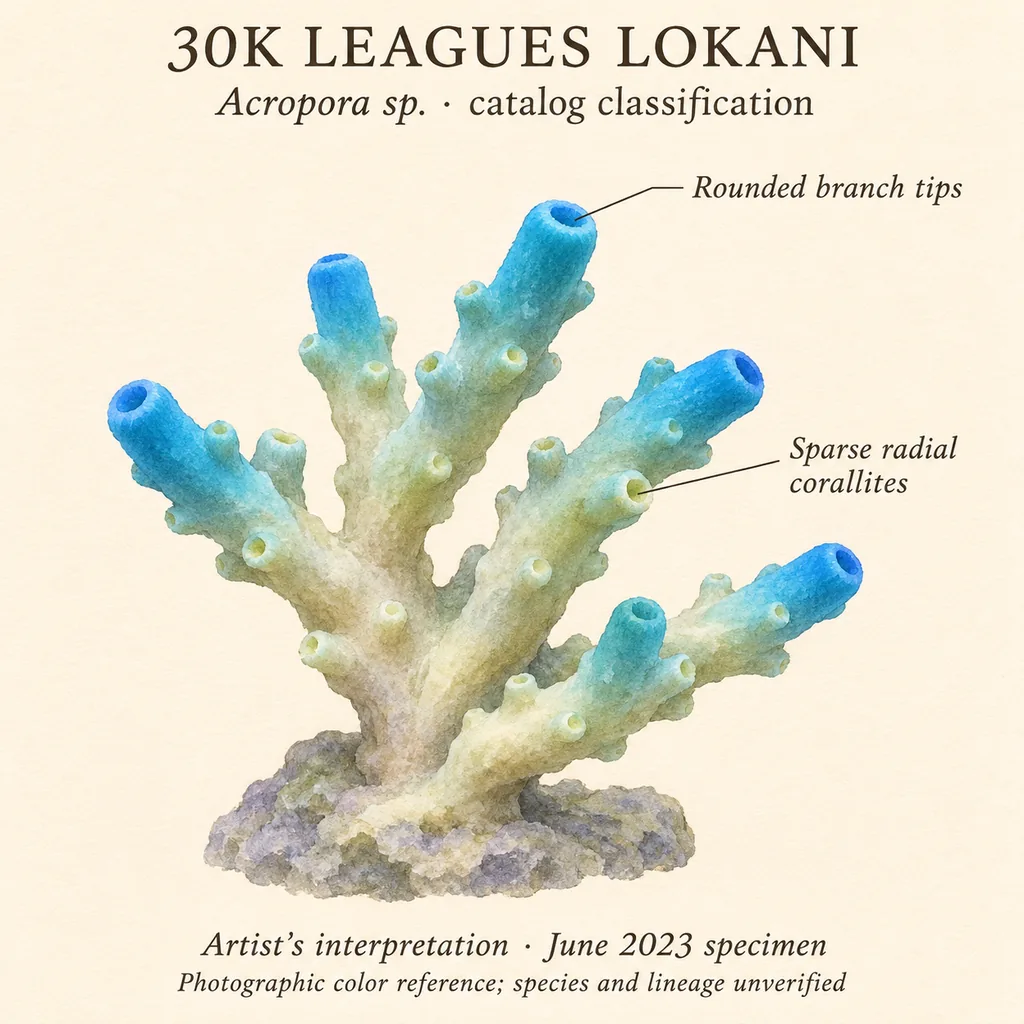
30K Leagues Lokani
Acropora sp.
Same genus
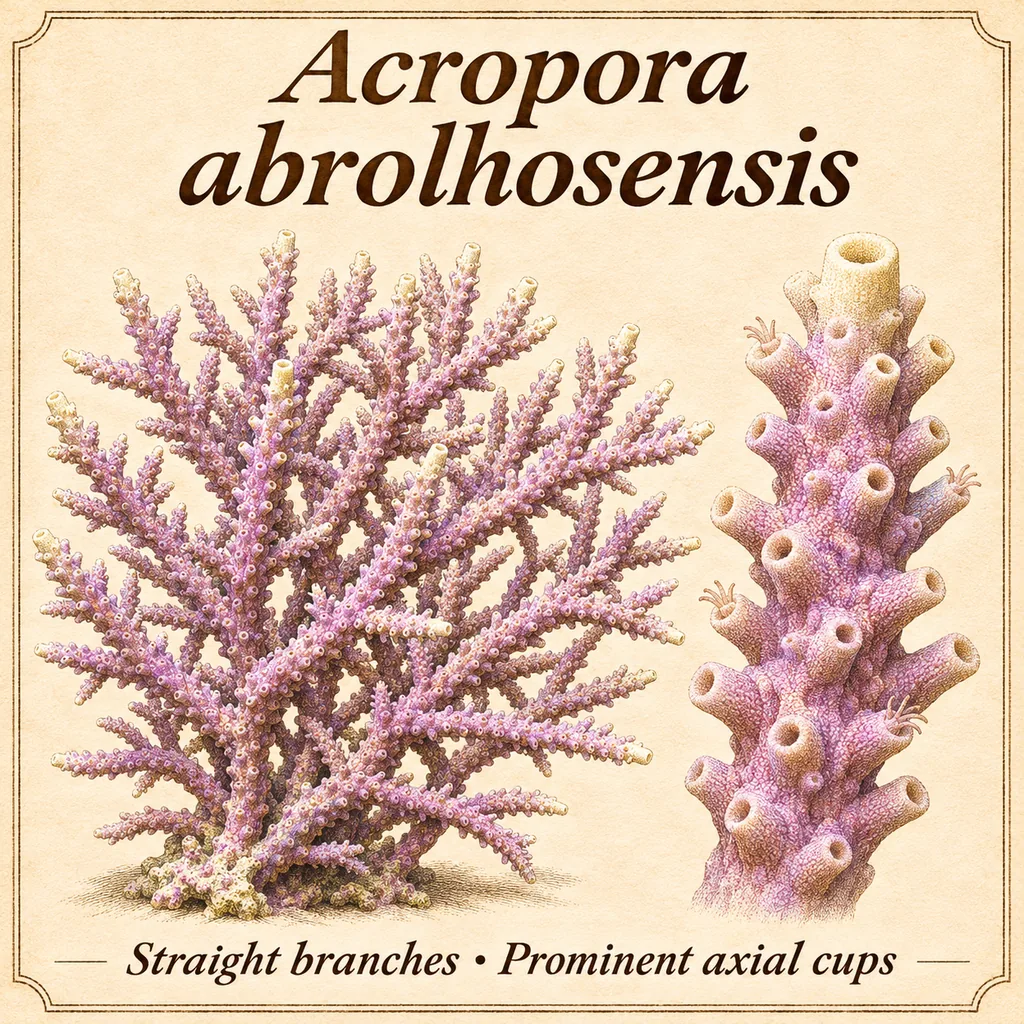
Acropora abrolhosensis
Acropora abrolhosensis
Same genus
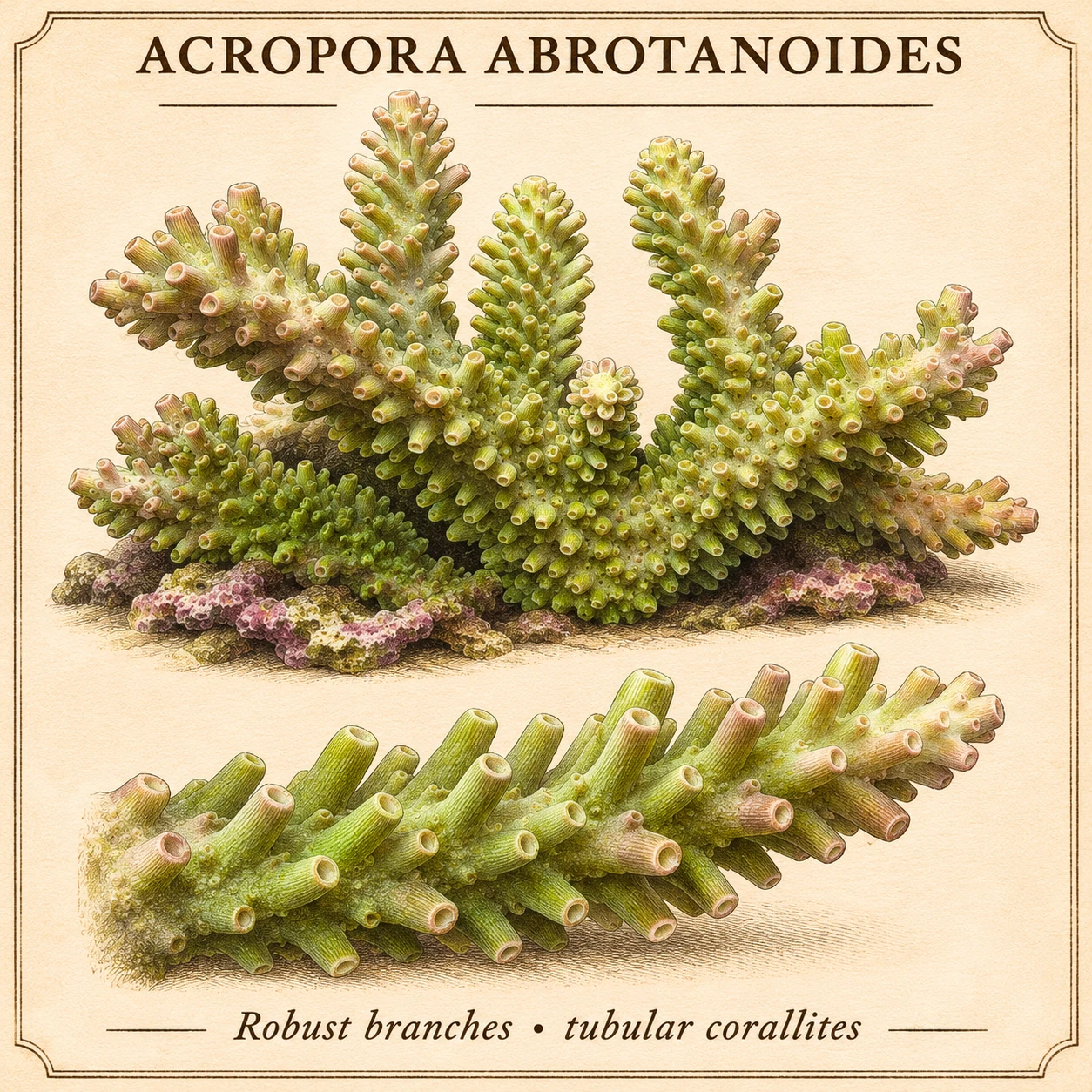
Acropora abrotanoides
Acropora abrotanoides
Same genus
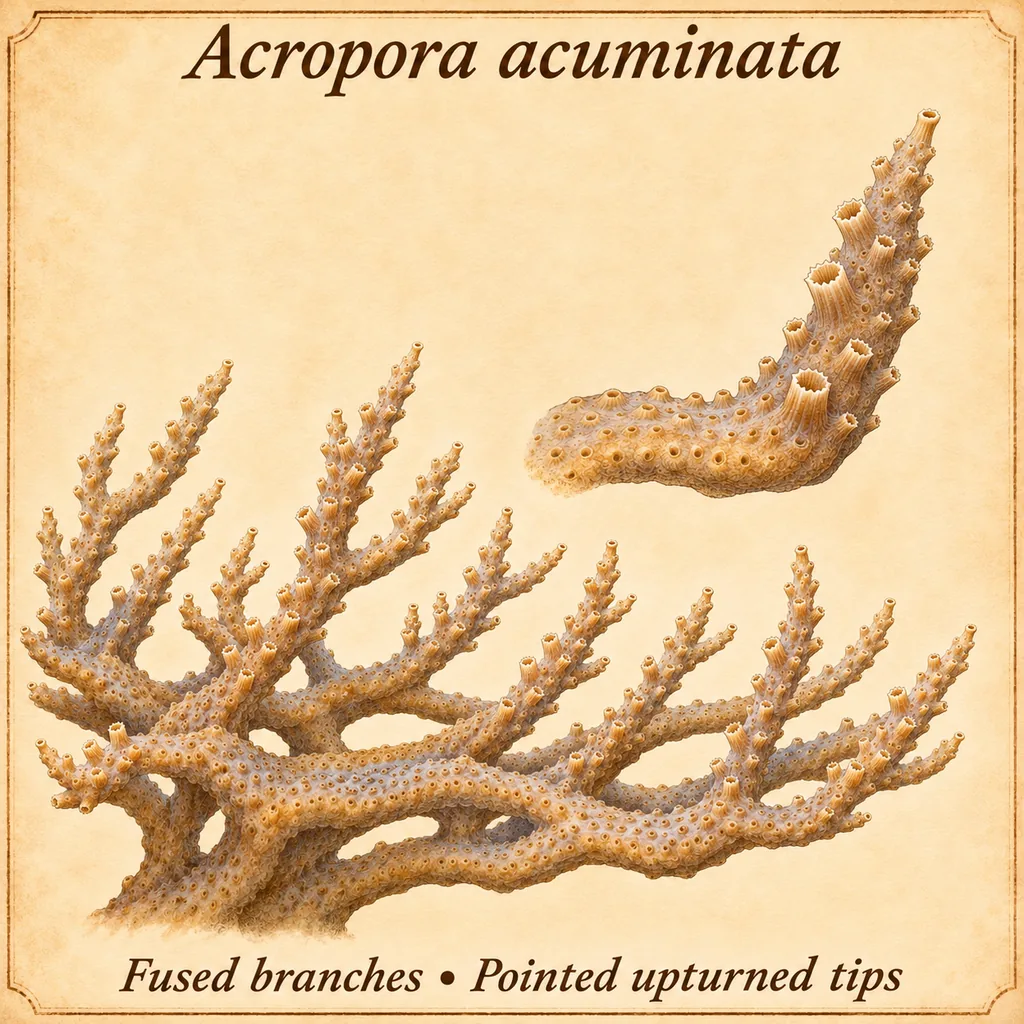
Acropora acuminata
Acropora acuminata
Same genus
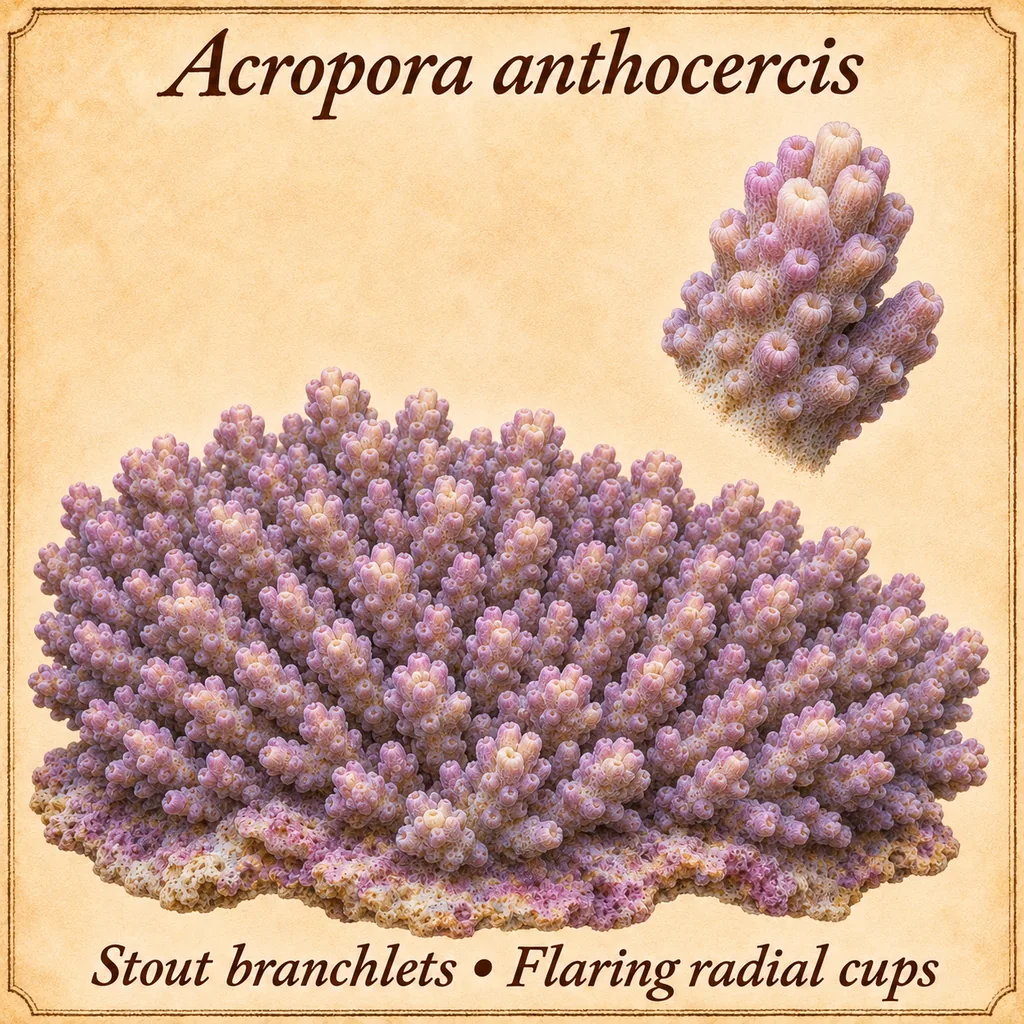
Acropora anthocercis
Acropora anthocercis
Same genus
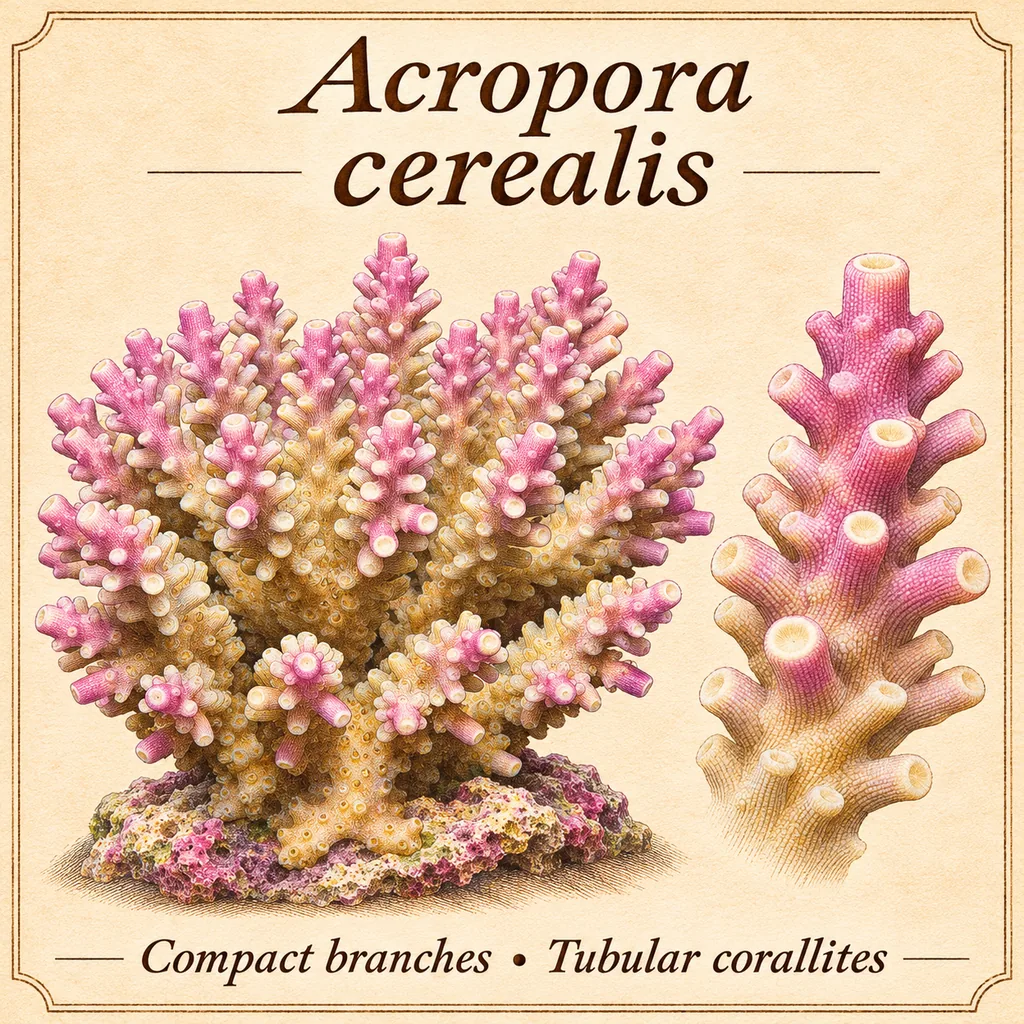
Acropora cerealis
Acropora cerealis
Same genus
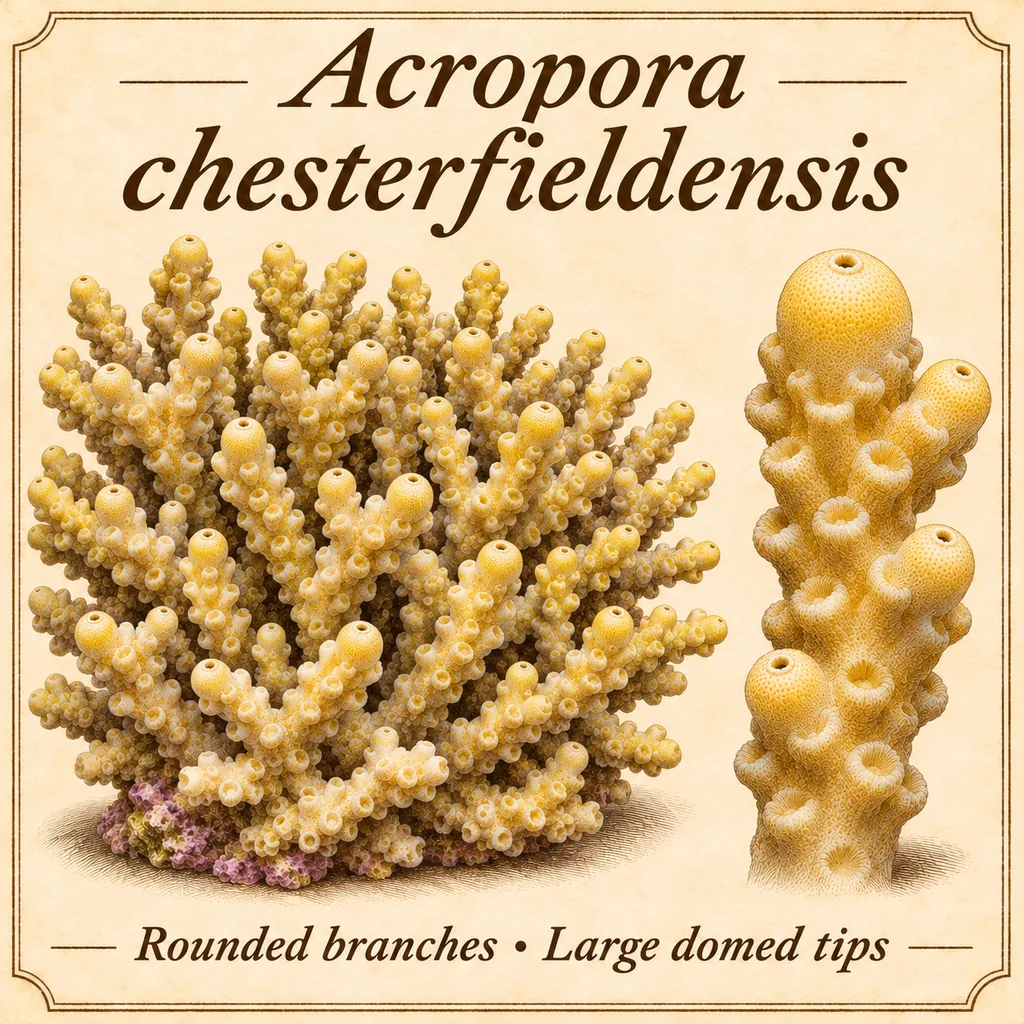
Acropora chesterfieldensis
Acropora chesterfieldensis
Same genus
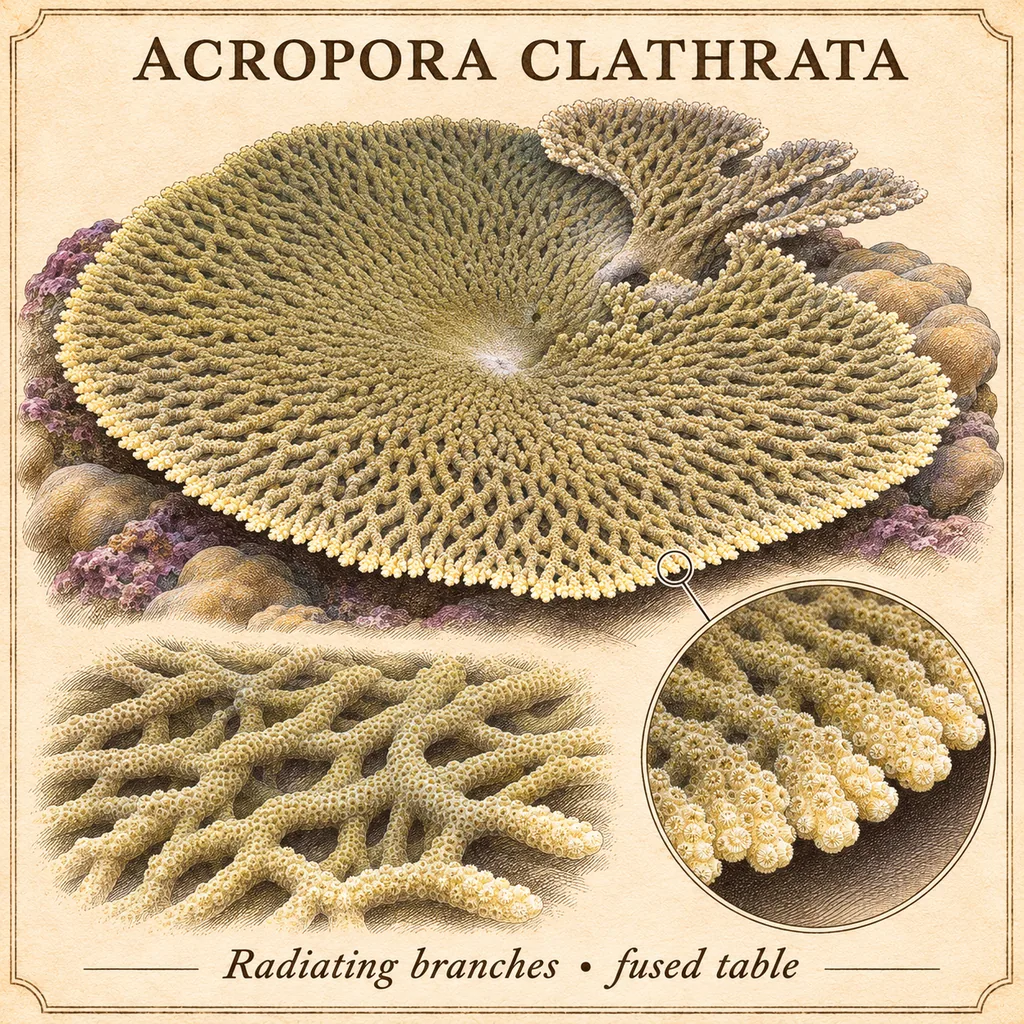
Acropora clathrata
Acropora clathrata
Same genus