Palytoxin safety
Some zoanthids and palythoas can contain a potent toxin. Wear sturdy waterproof gloves and eye protection, minimize handling, and keep colonies submerged when possible. Never boil, steam, pressure-wash or scrub colonized rock under running water. Keep other people and pets away during handling. If exposure is suspected, seek urgent medical advice and tell the clinician about possible palytoxin exposure.
Sources: CDC: palytoxin exposure · OATA: avoiding palytoxin poisoning
Gallery
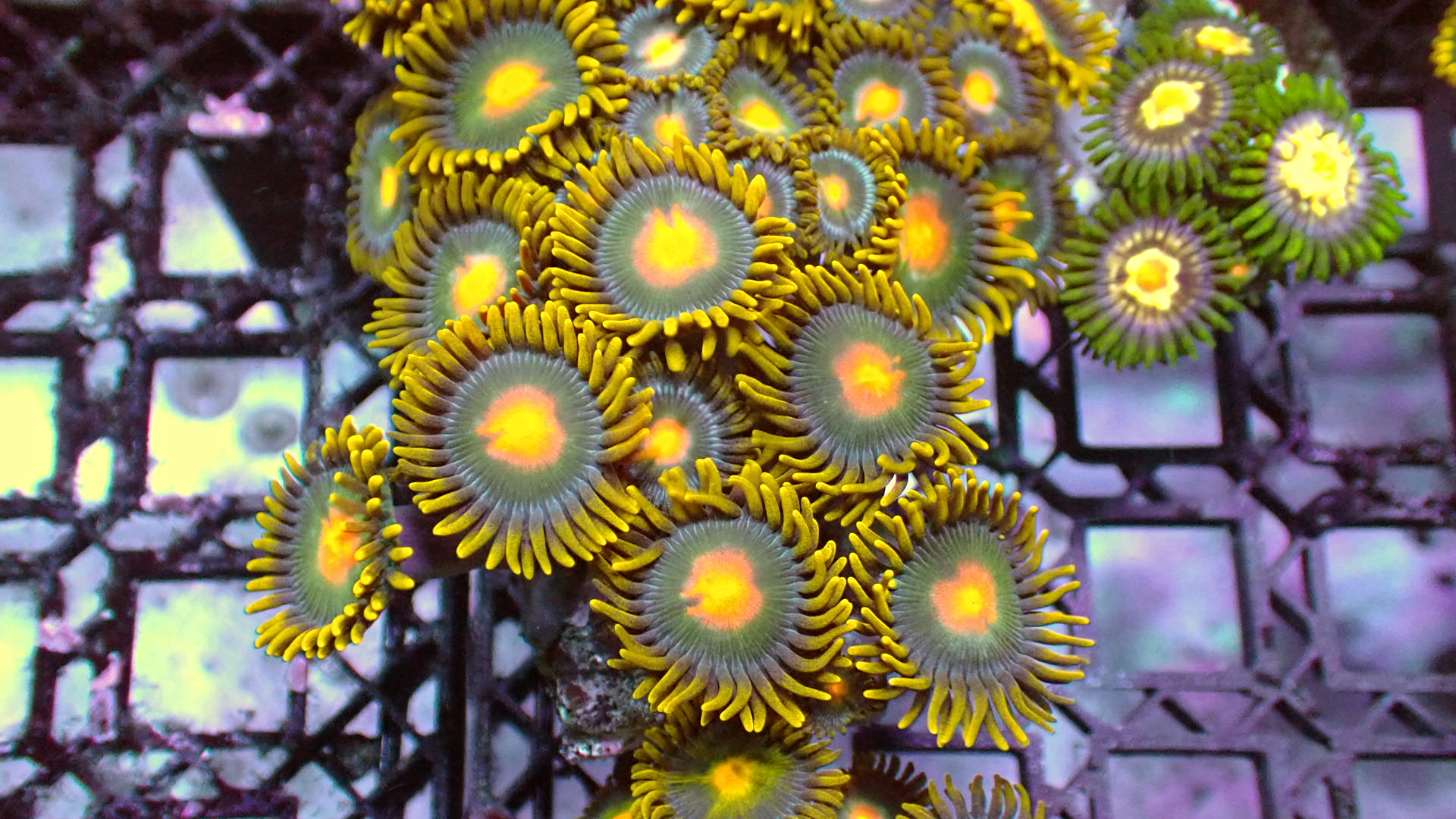
Green Bay Packers zoanthids are a named Zoanthus morph in green and gold coloring, a pairing that explains the football name hobbyists gave this form. Polyps carry a green face with yellow-gold tones that stand out under blue light, and the two-tone look reads best across a full mat. Named morphs vary a little between tanks, so judge this one by the green-and-gold pattern holding across most polyps once the colony settles.
The entry lists beginner-level difficulty, low light, medium flow, bottom placement, peaceful behavior, and moderate growth. Start the frag low, on rockwork near the sand or on a low island, where light is gentle and flow keeps the polyps clean. This morph tolerates brighter spots after slow acclimation, though low placement suits the entry rating and keeps color rich for most keepers.
A dedicated rock or island is the cleanest way to keep this coral. The mat spreads across connected surfaces and into neighboring colonies, and mixed zoanthid mats are hard to separate and harder to label later. An island also makes it simple to lift the whole colony out for inspection or fragging without disturbing the main rockwork.
Handle Green Bay Packers zoanthids with full zoanthid caution. Zoanthid mucus can contain palytoxin, a serious toxin. Wear gloves when handling or fragging, keep the coral away from open cuts, wash hands and tools well after any work, and never boil, steam, or pressure-wash rock that carries zoanthids. Frag outside the tank on a tray, keep children and pets away from the work area, and dispose of trimmings and rinse water with care.
Feeding needs are modest. The colony does well on light plus the dissolved nutrients of a normally fed reef, and a light broadcast of fine coral food now and then supports growth. Keep detritus from settling into the mat with a gentle baster puff every few days. A mat that stays clean keeps its polyps open, while a mat buried in waste closes in patches and invites algae between the polyps.
Growth is moderate once the frag encrusts. New polyps bud around the edge of the mat, and a settled colony can cover its island over a season. Common pitfalls are starting the frag in high light on the top rockwork, letting a fast neighboring morph grow over it, and skipping pest inspection on new frags. Dip and inspect before placement, keep the mat clean, and this beginner-friendly morph usually becomes a steady, colorful filler for the lower tank.
Field notes — what keepers report
- Keepers report the gold tones in this morph shift with light. Under blue-heavy light the yellow-gold reads bright, while under whiter light the mat reads mostly green. Keepers comparing photos across tanks treat spectrum as the main variable before questioning whether two mats are the same morph.
- Growth reports split by tank nutrients. Keepers in well-fed tanks describe steady mats that need trimming back from the island edge, while keepers in very clean tanks describe slow, tidy growth with long pauses. Both groups describe the coral as hardy, with closed polyps usually tracing back to pests, detritus in the mat, or a fish or shrimp picking at it.
- Mixing reports carry a warning. Keepers who planted this morph beside faster zoanthids describe it holding its ground for a while, then losing edge polyps as the faster mat grew over it. The shared fix is separate islands for each named morph, spaced so mats meet sand or water rather than each other.
Field Notes
Related species
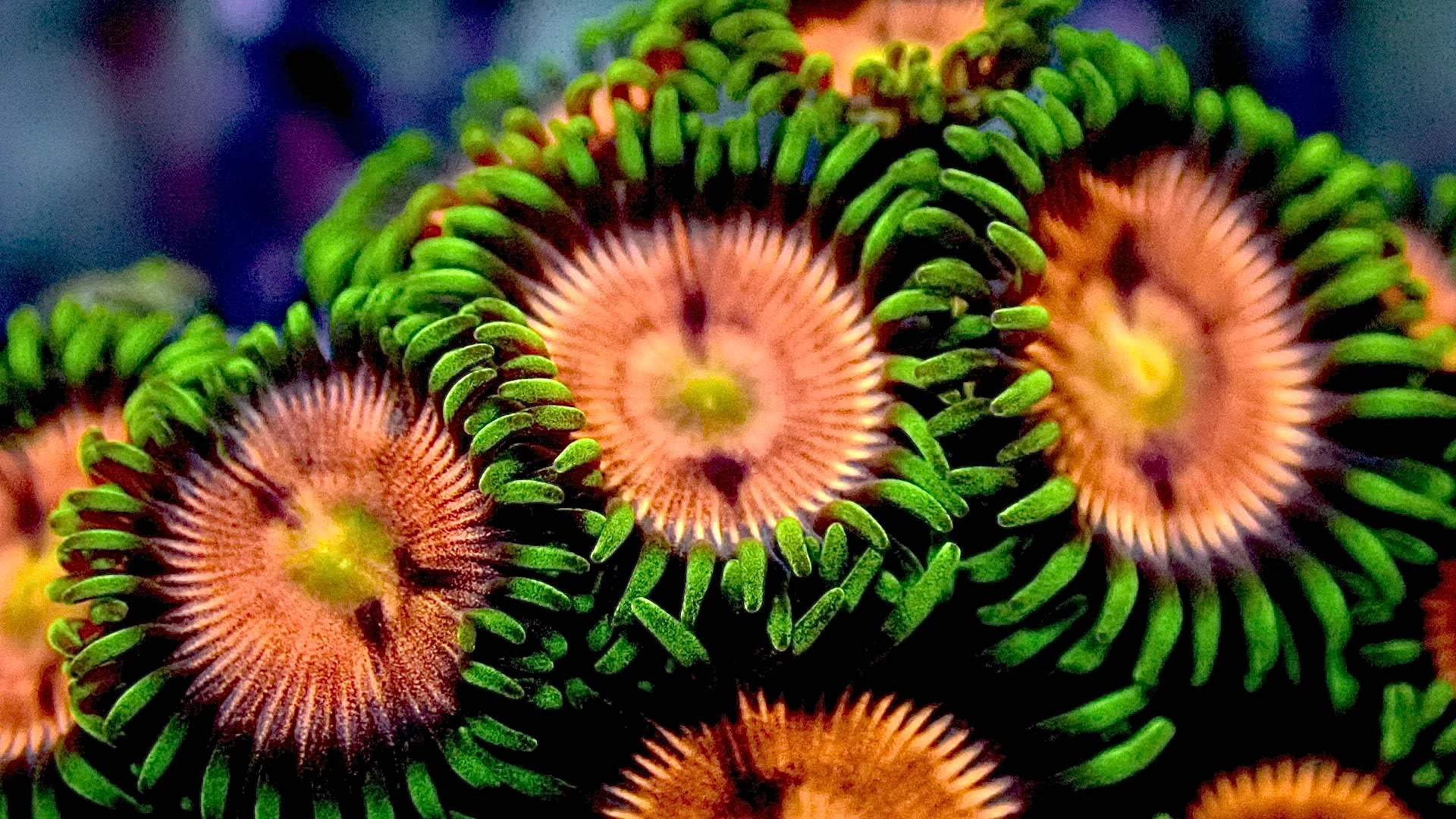
Laser lemon zoanthids
Zoanthus sp.
Same genus

Blueberry Haze Zoas
Zoanthus sp.
Same genus

Burning Willow Zoas
Zoanthus sp.
Same genus

C-137 zoas
Zoanthus sp.
Same genus
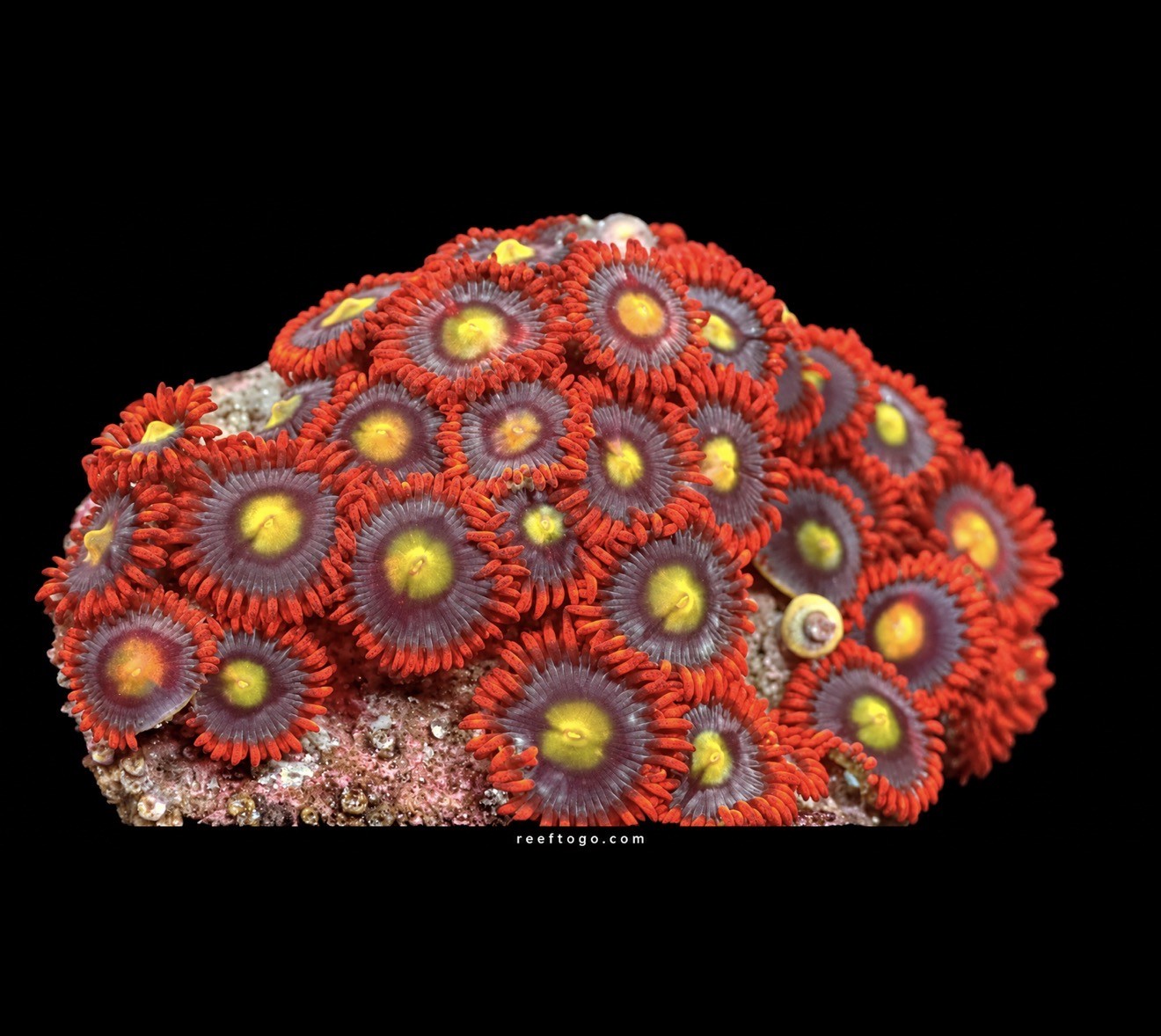
Fire and ice zoanthids
Zoanthus sp
Same genus
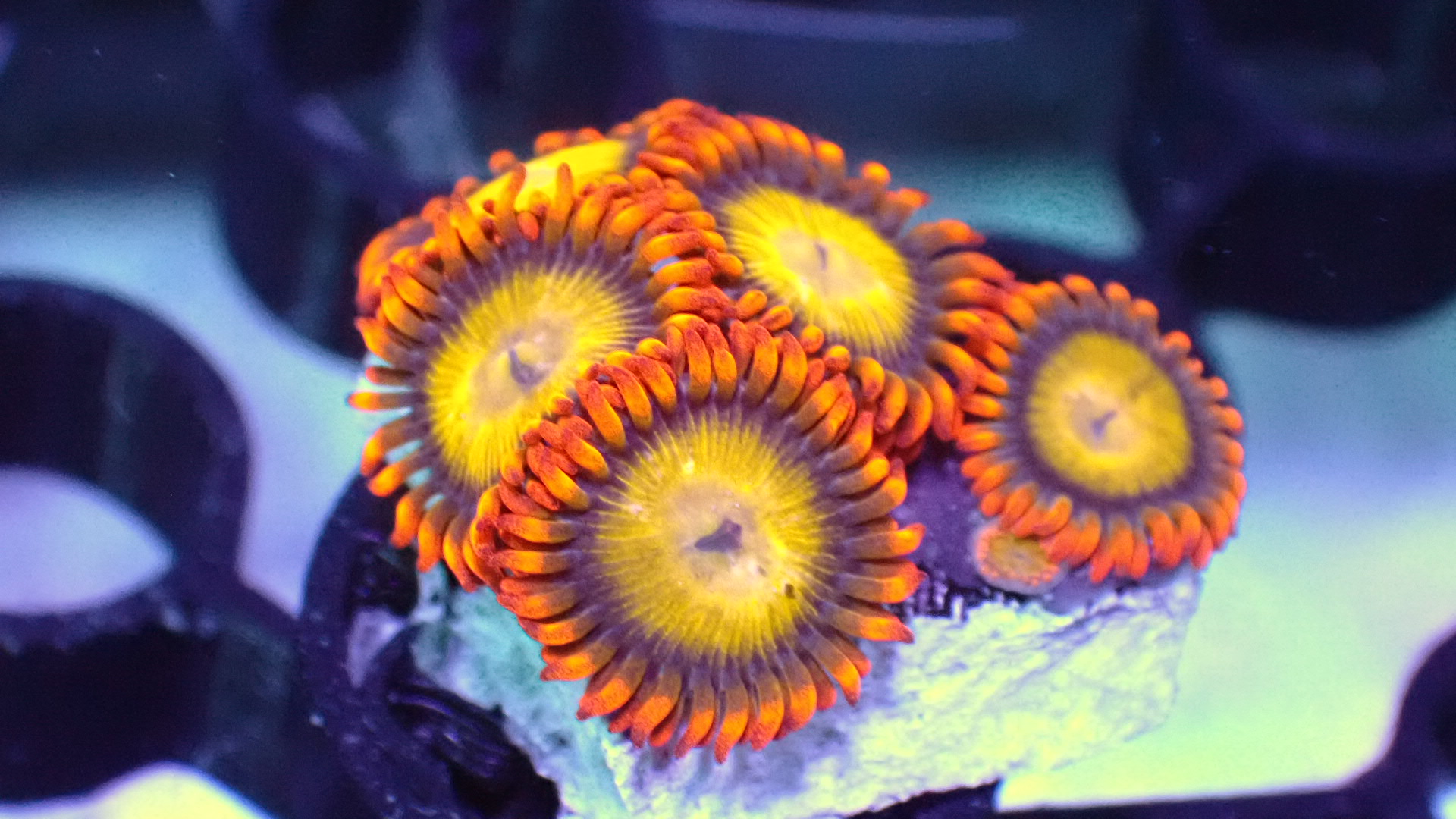
Mandarin zoanthids
Zoanthus sp
Same genus

Manderin zoas
Zoanthus sp.
Same genus

Perennial Dance zoas
Zoanthus sp.
Same genus