Palytoxin safety
Some zoanthids and palythoas can contain a potent toxin. Wear sturdy waterproof gloves and eye protection, minimize handling, and keep colonies submerged when possible. Never boil, steam, pressure-wash or scrub colonized rock under running water. Keep other people and pets away during handling. If exposure is suspected, seek urgent medical advice and tell the clinician about possible palytoxin exposure.
Sources: CDC: palytoxin exposure · OATA: avoiding palytoxin poisoning
Gallery
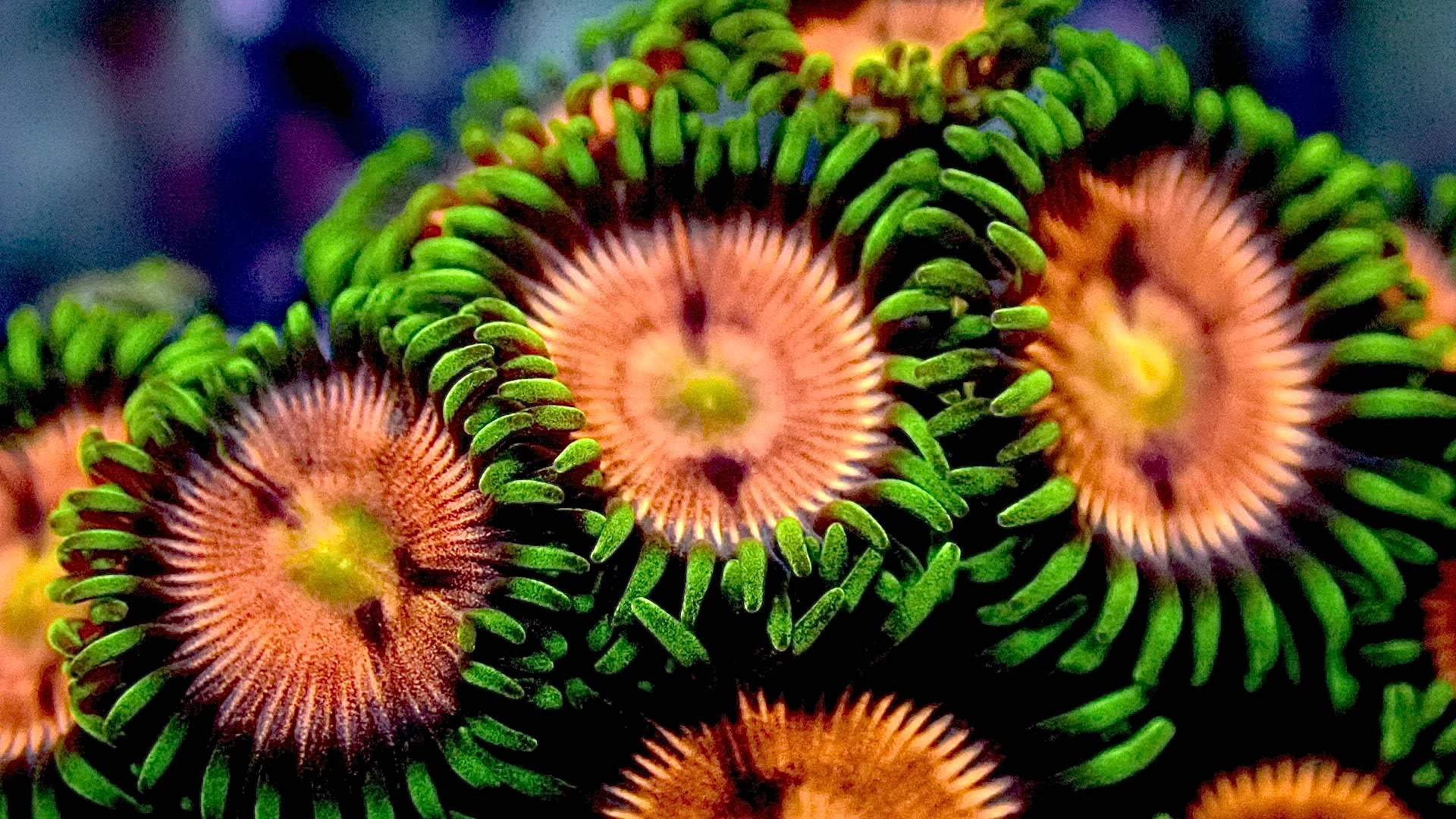
Laser lemon zoanthids are a bright yellow-green zoanthid, listed as Zoanthus sp. Zoanthids grow as a mat of connected polyps, each polyp a short stalk topped with a disc and a fringe of tentacles. The laser lemon name follows the vivid lemon-yellow face that stands out sharply under blue light. A healthy colony opens flat through the day, closes at night, and spreads by budding new polyps at the mat edge.

The entry lists beginner care, low light, medium flow, and the care fields call for a low placement on rockwork near the bottom to middle of the tank. Start frags low and raise them slowly only if color fades or polyps stretch tall, which signals a wish for more light. These polyps tolerate a range of light once settled, and gradual moves protect color better than sudden jumps to bright rockwork.
Medium flow keeps the mat clean. Flow should move across the polyps enough to clear detritus and discourage film algae between stalks, without bending the colony flat all day. Pockets of waste between polyps are a common trigger for closed clusters and pest problems. A varied flow pattern helps the whole mat open evenly rather than only the edge facing the current.
Zoanthids are generally peaceful toward neighbors in sting, and they lose direct contact fights with stronger corals. Give the mat room to spread and keep it clear of LPS sweepers. Growth direction is the real spacing issue. A colony on main rockwork will encrust outward and can surround slower frags over time. An island rock or a defined ledge keeps the spread easy to manage and frag back.
Feeding is optional and indirect. The polyps may take fine particulate food and dissolved nutrients from regular reef feeding. Broadcast feeding is enough for most colonies. Heavy target feeding tends to invite algae and pests around the mat rather than adding visible growth.
Growth for a settled colony is typically steady at the edges, with new polyps filling gaps in the mat. This entry is set to moderate growth as the standard default where the original record left the field blank. Closed polyps for a day after a move or dip are common. Clusters that stay closed, shrink, or develop film need a check for pests, algae between polyps, and fish or invertebrates nipping at the mat. Stable nutrients suit zoanthids well. Very clean water can slow them, and neglected water quality grows algae through the colony faster than the polyps can compete.
Safety matters with every zoanthid. Some zoanthids can carry palytoxin. Handle frags with gloves and eye protection, wash hands after contact, and keep tools and waste water away from cuts and from pets. Never boil, steam, or pressure-wash zoanthid rock, because heating or aerosolizing the tissue creates a serious exposure risk. Frag outside the display with care and dispose of trimmings safely.
Common pitfalls are placing a fresh frag in harsh light, letting algae establish inside the mat, and skipping a dip and inspection before adding a colony to the display. Quarantine and a close look for nudibranchs, spiders, and egg strings protect the rest of the collection.
Field notes — what keepers report
- Color reports depend on light. Keepers under blue-heavy light describe a bright lemon face with strong contrast, while keepers under whiter light describe a paler yellow-green. Keepers who moved colonies upward slowly describe color improving, while sudden moves get linked to closed polyps for several days.
- Growth reports vary by tank. Some keepers describe a mat that buds steadily once settled, while others describe a colony that holds at the same size for a long stretch before spreading. Both sides describe stability and a clean mat as the common ground when growth does pick up.
- Closed-polyp reports are frequent and mixed in cause. Keepers trace some closures to pests or film on the mat and others to a recent move, dip, or a fish brushing the colony. The shared practice is to inspect closely, clean gently, and give a settled colony a few undisturbed days before moving it again.
Field Notes
Related species
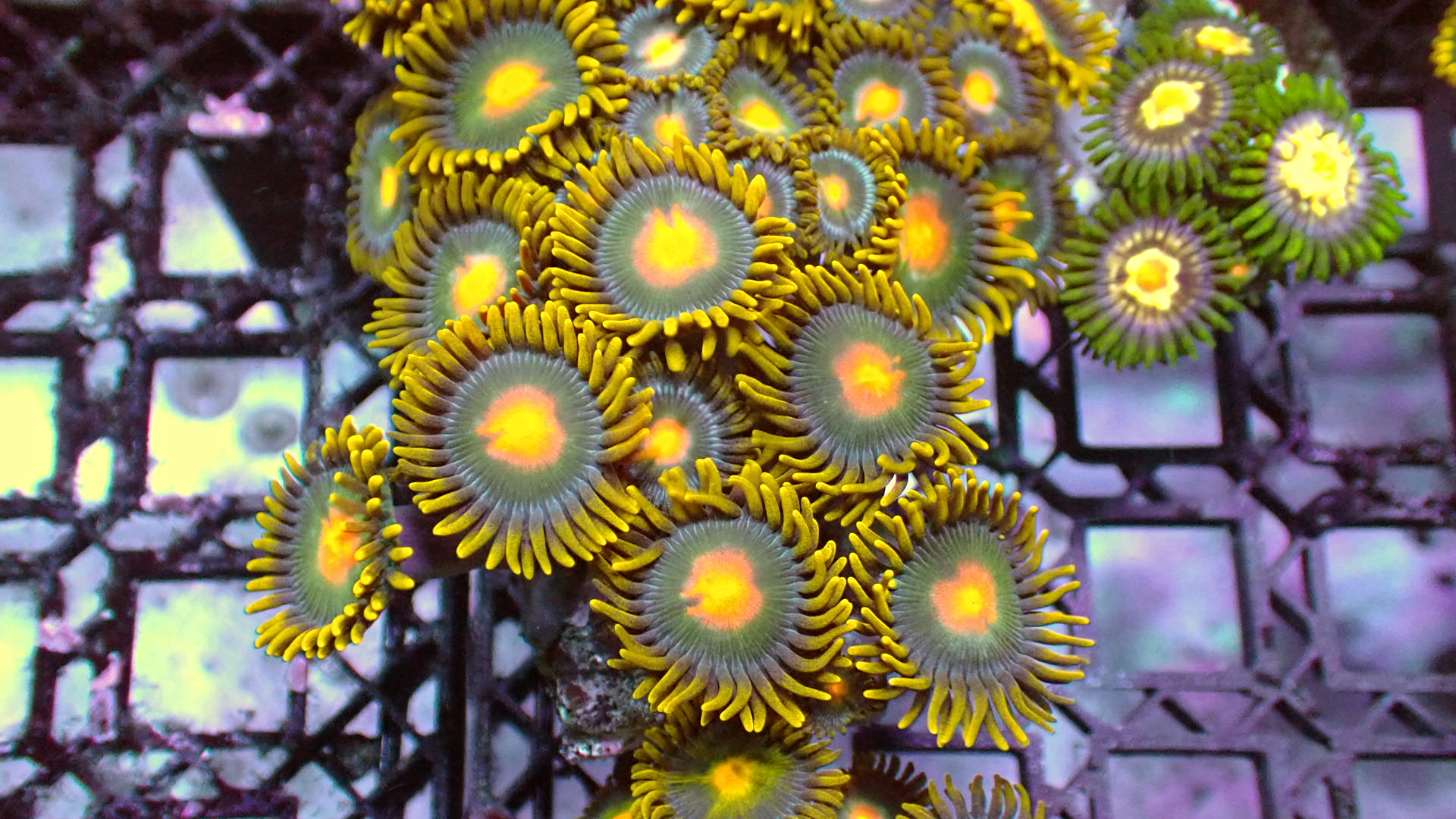
Green Bay Packers zoanthids
Zoanthus sp
Same genus

Blueberry Haze Zoas
Zoanthus sp.
Same genus

Burning Willow Zoas
Zoanthus sp.
Same genus

C-137 zoas
Zoanthus sp.
Same genus
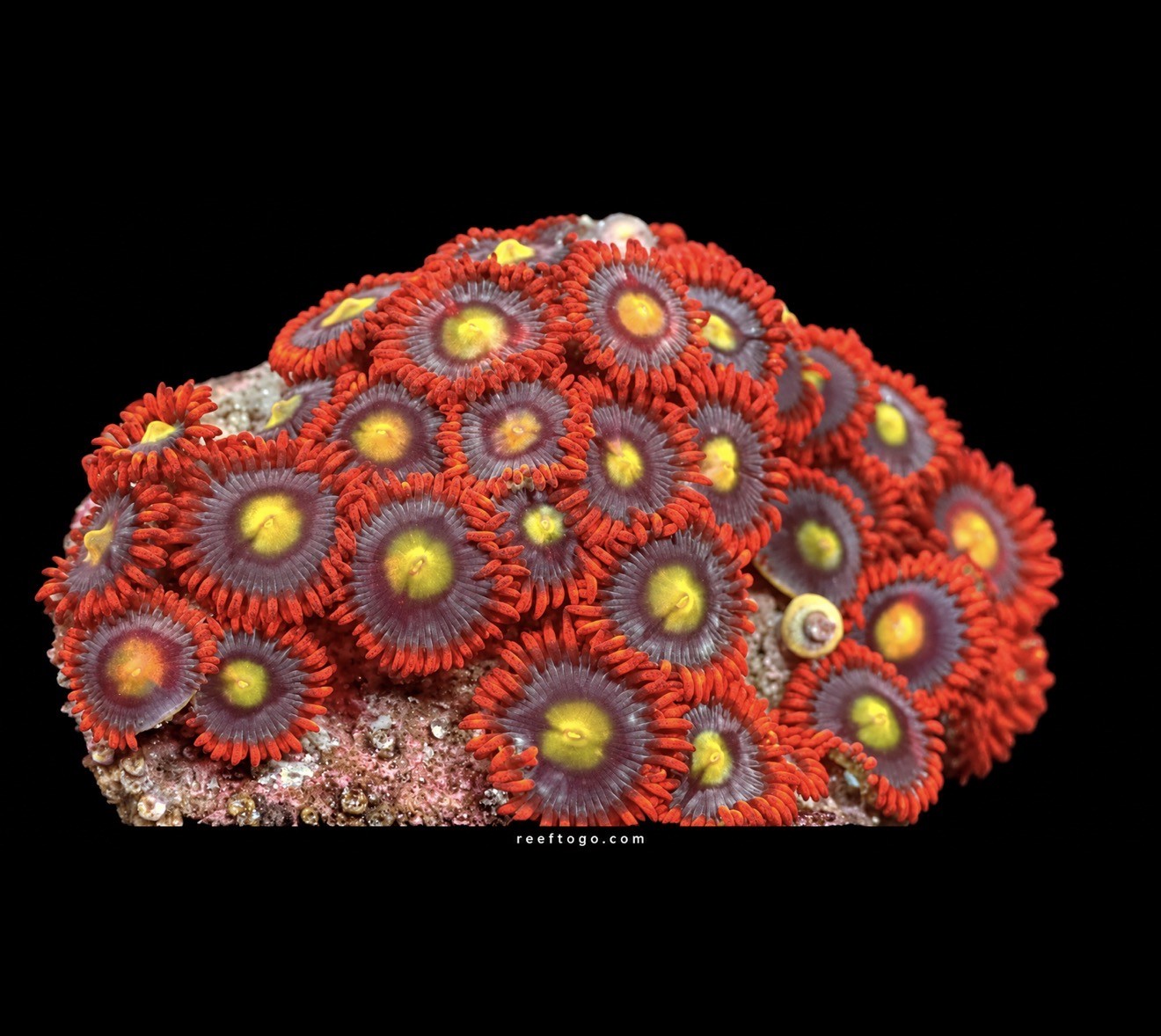
Fire and ice zoanthids
Zoanthus sp
Same genus
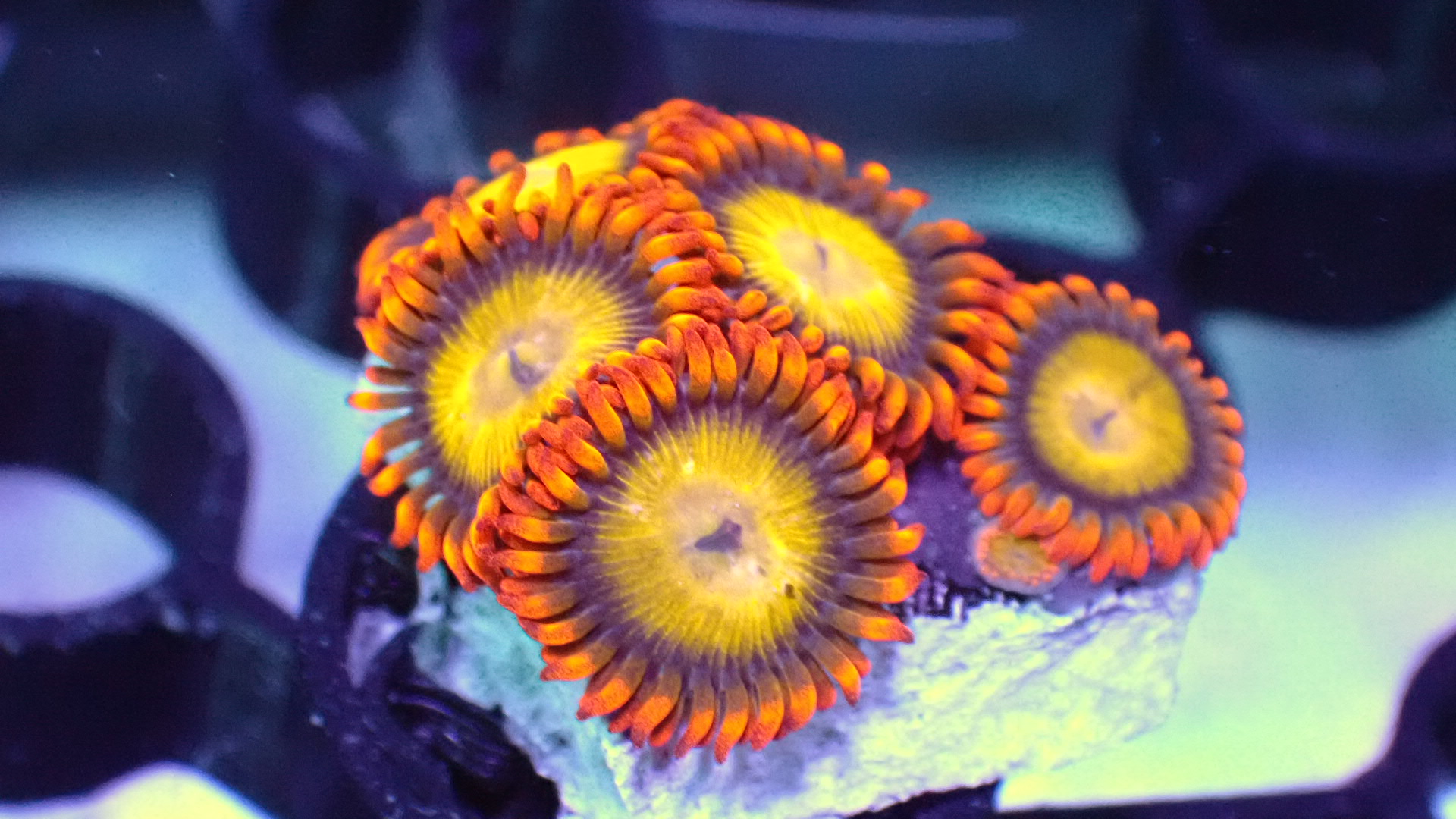
Mandarin zoanthids
Zoanthus sp
Same genus

Manderin zoas
Zoanthus sp.
Same genus

Perennial Dance zoas
Zoanthus sp.
Same genus