Impastas Zoanthid
Zoanthus sp
Care facts
- Care
- Beginner
- Light
- Low-Med
- Flow
- Medium
- Place
- Bottom-Middle
- Space
- Not recorded
- Growth Rate
- Fast
Palytoxin safety
Some zoanthids and palythoas can contain a potent toxin. Wear sturdy waterproof gloves and eye protection, minimize handling, and keep colonies submerged when possible. Never boil, steam, pressure-wash or scrub colonized rock under running water. Keep other people and pets away during handling. If exposure is suspected, seek urgent medical advice and tell the clinician about possible palytoxin exposure.
Sources: CDC: palytoxin exposure · OATA: avoiding palytoxin poisoning
Gallery
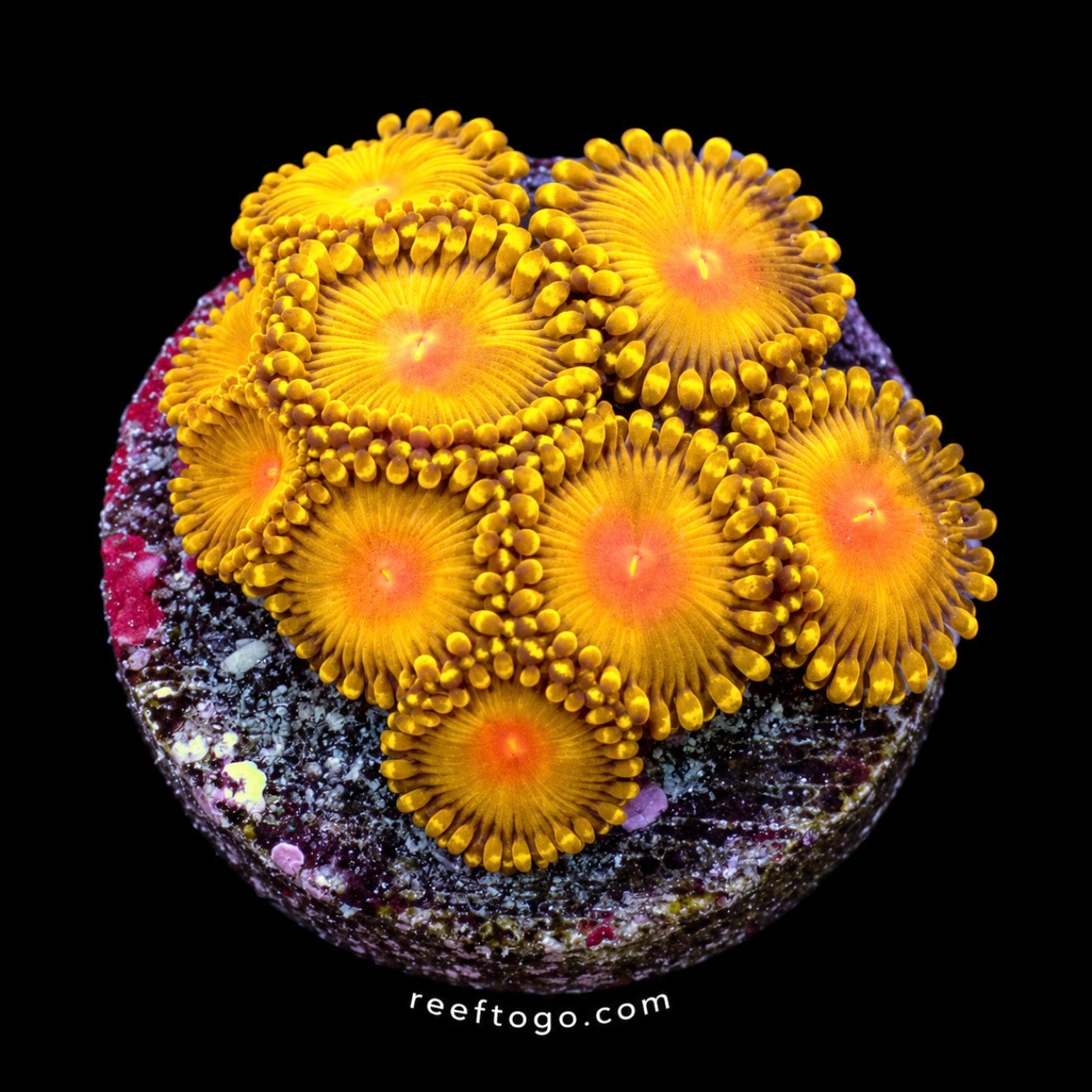
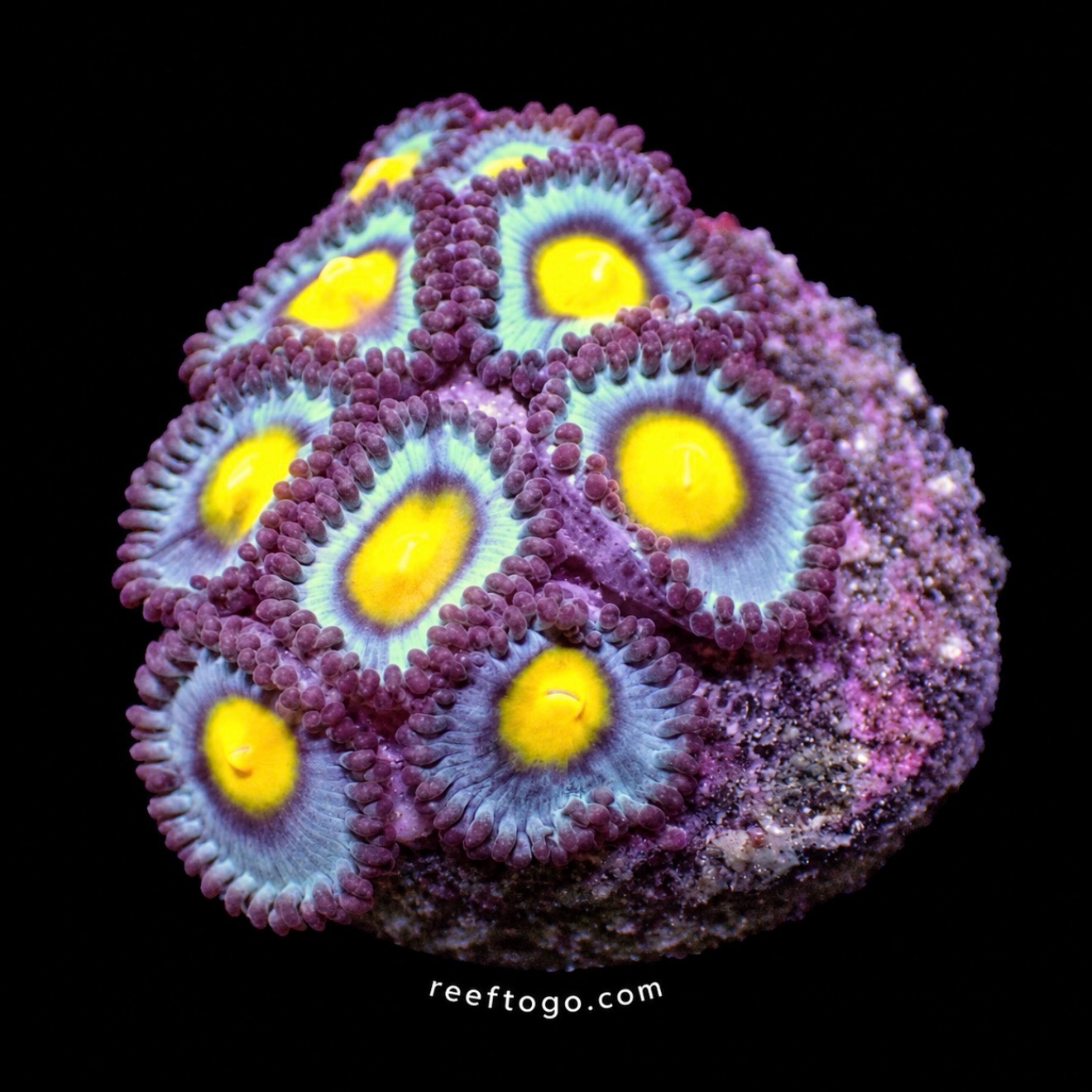
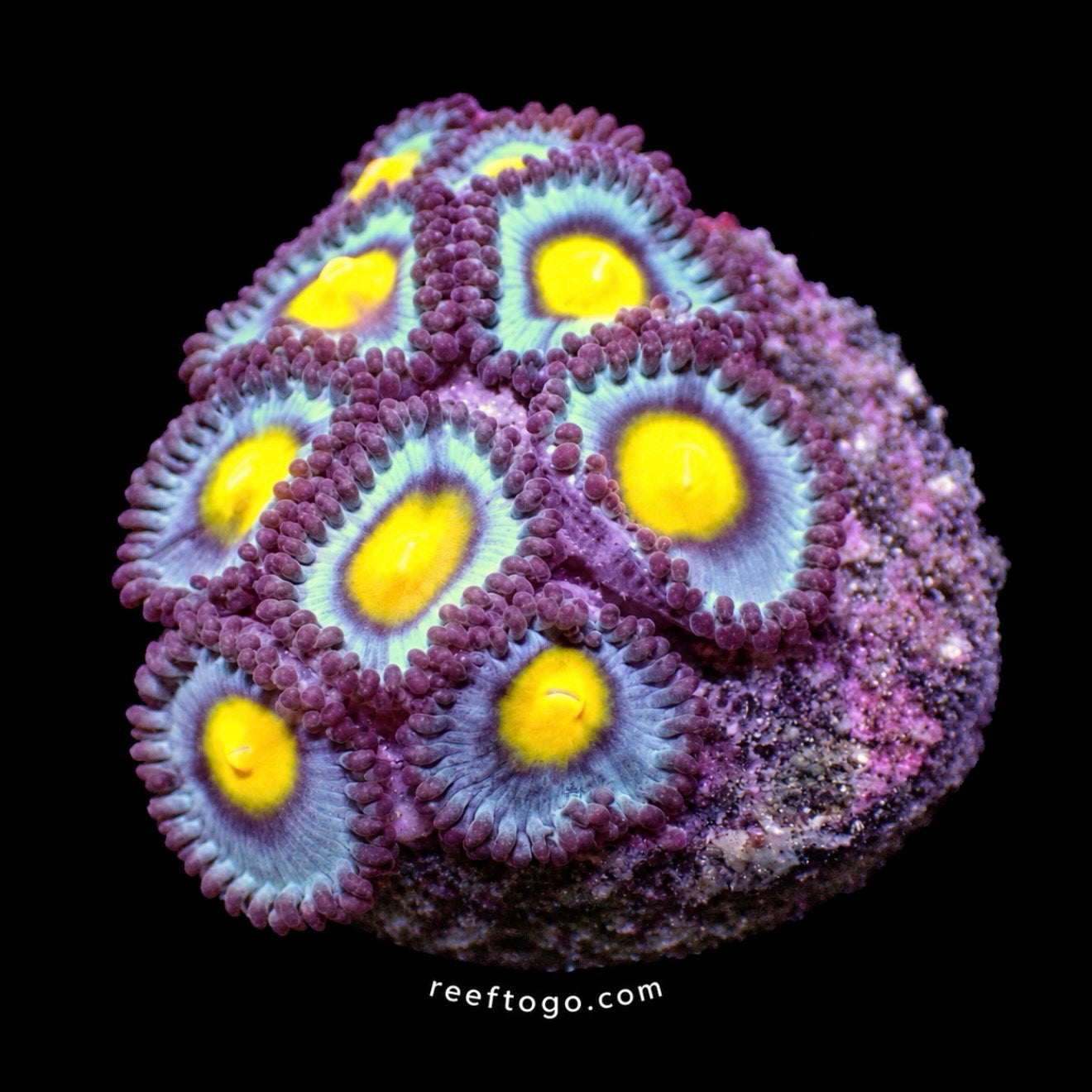
The Impastas in our photo looks like a patch of gold flowers with orange centers. Every flower is an animal. Watch one tuck in its fringe and close like a drawstring bag. Look between the buttons for the living mat that joins them.
History
1. A name from the frag rack. Impastas is the aquarium name for this zoa. Coral farms grow and sell frags under that name. The Reef To Go photo dates to October 2026. The name tells you which frag to ask for. Its scientific ID stops at Zoanthus.
2. Small pieces, new patches. A frag is a small piece of a colony. Once it settles on its plug, it can put out new buttons. The name follows the frag from tank to tank. It doesn't give the original collection site.

In the wild
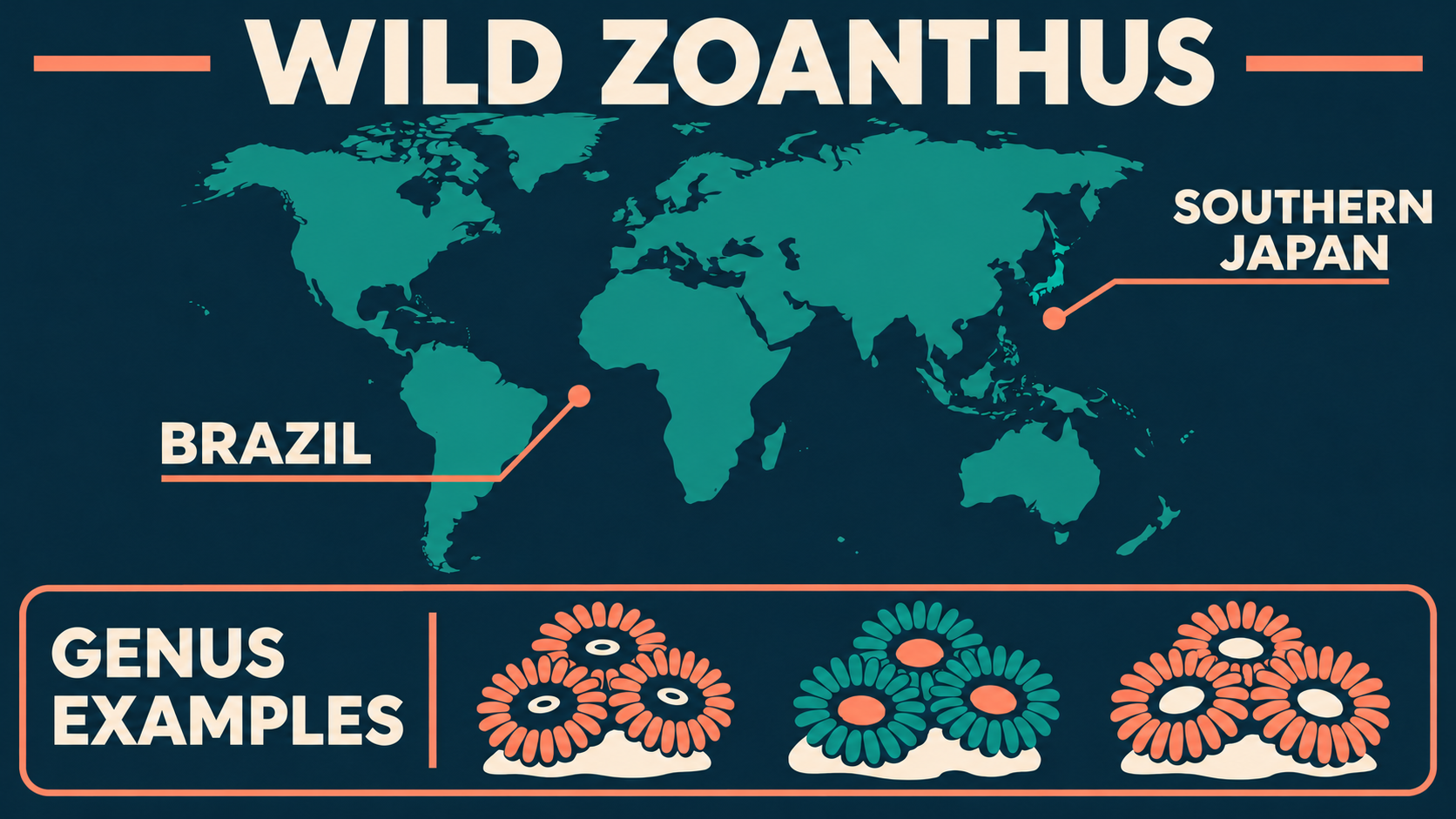
3. Cousins in warm seas. Wild Zoanthus live in the tropical Atlantic and Indo-Pacific, including Brazil and southern Japan. Some cling to rock on wave-washed reef flats. One wild cousin in Okinawa grows down the reef wall past 35 meters (115 feet).
4. Little gardens in the light. Tiny algae live inside the polyps and turn sunlight into food. Water sweeps across exposed rock. Tucked-away spots get shade and a different current. These are habitats of wild relatives, not a collection address for Impastas.
Light and flow
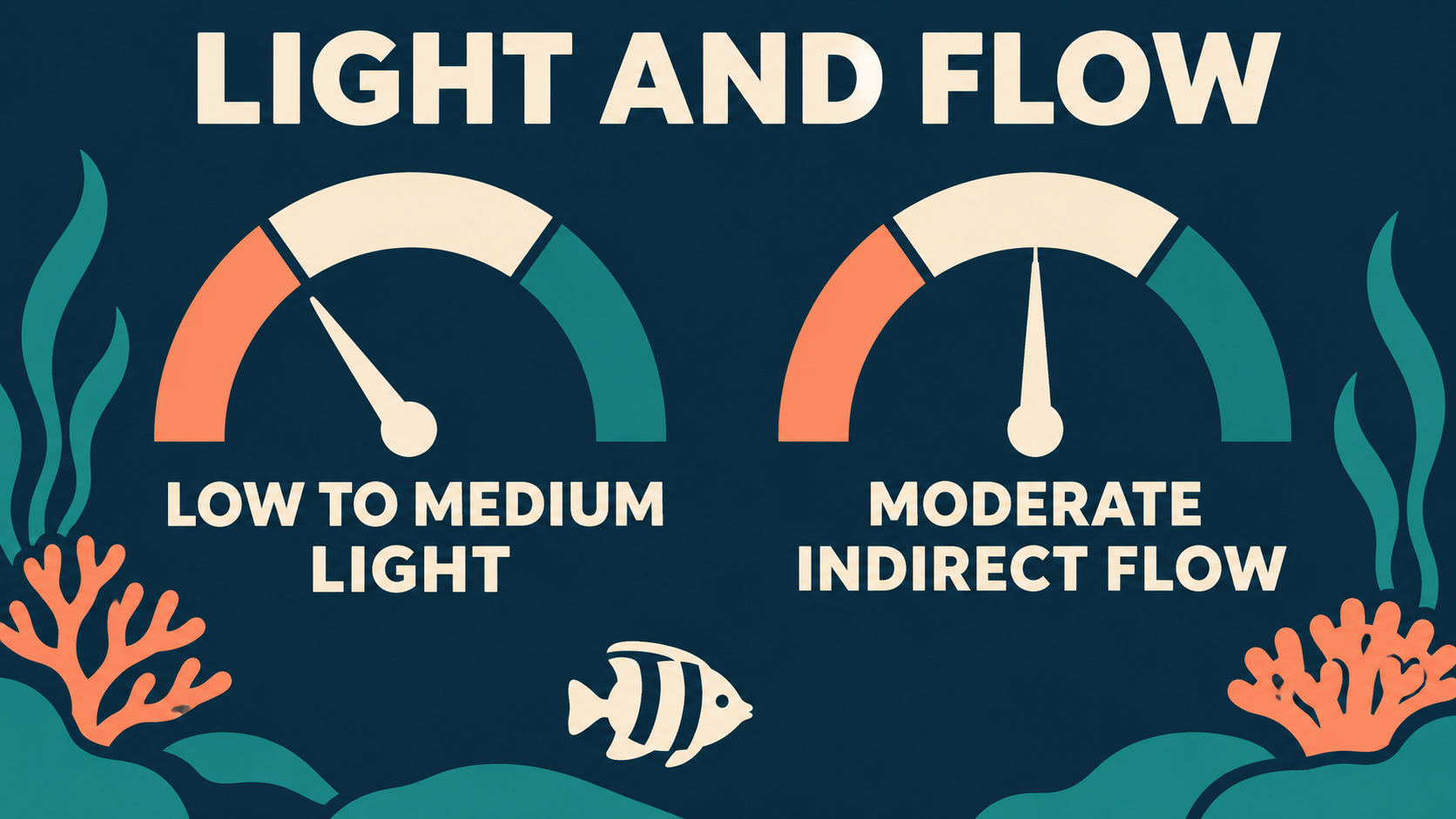
5. Start on the lower rockwork. Place the new frag low to middle in the tank, in low to medium light. Keep temperature and salinity steady. Give the polyps time to open regularly before you try a brighter spot. Make changes a little at a time.
6. Aim the pump past it. Set moderate flow that passes by the frag. The fringe should move and loose grit should wash away. If the stream pins the skirts down, aim it farther away. Fine coral food is optional.
Make a zoa island
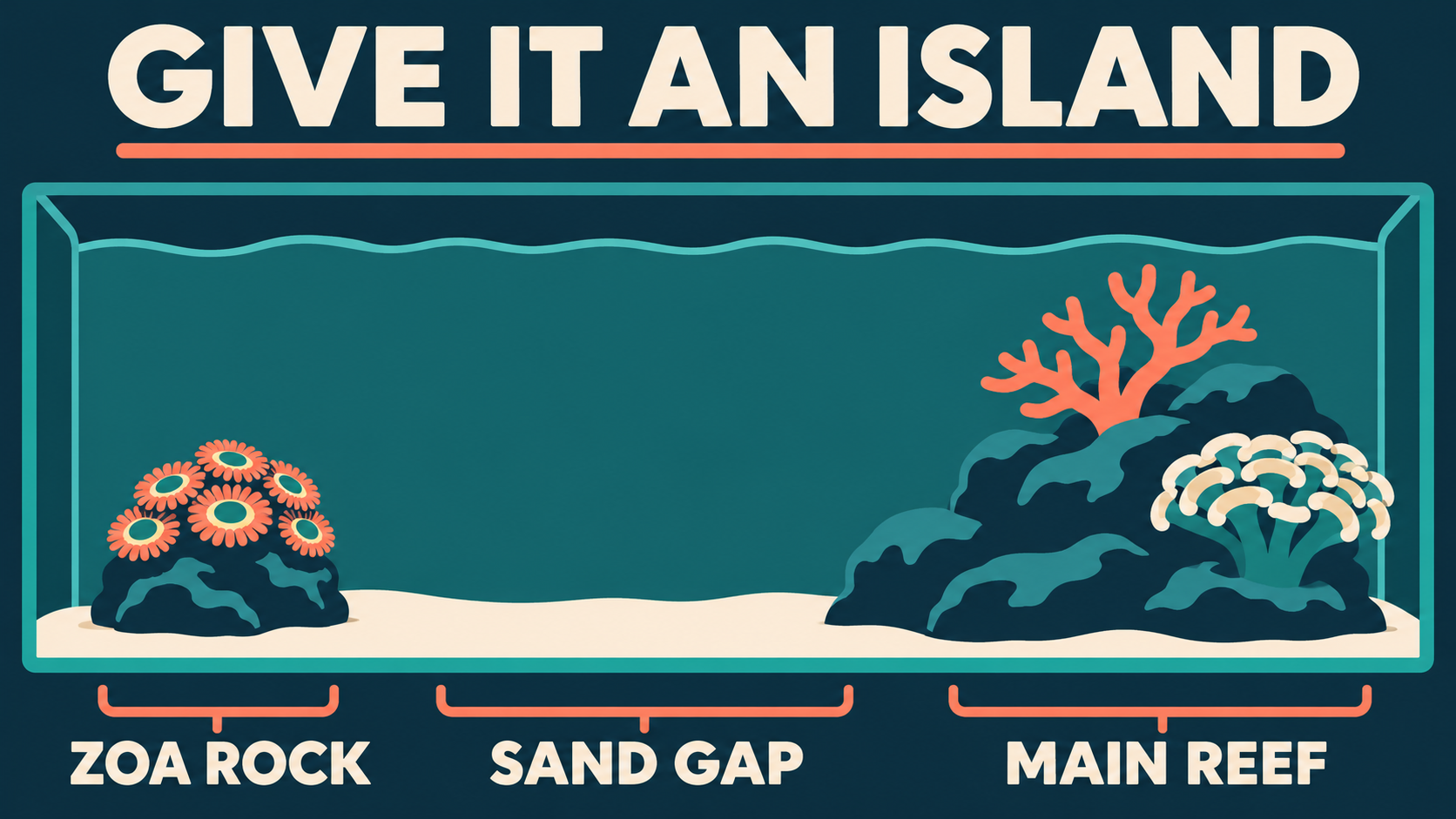
7. Sand around the edges. Set the plug on a small rock with sand around it. A clear gap makes it easy to see where the colony ends. Keep loose plugs and rubble from making a bridge to the main reef.
8. Count the newest buttons. Look along the edge of the mat. That's where new polyps bud. Watch the gap as the patch grows. Leave room to move the whole rock without pulling the colony apart.
Handle zoas safely
9. Wear gloves and goggles. Zoas can carry palytoxin. Wear waterproof gloves and splash goggles when handling them. Cover cuts and keep your hands away from your face. Wash up when you're done.
10. Skip steam and splashes. Never boil, steam, or scrub rock with zoas on it. Keep the colony submerged when moving it and avoid splashes. If you suspect exposure in the U.S., call Poison Control at 1-800-222-1222 and mention possible palytoxin exposure. Call 911 for difficulty breathing.

Field notes — what keepers report
11. Some frags stay stubborn. One keeper's Impastas hadn't bounced back even after the rest of the tank looked better. A closed frag doesn't tell you which setting is wrong. Check water, light, flow, and pests before changing one thing at a time.
12. Look for progress at the edge. A grower who keeps Impastas notes that settled zoas add buttons along the rim, with growth speed varying among named varieties. Take a weekly photo from the same angle and count the open polyps. One check is a snapshot. A few checks show a pattern.

Give your new frag a small rock, gentle light, and water that keeps the fringe moving. Take a photo once the buttons open. The tiniest new one is easy to miss until you compare it with last week's picture.
Photo: Tin Huynh / ReefToGo, Impastas Zoanthid.
Field Notes
Related species
Alien Eye zoas
Zoanthus sp
Same genus
Antimatter zoas
Zoanthus sp
Same genus
Aoi Zoanthid
Zoanthus sp
Same genus
Awesome Blossom zoas
Zoanthus sp
Same genus
Bam Bam zoas
Zoanthus sp
Same genus
Black Bella zoas
Zoanthus sp
Same genus
Blow Pops zoas
Zoanthus sp
Same genus
Burning Ember zoas
Zoanthus sp
Same genus