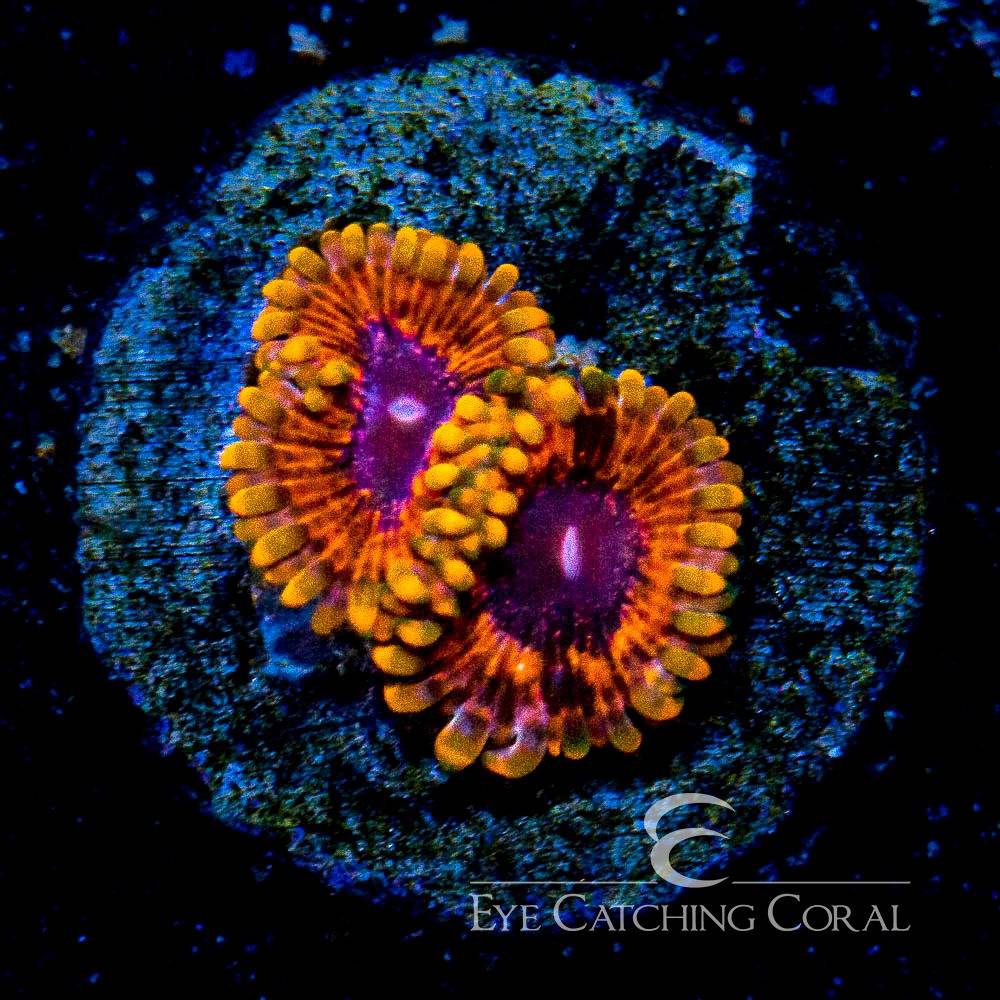
Burning Ember zoas
Zoanthus sp
Palytoxin safety
Some zoanthids and palythoas can contain a potent toxin. Wear sturdy waterproof gloves and eye protection, minimize handling, and keep colonies submerged when possible. Never boil, steam, pressure-wash or scrub colonized rock under running water. Keep other people and pets away during handling. If exposure is suspected, seek urgent medical advice and tell the clinician about possible palytoxin exposure.
Sources: CDC: palytoxin exposure · OATA: avoiding palytoxin poisoning
Gallery
A little patch of fire
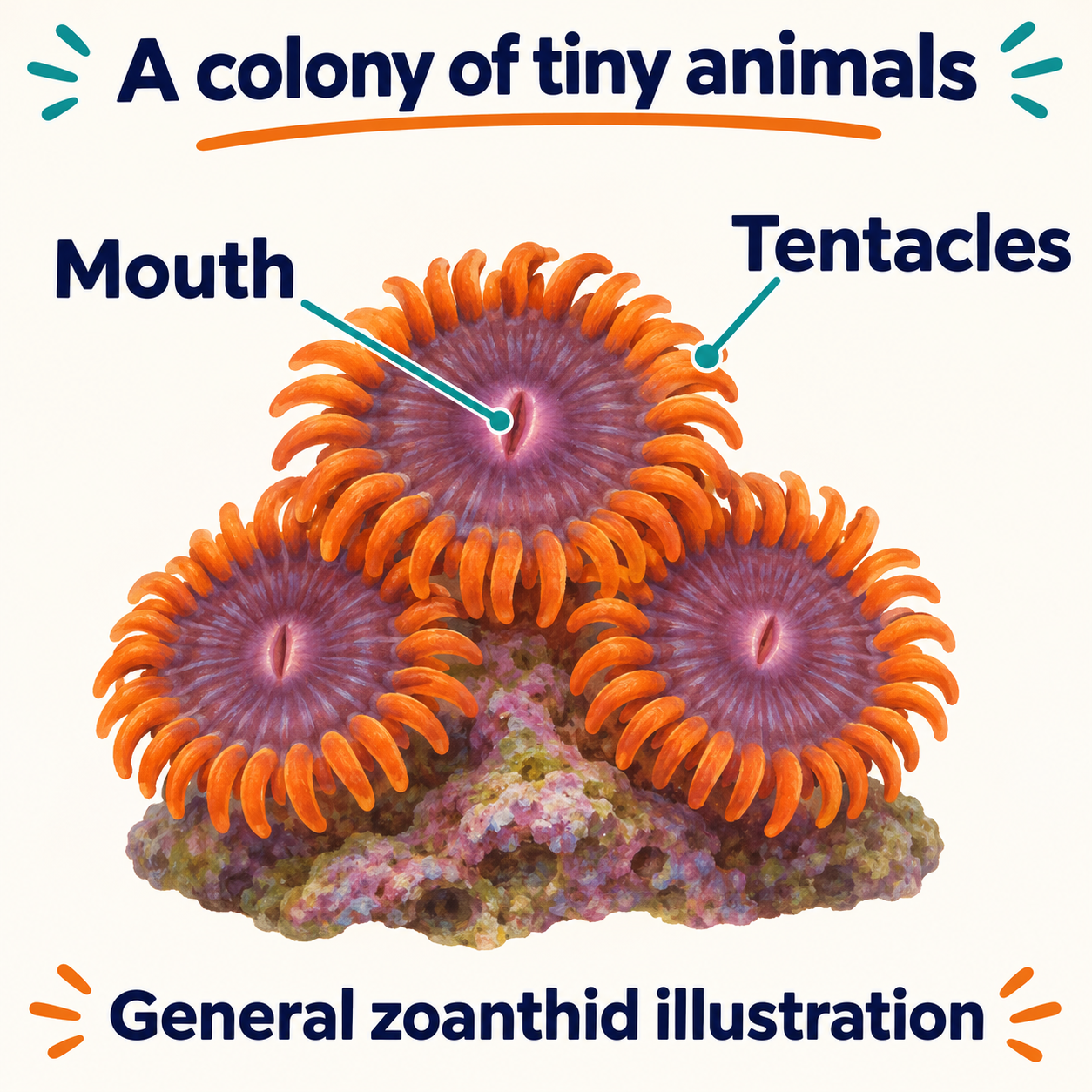
A zoa garden rewards a closer look. Each little button is an animal, with a mouth in the middle and a fringe of tentacles around it. Together, the polyps spread into a living patchwork on the rock.
Burning Ember is a hobby name. Ceylon Corals describes its stock as red and orange, but a trade name is not a species test or a guarantee that every seller has the same line. Keep this entry at Zoanthus sp. The existing ReefToGo photo remains the reference for this entry; the drawings here explain care, not an exact color pattern. [ReefToGo entry](https://database.reeftogo.com/coral/burning-ember-zoas-47af2885) · [Ceylon Corals](https://ceyloncorals.com/products/burning-ember-zoas) · [Tidal Gardens care](https://tidalgardens.com/articles/coral-care-articles/zoanthus-coral-care.html)
The best start is a settled reef, a secure foothold and a little patience. Give the frag time to become a colony before asking it to become a showpiece.
Find a comfortable seat
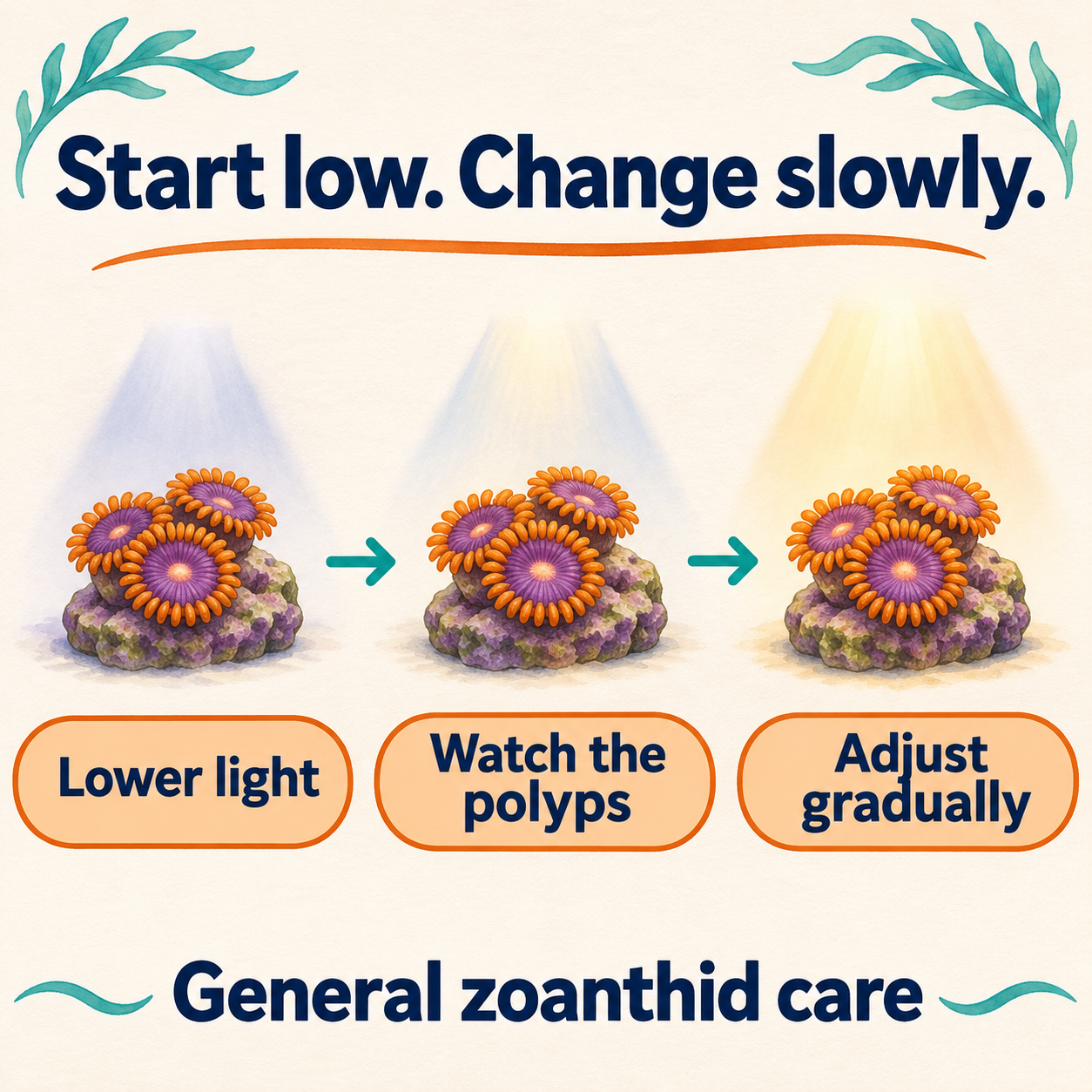
Start in lower light, then adjust gradually. A mid-rockwork label is a starting place, not a promise about how much light reaches the coral. A ledge halfway up one tank can be brighter than the top of another.
Tidal Gardens reports growing its zoanthids at roughly 75–125 PAR. That is one grower's experience, not a measured Burning Ember requirement. A PAR meter helps you compare locations. Watch the coral as well: a sudden pale look after a lighting change is a reason to review that change, not turn the light up again. [Tidal Gardens care](https://tidalgardens.com/articles/coral-care-articles/zoanthus-coral-care.html)
Give water a clear path across the colony. Aim for enough movement to carry away waste while the polyps can stay open. A direct jet that keeps them folded is too much for that spot. A mat collecting debris needs better circulation. Secure the plug so it cannot tumble into sand or a neighbor. [BRS care guide](https://www.bulkreefsupply.com/content/post/coral-care-guide-zoanthids)
Feed the reef, then check the water
Tiny algae living inside zoanthid tissue turn light into food. Fine foods can add to that supply, but more food is not automatically better care. If you try supplemental feeding, offer a small amount and watch whether the polyps actually take it. Do not bury them under a cloud of powder. [Tidal Gardens care](https://tidalgardens.com/articles/coral-care-articles/zoanthus-coral-care.html)
Keep temperature and salinity steady. For reference, Bulk Reef Supply's general zoanthid guide uses 75–78°F and specific gravity 1.025–1.026. These are workable reef values, not a reason to abruptly reset a healthy tank. Keep up regular water testing and water changes. [BRS care guide](https://www.bulkreefsupply.com/content/post/coral-care-guide-zoanthids)
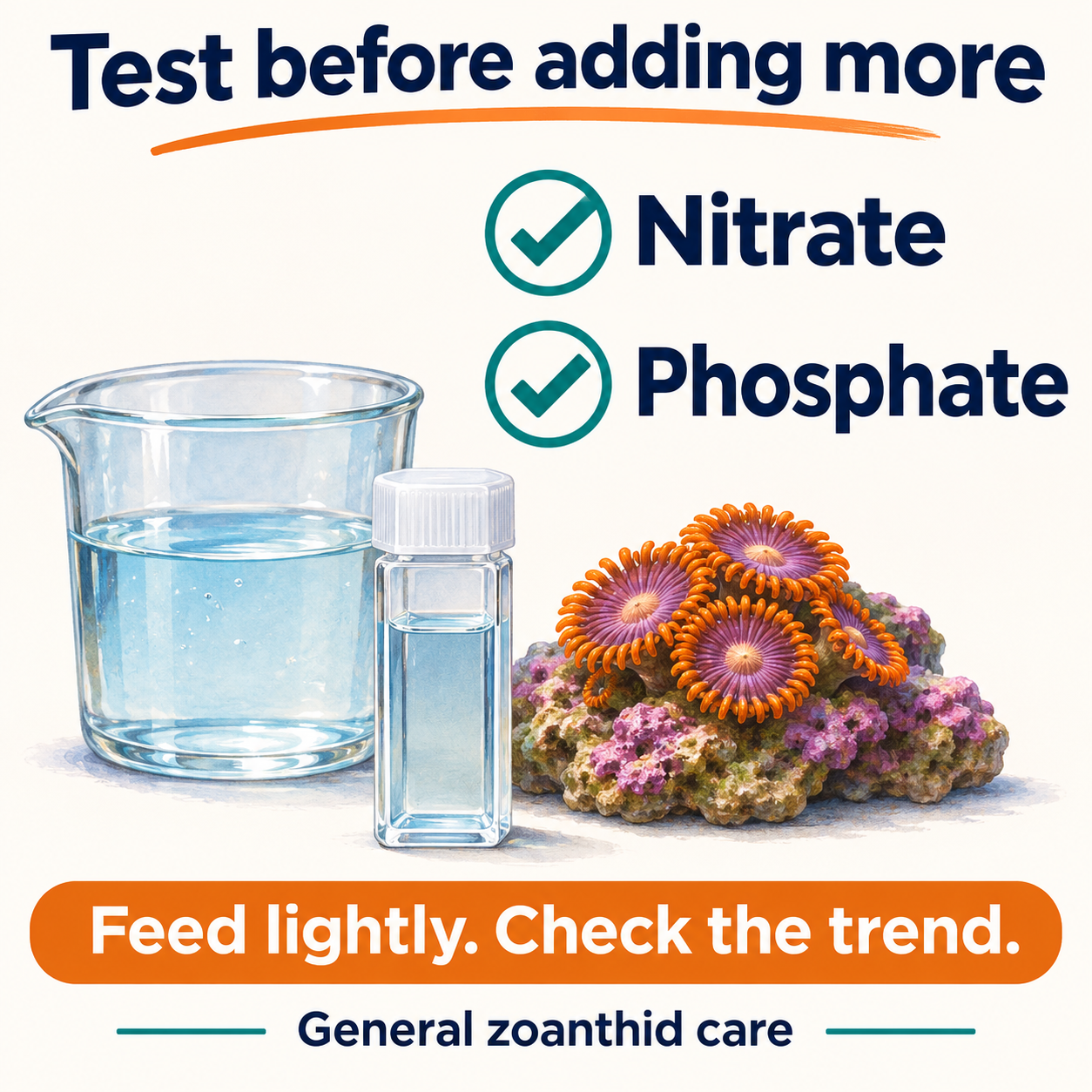
Test nitrate and phosphate rather than chasing perfectly empty readings. Zoanthids need nutrients, while excess food can fuel algae. Change the amount you feed in small steps and follow the trend. A food bottle cannot tell you how much your particular aquarium can handle. [Tidal Gardens care](https://tidalgardens.com/articles/coral-care-articles/zoanthus-coral-care.html) · [Top Shelf Aquatics](https://topshelfaquatics.com/products/burning-embers-zoanthids-coral)
Give tomorrow's colony room
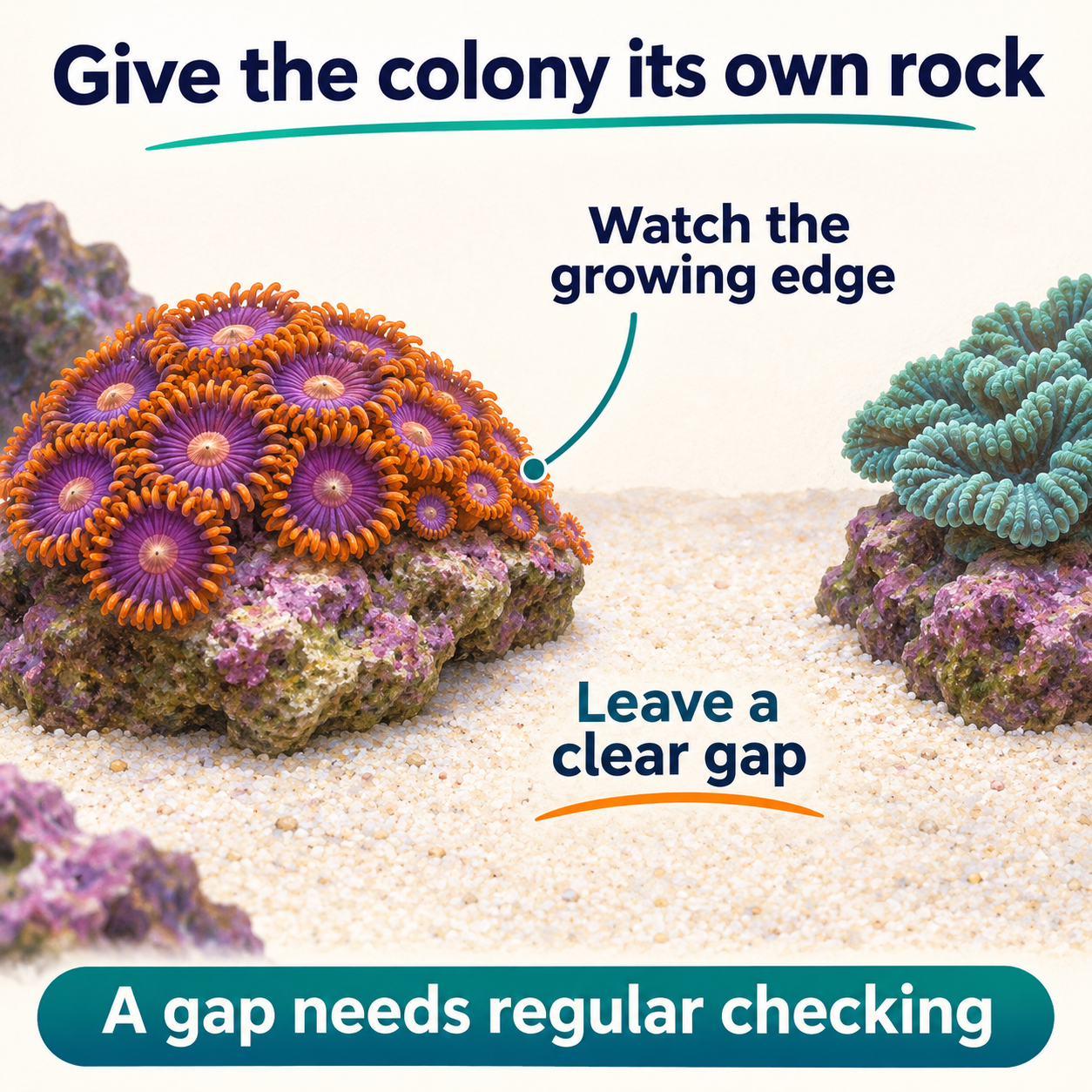
That tidy frag may eventually cover its rock. Put it where you can see the growing edge, and leave room before it meets another coral. A separate, removable rock makes that easier. Check the gap as both neighbors grow. [BRS care guide](https://www.bulkreefsupply.com/content/post/coral-care-guide-zoanthids)
The old note's 1–2 inches is only an initial buffer. It is not a permanent safe distance, especially beside a coral whose tentacles reach farther. This entry keeps Moderate for its space/aggression field because spreading polyps can crowd neighbors. It does not mean Burning Ember has a measured two-inch sting. [ReefToGo entry](https://database.reeftogo.com/coral/burning-ember-zoas-47af2885) · [Top Shelf Aquatics](https://topshelfaquatics.com/products/burning-embers-zoanthids-coral)
Fast remains the care-card growth label. Treat it as a planning warning, not a promise of new polyps each week. A new frag can pause before settling in, and different zoanthids grow at different speeds. Photograph the edge under the same lighting now and then. Slow, steady expansion is more useful than chasing someone else's polyp count. [BRS care guide](https://www.bulkreefsupply.com/content/post/coral-care-guide-zoanthids) · [Keeper light discussion](https://www.reef2reef.com/threads/some-simple-tips-for-keeping-zoanthids-happy-healthy-and-growing-fast.250791/)
Closed polyps are a clue
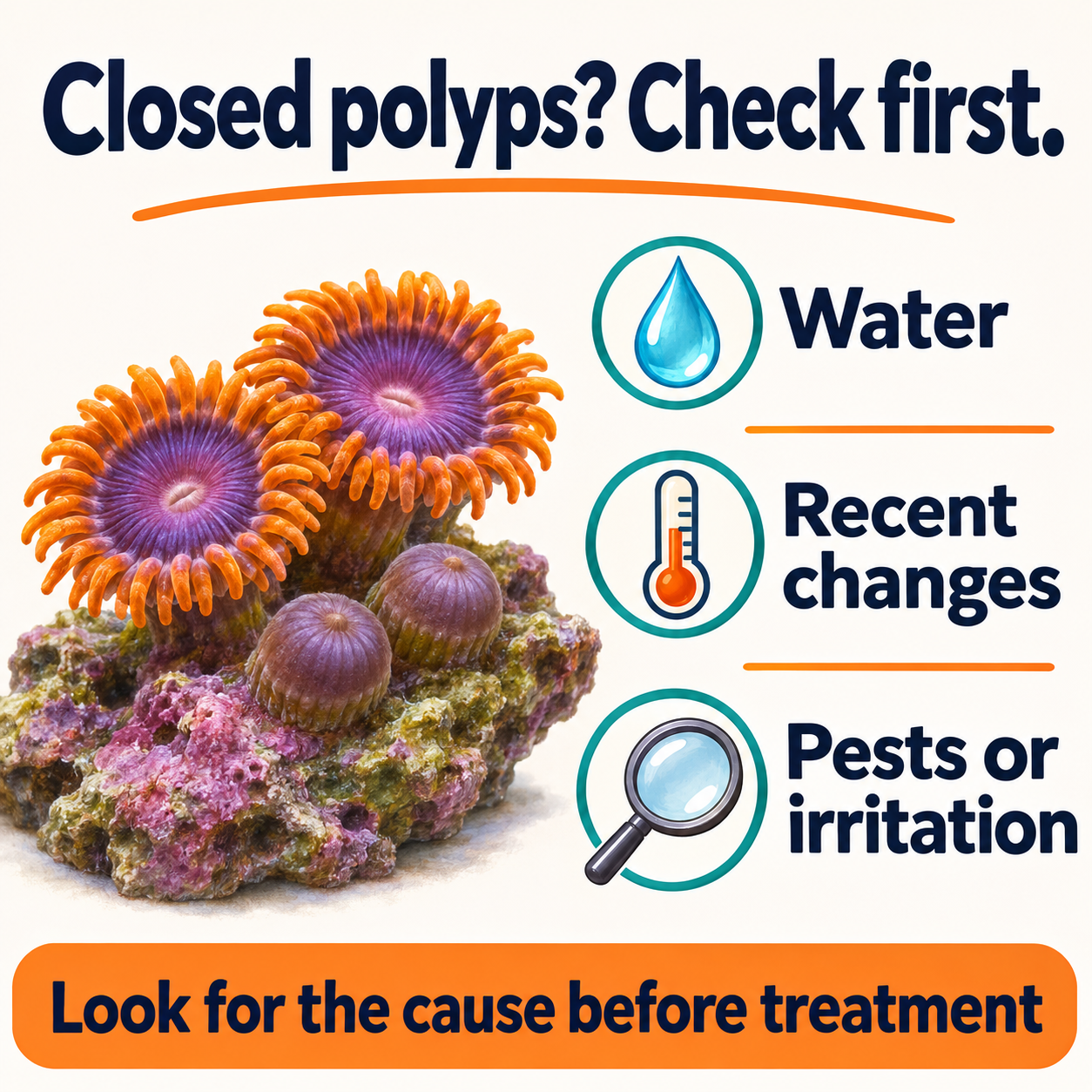
A closed polyp is a clue, not a diagnosis. Check what changed recently: light, water movement, temperature, salinity or a new tankmate. Look for debris between polyps, rubbing from a neighbor, and animals picking at the colony. [Top Shelf Aquatics](https://topshelfaquatics.com/products/burning-embers-zoanthids-coral)
Inspect new frags closely and use a separate, established observation tank when possible. [WWC quarantine guidance](https://www.bulkreefsupply.com/wwc-acclimate)
Zoanthid-eating nudibranchs can hide at the base of polyps and blend into their prey. A coral dip may remove adults while leaving eggs behind, so one dip is not an all-clear. Follow the product's directions and keep inspecting. [BRS pest guide](https://www.bulkreefsupply.com/content/post/md-2021-02-reef-tank-pest-and-remedy-guide)
If tissue is disappearing or the whole colony keeps declining, get experienced help promptly. Photograph the problem and record water tests. Avoid stacking several treatments and lighting changes at once; that makes it harder to find what helped. Never scrub a zoa-covered rock under running water. [OATA safety](https://ornamentalfish.org/what-we-do/advice-information/care-sheets/caresheets-marine-fish/how-to-avoid-palytoxin-poisoning-if-you-keep-corals/)
Enjoy the coral, respect the toxin
Some zoanthids and palythoas can contain palytoxin. A bright color or familiar name does not establish that a colony is toxin-free. Keep the existing safety panel on this page and take its precautions seriously. [OATA safety](https://ornamentalfish.org/what-we-do/advice-information/care-sheets/caresheets-marine-fish/how-to-avoid-palytoxin-poisoning-if-you-keep-corals/) · [CDC exposure report](https://www.cdc.gov/mmwr/preview/mmwrhtml/mm6431a4.htm)
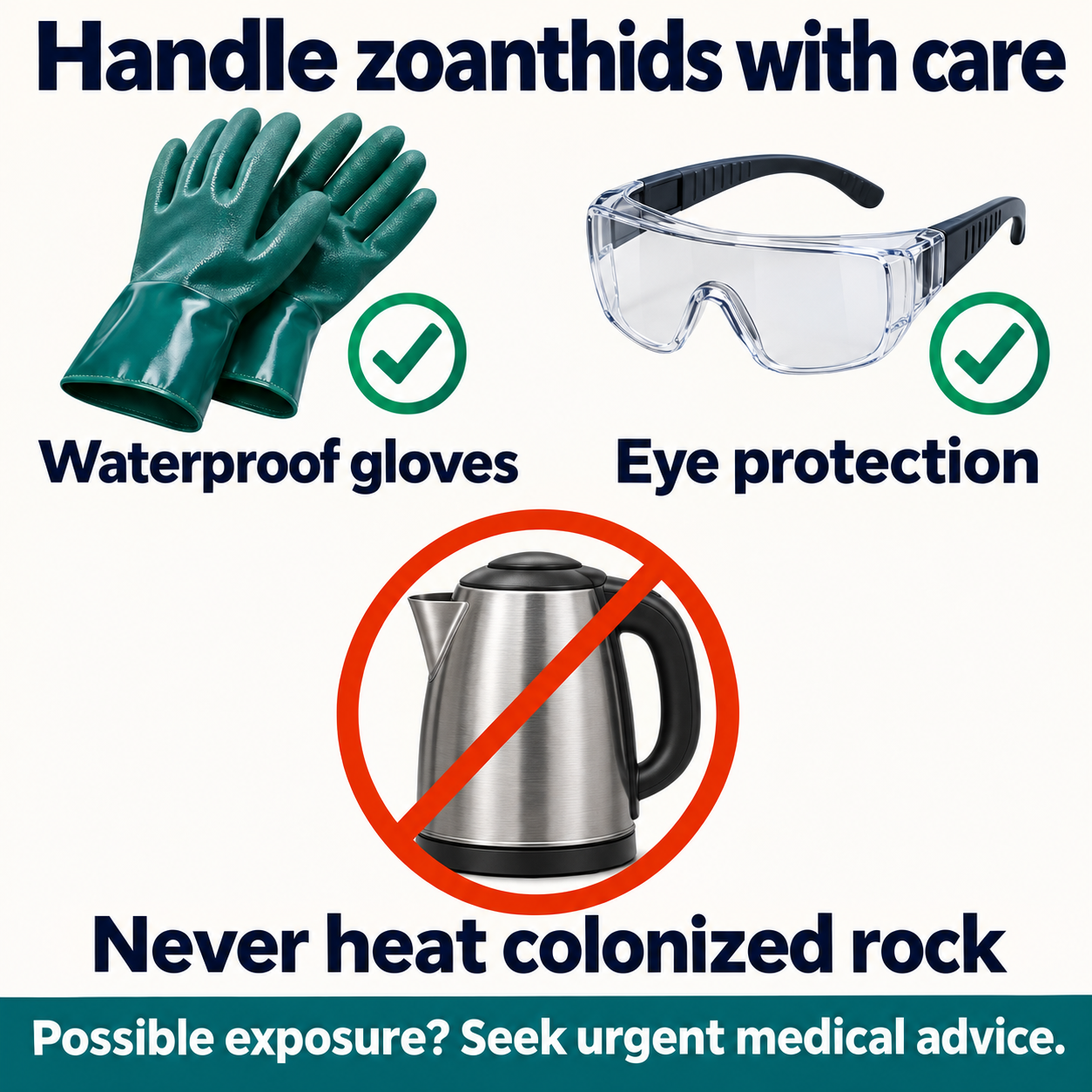
Wear sturdy waterproof gloves and eye protection. Minimize handling and keep colonies submerged when possible. Keep other people and pets away from the work area. Avoid touching your face and wash your hands after aquarium work. [OATA safety](https://ornamentalfish.org/what-we-do/advice-information/care-sheets/caresheets-marine-fish/how-to-avoid-palytoxin-poisoning-if-you-keep-corals/)
Never boil, steam, microwave, pressure-wash or scrub colonized rock under running water. Protective gear does not make those methods safe. For a colony that needs dividing, ask an experienced coral grower for a safe plan rather than peeling or cutting it casually at the kitchen counter. [OATA safety](https://ornamentalfish.org/what-we-do/advice-information/care-sheets/caresheets-marine-fish/how-to-avoid-palytoxin-poisoning-if-you-keep-corals/) · [CDC exposure report](https://www.cdc.gov/mmwr/preview/mmwrhtml/mm6431a4.htm)
If exposure is suspected, seek urgent medical advice and say that palytoxin may be involved. Breathing trouble after possible exposure is an emergency. Do not wait for a forum reply. [OATA safety](https://ornamentalfish.org/what-we-do/advice-information/care-sheets/caresheets-marine-fish/how-to-avoid-palytoxin-poisoning-if-you-keep-corals/) · [CDC exposure report](https://www.cdc.gov/mmwr/preview/mmwrhtml/mm6431a4.htm)
Field notes — what keepers report
These reports concern zoanthids generally, not verified Burning Ember colonies. They are useful experiences, not controlled tests.
In a 2016 Reef2Reef discussion, that Reef Guy favored stronger light and flow, while acknowledging exceptions. In the same thread, DereksReef77 described shrinkage and recession after increasing light. Both experiences belong in the story. A setting that works in one tank can be a poor jump for a newly moved frag. [Keeper light discussion](https://www.reef2reef.com/threads/some-simple-tips-for-keeping-zoanthids-happy-healthy-and-growing-fast.250791/)
In a 2019 feeding thread, robocop1906 reported good growth without direct coral feeding. Steven Garland reported better-looking, growing polyps while feeding a mixed coral-food regimen. A reef that is not target-fed still receives nutrients from normal tank feeding. Neither report makes one feeding routine compulsory. [Keeper feeding discussion](https://www.reef2reef.com/threads/what-do-you-feed-zoas.591872/)
In a 2020 thread, BeardedMcG saw little difference between spot and broadcast feeding. Better growth coincided with a change in nutrients. That does not prove which change caused the improvement, but it shows why notes help more than a borrowed recipe. [Keeper feeding-method discussion](https://www.reef2reef.com/threads/feeding-zoas-whats-best.744437/)
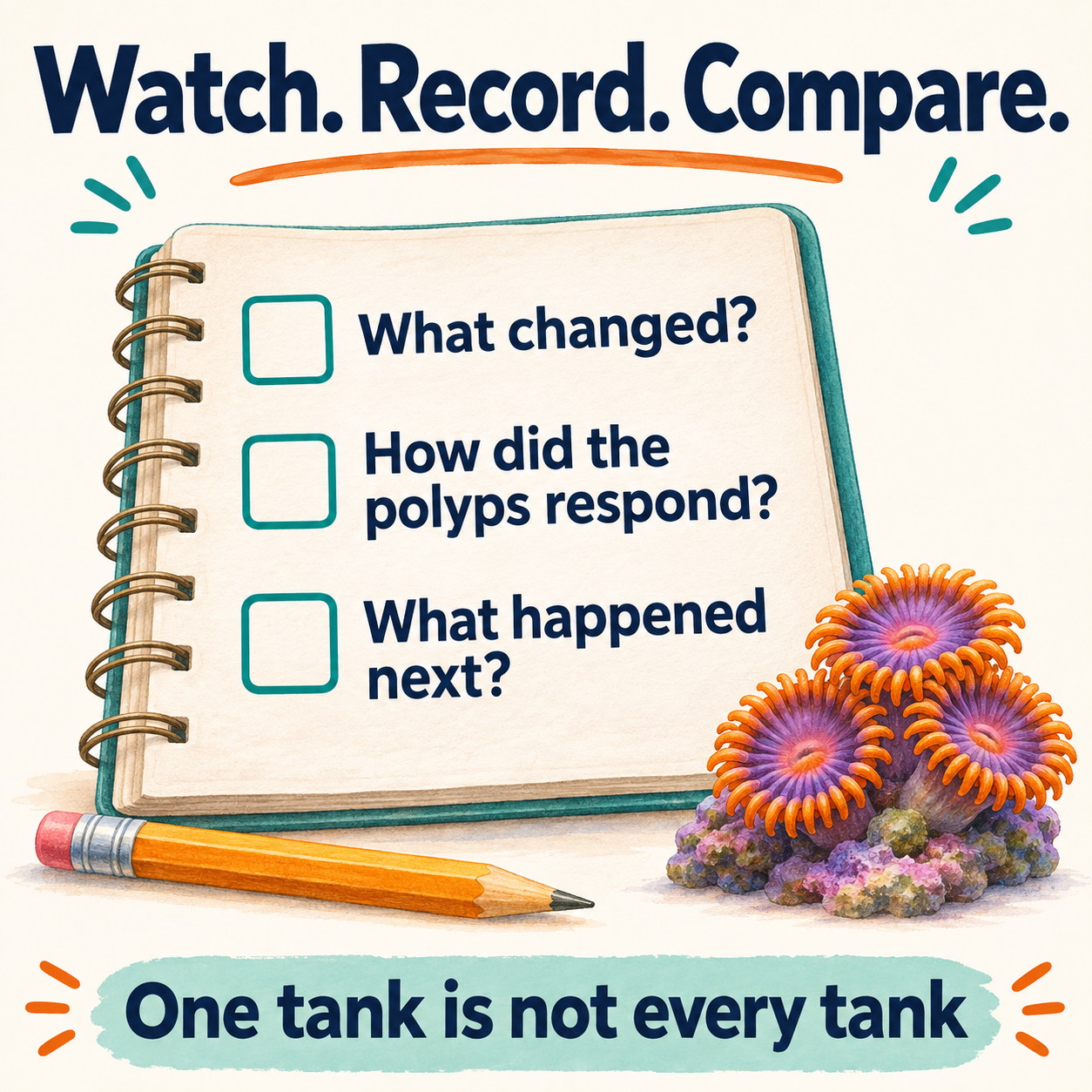
Write down what changed, what the polyps did and what happened next. Keep the next adjustment small. Let your own colony add the next field note.
Field Notes
Related species
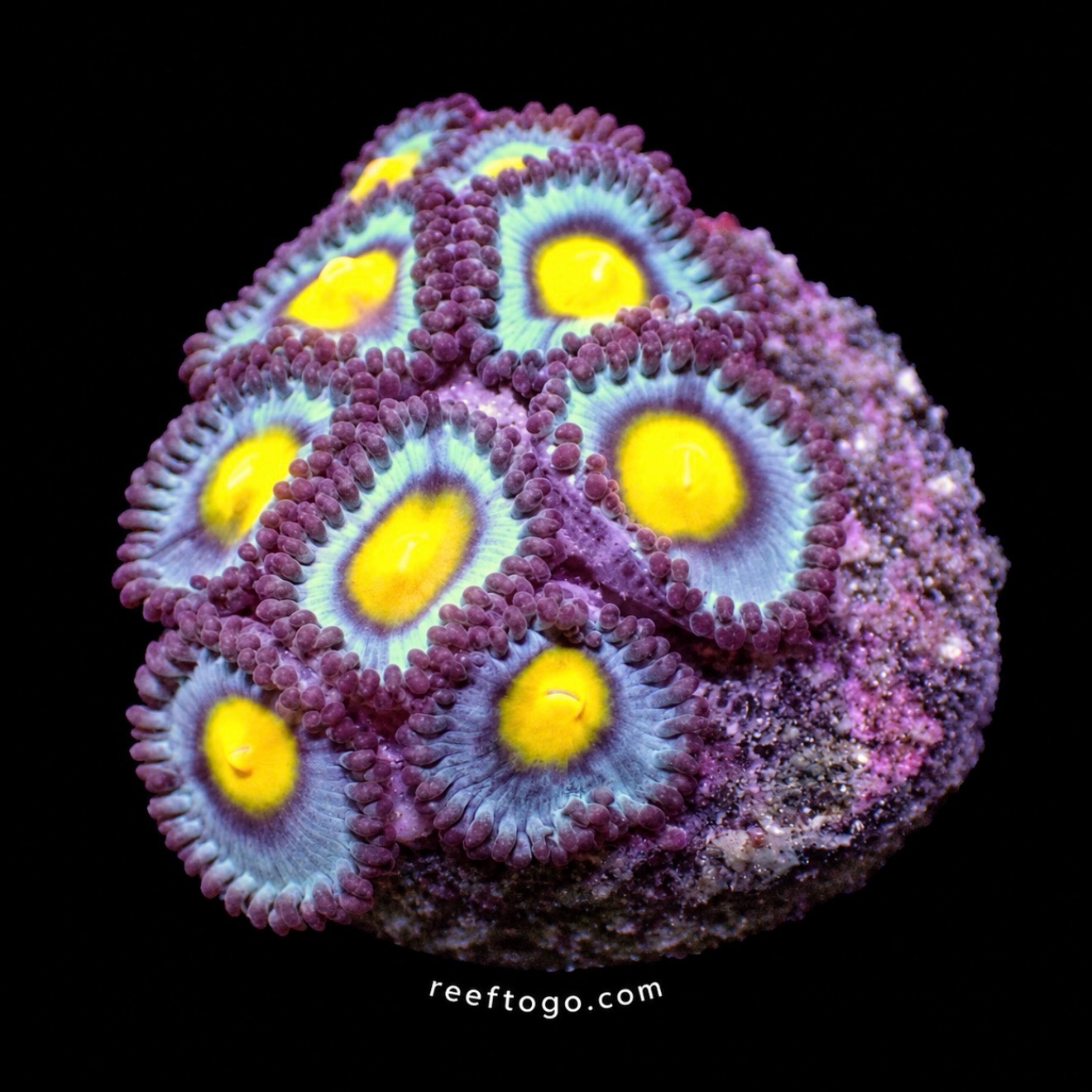
Alien Eye zoas
Zoanthus sp
Same genus
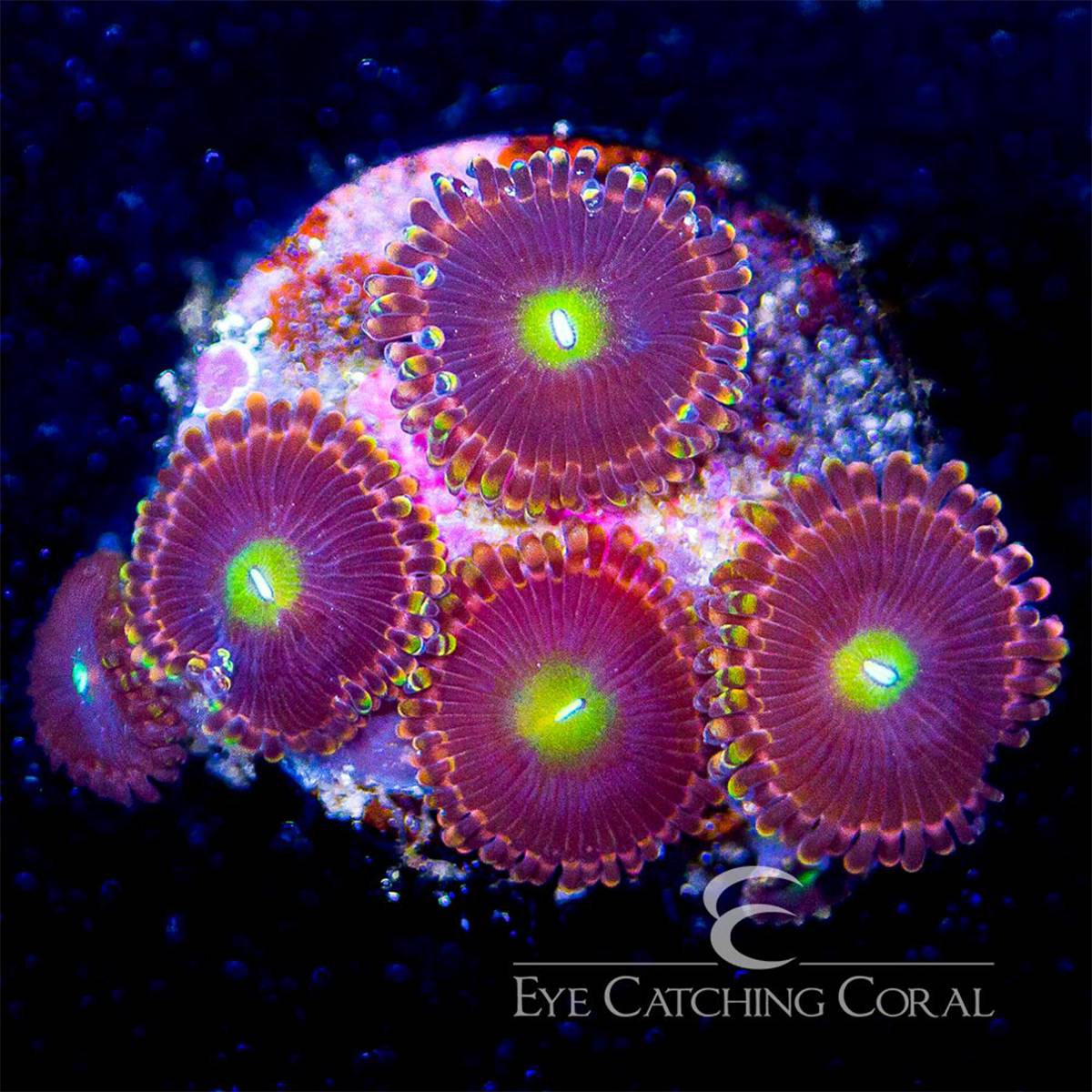
Antimatter zoas
Zoanthus sp
Same genus
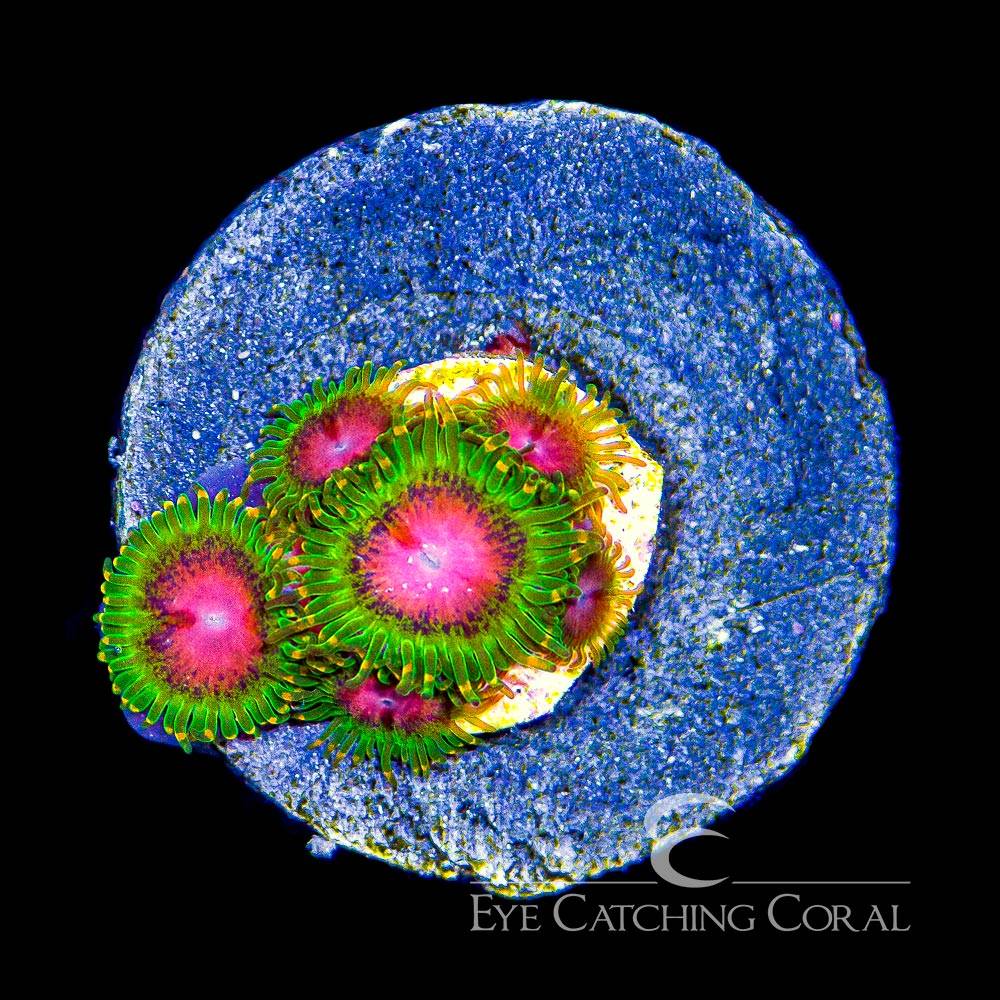
Awesome Blossom zoas
Zoanthus sp
Same genus
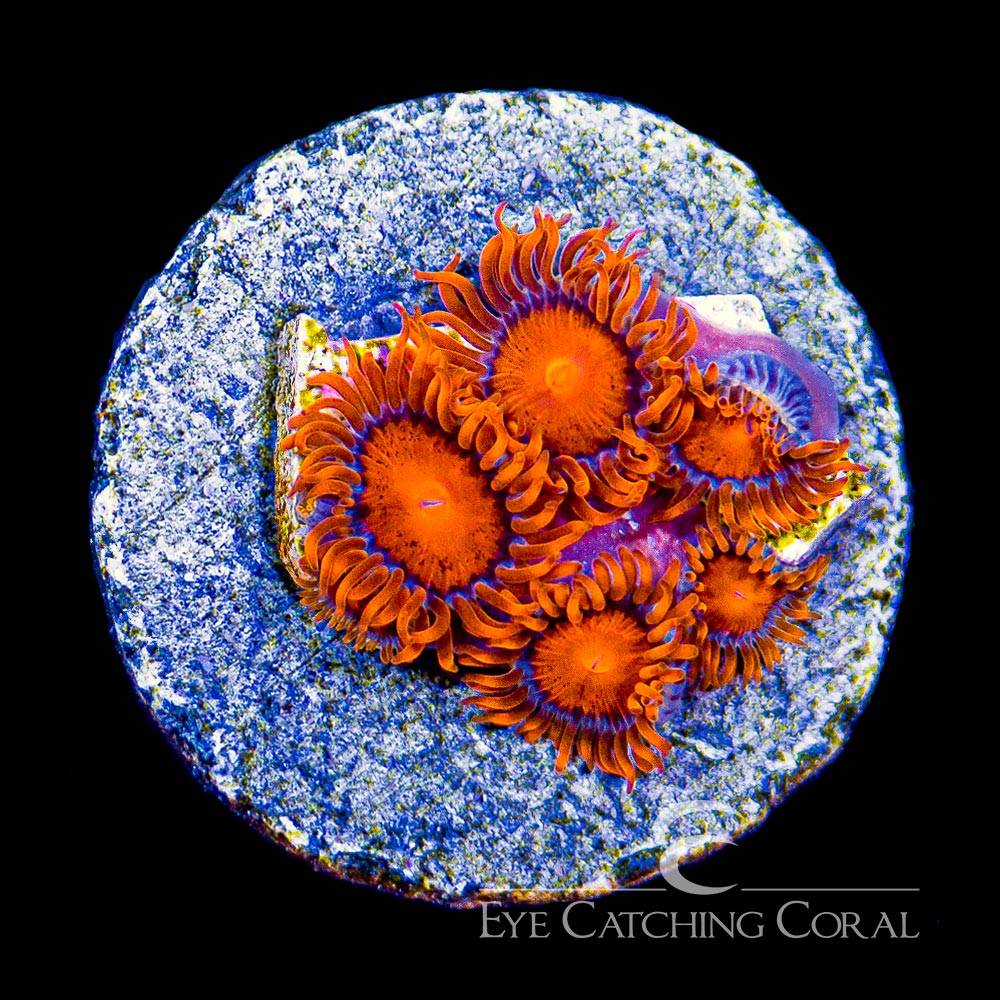
Bam Bam zoas
Zoanthus sp
Same genus
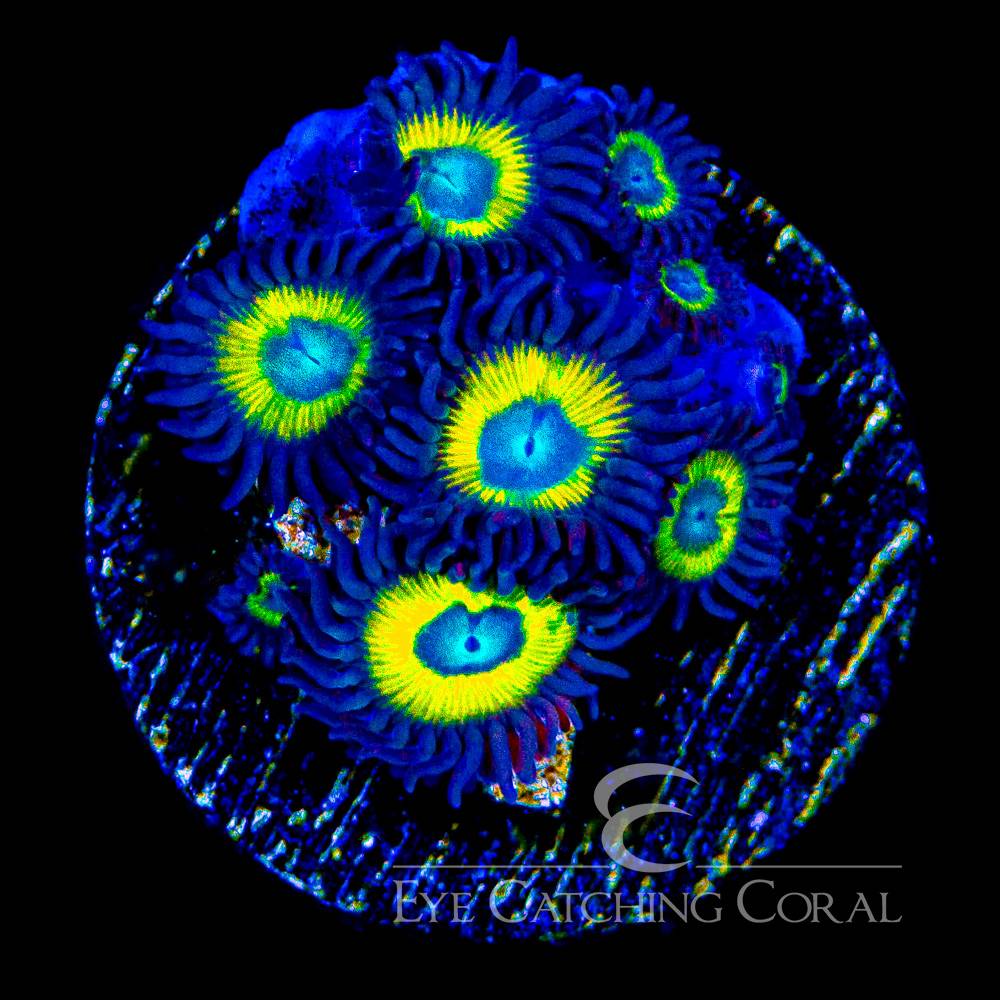
Black Bella zoas
Zoanthus sp
Same genus
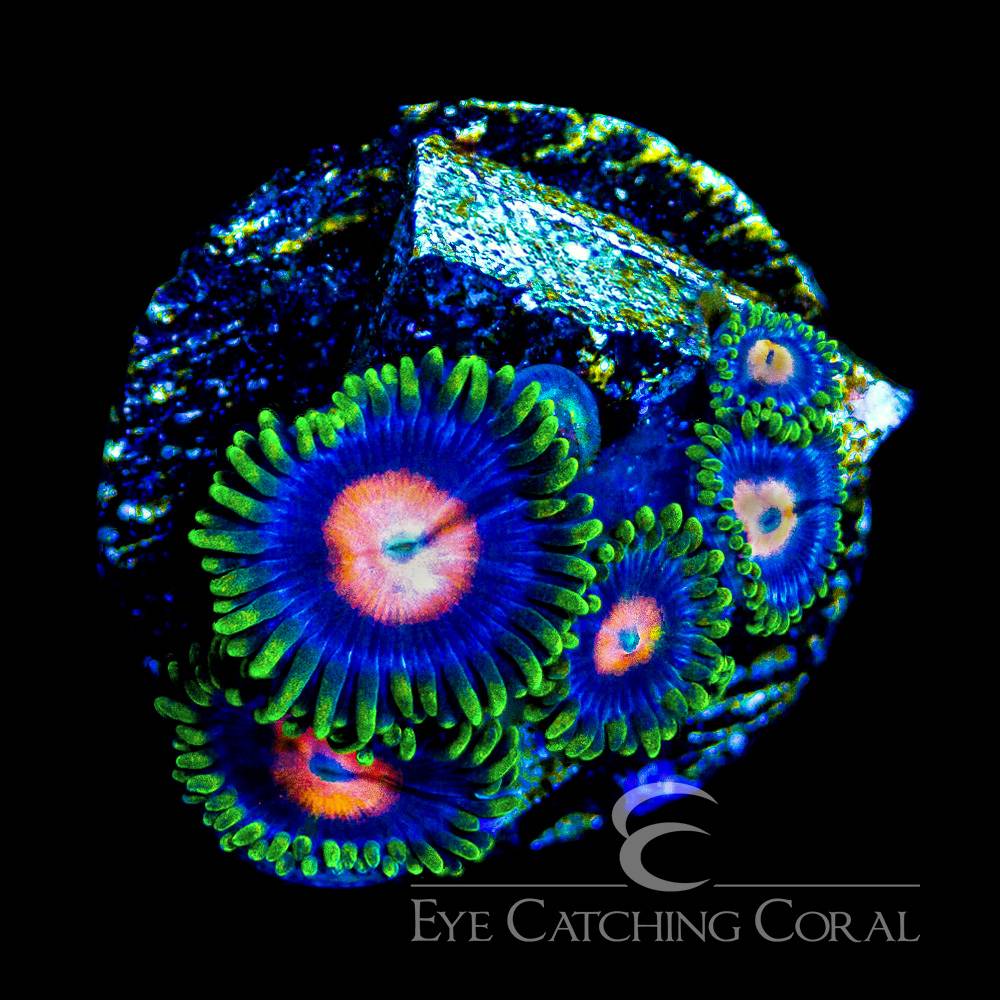
Blow Pops zoas
Zoanthus sp
Same genus
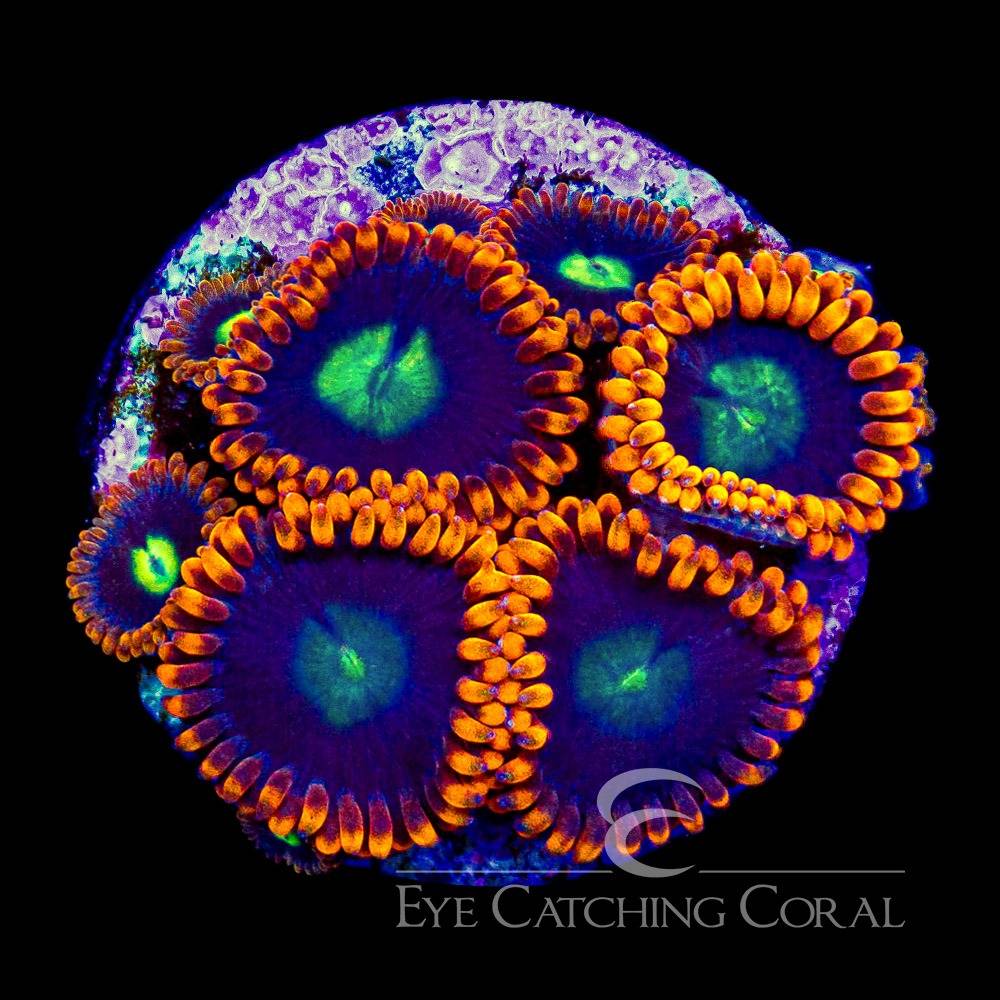
Burning Suns zoas
Zoanthus sp
Same genus
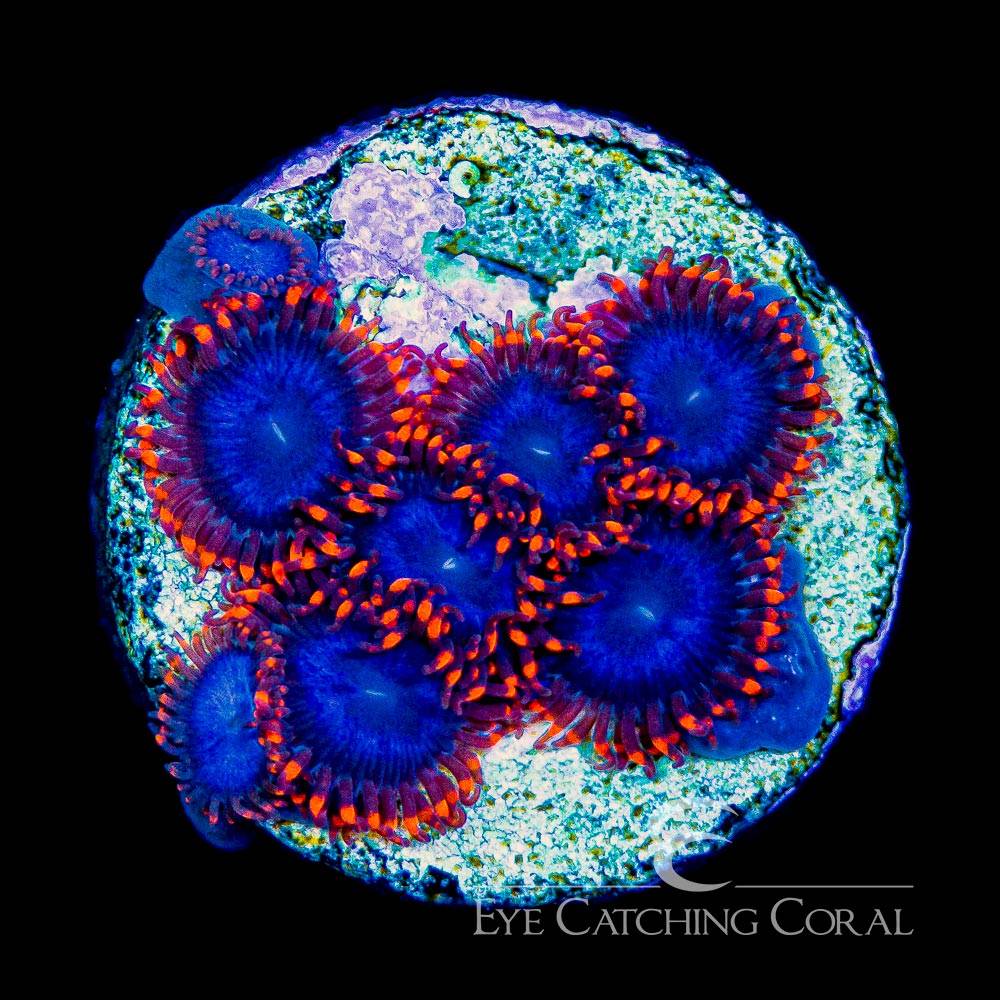
Captain Falcon zoas
Zoanthus sp
Same genus