Black Bella zoas
Zoanthus sp
Palytoxin safety
Some zoanthids and palythoas can contain a potent toxin. Wear sturdy waterproof gloves and eye protection, minimize handling, and keep colonies submerged when possible. Never boil, steam, pressure-wash or scrub colonized rock under running water. Keep other people and pets away during handling. If exposure is suspected, seek urgent medical advice and tell the clinician about possible palytoxin exposure.
Sources: CDC: palytoxin exposure · OATA: avoiding palytoxin poisoning
Gallery
# Black Bella zoas

A small frag is easy to fit into a reef. The trick is choosing a spot you will still like when that frag becomes a patch. Start Black Bella gently, give it steady conditions, and leave yourself room to manage the colony.
Meet Black Bella
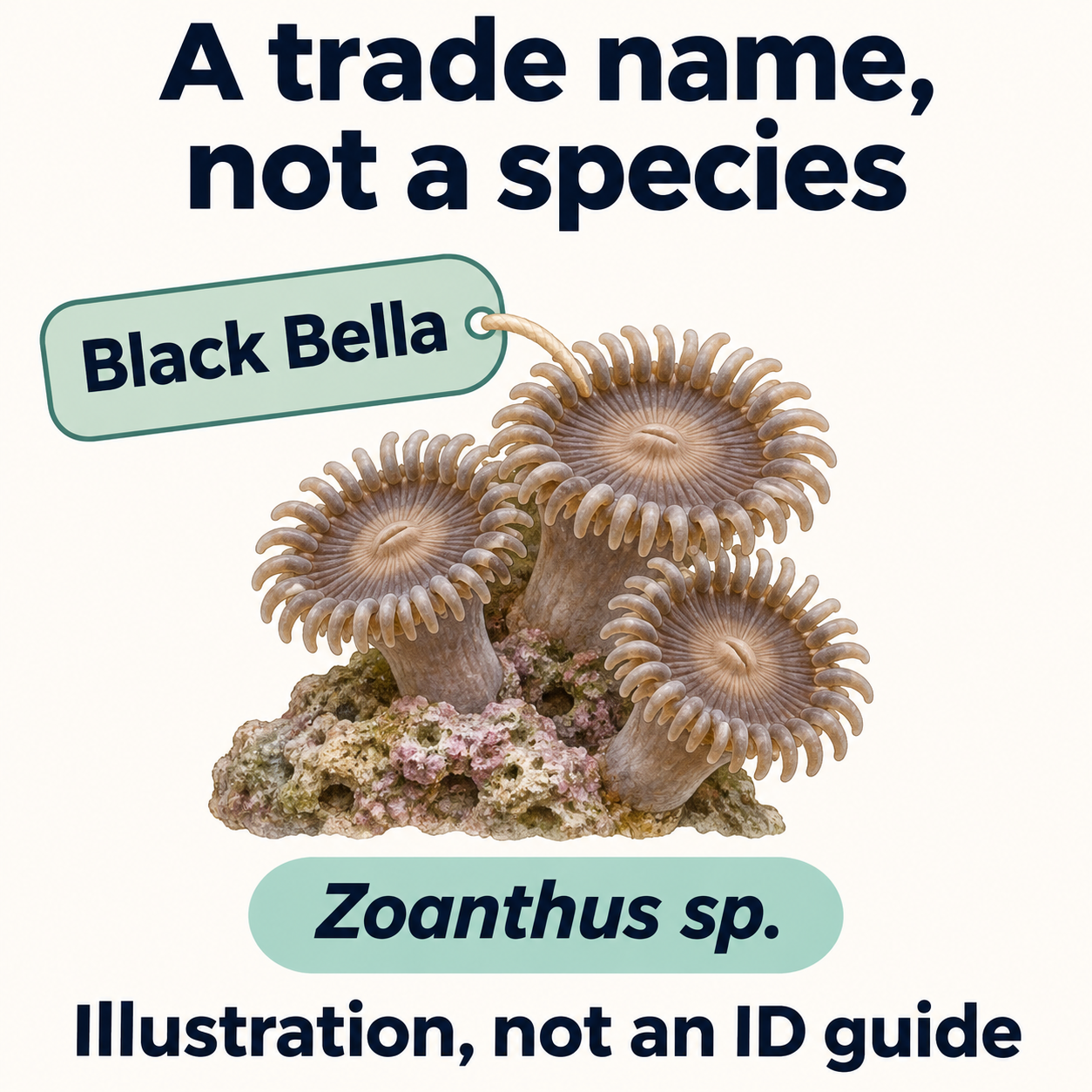
Black Bella is a trade name. Keep the scientific name at Zoanthus sp. That is how the named coral is listed by both Bulk Reef Supply and Lucky Corals. The name does not establish an exact species or prove that every seller's colony shares the same history. [Black Bella listing](https://www.bulkreefsupply.com/ecc-black-bella-zoanthid-eye-catching-coral.html)
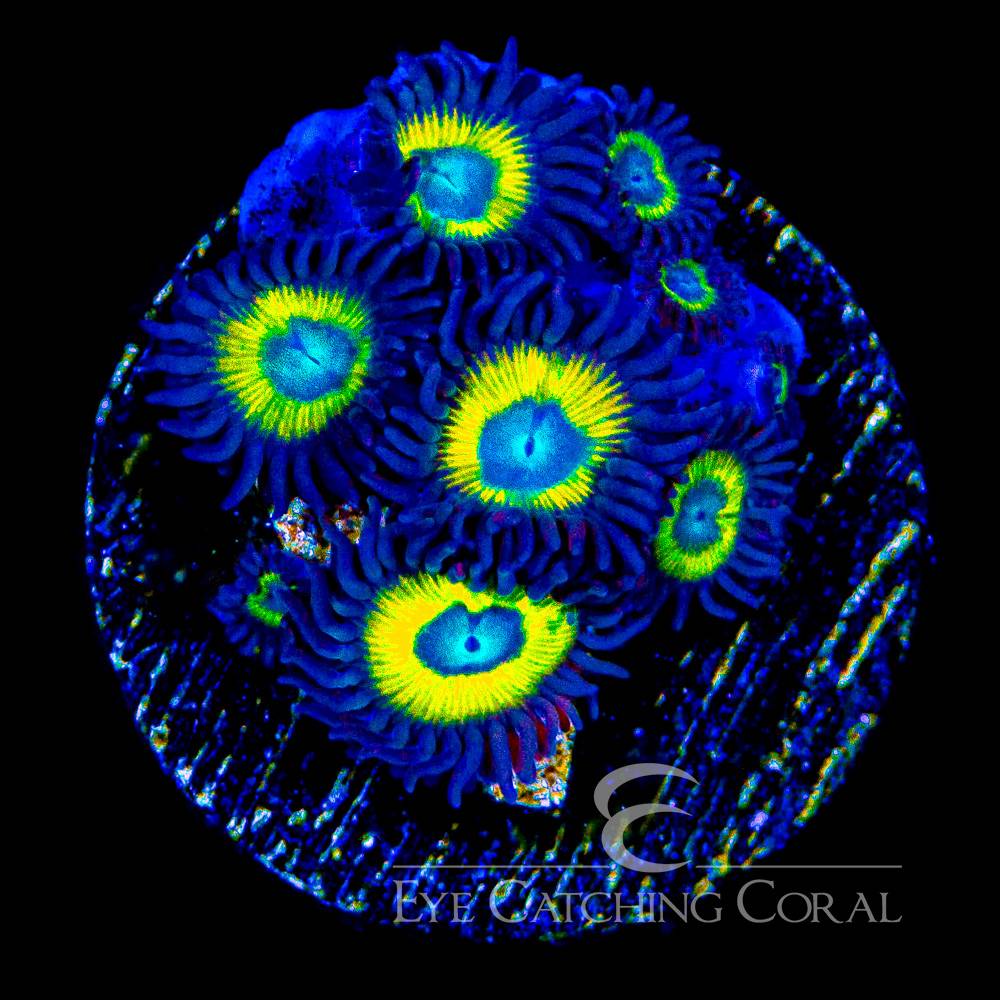
Vendors describe a yellow ring, a blue-green center and dark or purple skirts. Those are seller descriptions, not an identification test for your frag. Blue-heavy aquarium lighting changes how colors appear. This guide does not assign colors to Reef To Go's specimen from its photographs. [Corals.com description](https://www.corals.com/product/black-bella-zoanthid-frag-aquacultured/) · [Lighting and appearance](https://tidalgardens.com/articles/coral-care-articles/zoanthus-coral-care.html)
The useful starting point is simpler: an established reef, low to moderate light, and water moving across the colony without battering it. Beginner-friendly still means a living coral that needs observation. [Black Bella care](https://luckycorals.com/collections/corals-for-sale/products/black-bella-zoanthid)
Pick a spot, then let it settle
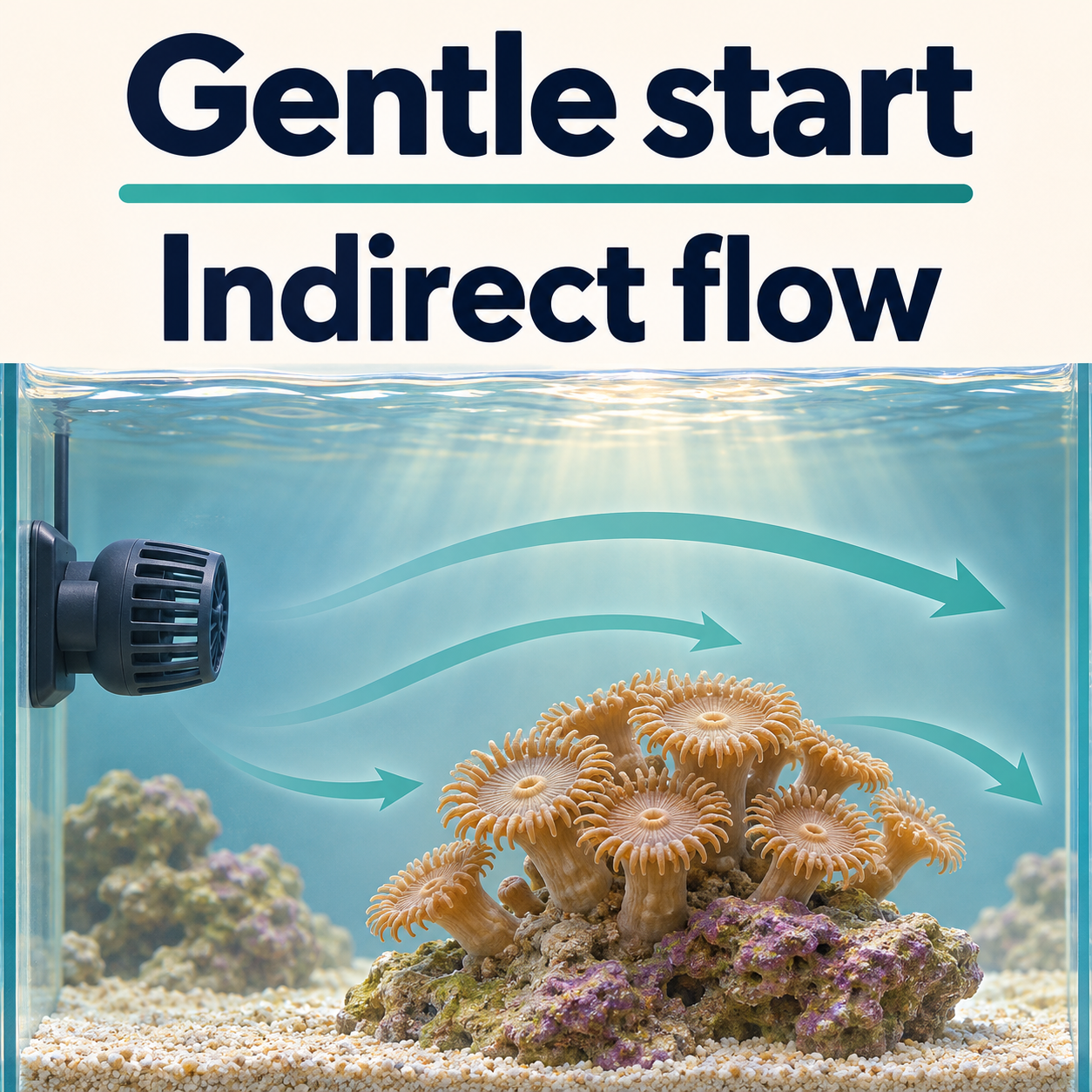
Start in a lower or middle area with indirect flow. The Mid placement label is a starting location, not an instruction to put the frag halfway up every tank. A shallow tank and a deep tank can deliver very different light at the same height. Ask what lighting the frag came from before making a big change. [Black Bella placement guidance](https://luckycorals.com/collections/corals-for-sale/products/black-bella-zoanthid)
Aim for open polyps and a clean mat. If a pump keeps folding the polyps shut, redirect the stream. If debris settles between them, improve circulation around the rock. Do not turn “moderate flow” into a fixed pump percentage. [Placement and flow](https://www.bulkreefsupply.com/ecc-black-bella-zoanthid-eye-catching-coral.html)
Avoid chasing color with sudden light increases. A brighter setting can damage a colony before it delivers the look you wanted. Adjust gradually and watch the response. [Zoanthid lighting](https://tidalgardens.com/articles/coral-care-articles/zoanthus-coral-care.html)
Feed the reef, not the problem
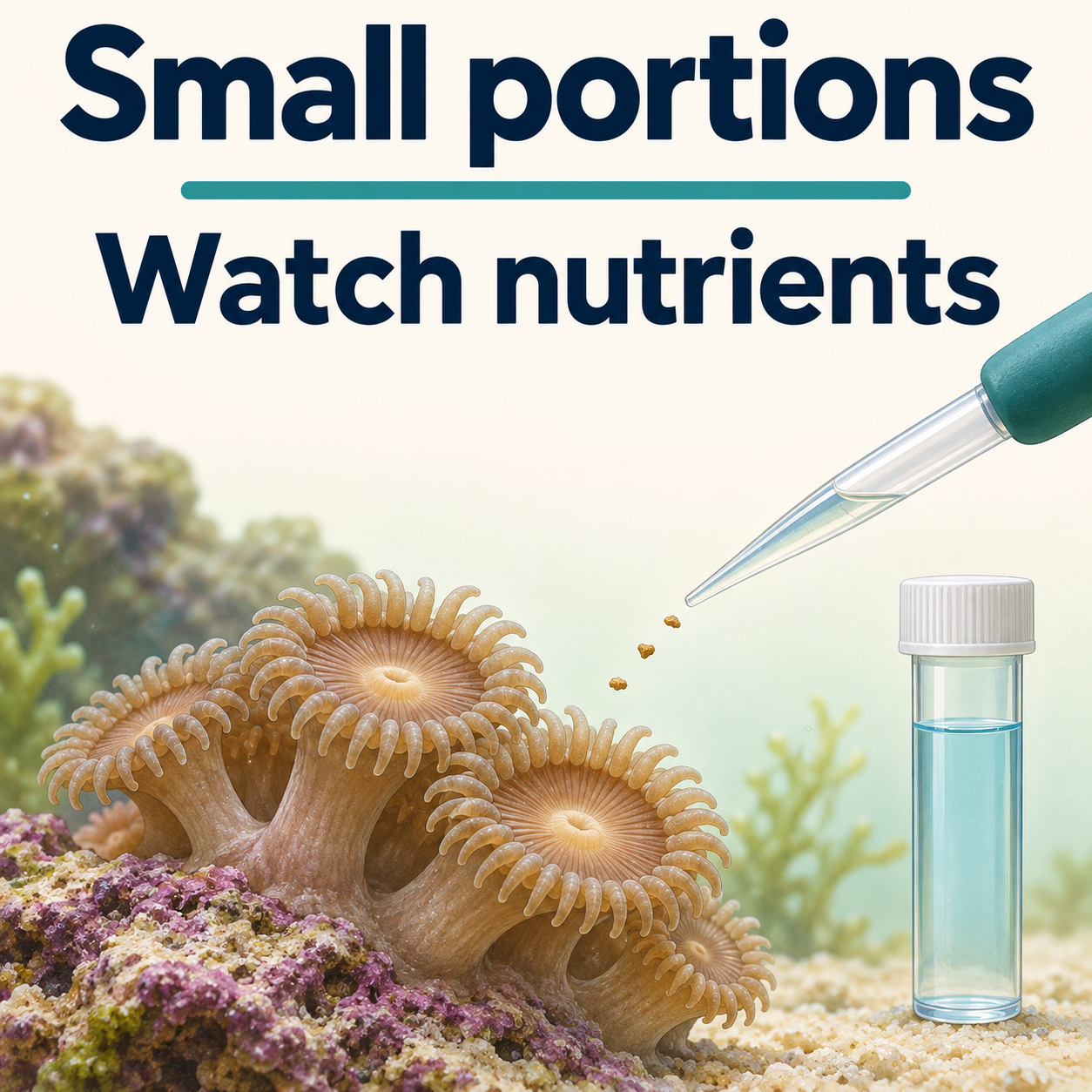
Black Bella does not need a meal pushed into every polyp. Lucky Corals says direct feeding is generally unnecessary, although fine coral foods may help. Corals.com reports benefits from spot and broadcast feeding. Neither is a controlled feeding trial. [Lucky Corals](https://luckycorals.com/collections/corals-for-sale/products/black-bella-zoanthid) · [Corals.com](https://www.corals.com/product/black-bella-zoanthid-frag-aquacultured/)
If you try feeding, make it a small experiment. Start with a small portion of suitable fine food. Watch both the colony and nutrient tests before adding more. A pile of uneaten food is not evidence that the coral needed a bigger meal.
Keep salinity, temperature and the tank's maintenance routine steady. Test nitrate and phosphate instead of treating perfectly clear water as proof that everything is right. Deliberately stripping both nutrients to zero can leave zoas struggling; letting waste accumulate is not the answer either. [Water stability](https://www.bulkreefsupply.com/content/post/coral-care-guide-zoanthids) · [Zoanthid nutrition and chemistry](https://tidalgardens.com/articles/coral-care-articles/zoanthus-coral-care.html)
When the polyps stay closed
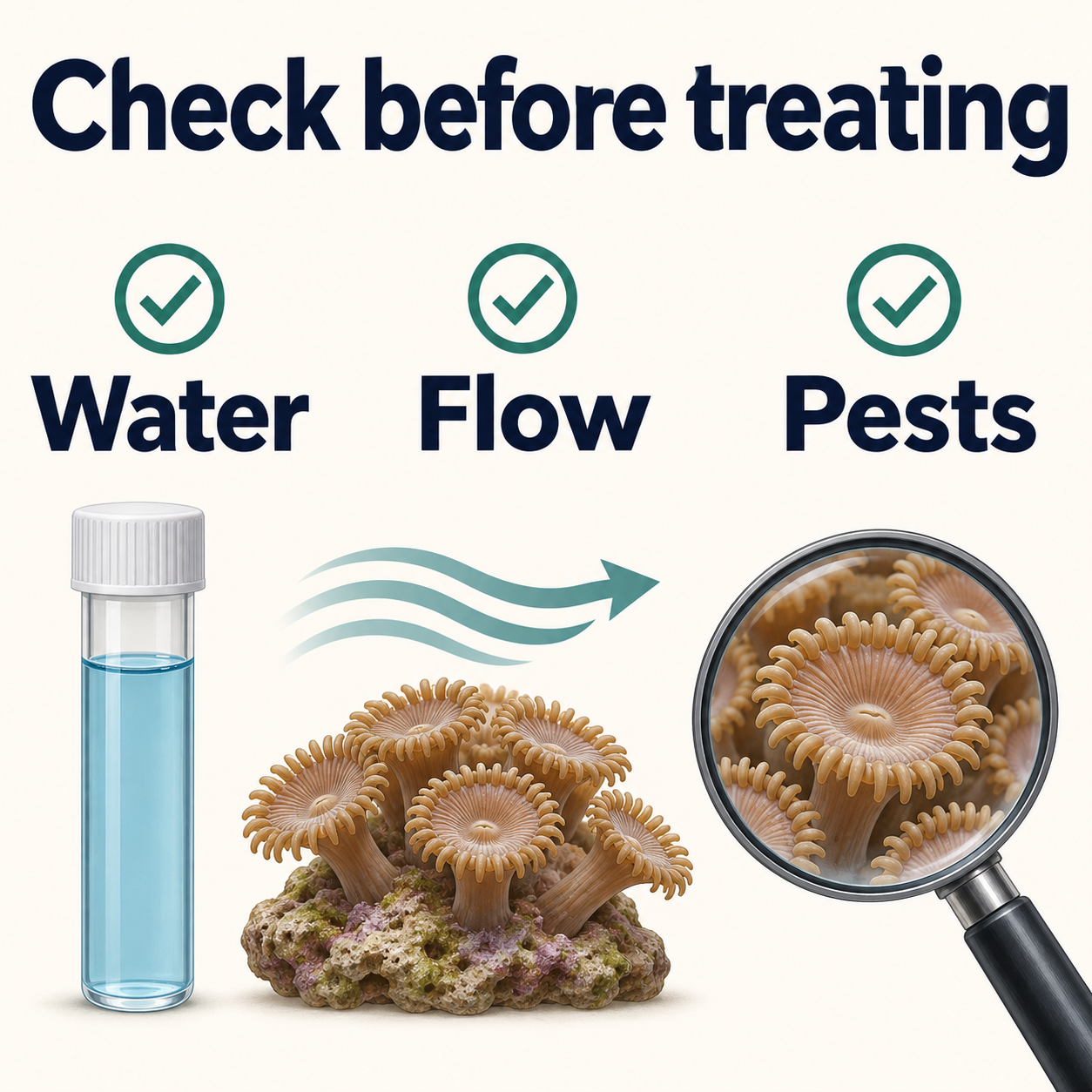
Start with a question: what changed?
- Several colonies are unhappy: check temperature, salinity, recent dosing and equipment changes first.
- Only this frag is closed: look for a direct pump stream, settled debris, nearby contact or repeated disturbance.
- Tissue is disappearing: inspect closely for pests and seek help promptly. Take clear photos and record when it started.
These are troubleshooting steps, not diagnoses. Zoanthid-eating nudibranchs, sundial snails and sea spiders are among the pests reported on zoas. Fish can also pick at polyps. A white mark or closed polyp alone does not tell you which problem you have. [Zoanthid pests and diseases](https://tidalgardens.com/articles/coral-care-articles/zoanthus-coral-care.html)
Check the basics before repeatedly moving or treating the frag. Too much flow and an abrupt lighting change are both worth checking. If a treatment is justified, identify the problem and follow the product's coral-specific directions. This guide does not prescribe a dip recipe. [Lighting and flow guidance](https://www.bulkreefsupply.com/content/post/coral-care-guide-zoanthids)
Give it room and handle it safely
Black Bella spreads across its growing surface as new polyps appear. Corals.com describes it as relatively fast growing. Leave room for that spread and inspect the colony's edge as it expands. A separate, removable rock makes future management easier. The old one-to-two-inch gap is not a permanent safety boundary. Neighboring corals and future growth still matter. [Growth description](https://www.corals.com/product/black-bella-zoanthid-frag-aquacultured/) · [Zoa garden planning](https://www.bulkreefsupply.com/content/post/coral-care-guide-zoanthids)
Treat zoanthids as potentially toxic. The Black Bella name does not tell you whether a colony contains palytoxin or how much. CDC has documented serious aquarium-related exposures. Do not assume a small frag is harmless. [CDC report](https://www.cdc.gov/mmwr/preview/mmwrhtml/mm6431a4.htm)
Wear protective gloves and eye protection when handling. Keep colonies submerged where practical, avoid splashes, and wash your hands afterward. Keep other people and pets away from handling work. Never boil, microwave, steam-clean, pressure-wash or pour hot water over zoanthid-covered rock. Avoid brushing it under running water. [OATA safety guidance](https://ornamentalfish.org/what-we-do/advice-information/care-sheets/caresheets-marine-fish/how-to-avoid-palytoxin-poisoning-if-you-keep-corals/) · [Handling precautions](https://luckycorals.com/collections/corals-for-sale/products/black-bella-zoanthid)
If you suspect palytoxin poisoning, seek urgent medical advice and say that aquarium coral may be involved. Breathing trouble needs emergency medical help. Do not keep working through symptoms. The entry's existing safety panel remains part of this guide's safety advice. [CDC exposure findings](https://www.cdc.gov/mmwr/preview/mmwrhtml/mm6431a4.htm)

Field notes — what keepers report
These are reports about zoanthids generally, not verified Black Bella trials.
Feeding gets mixed reviews. In Reef Central's “Feeding zoanthids” thread, ozmosis7 reported little growth difference after spot feeding. In the same thread, jeffmol54 reported strong growth while feeding fine coral food and doing frequent water changes. Both accounts can be honest. Neither separates food from all the other differences between tanks. [Keeper discussion](https://forums.reefcentral.com/threads/feeding-zoanthids.1972028/)
A slow patch does not settle the question forever. In a Reef2Reef growth discussion, AwildcatsZ reported that some named zoas grew quickly while others stayed the same size for months. Another keeper, 40B Knasty, described improved Rasta growth after changes to husbandry. Those reports show variation, not a recipe for Black Bella. [Growth discussion](https://www.reef2reef.com/threads/fastest-and-slowest-growing-zoas.302799/)
Very low nutrients deserve a look, not a blind dose. ReeferMaddness843 reported better zoa growth after moving away from zero nitrate while keeping up water changes. Several things changed together, so this is a useful observation rather than proof of a target number. [Nutrient discussion](https://www.reef2reef.com/threads/some-simple-tips-for-keeping-zoanthids-happy-healthy-and-growing-fast.250791/)
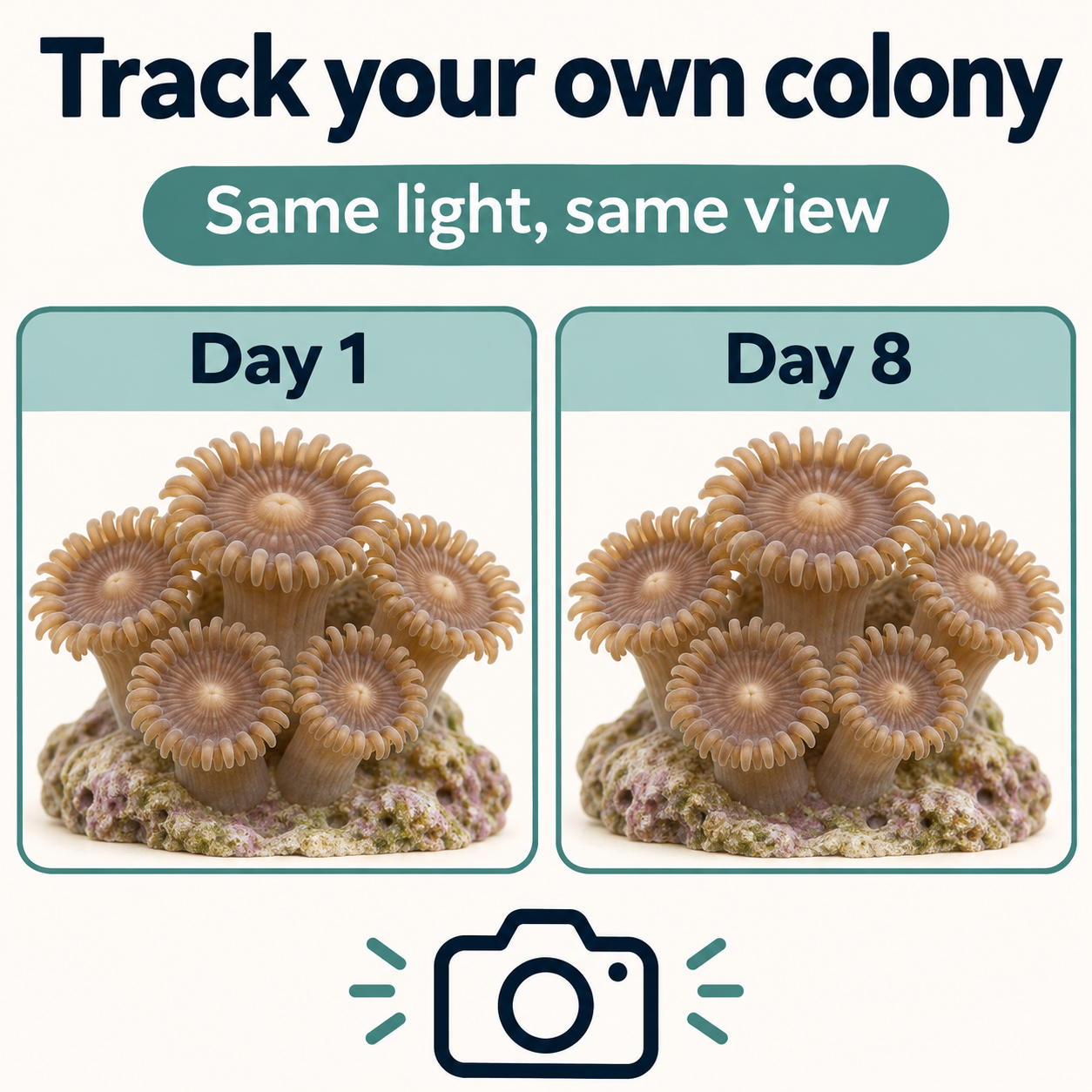
For your own colony, keep a dated photo from the same angle and under the same light. Note feeding and equipment changes beside it. That record is more useful than expecting another keeper's growth rate to happen in your tank.
Field Notes
Related species
Alien Eye zoas
Zoanthus sp
Same genus
Antimatter zoas
Zoanthus sp
Same genus
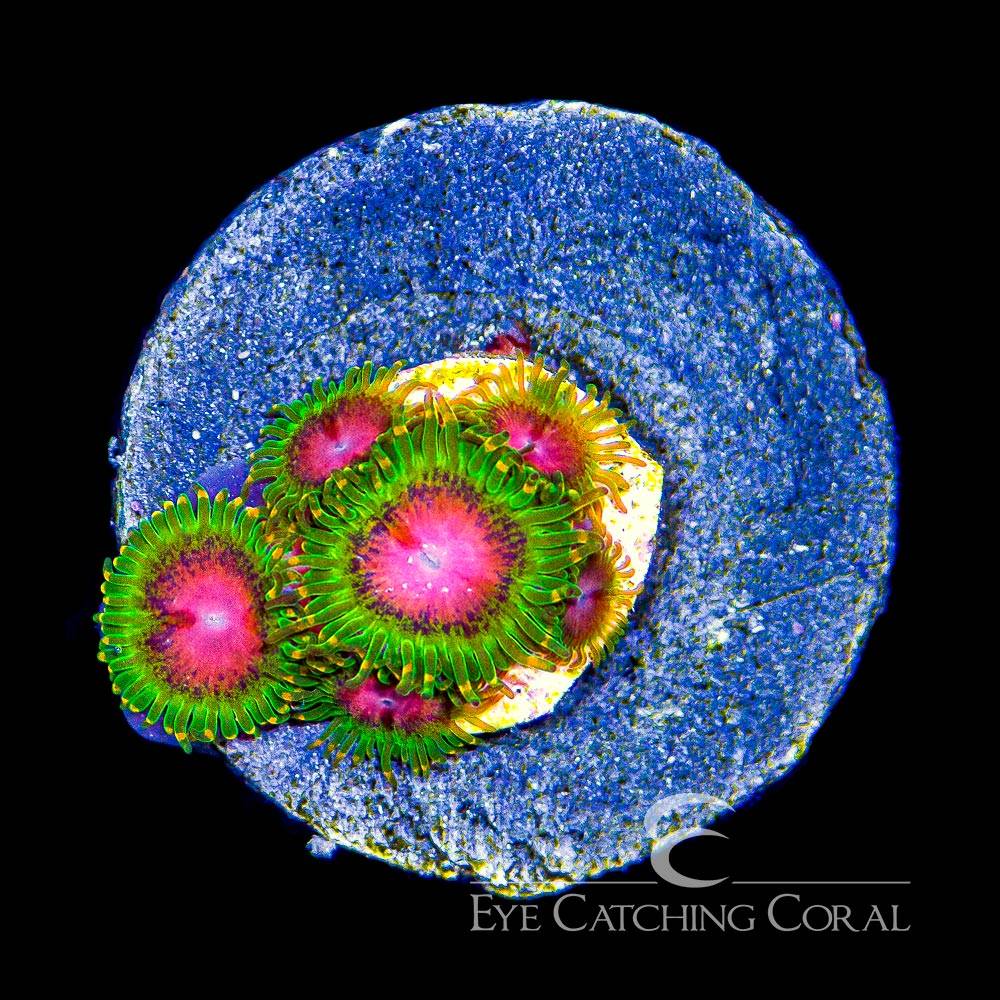
Awesome Blossom zoas
Zoanthus sp
Same genus
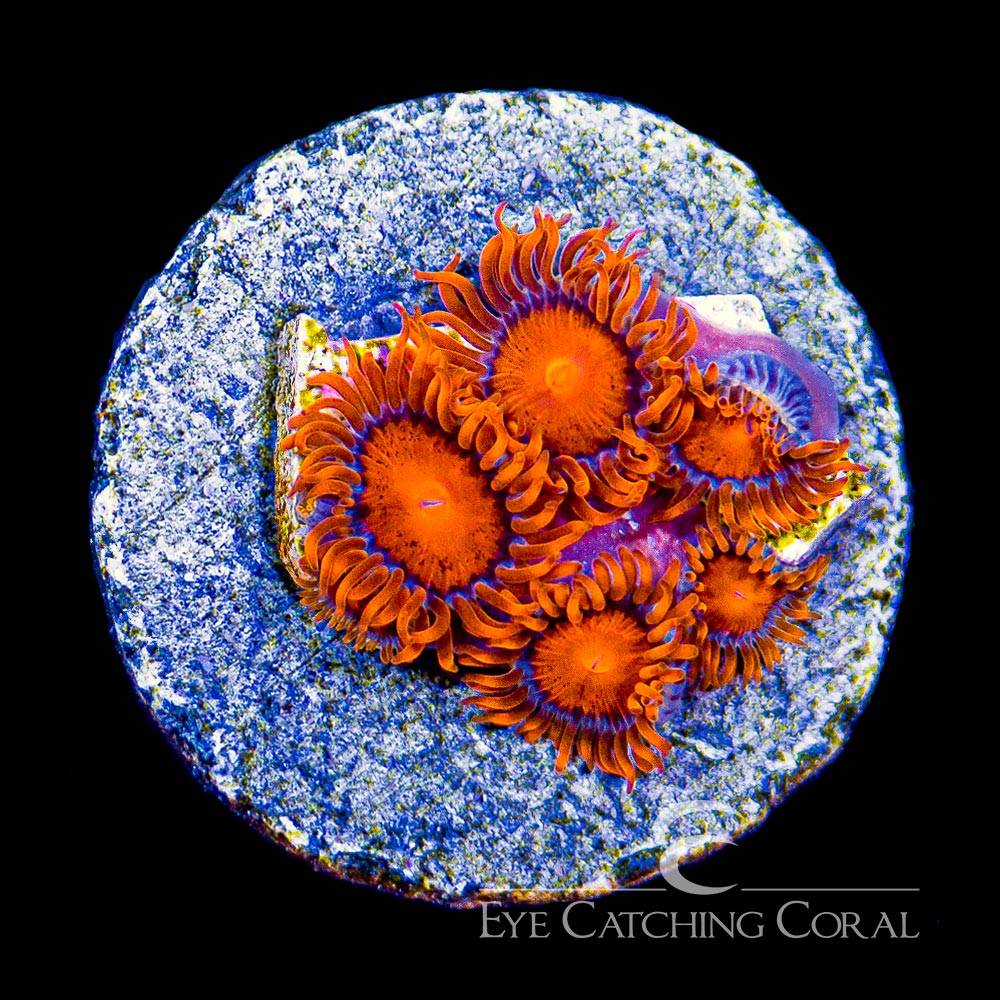
Bam Bam zoas
Zoanthus sp
Same genus
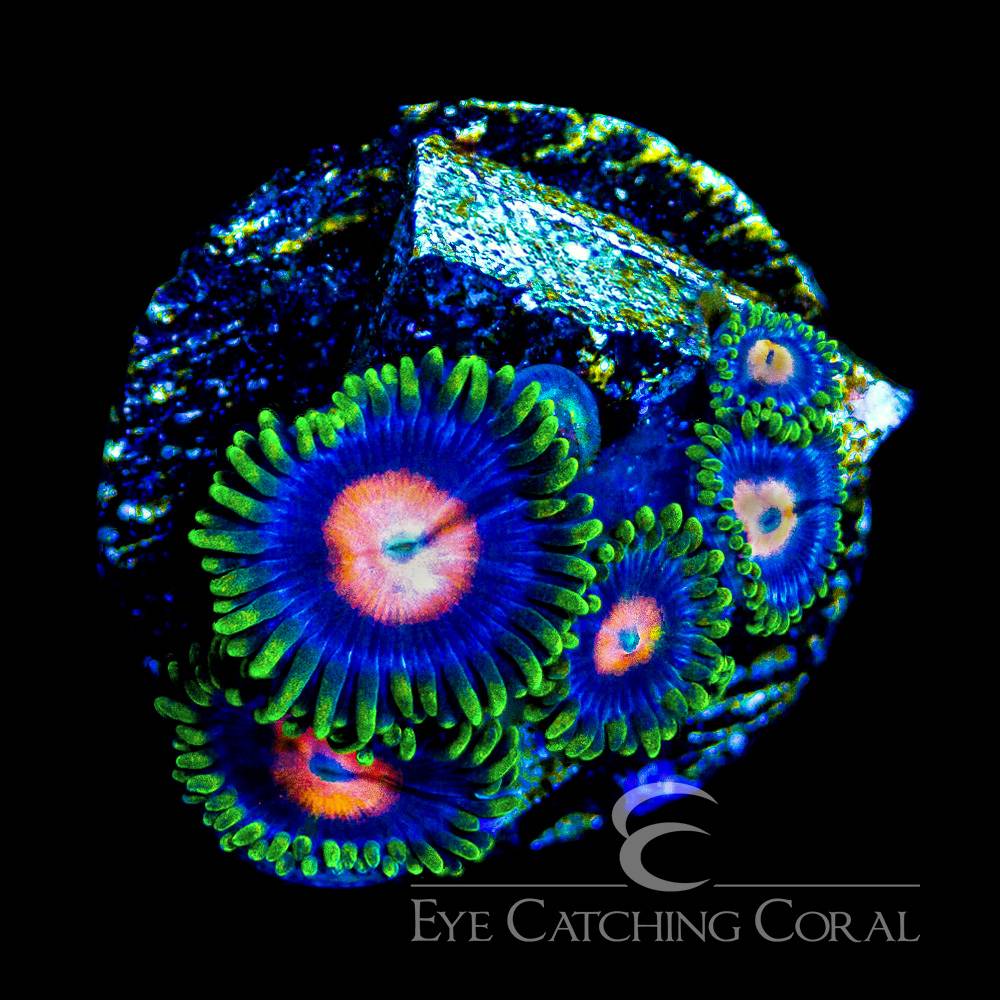
Blow Pops zoas
Zoanthus sp
Same genus
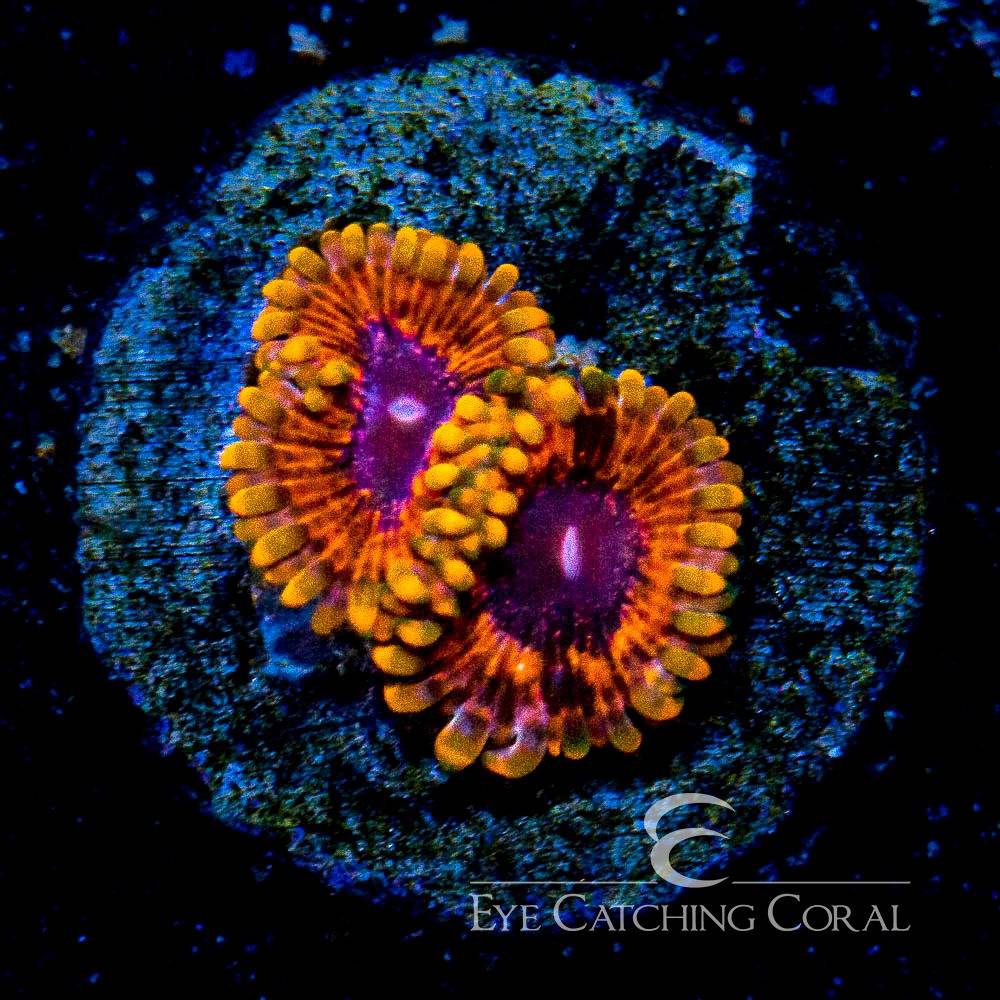
Burning Ember zoas
Zoanthus sp
Same genus
Burning Suns zoas
Zoanthus sp
Same genus
Captain Falcon zoas
Zoanthus sp
Same genus