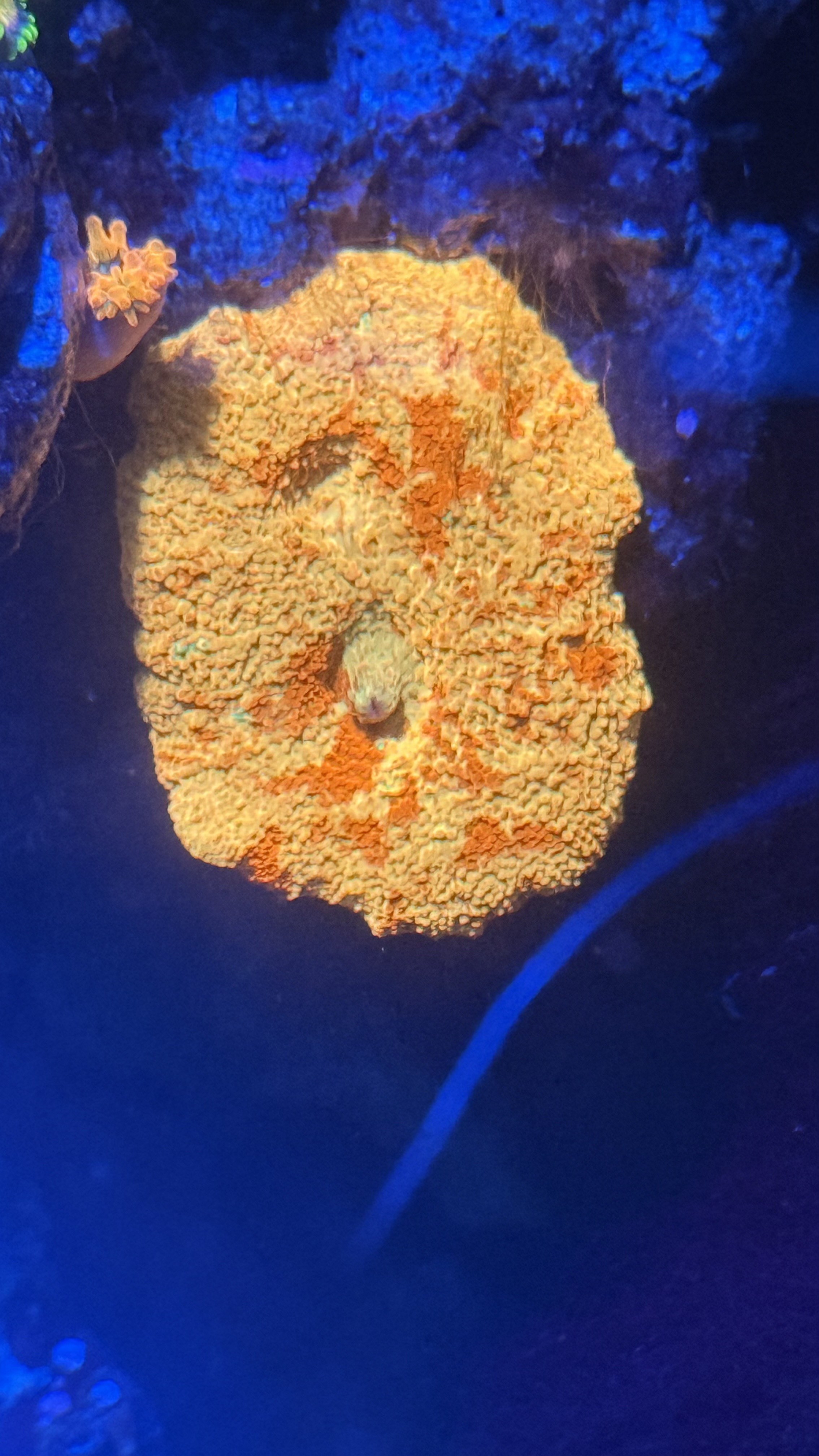
Care facts
- Care
- Intermediate
- Light
- Low
- Flow
- Low
- Place
- Bottom
- Space
- Peaceful
- Growth Rate
- Slow
Gallery
Jawbreaker mushroom is a named Discosoma, listed as Discosoma sp. Discosoma mushrooms are soft corals with a smooth to lightly textured disc on a short stalk, attaching to rock with a fleshy foot. The jawbreaker pattern is prized for bold contrasting color that develops over time, often starting simpler on young mushrooms and gaining spots, streaks, and blended patches as the disc matures. No two discs in a colony tend to look exactly alike once patterning develops.

The entry lists intermediate care, low light, low flow, bottom placement, peaceful behavior, and slow growth. Intermediate fits the value and patience this mushroom calls for rather than any demanding water requirement. Place it low, on rock near the sand bed, in a sheltered pocket. Low light protects color. Strong light can bleach the disc, shrink it through the day, or push it to detach and drift to a shadier spot.
Low flow is equally important. The disc should sit relaxed and flat. Flow that lifts an edge, folds the disc, or keeps it cupped all day is too strong for that spot. A mushroom that dislikes its placement may release its foot and float, so a calm landing zone matters during the first weeks. Many keepers settle new pieces in a low-flow container with rubble until the foot grips firmly.
This coral is peaceful and has no sweeper reach. Spacing is still worth planning because a settled disc expands wide at midday and offspring appear around the mother. Leave room for the disc to open fully without pressing against stinging neighbors, which can damage the mushroom badly. LPS sweepers and aggressive corals should stay well clear of its low, sheltered zone.
Feeding is light. Discosoma may absorb nutrients from the water and can take very fine foods that land on the disc, closing slowly around them. Regular reef feeding is enough in most tanks. Direct attempts with large meaty pieces usually end with the food sliding off or fouling the rock around the base.
Growth is slow for the prized pattern. A mother disc grows, then produces babies from the foot or splits over time. Color development is slower still, and judging a young jawbreaker by its first colors often undervalues it. Stable placement beats frequent repositioning for pattern, because each move can cost weeks of attachment and opening. Keep nutrients present and steady. Ultra-clean water can shrink mushrooms over time, while wild nutrient swings invite algae on the surrounding rock.
Common pitfalls include high light in pursuit of brighter color, strong flow on a new frag, and handling the foot repeatedly. Give a detached mushroom calm rubble and time rather than daily intervention.
Field notes — what keepers report
- Pattern development gets the most divided reports. Some keepers describe young discs gaining new spots and streaks as they grow, while others describe babies that stay plain for a long period before pattern appears. The shared advice is patience, because reports judge mature pattern over many months rather than weeks.
- Light reports also split in emphasis. Keepers in shaded, low placements describe deep color and wide, flat discs, while keepers who raised the coral higher describe paler discs that moved or detached. Both sides describe low placement as the safer starting point for a new piece.
- Attachment reports vary. Some keepers describe a foot gripping rubble within days in a calm spot, while others describe repeated drifting until the mushroom was sheltered from flow and fish traffic. Keepers agree that chasing and regluing a loose mushroom daily makes settling slower.
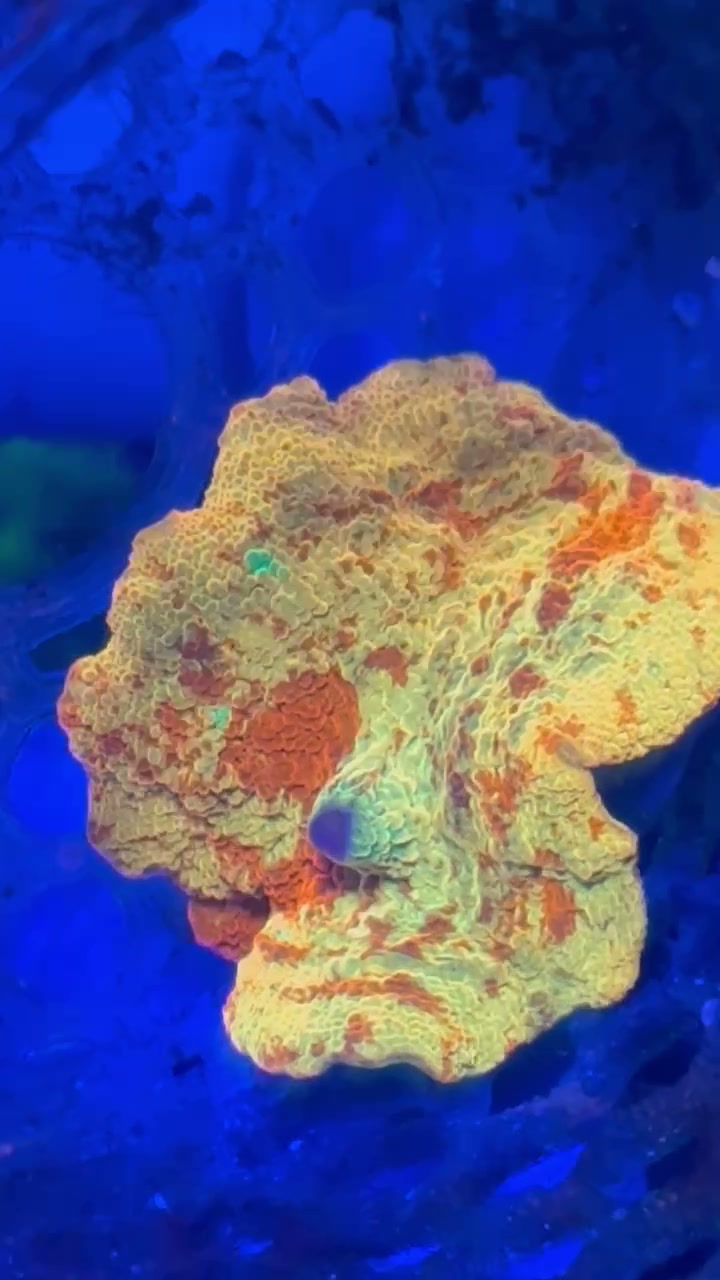

Field Notes
Related species
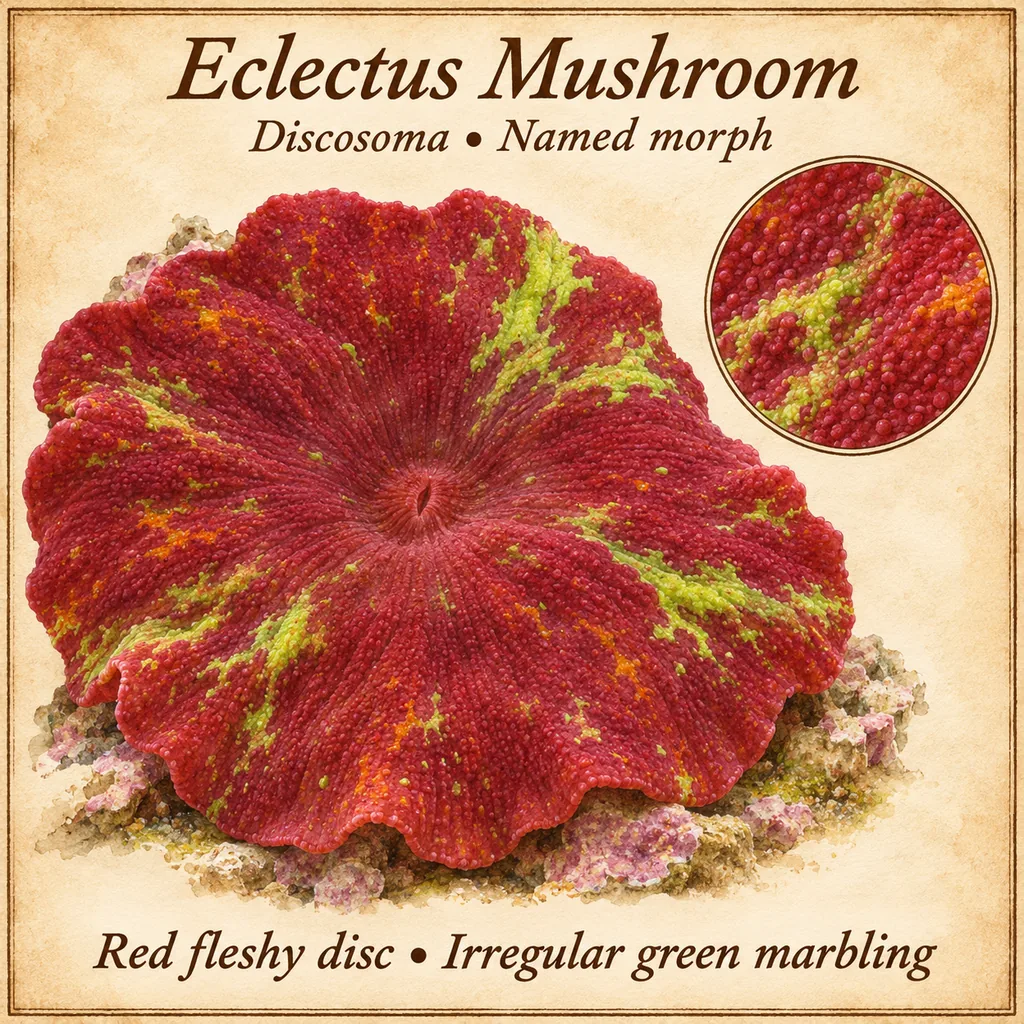
Eclectus Mushroom
Discosoma sp.
Same genus
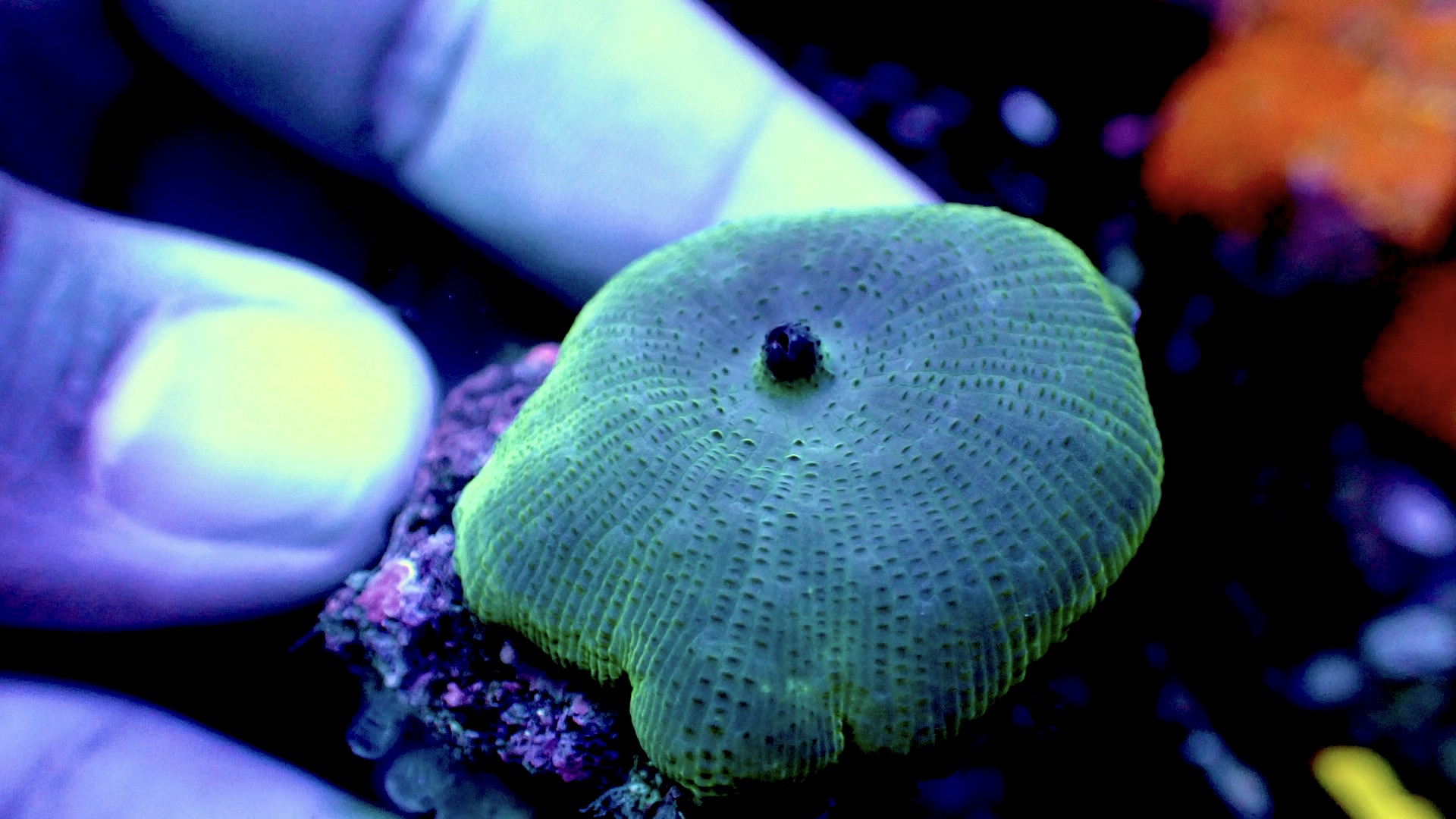
Blue discosoma mushroom
Discosoma sp
Same genus

Neon green hairy mushroom
Discosoma sp
Same genus

Red bumpy discosoma mushroom
Discosoma sp
Same genus

Scarlet Red Discosoma Mushroom
Discosoma sp
Same genus

St Thomas mushroom
Discosoma sp
Same genus
Stratosphere
Zoanthus sp
Similar care · Soft
OG bounce mushroom
Rhodactus sp
Similar care · Soft