

St Thomas mushroom
Discosoma sp
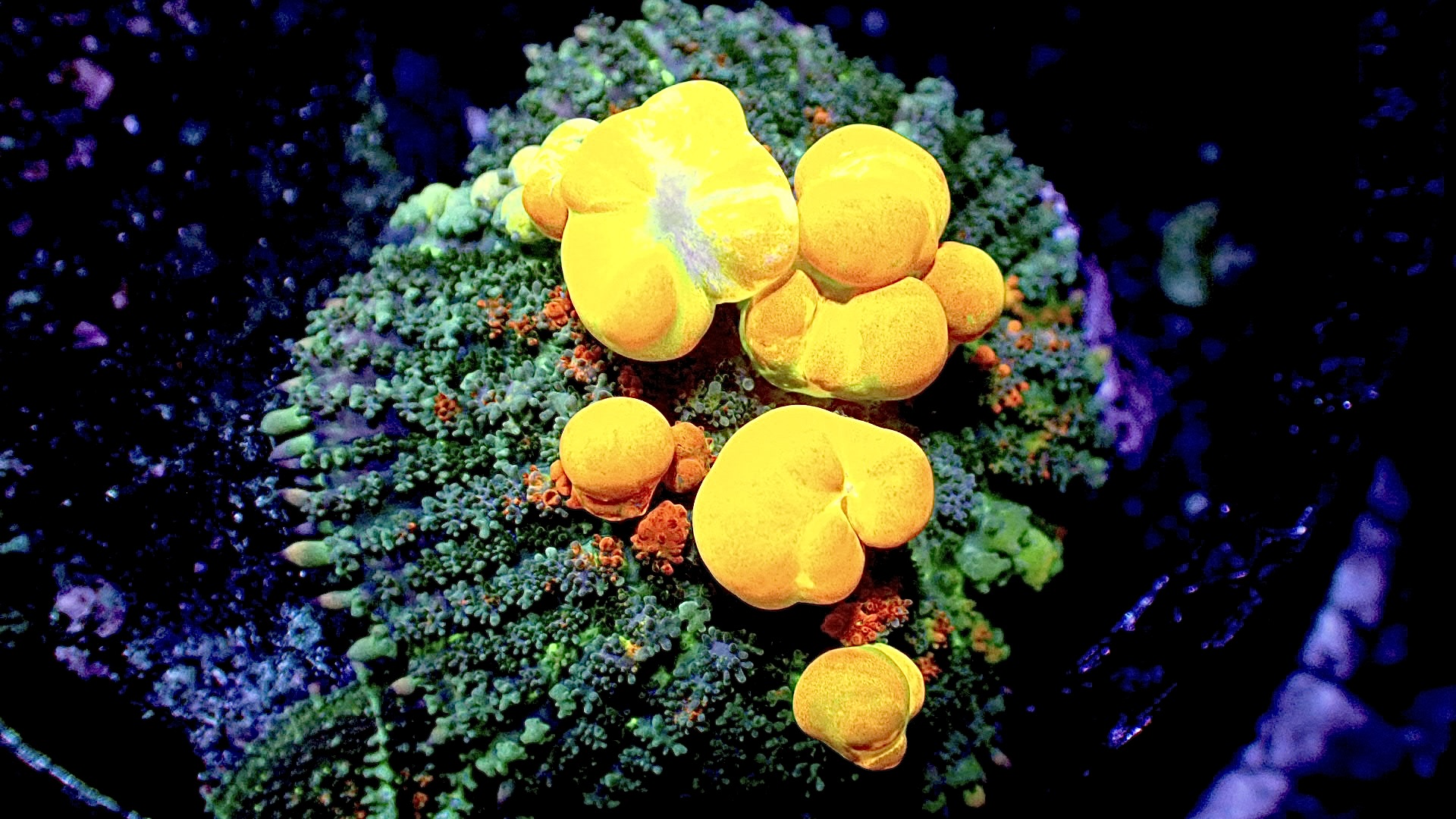
St Thomas mushroom is a Caribbean mushroom coral, listed as Discosoma sp. and known in the hobby for the St Thomas form of Discosoma, sometimes traded as Rhodactis sanctithomae. The disc attaches to rock by a foot and carries a surface of small, bubble-like vesicles that give it a bumpy, textured look quite different from a smooth discosoma. Discs can show green, blue, orange, or mixed tones across the bubbles, and a settled mushroom sits low and wide, hugging the rock with the vesicles held evenly across the face.

The original record describes this entry in one line: mushroom morph, low light and low flow. The full entry lists beginner care, low light, low flow, bottom placement, peaceful behavior, and moderate growth. Place it low, on rock near the sand bed, in a sheltered pocket. Low light at that level suits the vesicles and holds color well. Strong light can shrink the disc through the day or push the mushroom to detach and drift toward shade, so raise a settled piece slowly and only in small steps if it stretches or fades.
Low flow keeps the disc seated. Flow that lifts an edge, folds the face, or keeps it cupped is too strong for that spot. A mushroom that dislikes its placement may release its foot and float, so a calm landing zone matters in the first weeks. Many keepers settle a new St Thomas in a low-flow container with rubble until the foot grips firmly, then place the rubble where it will stay, because a loose mushroom in open water often lands against a coral it can harm or be harmed by.
This coral is peaceful in sting and carries no sweeper reach. Spacing still deserves thought. A settled disc expands wide, mushrooms can irritate a delicate neighbor they press directly against, and a colony will spread across nearby rock over time. Leave a clear margin around the disc, keep LPS sweepers well away from its sheltered zone, and choose rock whose boundaries suit a mushroom that will eventually share the surface with its own babies.
Feeding is light and indirect. The mushroom may absorb nutrients from the water and can take very fine foods that settle among the vesicles, closing slowly around them. Regular reef feeding is enough in most tanks. Large meaty pieces usually slide off or foul the rock around the base, and repeated handling to offer food stresses the foot and delays attachment.
Growth is moderate for a mushroom. A mother disc grows, then produces babies from the foot or splits, and a settled group can cover a rock face over a season. Stable placement beats frequent repositioning, because each move restarts the attachment process. Keep nutrients present and steady. Very clean water can shrink mushrooms over time, while heavy swings invite algae across the rock the colony is trying to claim.
Common pitfalls include high light in pursuit of brighter bubbles, strong flow on a new piece, and chasing a drifting mushroom around the tank daily. Give it calm rubble, shade, and time to grip, then leave the rock undisturbed while the colony spreads.
Field notes — what keepers report
- Attachment reports divide the first weeks. Some keepers describe a foot gripping rubble within days in a calm, shaded tray, while others describe repeated drifting after moves or flow changes. The shared advice is a sheltered rubble container and patience before any display placement.
- Color reports vary with light spectrum. Keepers under blue-heavy light describe strong contrast across the vesicles, while keepers under whiter light describe softer, more blended tones on the same type of disc. Keepers treat the difference mainly as presentation when the disc sits wide and flat.
- Spread reports lean steady once settled. Keepers describe babies appearing around the mother and the group claiming nearby rock over months, with faster spread in tanks where the original rock was left undisturbed. Reports agree that a colony moved often spreads more slowly than one left alone.
Field Notes
Related species
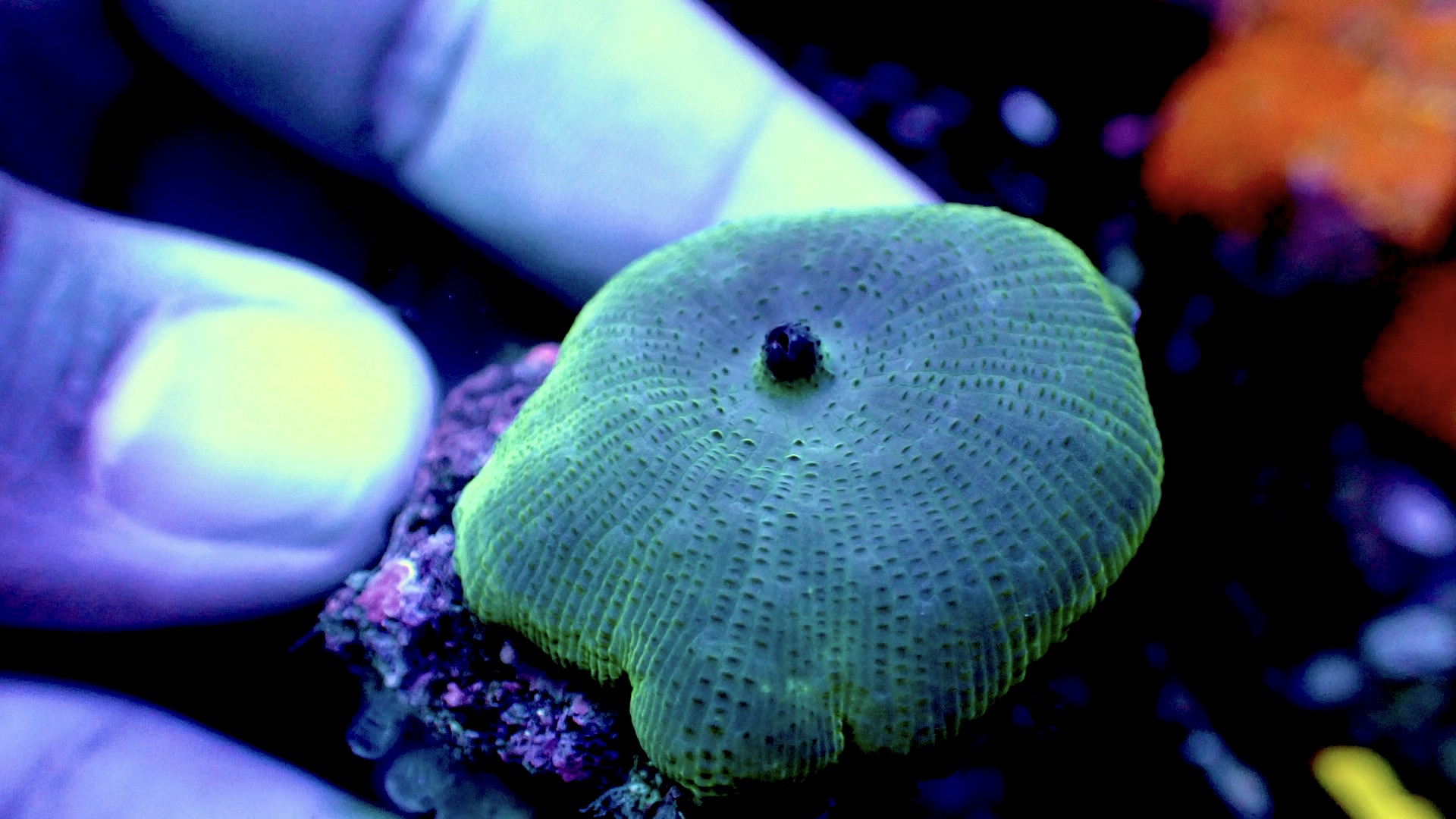
Blue discosoma mushroom
Discosoma sp

Neon green hairy mushroom
Discosoma sp

Superman rhodactus mushroom
Rhodactus sp
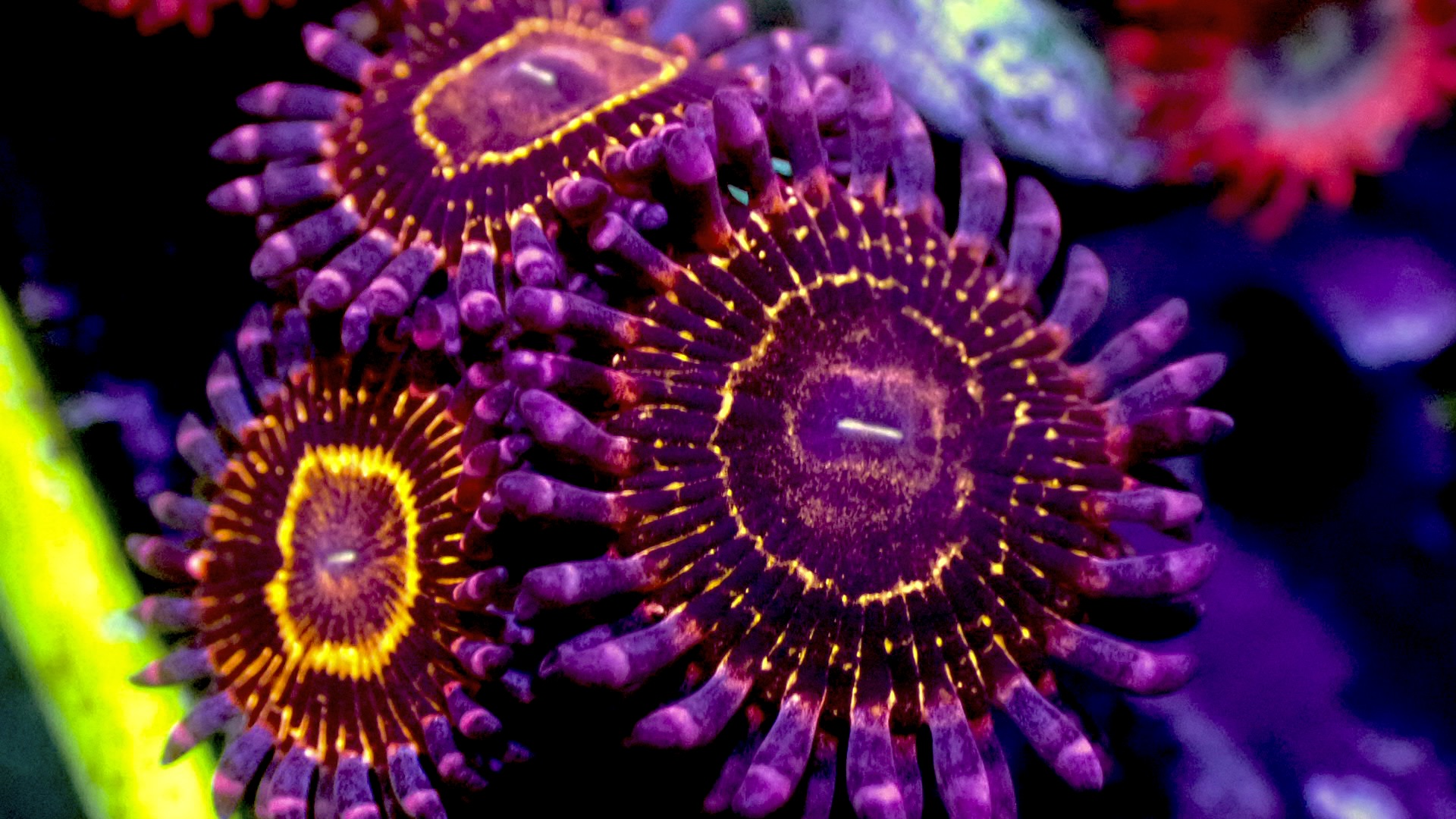
Stratosphere
Zoanthus sp
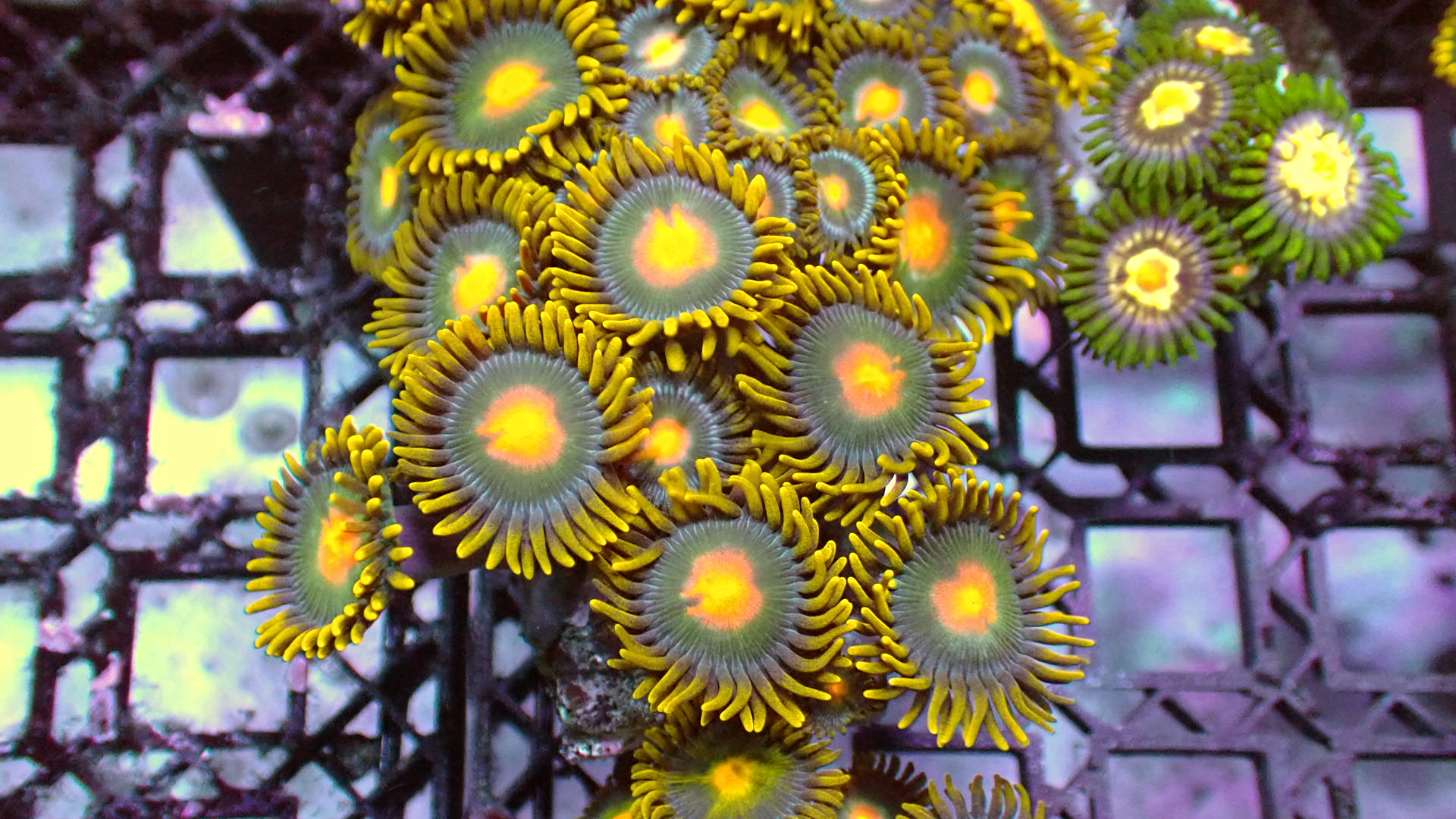
Green Bay Packers zoanthids
Zoanthus sp
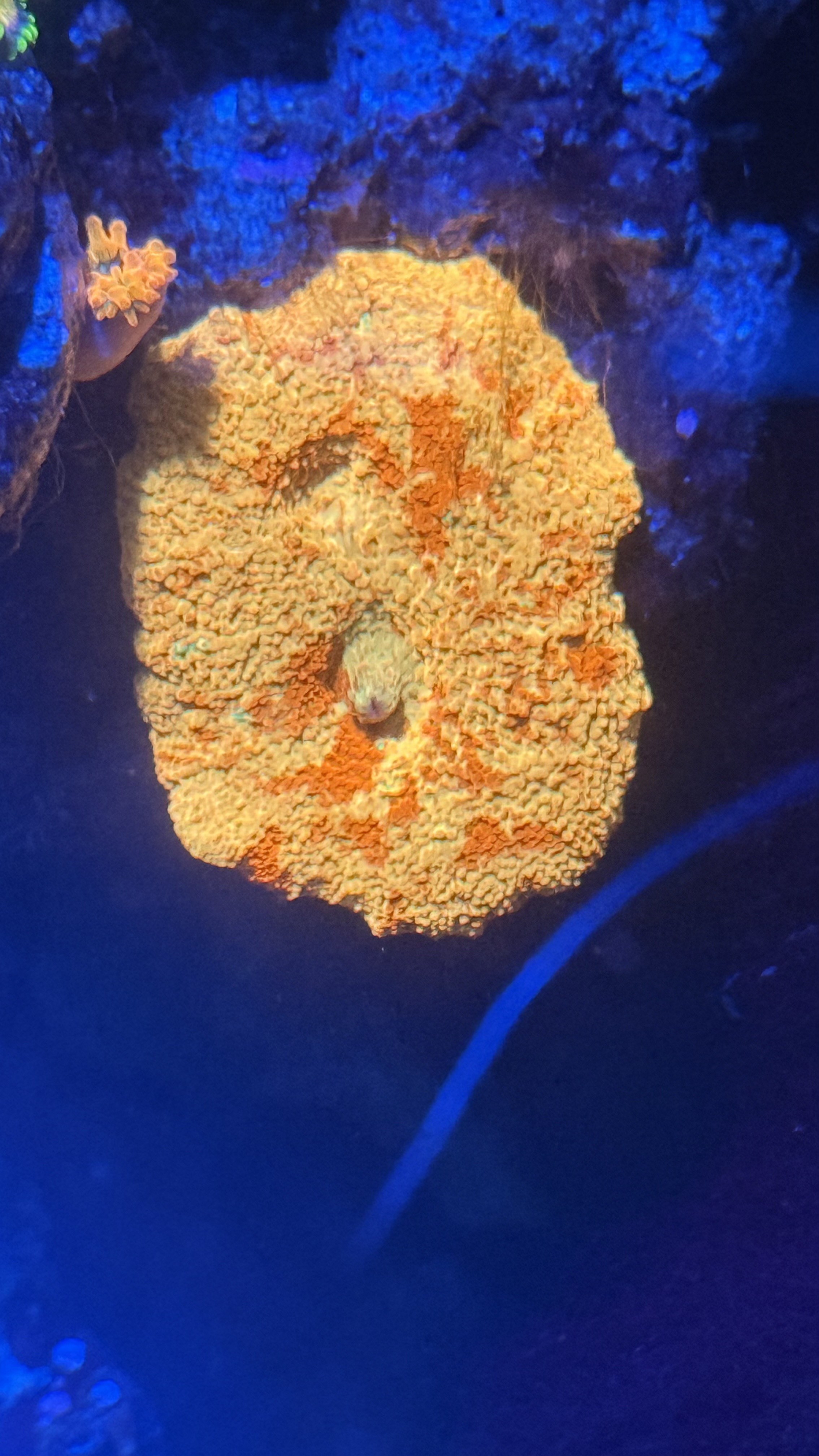
Jawbreaker mushroom
Discosoma sp.

Laser lemon zoanthids
Zoanthus sp.
OG bounce mushroom
Rhodactus sp
Recommended from the shop


Love this species? No tank needed.
Reef art from the shop — for the wall, not the tank.


Get notified when Reef To Go has St Thomas mushroom in stock or up for auction. One email when it's in — no spam.