Stratosphere
Zoanthus sp
Also known as: Stratospheres zoas, Stratospheres, Stratosphere zoas
 ▶ Video
Care facts
- Care
- Intermediate
- Light
- Low
- Flow
- Low
- Place
- Bottom
- Space
- Peaceful
- Growth Rate
- Slow
Palytoxin safety
Some zoanthids and palythoas can contain a potent toxin. Wear sturdy waterproof gloves and eye protection, minimize handling, and keep colonies submerged when possible. Never boil, steam, pressure-wash or scrub colonized rock under running water. Keep other people and pets away during handling. If exposure is suspected, seek urgent medical advice and tell the clinician about possible palytoxin exposure.
Sources: CDC: palytoxin exposure · OATA: avoiding palytoxin poisoning
Gallery
Videos
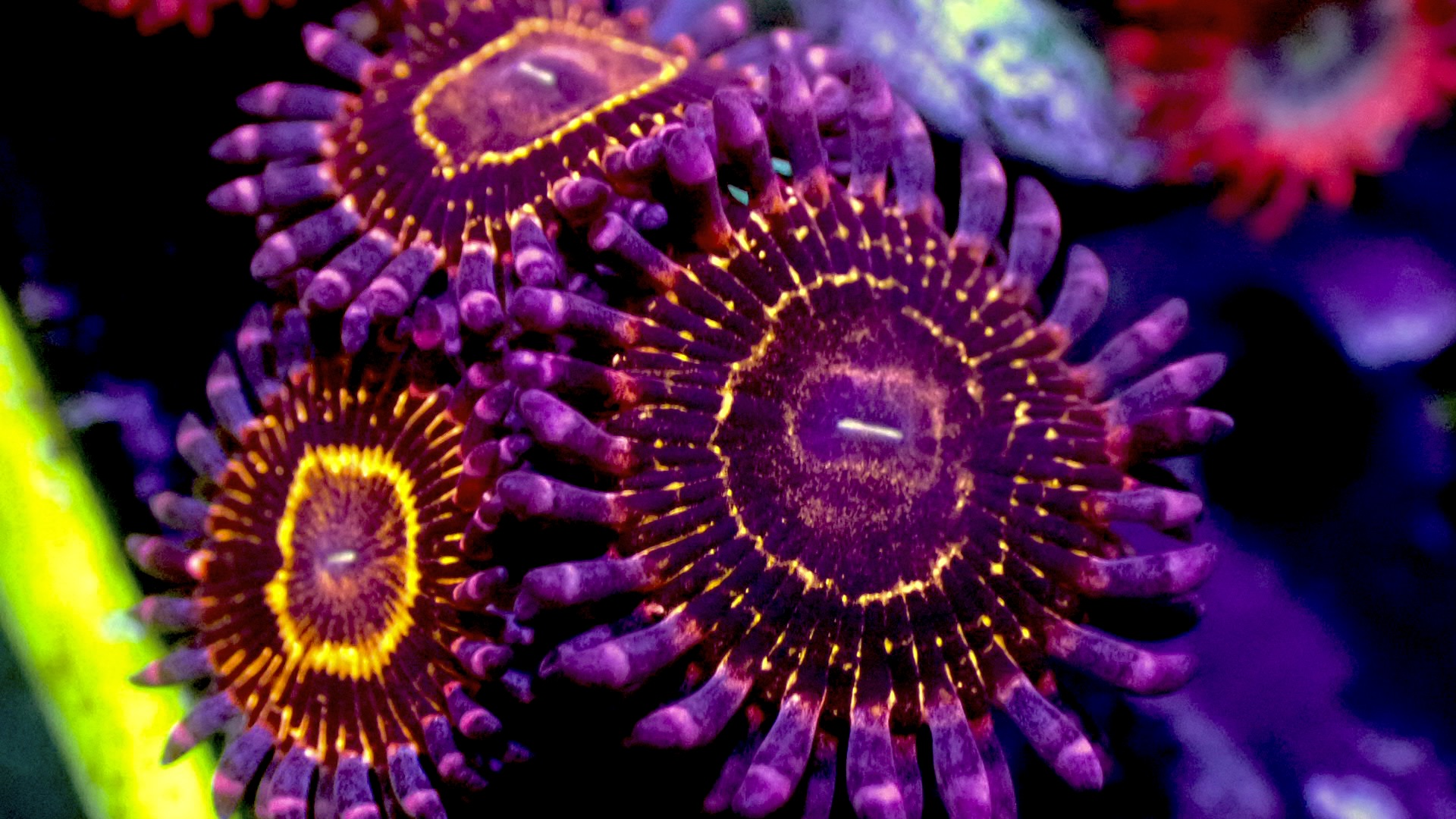
Stratosphere is a named Zoanthus morph, also traded as Stratospheres and Stratosphere zoas. Named zoanthid morphs are identified by their polyp pattern and color under blue light, and Stratosphere is kept for the contrast its polyps show once a colony fills in. Single frags can look modest at first. The character of the morph reads best as a mat of polyps viewed together.

The entry lists low light, low flow, bottom placement, intermediate difficulty, peaceful aggression, and slow growth. Start it low on rockwork or on a frag rack near the bottom, then raise it slowly only if the polyps stretch or lose color. Moderate, steady conditions matter more than a single perfect spot. Polyps that stay closed for days after a move usually need time and stable water before another change is made.
Spacing deserves planning even with a peaceful rating. A zoanthid mat spreads across whatever rock it touches and can grow over slower neighbors. Give the frag its own rock or an island where the spread stays contained and easy to frag back. Keeping named morphs on separate rocks also keeps labels straight, since similar zoanthids grown into one mixed mat become hard to separate and hard to identify later.
Handle Stratosphere with full zoanthid caution. Zoanthid mucus can contain palytoxin. Wear gloves when fragging or handling, keep the coral away from open cuts, wash hands and tools well after any work, and never boil, steam, or pressure-wash rock that carries zoanthids. Work outside the tank on a tray, keep pets and children clear of the work area, and dispose of fragging waste where nothing can get into it.
Growth is rated slow, so patience is part of the care plan. New polyps bud from the edge of the mat once the frag has settled and encrusted its plug or rock. A small broadcast or target feeding of fine coral food can support growth, though clean water and stable alkalinity matter more day to day. Common pitfalls are moving the frag repeatedly while chasing color, letting algae or detritus settle in a low-flow spot and smother the mat, and letting a fast neighboring zoanthid overgrow a slower named morph.
Field notes — what keepers report
- Keeper reports on named zoanthids stress how much appearance shifts with lighting. Polyps described as vivid under blue-heavy light can look muted under whiter light, and keepers advise judging a new frag after it has had weeks to settle before deciding the color is off. Reports differ on whether higher light improves this type of morph or washes it out, which is why gradual moves are the common recommendation.
- Slow starts come up often. Keepers describe high-value zoanthid frags sitting with no new polyps for long stretches, then budding steadily once the mat fully encrusts. Others report steadier growth from the start in tanks with regular feeding. A closed or still frag is widely treated as a reason to check pests and stability first, and to leave the frag in place rather than moving it repeatedly.
- Safety warnings circulate in nearly every zoanthid discussion. Keepers who frag without gloves share stories that push the community toward eye protection and gloves as routine, and experienced keepers repeat the rule about never using hot water or steam on zoanthid rock when cleaning equipment or aquascape.


Field Notes
Related species
Exosphere zoanthids
Zoanthus sp
Same genus
Blue Hornet
Zoanthus sp.
Same genus
Green Bay Packers zoanthids
Zoanthus sp
Same genus
Green Stardust People Eater
Zoanthus sp.
Same genus
Laser lemon zoanthids
Zoanthus sp.
Same genus
Mary Jane
Zoanthus sp.
Same genus
Purple Hornet
Zoanthus sp.
Same genus
Salted agave zoanthids
Zoanthus sp
Same genus