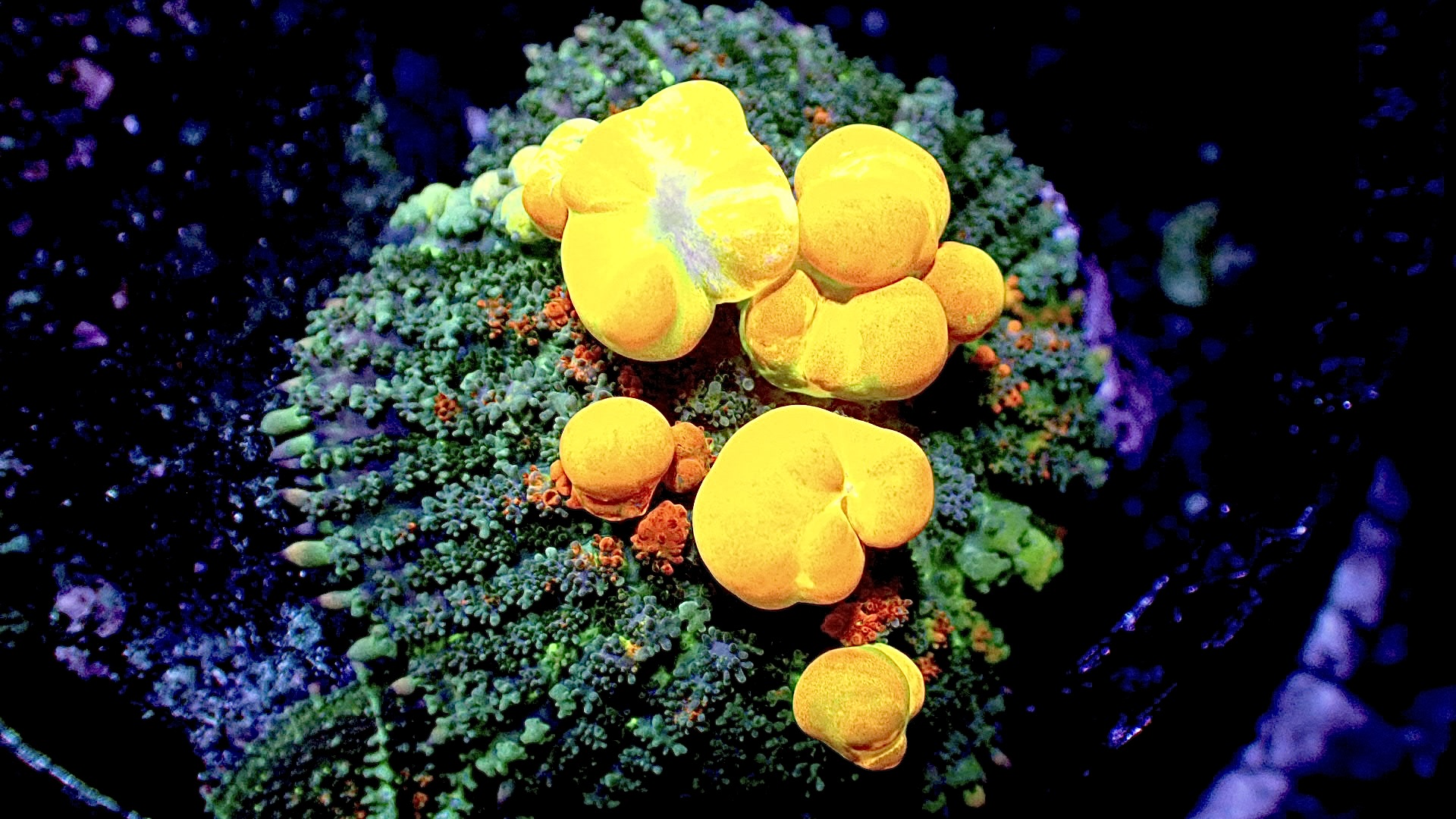
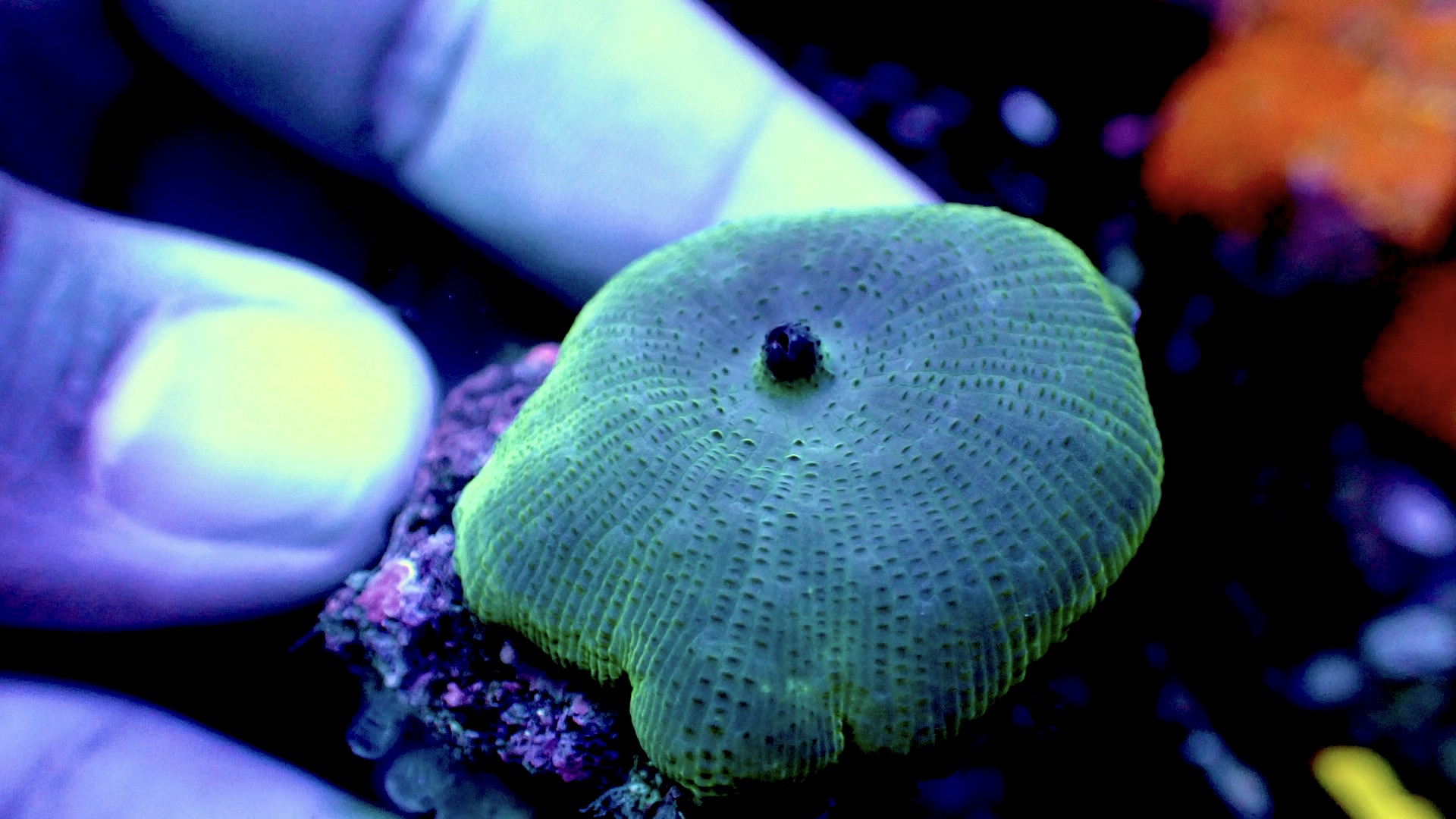
OG bounce mushroom
Rhodactus sp
Care facts
- Care
- Intermediate
- Light
- Low
- Flow
- Low
- Place
- Bottom
- Space
- Peaceful
- Growth Rate
- Slow
Gallery
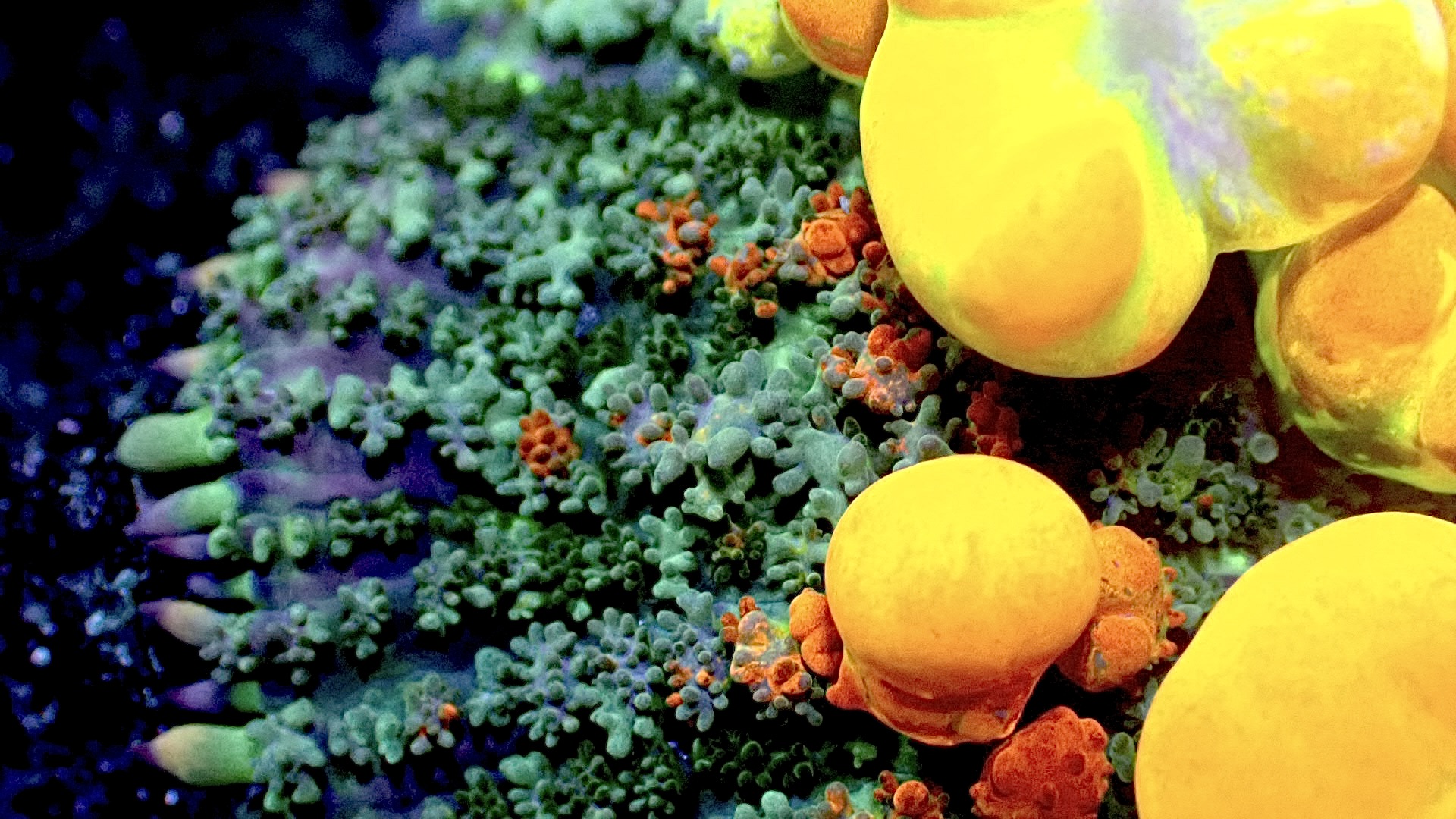
OG Bounce is a named Rhodactis mushroom known for the large, raised vesicles that form across its surface. Those bubbles give bounce mushrooms their name and separate them from flatter Rhodactis types. Color and bubble size vary from piece to piece, and a mushroom that arrives looking fairly flat can develop stronger vesicles as it settles into stable light and flow.
Care basics
Place it low in the tank. The entry lists low light, low flow, and bottom placement, with intermediate difficulty. A quiet spot on the sand bed or on low rockwork suits it well. Strong flow can fold the mushroom over and keep it from opening fully, while strong light can cause it to shrink, move, or lose color. Make small changes and give it weeks to respond, because mushrooms show stress slowly and recover slowly.
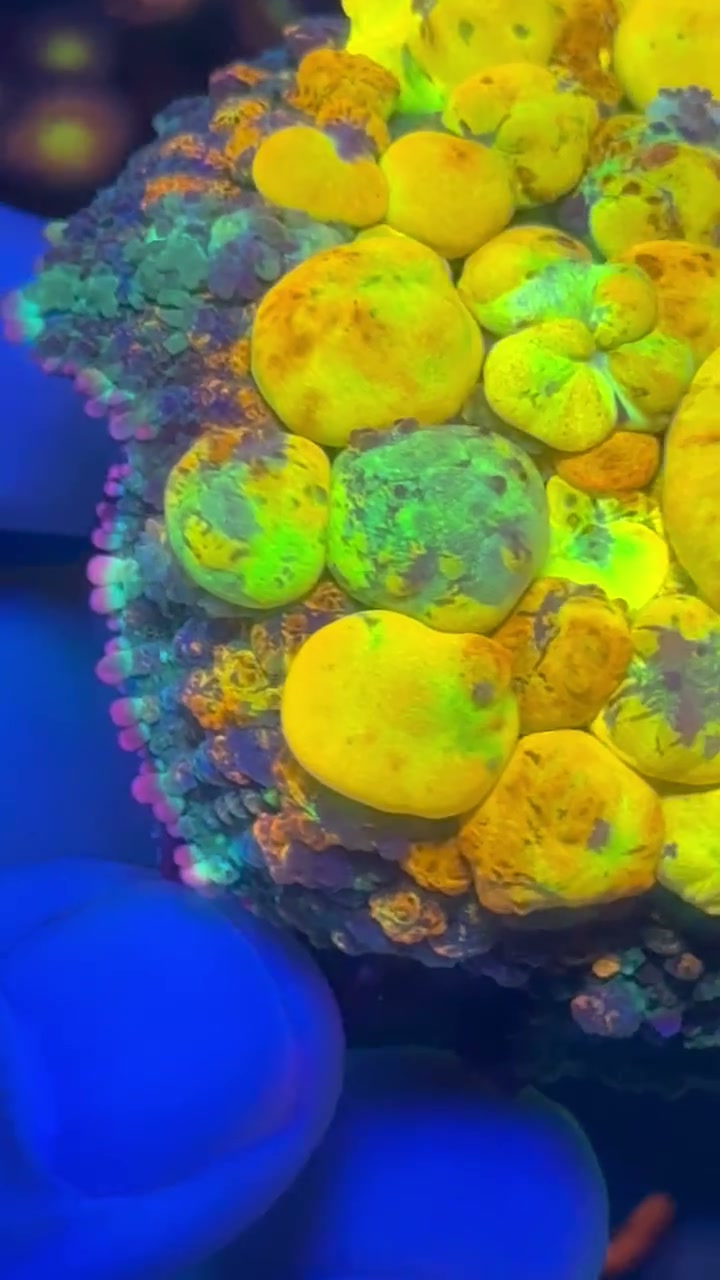
Keep the mushroom where it can expand without pressing against neighboring corals. The entry lists peaceful aggression and slow growth. Peaceful behavior still leaves room for contact problems, since an expanded mushroom covers more ground than its foot suggests. Leave clear space around the base, and watch for the mushroom creeping toward nearby frags as it grows. Mushrooms can also detach and drift when they dislike a spot, so check behind rockwork if a piece goes missing.
Feeding and upkeep
Feeding is optional and should stay light. A small amount of fine meaty coral food placed near the center once in a while can be taken in, though many mushrooms rely mainly on light and dissolved nutrients. Overfeeding a low-flow corner fouls the water around the mushroom and invites algae on its surface. A gentle turkey-baster puff now and then clears settled detritus without blasting the tissue.
Growth and splitting
Growth is slow by the entry rating. A settled mushroom expands, thickens, and eventually splits or buds a daughter mushroom at the foot. Frequent moving resets that process. The most common pitfalls are chasing bubble size with constant light changes, placing the mushroom in flow meant for SPS, and crowding it against corals that sting. Stable, dim, and quiet conditions do more for this mushroom than frequent adjustment.
Field notes — what keepers report
- Bubble size is the most debated point. Keepers report vesicles swelling under one lighting setup and flattening under another, with no single schedule that works for every tank. Some keepers see the best bubbles under gentle blue light, while others report the same piece bubbling more after a move to a slightly brighter spot, so gradual moves and long observation periods are the advice that comes up most often.
- Detachment stories are common. Keepers describe mushrooms letting go and drifting after a flow change or a nearby coral dispute, then reattaching in a shaded corner. The shared advice is to recover a loose mushroom into a low-flow container with rubble until it grips again, rather than gluing the foot down hard.
- Feeding reports are mixed. Some keepers credit occasional target feeding with faster splitting, while others report no visible difference and warn that uneaten food in a quiet corner degrades water quality. Both sides agree the mushroom holds its health without direct feeding when light and stability are right.
Field Notes
Related species
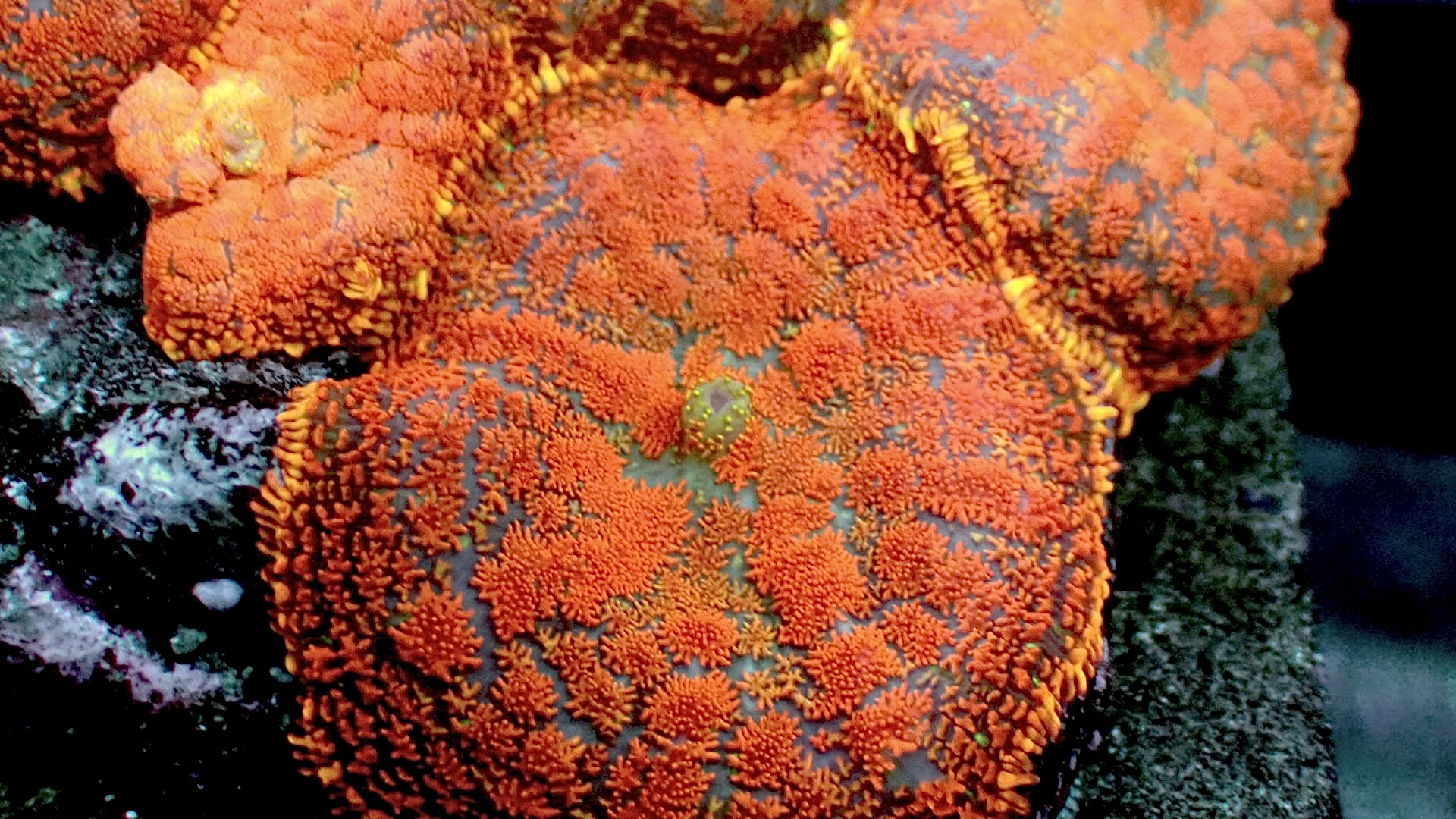
Superman rhodactus mushroom
Rhodactus sp
Same genus
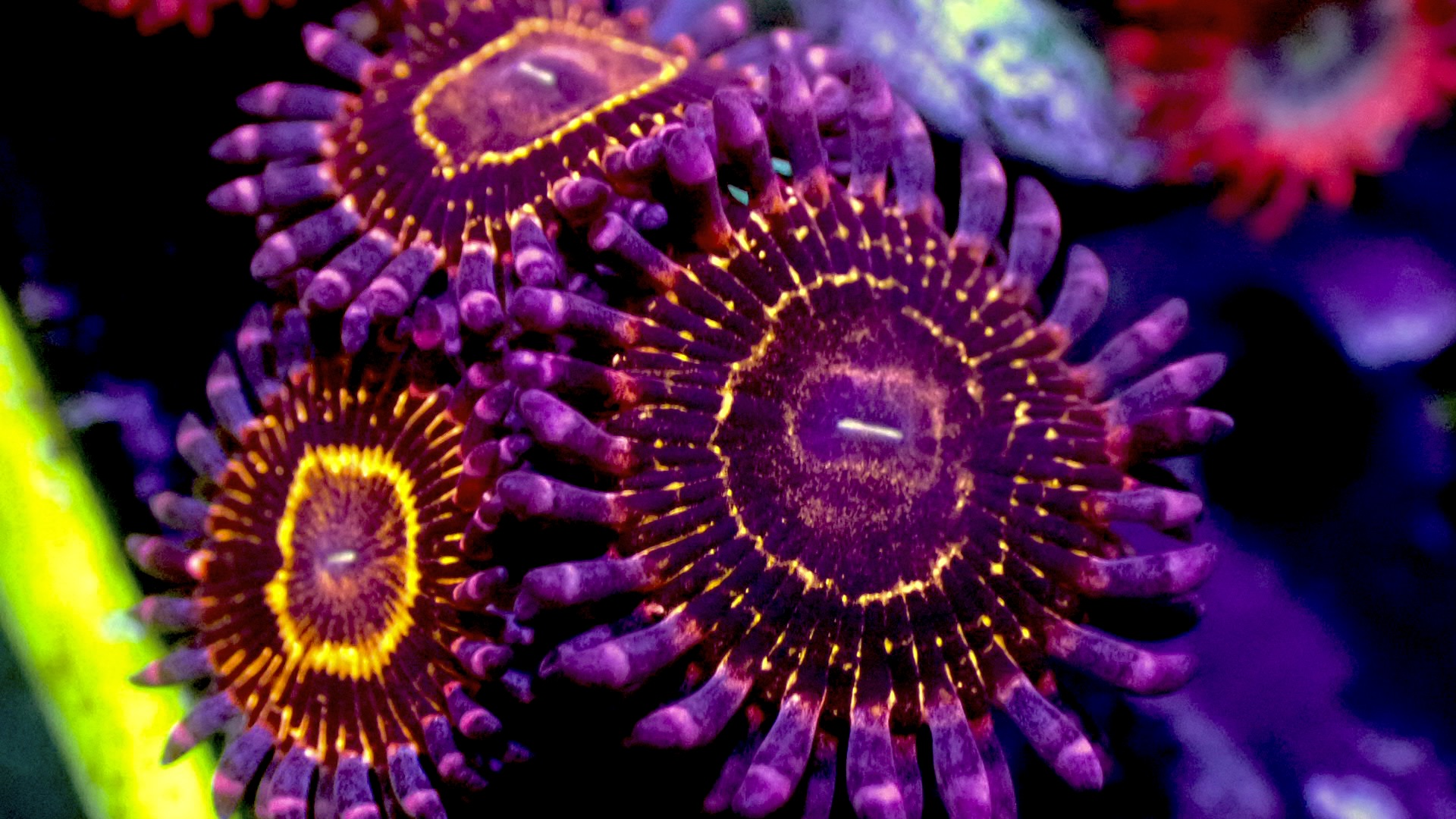
Stratosphere
Zoanthus sp
Similar care · Soft
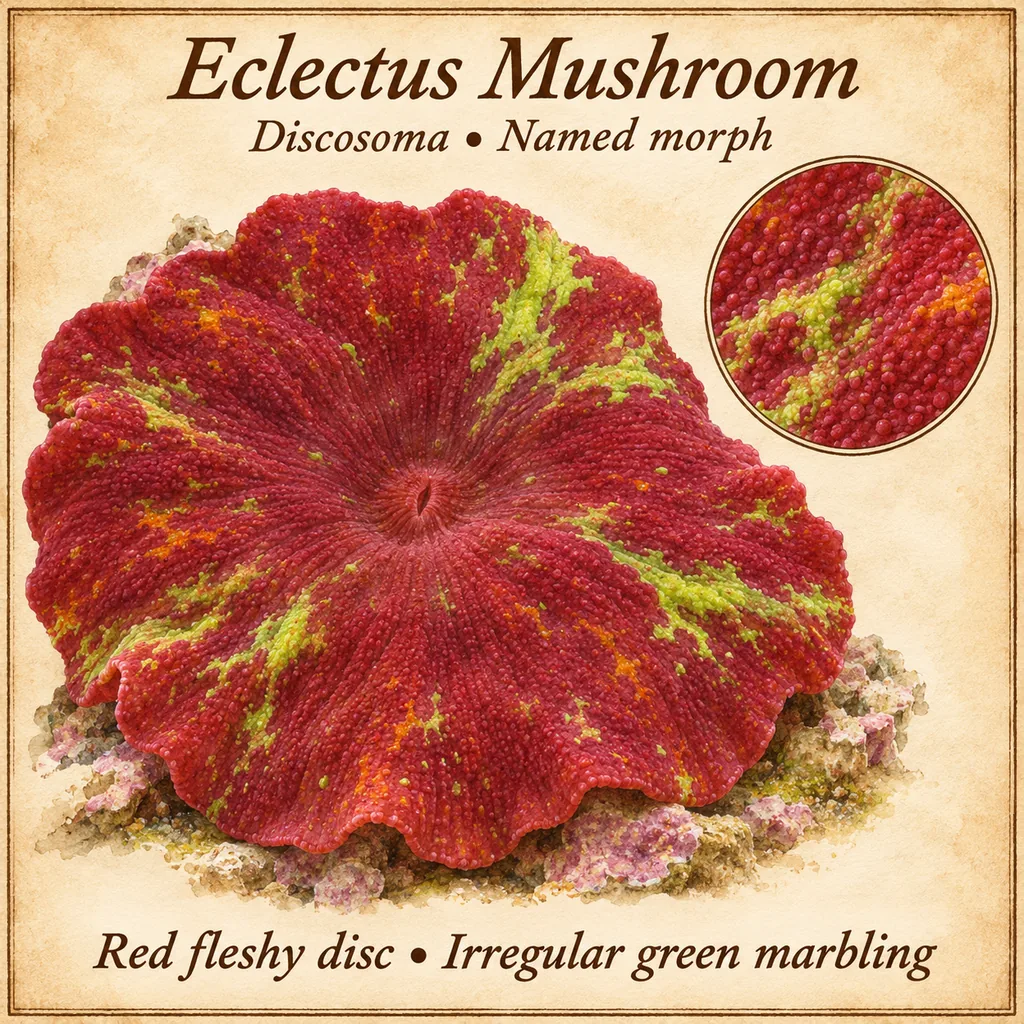
Eclectus Mushroom
Discosoma sp.
Similar care · Soft
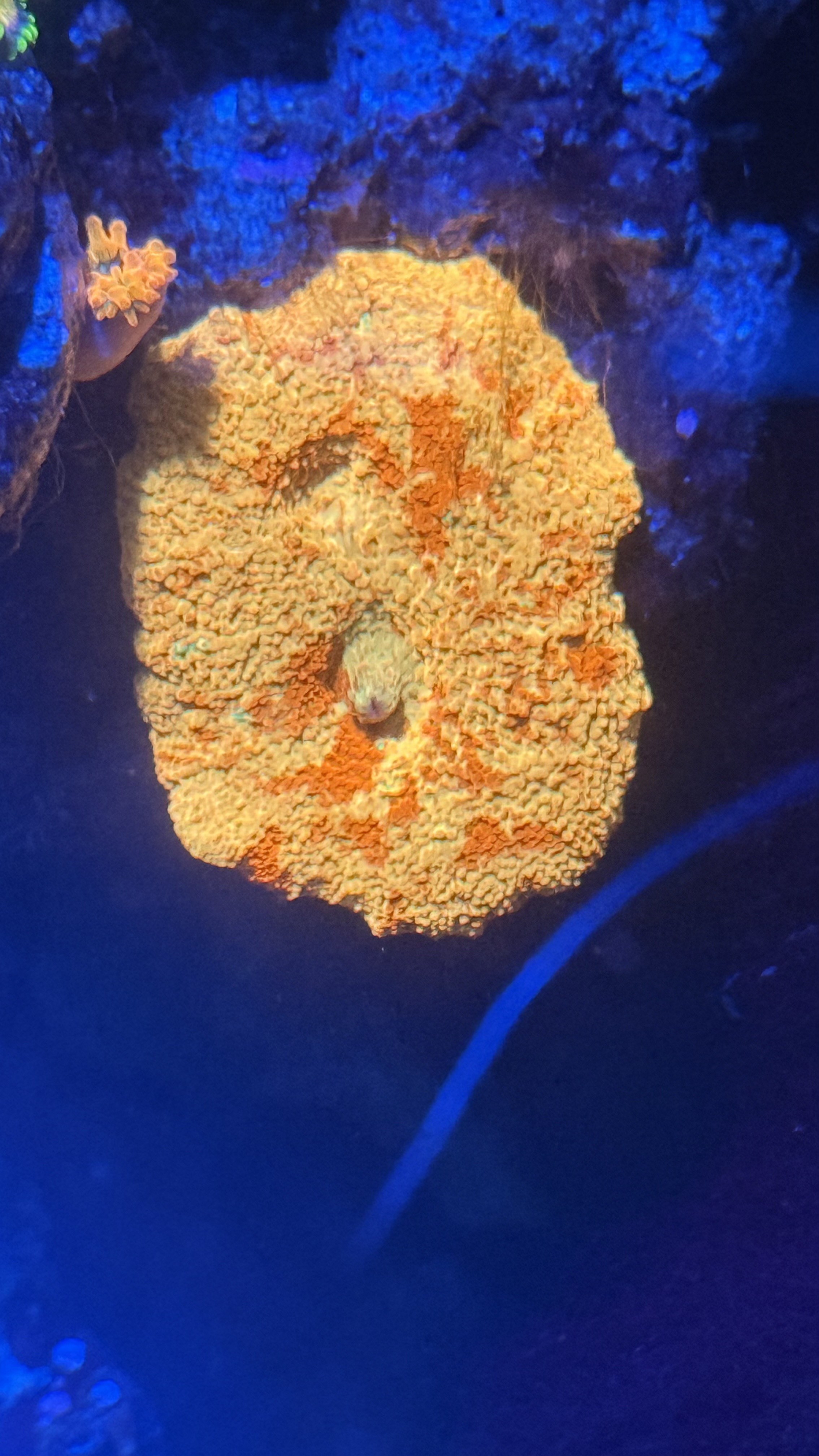
Jawbreaker mushroom
Discosoma sp.
Similar care · Soft
Sunkist Bounce Mushroom
Rhodactis sp.
Similar care · Soft
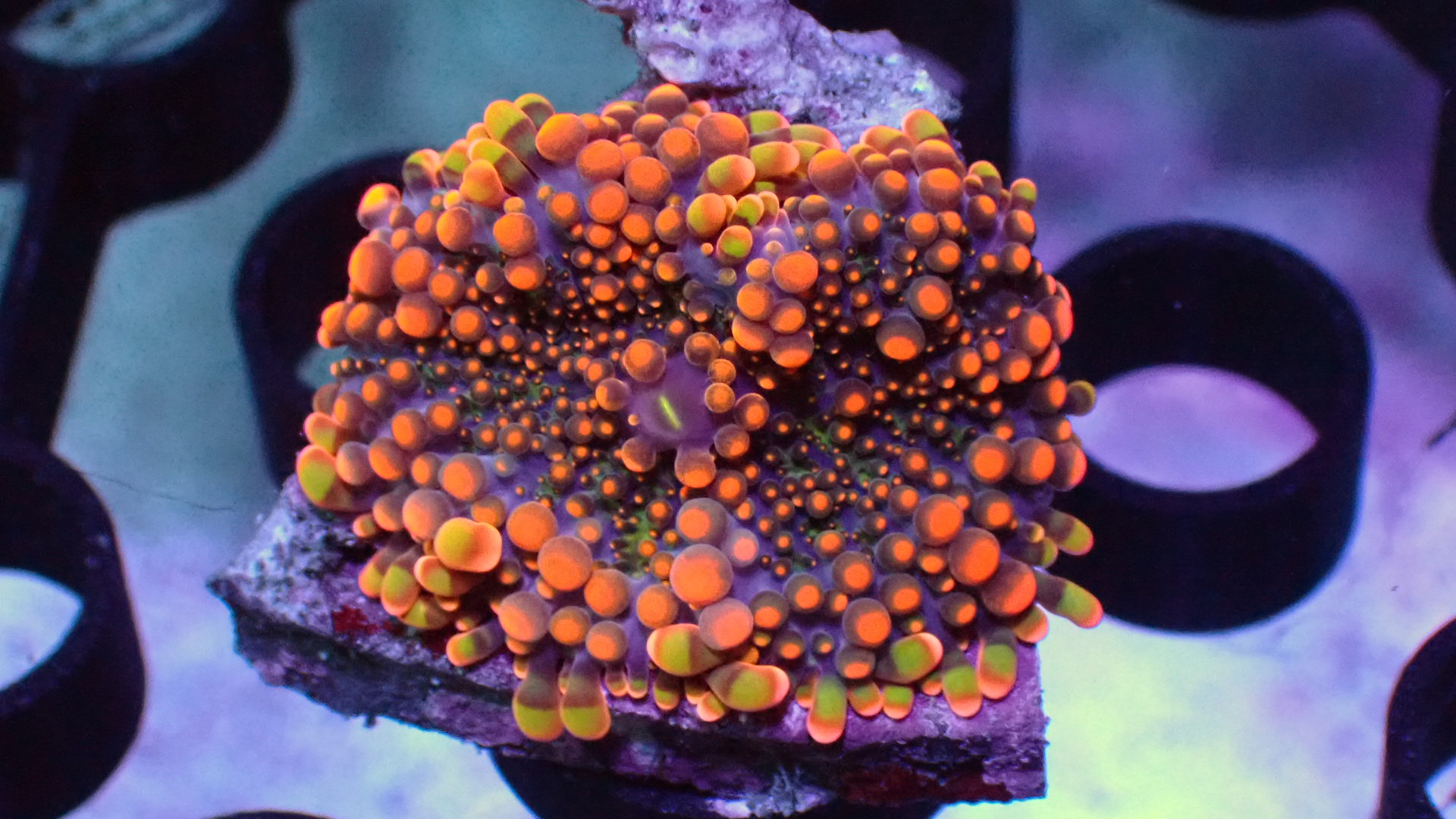
King Kong Yuma mushroom
Ricordea yuma
Similar care · Soft

Acid Galaxy Yuma Ricordea
Similar care · Soft
Blue discosoma mushroom
Discosoma sp
Similar care · Soft