Nasuta Acropora
Acropora nasuta

Ewa Barska · CC BY-SA 3.0 · source
Gallery
This coral has a fish-sized emergency crew. When a certain seaweed brushes Nasuta Acropora in the wild, tiny gobies slip out of its branches and trim it back. In a reef tank, the job falls to you. Give this small-polyp stony coral bright light, broad moving water and enough room to grow into a thicket.
History of the coral
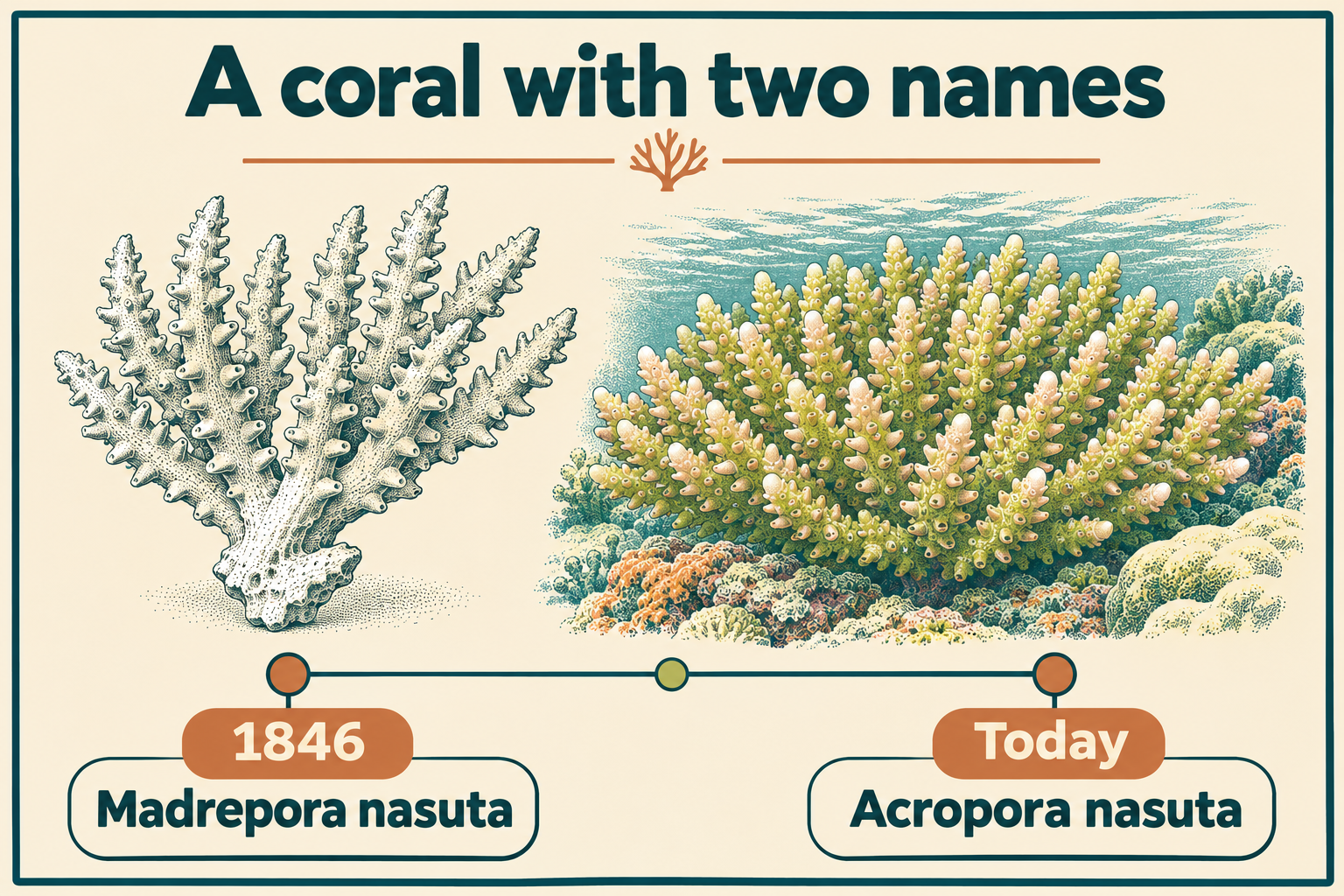
1. The name in the old sketchbook. In 1846, James Dwight Dana described this coral from Fiji as Madrepora nasuta. Today it goes by Acropora nasuta. Look at the tiny skeleton cups on the sides of the branches and you'll see why it also goes by nose coral. 2. A species is bigger than a trade name. Nasuta is the species, not a single color or aquarium lineage. Tyree Pink Lemonade is a separately named aquarium line. A pink or yellow frag by itself doesn't tell you its name or where it came from.
How they live in the wild
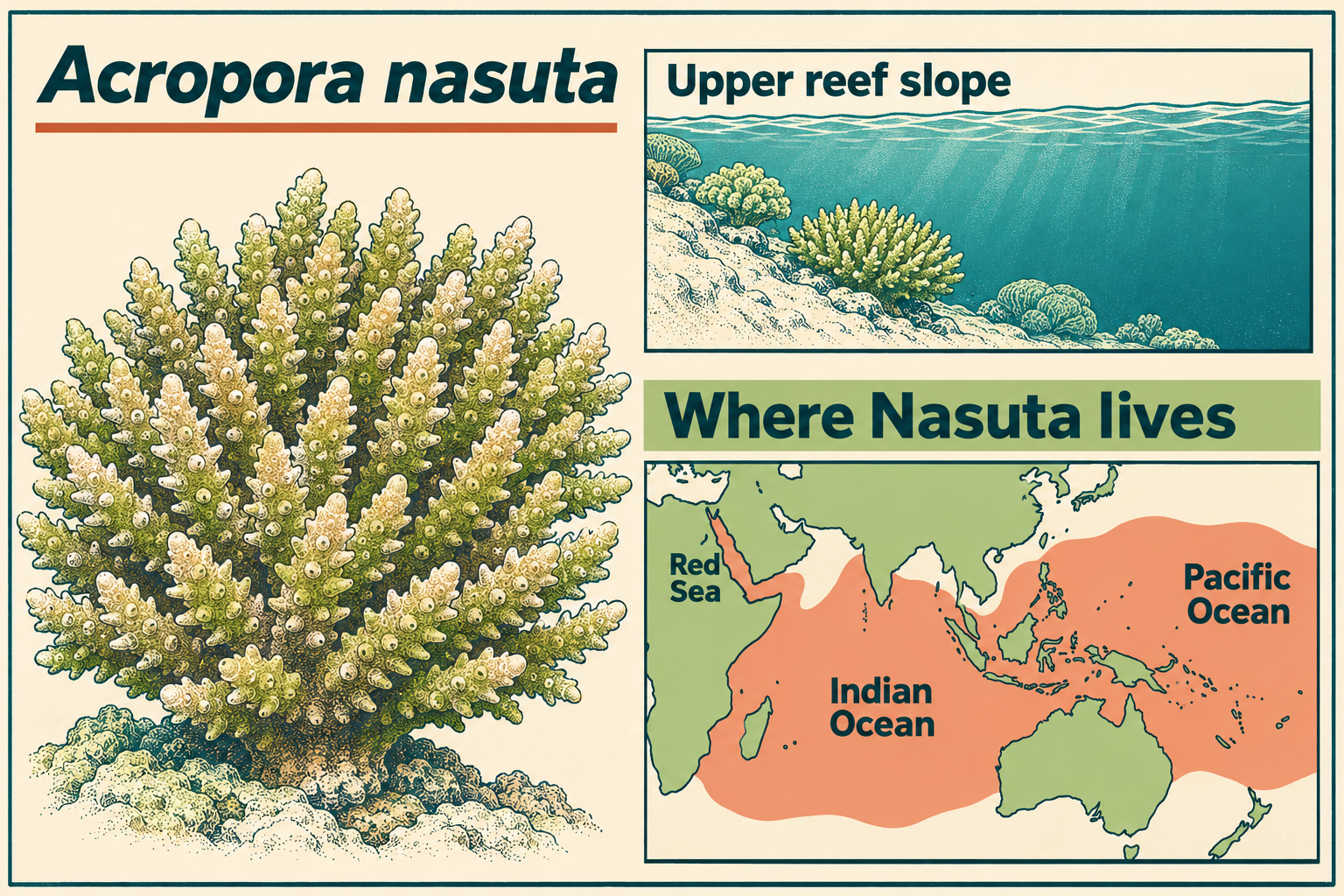
3. Follow the upper reef slope. Look for Nasuta from the Red Sea and Indian Ocean into the Pacific, including the Great Barrier Reef and Fiji. It is especially common on upper reef slopes, not just at the wave-battered crest. Sunlight feeds the tiny algae living in its tissues. The algae pass some of that energy to the coral. 4. The gobies get a dinner bell. Contact with one kind of seaweed triggers a chemical cue. Gobies that shelter in the coral respond by clipping the weed where it touches the colony. In your tank, don't wait for a fish to do the work. Keep nuisance algae from growing onto the frag.
What a healthy colony looks like
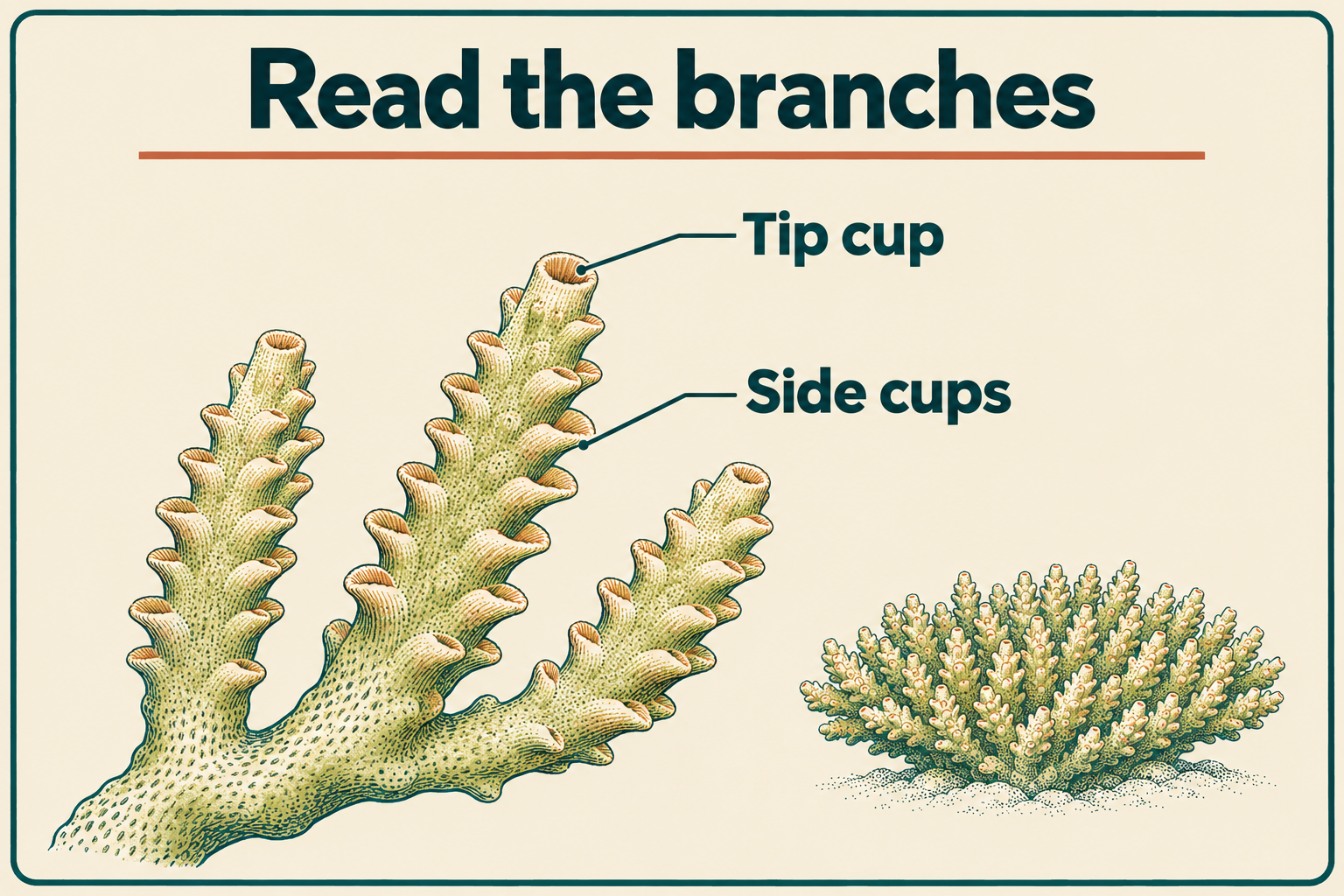
5. Find the tiny noses. Look for a low, uneven cluster of tapering branches. One tube-shaped skeleton cup sits at the end of a branch. Smaller cups line its sides, often in rows. Those side cups are the ones with the nose-like shape. 6. Watch the living skin. Cream, brown or greenish tissue can sit under blue or purple accents. A pale growing tip still has living tissue. Chalk-white bare skeleton, especially a patch that gets bigger, is a different story. Take a photo under whiter light so you can compare the same branch tomorrow.
Light, flow and placement
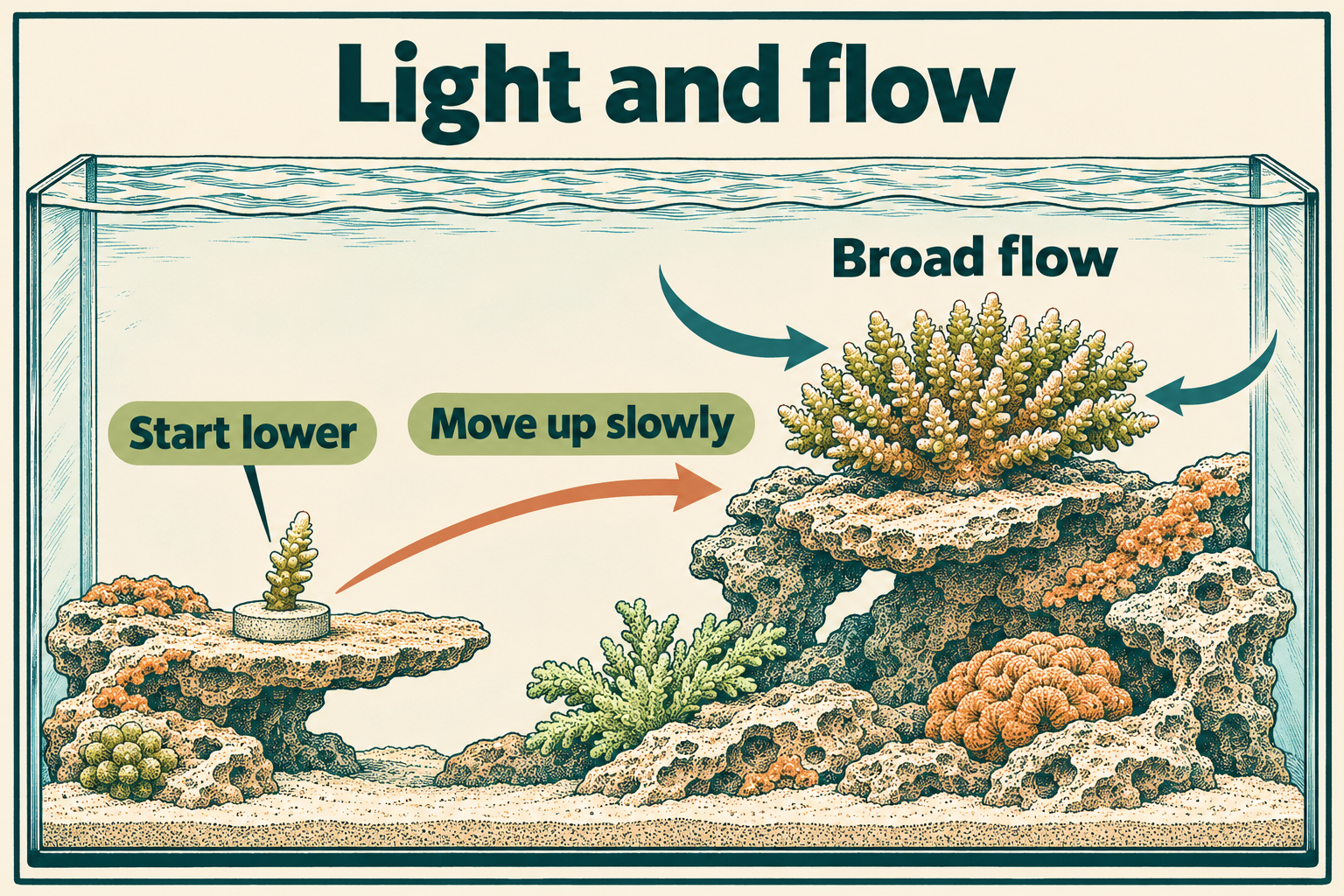
7. Earn the top shelf. Use bright upper rockwork as your final spot. Give a new frag a gentler start and raise the light in small steps. Use a PAR meter if you have one. Match the light the frag is used to before you ask it to take more. 8. Make flow reach the middle. Aim for strong, broad flow that changes direction. Watch food or fine particles pass between the branches, not just skim over the tips. Redirect a narrow jet that hits one spot all day. Leave a gap big enough for new branches and for water to get behind the colony.
Water and feeding
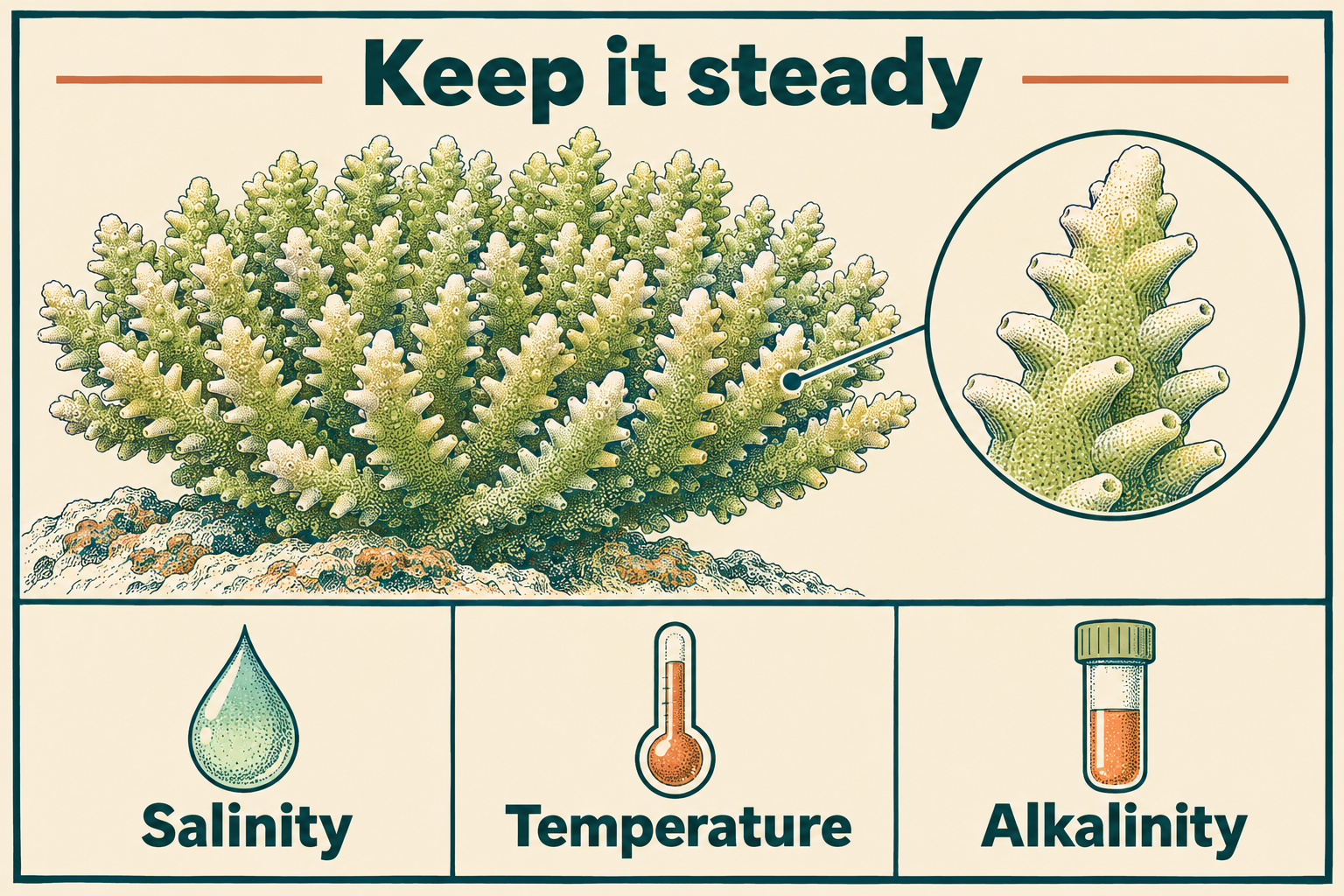
9. Steady wins over perfect. Add Nasuta to a mature reef that already holds temperature and salinity steady. Test alkalinity often enough to spot a trend, and track calcium as the colony grows. Replace what the reef uses. Don't make a big dose change based on one surprise test. 10. Skip the mandatory feeding day. Bright light supports the coral's resident algae. You can offer a little fine coral food in the water, but don't blast the frag with a thick paste. Track nitrate and phosphate and keep them measurable rather than chasing zero. Judge success by intact tissue and new growth, not a feeding calendar.
Field notes
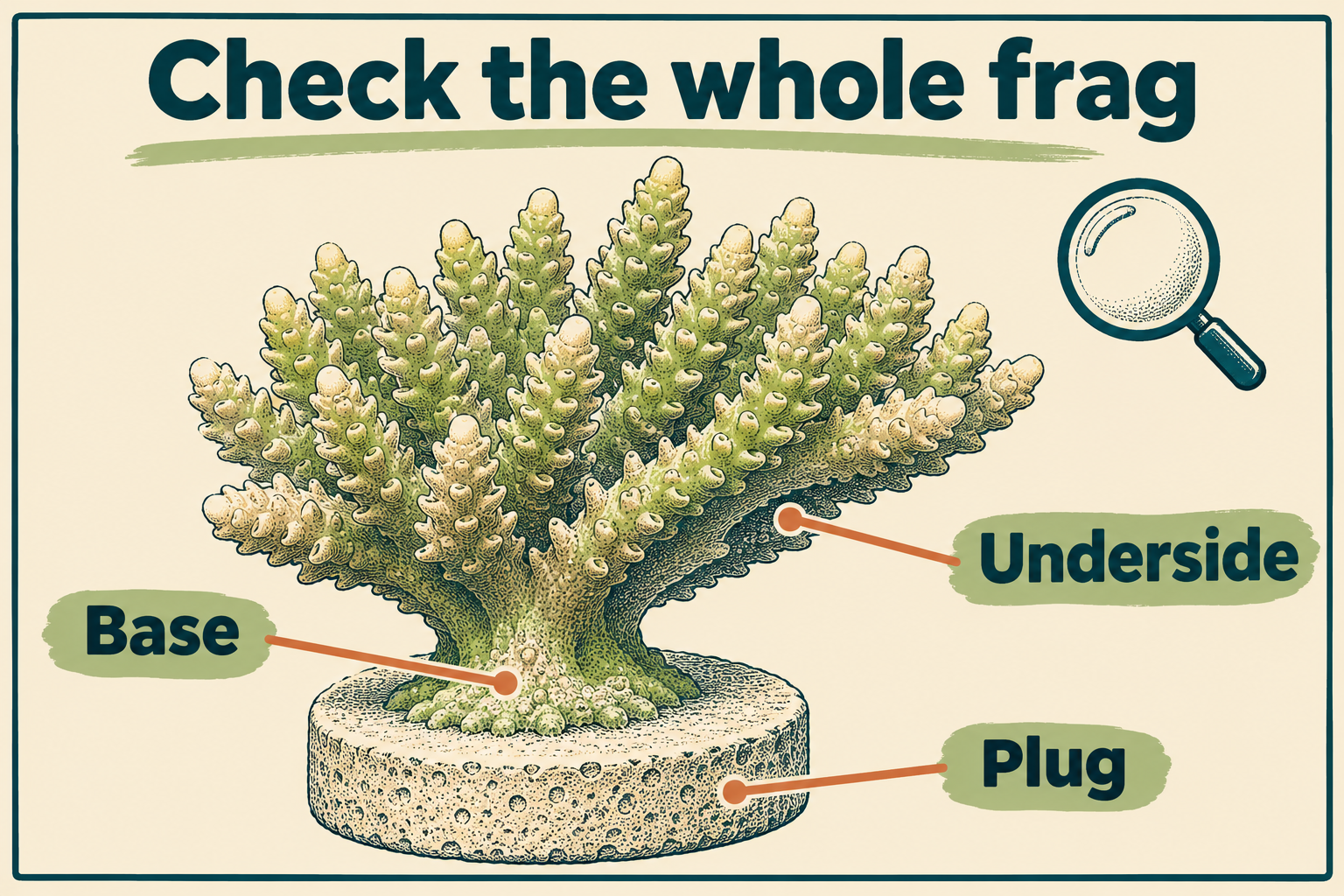
11. Turn the frag over. Isolate new Acropora before adding them to your display. Check shaded branches, the base and the plug for bite marks or egg clusters. A dip isn't a substitute for watching the frag in quarantine. If you find suspect marks, keep it separate and recheck. 12. Give the colony room to change shape. Today's open sprig can turn into tomorrow's shady thicket. Leave room between it and its neighbors, then check for trapped debris and rubbing branches as it fills out. If tissue starts peeling, check recent light, flow and water changes as well as pests before deciding what to fix.
Nasuta rewards a keeper who looks closely. Get the light and flow right, keep the water steady, then watch the new branch tips take shape. That's the part worth waiting for.
Field Notes
Related species
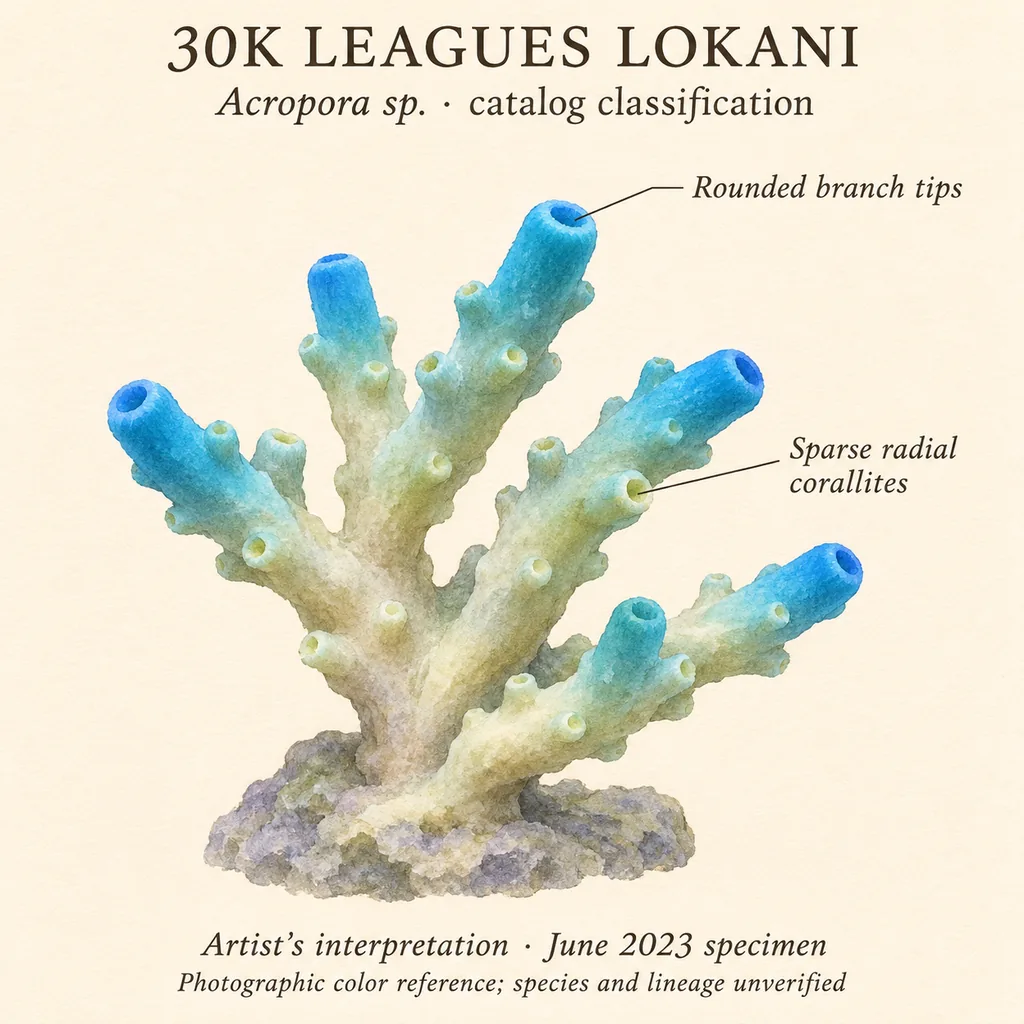
30K Leagues Lokani
Acropora sp.
Same genus
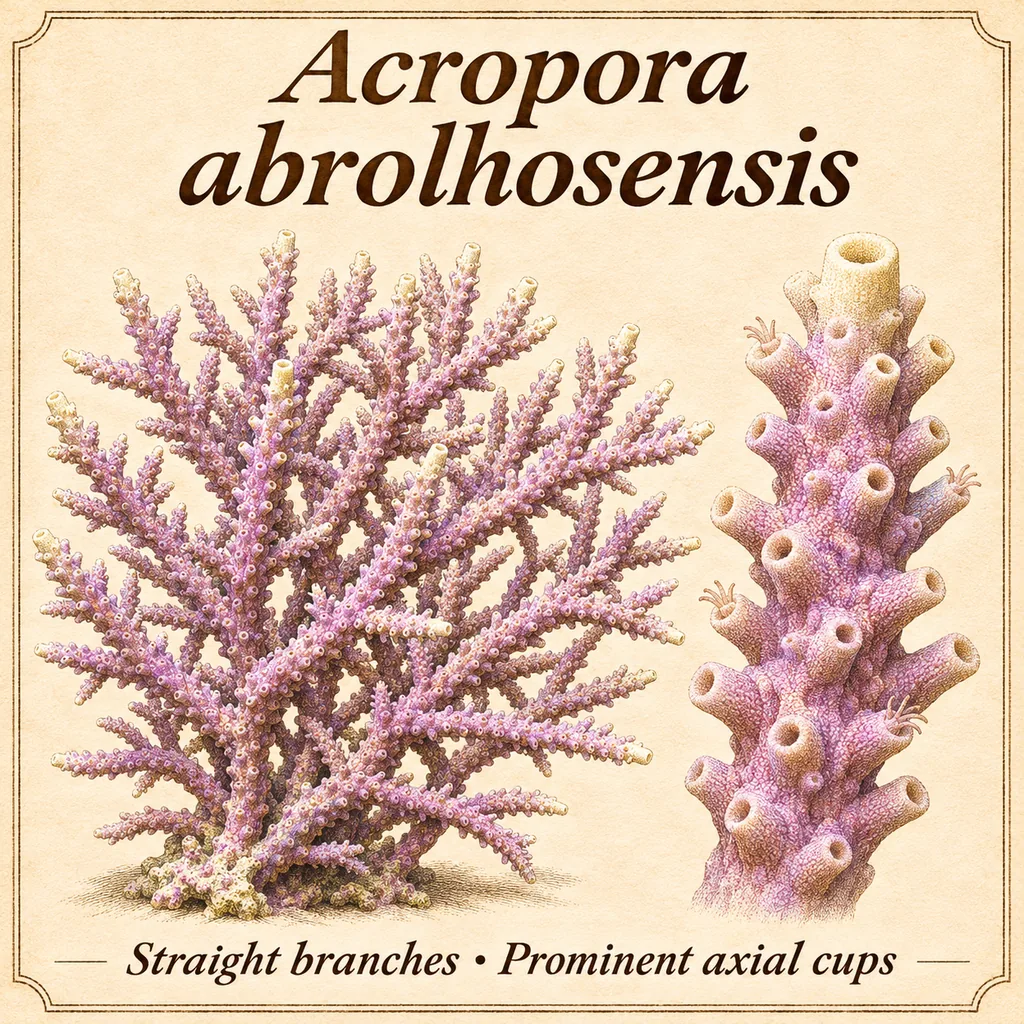
Acropora abrolhosensis
Acropora abrolhosensis
Same genus
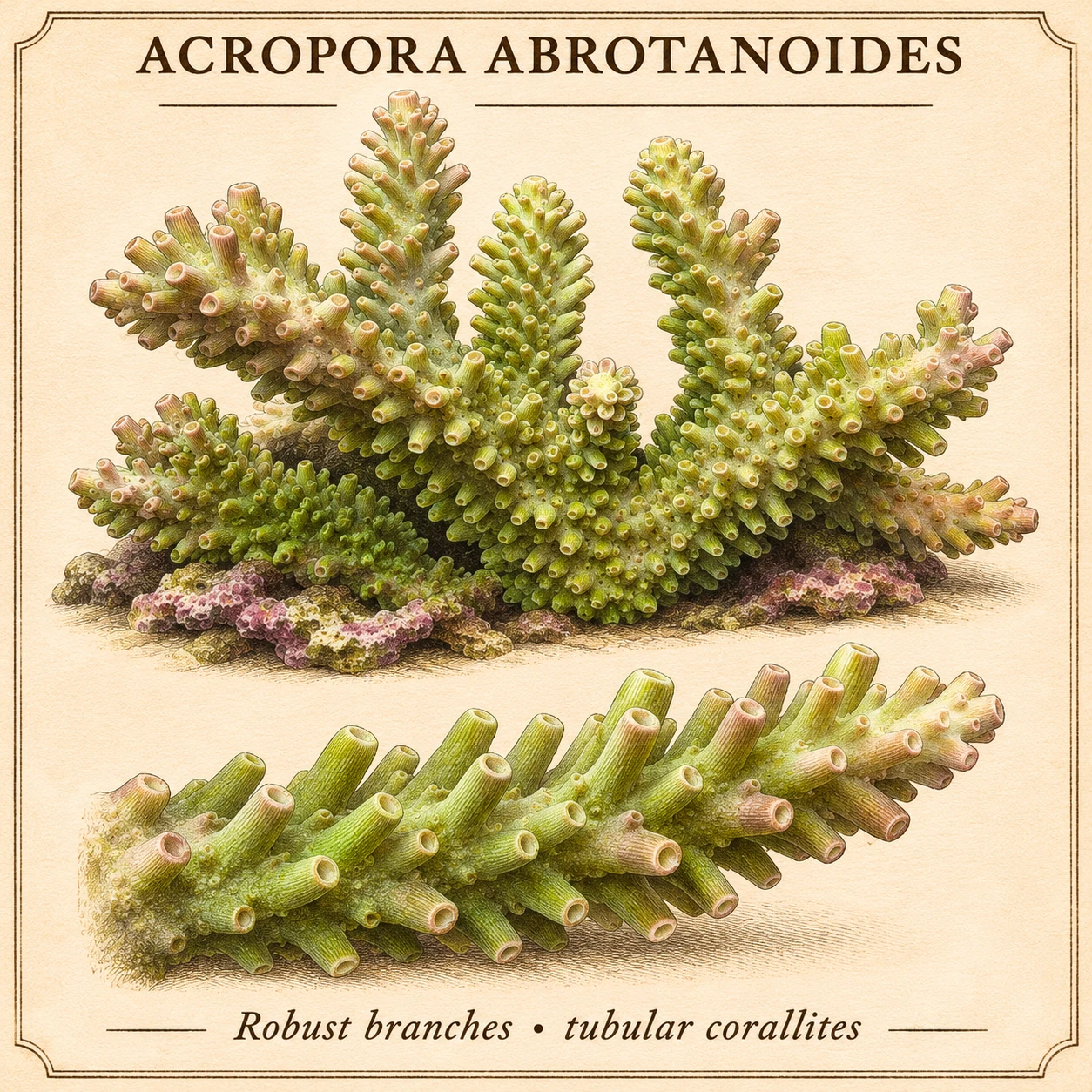
Acropora abrotanoides
Acropora abrotanoides
Same genus
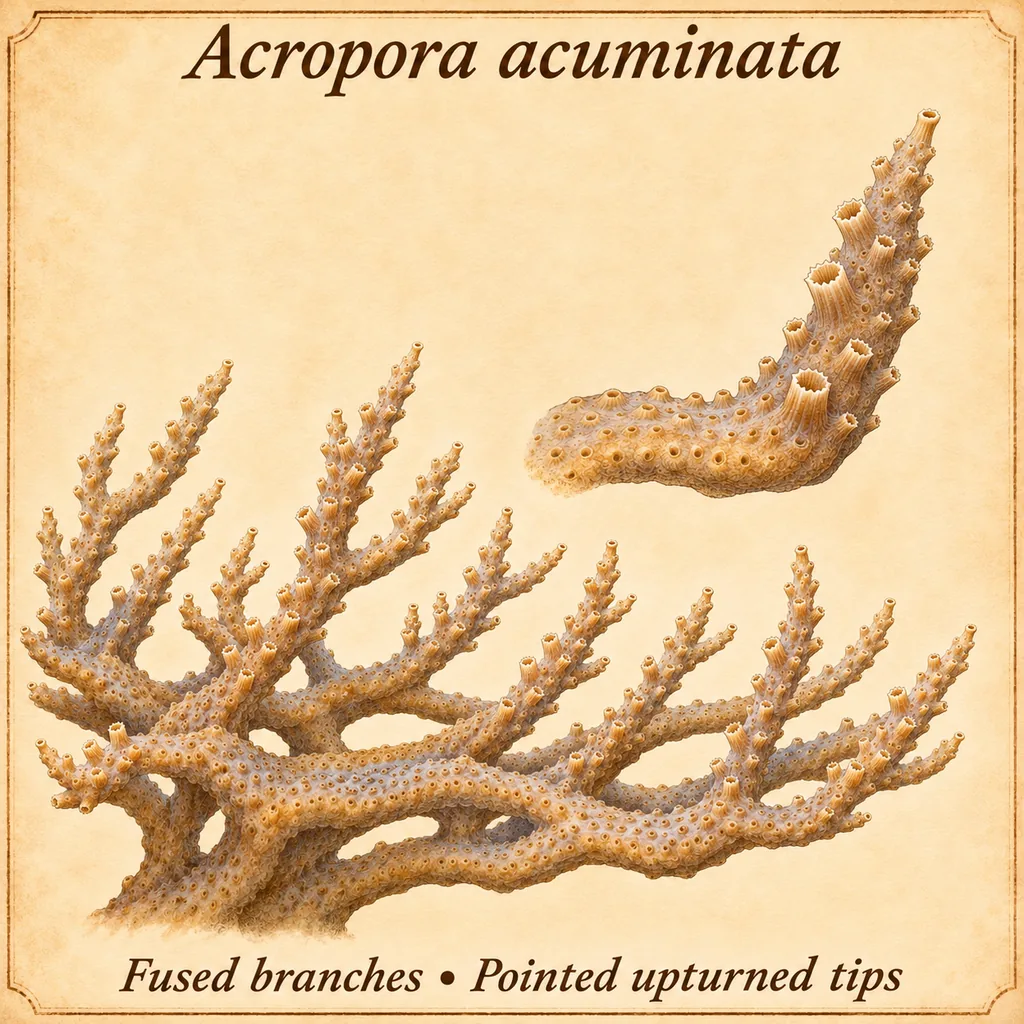
Acropora acuminata
Acropora acuminata
Same genus
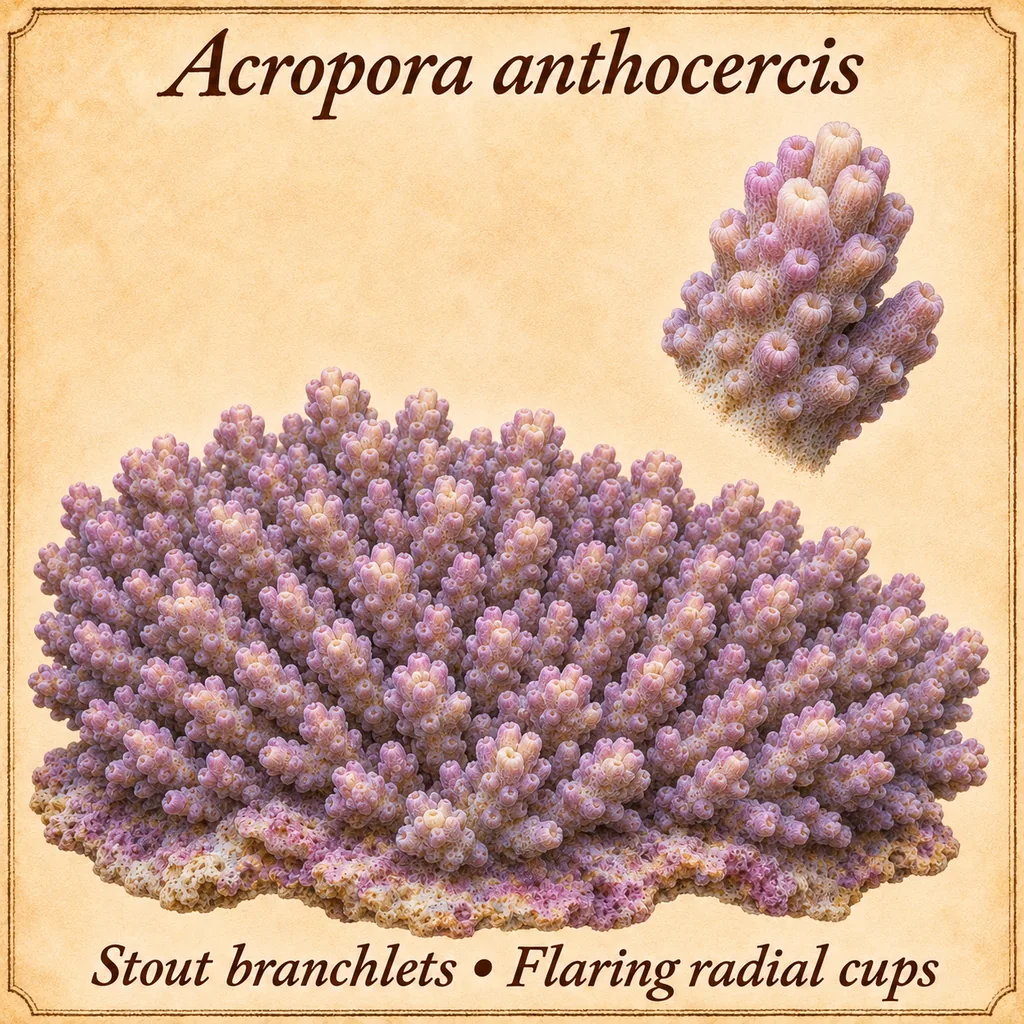
Acropora anthocercis
Acropora anthocercis
Same genus
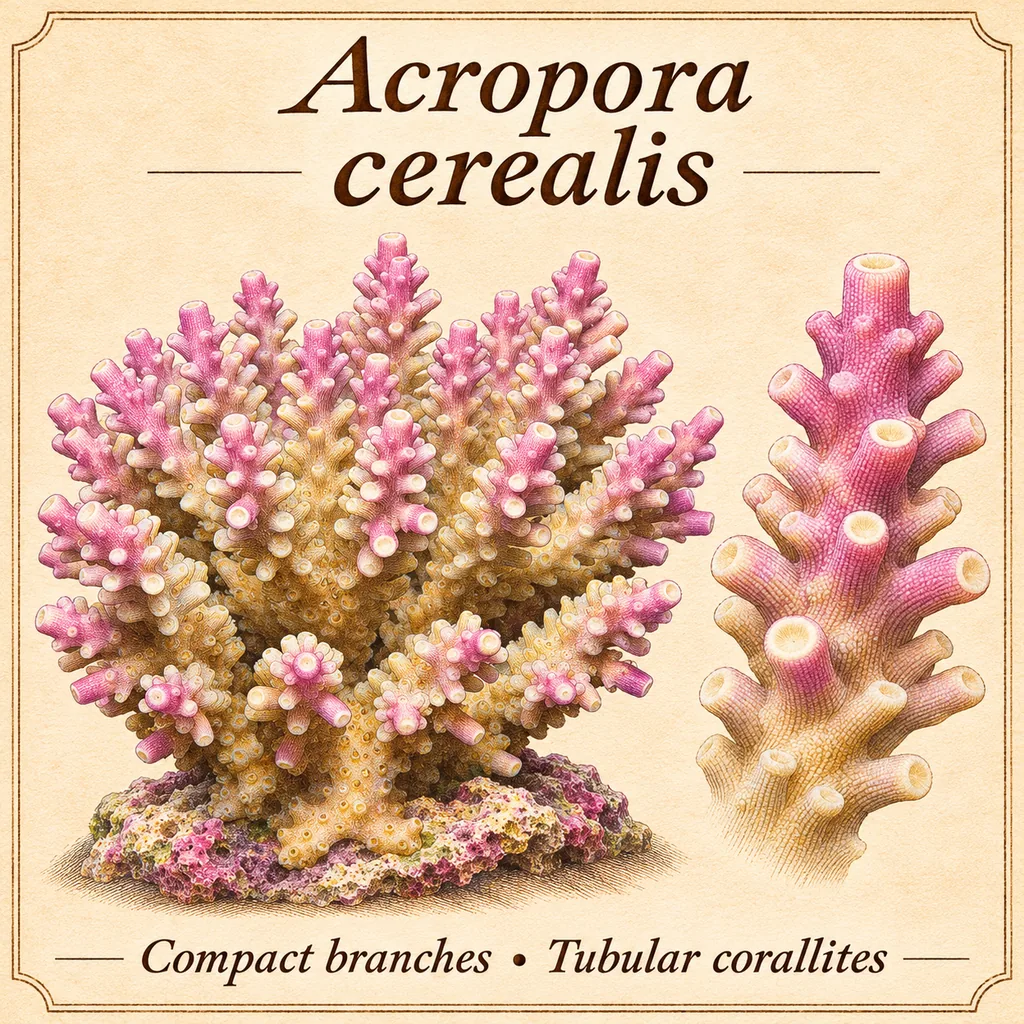
Acropora cerealis
Acropora cerealis
Same genus
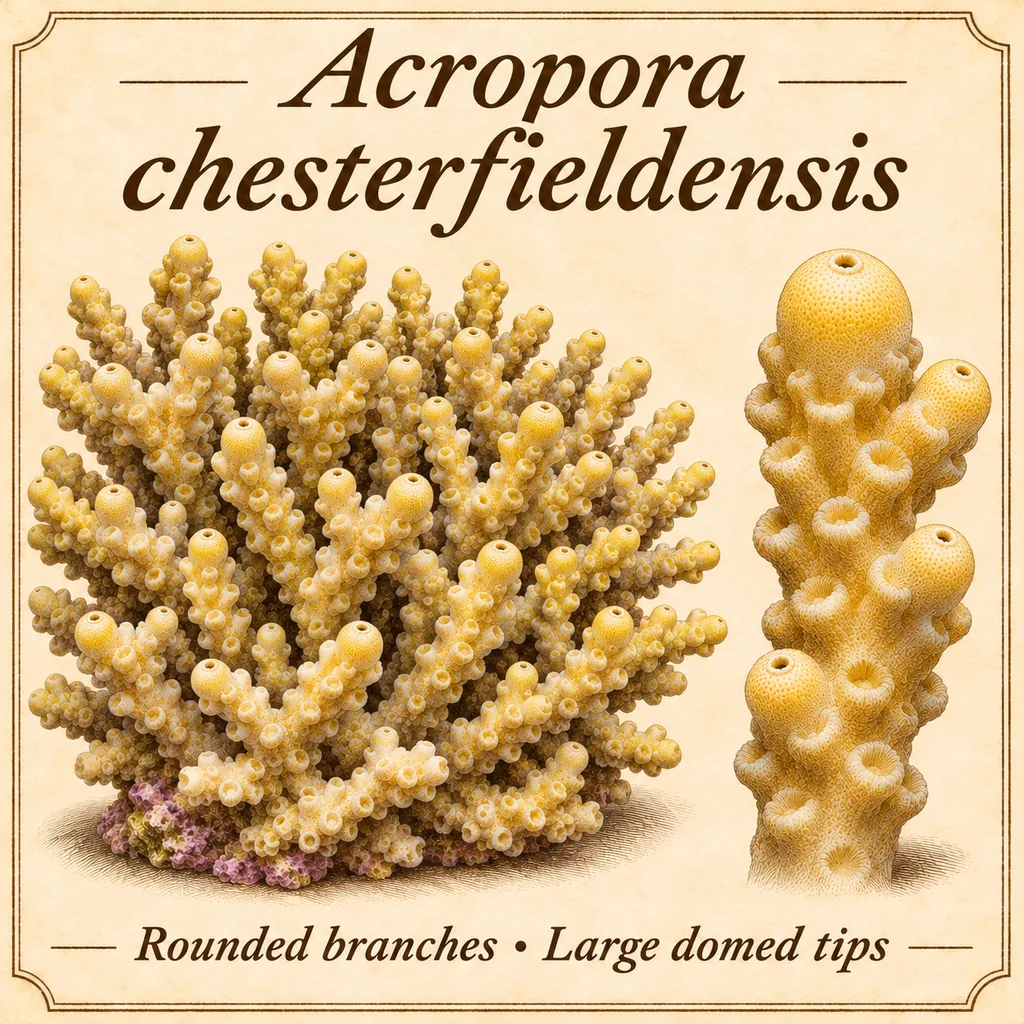
Acropora chesterfieldensis
Acropora chesterfieldensis
Same genus
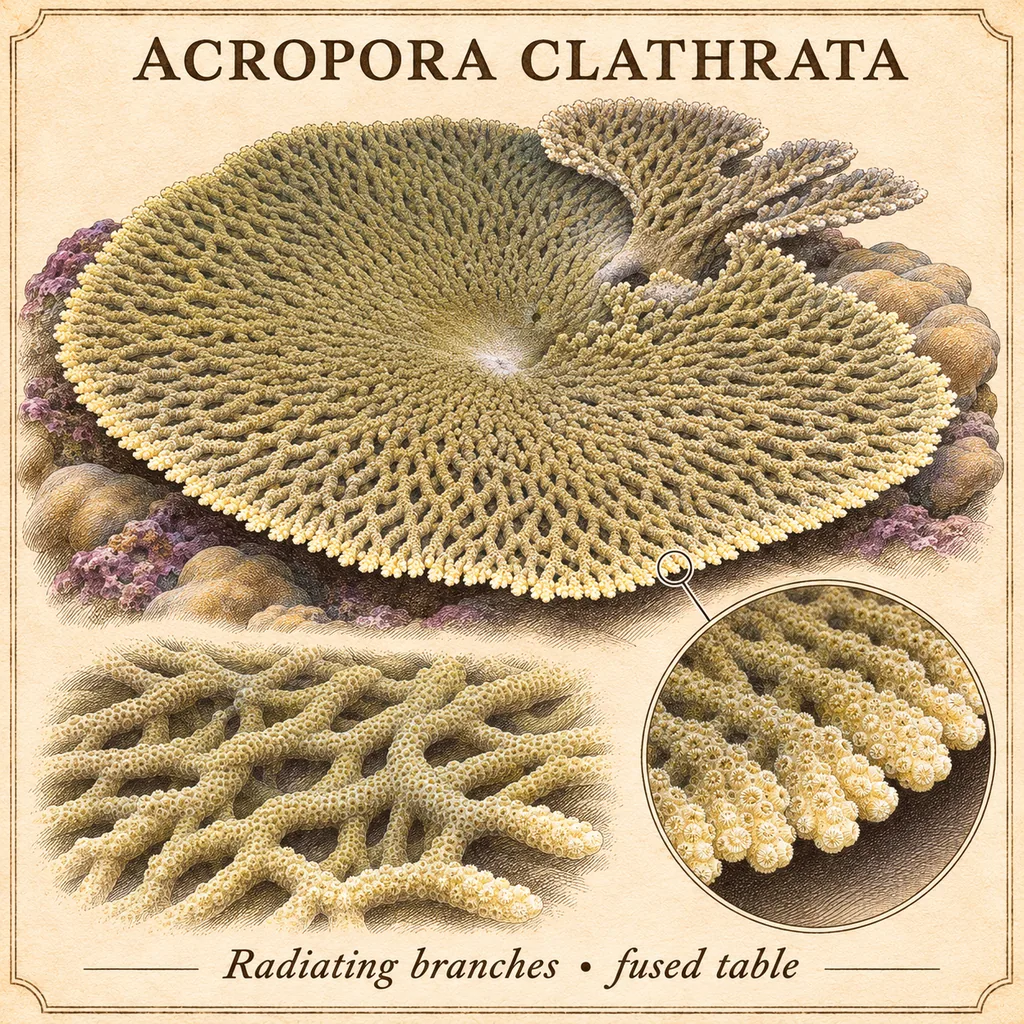
Acropora clathrata
Acropora clathrata
Same genus