

Poccilopora
Pocillopora sp
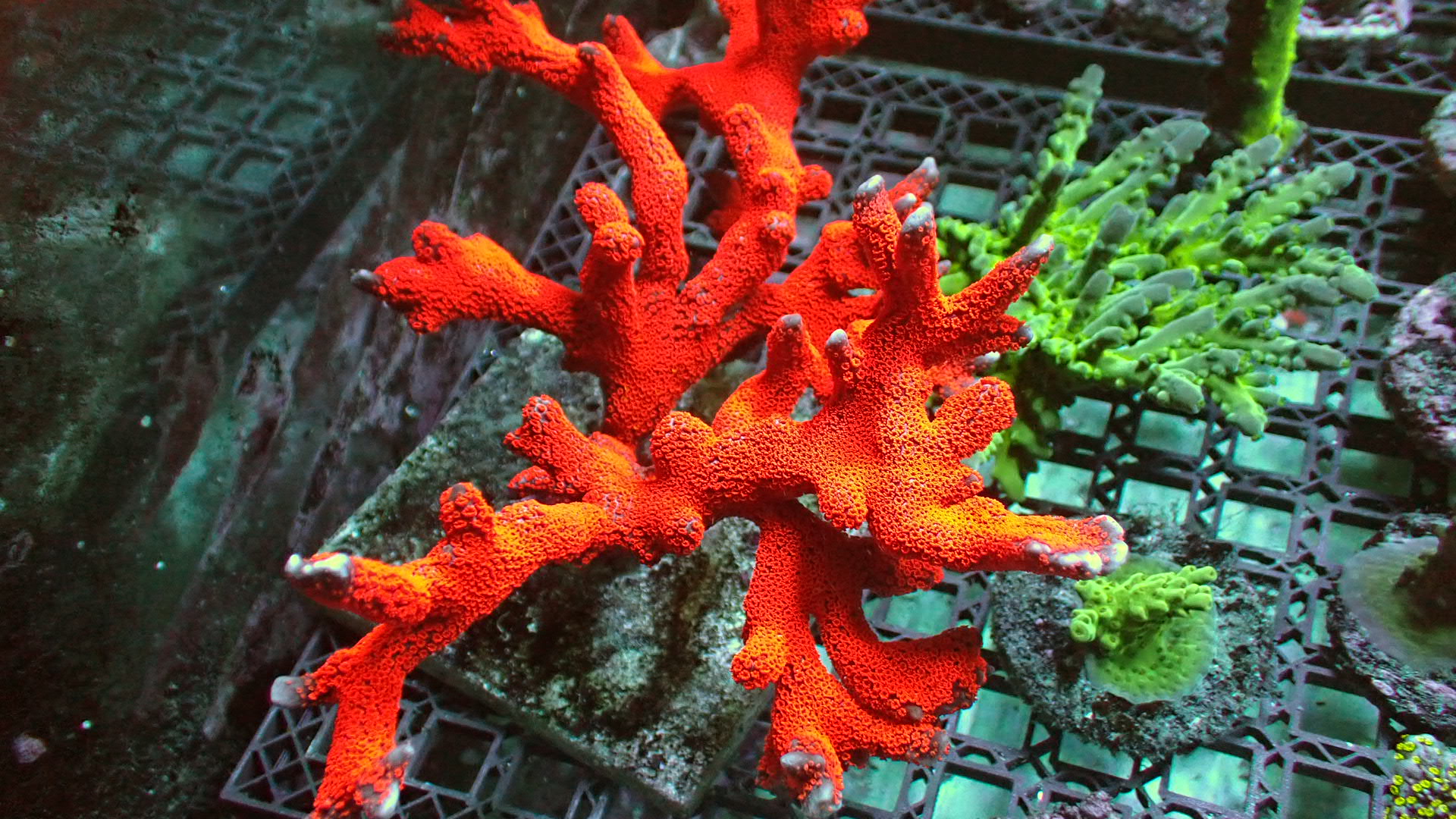
Poccilopora is a branching SPS in the family Pocilloporidae, the same family as Stylophora and Seriatopora. Colonies grow thick, stubby branches that end in rounded tips, and the surface carries dense, small polyps that stay extended through the day on a settled piece, giving the whole colony a fuzzy outline. Tissue color varies widely across the genus, from browns and greens to pinks and purples, and the growth form stays compact and bushy, closer to a cat's paw cluster than to the thin, open branches of a birdsnest.
The entry lists beginner care, high light, high flow, top placement, peaceful behavior, and fast growth. Beginner applies within the SPS group. Pocillopora forgives more than most Acropora, and stable chemistry still decides how well it does. Place the frag high on the rockwork on a secure mount where the branches face open water. High light supports tight growth and full polyp extension. A frag moved straight from dim holding into the brightest spot can pale at the tips, so step the light up over one to two weeks and watch the branch tips as the guide.
High flow is the other half of the placement. The dense branches trap waste deep inside the colony when flow runs weak, and settled detritus in the center is a common start of tissue loss in this genus. Strong, varied flow that changes direction keeps the branches clear, delivers food and minerals to every polyp, and supports the fast growth the entry lists. Flow aimed at one face from close range can strip tissue on that side, so broad movement across the whole colony works better than a single jet.
Feeding is mostly indirect. The small polyps capture fine particulate food from regular broadcast feeding, and the colony draws most of its energy from light. Chemistry matters more than extra food here. Fast skeleton growth consumes alkalinity, calcium, and magnesium at a real rate, and a colony that doubles in size will pull values down between water changes in a small tank. Small, steady values support clean new tips, while swings show up first as burned or receding tips.
This coral is listed as peaceful, with no sweeper reach worth planning around. Spacing is about growth and shade. A fast-growing Pocillopora widens in every direction, encrusts its mount, and can shade a slower neighbor below or crowd a frag beside it within a season. Leave a clear border of rock around the mount, keep LPS sweepers well away, and mount the piece firmly, because a fallen frag lands face-down and loses tissue on the contact side quickly.
Growth is fast for an SPS once the frag settles. The base encrusts, branch tips split and multiply, and the colony fills out into a dense ball of branches over months. Healthy signs are fuzzy daytime extension, pale growing tips that color up behind the tip, and steady encrustment at the base. Branches that stay bare, a center that thins and pales, or tissue receding from the base call for a check of flow through the colony, light level, and alkalinity stability.
Common pitfalls include placing the frag low in weak flow because the tank mainly holds soft corals, chasing color with a sudden jump to maximum light, and letting the dense center collect detritus until tissue thins inside the colony. Secure the mount high, give the branches moving water on all sides, and clear the center gently during maintenance.
Field notes — what keepers report
- Spread reports are famous for this genus. Keepers describe baby colonies appearing on rock, glass, and equipment away from the mother colony, from larvae the colony releases into the water. Some keepers welcome the volunteers and move them onto plugs, while others describe pulling them out before they settle near prized frags. Both sides link the heaviest settlement to a large, settled mother colony in a stable tank.
- Extension reports track flow. Keepers describe polyps out and branches looking thick and fuzzy under strong, changing flow, and a thinner, tighter look in colonies sitting in a calm corner. Reports agree that moving a tight colony into better flow is the first change to try before adjusting light.
- Color reports split by light level. Keepers high on the rockwork describe saturated tissue with bright tips, while keepers who kept the same type of colony lower describe duller, browner tissue that colored up after a slow move upward. Slow acclimation is the practice both sides describe.
Field Notes
Related species

Green poccillopora
Pocillopora sp

Aculeus Acropora
Acropora aculeus
Anacropora
Anacropora gracilis
Bubblegum digitata
Montipora digitata

Caliendrum Seriatopora
Seriatopora caliendrum

Digitifera Acropora
Acropora digitifera

Florida Branch Acropora
Acropora florida

Fused Staghorn Coral
Acropora prolifera
Recommended from the shop


Love this species? No tank needed.
Reef art from the shop — for the wall, not the tank.


Get notified when Reef To Go has Poccilopora in stock or up for auction. One email when it's in — no spam.