Red rockflower anemone
Gallery
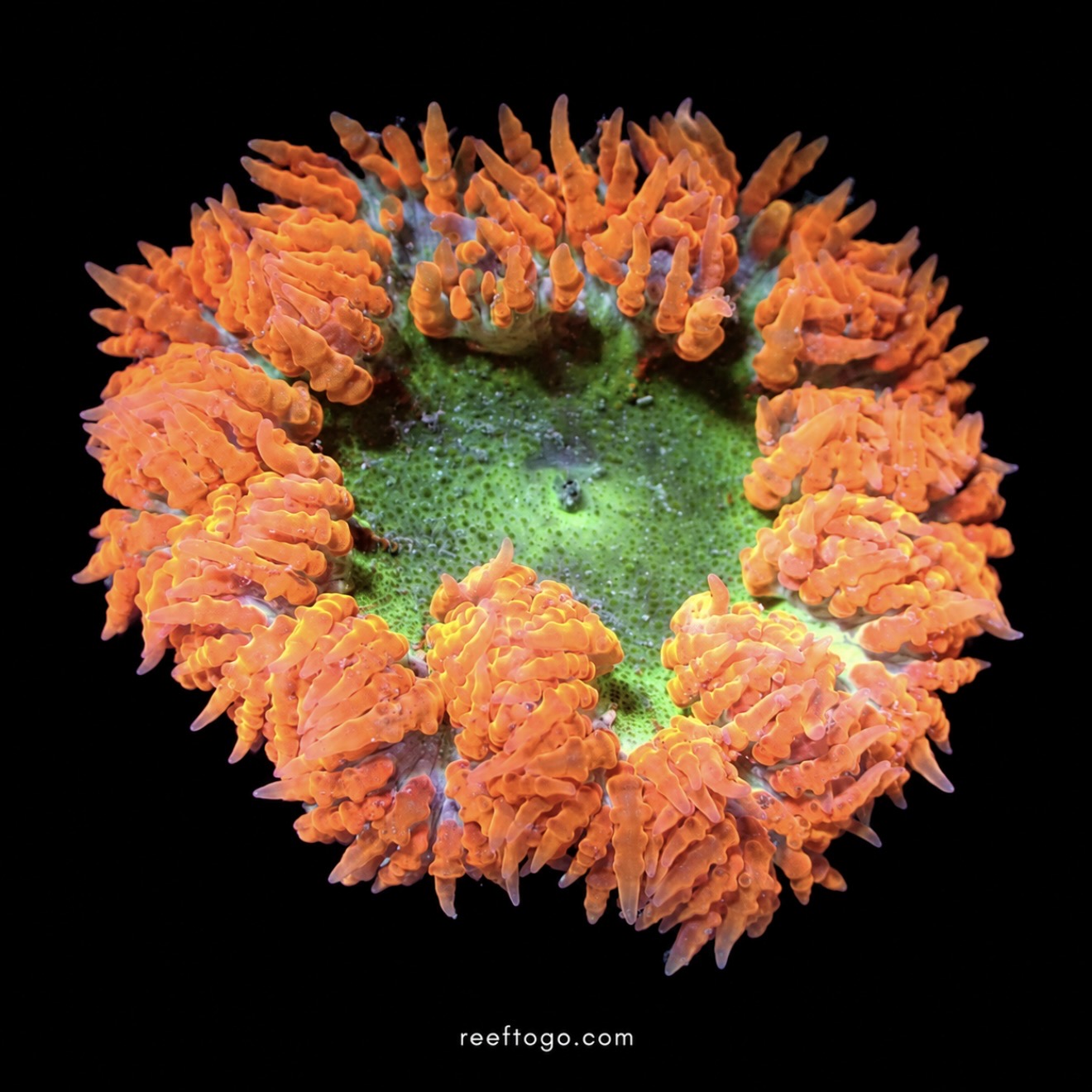
The little red flower on your rock is watching for dinner. Its colorful fringe is a ring of tentacles, and its hidden foot holds on below. A rock flower anemone makes a small patch of reef feel like a living garden.

Care at a glance: Beginner care in an established reef. Medium light. Medium flow, kept indirect. Bottom placement. Moderate aggression. Slow growth. These are the entry's existing care-card values. A safe foot-hold and steady water matter more than a perfect display spot.
Meet the living flower
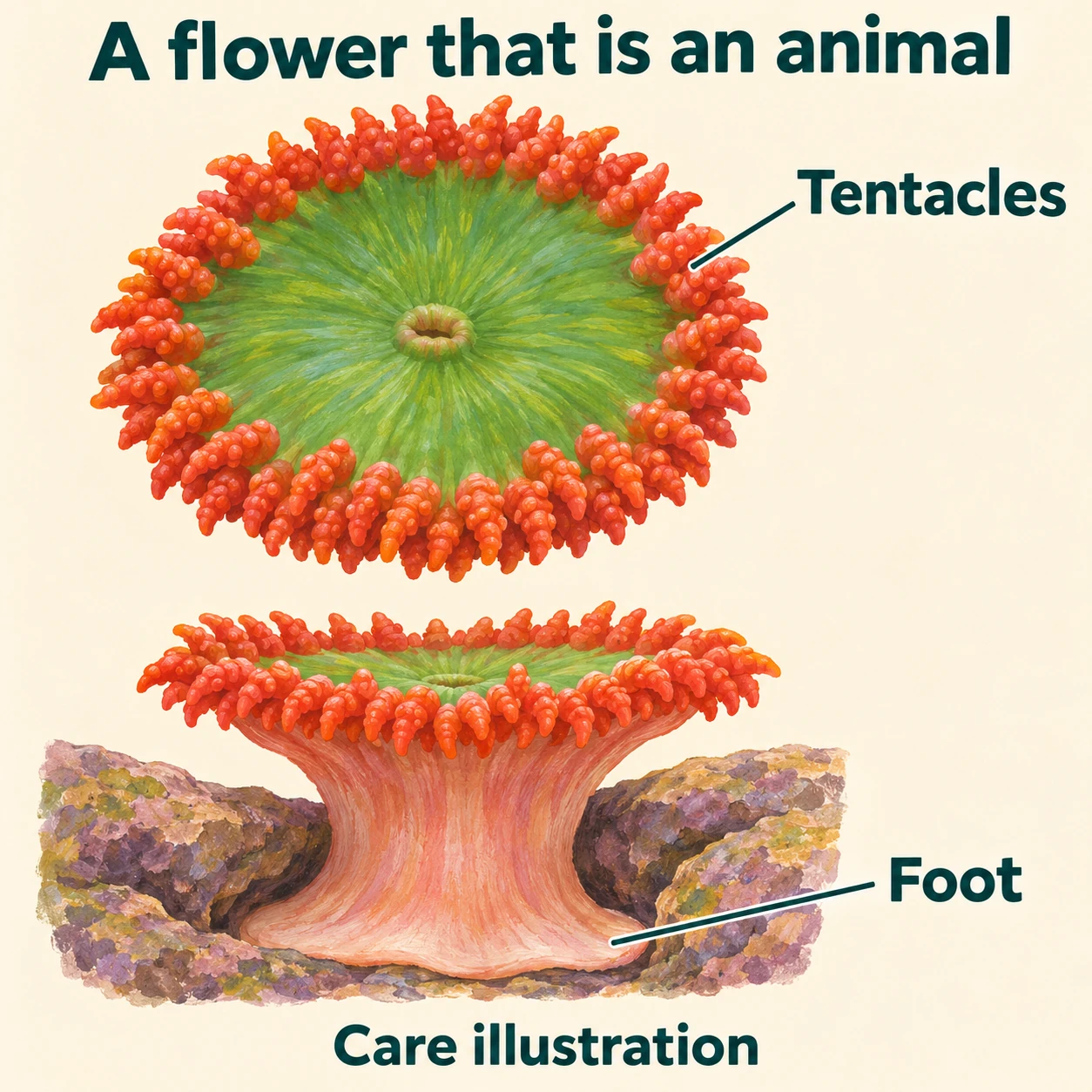
A rock flower is one soft-bodied animal. It has a mouth in the middle of a broad disc and short tentacles around the edge. Tiny algae living in its tissue use light to make food. The tentacles can also catch small meaty meals.

Rock flowers come from the tropical western Atlantic, including the Caribbean. Red describes a color form, not a separate species. Phymanthus crucifer is the accepted scientific name; shops also use its older name, Epicystis crucifer. This entry's scientific-name field remains unconfirmed. Its photographs are preserved, and the drawings below explain care rather than prove identity.
Although this database files it under Soft, it is an anemone, not a soft coral. It has no stony skeleton to glue onto a frag plug. WoRMS taxonomy and CORAL's breeder profile explain the animal behind the common name.
Let the foot choose a home
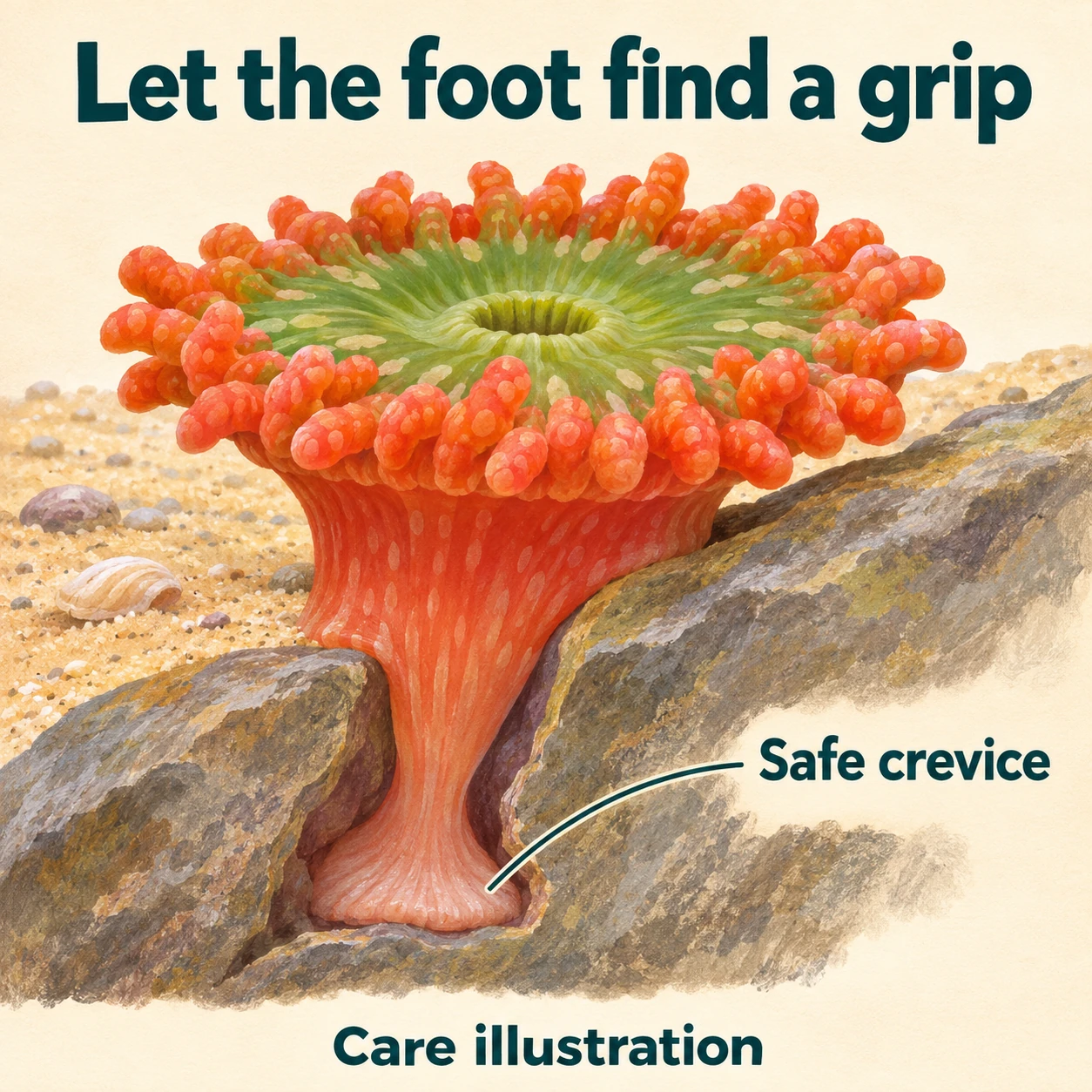
Start near the bottom, beside a stable rock with a sheltered crack. A sand pocket at the rock's edge can work well. The foot needs something firm to grip while the disc stays open above it.
Let the animal attach by itself. Never glue its foot, wedge it tightly into a hole, or bury its mouth. If it moves, check the conditions instead of putting it back again and again. Rock flowers often settle in one place, but they can still walk or let go.
Protect pump intakes and overflow openings before it arrives. A loose anemone can drift into machinery. Ask an experienced adult to handle equipment and any move. Use aquarium-safe gloves, and keep tank water away from your eyes. Pulling an attached foot can tear it. The Underwater Gardener's care guide covers placement and safe settling.
Give it light and a gentle current
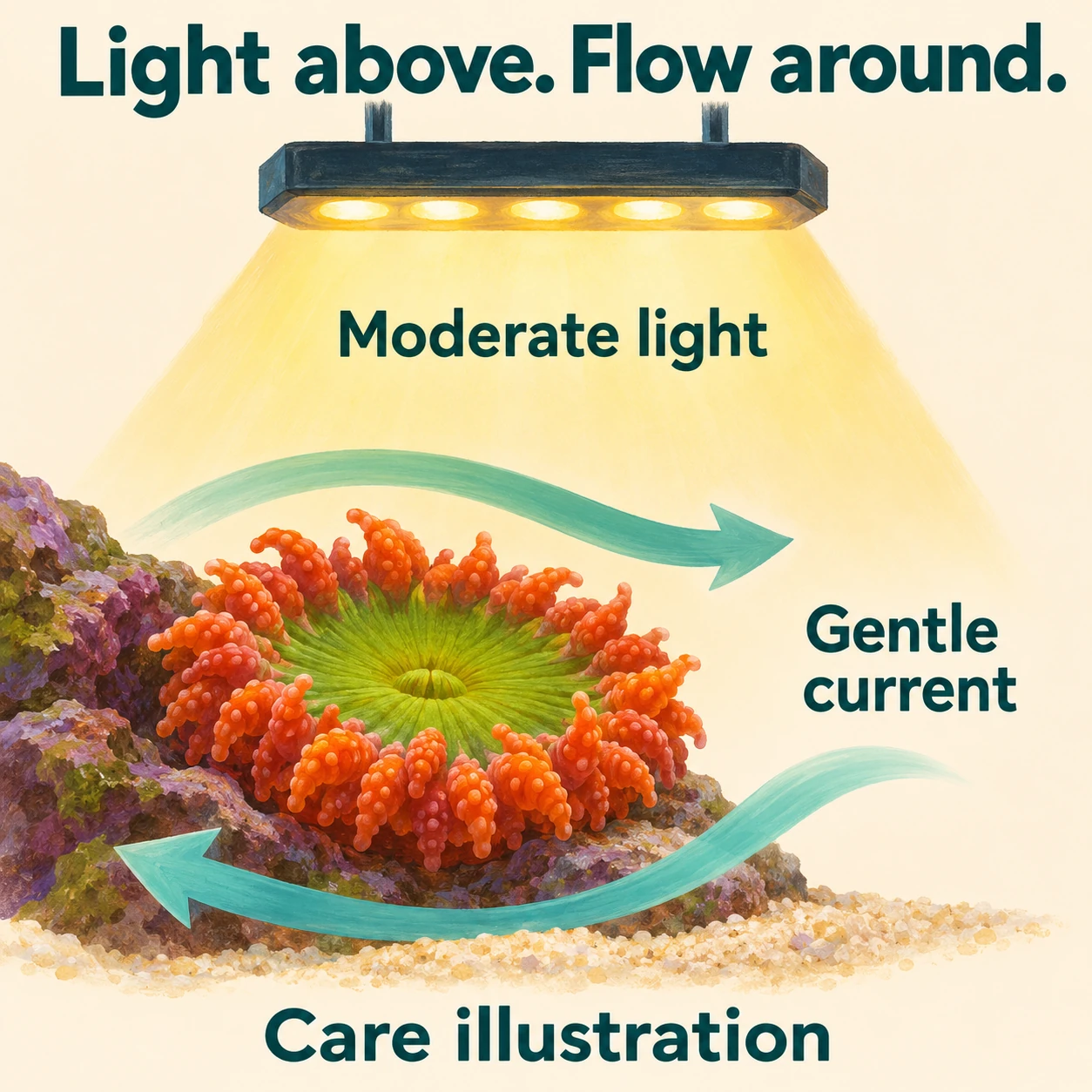
Think of a breeze, not a pressure washer. Use broad, indirect water movement that gently stirs the tentacles. A constant jet that folds the disc over or lifts the animal is too much.
Medium light is a useful starting description. Ask how the seller kept it, then ease into your tank's lighting. Increase exposure gradually while watching its response. The bottom of a shallow tank can still be very bright.
Care sources give different light-meter ranges. There is no single magic PAR number for every rock flower. Keep the daily light routine predictable, and avoid sudden increases to chase a brighter red. Color also changes with the lamp and camera. Reef Builders' guide discusses light and flow.
Keep its small world steady
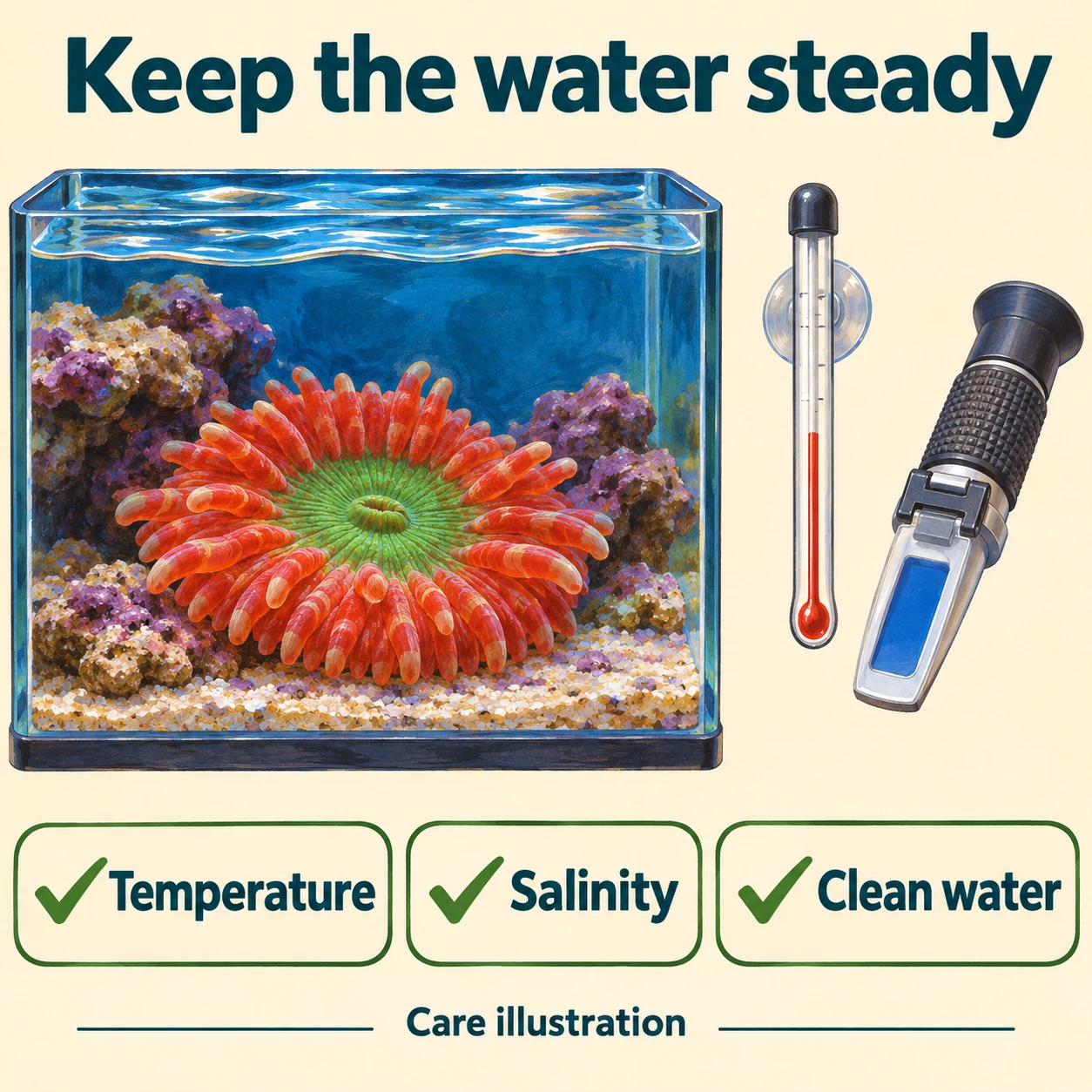
Choose an established saltwater aquarium with stable conditions. Around 24–26°C, or 75–79°F, and about 35 ppt salinity are practical reef targets. Check with reliable tools. Ammonia should be undetectable. Match replacement saltwater carefully, and let an adult handle test chemicals and dosing.
A brief tuck into the rock can be normal after a disturbance or meal. Look at the whole pattern. Is it opening again? Does its foot stay attached? Take photos under similar light so changes are easier to spot.
A mouth that stays wide open, damaged tissue, repeated detachment, or ongoing shrinking and fading needs attention. Check temperature, salinity, water quality, flow and tankmates. Do not assume more food or stronger light will fix it. Ask an experienced marine keeper for help if it keeps declining. OATA's anemone care advice supports a stable, monitored home.
Offer tiny meals
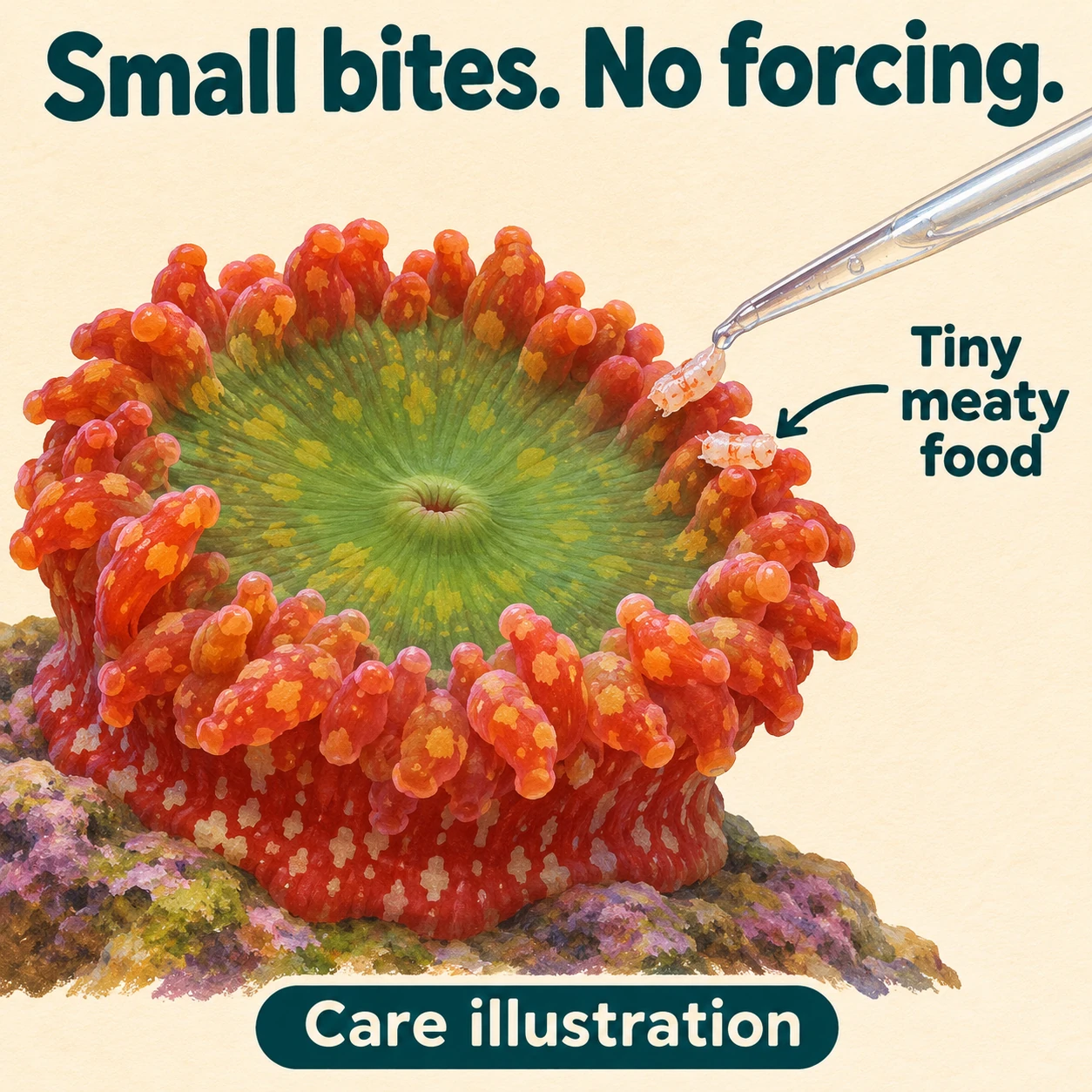
Once it is attached and opening normally, offer a little thawed mysis or finely chopped marine seafood. About once or twice a week is a reasonable starting routine. Adjust the portion and frequency to its size, feeding response and the tank's water quality.
Place a tiny bite on the tentacles and let them carry it inward. Never push food into the mouth. Remove rejected leftovers. A large chunk that gets spat out is not a reason to offer an even larger one.
Watch for fish or shrimp stealing the meal. Good lighting and small meals work together; neither makes poor water safe. Breeder routines vary, so treat feeding schedules as starting points, not rules every animal must follow. CORAL's aquaculture account describes supplemental feeding in managed systems.
Leave room for neighbors
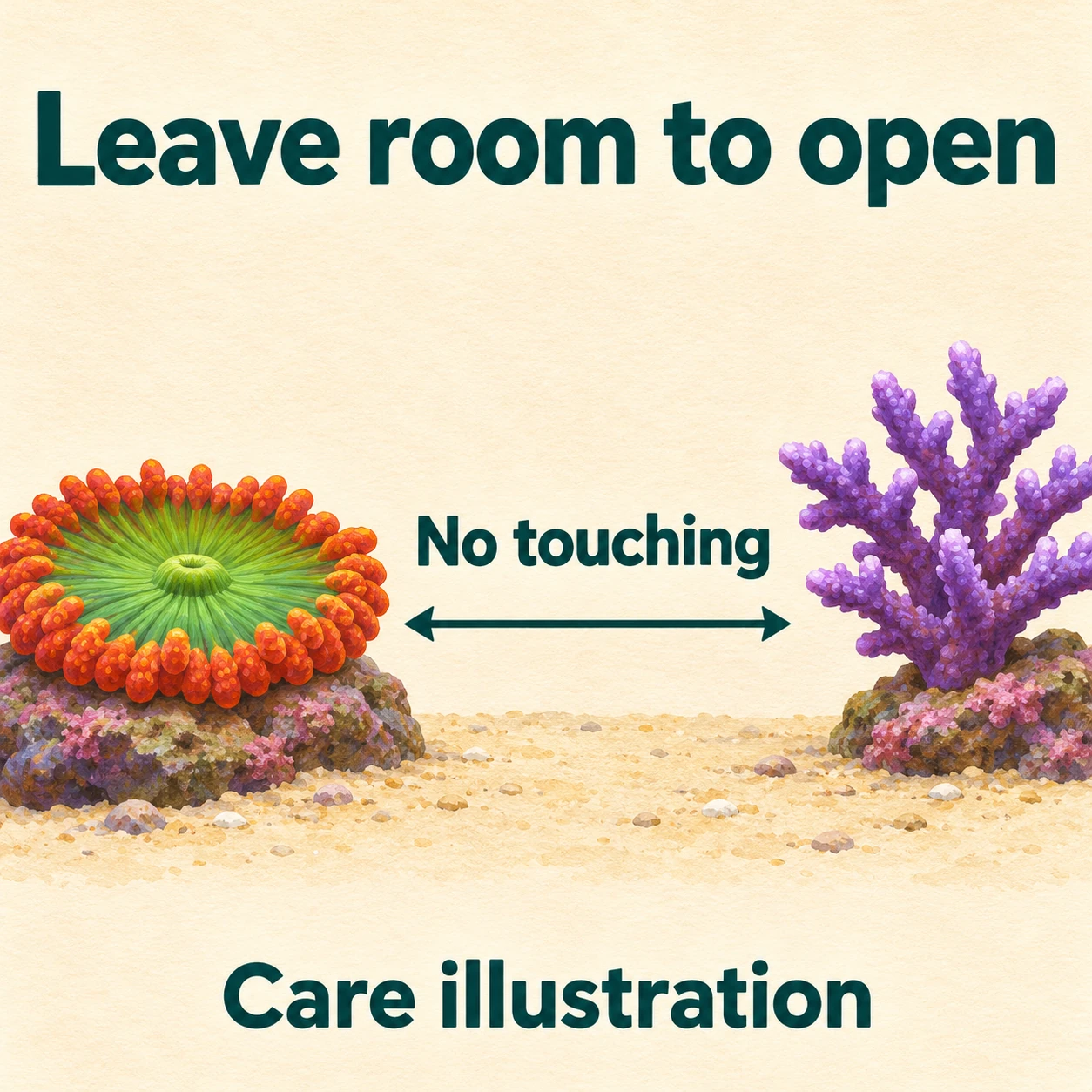
Those pretty tentacles can sting. Keep nearby corals beyond the anemone's fully open edge, with extra room for growth and movement. Three inches is not a safety guarantee. Check the gap again as both animals grow.
Rock flowers are not natural clownfish hosts. Do not buy one expecting that partnership or push a fish toward it. Some small shrimp associate with anemones, but any tankmate that keeps picking at yours deserves a closer look.
Rock flowers can produce babies through spawning. Tiny young may appear near adults, but babies are never promised. Do not cut this animal into pieces to make frags. Anemone breeding takes patience, good care and the right animals, not scissors. Reef Builders and The Underwater Gardener explain compatibility and reproduction.
Field notes: what keepers report
Real tanks add useful clues. They also give different answers. In Ron Reefman's long-running account, young rock flowers appeared near adults and grew over many months. In a keeper discussion about rock flower gardens, one experienced keeper linked weekly meaty meals with better juvenile growth.
A discussion of irritated rock flowers includes reports of oversized food being rejected and shrimp bothering anemones. Another keeper reported no direct feeding. These are individual experiences, not controlled tests or promises for your tank.
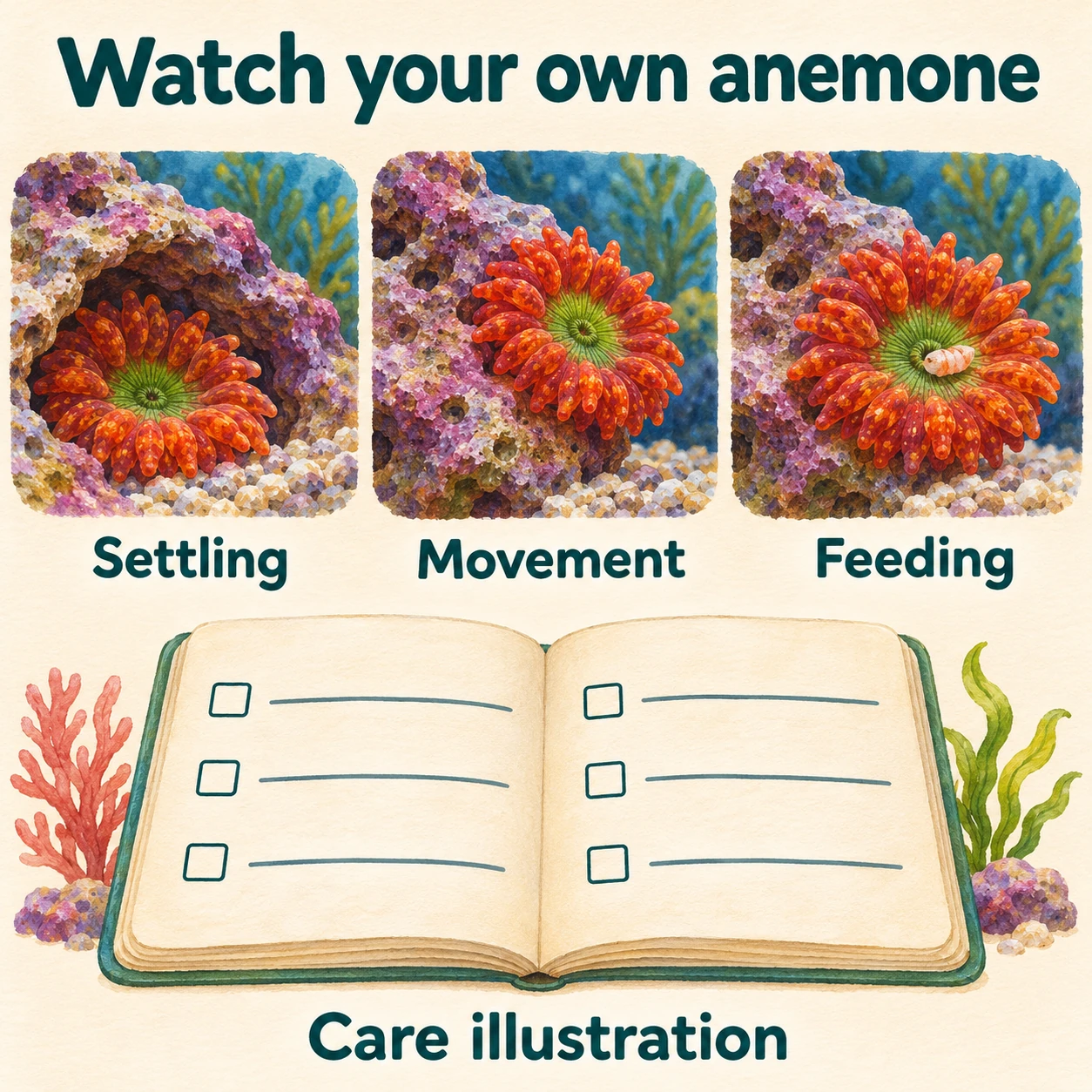
Keep a small notebook: where it settled, whether it ate, and what changed in the aquarium. Watch your own animal before copying someone else's routine. A securely attached rock flower opening comfortably is a better goal than making it grow on a deadline.
Field Notes
Related species
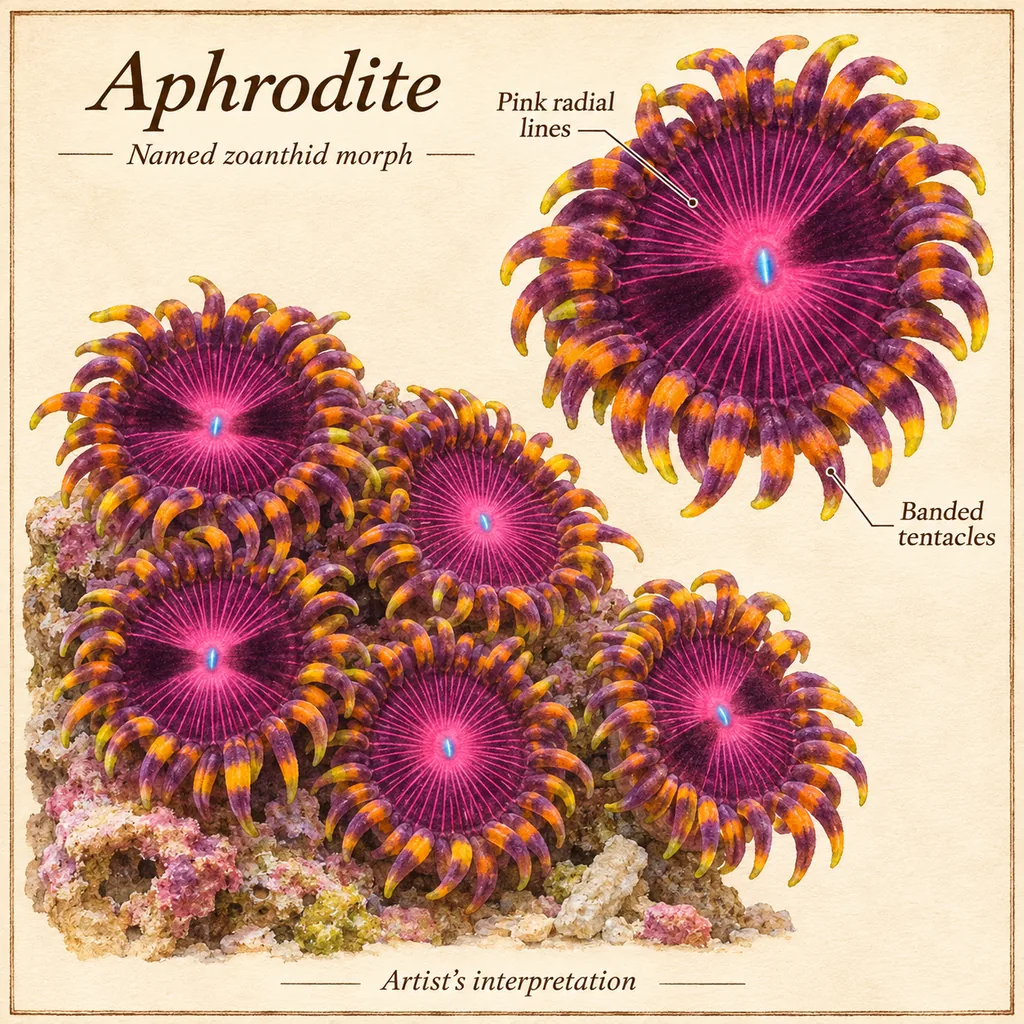
Aphrodite
Zoanthus sp.
Similar care · Soft
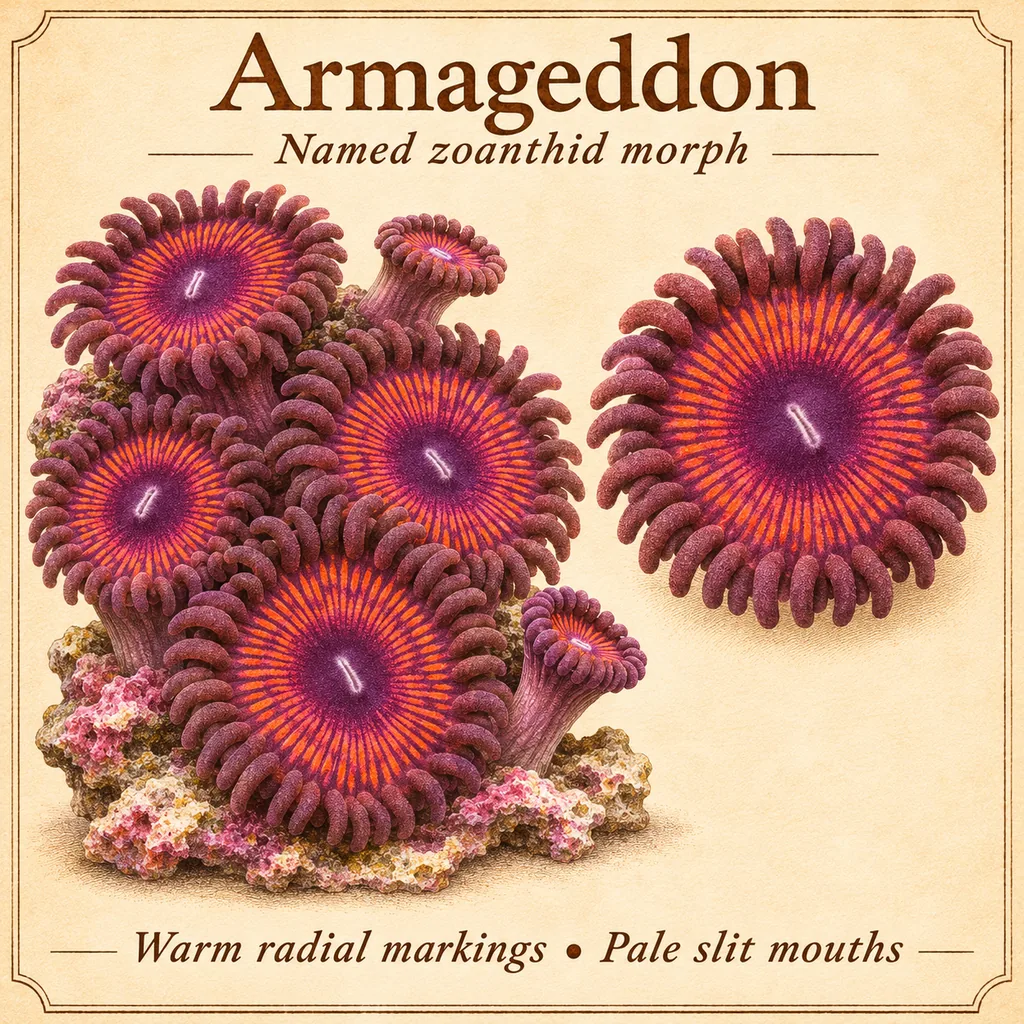
Armageddon
Zoanthus sp.
Similar care · Soft
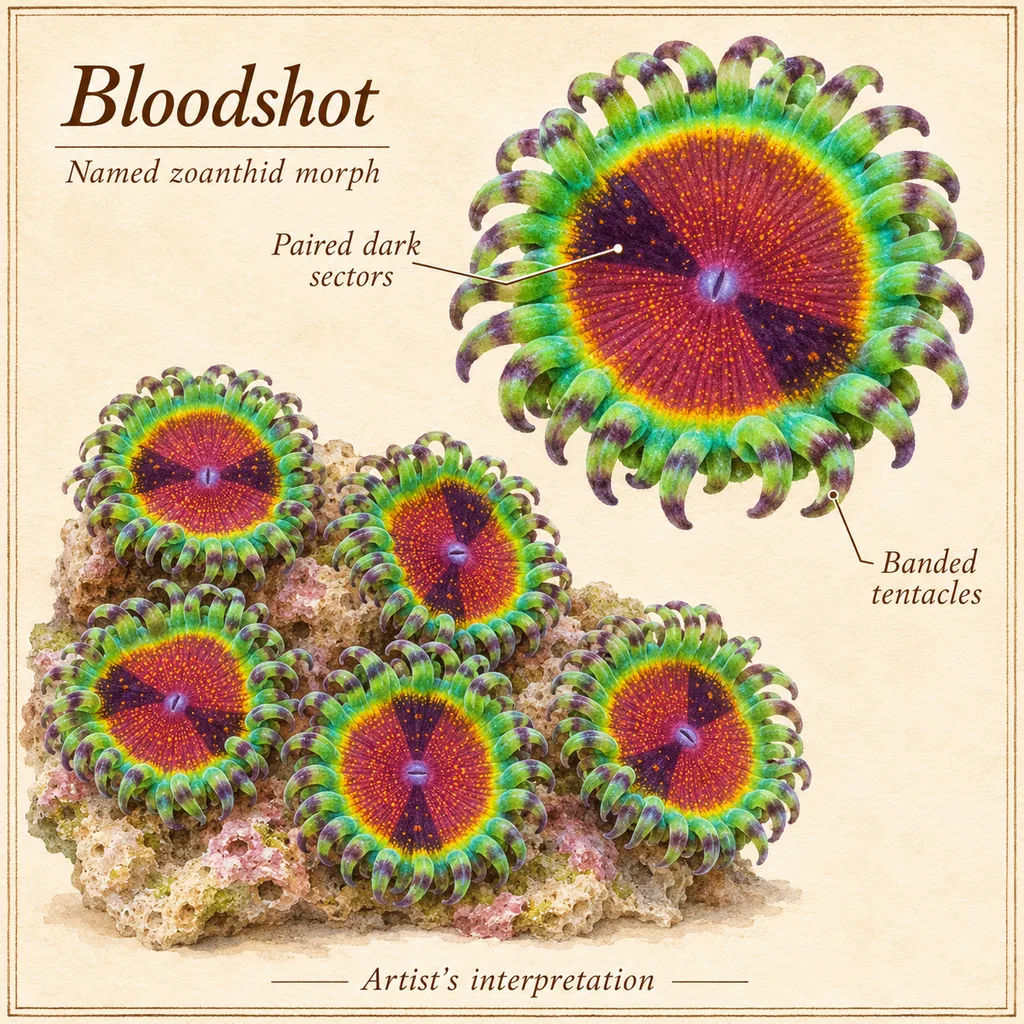
Bloodshot
Zoanthus sp.
Similar care · Soft
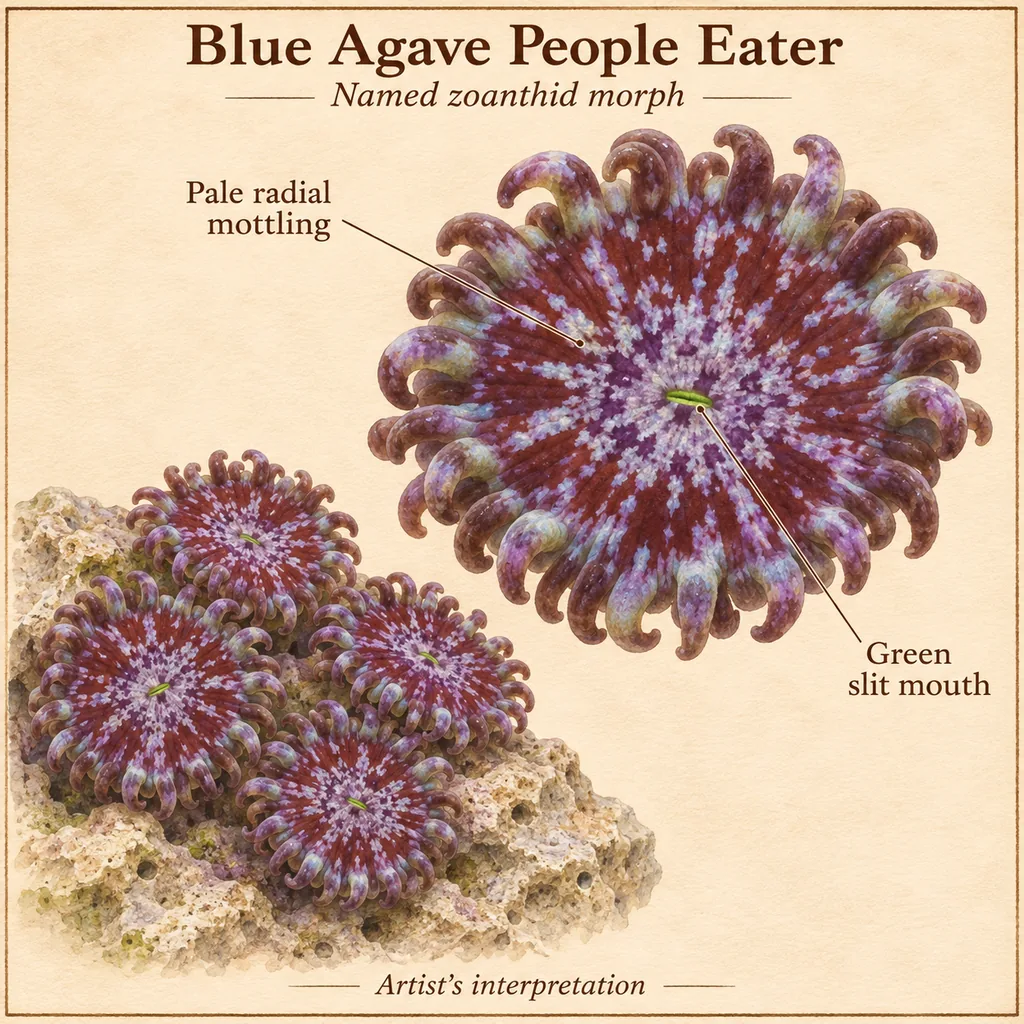
Blue Agave People Eater
Zoanthus gigantus
Similar care · Soft
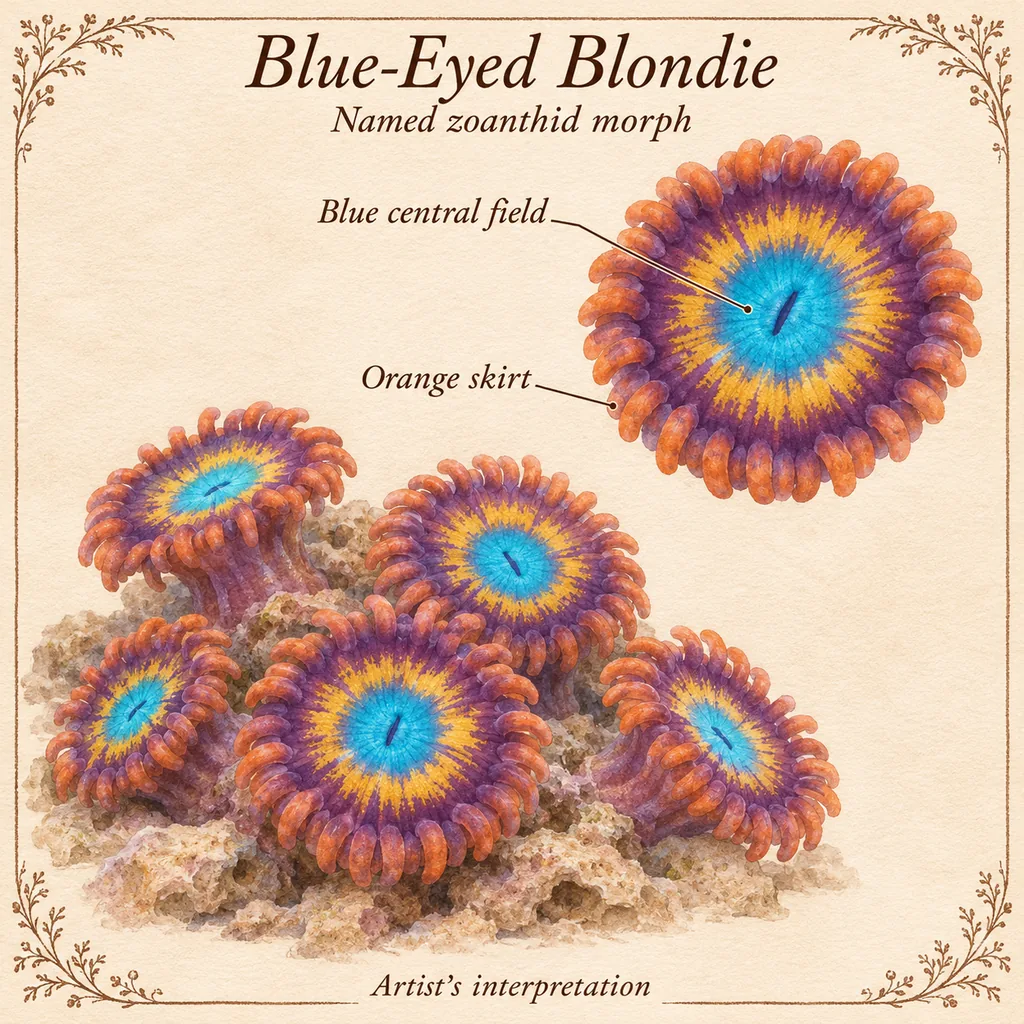
Blue-Eyed Blondie
Zoanthus sp.
Similar care · Soft
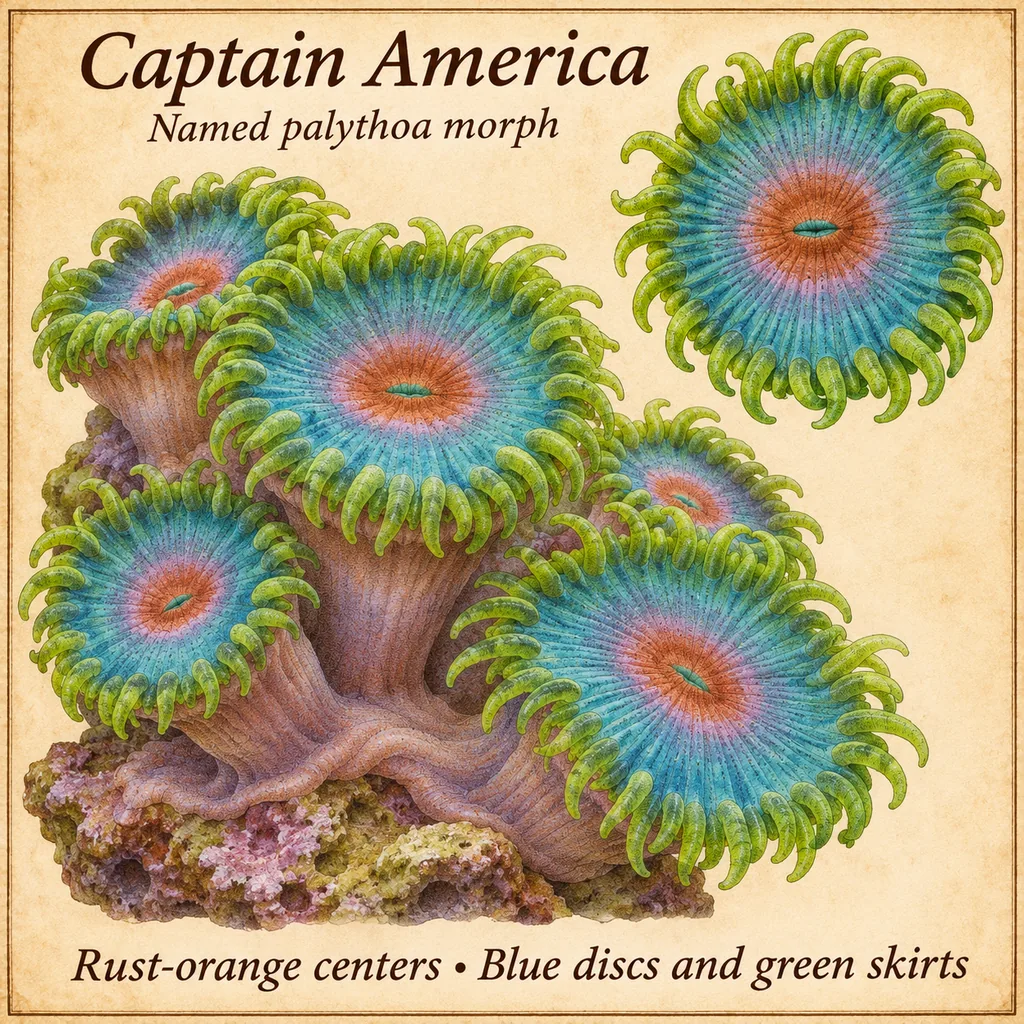
Captain America
Palythoa sp.
Similar care · Soft
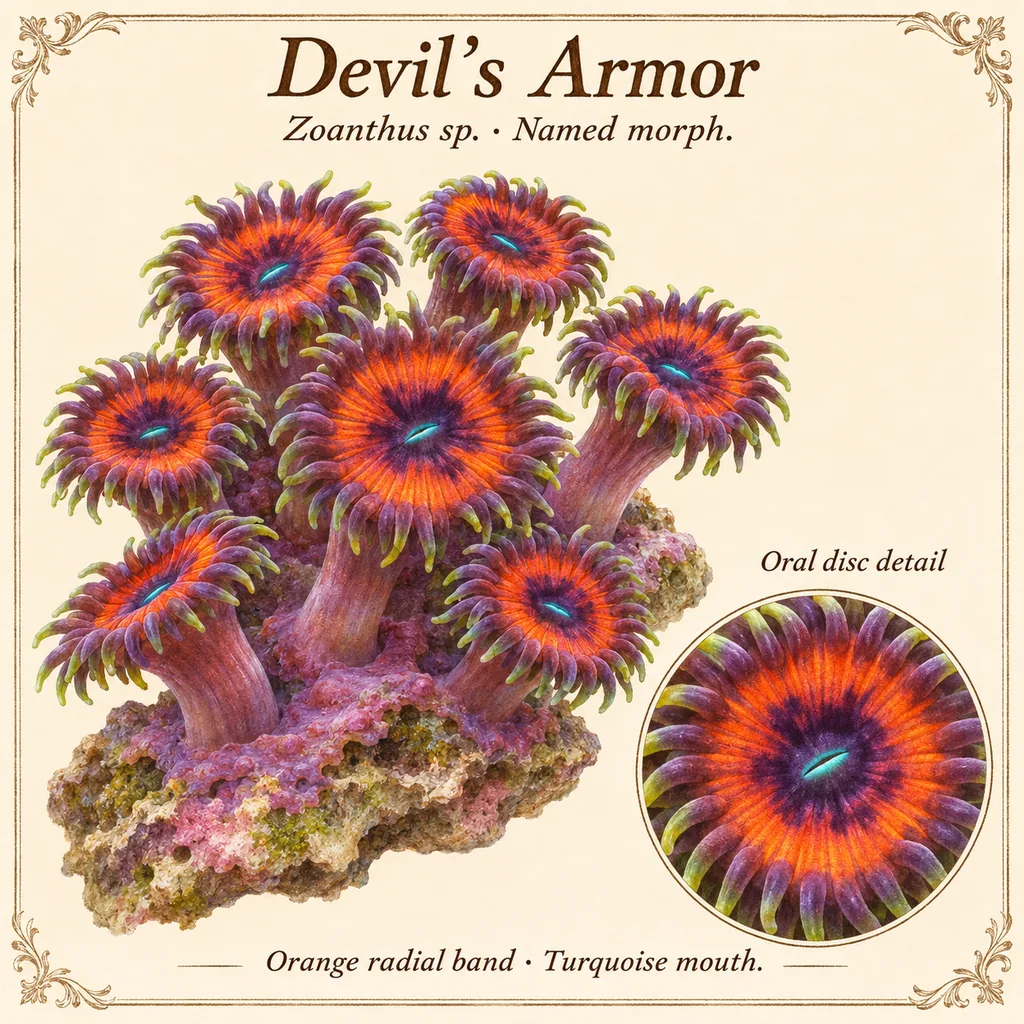
Devil's Armor
Zoanthus sp.
Similar care · Soft
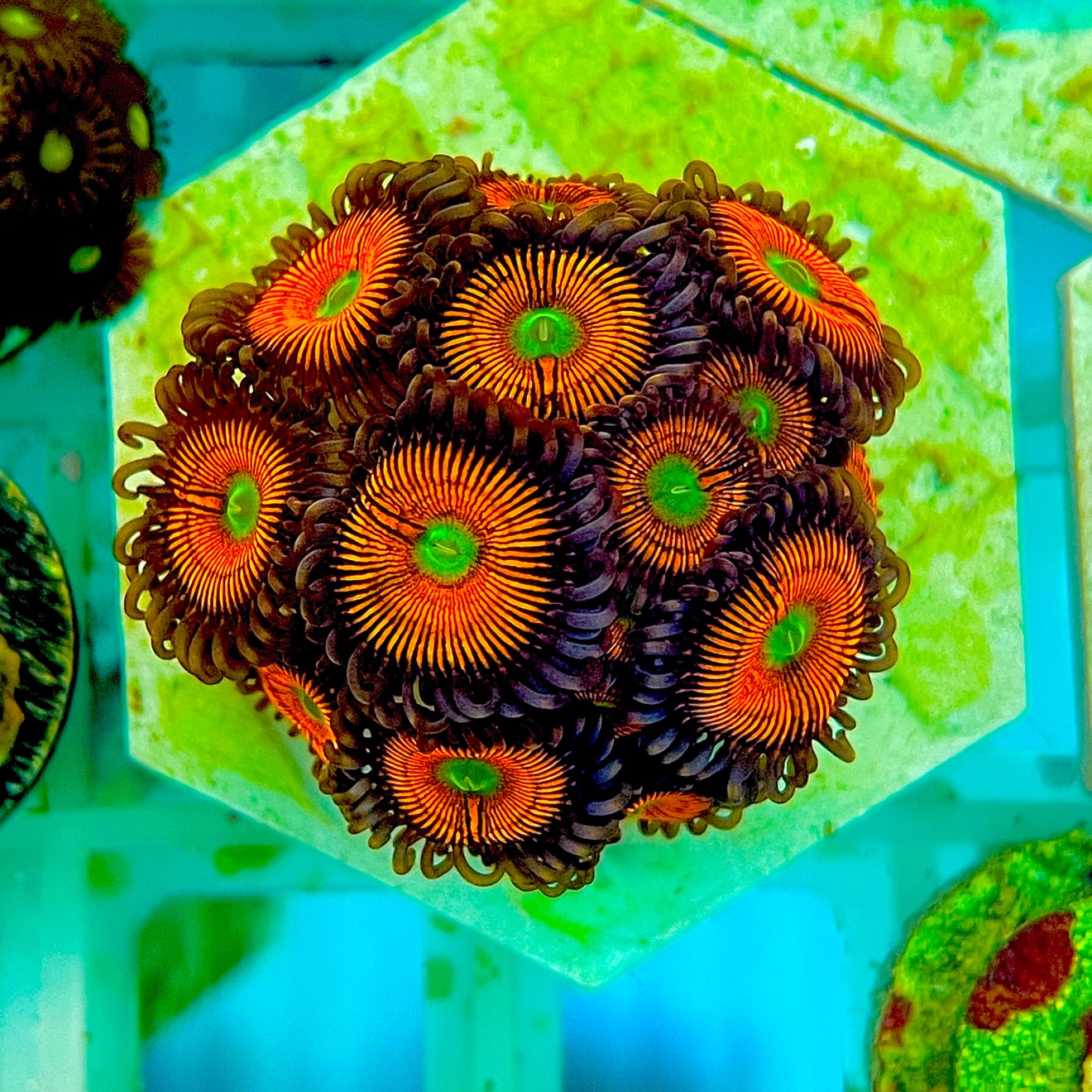
Everlasting Gobstopper
Palythoa sp.
Similar care · Soft