Care facts
- Care
- Intermediate
- Light
- Low
- Flow
- Low
- Place
- Bottom
- Space
- Peaceful
- Growth Rate
- Slow
Gallery
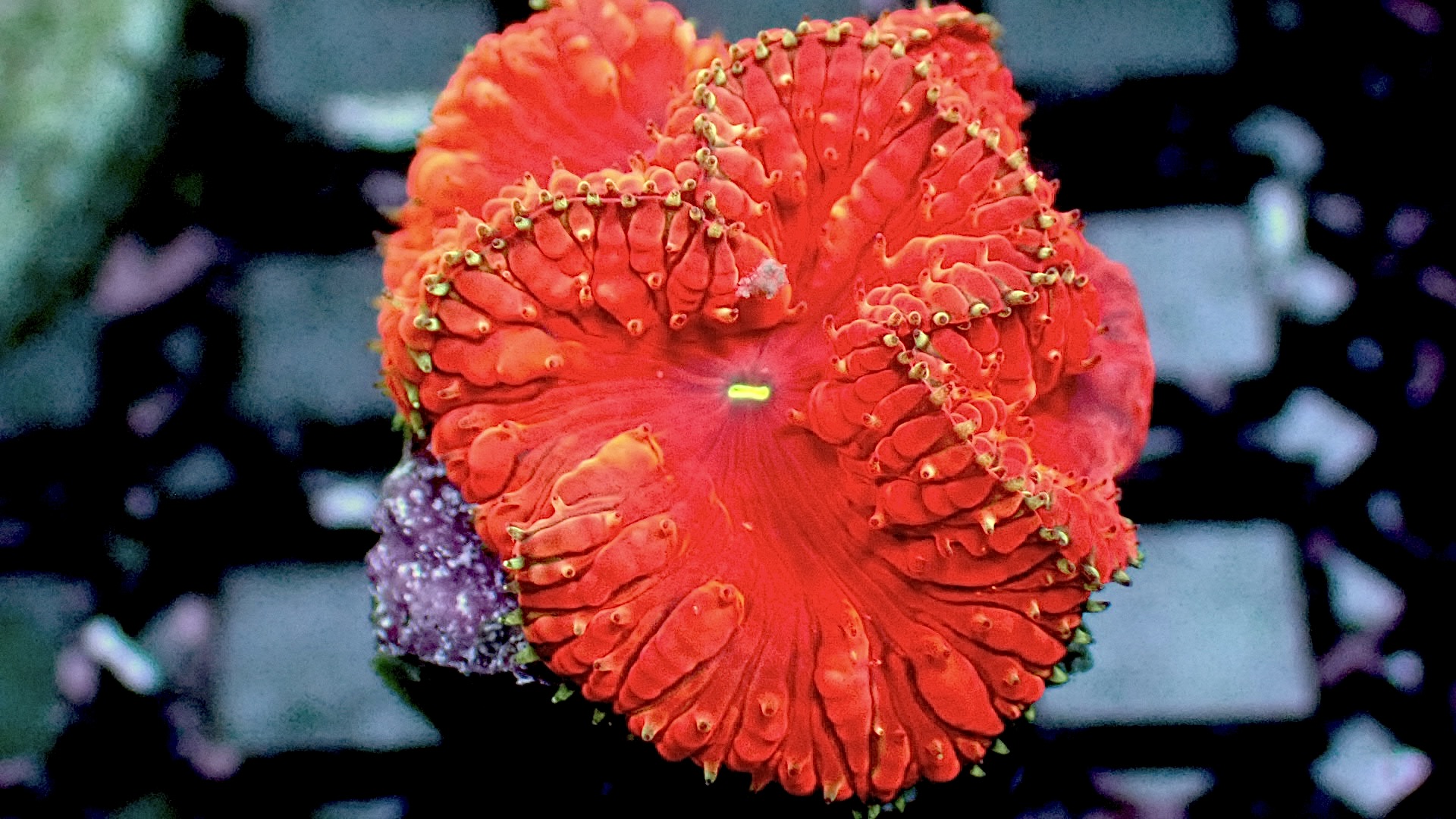
Red Scarlet blastomussa is a red form of Blastomussa wellsi, listed as Blastomussa wellsi. Blastomussa wellsi grows large, fleshy polyps packed closely over a branching skeleton, with each polyp swelling well beyond its corallite when settled. The red scarlet form shows deep red tissue that can carry contrasting tones toward the mouth, and a healthy colony reads as a cluster of full, rounded polyps with almost no skeleton visible at midday.
The entry lists intermediate care, low light, low flow, bottom placement, peaceful behavior, and slow growth. Place it low on stable rockwork or on a flat base near the sand bed, with polyps facing upward. Low light protects the red color. Strong light can pale the tissue, keep polyps drawn in through the day, or bleach the edges, so acclimate slowly if a move upward is ever needed and watch daily inflation as the guide.
Low flow suits the fleshy polyps. A gentle drift is enough to clear waste from between polyps. Direct flow presses tissue against the sharp skeleton beneath and can cause recession at the edges where flesh meets skeleton. Still corners collect detritus inside the cluster, so aim for calm movement that still lifts debris away during maintenance.
This coral is peaceful and has no sweeper reach worth planning around. Spacing is mainly protection. Keep stronger LPS and their sweepers well clear, because blastomussa tissue loses contact fights and recovers slowly. Leave room for the cluster to inflate fully and for new polyps to form around the edge without pressing into a neighbor or a rock wall.
Feeding supports fullness and growth. The polyps will take small meaty foods such as mysis or fine LPS pellets when they are inflated, offered once or twice a week with flow lowered for a short window. Spread food across several polyps rather than loading one. Light still supplies much of its energy, so feeding supports the colony rather than replacing good placement, and uneaten food left between polyps should be cleared.
Growth is slow. New polyps bud around the margin of the cluster and the skeleton expands gradually underneath. Stable calcium, alkalinity, and magnesium support that growth. Tissue that pulls back to expose skeleton, polyps that stop inflating while neighbors thrive, or color fading across the whole cluster usually trace back to light that is too strong, harsh flow, or a chemistry swing.
Common pitfalls include placing the frag under bright light for color, mounting it loosely so it tips face-down into the sand, and handling the polyps directly when moving it. Support the skeleton from below, start low and calm, and let daily inflation guide any small adjustment.
Field notes — what keepers report
- Inflation is the health signal keepers cite most. Reports describe polyps swelling full and smooth in a settled low spot, and pulling in early when light increases or flow turns direct. Keepers treat a return to gentle conditions as the first fix, with recovery described over days to weeks.
- Color reports split by light level. Keepers under low, blue-leaning light describe deep red tissue, while keepers who placed the coral higher describe paler, washed tones that recovered after a move back down. Both sides treat slow acclimation as important when any move is made.
- Feeding reports lean positive but stay modest. Keepers who target-feed describe fuller polyps and new edge polyps arriving sooner, while keepers who never target-feed describe healthy clusters that grow more slowly. Reports agree that food left sitting between polyps invites pests and should be offered in smaller amounts.
Field Notes
Related species

Pineapple Coral
Blastomussa merleti
Same genus

Stomping Grounds Blasto
Blastomussa merletti
Same genus
Aussie Blastomussa wellsi
Blastomussa wellsi
Same genus
Blastomussa Merleti
Blastomussa merleti
Same genus

Blastomussa Wellsi
Blastomussa wellsi
Same genus

Cat's Eye Coral
Cynarina lacrymalis
Similar care · LPS

Artichoke Coral
Scolymia cubensis
Similar care · LPS
Bleeding Apple Scolymia
Scolymia australis
Similar care · LPS