
Stomping Grounds Blasto
Blastomussa merletti
Also known as: ["Stomping Grounds Blastomussa", "Stomping Grounds Blasto Merletti"]
Care Summary
Stomping Grounds is an aquacultured Blastomussa merletti strain. Merletti is the small-polyp blastomussa: instead of a few large solitary heads, it grows as a dense cluster of small fleshy polyps on branching stalks, so a grown piece reads as a bouquet rather than a single mushroom-like head. The Stomping Grounds line is kept for its dark, moody base color with contrasting bright mouths, a combination that glows under blue light while staying subtle under whites.
Care is gentle on everything. Blastomussa merletti wants low light (about 50 to 100 PAR) — a shaded spot on the sandbed or the floor of the rockwork — and low, soft flow that lets the polyps inflate without pressing them against their own skeleton. Blastos placed in strong flow stay retracted and slowly recede, so if a piece never opens, flow is the first suspect and light the second.
Feed it and it grows. Each head has a mouth and takes meaty foods — mysis, finely chopped seafood, or LPS pellets — once or twice a week; fed colonies split heads noticeably faster. Keep alkalinity 8 to 10 dKH, calcium 400 to 450 ppm, and parameters steady. Give it about 2 inches of clearance; it has no real weapons, and it loses arguments with stinging neighbors.
Field notes — what keepers report
Keepers describe merletti as the blasto that rewards feeding more than any other — unfed frags can sit unchanged for months, while fed ones add heads steadily. Reports agree the polyps inflate largest in the morning before lights peak. Several keepers keep it fully under an overhang and report better extension there than in open low light. It is also reported as a good indicator coral: a happy, fully open Stomping Grounds usually means flow and light in that corner of the tank are gentle enough for other sensitive LPS.
Care
Field Notes
Related species
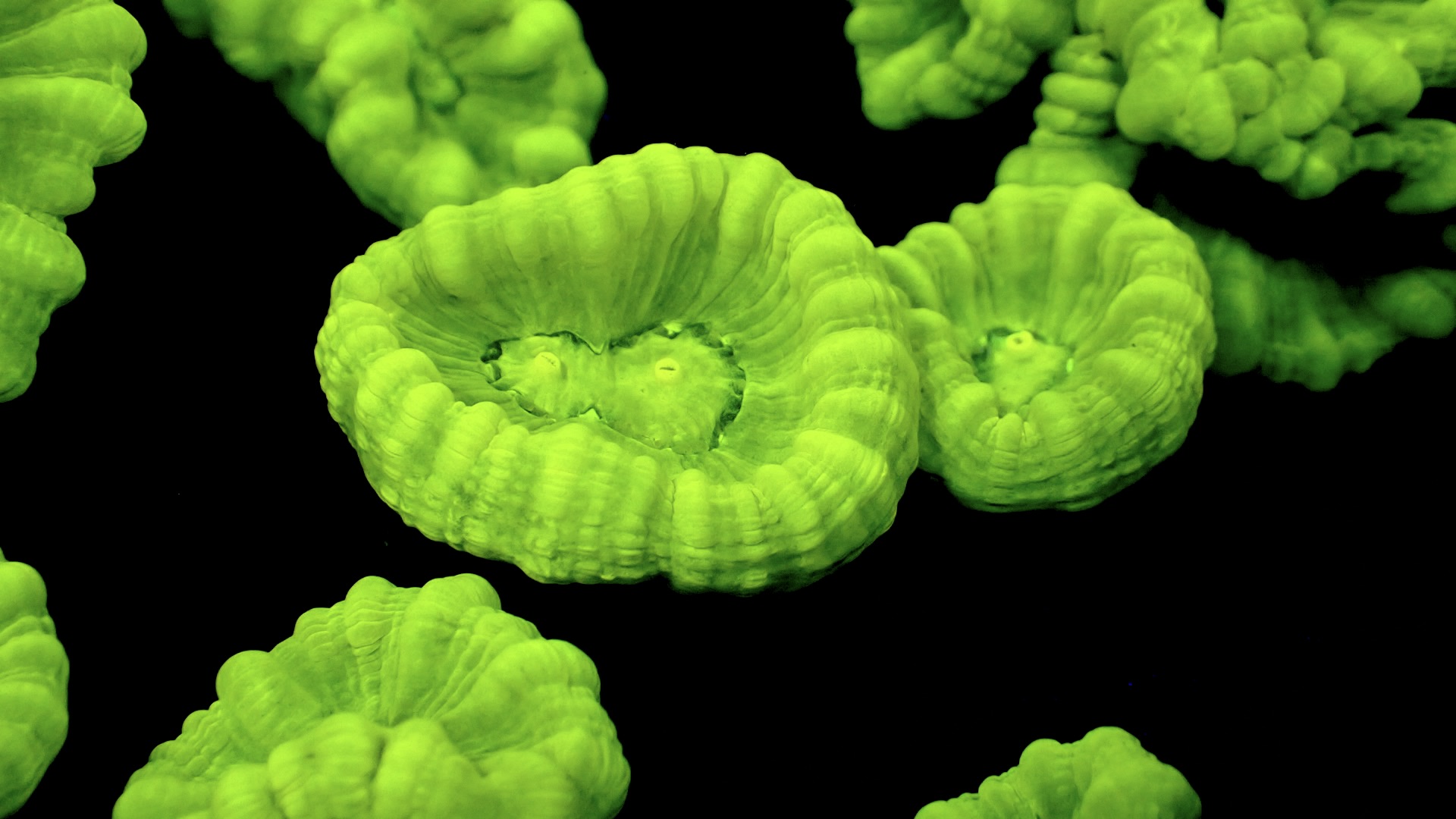
Kryptonite candy cane
Caulastrea sp

Blastomussa Merleti
Blastomussa merleti

Blastomussa Wellsi
Blastomussa wellsi

Bling bling cyphastrea
Cyphastrea sp
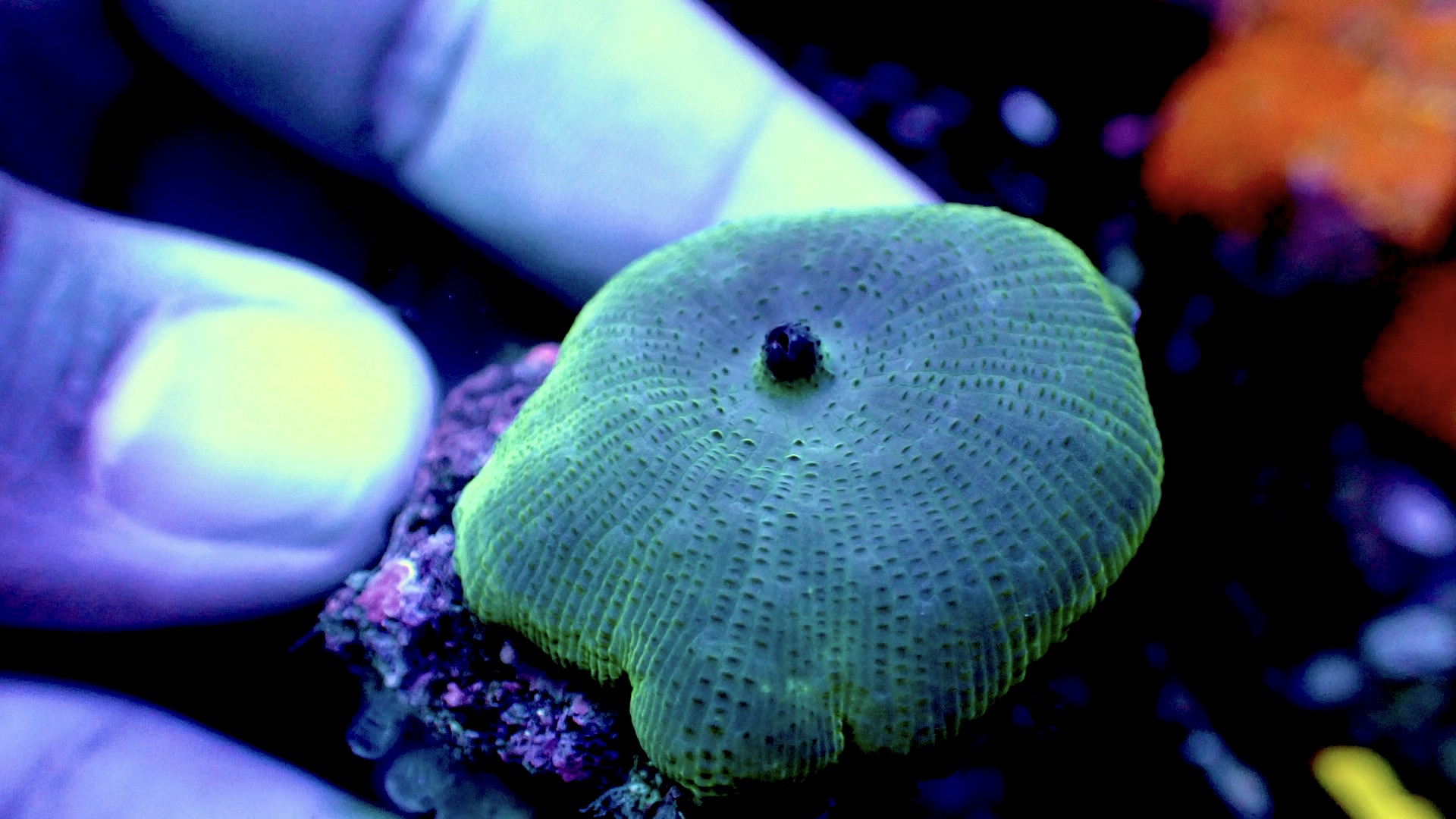
Blue discosoma mushroom
Discosoma sp

Candy Cane Coral
Caulastrea echinulata
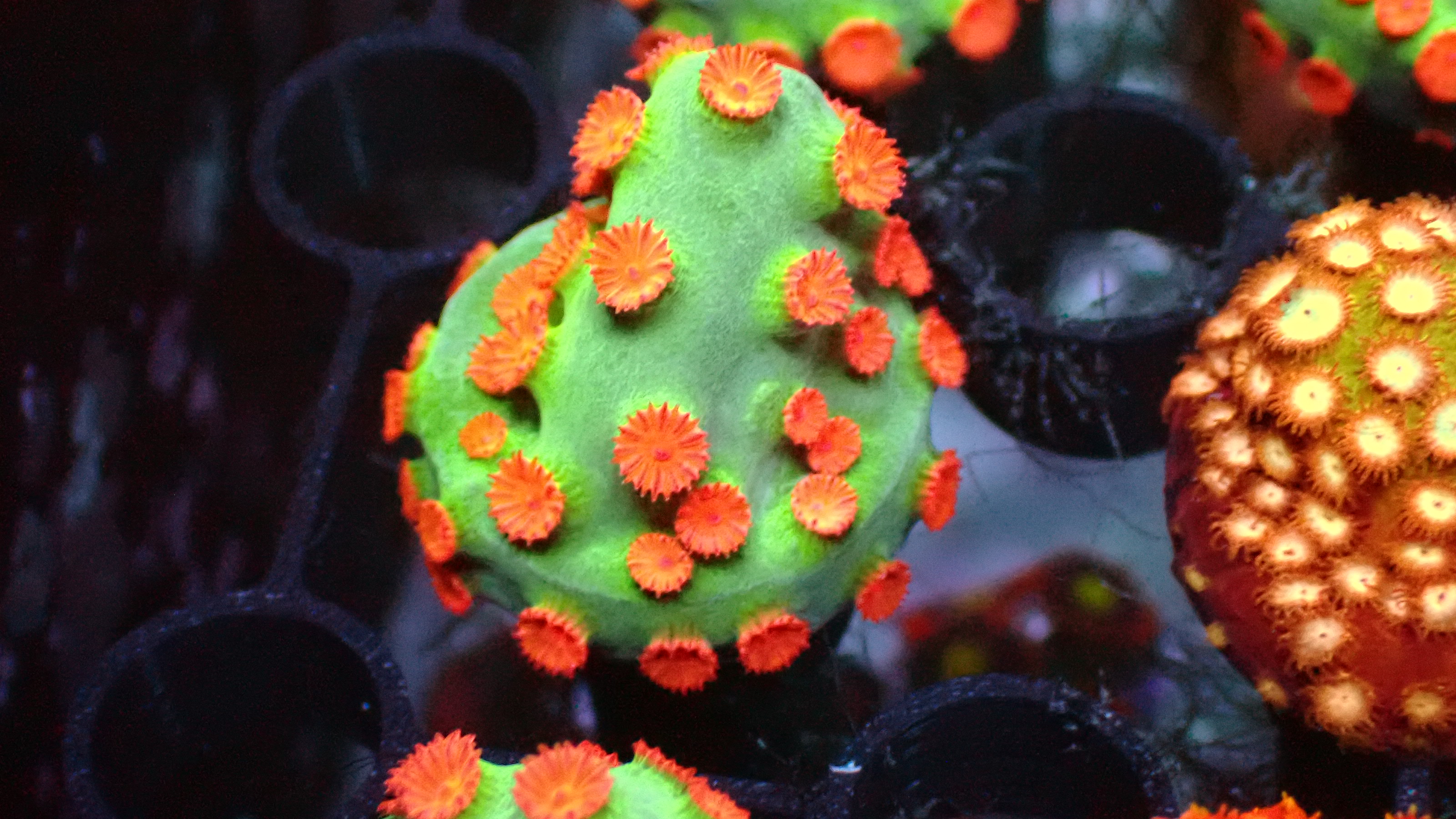
Meteor shower cyphastrea
Cyphastrea sp

Neon green hairy mushroom
Discosoma sp