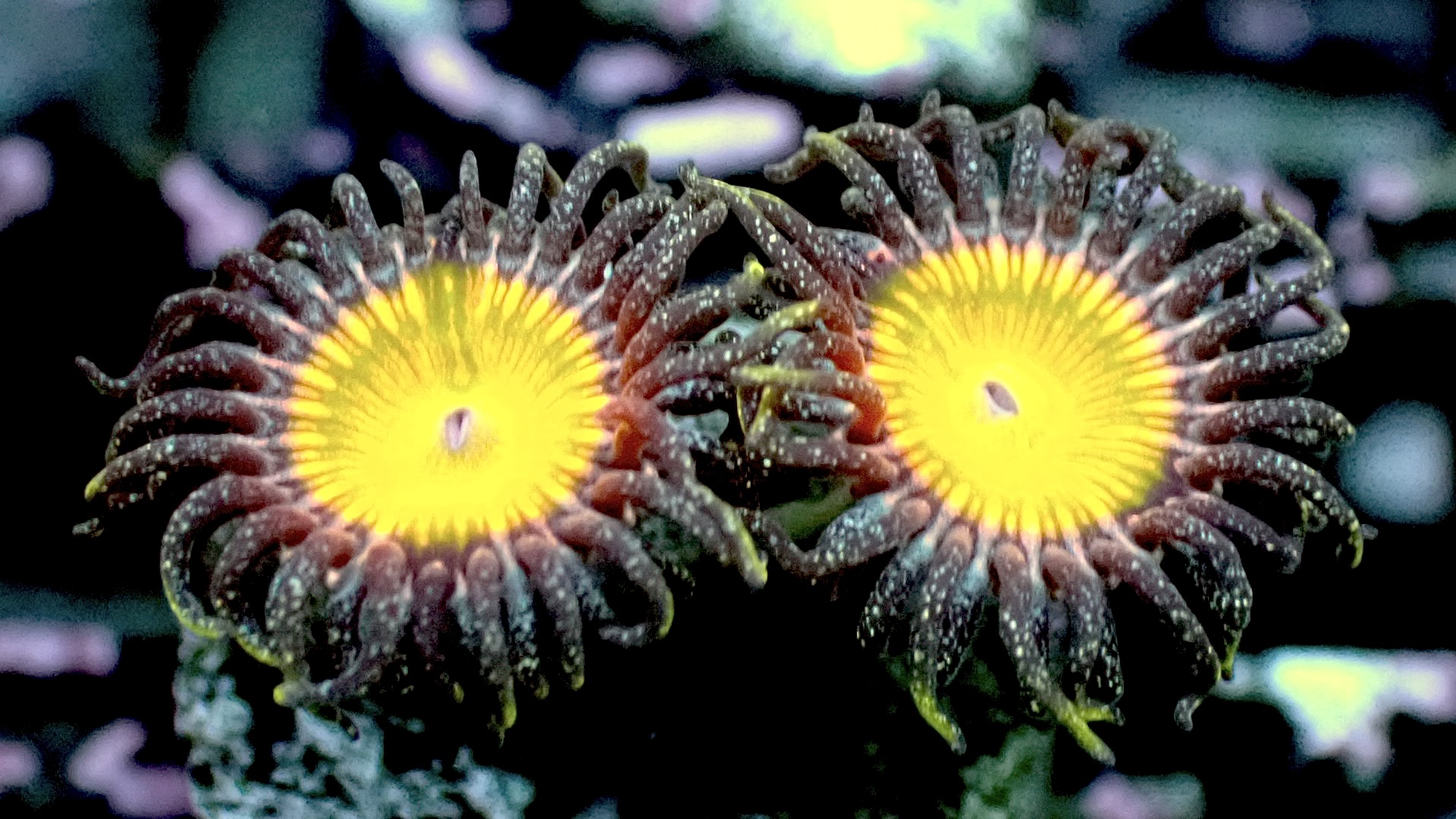
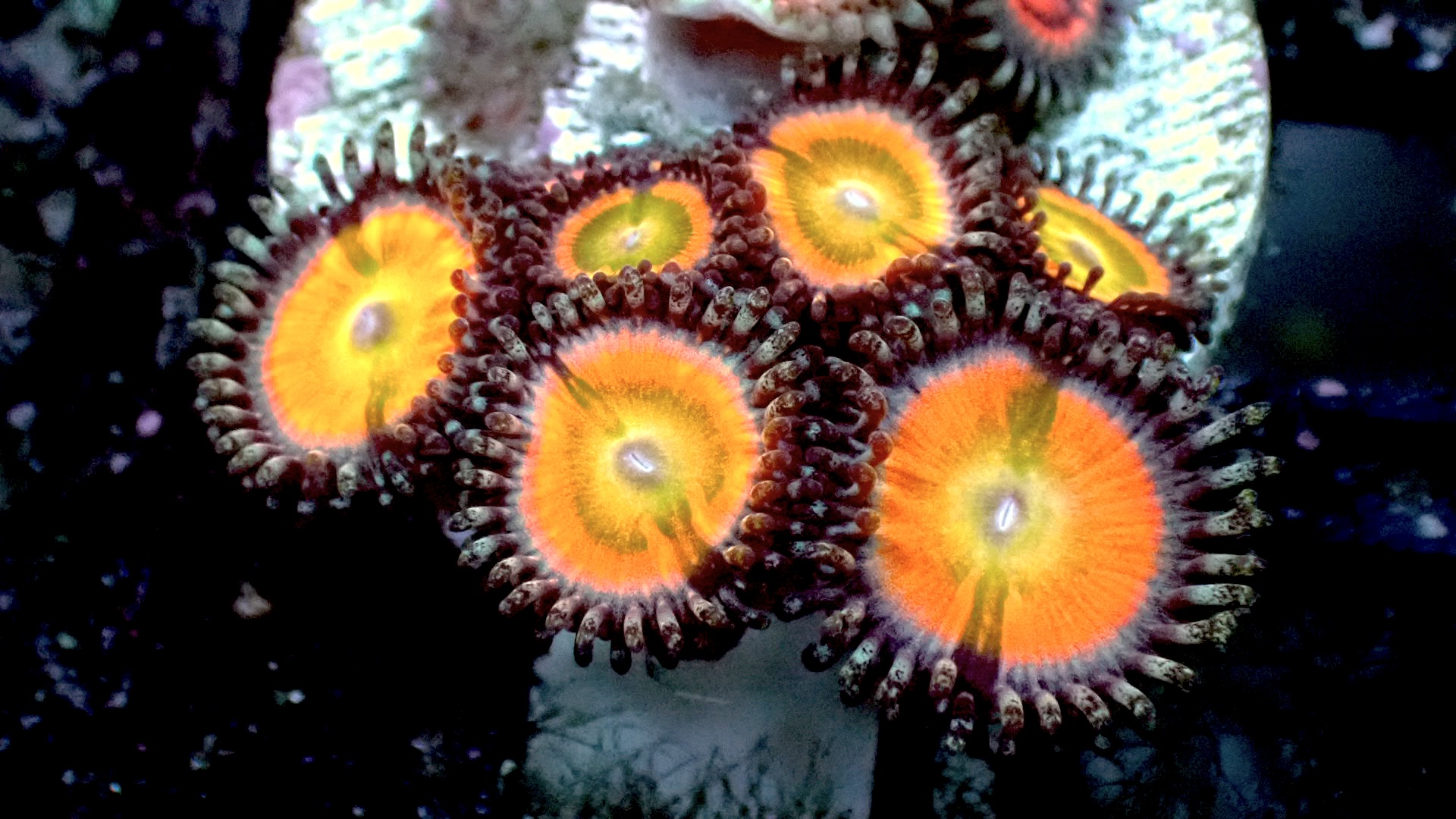
Sunny d zoanthids
Zoanthus sp
 ▶ Video
Palytoxin safety
Some zoanthids and palythoas can contain a potent toxin. Wear sturdy waterproof gloves and eye protection, minimize handling, and keep colonies submerged when possible. Never boil, steam, pressure-wash or scrub colonized rock under running water. Keep other people and pets away during handling. If exposure is suspected, seek urgent medical advice and tell the clinician about possible palytoxin exposure.
Sources: CDC: palytoxin exposure · OATA: avoiding palytoxin poisoning
Gallery
Videos
Sunny D is a well-known Zoanthus morph kept for its bright, warm-toned polyps that stand out in a mixed zoanthid garden. The name is used across the hobby for this morph, and colonies are usually grown as a spreading mat of many small polyps. Under blue light the faces brighten and the colony reads as a solid patch of color from across the tank.

Care basics
Care is rated beginner level in the entry, with medium light, medium flow, bottom placement, peaceful aggression, and moderate growth. Start low and move the frag up gradually if the polyps stretch toward the light or lose brightness. Medium flow keeps the mat clean and the polyps open without battering them. Sunny D adapts to a range of reef conditions, and steady parameters do more for color and growth than frequent repositioning.
Plan for spread from the day the frag goes in. A moderate growth rating on a zoanthid means a healthy mat will cover its rock and keep going. Place Sunny D on its own rock or island, leave room between it and slower morphs, and expect to frag the edge back over time. Mixed zoanthid gardens look good, though vigorous morphs can shade and overgrow slower neighbors until the slower colony thins out.
Handling and safety
Zoanthid handling rules apply in full. The mucus of zoanthids can contain palytoxin, so wear gloves when fragging or moving the colony, protect any open cuts, and wash hands and tools thoroughly after handling. Never boil, steam, or pressure-wash rock with zoanthids on it. Frag on a tray outside the tank, keep the work area away from children and pets, and clean up cuttings and rinse water with care.
Feeding and growth
Feeding is simple. A weekly broadcast of fine coral food or a gentle target feeding supports polyp growth, and the colony also does well on light and dissolved nutrients alone. Growth comes as new polyps at the mat edge, fastest once the frag has encrusted and settled. Common pitfalls are burying the mat in a low-flow corner where detritus settles, letting algae grow between polyps, and placing a vigorous colony where it can overrun a slower named morph. A soft brush of flow across the mat and an occasional gentle puff to clear debris keep polyps opening fully.
Field notes — what keepers report
- Keepers commonly describe Sunny D type morphs as forgiving growers that hold color across many tank styles. Reports from lower-light tanks describe taller, larger polyps, while reports from brighter tanks describe shorter polyps with stronger color. Both forms are described as healthy, so keepers tend to judge the placement by polyp posture rather than by color alone.
- Overgrowth is a recurring theme. Keepers who planted vigorous zoanthids beside slower morphs report the fast mat winning the rock over time, and the shared fix is island placement or regular edge fragging. Other keepers lean into the spread and use fast morphs to cover bare rock quickly, accepting the pruning work that follows.
- Closed-polyp scares are widely reported with zoanthids generally. Keepers describe colonies closing for days after a move, a dip, or a parameter swing, then reopening once conditions settle. The common advice is to check for pests and film algae on the mat, correct stability issues, and give the colony time before intervening again.
Field Notes
Related species

Blueberry Haze Zoas
Zoanthus sp.
Same genus

Burning Willow Zoas
Zoanthus sp.
Same genus
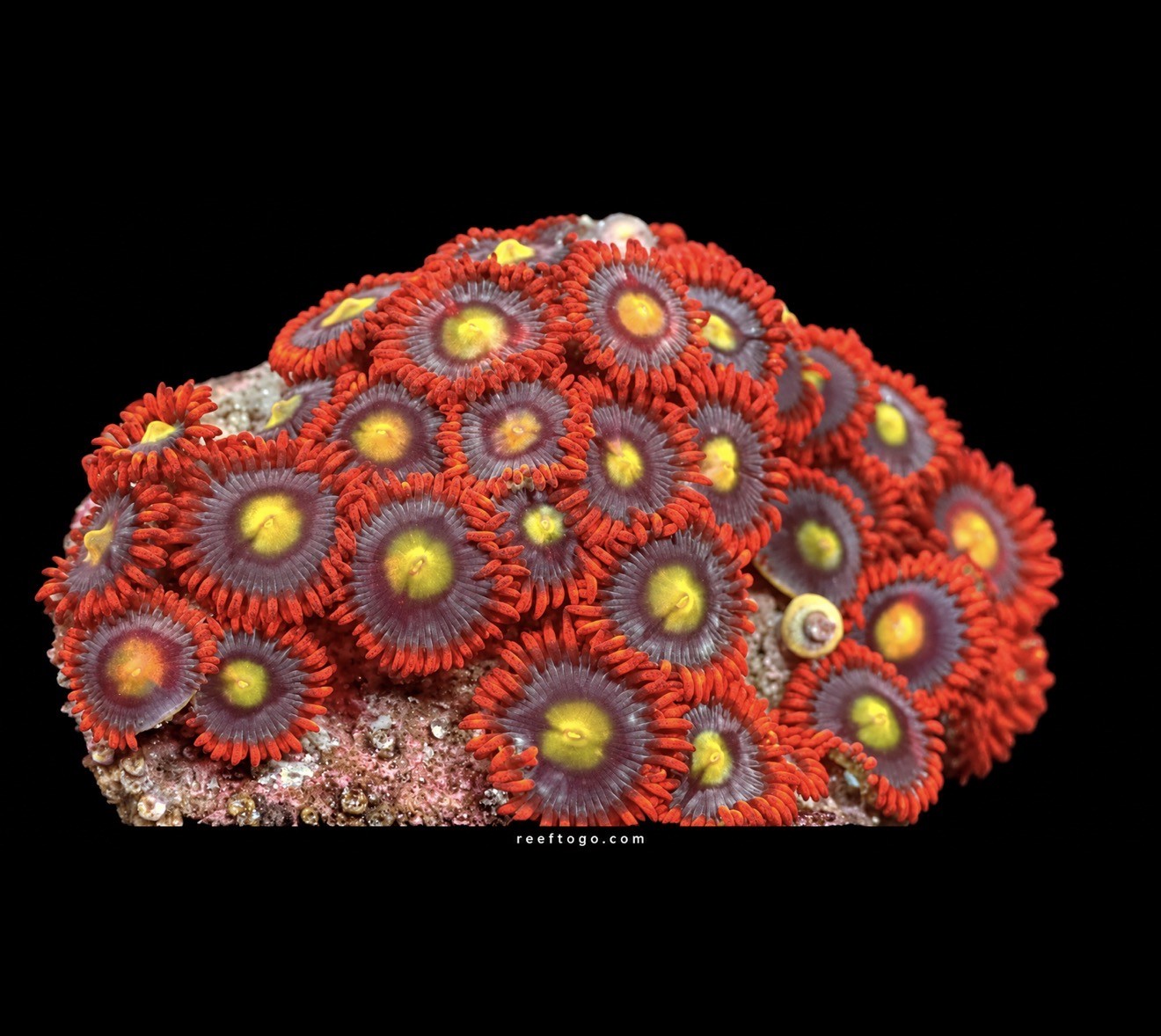
Fire and ice zoanthids
Zoanthus sp
Same genus
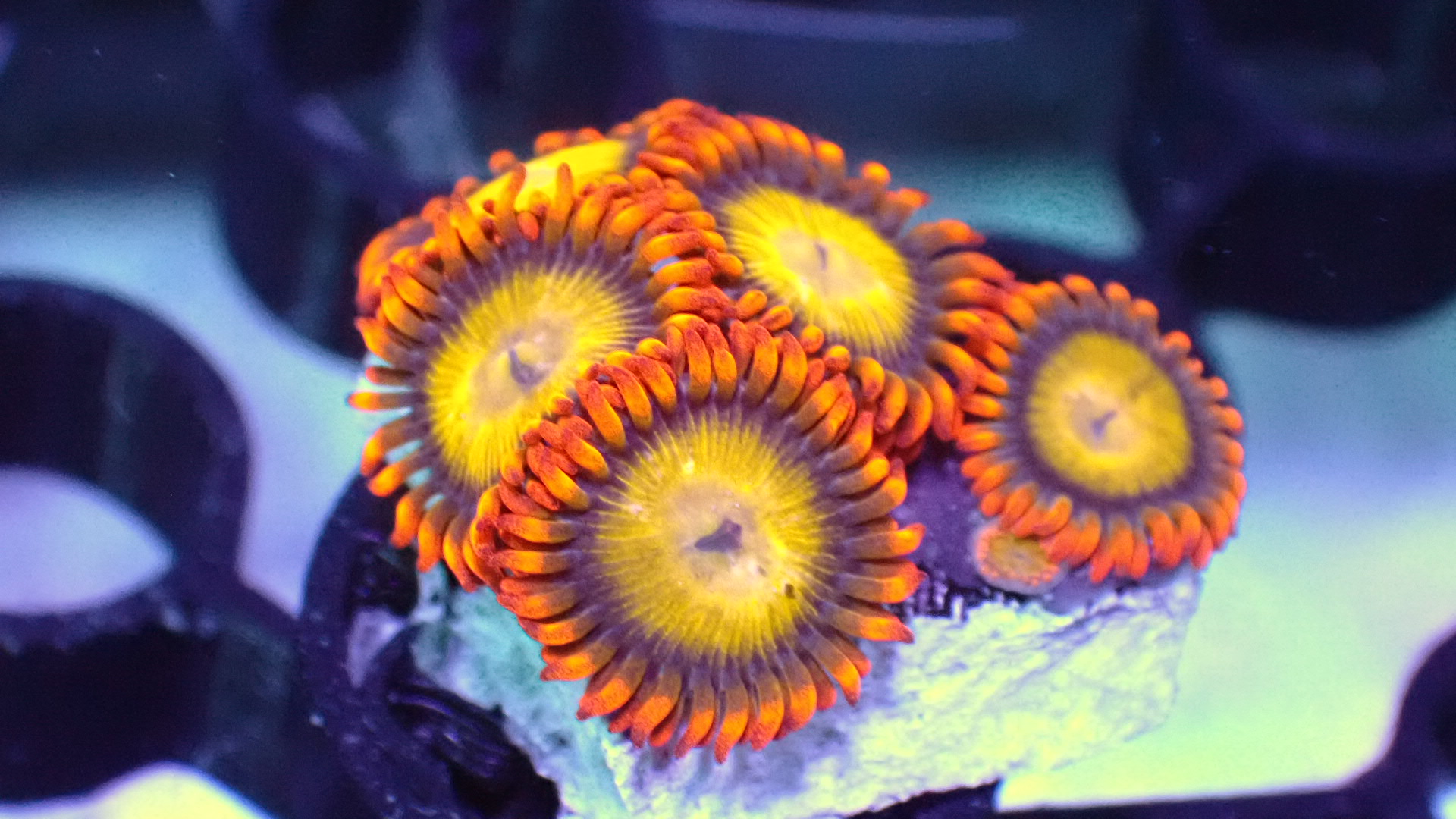
Mandarin zoanthids
Zoanthus sp
Same genus
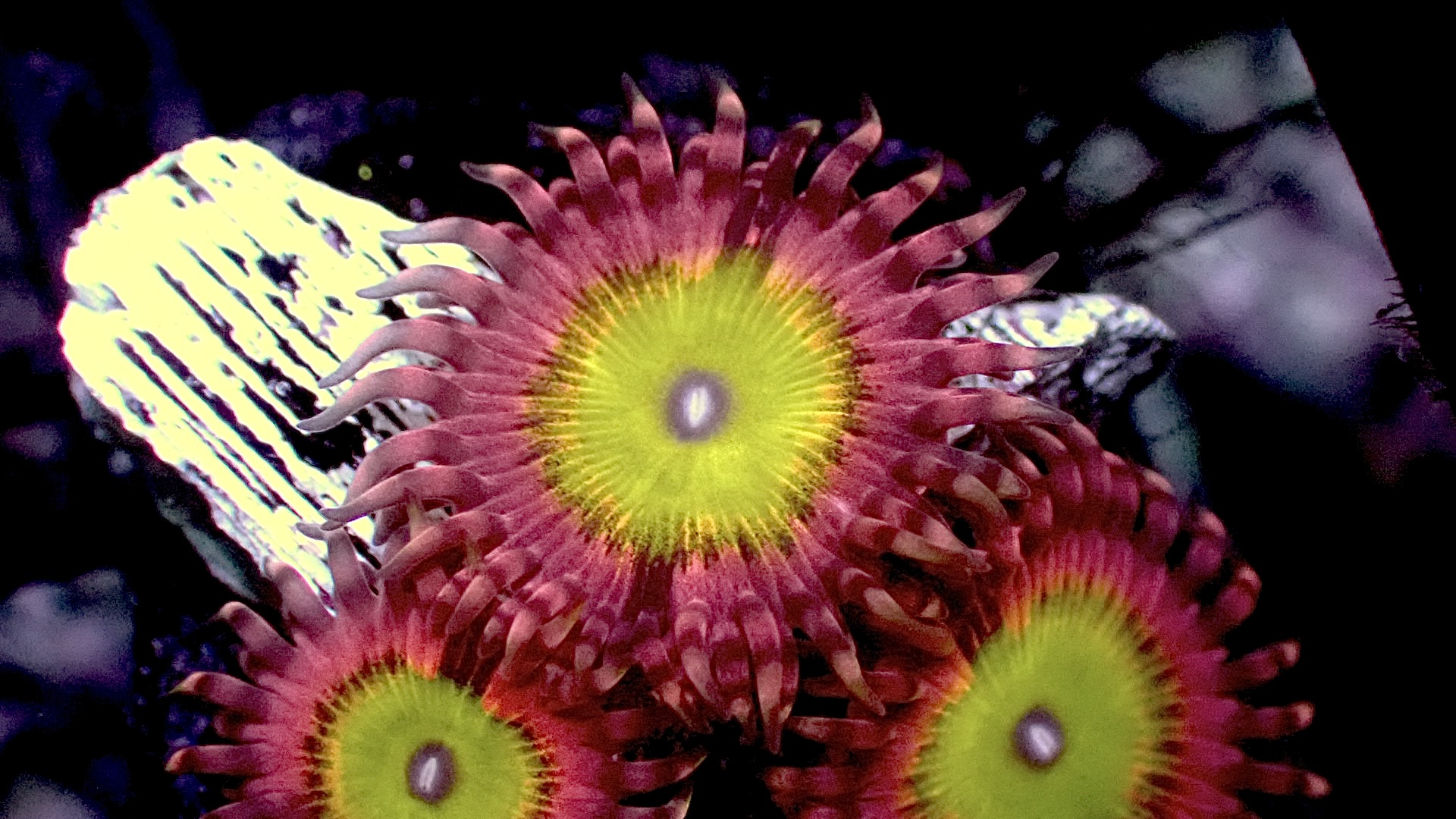
Pink hippo zoanthids
Zoanthus sp
Same genus

Purple Heart zoas
Zoanthus sp
Same genus

Radioactive dragon eyes
Zoanthus sp
Same genus
Rainbow infusion zoanthids
Zoanthus sp
Same genus