
Super Saiyan
Zoanthus sp.
Also known as: Super Saiyans, Super Sayians, Super Sayian
Super Saiyan is a named zoanthid carried on the Zoanthids.com catalog shelf in the master strain queue, filed there in one line: a yellow-gold spiky "hair" skirt around a bright face. The name points at the skirt — the spiky, upright, gold fringe reads as the powered-up hair the name invokes, and the skirt is the check a buyer uses first. Spectrum shifts zoanthid colour hard, and this morph shifts harder than most, so judge a frag under the light the seller photographed in and ask for a white-light view where the sale allows it.
The colour record rests on the skirt, and the entry keeps its limits visible. The queue filing gives a yellow-gold spiky skirt around a bright face. A keeper introducing a separate morph in 2013 reached for this strain as his comparison and described the shared feature as an electric yellow skirt. Top Shelf Aquatics sells the strain today under a FAQ whose first question is why the polyps faded from bright gold to green. No fuller disc and mouth description for this strain was found in the sources read for this entry. The blue mouth and orange centre that appear in the 2013 comparison belong to the other morph in that post, Spear of Triam, and they stay with that morph. A frag sold as Super Saiyan should read gold first, with the bright face inside a spiky yellow-gold fringe; a dull green-brown polyp under this name may be a shifted colony rather than a wrong one, and the light history is the first question to ask.
The name carries a spelling wobble worth knowing. Keeper sale lists read for this entry list the strain as Super Sayian, at $20 and $25 in a May 2026 refresh and at $25 in a July 2026 refresh of the same long-running Reef2Reef list, and the master queue already flags Super Sayians as the common misspelling in identification threads. Both misspelled forms sit in this entry's alias field, so a search typed the way sellers often type it still lands here. The plural Super Saiyans is the form Top Shelf Aquatics uses on its current retail listing.
Care follows the family baseline, and the strain adds colour work on top of it. Saltwaterfish calls zoanthids beginner-friendly, hardy, and adaptable, and Top Shelf Aquatics frames the group the same way on this strain's own page. No keeper record read for this entry reports this strain melting, refusing to settle, or dying in a thriving system. The work this morph asks for is spectrum work: holding the gold takes a blue-heavy spectrum and enough PAR, covered under Light below. A keeper can keep this coral alive under ordinary zoanthid care and still lose the colour that made them buy it, so the entry treats light as the strain's main husbandry point.
Water chemistry follows the standard reef shape. Reef To Go's standard parameters suit the strain: temperature 77–79 °F, salinity near 35 ppt (about 1.024–1.026), alkalinity 8–10 dKH held steady, calcium 400–450 ppm, with low but detectable nitrate and phosphate. Top Shelf Aquatics gives this strain's page calcium 380–450 ppm, alkalinity 8–9.5 dKH, magnesium 1,250–1,350 ppm, nitrate 5–15 ppm, phosphate under 0.10 ppm, temperature 75–80 °F, and salinity 1.024–1.026. Saltwaterfish gives the family nitrate 5–20 ppm and phosphate 0.03–0.10 ppm and notes that zoanthids prefer nutrient-richer systems than SPS corals, with too-clean water slowing growth and shrinking polyps. The strain FAQ lands in the same place for colour: keep nutrients non-zero, at nitrate 5–15 ppm and phosphate 0.03–0.10 ppm, for colour stability. Zoanthids carry no calcium skeleton, so the colony itself makes no dosing demand; stability does the work.
Light is where this strain is won or lost. The Top Shelf Aquatics FAQ written for this morph says a blue-heavy spectrum with moderate PAR of 120–200 preserves the gold tones, and warm whites with low PAR push the morph toward green and brown. The same page's general lighting section gives zoanthids 75–150 PAR, and Saltwaterfish works the family at 50–150 PAR with a low start. The working plan reconciles those bands in sequence: place the frag low, ramp intensity slowly over two to three weeks, and settle the colony where the gold holds — for most tanks that means the upper part of the family band under blue-heavy light. Change one variable at a time. A colony that has gone green under warm, dim light has a light history to correct before it has a chemistry problem to chase, and the keeper thread in the field notes shows that argument playing out in full.
Flow follows the family pattern. Top Shelf Aquatics calls for moderate, indirect flow that keeps debris from settling and lets the polyps stay open without excessive movement. Saltwaterfish calls for gentle to moderate flow, enough to keep detritus off the mat and move the polyps gently, with direct blasting flow closing polyps. The strain FAQ adds that a clean, moderate-to-strong crossflow helps keep a mat from creeping under shaded ledges on an island placement. A colony that stays closed earns a flow check and a light check together, in that order, before any chemistry change.
Feeding is a supplement with a real but secondary effect. Top Shelf Aquatics feeds its zoanthids fine-particle blends a few times a week, and its FAQ for this morph suggests small particulate foods sparingly, one to two times weekly, when growth stalls despite good lighting. Saltwaterfish feeds Reef Roids, phytoplankton, or coral-focused liquid foods once a week for a growth and colour boost. Keep the feeding modest and watch for capture; uneaten food in a zoanthid mat is a detritus problem wearing a feeding costume.
Placement should plan for a family mat on its own island rock. The strain FAQ's overrun answer is direct: mount on an isolated island rock or use a rubble moat to block the mat, prune by cutting the mat edge and removing small colonies, and keep the crossflow clean so the mat stays where it was put. Saltwaterfish gives the same isolated-rock advice for fast-growing varieties. Begin on a low island, keep the colony's spread room in the plan from the first day, and walk it upward only as its colour asks for more light.
Pests and health checks carry the family list. Inspect on arrival and dip as the standing defence, check at night for zoa-eating nudibranchs, sundial snails, and spiders, and treat closed or melting polyps as the everyday stress sign — the strain FAQ names bacterial trouble, including zoa pox, as the next suspect after predators, with alkalinity stability and non-zero nutrients as the background conditions. Handling follows the family safety rule at full strength: gloves and eye protection for every handling and fragging session, colonies away from high heat, and hands and tools washed thoroughly afterwards, because zoanthids can carry palytoxin.
Price anchors place this strain in the accessible collector band, with a long and unusually well-dated trade run. Keeper sales in the San Francisco Bay Area offered single polyps at $15 in 2013 and at $15 for one polyp or $25 for two in 2014. A Reef2Reef keeper list priced Super Saiyan frags at $10 a piece, a chunky keeper list read for this entry priced it at $28 with the frag size not stated, and the long-running 70+ strains keeper list priced it — under the Super Sayian spelling — at $20 and $25 in 2026. AquaSD's Fall Harvest sale carried Super Saiyan Zoas at regular prices of $29.99 and $44.99, at $9.00 and $13.50 after the sale discount. Top Shelf Aquatics lists the strain today at $59.99 for an almost-WYSIWYG frag, typically three-quarters of an inch to one inch. The spread across thirteen years of records runs from $10 keeper frags to a $59.99 retail frag, and the dossier records it as found.
Field notes — what keepers report
- The defining keeper record for this strain is a colour argument, and both sides stay visible. In Reef2Reef's "Zoas that are suppose to be yellow turning green" thread (October 2021), a keeper reported that his Super Saiyan skirt was green instead of yellow, alongside a WWC Purple Monster skirt with the same shift, a few weeks after adding the zoas, under a ViparSpectra light run at 50% blue and 1% white, with nitrate at 10 and phosphate at 0.05 on weekly water changes. His own theory was the salt — the elevated levels in his Red Sea Pro mix — and he had already ordered the lower-alkalinity blue bucket as a test. The replies ran the other way at full strength: zoas morph and change colour based on placement and on how different the new tank's spectrum is from the tank they came from, colour shifts are expected while they acclimate, a fellow keeper's Pikachus look green in white light and stark yellow in blue, and the salt was doubted outright while left open as a possibility. The original keeper closed by saying he would wait and see once the zoas fully acclimated. No resolution post was found in the record read. The Top Shelf Aquatics FAQ for this morph, written from the vendor side, lands on the replies' side of that argument: blue-heavy spectrum with moderate PAR of 120–200 preserves gold, warm whites and low PAR push the morph toward green and brown, and nutrients should stay non-zero for colour stability.
- The skirt check has an early, independent witness. In a March 2013 Nano-Reef sale post, a keeper introducing his new morph, Spear of Triam, described it as similar to a Super Saiyan with the electric yellow skirt, then separated his morph by its blue mouth and orange centre. A comparison written to sell a different coral has no reason to flatter this strain, and it confirms the feature the master queue filing leads with — an electric yellow, spiky skirt — from the strain's early trade years. The same post is the reason this entry refuses Spear of Triam's face: the blue mouth and orange centre are that morph's selling points, stated as differences from Super Saiyan.
- Longevity in the trade is the quiet record underneath the prices. The strain appears in keeper sale lists in 2013 and 2014 at $15 a polyp, in AquaSD sale posts at regular prices of $29.99 and $44.99, in Reef2Reef keeper lists at $10 and at $28, in a livestock list from a Florida shop in 2026, and as a current $59.99 Top Shelf Aquatics retail listing with a 5.0 rating from two reviews. A zoanthid name that keeps circulating, correctly spelled and misspelled, across thirteen years of keeper and vendor lists is a settled trade strain, and keepers in the colour thread reached for it by name without needing it explained.
- The growth record is an absence, and the tile says so. No doubling time, polyp-count report, or colony growth account naming this strain was found in the sources read. What exists is family and vendor material: Saltwaterfish describes fast colonial spread by mat extension and polyp budding under stable, nutrient-detectable conditions, and the Top Shelf Aquatics FAQ for this morph answers an overrun question with island rocks, rubble moats, and edge pruning, which presumes a mat that spreads. Both records stay at their own strength in these notes, and the GROWTH tile sits at the Moderate default between them, borrowing neither.
- The price record splits by channel and by era, and both stay visible. Earliest keeper sales: $15 for one polyp in 2013, sold, and $15 for one polyp or $25 for two in 2014, from the same Bay Area keeper across two sale threads. Later keeper lists: $10 a frag in a great-prices list (several offered, one marked sold), $28 in a chunky list with frag size unstated, and $20 / $25 under the Super Sayian spelling in 2026 refreshes of the 70+ strains list. Vendor sale channel: AquaSD regular $29.99 and $44.99, cut to $9.00 and $13.50 in a 70%-off flash sale. Current national retail: $59.99 at Top Shelf Aquatics for a three-quarter to one-inch almost-WYSIWYG frag. The dossier records the full spread rather than averaging it away; the honest summary is a strain that trades cheaply between keepers and at ordinary designer-zoa retail from a national vendor.
Field Notes
Related species
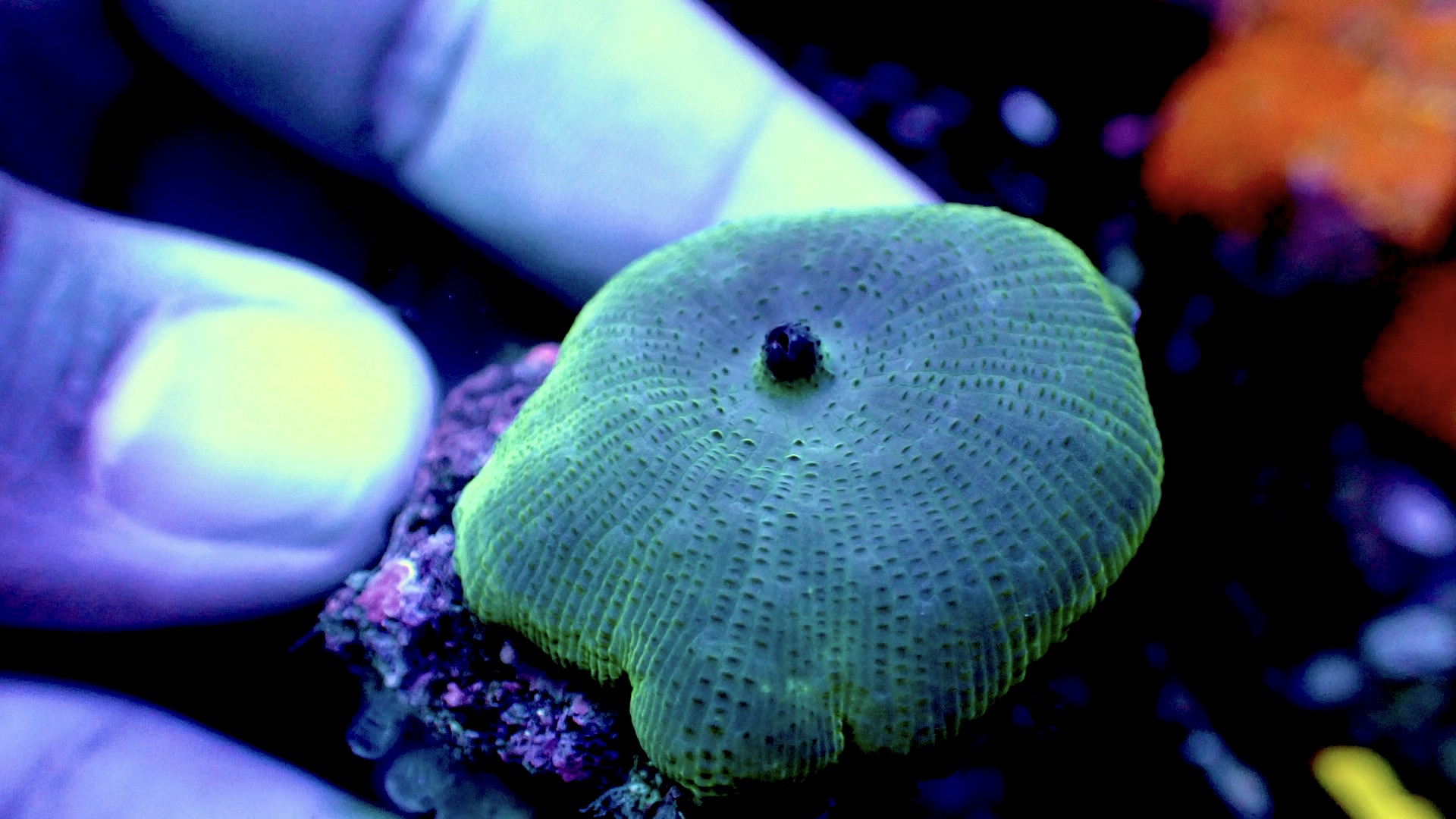
Blue discosoma mushroom
Discosoma sp
● Beginner · ●●● Advanced

Digitata Montipora
Montipora digitata
● Beginner · ●●● Advanced
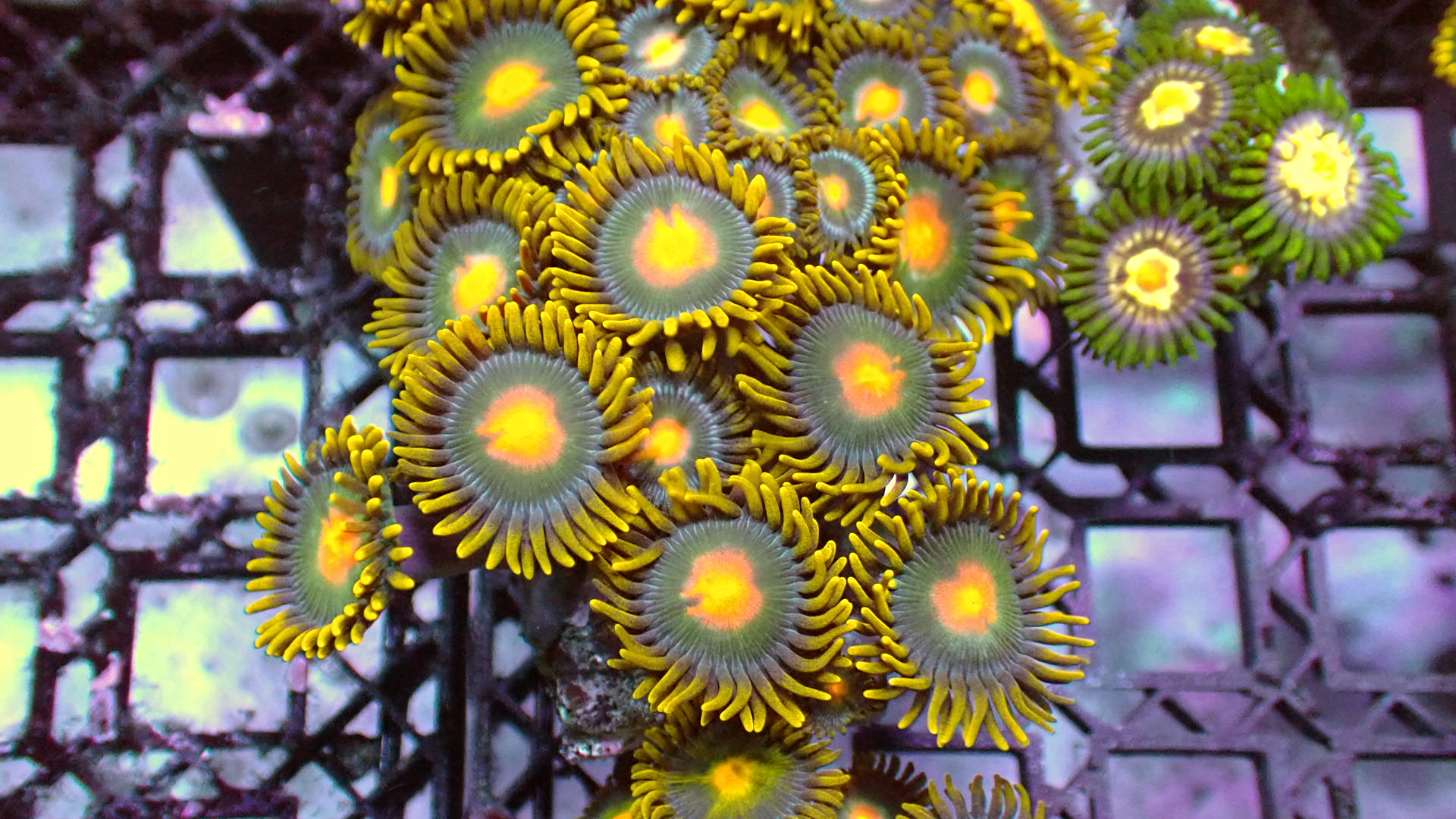
Green Bay Packers zoanthids
Zoanthus sp
● Beginner · ●●● Advanced
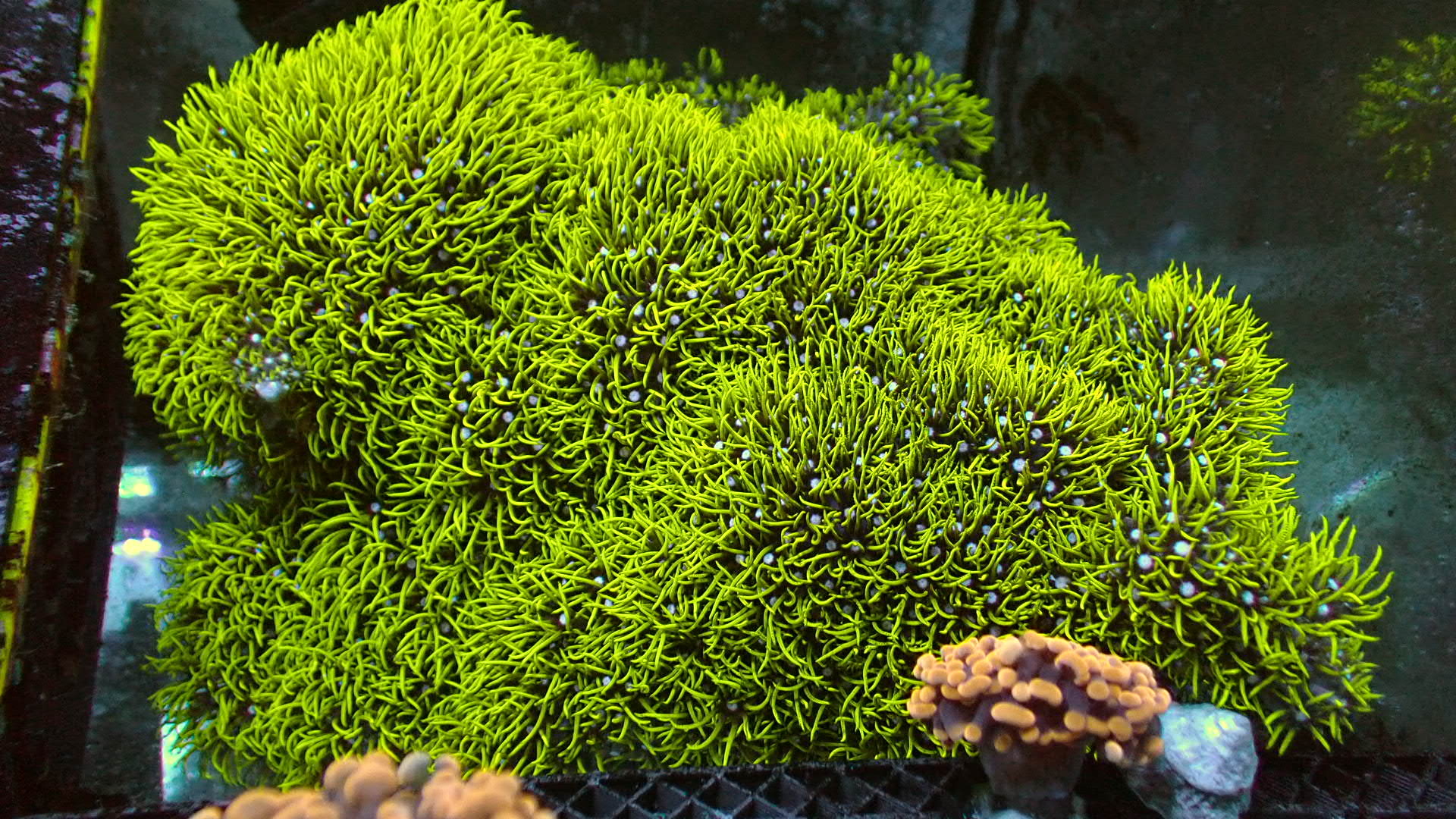
Green star polyps
Pachyclavularia violacea
● Beginner · ●●● Advanced

Laser lemon zoanthids
Zoanthus sp.
● Beginner · ●●● Advanced
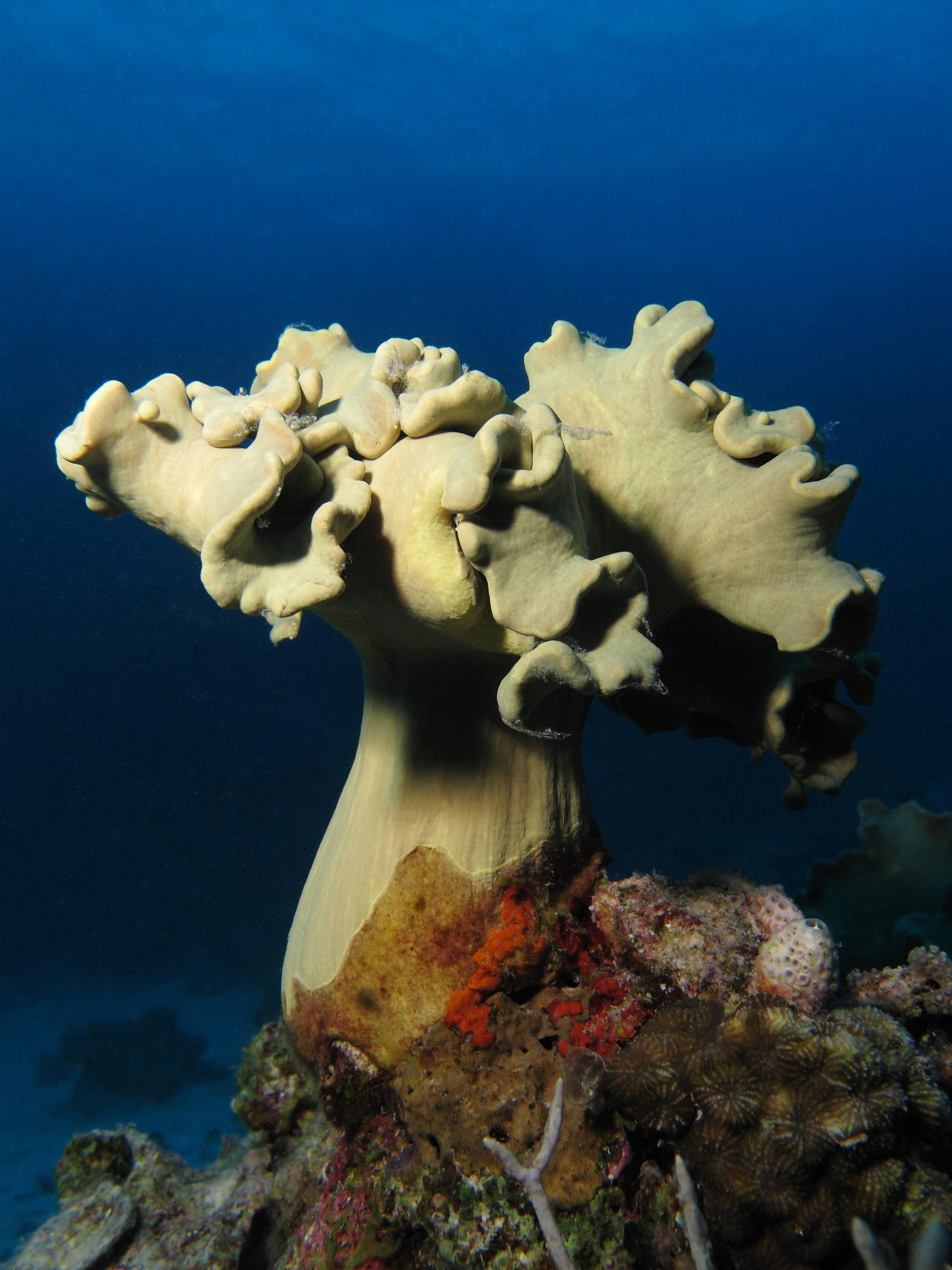
Leather Toadstool
Sarcophyton glaucum
● Beginner · ●●● Advanced

Lunar eclipse zoanthids
● Beginner · ●●● Advanced

Neon green hairy mushroom
Discosoma sp
● Beginner · ●●● Advanced


Love this species? No tank needed.
Reef art from the shop — for the wall, not the tank.


Get notified when Reef To Go has Super Saiyan in stock or up for auction. One email when it's in — no spam.