Gallery
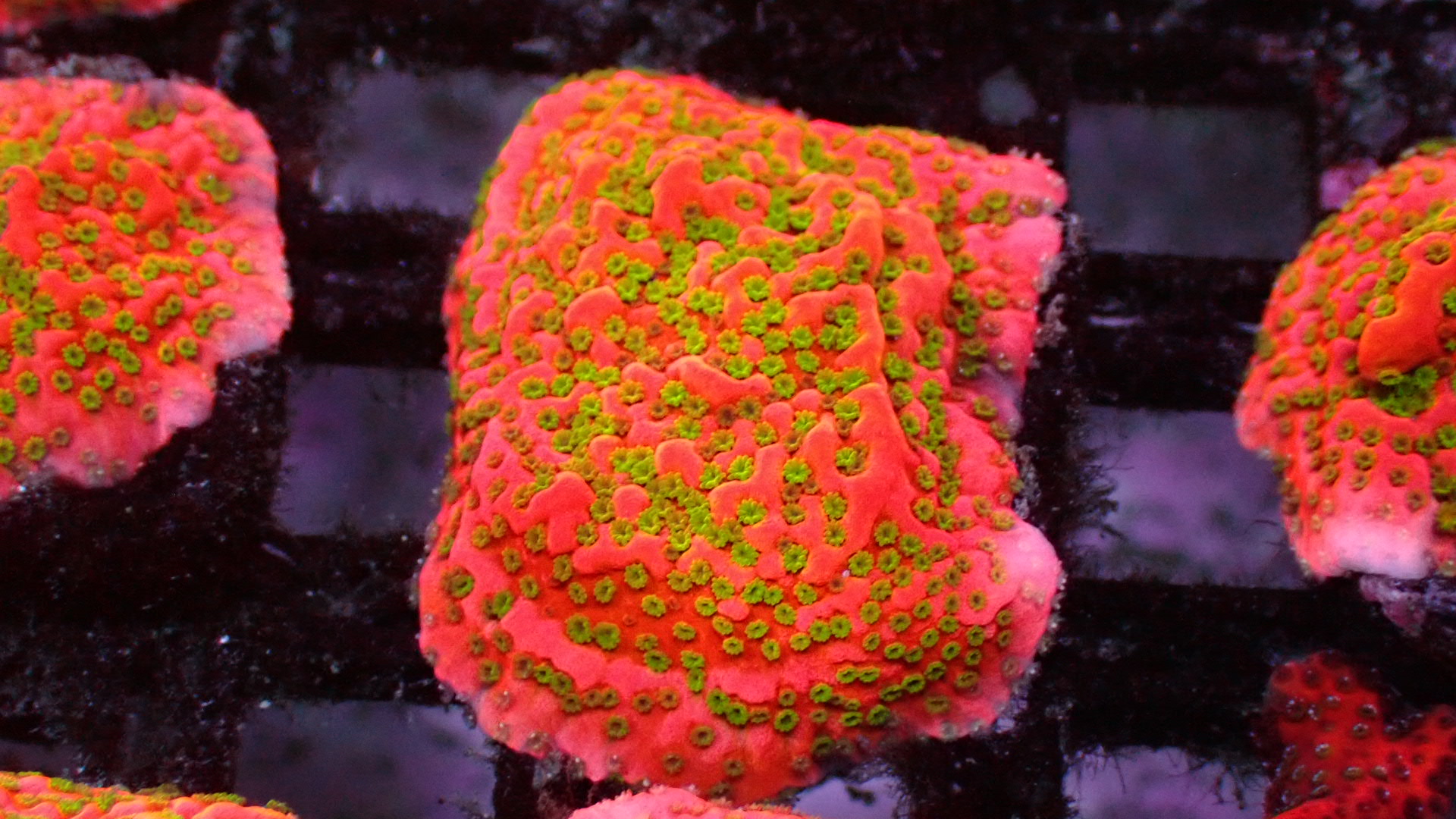
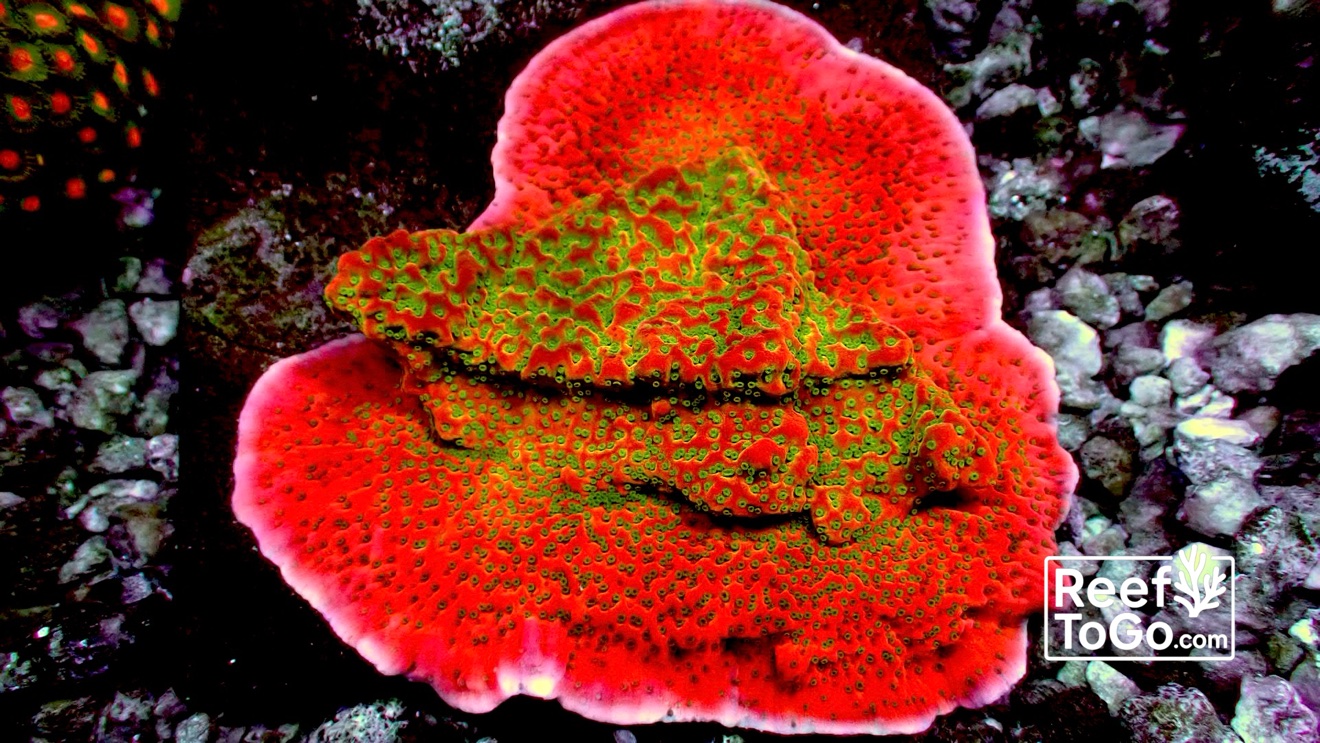
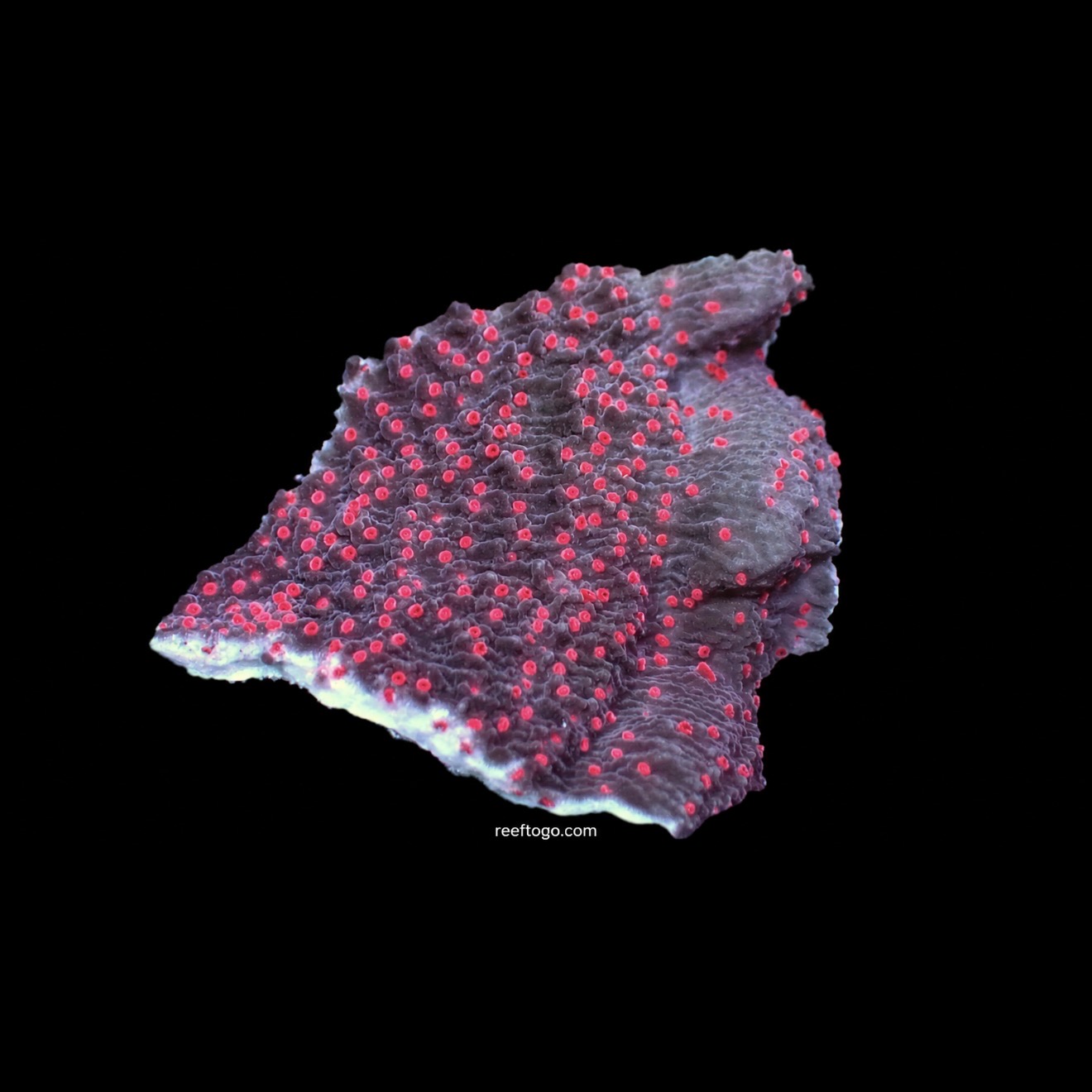
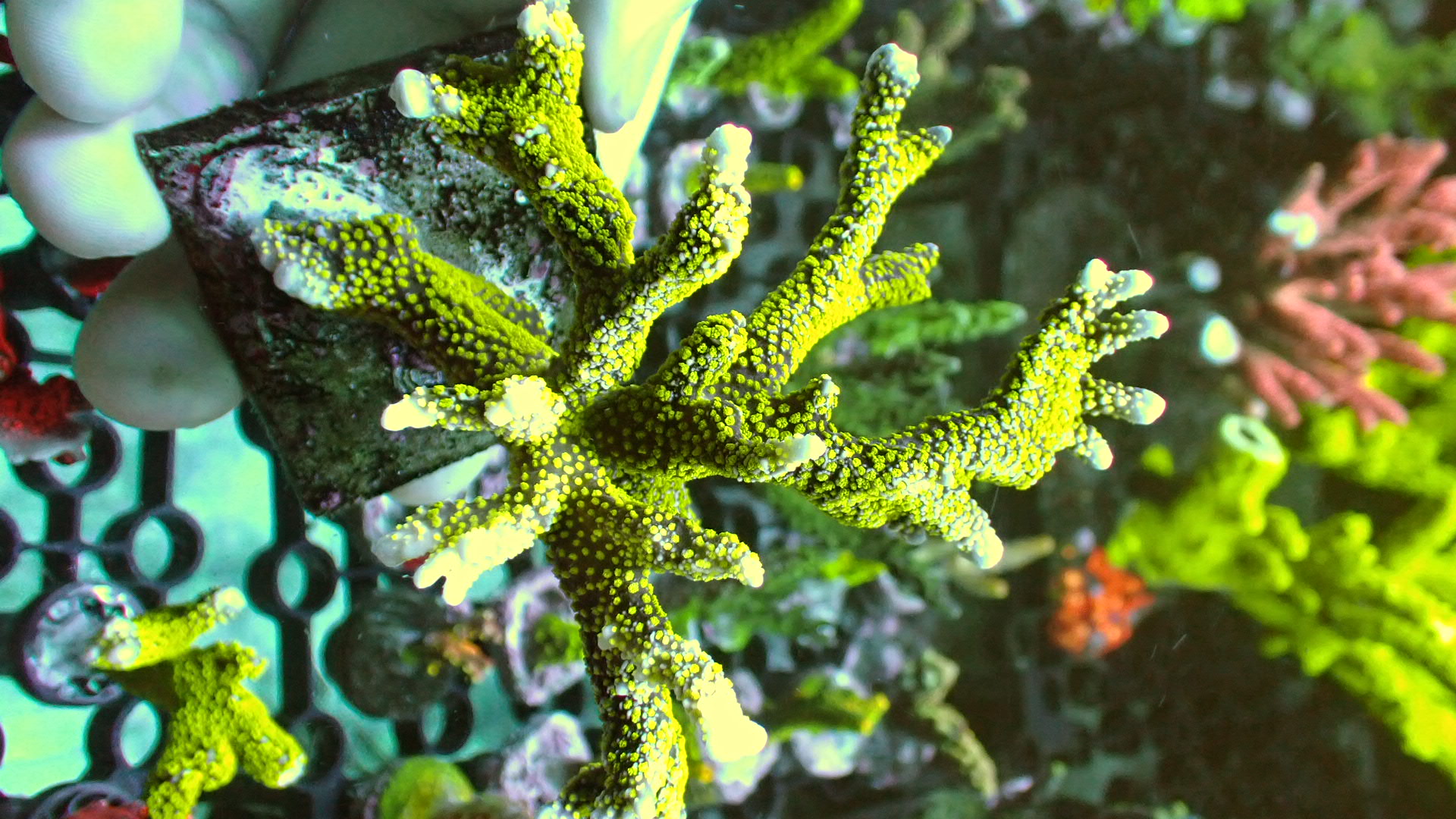
Tropic thunder monti is a colored form of Montipora, listed as Montipora efflorescens. Montipora of this type grow an encrusting to plating base over rock, with a surface of very small polyps set into the skeleton and color that spreads across the whole growth front. The tropic thunder name follows the vivid, contrasting color this form is kept for, which reads best as a bright field under blue light once the frag has encrusted its mount and started growing onto surrounding rock.

The entry lists beginner care, medium light, and high flow. The care fields for placement, aggression, and growth were blank in the original record and are set here to the standard for this type: middle placement, peaceful behavior, and moderate growth. Beginner reflects how forgiving a settled Montipora can be compared with more demanding SPS, and a stable tank still matters more than the label. Place the frag in the middle of the rockwork on a secure mount where the growing edge has room to advance. Medium light supports color and growth. A frag that pales across the top may sit in more light than it prefers, while a dull, slow edge can signal a wish for a small step upward after it has settled.
High flow is the other half of the placement. SPS of this type want strong, varied movement across the surface to clear waste, deliver food and minerals, and keep the growing edge clean. Flow aimed straight at the face from close range can damage tissue, so broad flow that changes direction works better than a single jet. Dead spots where detritus settles on the plate invite tissue loss that starts at the covered patch.
This coral is peaceful and has no sweeper reach. Spacing is about light, flow, and future growth. An encrusting colony will claim the rock it touches and can shade or overgrow a slower neighbor at its margin, so leave a planned border of bare rock around the mount. Keep it clear of LPS sweepers and falling frags, because Montipora tissue loses contact fights and a sting at the edge can spread before it is noticed.
Feeding is indirect. The tiny polyps take fine particulate food and nutrients from regular broadcast feeding, and the colony draws most of its energy from light. Stable alkalinity, calcium, and magnesium matter more than extra food, because the skeleton grows continuously under the tissue. Small, steady values support a clean advancing edge, while swings show up quickly as slowed growth or a pale margin.
Growth is moderate once the frag settles. The base encrusts the plug or rock first, then the visible growth front widens and new surface color develops behind it. Judging the colony by polyp extension and edge advance over weeks gives a better read than daily change. Tissue that recedes from the edge, patches that lose color in the middle of the colony, or polyps that stay retracted across the whole piece call for a check of flow, light, chemistry stability, and pests.
Common pitfalls include mounting the frag where detritus settles on it, placing it in weak flow because the tank is mainly soft corals, and moving it repeatedly while chasing stronger color. Secure the mount, give it moving water and room to encrust, and let the edge guide small adjustments.
Field notes — what keepers report
- Color reports split by light and stability. Keepers in medium light with strong flow describe bright, even color across new growth, while keepers in weaker flow describe dull patches where waste settled on the surface. Reports treat a clean, advancing edge as the clearest sign the spot suits the colony.
- Growth reports vary at the start. Some keepers describe a frag that encrusts its mount quickly and then spreads, while others describe a long pause with almost no visible change before the edge begins to move. Both sides link the turn to stable chemistry and an undisturbed mount.
- Placement reports agree on room to grow. Keepers who left bare rock around the colony describe an easy margin to manage, while keepers who mounted it tight against neighbors describe the edge meeting other corals sooner than expected. Planning the border at mounting time is the practice most often described.


Field Notes
Related species
Bubblegum digitata
Montipora digitata
Same genus

Confused Rainbow Montipora
Montipora sp.
Same genus

Digitata Montipora
Montipora digitata
Same genus
Forest fire digitata
Montipora digitata
Same genus

Orange monti cap
Montipora capricornis
Same genus
Red rose montipora
Montipora sp
Same genus
Tubbs Stellata Montipora
Montipora stellata
Same genus

Aequituberculata Montipora
Montipora aequituberculata
Same genus