Aequituberculata Montipora
Montipora aequituberculata

U.S. Fish and Wildlife Service Headquarters · Public domain · source
Care facts
- Care
- Intermediate
- Light
- High
- Flow
- Medium
- Place
- Mid
- Space
- Peaceful
- Growth Rate
- Moderate
Gallery
This Montipora builds shelves. Thin plates curl over one another like petals, and tiny bumps crowd their upper surfaces. In a reef tank, give the plates a bright perch, a current that reaches underneath, and room to spread.
History of the coral
1. A name from the Torres Strait. Henry Bernard described Montipora aequituberculata in 1897. The original specimen came from the strait between Australia and New Guinea.
2. Read the bumps. Get close and look for tiny bumps around the polyp cups. Near the rim, some join into short ridges. Several Montipora grow plates, so a curled edge alone won’t tell you which one you have.

How they live in the wild
3. Shelves across two oceans. This coral lives on Indo-Pacific reefs, including Jarvis Island in the central Pacific. Its plates often overlap in whorls. You can also find colonies that hug the rock.
4. A perch on the slope. It grows on sheltered upper reef slopes and in other reef settings. Shallow slopes get strong daylight; deeper sites get less. A colony recorded at 34 meters off American Sāmoa shows how far down it can grow.

Light and flow
5. Ease into bright light. Start a new frag under gentler light. Increase the light in steps once it settles. Choose a bright spot around mid-tank and watch for paling after each change.
6. Get water under the shelf. Use medium, indirect flow. Aim the current past the rim so water also moves below the plate. If debris collects in a fold, change the pump angle.

Keep the water steady
7. Test before you dose. Check alkalinity, calcium and salinity regularly. Growing plates use up alkalinity and calcium. Let repeated tests guide dosing, and make changes gradually.
8. Watch the coral over time. Compare photos taken under the same light. Look for tissue covering the plate, a clean growing edge and color that stays steady. Check light, flow and chemistry before changing several things at once.

Make room to grow
9. Give that rim a runway. Leave space around the frag for plates to extend and stack. Keep bright-light neighbors out from under its future shadow. Look from the side before you pick a spot.
10. Check the underside. A plate can look fine from above while debris or pale patches go unnoticed below. Use a flashlight to check the shaded side, the base and any folds you can see.

Field notes
11. Two lessons from plating Montis. One keeper grew caps both near the lights and down in a back corner. Another had plates that shaded more of the tank than expected, even with pruning. Check the light where your frag sits and leave room for a wide plate.
12. Spot the stowaways. Tiny Montipora-eating sea slugs and their eggs can hide in crevices. Inspect the underside and plug seam before adding a frag. Isolate a suspect frag and check again before it goes into the display.

Pick a ledge with light above it and moving water below it. Then take a side photo. When that first shelf curls out over the rock, you’ll see just how much room it’s going to need.
Photo credit: [Jim E. Maragos / U.S. Fish and Wildlife Service](https://www.fws.gov/media/coral-jarvis-island-national-wildlife-refuge), public domain, [via Wikimedia Commons](https://commons.wikimedia.org/wiki/File:Montipora_aequituberculata.jpg).
Field Notes
Related species

Leaf Plate Montipora
Montipora capricornis
Same genus

Monasteriata Montipora
Montipora monasteriata
Same genus
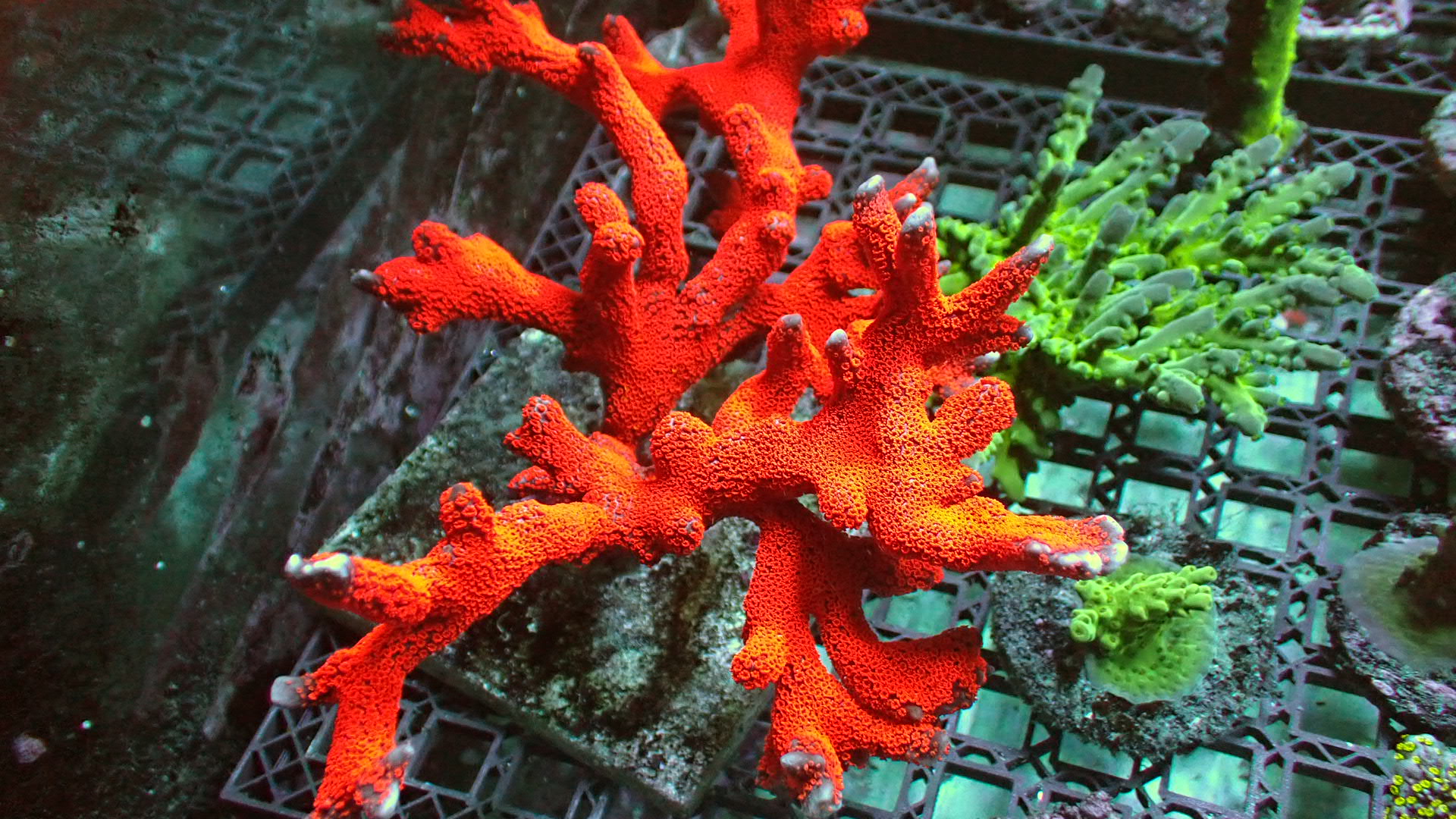
Bubblegum digitata
Montipora digitata
Same genus

Confused Rainbow Montipora
Montipora sp.
Same genus

Neon Green Montipora Spongodes
Montipora spongodes
Same genus

Orange monti cap
Montipora capricornis
Same genus

Tubbs blue digitata
Montipora digitata
Same genus
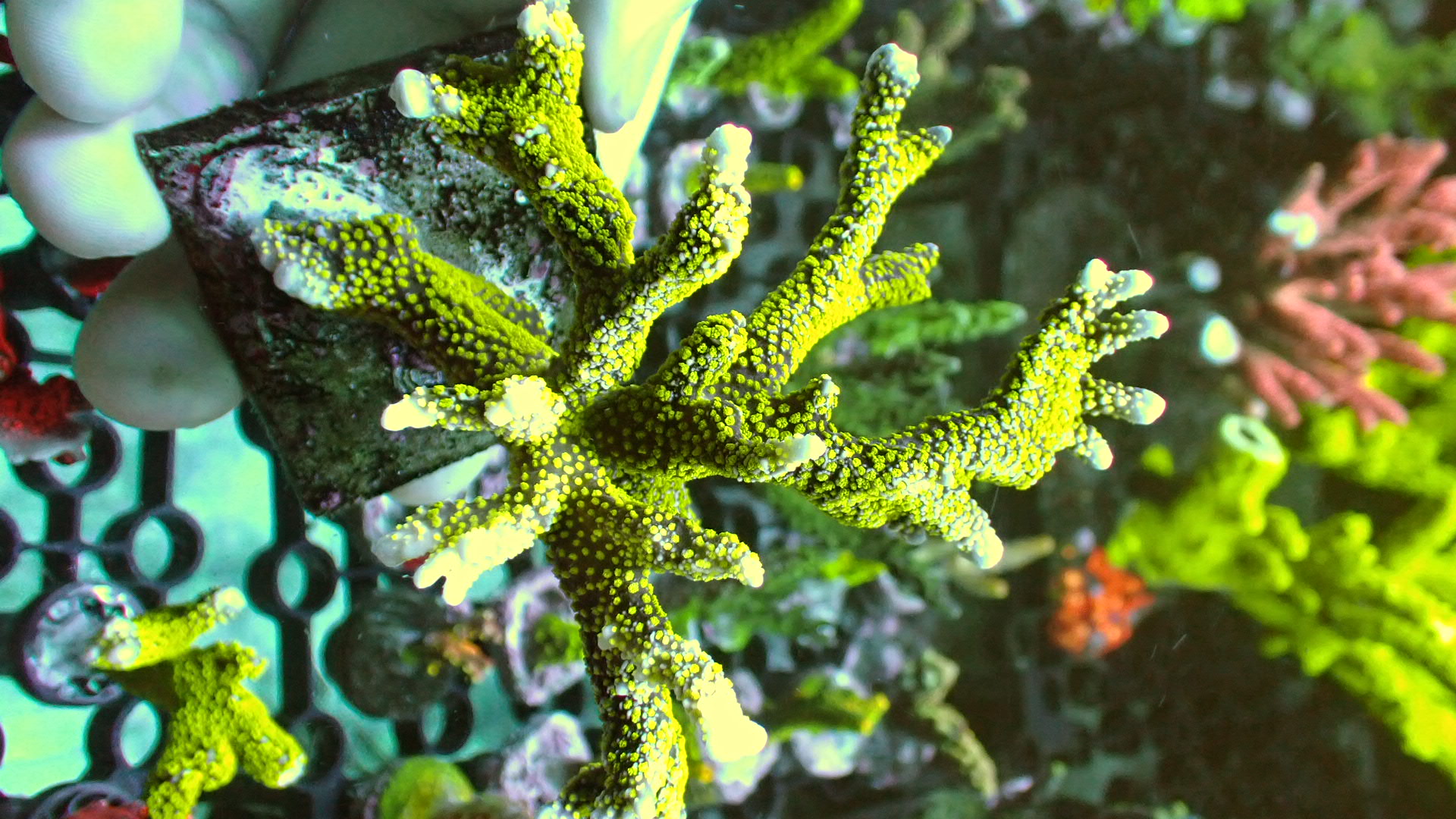
Tubbs Stellata Montipora
Montipora stellata
Same genus