Valida Acropora
Acropora valida
Gallery
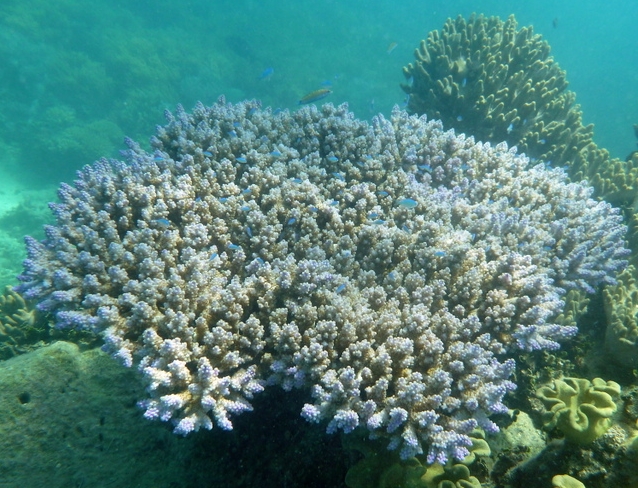
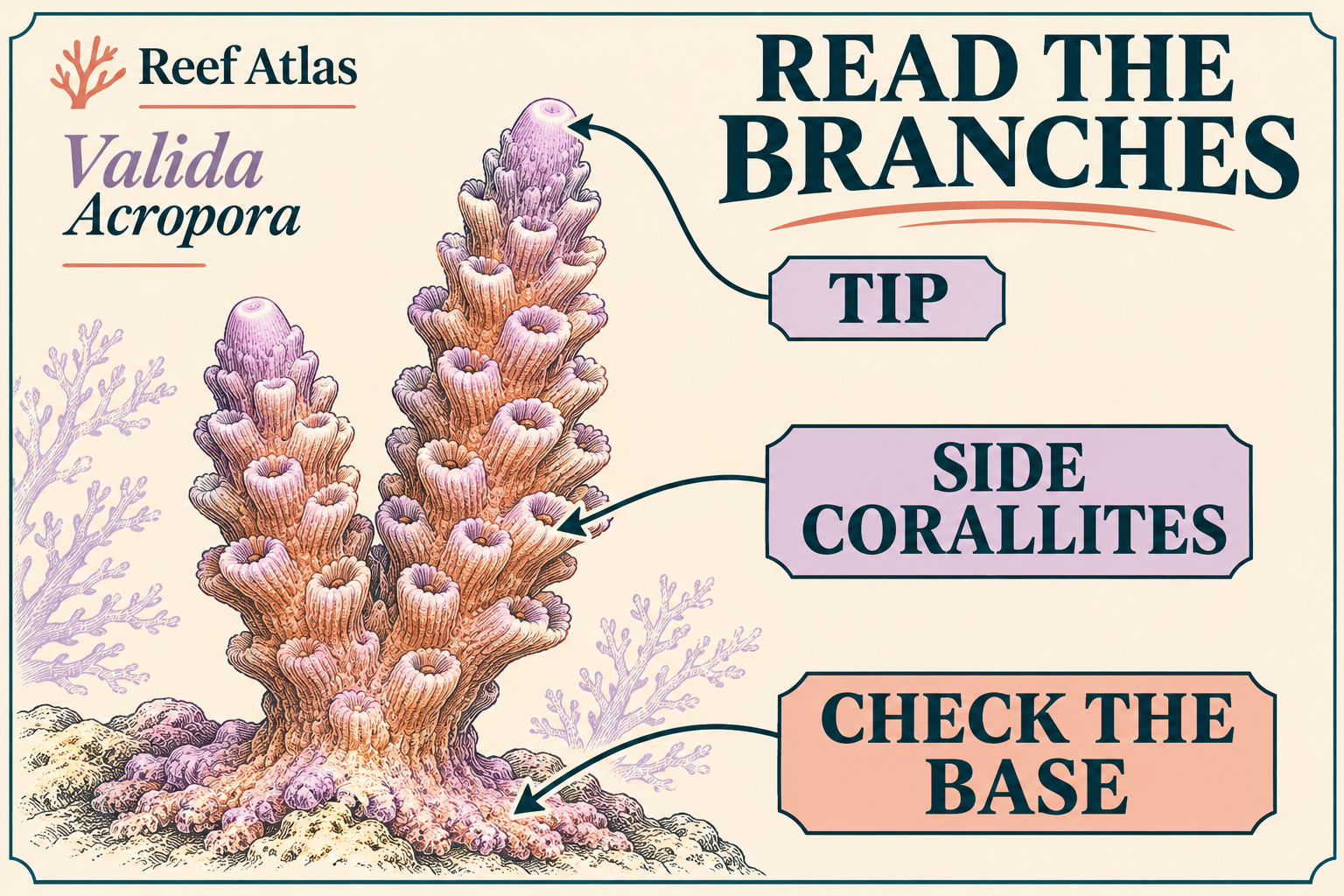
Look close at a Valida branch. Its sides are packed with tiny stony cups, each built around a polyp. Multiply that by a whole colony and you get a knobby bush that can spread into a low table. Give those branches bright light, moving water and room to fill in.
History of the coral
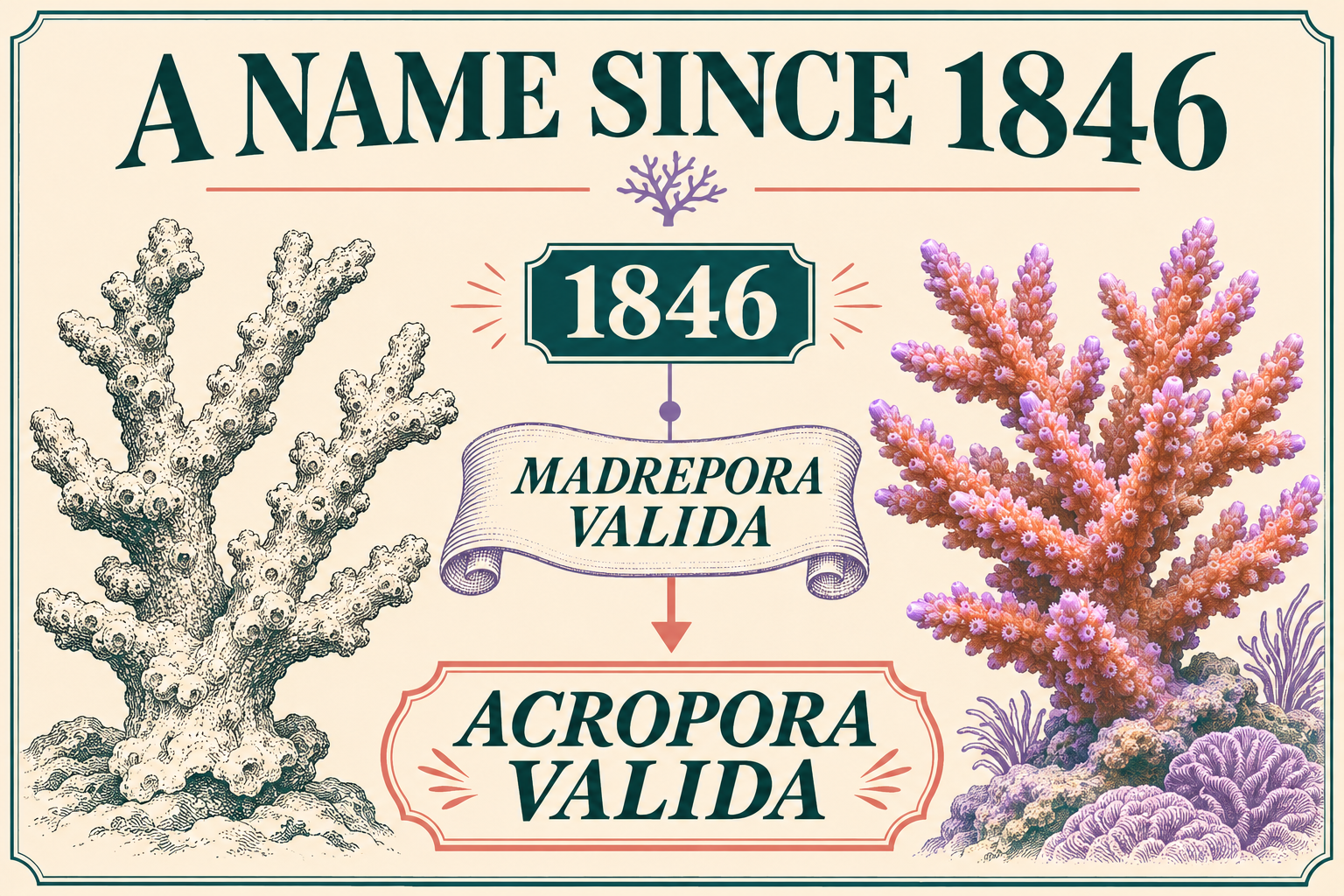
1. A name from Fiji. James Dwight Dana described this coral in 1846 from material collected in Fiji. He called it Madrepora valida. Today it goes by Acropora valida.
2. A trade name travels. Reefers grow and swap colorful Valida frags. The trade label Tri-Color Valida covers several cultivated forms. Purple tips show up on other Acropora too, so keep the frag's label and grower details.
How they live in the wild
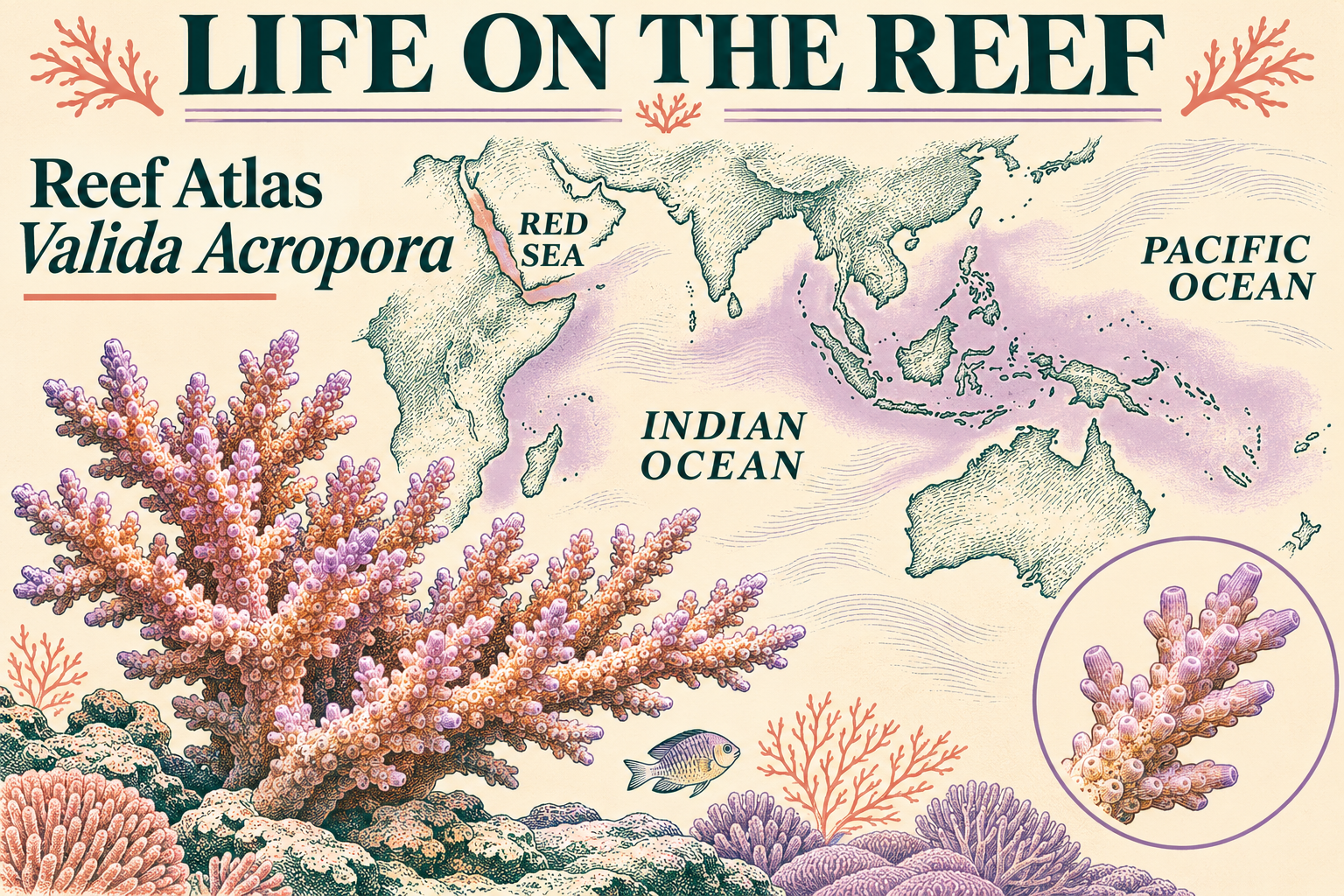
3. A coral with a big address. Valida lives from the Red Sea and East Africa across the Indo-Pacific. It grows on reef flats, reef edges and upper slopes, with colonies recorded at 2 to 4 meters in an Australian lagoon.
4. Sun and moving water. Shallow colonies get plenty of daylight. Waves move water around exposed reef edges, and lagoons offer more shelter. Small cups hug each branch, giving the colony its knobby look.
Light and flow
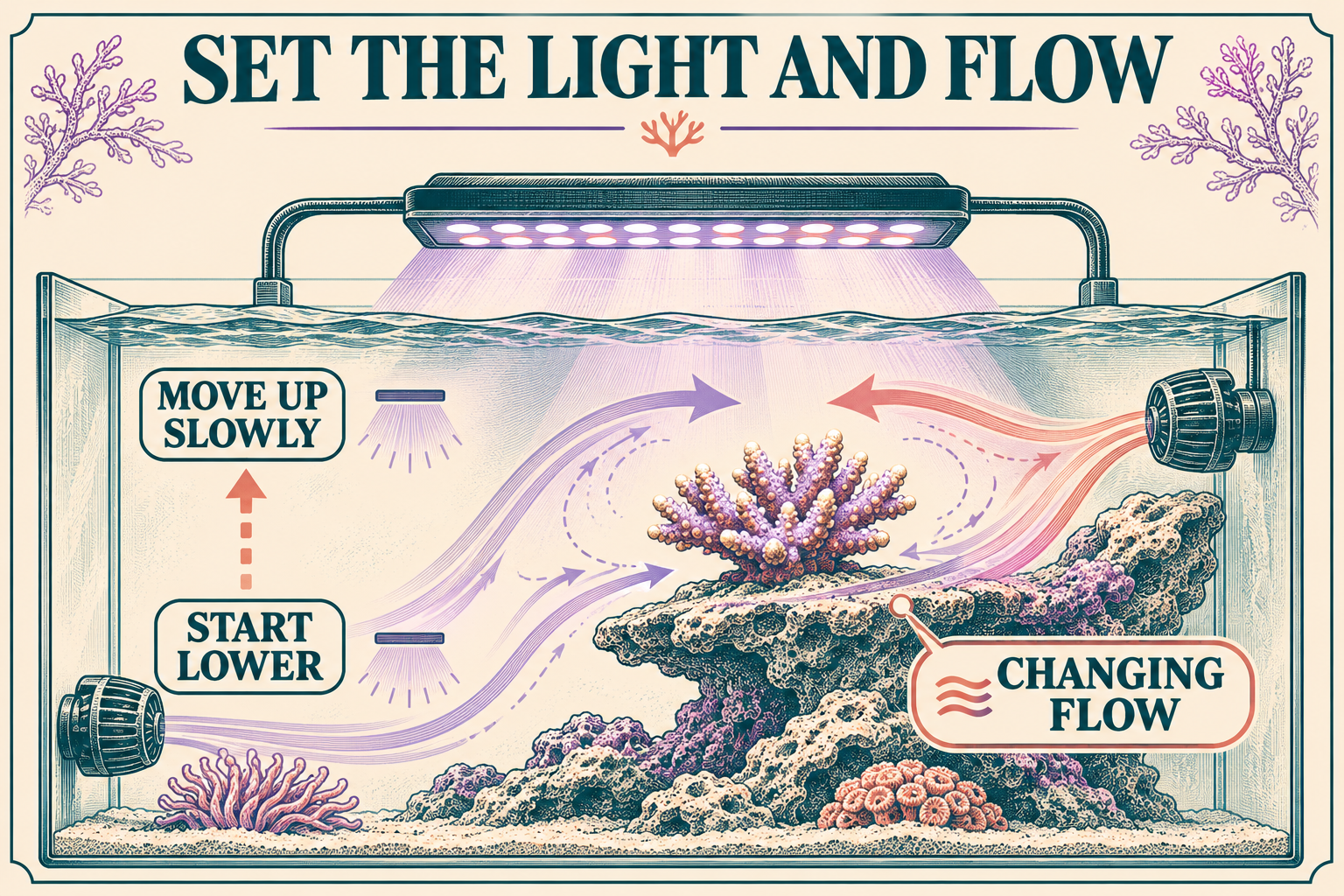
5. Build up to a bright perch. Begin lower or dim the lights for a new frag. Raise exposure in steps. Put the coral in the upper rockwork once it handles the brighter spot.
6. Send water around the branches. Use strong, changing flow and aim pumps past the colony. Check that water reaches the branch bases. If debris settles there, redirect the flow.
Steady water
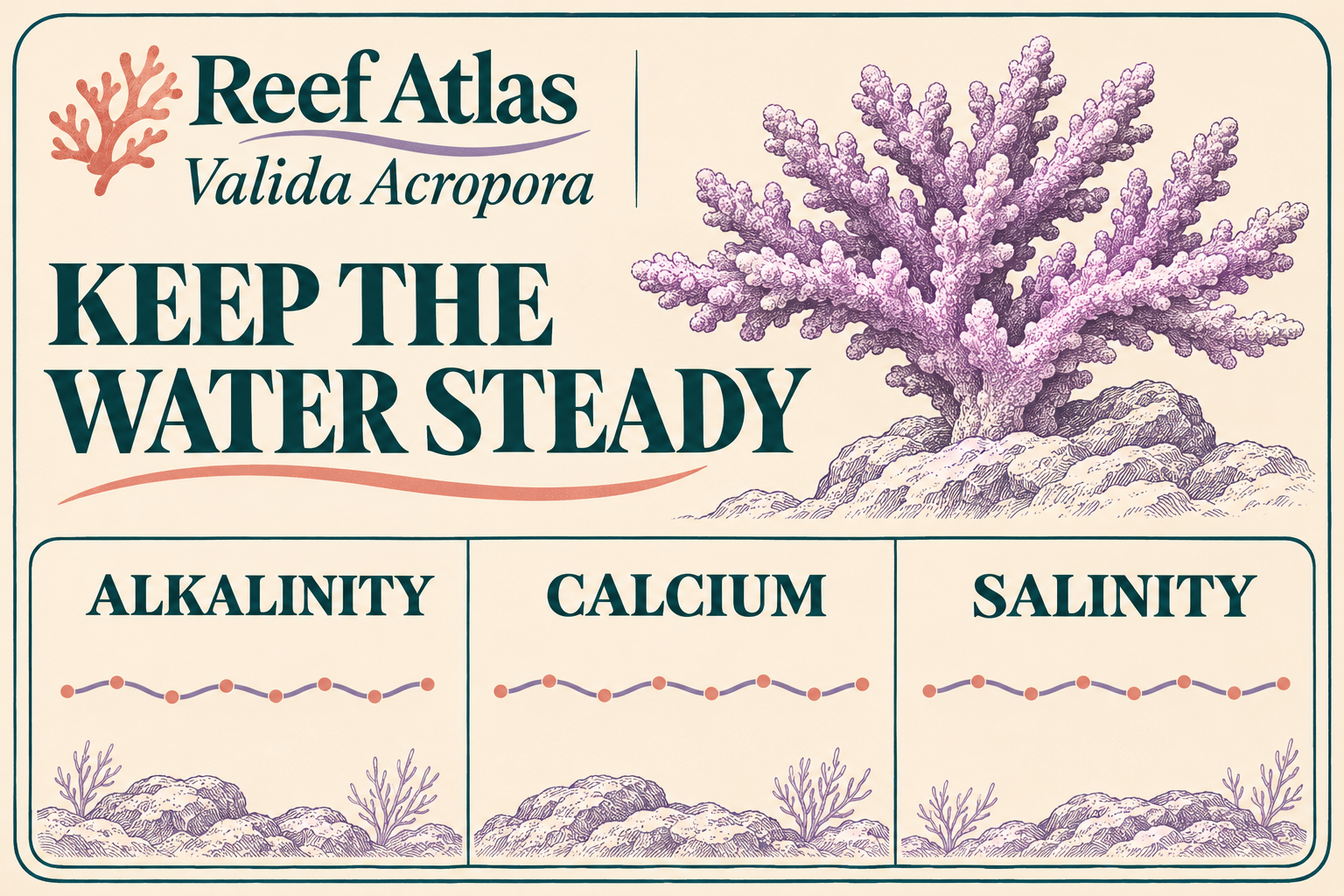
7. Test before you dose. Check alkalinity, calcium and salinity on a regular schedule. Adjust gradually. As the coral builds skeleton, use your test results to match dosing to what the tank uses.
8. Keep feeding simple. Give this coral a normal reef feeding routine and watch nutrient trends. Skip a mandatory powder, amino acid or carbon dosing schedule.
Space to grow
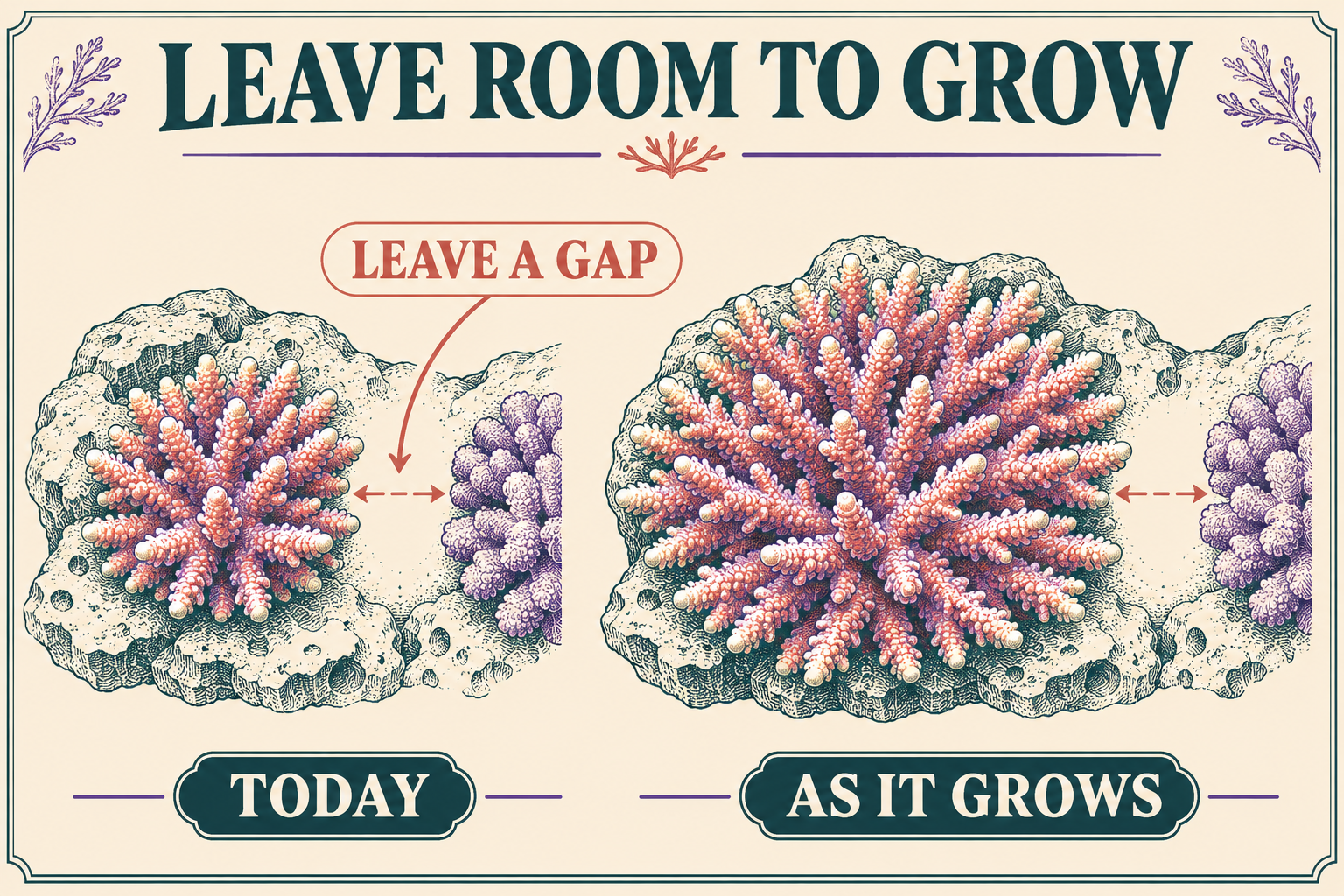
9. Leave room around the crown. Give the frag open rock to spread onto and room above its neighbors. Look for shade underneath as the branches fill in.
10. Check before you trim. Compare pictures from the same angle each month. Trim a healthy branch when the colony starts crowding its neighbors. Give a newly mounted frag time to settle before moving it again.
Field notes
11. A base first or a bush fast. One GARF Bonsai frag spread a little at the base and barely branched for nine months. Another grew from a small frag into a colony that needed room. Watch your own frag's base and tips over time.
12. Look under the branches. Inspect new frags and plugs away from the display. Check the base and branch undersides for tiny flatworms, eggs or fresh pale bite marks. Isolate a suspect frag before it goes in.
Give Valida a bright perch, a changing current and a clear patch of rock. Then take that first photo. Once the base starts creeping off the plug, you'll have something to compare next month.
Photo credit: [David Witherall and Lyka, via Wikimedia Commons](https://commons.wikimedia.org/wiki/File:Acropora_valida.jpeg), [CC BY 3.0](https://creativecommons.org/licenses/by/3.0/).
Field Notes
Related species
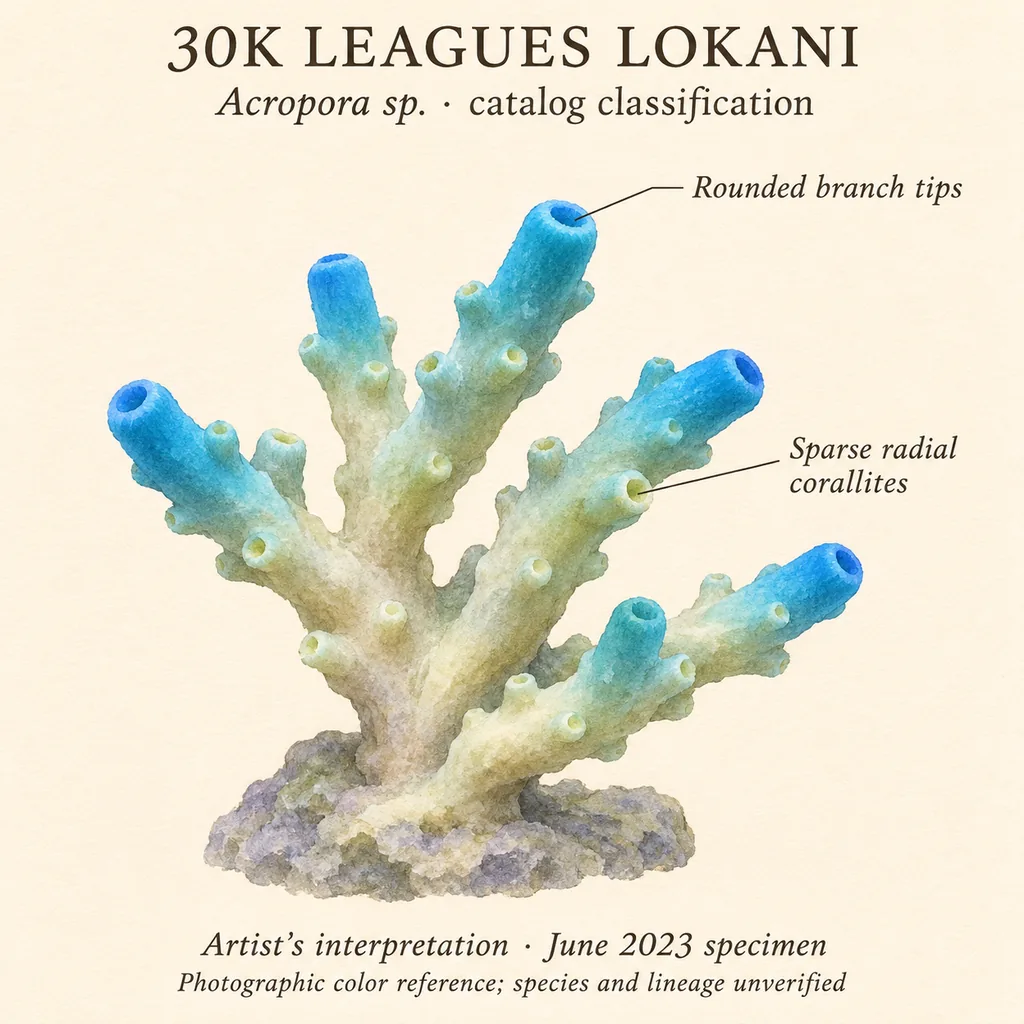
30K Leagues Lokani
Acropora sp.
Same genus
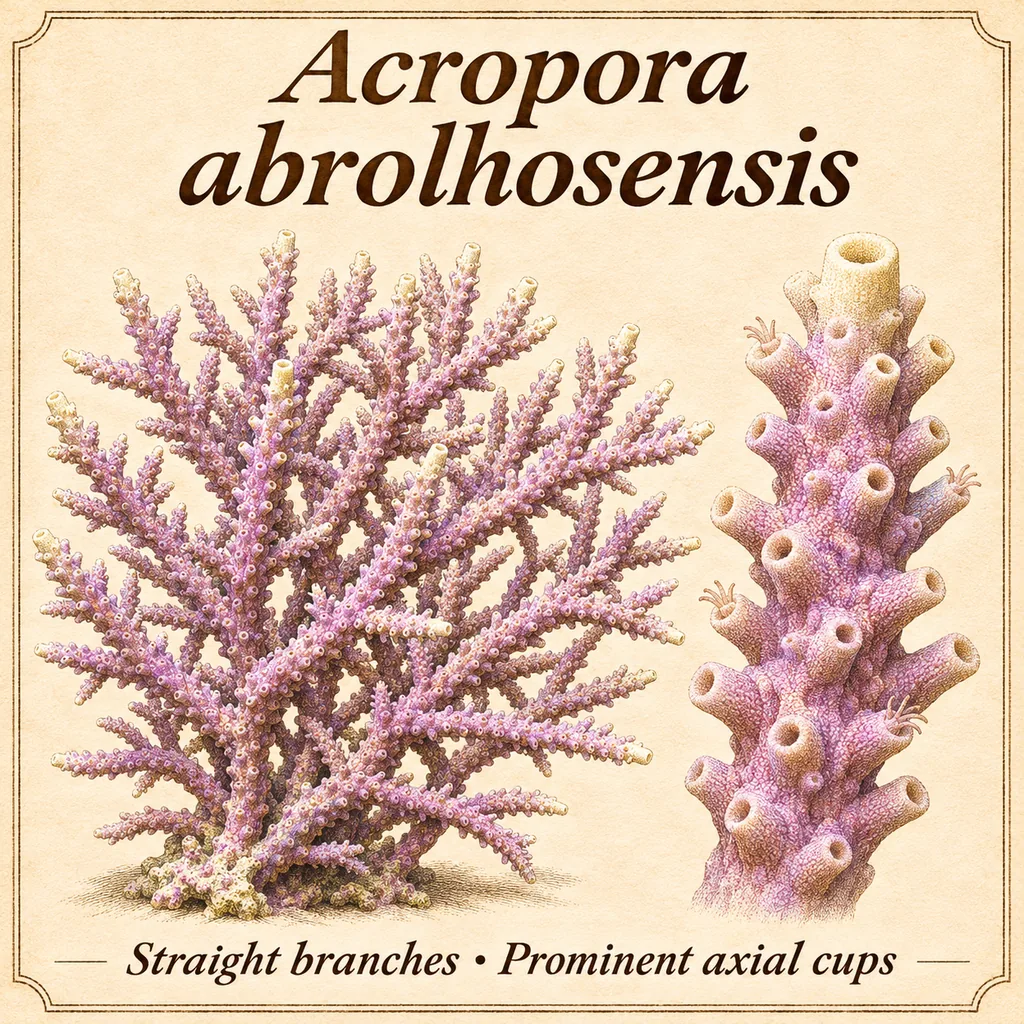
Acropora abrolhosensis
Acropora abrolhosensis
Same genus
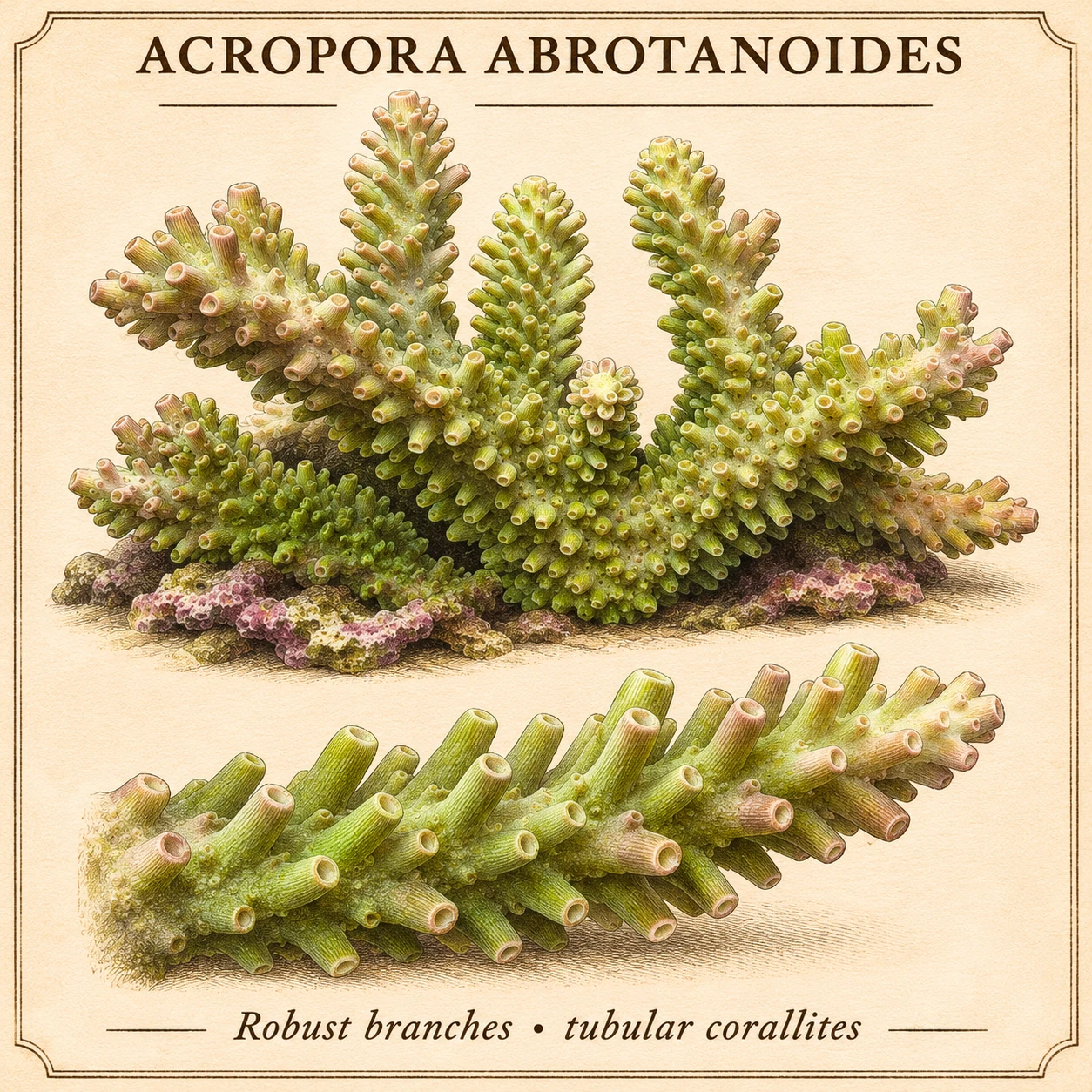
Acropora abrotanoides
Acropora abrotanoides
Same genus
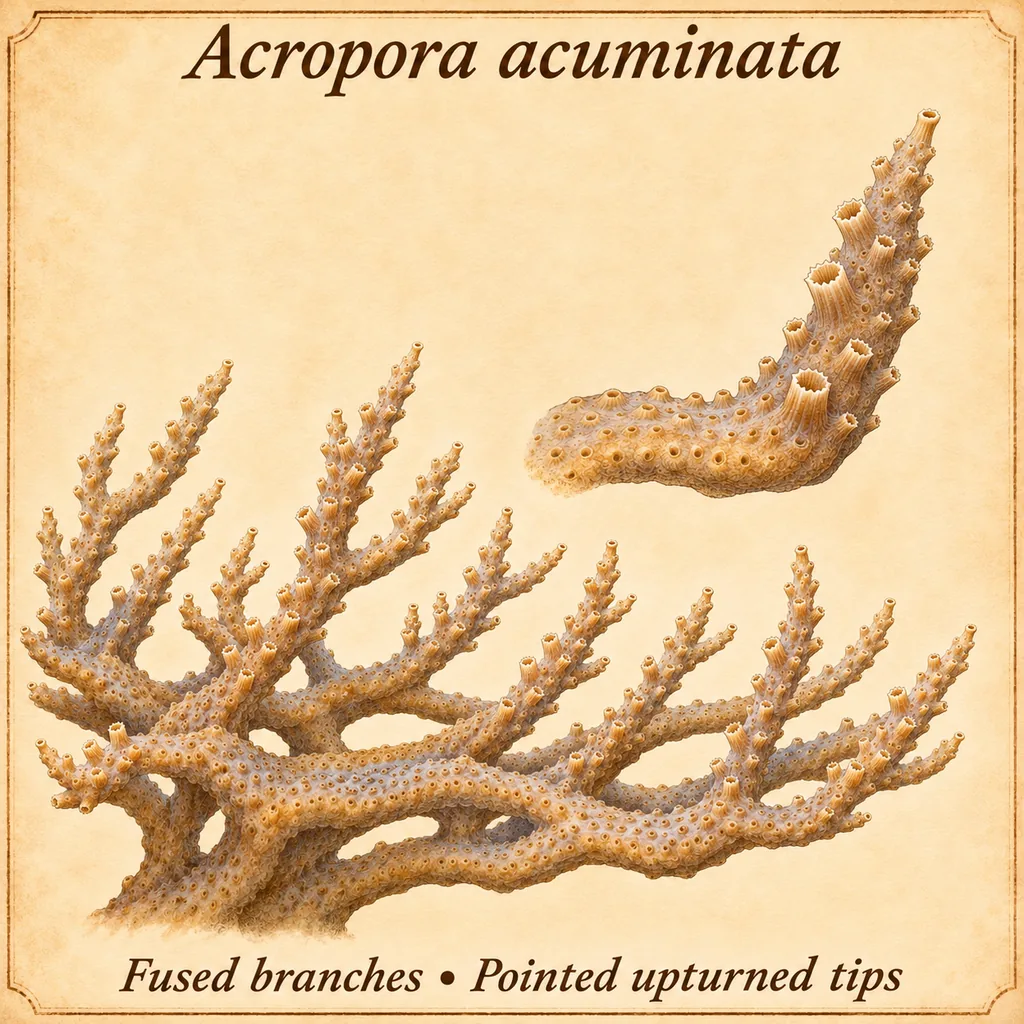
Acropora acuminata
Acropora acuminata
Same genus
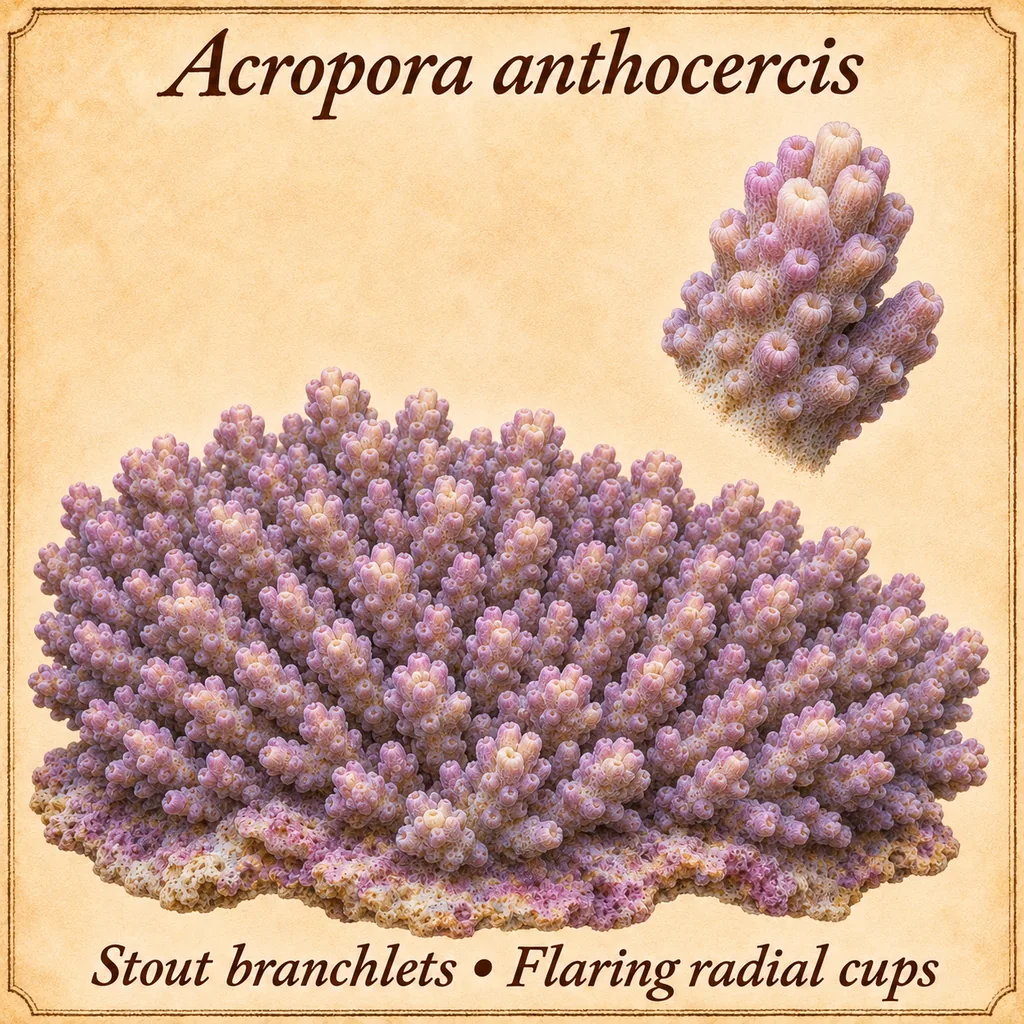
Acropora anthocercis
Acropora anthocercis
Same genus
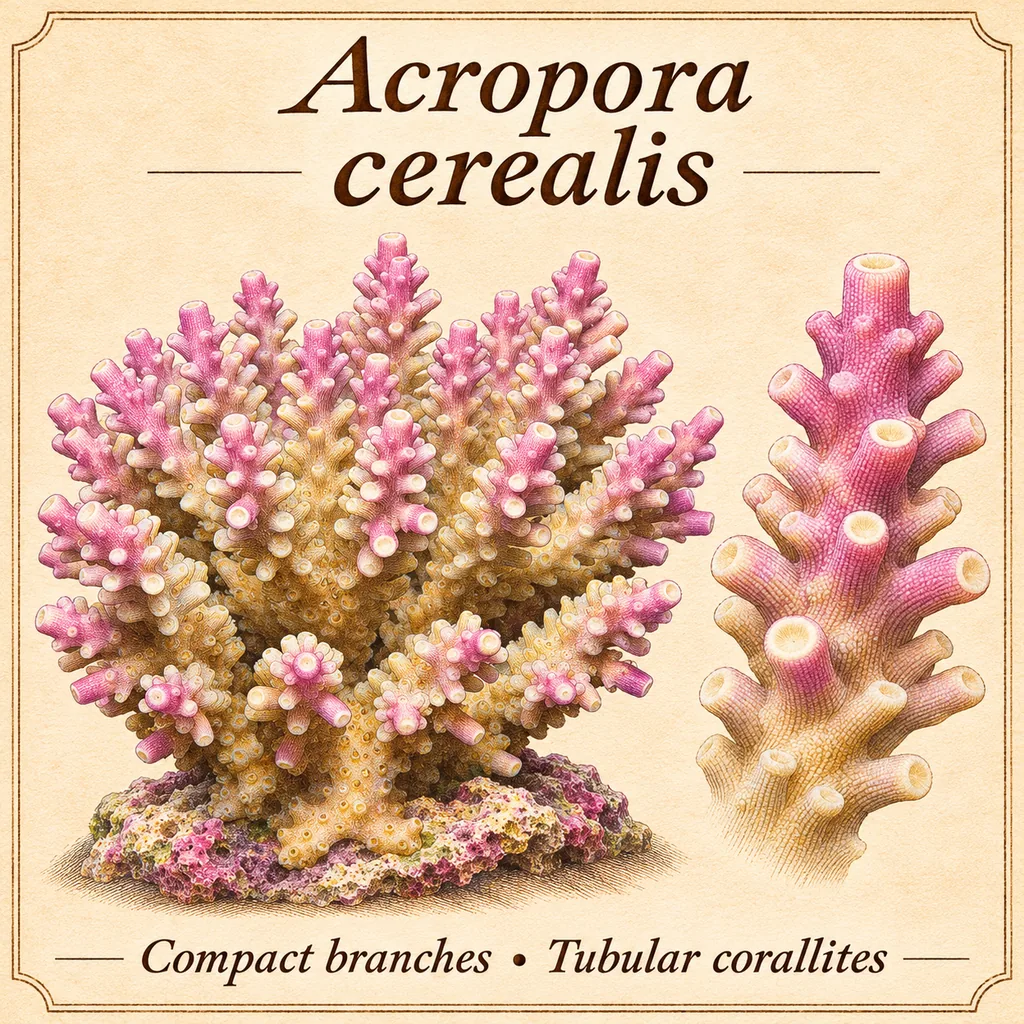
Acropora cerealis
Acropora cerealis
Same genus
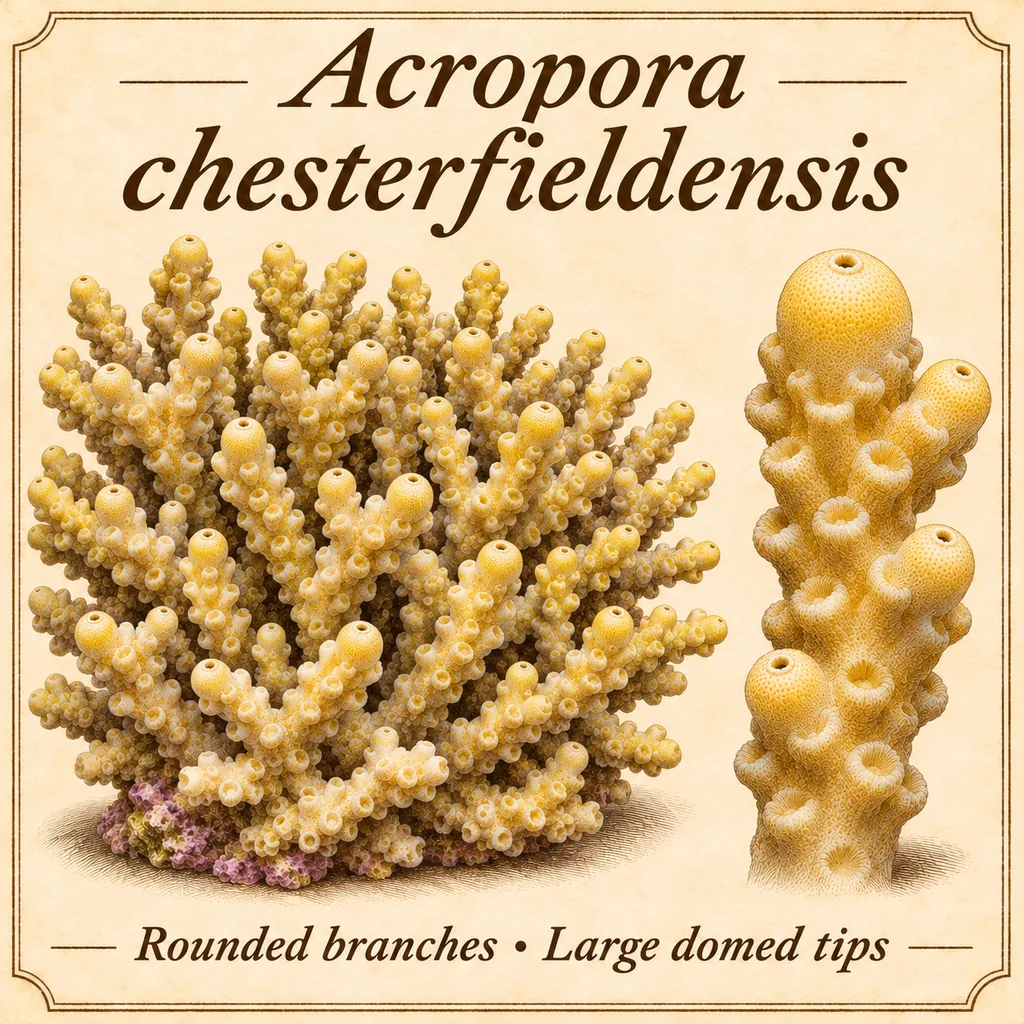
Acropora chesterfieldensis
Acropora chesterfieldensis
Same genus
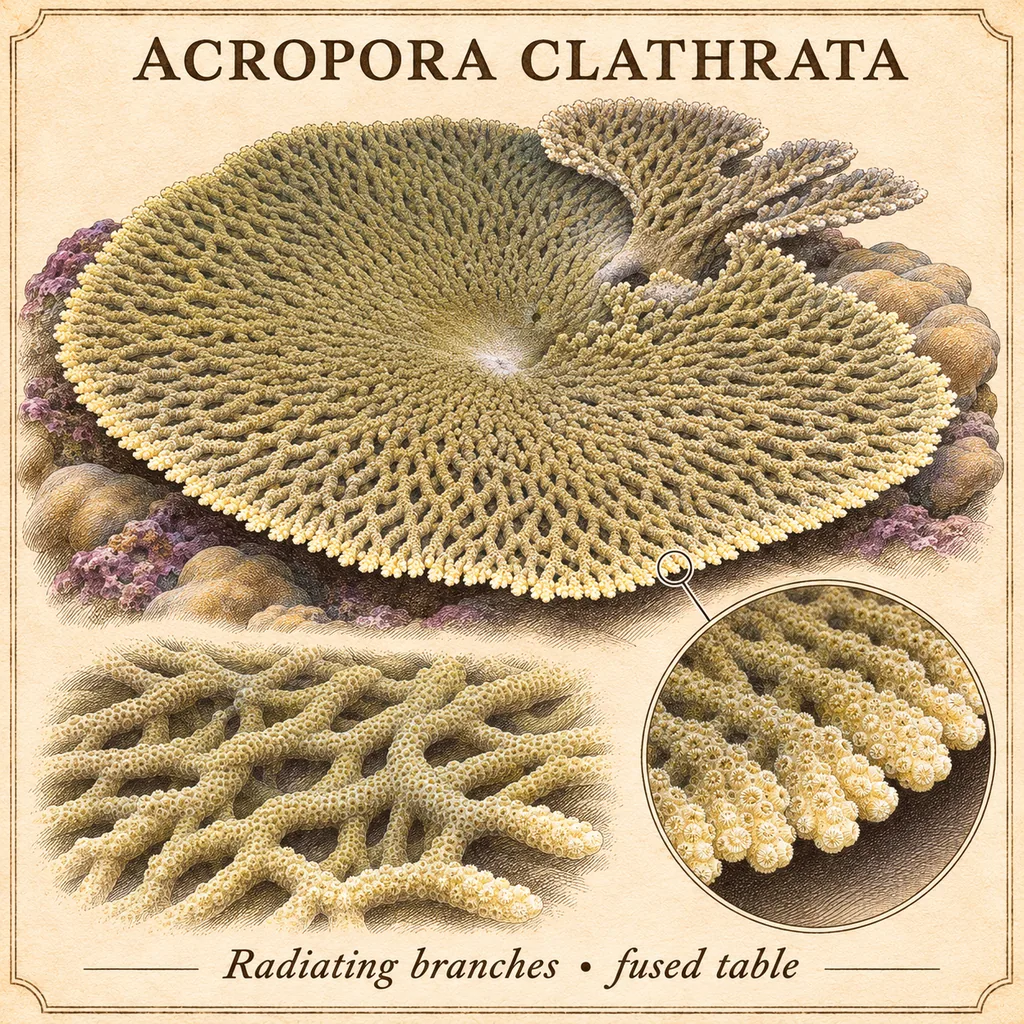
Acropora clathrata
Acropora clathrata
Same genus