Care facts
- Care
- Intermediate
- Light
- Low
- Flow
- Medium
- Place
- Bottom
- Space
- Moderate
- Growth Rate
- Slow
Gallery
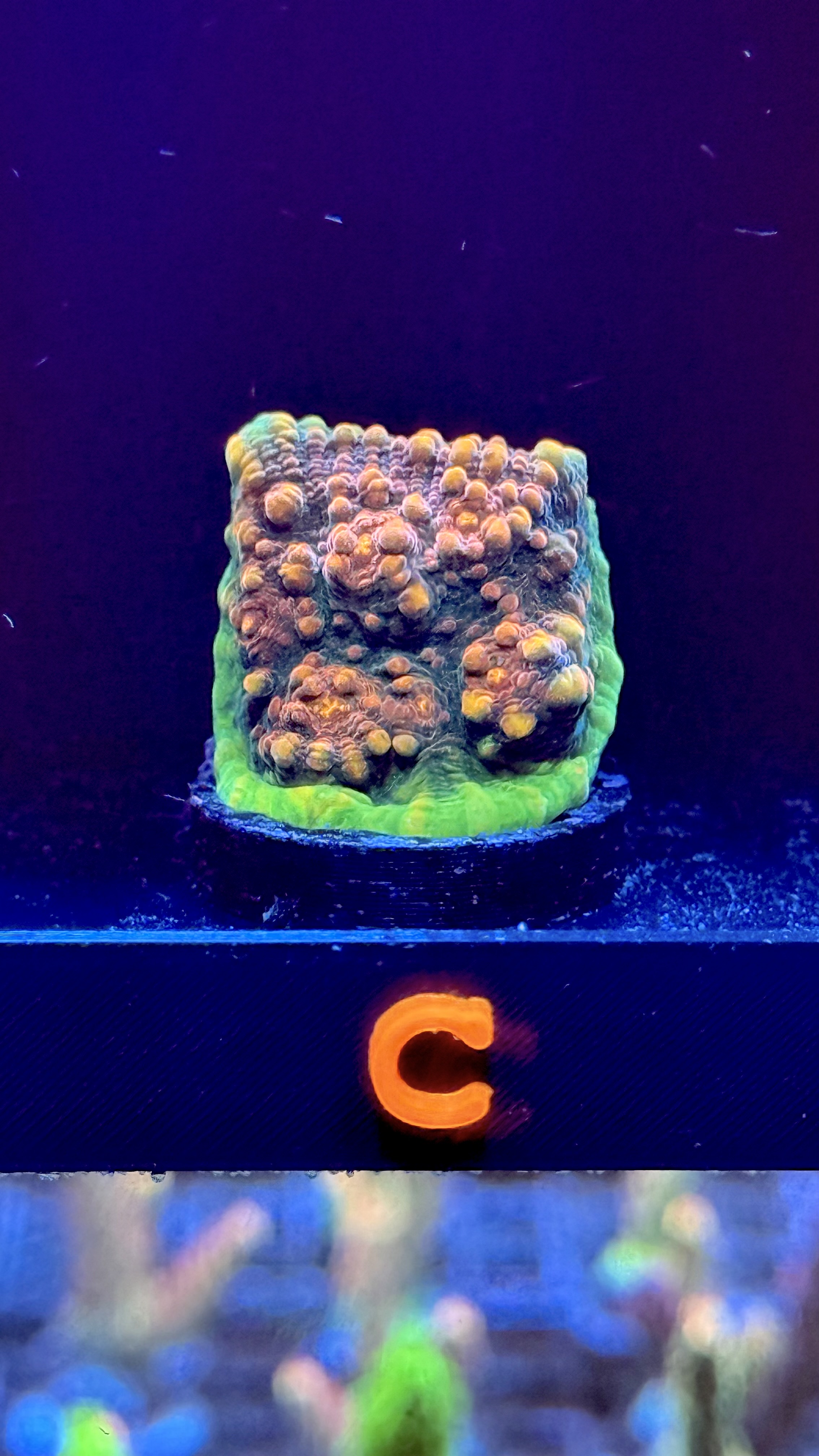
WWC Area 51 chalice is a named chalice coral from the WWC line, kept among the encrusting LPS grouped under the chalice name, which spans genera such as Echinophyllia and Oxypora. A chalice grows a thin, plating to encrusting skeleton covered in fleshy tissue, with scattered raised mouths across the surface and a growing rim that advances over rock. The Area 51 name follows the vivid, otherworldly color this form is selected for, with contrasting mouths and rim tones that show strongly under blue light on a settled colony.
The entry lists intermediate care, low light, medium flow, bottom placement, moderate aggression, and slow growth. Place it low on stable rockwork, set at a slight angle or flat with the rim clear of the sand, where it can plate outward. Low light protects the color. Strong light can pale the tissue, keep the surface tight, and bleach the rim first, so shade is the safer start and any move upward should run in small steps over weeks. Many chalices hold their richest contrast in spots that look almost too dim for other LPS.
Medium flow should move across the surface without lifting the rim or blasting the tissue. The current needs to clear sand and detritus off the plate, which matters at a bottom placement where waste settles daily. Flow aimed straight at the face can keep one side retracted and damage the thin edge. Broad, indirect movement keeps the whole surface clean and the rim free to advance.
Chalices can extend surprisingly long sweeper tentacles at night, which is why the aggression is listed as moderate. Give the colony clear space on all sides, several inches from other corals, and check the nighttime reach after it settles rather than judging by the daytime footprint. Keep it away from stronger LPS as well, because thin chalice tissue loses contact fights and an injured rim recedes quickly. Leave room for the plate to widen without meeting a neighbor.
Feeding is worthwhile for this type. The mouths will take fine meaty foods such as small LPS pellets, mysis pieces, or coral blends when tentacles show, often after lights dim. Offer food once or twice a week with flow lowered briefly, spread across several mouths. Light supplies much of the energy, and feeding supports rim growth and recovery, while food left rotting on the surface invites tissue damage at that spot.
Growth is slow. The rim advances over rock in small runs, new mouths form behind the margin, and the plate widens gradually over months. Stable alkalinity, calcium, and magnesium support the thin skeleton. A rim that pulls back, pale patches spreading from the edge, or mouths that stay closed across the colony usually point to light that is too strong, settled detritus, or a sting received overnight.
Common pitfalls include placing the frag in bright light for color, burying the rim under sand at a low placement, and crowding it based on its daytime size. Start low and shaded, keep the surface clean, and give the nighttime sweepers a wide berth.
Field notes — what keepers report
- Color reports split sharply by light. Keepers in low, shaded placements describe the strongest contrast between surface, mouths, and rim, while keepers who placed the coral higher describe pale tissue that recovered slowly after a move back down. Reports treat patience after a light change as important, because recovery gets measured in weeks.
- Sweeper reports surprise many keepers. Some describe tentacles reaching much farther at night than the plate suggests, damaging a neighbor that looked safely spaced by day, while others report no trouble once a wide clear zone was left. Checking the colony after dark is the practice most often described.
- Growth reports lean slow and edge-led. Keepers describe the rim advancing in short runs after long quiet periods, with a clean margin and stable chemistry present in the faster reports. Feeding reports are mixed, with some keepers crediting regular offerings for rim growth and others seeing the same pace on light and broadcast feeding alone.
Field Notes
Related species
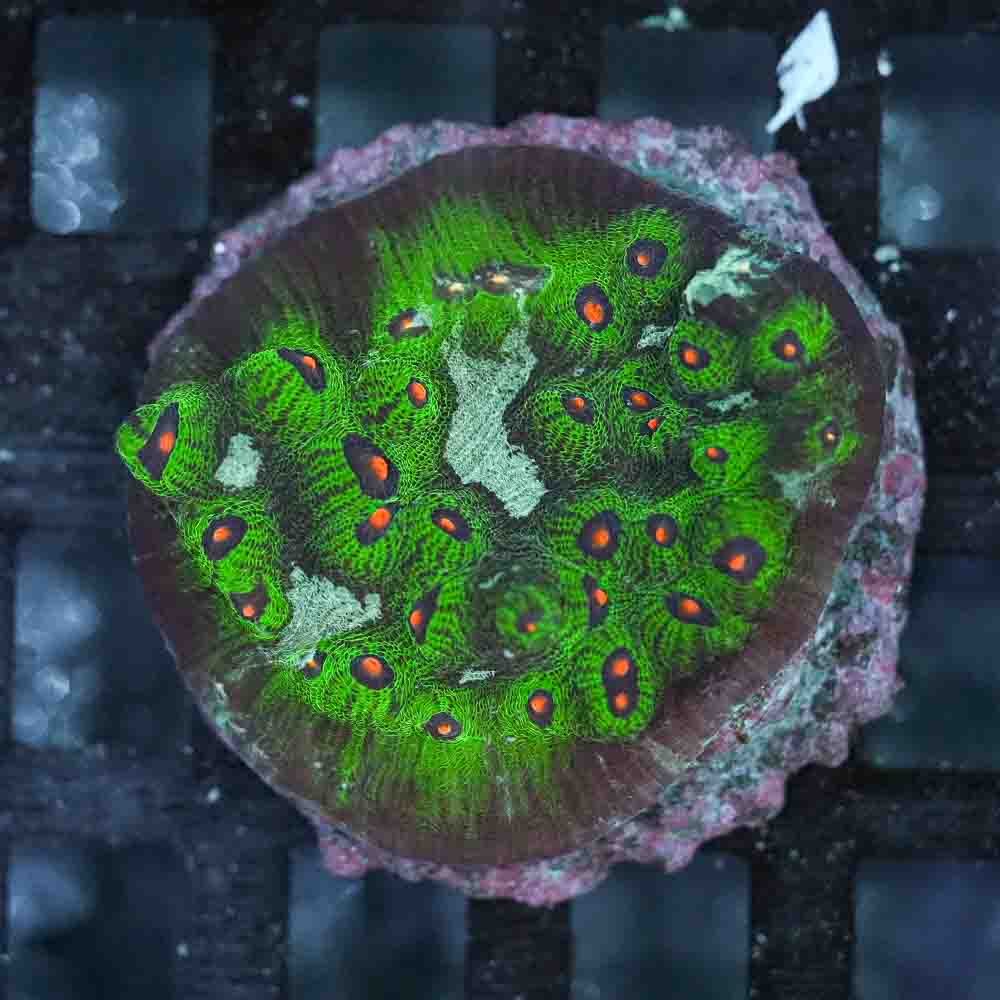
Avatar chalice
Echinophyllia aspera
Similar care · LPS

Dragon ball chalice
Echinophyllia aspera
Similar care · LPS

Mars chalice
Echinophyllia aspera
Similar care · LPS

Miami hurricane chalice
Echinophyllia aspera
Similar care · LPS

Artichoke Coral
Scolymia cubensis
Similar care · LPS
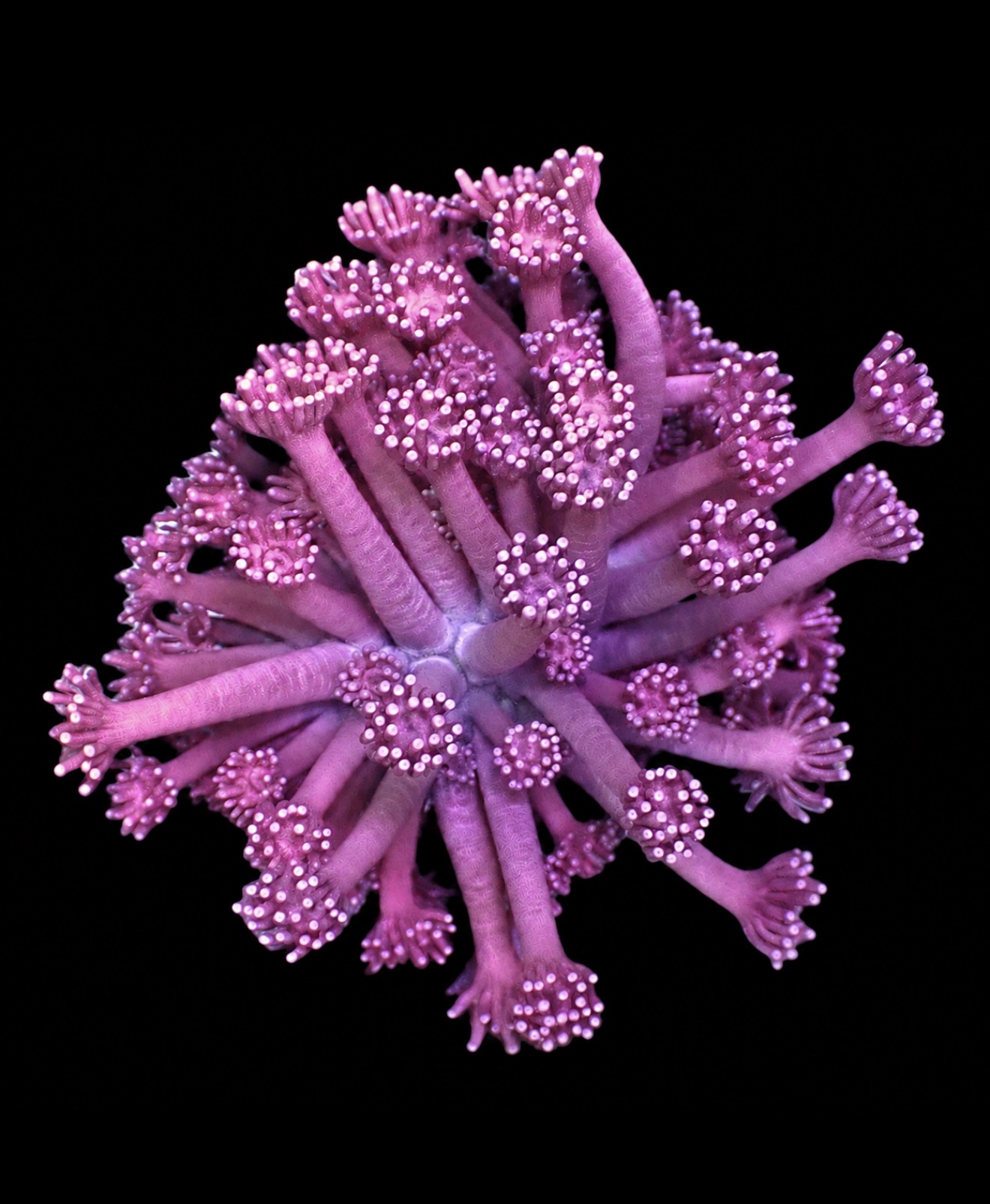
Barney the dinosaur Goni
Goniopora sp.
Similar care · LPS
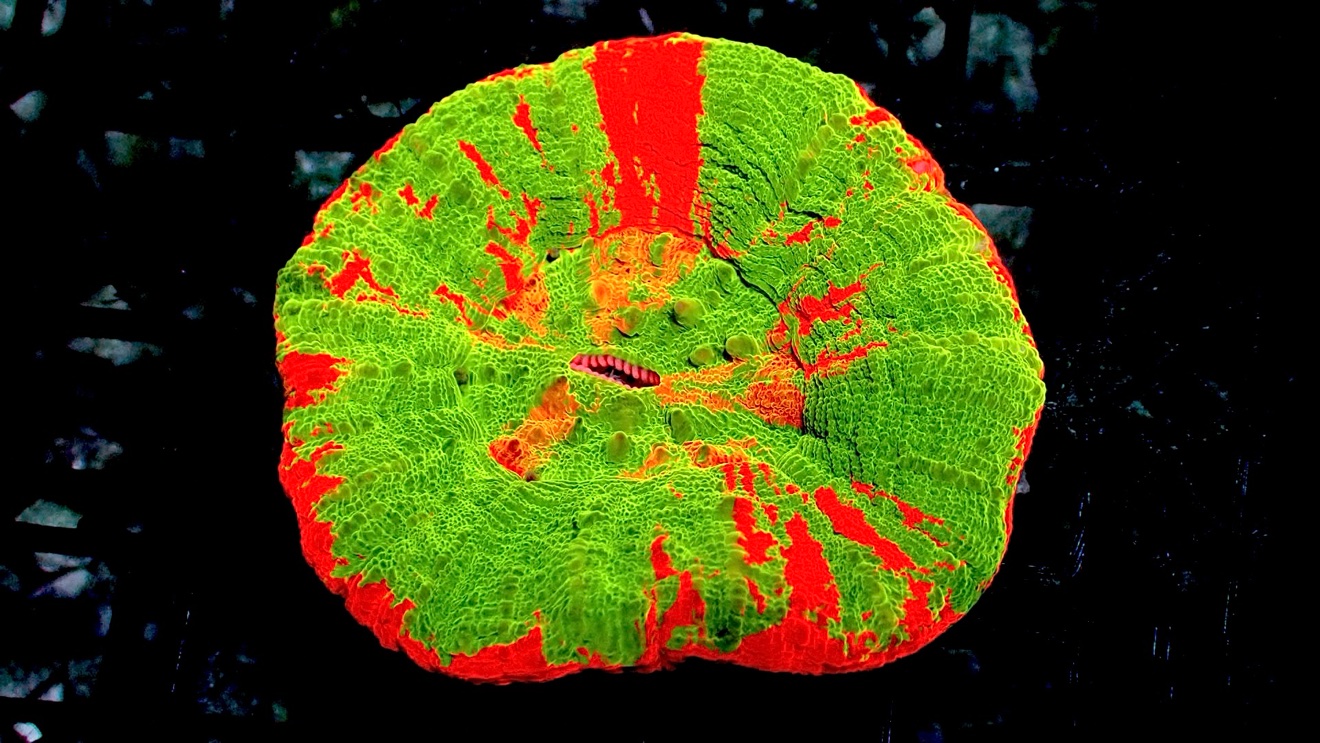
Bleeding Apple Scolymia
Scolymia australis
Similar care · LPS

Blue rim acan lord
Acanthastrea lordhowensis
Similar care · LPS