Yellow Tang
Zebrasoma flavescens
Reef Safe

Gallery
Videos
Few fish read as instantly as a Yellow Tang. The body is a flat oval disc colored an even, saturated yellow from nose to tail, with a small protruding mouth built for picking at algae and a sharp white spine at the base of the tail — the scalpel that gives tangs their other name, surgeonfish. Healthy fish hold a deep, almost glowing yellow; a pale, washed-out tang is telling you something about its diet or its stress level.
Origin and habitat
Yellow Tangs come from reefs across the Pacific, with the classic fishery centered on Hawaii, where they graze shallow reef flats in loose groups. They spend the day in near-constant motion, working over rock for film algae and picking at anything green. Captive-bred fish from Hawaii are now regularly available and settle in faster and take prepared foods more readily than wild-caught fish, which makes them the better buy whenever you can find one.
Space, water and diet
The care itself is simple; the commitments are space and greens. Keep one in 75 gallons or more with at least four feet of swimming length — tangs cramped into short tanks pace, lose color, and become prone to head and lateral line erosion (HLLE). Water at 77–79°F, salinity near 35 ppt, alkalinity 8–10 dKH, and calcium 400–450 ppm suits it well. Clip nori or another dried seaweed in daily, and round the diet out with herbivore blends and frozen algae foods. A grazing tang with a full belly keeps both its color and its manners.
Tankmates and rivals
In a community tank a Yellow Tang is reef safe and generally peaceful, with one exception: it reads other tangs of similar shape as rivals, above all other Zebrasoma species. Mixing across genera — an Acanthurus or a bristletooth Ctenochaetus alongside — usually works far better. Add it last among tangs when you can, keep it fed, and it will spend its days doing visible work on the rockwork.
Field notes — what keepers report
- The most repeated advice from owners is to add a yellow tang last. Keepers describe established yellows harassing later arrivals, especially other tangs of similar body shape, and the workarounds are pure folklore that keepers swear by: a mirror on the glass to keep the yellow busy, or pulling the yellow out and reintroducing it alongside the newcomer.
- Group keeping draws sharply divided reports. One long-term keeper with four yellows credits heavy feeding at multiple autofeeder stations and movable aquascape pieces for keeping the peace, and still reports that a dominant alpha killed six other yellows over the years in a 300-gallon tank, with the group singling out one victim at a time. Other keepers run mixed tang groups successfully in very large systems when all the fish go in young and together, and describe the tangs sorting themselves to opposite ends of the tank with a neutral zone between.
- New yellows are frequently described as nervous rather than bold. Keepers report glass-pacing in the first days, a fish that darts back to its cave at every movement, and color that washes pale when the fish hides. The reported fix is food: nori offered at several spots around the tank settles most new arrivals into grazing.
- Plenty of owners describe the opposite personality: a yellow that ran the tank as undisputed boss across several aquariums yet never did real damage to tankmates. Keeper consensus in the threads is that individual temperament varies enough that stocking plans should assume the pushy version.
Field Notes
Related species

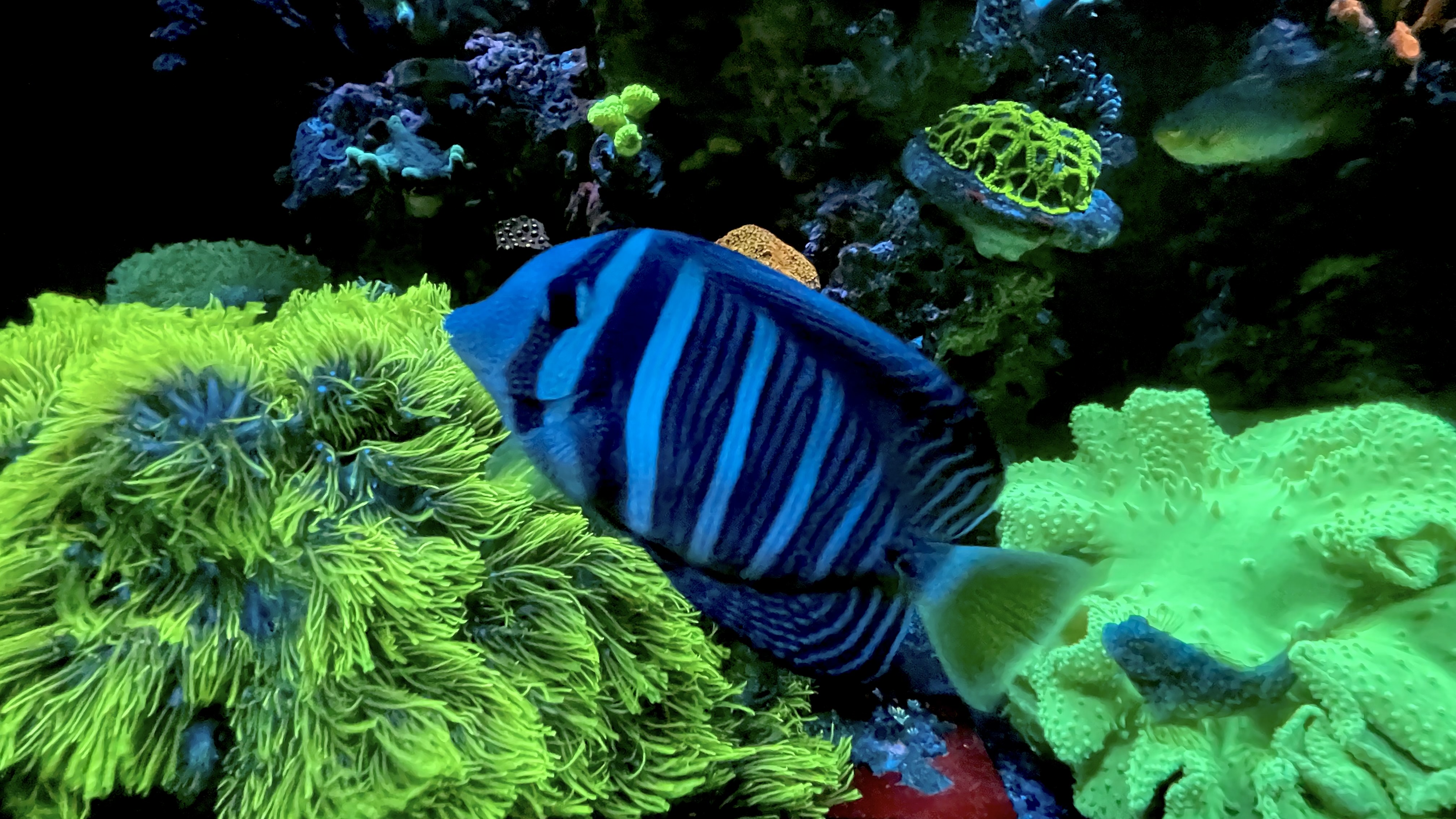
Desjardini Sailfin Tang
Zebrasoma desjardinii
Same genus
Sailfin Tang
Zebrasoma velifer
Same genus

Sailfin Tang
Zebrasoma veliferum
Same genus

Scopas Tang
Zebrasoma scopas
Same genus

Gem Tang
Zebrasoma gemmatum
Same genus

Purple Tang
Zebrasoma xanthurum
Same genus