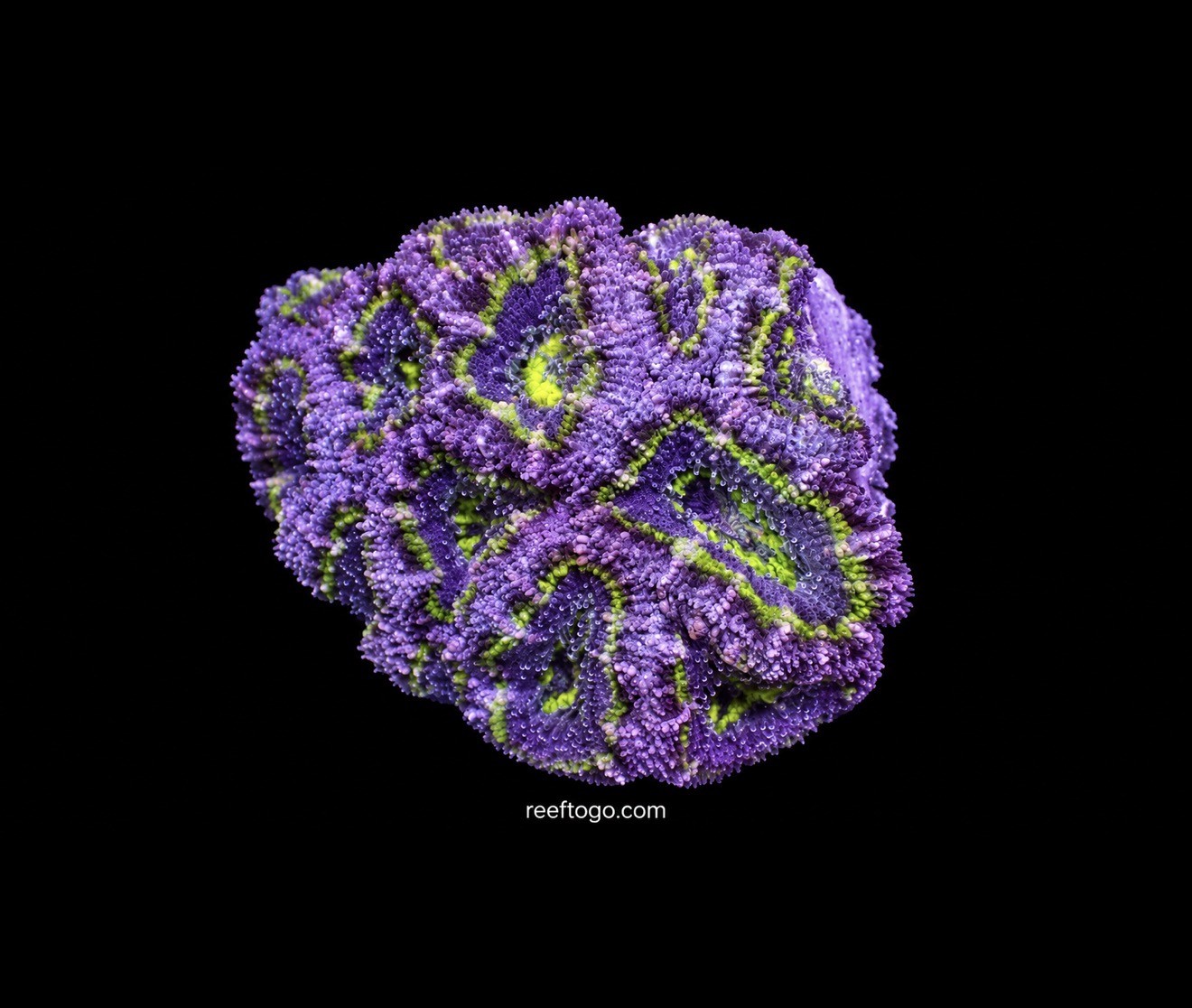
Purple acan
Acanthastrea sp
Care facts
- Care
- Intermediate
- Light
- Medium
- Flow
- Medium
- Place
- Mid
- Space
- Aggressive
- Growth Rate
- Moderate
Gallery
A tiny coral with a big personal bubble! Purple acan packs soft, fleshy polyps onto a hard skeleton. That cozy-looking colony still needs elbow room. Give it a steady home and watch what happens after dark.
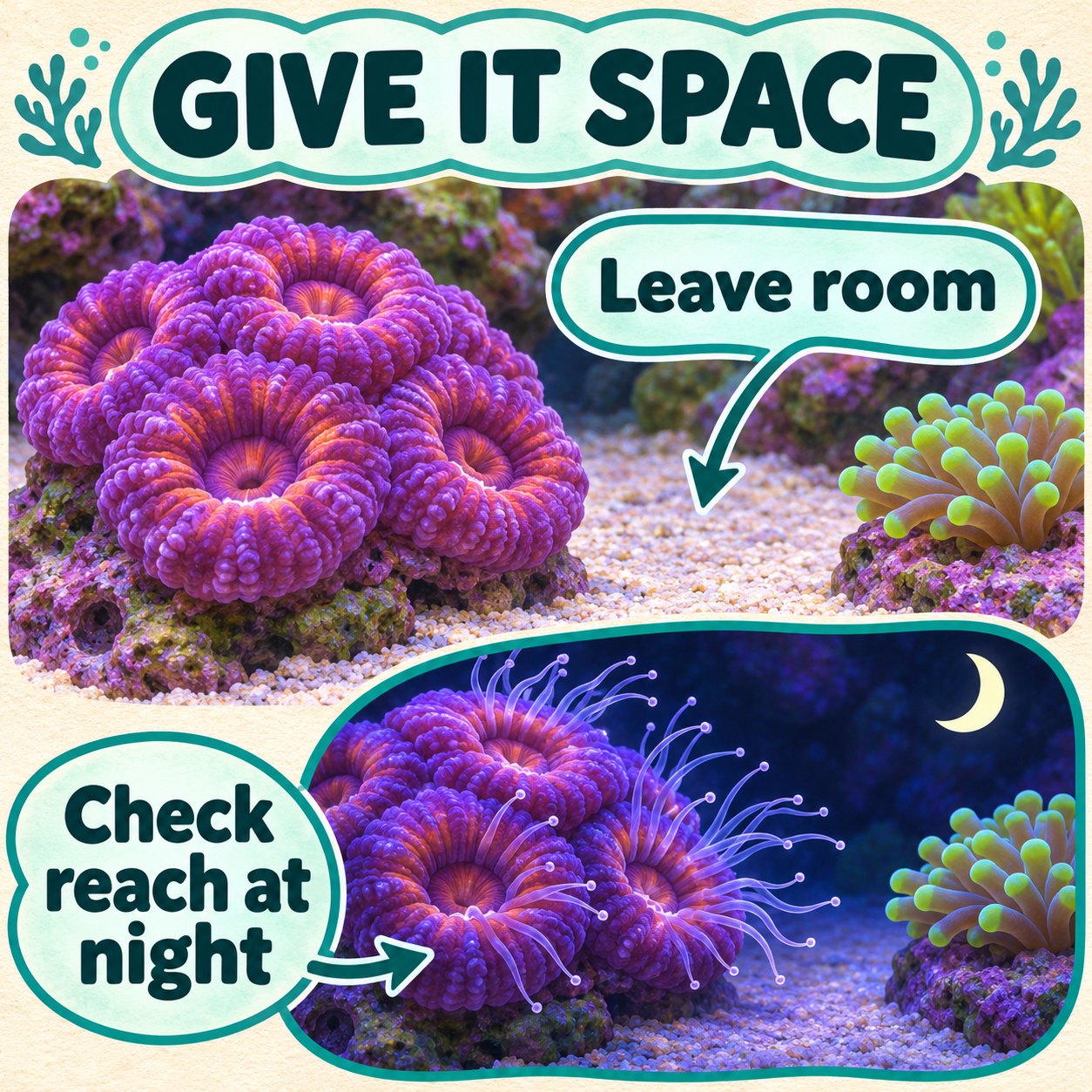
1. GIVE IT SPACE
Small colony, strong sting. Leave a generous gap from neighbors, starting around six inches. Check after dark and widen the gap if tentacles reach toward another coral. A separate, movable rock makes space easier to manage. Do not assume another acan is a safe neighbor.
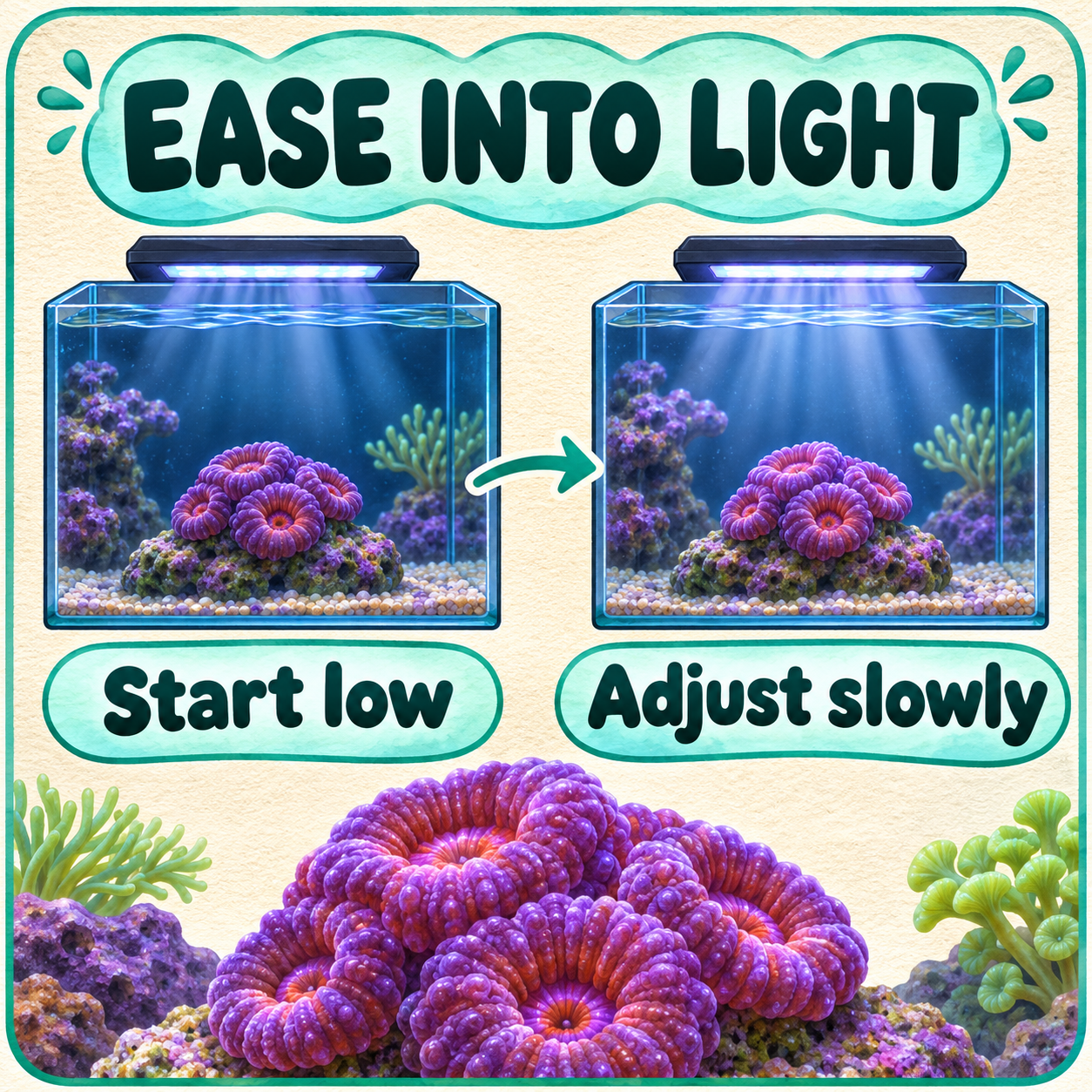
2. EASE INTO LIGHT
Let it settle before the spotlight. Start with gentler light and adjust slowly toward moderate light. A bottom-to-middle spot can work. Judge the light reaching the coral, not just its height in the tank. Avoid repeated moves while it settles.
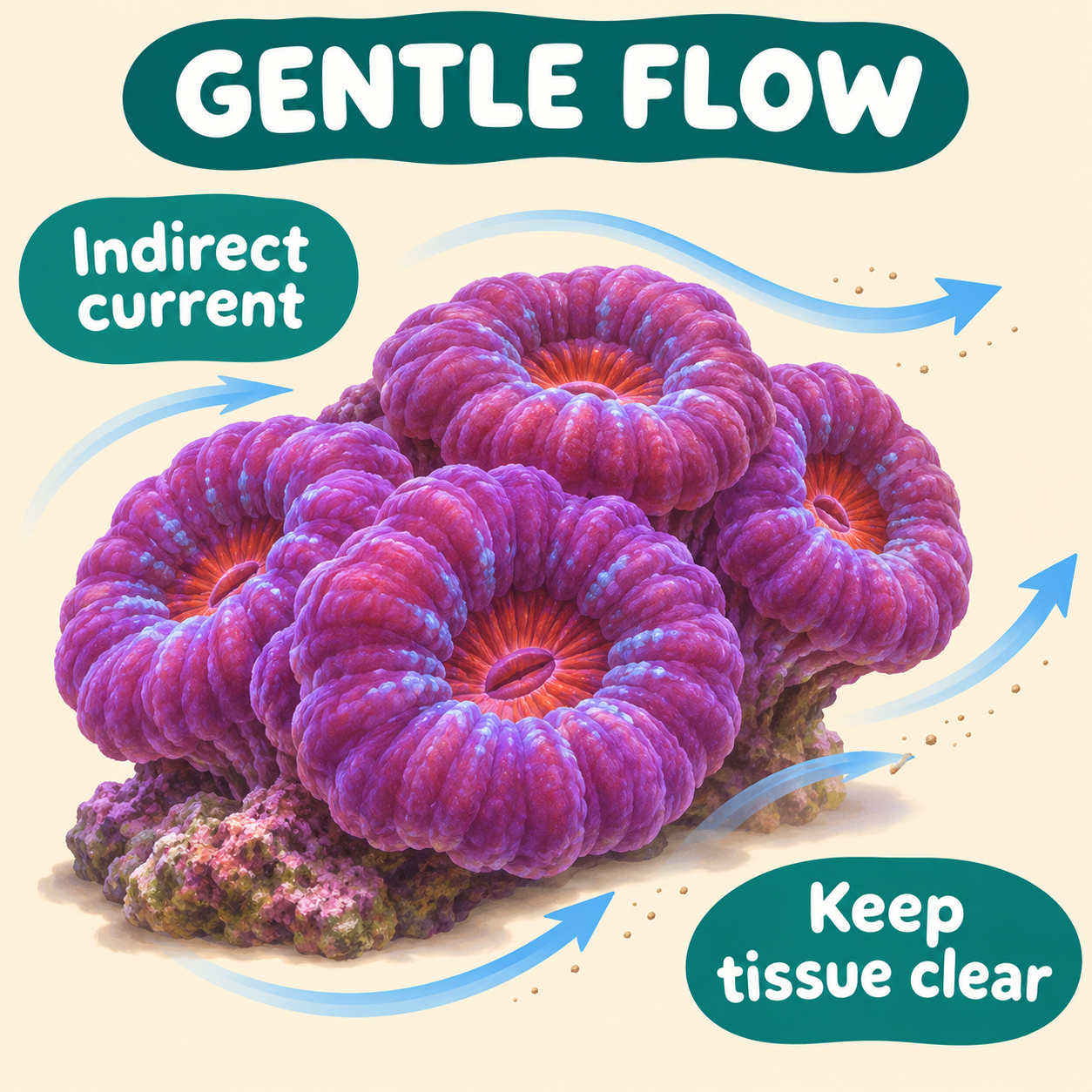
3. GENTLE FLOW
Move water, not flesh. Use moderate, indirect current to carry away loose waste. Keep pump jets off the polyps. The tissue should stay full rather than being pushed hard against its skeleton.
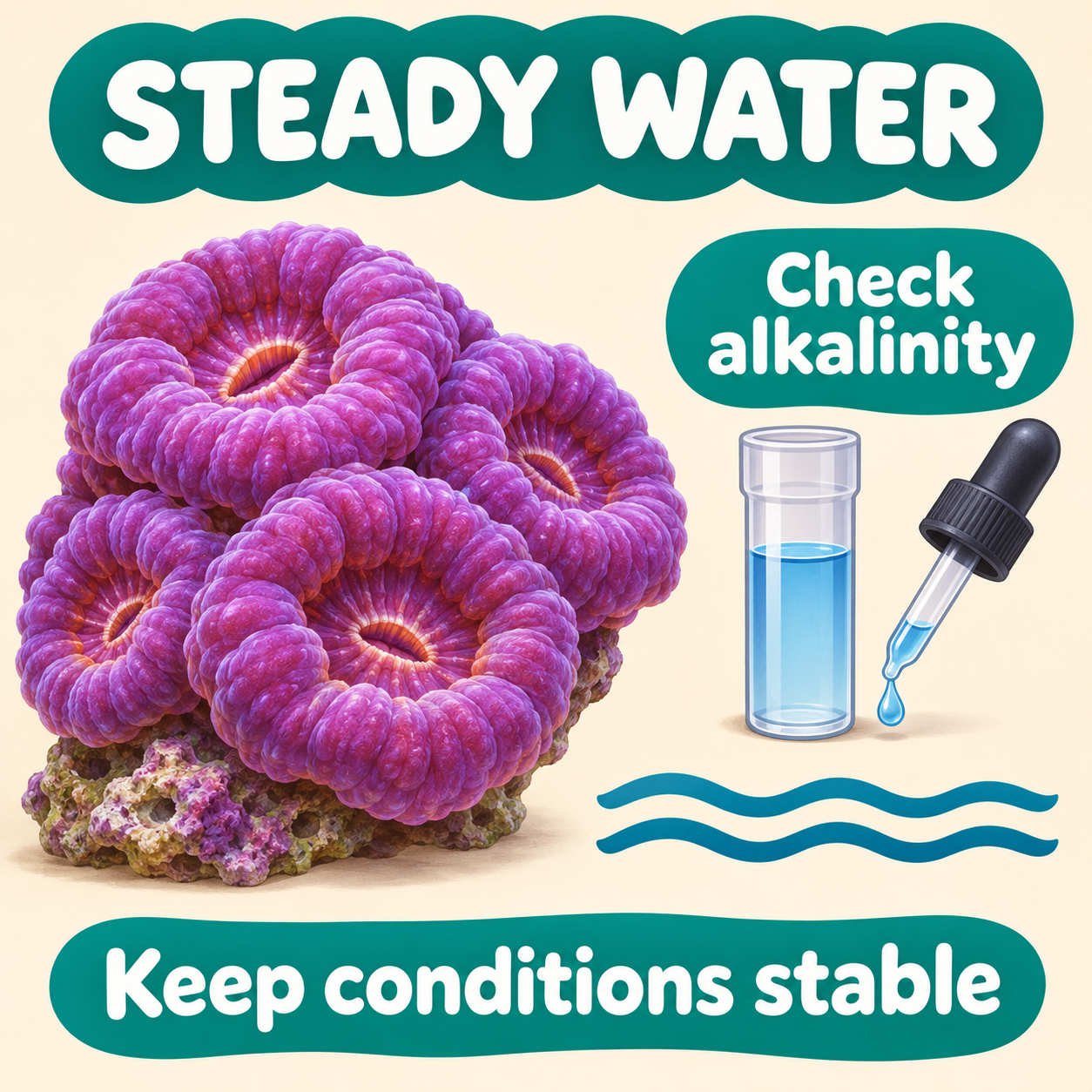
4. STEADY WATER
Boring water is good news. Keep salinity and temperature steady. Check alkalinity and calcium regularly, and keep magnesium in balance. Watch the soft tissue for damage or recession. Investigate a shrinking colony before chasing a brighter color.
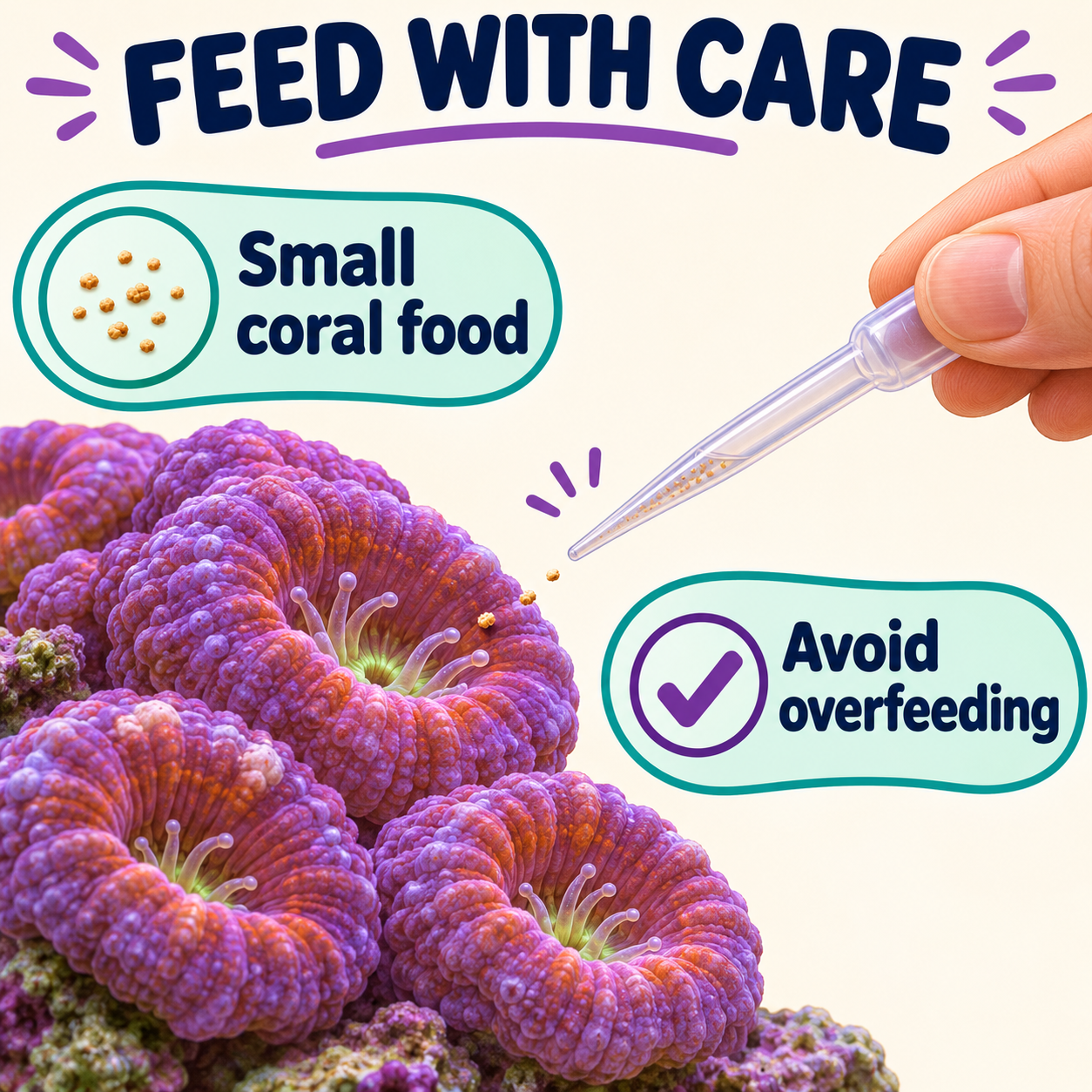
5. FEED WITH CARE
Little mouths, little meals. Light helps feed the coral through tiny algae in its tissue. Offer a small amount of suitable meaty food when feeding tentacles are out. Let the polyps take it in, and remove uneaten leftovers. More food is not a shortcut to a bigger colony.
Field notes — what keepers report
6. General Acanthastrea experiences. One keeper managed an aggressive colony on its own movable rock. Another reported losing nearby corals. Neither experience gives a guaranteed safe distance. Watch your own colony and keep its boundary clear.
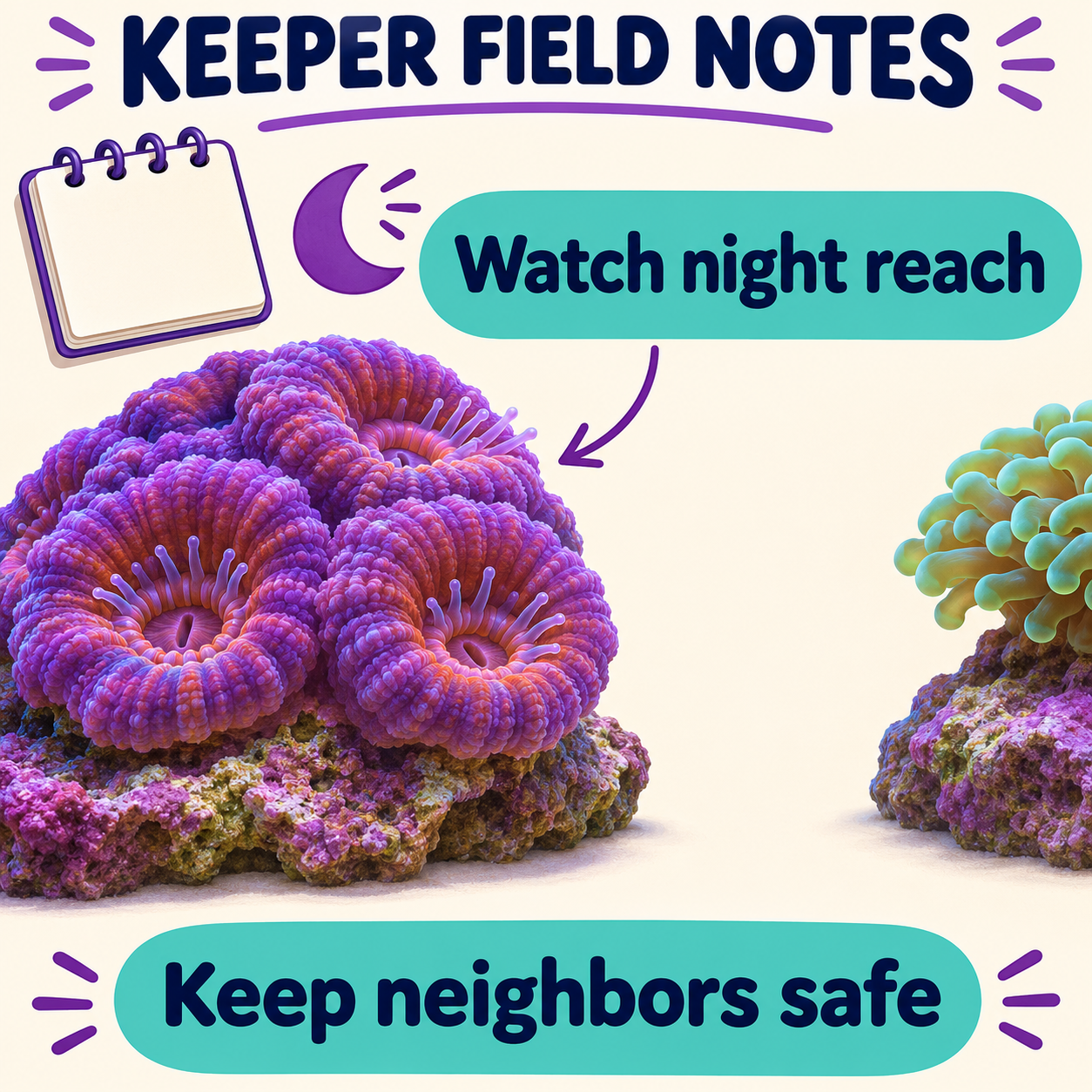
Room first, rewards later. Keep the water steady, the current gentle and the neighbors out of reach. A quick look after lights-out can reveal what the daytime view misses.
Field Notes
Related species

Blue rim acan lord
Acanthastrea lordhowensis
Same genus

Charged Lithium war coral
Acanthastrea sp
Same genus

Acanthastrea Echinata
Acanthastrea echinata
Same genus
Starry Cup Coral
Acanthastrea echinata
Same genus

Elegance coral
Catalaphyllia jardinei
Similar care · LPS
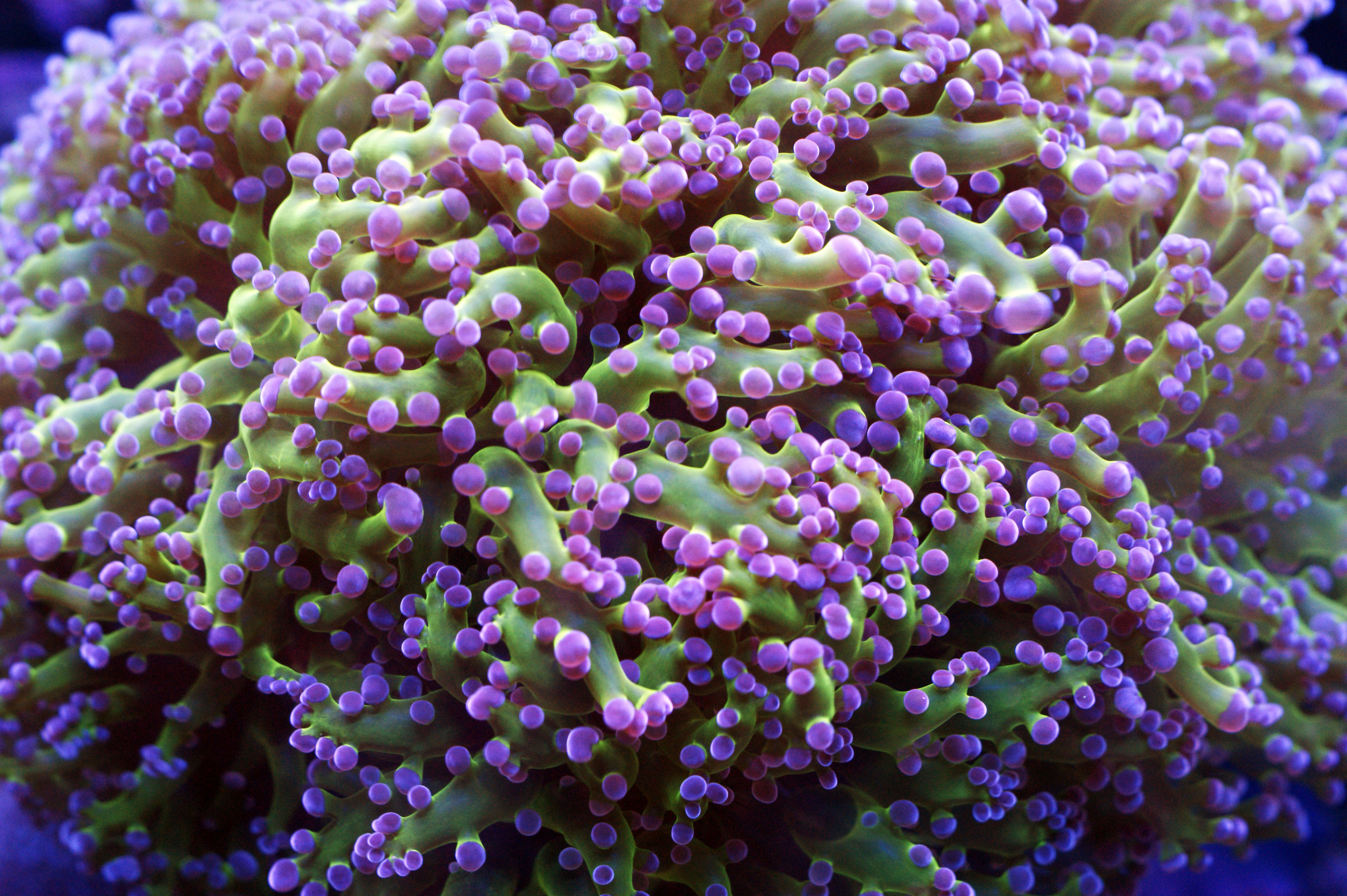
Branching Frogspawn
Fimbriaphyllia paradivisa
Similar care · LPS

Cotton candy torch
Similar care · LPS
Dragon soul torch
Euphyllia glabrescens
Similar care · LPS