
Acropora echinata
Acropora echinata
Also known as: Bottlebrush Acropora, Madrepora echinata, Madrepora durvillei, Madrepora procumbens
Recommended from the shop


Care Summary
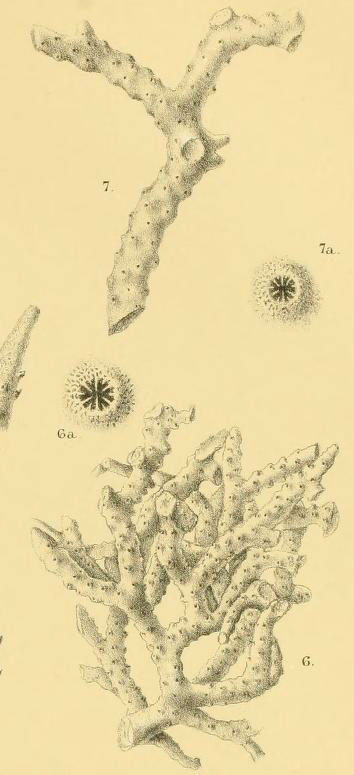
Acropora echinata is the bottlebrush species behind two of the hobby's classic farmed corals, the ORA Hawkins Echinata and the Ice Fire Echinata. Taxonomy places it in the family Acroporidae, described by Dana in 1846 under Madrepora, with Madrepora durvillei and Madrepora procumbens carried as synonyms in the modern record (WoRMS AphiaID 207069). The Australian Institute of Marine Science description, carried in the Wikipedia account read for this dossier, gives the shape a keeper should expect: colonies of flat, bottlebrush-like branches with thin, neatly arranged branchlets, axial and incipient axial corallites that are indistinguishable from each other, and radial corallites that are tube-shaped, short, and easy to miss. A modern treatment of museum specimens adds the finer separators: terete incipient axial corallites with square walls and a costate surface texture, against the thicker rounded walls and elaborate spinules of lookalike bottlebrush species such as Acropora subglabra.
The wild range is wide and the local picture is sparse. The species is uncommon across a large Indo-Pacific range — Palau, the central Pacific, Southeast Asia, Australia, the Indian Ocean, the East China Sea, and Japan, with records at 17 Marshall Islands locations and in five of the six Indonesian regions. Habitat is sheltered, shallow, tropical reef in clear water at 8 to 25 metres, extending onto sand slopes and lagoon floors. Aquarium colonies reach about 15 centimetres across. Colour in the wild record runs white or cream with blue or purple branchlet tips, through to colonies that are completely blue. That pale body with coloured tips is the wild template the farmed strains were selected from.
Conservation status belongs in this entry because the record is current and specific. The IUCN Red List account read for this dossier lists the species as Endangered in its 2024 assessment, with a decreasing population, and the species sits on CITES Appendix II. The same account records very low resistance to bleaching from temperature change, with every specimen in the Palau survey affected in 1998, alongside the wider pressures of reef decline, disease, fishing, climate change, ocean acidification, pollution, and crown-of-thorns predation. An aquacultured frag of a named strain carries none of that collection pressure, which is part of why both famous forms of this species circulate almost entirely as farmed pieces.
The two farmed strains frame how most keepers meet this species, and the entry keeps them distinct. Hawkins Echinata is an original ORA coral, aquacultured in North America for decades after the line arrived from Germany in 2006: short turquoise branches, bright blue polyps, and aqua-blue shades through the colony, growing by sprouting new branches from a central stalk and by encrusting the rockwork at its base until new stalks rise from the crust. Ice Fire Echinata carries blue tips that soften down the branch into a cream stalk, with blue-green polyps, and circulates almost always as an aquacultured specimen, so its colouration breeds true in a way wild imports do not. Both strain pages in the sources read add the same handling warning, and the warning belongs to the species: echinata carries no protective slime coating, dries out fast in air, and tolerates dips less well than other Acropora, so fragging and dipping call for a light hand and short air exposure.
Care departs from the standard crest-Acropora recipe in one important way, and the species record is consistent about it. Light demand sits a step below the high-PAR staghorn band. TSA's Hawkins FAQ puts the preferred band at moderate PAR around 200–300 under a blue-heavy spectrum, and explains the failure mode at higher intensity: growing tips bleach while shaded bases keep their pigment, so the fix is lower peak intensity and a longer photoperiod rather than a harder blast. Doc Aquarium's band for the same line runs wider, 150–350+ PAR, and the Fragbox pages call the species light-loving at moderate-to-high levels, reading brown as too little light and white as too much. Start a new frag low, raise intensity over two to three weeks, and judge the move by tip colour and polyp extension.
Flow should be strong, alternating, and indirect. Doc Aquarium builds its installations around alternating strong flow for this coral, Fragbox asks for flow high enough to encourage polyp extension and keep detritus off the branches, and TSA's base-recession answer makes the mechanism plain: low flow and shading trap detritus and film at the base, tissue stresses there first, and chaotic current across the base is the countermeasure. Placement in the vendor record is an exposed position in the upper third of the tank, with generous room — colonies grow large, the coral is peaceful, and neighbours with a longer sting are the threat to plan around.
Water chemistry is the Reef To Go standard reef base, held steady: 77–79°F, salinity near 35 ppt (about 1.024–1.026), alkalinity 8–10 dKH, calcium 400–450 ppm. The sources read overlap that base closely — TSA runs alkalinity 8–9.5 dKH and calcium 420–440 ppm for its Acropora, Doc Aquarium runs alkalinity 7–9.5 dKH with calcium 400–450 ppm and magnesium at 1350 ppm, and the TankFacts Ice Fire record runs calcium 400–450 ppm with magnesium 1350–1500 ppm. TSA's nutrient band for holding the classic blue is the useful refinement: nitrate 2–10 ppm and phosphate 0.03–0.08 ppm, detectable and stable, with potassium at 380–420 ppm verified by testing before any dosing. Ultra-low nutrients and abrupt alkalinity drops both wash the blues out in that account.
Pests and base health get their own paragraph because the farm record names the checks. TSA's Hawkins FAQ lists the base-recession workup in order: redirect flow across the base and siphon debris, trim whatever shades the colony, then check the slow-tissue-necrosis triggers — unstable alkalinity, very low nutrients, chemical pressure from soft corals answered with fresh carbon and stronger skimming — and inspect for Acropora-eating flatworm bite marks, with quarantine and treatment if they appear. Doc Aquarium's troubleshooting adds the colour signal keepers see first: browning on arrival in a new system, from unstable levels, from high nutrients, or from flatworm pressure. The database's Pests section carries the full flatworm control record.
Feeding is supplemental and sized to the coral. The species is photosynthetic first. TSA's farm routine adds a phytoplankton blend plus fine particulate coral foods and aminos, target-fed with pumps paused. Fragbox names a commercial SPS food as a suitable spot feed for both strains. The TankFacts Ice Fire record adds the size limit in plain terms: nano-zooplankton once a week suits the coral, and copepods, Artemia, and other nauplii are too large for it to ingest, with dissolved organics as the other addition it recommends. A fish-fed system covers part of this on its own; the fine-particle step is the deliberate addition.
Growth expectations should be set before purchase, because this species spends its early months on groundwork. The pattern in the farm record is a solid encrusting base first, a stall that can look like failure, then multiple thin vertical bottlebrush shoots once conditions have held steady. TSA notes the same opening stall across its Acropora — growth commonly appears stagnant for the first three to six months in a new system — and the keeper record for the Ice Fire form gives the stall a similar length. Price reflects the farmed supply and the patience involved. TSA lists its ORA Hawkins Echinata at $74.99 for a ¾–1 inch frag, Doc Aquarium lists its Hawkins line at $30.00 for a chunky frag around an inch with extra branches, and an Ultimate Reef keeper in the sources read describes the Ice Fire colony he was weighing as the most expensive coral he had considered buying. Same species, three price points — lineage and colour form do the pricing work.
Choosing a specimen comes down to form, tissue, and handling history. Look for the flat bottlebrush branching with thin, neat branchlets, tissue running clean to the base, and tip colour judged under a stated spectrum, since the same colony reads blue high in a tank and turquoise-green lower down in the Hawkins comparison recorded in the field notes. Ask how the piece was dipped and handled: a coral with no slime coat and low dip tolerance arrives with less margin than a millepora frag handled the same way. Expect the settlement stall, and read encrusting at the base as progress — in this species the crust is the colony under construction.
Field notes — what keepers report
- Light placement is the most argued topic in the keeper record, and the accounts agree on the direction while disagreeing on the number. One Reef2Reef keeper reports his Ice Fire looked best and grew well under 300 PAR in moderate flow, with greener hues showing at the base in the lower light. Another keeps a wild piece low in the tank at about 200 PAR, where a brown and ugly arrival coloured up into a piece he calls amazing. A third runs his Ice Fire close to the bottom at roughly 150–185 PAR and calls the coral really hardy, trucking through a neglected-tank stretch that cost him several other nice SPS. A fourth keeper with three echinatas in the mid-section reports they clearly prefer lower PAR and show little polyp extension under higher PAR. Read together against TSA's 200–300 PAR farm band, the keeper consensus sits at or below the bottom of the vendor band, and every account treats slow acclimation as settled practice.
- Colour in this species answers to nutrients as much as to light, and the Ultimate Reef record states the trade plainly. Smooth-skin Acropora commonly arrive pale from shipping, darken as they settle, and return to the white body with blue tips only when phosphate and nitrate run low; at higher nutrient levels the same coral darkens and turns mainly blue. TSA's farm answer points the same way from the other side: detectable, stable nutrients hold the blue, while ultra-low nutrients and abrupt drops wash it out. The two accounts meet in the middle — pale with blue tips lives in a narrow, stable nutrient window, and a keeper chasing the import photograph with aggressive nutrient stripping is working against the farm record.
- The flow argument has a genuine split, and both sides stay in this record. One Reef2Reef voice classifies Ice Fire among deepwater Acropora, prescribes actinic-heavy light with very low white, and argues flow must be very low because the tissue is thin, with slow acclimation to water and light throughout and a quiet corner away from the powerheads as the starting position. The thread answers him directly: another keeper agrees on light acclimation and disagrees on flow, holding that smooth-skin Acropora need plenty of indirect flow with individual assessment per piece, and a third adds that the deepwater label describes sparse polyps and visible smooth skin rather than collection depth, that many echinata do well in higher light and strong random flow, and that dip sensitivity is the part of the warning he recognises. The vendor record sides mostly with the second group — alternating strong flow, indirect rather than direct — and the practical overlap is narrow and useful: no direct blast, no stagnant corner, and patience with light.
- Hawkins colour splits by height inside a single tank, in the most useful comparison in the placement thread. A keeper who ran multiple Hawkins pieces at once reports the higher piece always bluer and the lower piece turquoise-green, and he placed his Ice Fire low on purpose, hoping to hold its blue tips over a white body. The comparison matters because it separates two colour levers keepers often merge: height changes the Hawkins body colour itself, while the Ice Fire keeper's hope rests on the pale-body form holding at low light. Both outcomes are consistent with the nutrient account above — position and chemistry move this species' colour together, and changing one while ignoring the other produces the confusing results the threads are full of.
- Settlement time is the shared frustration and the shared relief. A tiny Ice Fire frag in the Ultimate Reef thread looked no better after a week and slightly darker, from a shaded part of its mother colony, with its keeper hoping a water change would turn it around. A second keeper in the same thread reports his piece took ages to settle, started growing after about six months placed relatively low, and holds a blue he counts among his favourites. The farm version of the same story is the encrust-then-shoot pattern in TSA's FAQ. Keepers who judge this species in its first month are judging the encrusting phase, and the record from both forums and the farm says the branches come after the base.
- Hardiness reports split by framing, and the split is worth keeping. The Ultimate Reef keeper who found Ice Fire as easy as any other smooth-skin Acropora, and later called the form overrated next to unnamed Acropora he prefers, is answering the reputation question. The Reef2Reef keeper whose bottom-placed piece survived neglect that killed other SPS is answering the toughness question. Doc Aquarium and Fragbox answer the handling question, with the slime-coat and dip warnings. A buyer can hold all three at once: settled colonies are tough, the reputation for difficulty is earned during shipping, dipping, and the long settlement, and the coral's price buys colour and form rather than a growth rate.
Care
Field Notes
Related species
Anacropora
Anacropora gracilis

Caliendrum Seriatopora
Seriatopora caliendrum

Digitifera Acropora
Acropora digitifera

Fused Staghorn Coral
Acropora prolifera

Gemmifera Acropora
Acropora gemmifera

Granulosa Acropora
Acropora granulosa

Humilis Acropora
Acropora humilis

Hyacinth Table Coral
Acropora hyacinthus
Love this species? No tank needed.
Reef art from the shop — for the wall, not the tank.


Get notified when Reef To Go has Acropora echinata in stock or up for auction. One email when it's in — no spam.