
Acropora tortuosa
Acropora tortuosa
Also known as: Blue Tort Acropora, Madrepora tortuosa, Acropora implicata
Care Summary
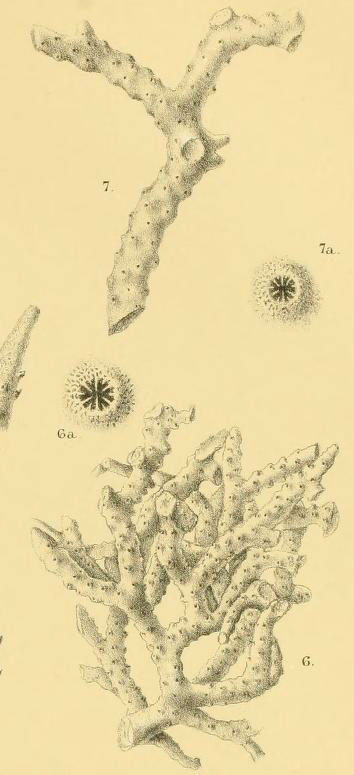
Acropora tortuosa is the bottlebrush species behind the two most famous blue corals in the reef hobby. Taxonomy places it in the family Acroporidae, described by Dana in 1846 under Madrepora, with Acropora implicata carried as a junior synonym in the modern record (WoRMS AphiaID 288259). The scientific description, carried in the Australian Institute of Marine Science account that the Reef2Reef species spotlight cites, gives the shape a keeper should expect: colonies of prostrate, tapered branches carrying many branchlets and incipient axial corallites, with corallites that run from immersed to long and tubular and give the branches a rough, irregular surface. Tentacles stay retracted during the day.
The wild range is narrow for such a famous aquarium coral. The species spotlight places the true species primarily in the South Pacific around Australia, living as a lagoon coral rather than a reef-crest coral. Reef Builders' Marshall Islands field account adds the wider picture: huge tree-like stands reported at Rongelap Atoll, and at Kwajalein a stout near-shore colony growing in turbid, nutrient-rich water with its blue-purple colour held in the tips, plus larger, paler, more open colonies in clear, nutrient-poor shallows that grew closer to a staghorn shape. Colour and form in this species answer to the water around the colony, in the wild and in glass boxes alike.
Colour range is the species' calling card. The spotlight records green, blue, yellow, and pale blue-white forms with variants between, all shifting with light intensity and spectrum. The aquarium trade built its two classics from that range. The California Tort carries blue-green colouration and grows comparatively fast for the group. The Oregon Tort carries a uniform, saturated deep blue with blue polyps, grows slowly, and shows tubular, irregular, curving radial corallites. A ReefBum lineage account traces the Oregon coral from a Bali shipment through Portland-area hands — Shaun Monahan's Waves shop, then Upscales, then Rick Souta's Reefstuff — starting from a small light-brown colony that coloured up deep blue in a display tank. That brown-to-blue start is worth remembering when judging a fresh import of this species.
Identity deserves a full paragraph in this entry, because the tort name is applied loosely in the trade. The spotlight's position is that the California Tort is the offering that most consistently matches the scientific description of Acropora tortuosa, and that several other corals sold as torts — Miyagi Tort and the Bennett Yellow Tort among them — show characters such as fused branches that sit closer to Acropora austera. ORA has farmed an ORA Oregon Tort and an ORA Ice Tort as distinct branded corals, and farmed the California Tort until early 2011. A buyer who wants the true species should buy the growth form — prostrate tapered branches, rough irregular corallite texture — alongside the colour, and should treat a tort label on a fused-branch colony as an open question.
Care follows the Acropora standard this database records for its SPS entries, tuned by the tortuosa-specific record. Light demand is high: Top Shelf Aquatics targets 300–450 PAR for its Oregon Tort with strong chaotic flow, keeper accounts cluster at 350–400 PAR, and Tidal Gardens' general Acropora guidance centres near 300 PAR while warning that new arrivals suffer more from overexposure than from a dim start, so intensity should rise over a couple of weeks. Flow should be strong and random, clearing detritus from between the tight corallites and carrying waste away from the base. Placement is the upper rockwork, with sideways room: this species spreads prostrate before it builds height, and a colony shades its own base as the branches thicken.
Water chemistry is the Reef To Go standard reef base, held steady: 77–79°F, salinity near 35 ppt (about 1.024–1.026), alkalinity 8–10 dKH, calcium 400–450 ppm. The sources read overlap that base closely — TSA runs alkalinity 8–9.5 dKH and calcium 420–440 ppm for its Acropora, the spotlight's quick stats run alkalinity 7–11 dKH, and the Cali Tort care page runs alkalinity 7–10 dKH with calcium 380–450 ppm. TSA's nutrient band for blue colour is the useful refinement: nitrate 2–10 ppm and phosphate 0.03–0.08 ppm, with potassium 380–420 ppm named as a blue-supporting element to verify by ICP rather than by guesswork. Alkalinity stability matters more than any single value in that band; TSA links basal recession in this group to rapid alkalinity swings working alongside self-shading.
Pests get their own paragraph because the record names them for this species group. Reef Builders' aquaculturist account calls tortuosa generally hardy and flags its smooth skin as the reason the group can be more susceptible to red bugs, with twice-monthly inspection of mother colonies as the working habit even under quarantine. TSA's FAQ adds the Acropora-eating flatworm picture for tortuosa specifically: pale irregular bite patches between corallites, reduced polyp extension with tiny orange specks for red bugs, and eggs hidden along shaded bases inside the tight corallite structure. Dip and inspect new frags, and baste colonies as part of routine looking — the database's Pests section carries the full control records for both pests.
Feeding is supplemental. The coral is photosynthetic first, and TSA's farm routine adds phytoplankton blends and fine particulate coral foods, target-fed with pumps paused; Tidal Gardens adds amino acids and small zooplankton such as rotifers and cyclops plankton to its Acropora feeding. A system with fish, fed normally, covers much of this. Night-time low-dose amino or fine particulate feeding is the step TSA suggests when a stalled colony needs encouragement after its parameters have been held stable for two to three weeks.
Growth expectations should be set before purchase. The famous blue forms grow slowly at frag size — keeper language for the Oregon form runs from a nine-month wait before growth starts to a frag that encrusts and thickens for a long time before branching — and multiple independent accounts report the same turn: once a colony reaches roughly three inches across or fist size, growth speeds up noticeably, and a mature colony can be fragged regularly. Price follows that timeline. TSA lists its Oregon Blue Tort cut-to-order at $109.99 for a ¾–1 inch frag, and a keeper account in the sources read watched a fist-sized colony sell at a local shop for $400 and leave the next day. Slow growth, steady demand, and two decades of collector reputation keep this species' frags priced as long-term projects.
Choosing a specimen comes down to form, tissue, and patience. Look for the prostrate, tapered branching and the rough corallite texture from the species description, tissue that runs clean to the base, and colour judged under a stated spectrum — the same colony reads dark blue with powder-blue tips under one lamp and dark blue over an emerald base under another, in Reef Builders' own side-by-side account of its mother colonies and frags. Expect a settlement stall: TSA notes Acropora commonly sit still for the first three to six months in a new system, and its tortuosa FAQ describes the same pause after shipping or a large water change. A frag that encrusts quietly for months is behaving the way this species behaves.
Field notes — what keepers report
- The growth argument runs through every keeper account of this species, and both sides use the same facts. One Reef2Reef keeper calls the Oregon form the slowest coral in his system, taking nine months to start growing and growing super slowly even then, in a tank run with very heavy lighting and daily automatic water changes totalling most of the water each month. Another keeper in the Oregon Tort thread calls it flatly the fastest grower for him under LED and T5 at about 350 PAR with high flow. The accounts between those poles explain the spread: a frag stays slow while it encrusts and thickens, then a colony at fist size can grow quickly and take constant fragging — one keeper's seven-year-old colony is fragged almost monthly. Read together, the record says the species has two growth gears and the frag gear is the slow one; keepers who judge it in the first months are judging the wrong gear.
- Placement decides colour in the most detailed single-tank comparison in the record. A keeper running the Oregon form in three positions at once reports the mid-top frag holding the deepest blue, the frag at the very top turning more purple with green polyps under direct blast, and the frag lower down staying blue with less brightness — and he ties the mid-top result to heavy random swirling flow as well as light. His larger mid-top piece also came through a bleaching event and parameter swings that damaged the top frag, which he credits to the bigger piece being healthier and better flowed. The practical lesson keepers repeat from that thread is to give the coral high light and high flow together, with the very top spot not automatically the best spot.
- Hardiness reports are strong for a slow coral. Reef Builders' aquaculturist account describes his Oregon Tort colony coming through all kinds of tank ups and downs without trouble, and recommends the California form as the best beginner tort for keepers starting with this species. ReefBum takes the other side on readiness, rating the Oregon form advanced and recommending it only after success with other SPS, under strong lighting near the top of the tank. Both accounts agree on the underlying point: the coral tolerates a mature keeper's mistakes better than a new system's instability, and the frag's long quiet period tests patience more than skill.
- The colour-fidelity problem is a keeper topic in its own right. ReefBum writes that a true Oregon Blue Tort is so vividly blue it can look artificially pigmented, with bold blue visible across a room, and warns that buyers confuse it with the Cali Tort — his separator is the greenish hue in the Cali Tort's body against the Oregon form's solid deep blue. The Reef2Reef spotlight complicates any simple colour test by recording the species' full wild range — green, blue, yellow, and pale blue-white — and by questioning whether some tort-named corals are this species at all. Keepers buying on colour alone get both warnings from this record: buy the growth form and the lineage, and let colour confirm them.
- Basal recession has a named keeper pattern in TSA's FAQ, drawn from its farm experience: thick tortuosa branches shade their own base, flow and light fall away underneath, and tissue recedes while the tips keep growing. The countermeasures recorded there are strong cross-flow to clear detritus, periodic pruning to open the colony, and laying a frag flat at the start so it encrusts and plates before it grows upward. The same FAQ ties continuing recession to two checks — flatworm bite marks and alkalinity stability — which matches the wider Acropora record in this database: check pests and chemistry before changing anything else.
- Pest vigilance is the habit the professional account models. Reef Builders' writer quarantines all new corals and still inspects his established tortuosa mother colonies about twice a month, because the group's smooth skin leaves it more open to red bugs and early catching keeps an infestation from spreading through a system. TSA's keeper-facing version of the same habit is to look for pale irregular bite patches between corallites and tiny orange specks alongside reduced polyp extension. Neither account treats dipping a new frag as the end of the job.
Care
Field Notes
Related species

Aculeus Acropora
Acropora aculeus
Anacropora
Anacropora gracilis

Caliendrum Seriatopora
Seriatopora caliendrum

Digitifera Acropora
Acropora digitifera

Fused Staghorn Coral
Acropora prolifera

Gemmifera Acropora
Acropora gemmifera

Granulosa Acropora
Acropora granulosa

Humilis Acropora
Acropora humilis
Get notified when Reef To Go has Acropora tortuosa in stock or up for auction. One email when it's in — no spam.