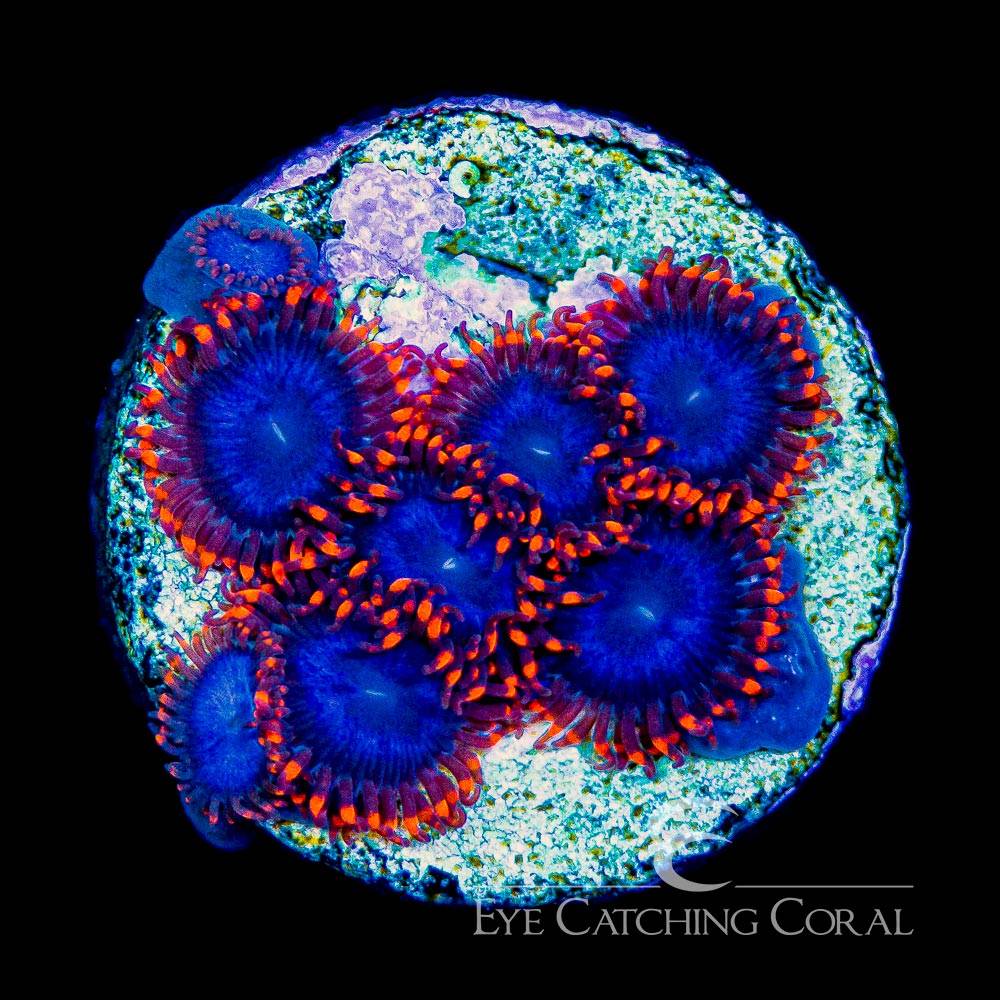
Captain Falcon zoas
Zoanthus sp
Palytoxin safety
Some zoanthids and palythoas can contain a potent toxin. Wear sturdy waterproof gloves and eye protection, minimize handling, and keep colonies submerged when possible. Never boil, steam, pressure-wash or scrub colonized rock under running water. Keep other people and pets away during handling. If exposure is suspected, seek urgent medical advice and tell the clinician about possible palytoxin exposure.
Sources: CDC: palytoxin exposure · OATA: avoiding palytoxin poisoning
Gallery
1. Meet Captain Falcon zoas
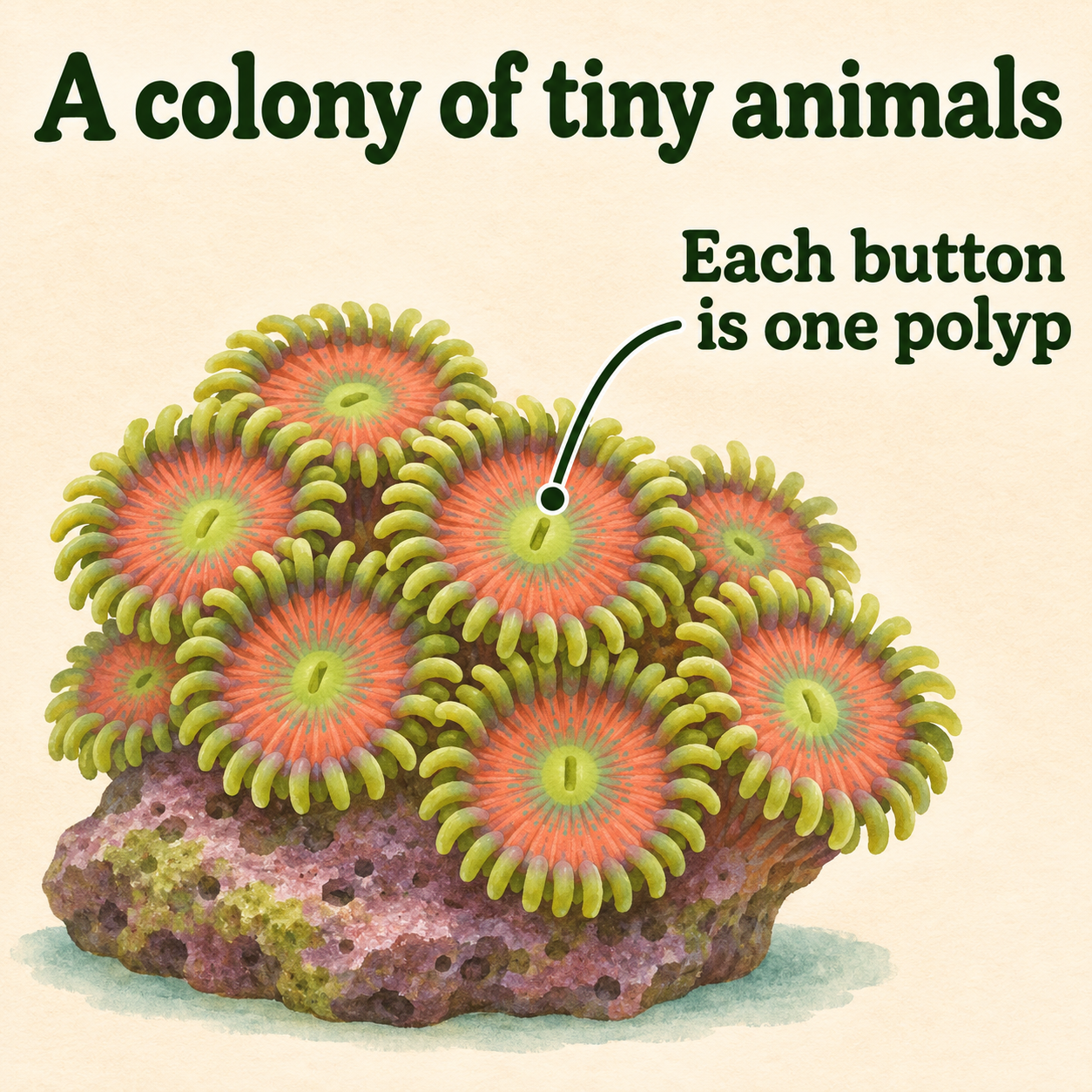
A zoa colony is a tiny crowd. Each button is a living animal called a polyp. Together, the polyps spread across a shared patch of rock. Watch long enough and you may spot a small new button beside the older ones.
Captain Falcon is this coral's trade name. It is not a scientific species name or proof of a particular family tree. The Reef To Go record places it in Zoanthus. We keep that identification and do not narrow it from a photograph. No verified Captain Falcon lineage or color description was found for this guide.
The care card is your starting point: CARE Beginner, LIGHT Low-Med, FLOW Med, PLACE Mid, SPACE Moderate, GROWTH Fast. Beginner means manageable reef care, not safe to handle barehanded. Read the safety section before working with zoas.
For the colony idea and general care, see [LiveAquaria's Zoanthus overview](https://www.liveaquaria.com/products/colony-polyp). This guide uses general Zoanthus care where Captain Falcon-specific evidence is missing.
2. Find a comfortable patch of reef
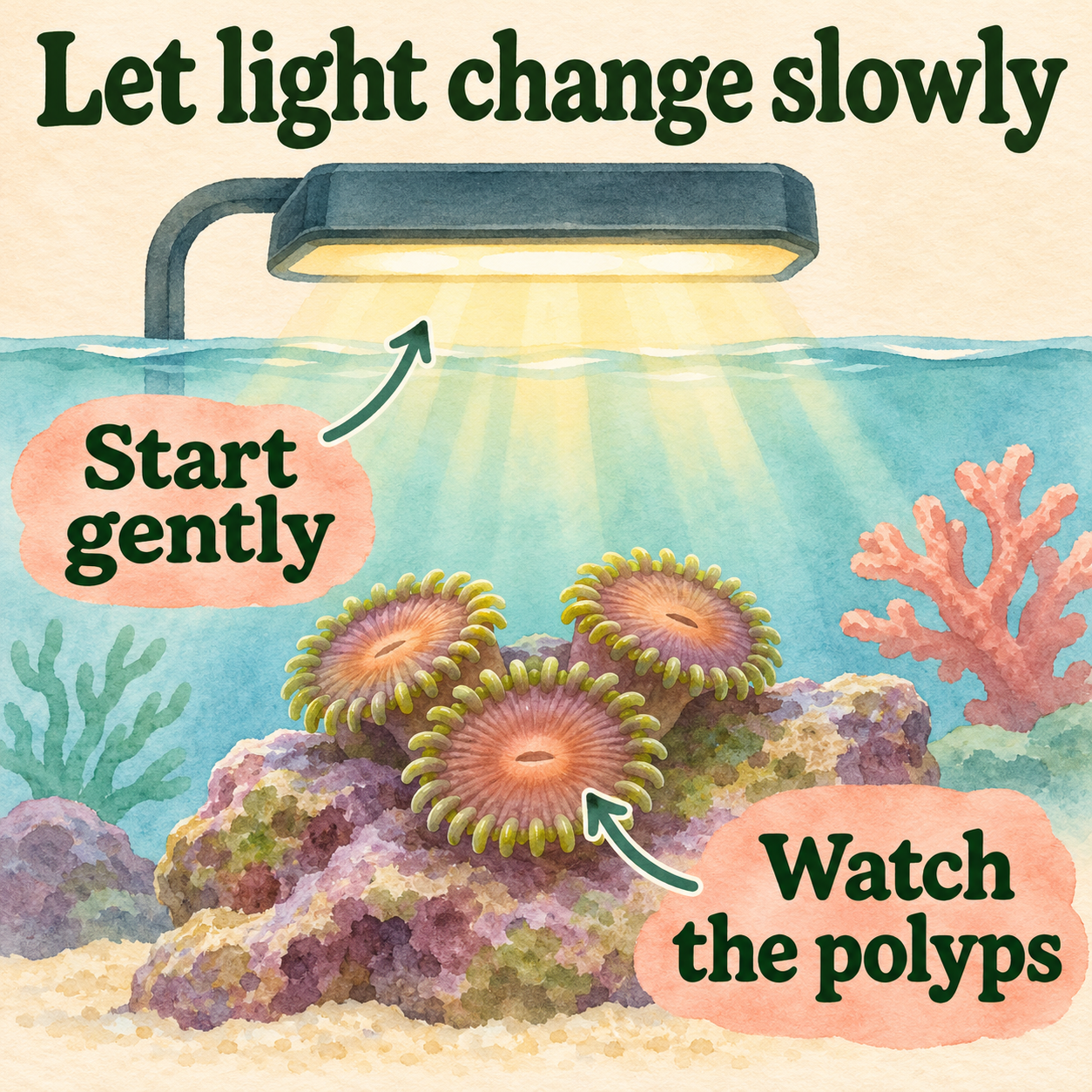
Start gently with light. A bright new lamp can be a big change, even for a small coral. Use a lower-light spot at first and adjust gradually. Low-Med is a useful starting label, not a measured light setting.
Mid describes a place in the tank, not a promise about brightness. A spot halfway up one tank can be brighter than the top of another. Shade, lamp settings and rock shape all matter.
Give the colony moderate water movement that carries loose dirt away. Avoid a direct blast that keeps the polyps folded shut. Look between the buttons: waste should not sit there in little piles. Secure the plug so the current cannot tumble it.
Light supplies energy through tiny algae living inside the coral. Different lamps also change how a colony looks to our eyes. Do not chase a seller's photograph by suddenly turning the light up. There is no verified Captain Falcon PAR target in the sources used here.
The starting approach is supported by [BRS's zoanthid guide](https://www.bulkreefsupply.com/content/post/coral-care-guide-zoanthids) and [Tidal Gardens' care observations](https://tidalgardens.com/articles/coral-care-articles/zoanthus-coral-care.html).
3. Steady water and sensible meals
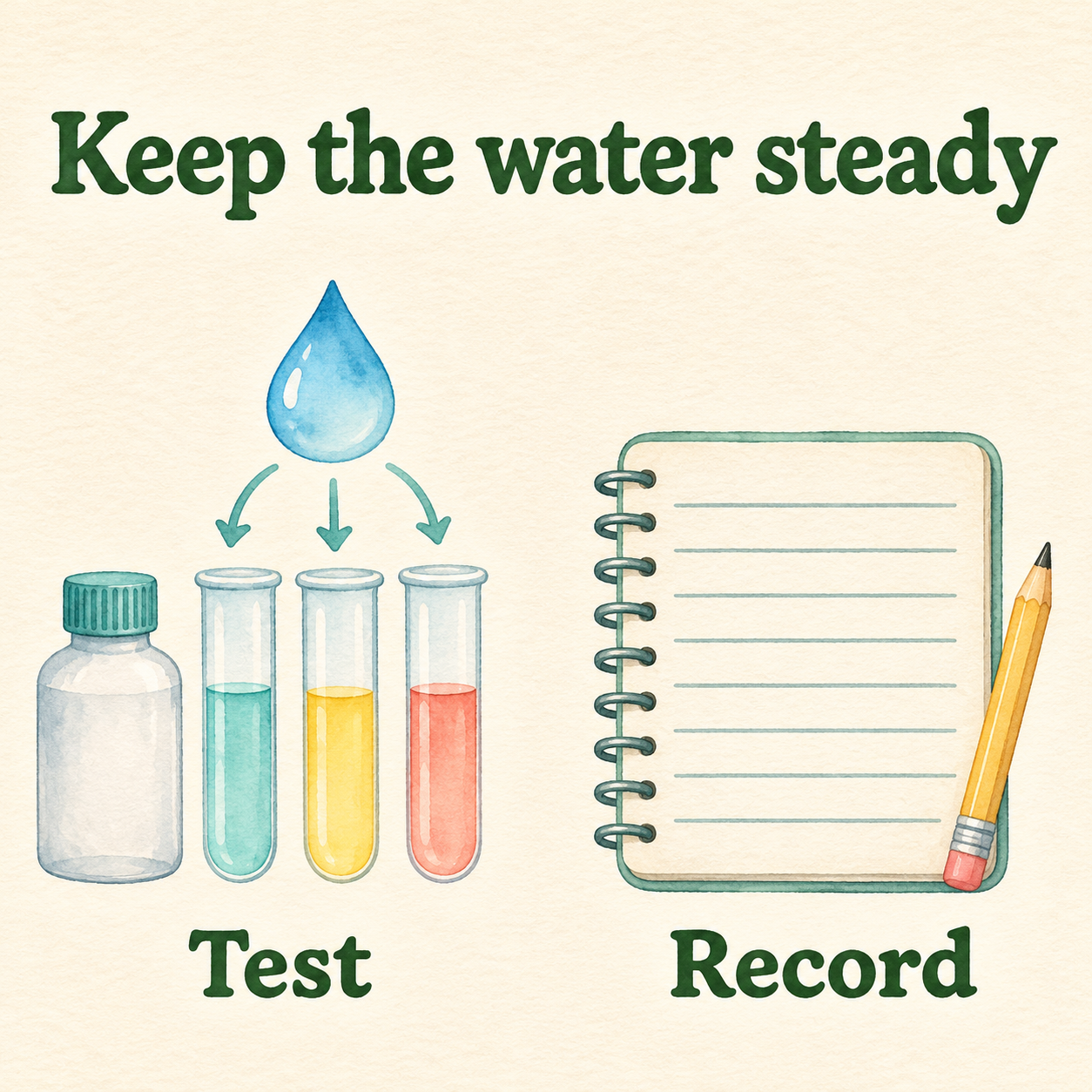
Think of the aquarium as the zoas' whole world. Keep temperature and salinity steady. Test the water regularly and write the results down. Keep up the tank's normal maintenance rather than waiting for the polyps to look unhappy.
Nitrate and phosphate are nutrients, not just numbers to drive down. Zoas can struggle when a tank is stripped too clean. Too much leftover food can cause trouble too. Use your test results and the whole tank's response to guide small changes.
These polyps get much of their energy from their partner algae. Extra food is optional, and responses vary. If you try a suitable fine coral food, start with a small amount and follow its label. A closed polyp does not prove that it swallowed a meal. Watch the colony and the water tests before adding more.
Skip the hunt for a magic growth bottle. This guide does not prescribe extra iodine or a special dosing recipe for Captain Falcon. It does not promise a feeding schedule that will make every frag grow.
Sources: [BRS on stable reef care](https://www.bulkreefsupply.com/content/post/coral-care-guide-zoanthids) and [Tidal Gardens on nutrients and feeding](https://tidalgardens.com/articles/coral-care-articles/zoanthus-coral-care.html).
4. Inspect first, then settle in
A new frag can bring tiny passengers. Check the plug, the underside and the spaces between polyps. Some zoa-eating sea slugs hide close to their food. A magnifier can help you look without poking the colony.
Use an established coral quarantine tank when possible. It gives you time to watch the frag away from your other corals. A dip does not replace that watch time. Some pest eggs can survive a dip.
Choose a dip labeled for zoanthids. Follow that product's strength and time exactly, in a separate container. More dip is not better dip. Rinse with clean saltwater afterward, and keep used dip water out of the aquarium. If a frag arrives badly stressed or damaged, get advice about its condition before adding another treatment.
Polyps may close after a move or disturbance. Look at the pattern, not one snapshot. If they stay closed, check light, flow, temperature, salinity and possible pests. Shrinking tissue, disappearing polyps or a problem spreading through the colony deserves prompt attention. Photograph the change and ask an experienced coral keeper or the supplier for help. Do not guess a disease from one picture or pile on several treatments at once.
Sources: [BRS on coral pests](https://www.bulkreefsupply.com/content/post/md-2021-02-reef-tank-pest-and-remedy-guide), [coral quarantine](https://www.bulkreefsupply.com/content/post/md-2016-02-how-to-build-a-coral-quarantine-tank), and [WWC's handling and dip cautions](https://www.bulkreefsupply.com/wwc-acclimate).
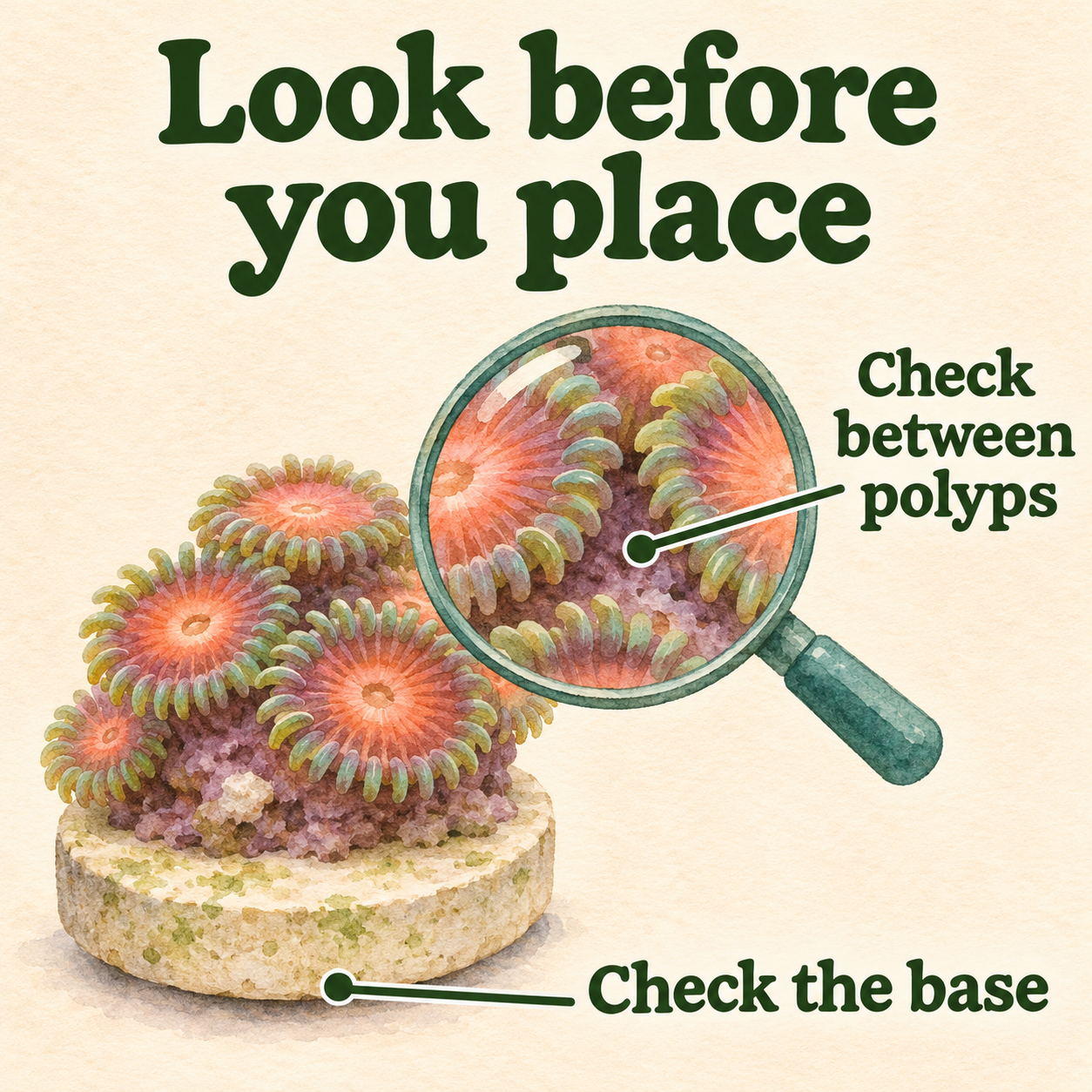
5. Give the garden an edge
That little patch may not stay little. Zoas can spread across nearby rock and crowd other corals. A separate rock makes the colony's edge easier to watch and manage. It helps you plan space, but it is not an escape-proof fence.
Leave room between the growing mat and its neighbors. Check the gap as both colonies grow. A nearby coral may also reach farther at night. The old one-to-two-inch note is not a guaranteed safe border for every neighbor.
SPACE stays Moderate in the care card. It describes contact and crowding risk, not a distance in inches. Some sellers call zoas semi-aggressive; others stress their mild sting and ability to spread. Those labels do not justify changing this entry's existing value.
GROWTH stays Fast as a broad planning category. It is not a promise of a new polyp every week. Different colonies, including different zoas in the same tank, can grow at different speeds. A slow spell is a reason to look carefully, not to force-feed the frag.
Zoas can be propagated, but cutting them is an adult task with a real handling hazard. Let a healthy colony settle and ask a skilled propagator for help rather than learning by cutting a stressed frag.
Sources: [LiveAquaria on budding and crowding](https://www.liveaquaria.com/products/colony-polyp), [BRS on rock islands and growth](https://www.bulkreefsupply.com/content/post/coral-care-guide-zoanthids), and [OATA's handling guidance](https://ornamentalfish.org/what-we-do/advice-information/care-sheets/caresheets-marine-fish/how-to-avoid-palytoxin-poisoning-if-you-keep-corals/).
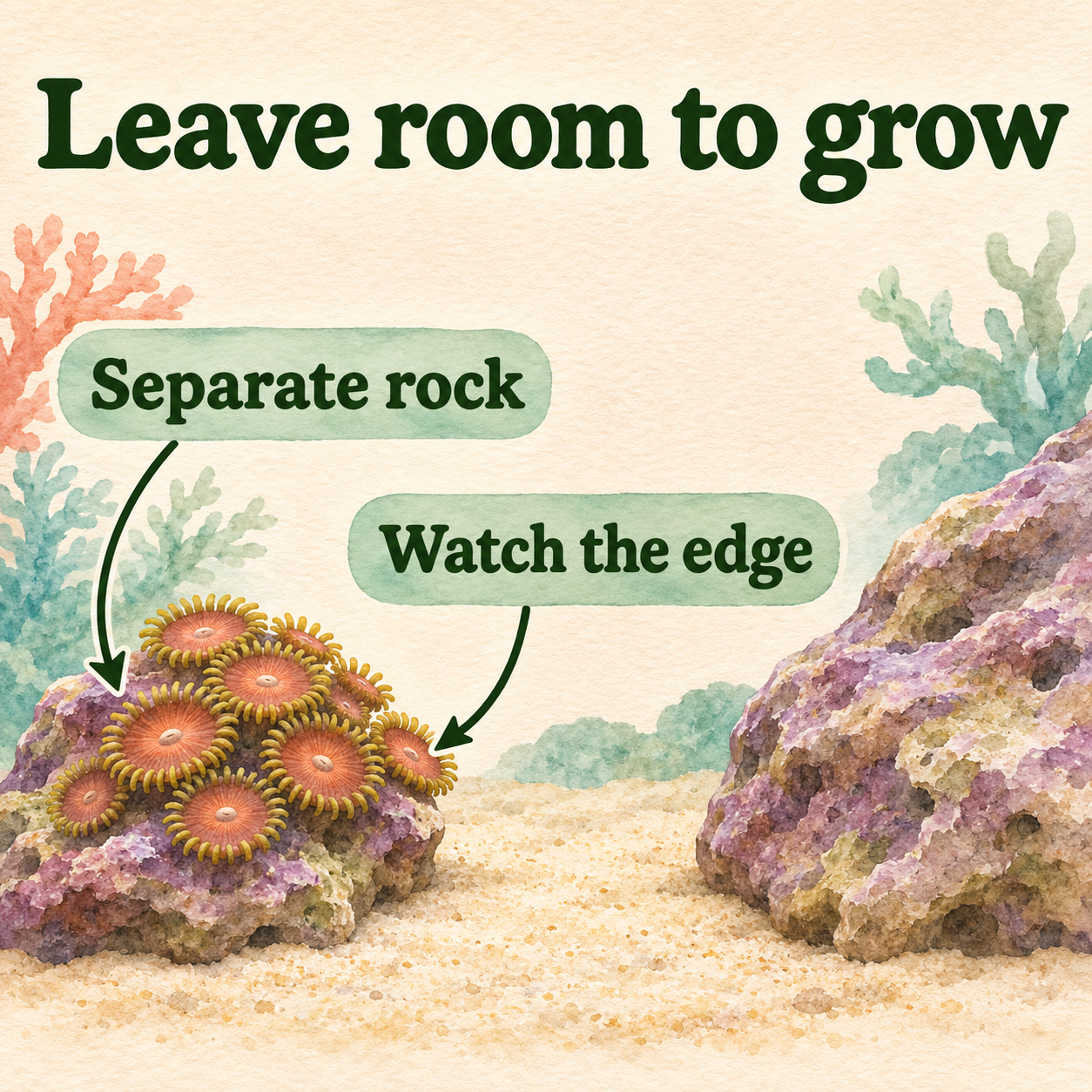
6. Enjoy the view, handle with care
Zoas are wonderful to watch. Working on them needs a different kind of attention. Some zoanthids contain palytoxin, a powerful poison. A trade name, a color or a healthy-looking colony cannot certify that a frag is toxin-free.
Let an informed adult do the handling. Wear sturdy waterproof gloves and eye protection. Minimize handling, keep colonies submerged when possible, and keep children, other people and pets away from the work area. Wash your hands afterward and avoid touching your face.
Never boil, steam, microwave or pressure-wash colonized rock. Do not scrub it under running water. Sprays and heated water can turn a coral-cleaning job into a serious exposure. Gloves and goggles do not make those actions safe. Seek experienced help and follow specialist safety guidance for fragging or removal.
If you suspect exposure, seek urgent medical advice and say that palytoxin from aquarium coral may be involved. Breathing trouble, eye pain or feeling ill after handling coral is not something to watch and wait on.
This section adds explanation. It does not replace or weaken the existing palytoxin safety panel on this entry. Safety sources: [CDC's aquarium exposure investigation](https://www.cdc.gov/mmwr/preview/mmwrhtml/mm6431a4.htm) and [OATA's prevention guidance](https://ornamentalfish.org/what-we-do/advice-information/care-sheets/caresheets-marine-fish/how-to-avoid-palytoxin-poisoning-if-you-keep-corals/).
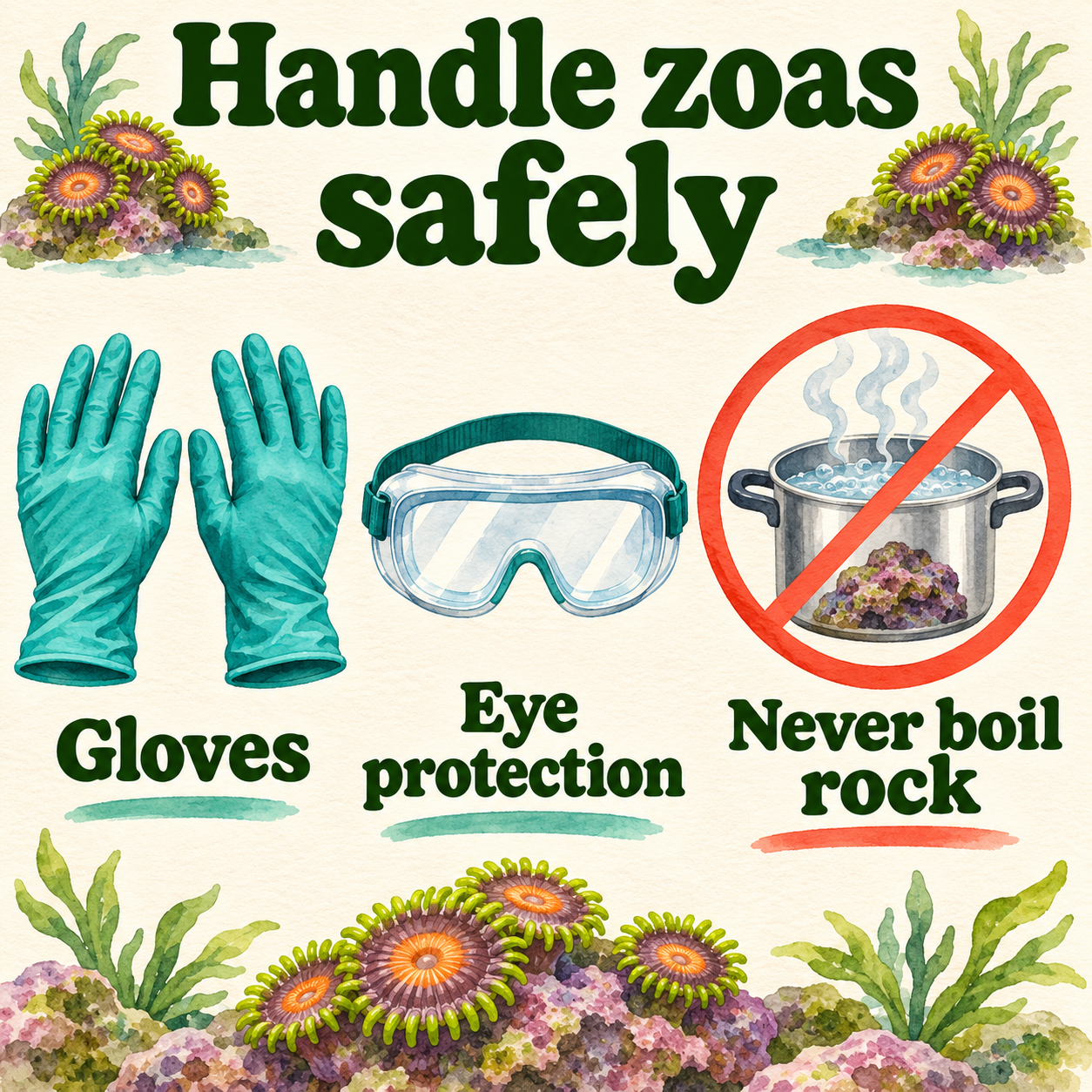
Field notes — what keepers report
Two tanks can tell different stories about the same food. Here are real aquarium reports about zoas generally, not verified Captain Falcon colonies. They are clues from keepers, not controlled trials or promises.
On July 29, 2020, Reef2Reef member Hillerd86 reported that some zoas were opening well and growing new heads after about two weeks of Reef-Roids feeding. The same update says phosphate was creeping up, so feeding was reduced. The useful part is both halves of the story: a promising coral response and a water-quality trade-off. [Read Hillerd86's update, post 20](https://www.reef2reef.com/threads/zoa-growth.736172/post-7777751).
On December 12, 2020, Reef2Reef member blasterman reported a different response. Larger polyps in their zoa/paly gardens seemed to benefit from small foods. Smaller zoas closed in irritation, with no growth change noticed. This does not prove that small zoas never feed. It shows why one keeper's success should not become everyone's recipe. [Read blasterman's report, post 10](https://www.reef2reef.com/threads/reef-roids.783871/post-8317674).
Neither report tells us how Captain Falcon will behave in your tank. Start a small coral notebook. Record what you changed and take a photo from the same spot. Change one thing at a time. Your colony's own story will be easier to follow when the pages line up.
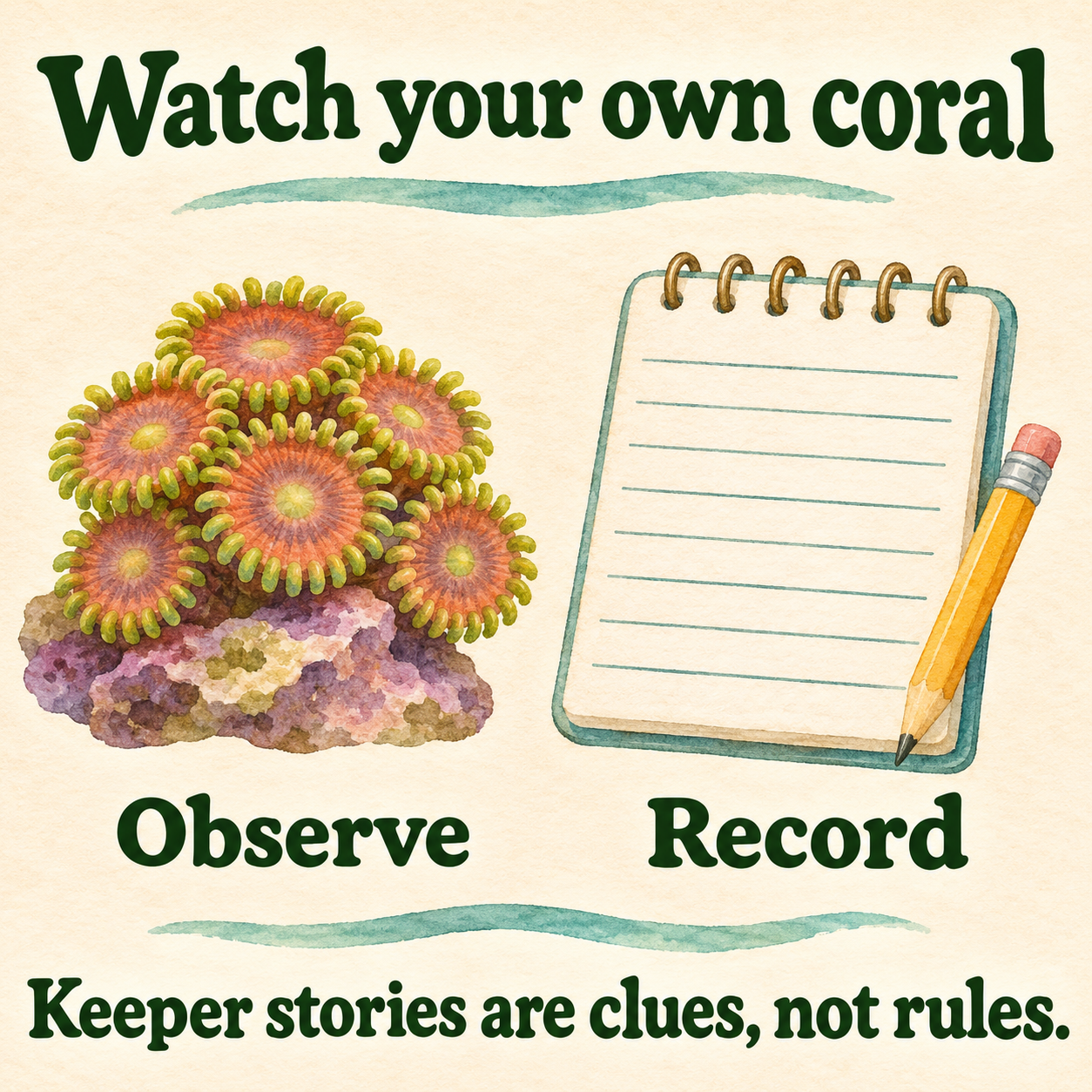
Field Notes
Related species
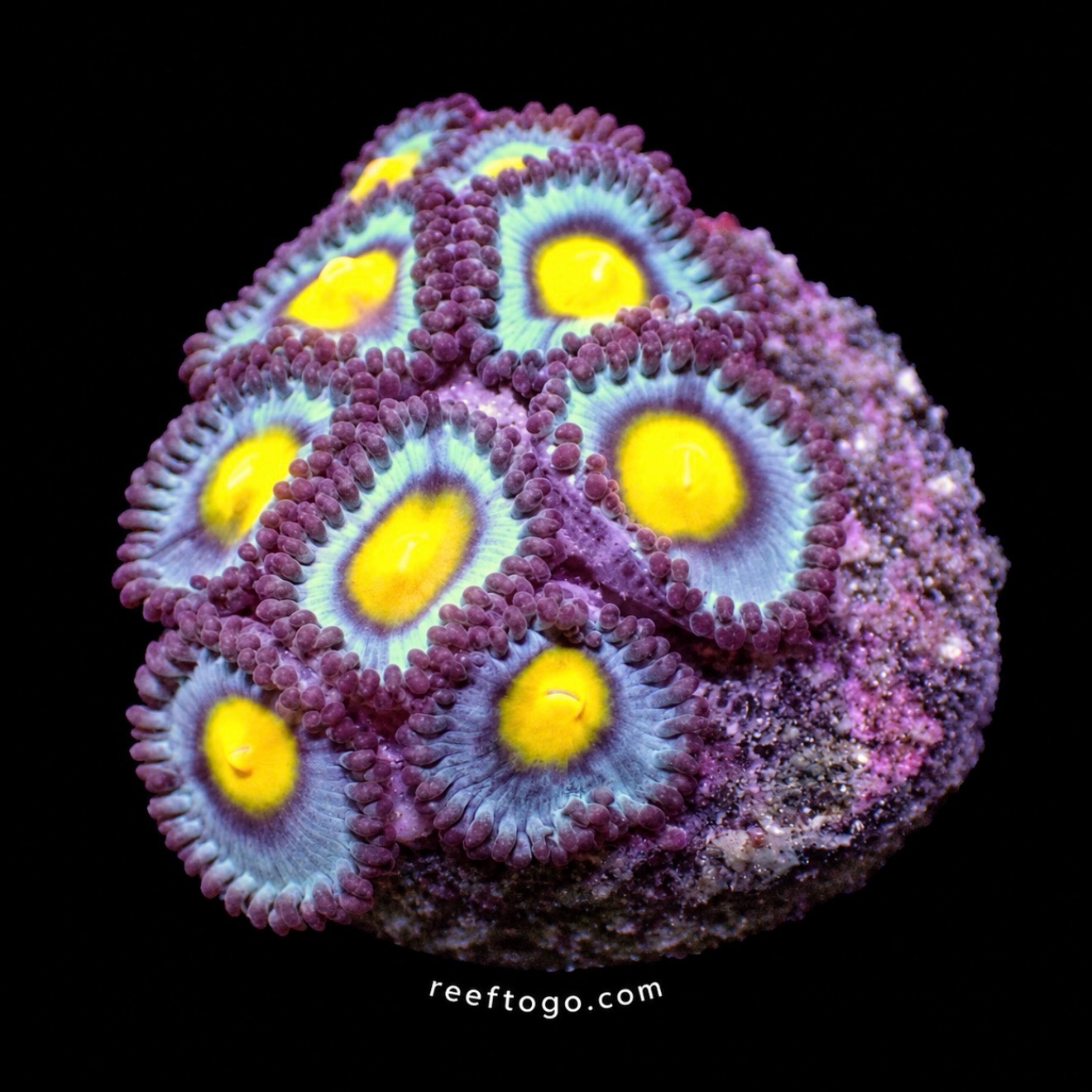
Alien Eye zoas
Zoanthus sp
Same genus
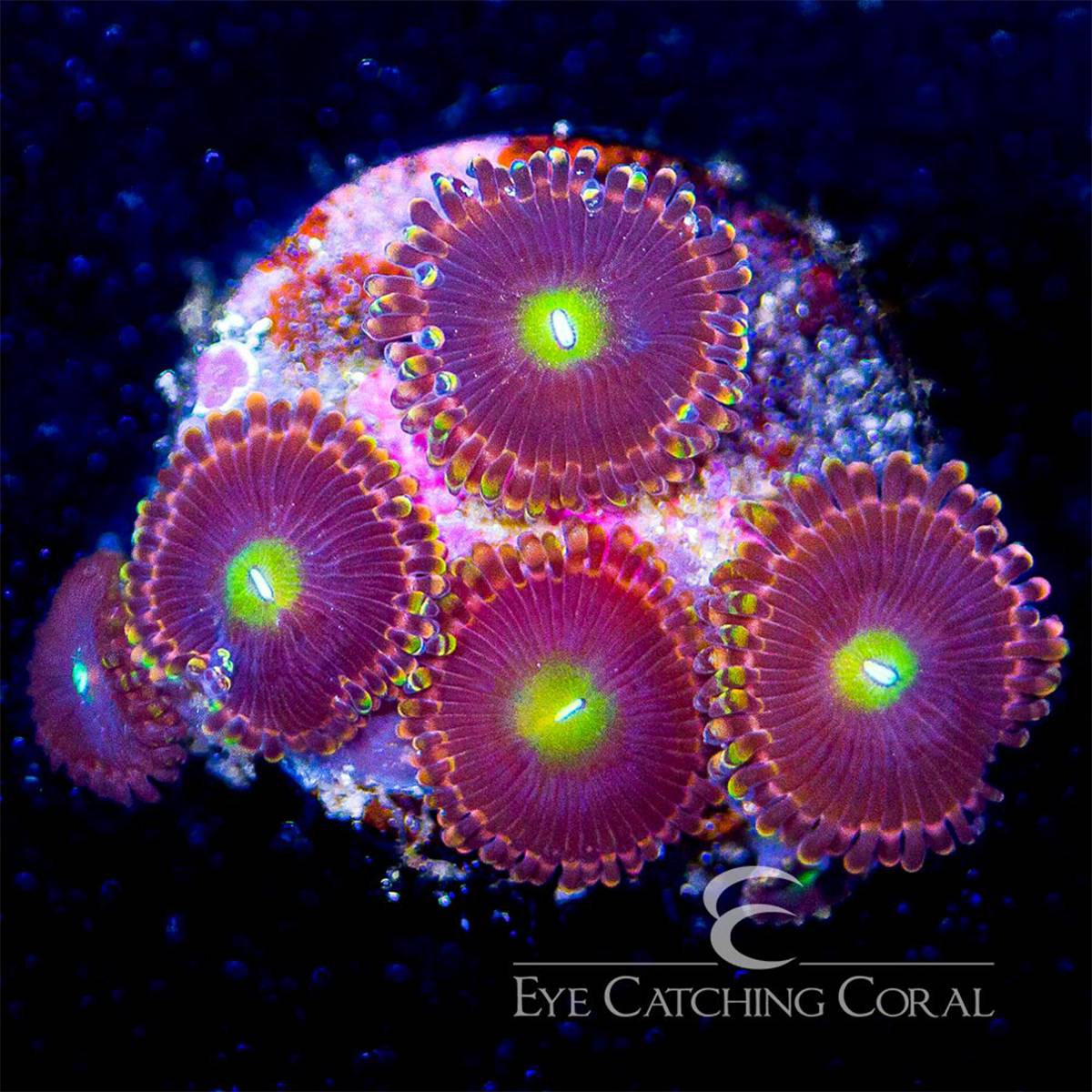
Antimatter zoas
Zoanthus sp
Same genus
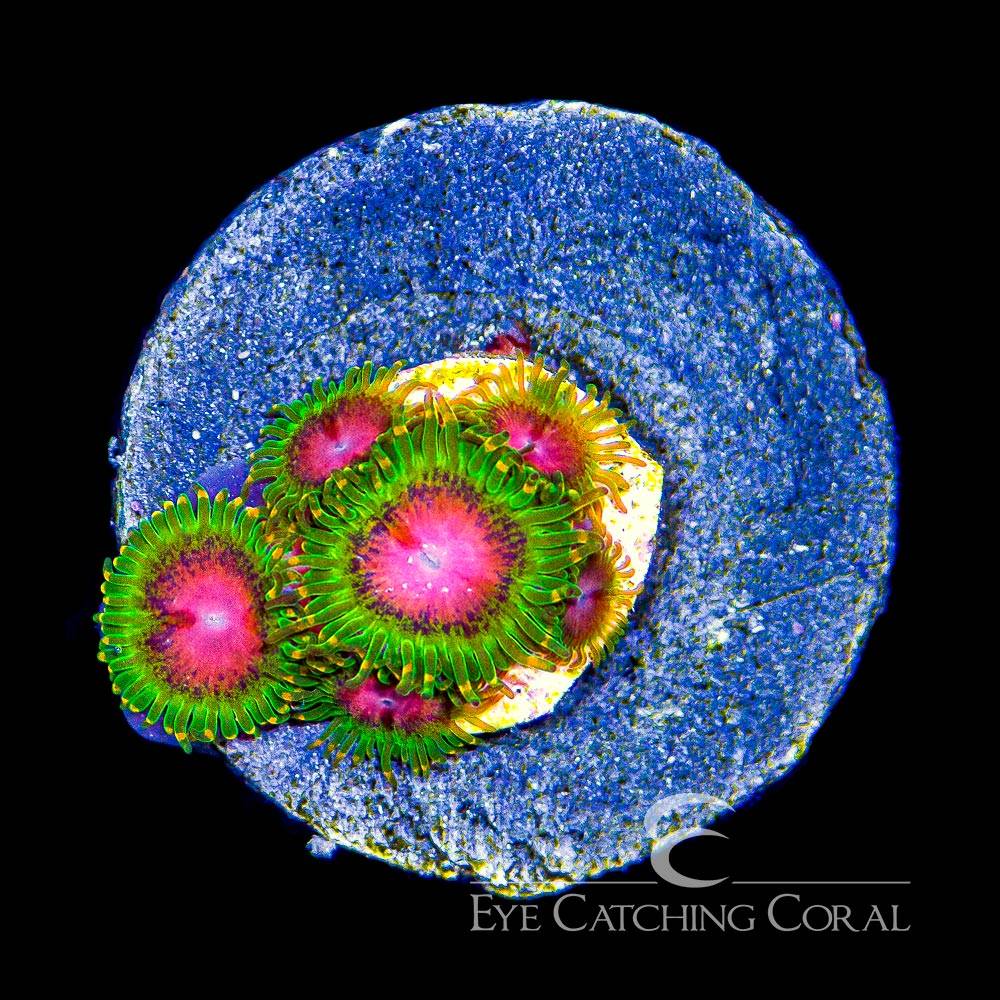
Awesome Blossom zoas
Zoanthus sp
Same genus
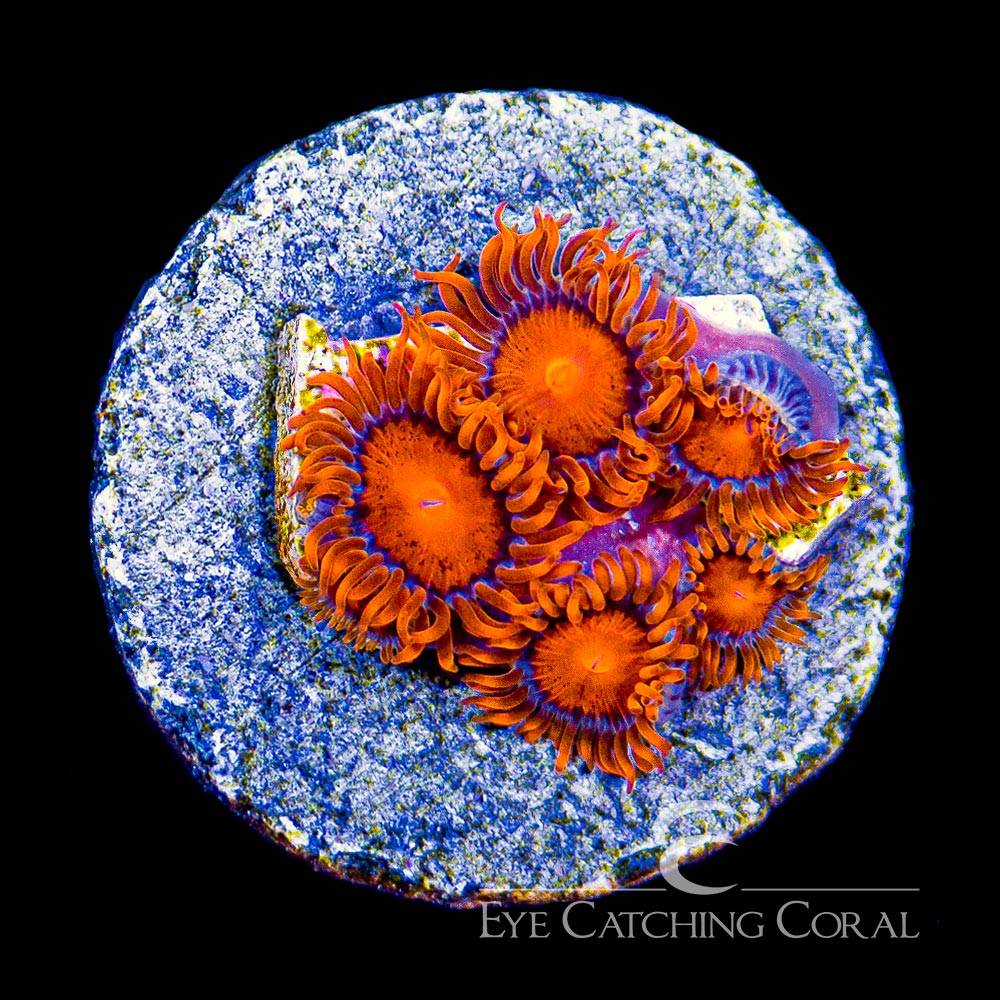
Bam Bam zoas
Zoanthus sp
Same genus
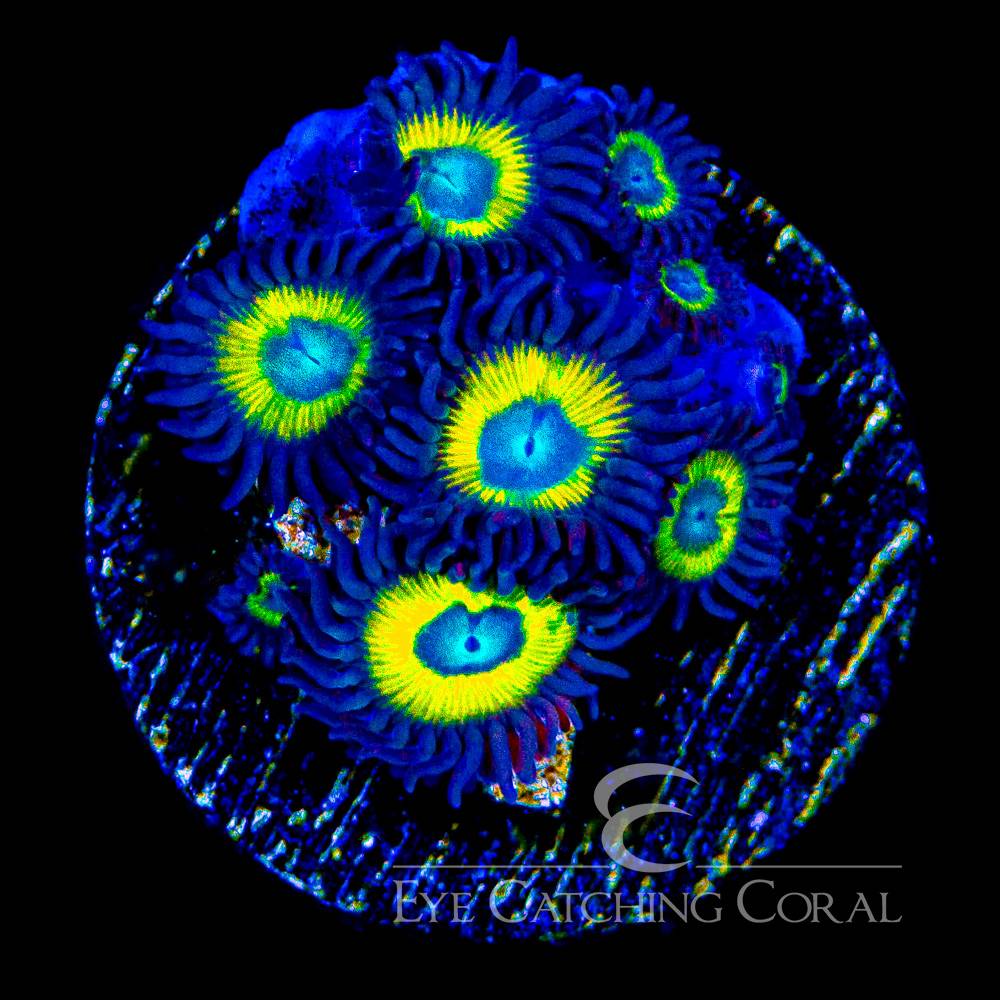
Black Bella zoas
Zoanthus sp
Same genus
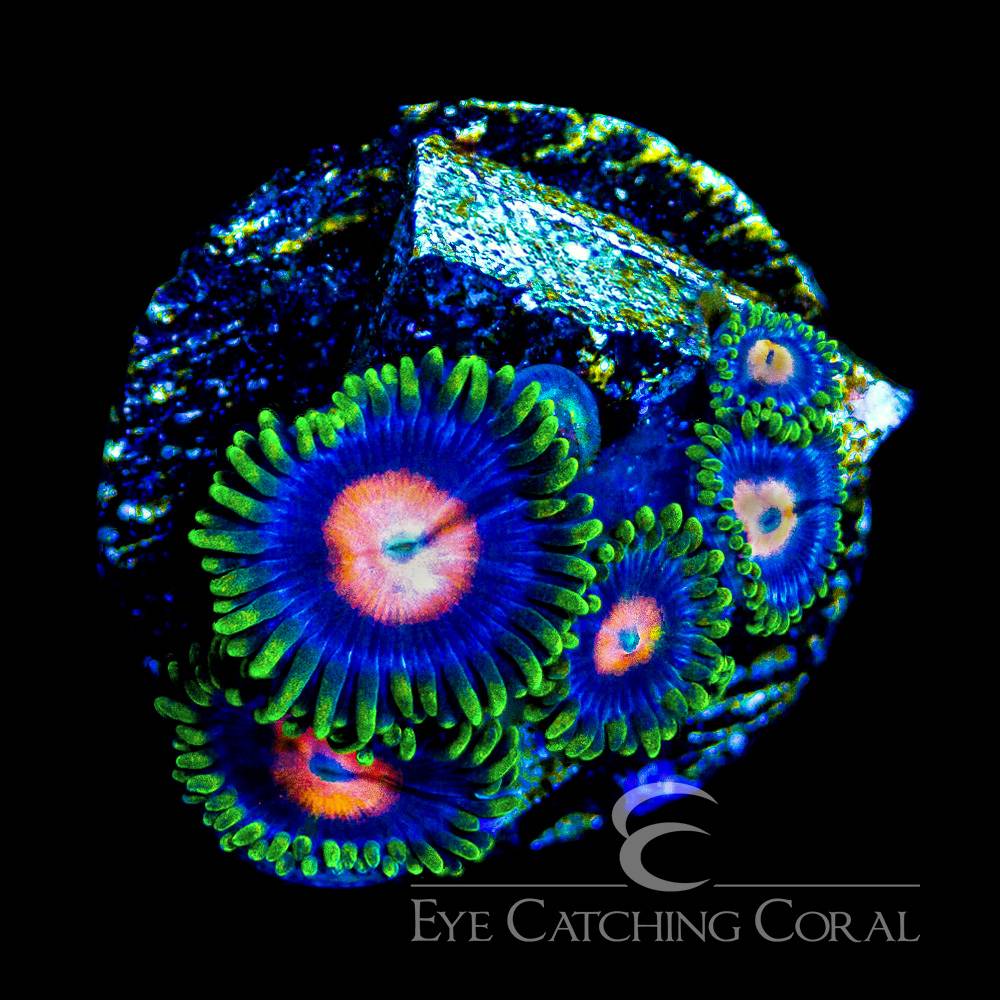
Blow Pops zoas
Zoanthus sp
Same genus
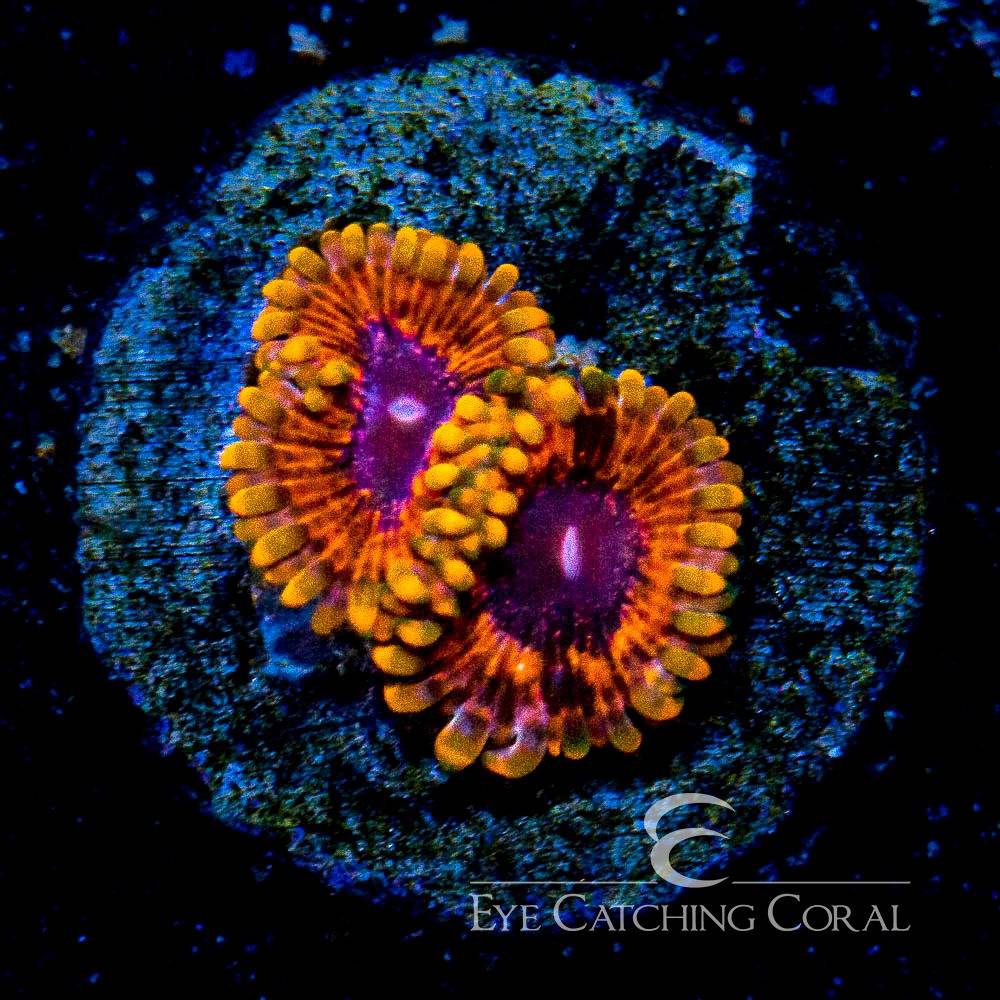
Burning Ember zoas
Zoanthus sp
Same genus
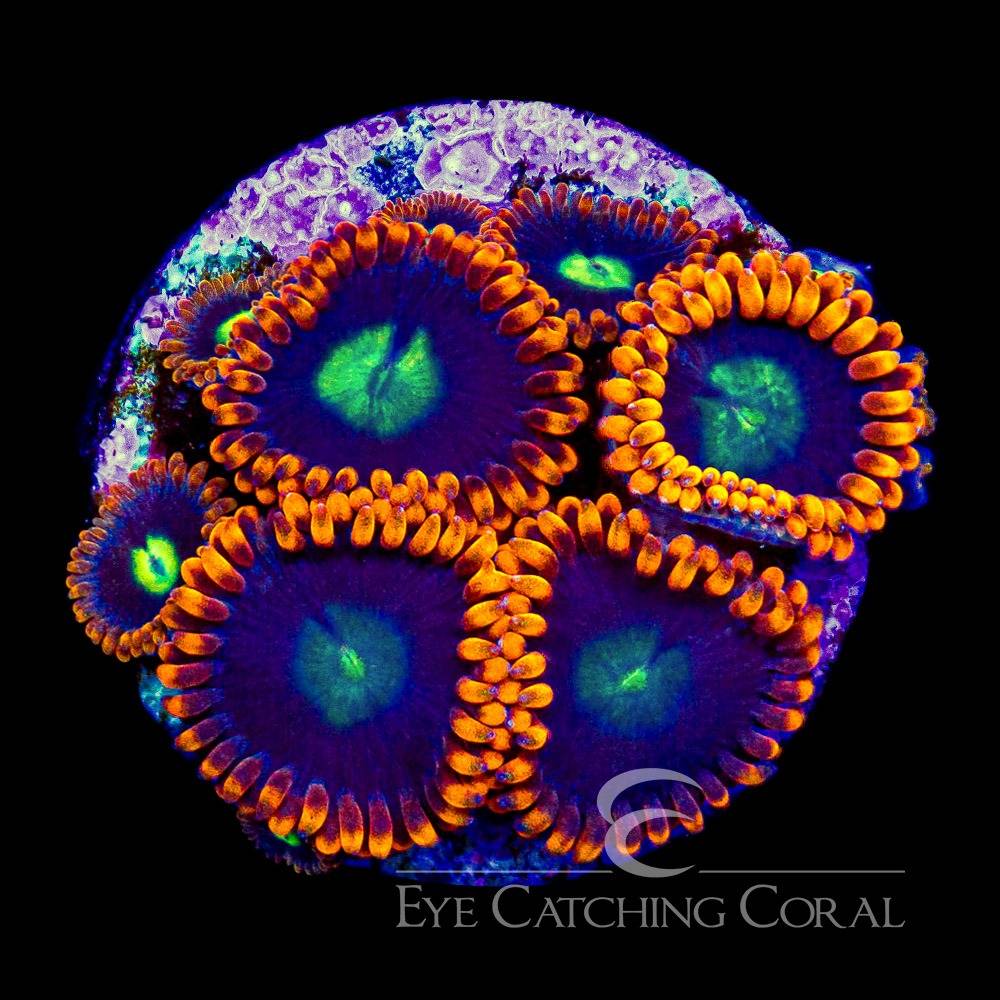
Burning Suns zoas
Zoanthus sp
Same genus