

Blue mouth Duncan
Duncanopsammia axifuga
Blue mouth Duncan is a Duncan coral listed as Duncanopsammia axifuga, an LPS kept for its large, fleshy polyps. Each head rises on a branching skeletal stalk, and a settled polyp opens wide, with long tentacles around a clear central mouth. Polyps sway gently and react visibly to food in the water, closing around offerings in a slow, deliberate motion. The blue mouth name follows the blue tone at the center of the polyp, set against the surrounding tentacles, so the mouth reads as the focal point of each open head.

The entry lists beginner care, low light, low flow, bottom placement, peaceful behavior, and moderate growth. Place the colony low, with the stalks supported and the heads facing up into open water. Low light at a bottom placement suits the entry and holds full, relaxed extension through the day. Stronger light can keep heads smaller and tighter, and deep shade can stretch stalks as polyps reach. Judge a spot by how wide the heads open over a full week.
Low flow should let the tentacles drift without folding the polyps to one side. Strong current presses soft tissue against the skeleton and can keep heads closed, while still water lets waste settle between the stalks. A gentle, varied pattern that clears the base and lets each head sway is the balance this coral opens widest under. Secure the skeleton well, because the branching base is top-heavy once heads multiply and a fallen colony lands on its polyps.
Feeding is a strength of this coral. The heads take meaty foods readily, including mysis, finely chopped seafood, and LPS pellets placed near the mouth. Offer food once or twice a week with flow lowered for a short window, and spread offerings across heads rather than loading one polyp. Light supplies part of the energy, and regular feeding supports new head growth and quick recovery after a move. Clear away food that a head rejects so it does not foul the base.
This coral is listed as peaceful. Its tentacles carry a mild sting, and heads expand well beyond the skeleton when settled, so spacing should be judged by the open colony rather than the frag. Leave clear space on all sides, keep stronger LPS and their sweepers away, and leave room above and beside the colony for new heads to open without pressing a neighbor.
Growth is listed as moderate, and feeding moves it visibly. New heads bud from the base of existing polyps and along the stalks, and a small frag can become a multi-head colony over a season in a settled spot. Stable alkalinity, calcium, and magnesium support the branching skeleton. Heads that stay closed for days, tissue receding at a stalk base, or a whole colony shrinking usually trace back to flow, a recent move, or a chemistry swing.
Common pitfalls include placing the colony in medium or strong flow because the frag looked sturdy, mounting it loosely so it topples as heads gain weight, and crowding it by its frag size rather than its open size. Support the skeleton, start low and gentle, and let daily extension guide any change.
Field notes — what keepers report
- Feeding reports are strongly positive. Keepers who target-feed describe faster budding and fuller heads, while keepers who rely on light and broadcast feeding describe healthy colonies that add heads more slowly. Both sides describe the feeding response itself, a slow close around food, as one of the pleasures of keeping the coral.
- Flow reports track extension closely. Keepers describe wide, relaxed heads under gentle, changing flow, and smaller, tighter heads under a steady stream. A calmer spot is the first change described when a colony stays partly closed through the day.
- Hardiness reports lean forgiving. Keepers describe Duncans reopening after moves, swings, and rough handling that kept fussier LPS closed far longer, and many rank the coral among the best first LPS choices. Reports still note that a colony knocked face-down and left can lose heads, so a secure mount is the shared practice.
Field Notes
Related species
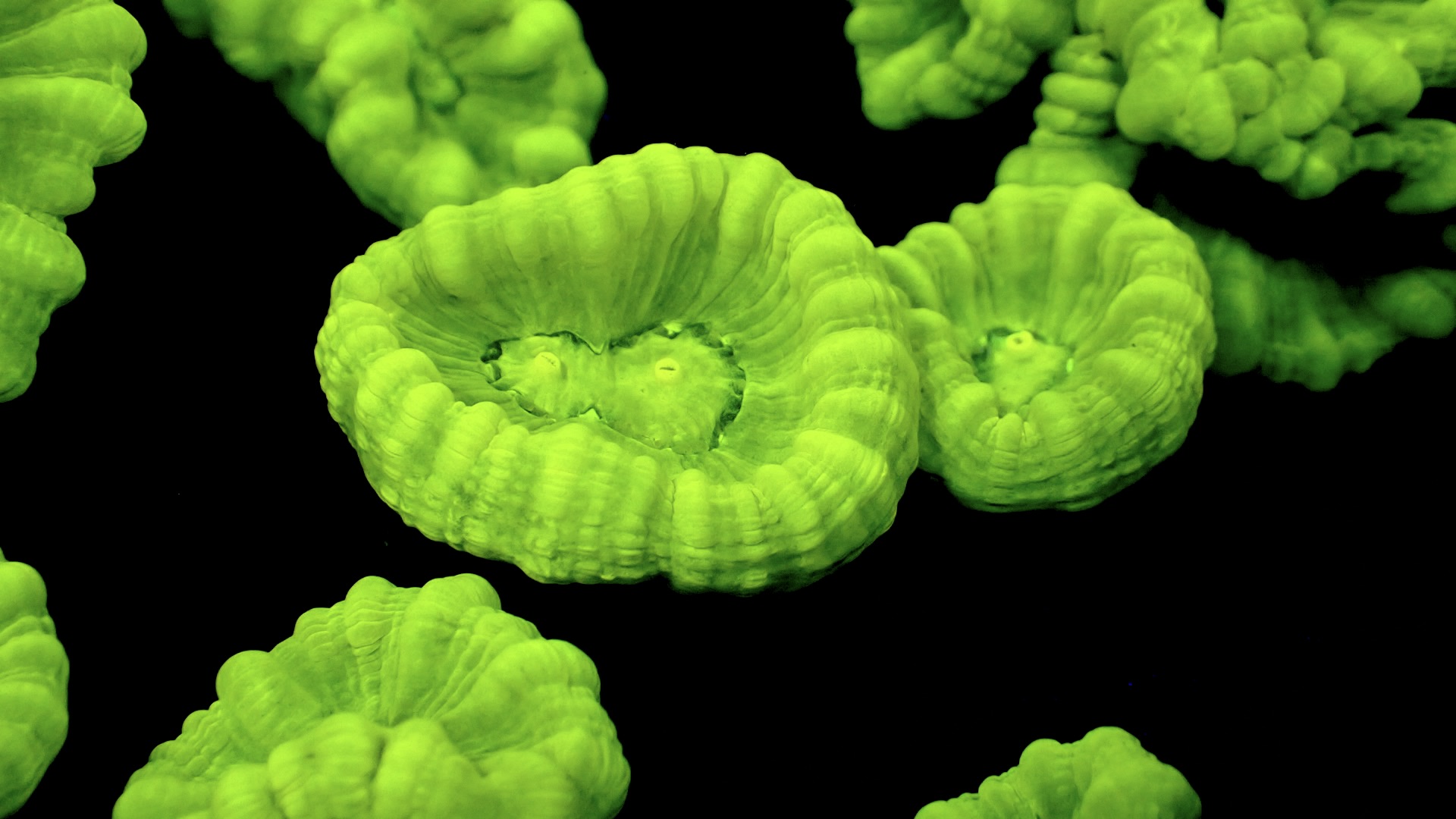
Kryptonite candy cane
Caulastrea sp

Blastomussa Merleti
Blastomussa merleti

Blastomussa Wellsi
Blastomussa wellsi

Bling bling cyphastrea
Cyphastrea sp
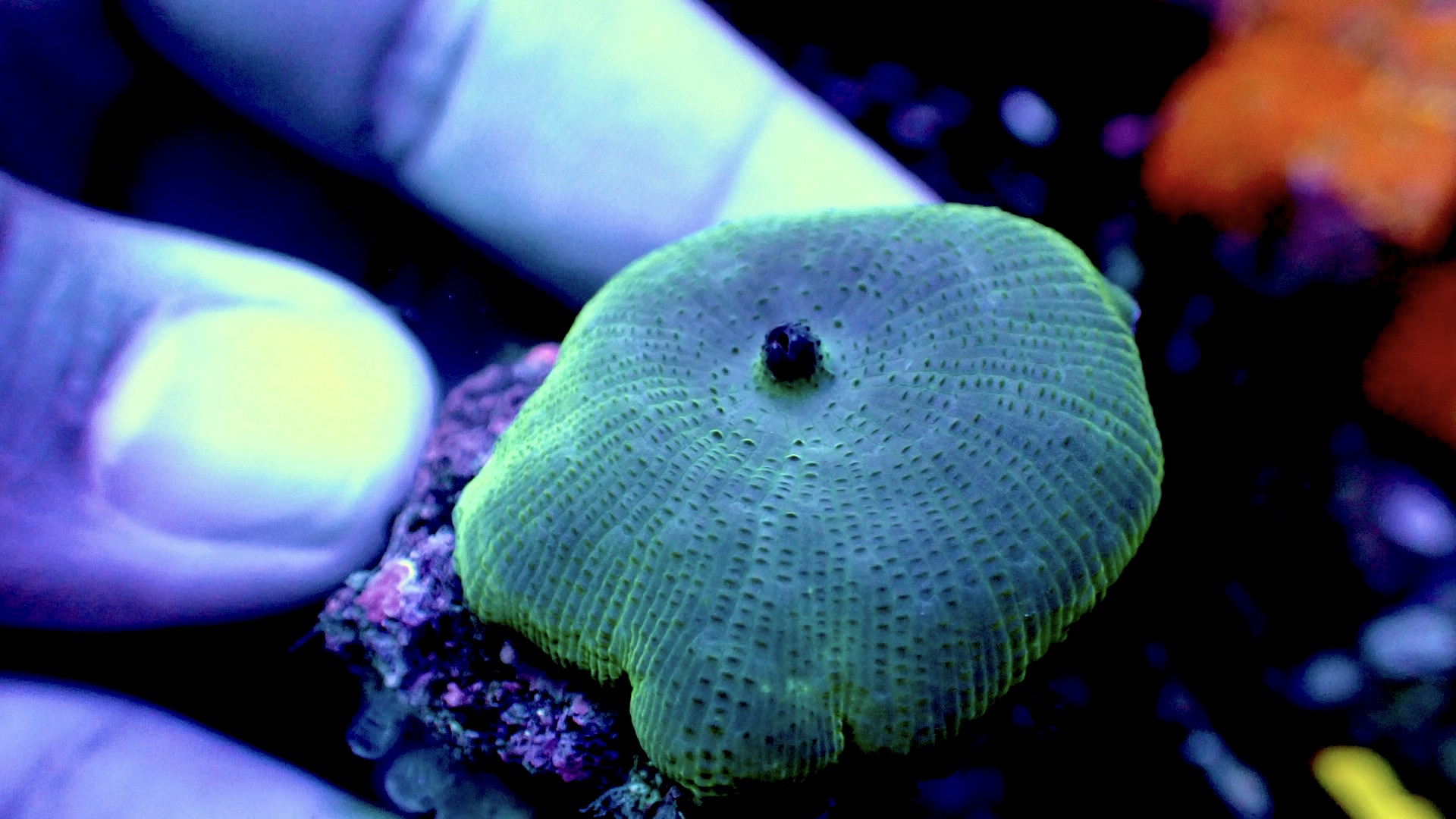
Blue discosoma mushroom
Discosoma sp
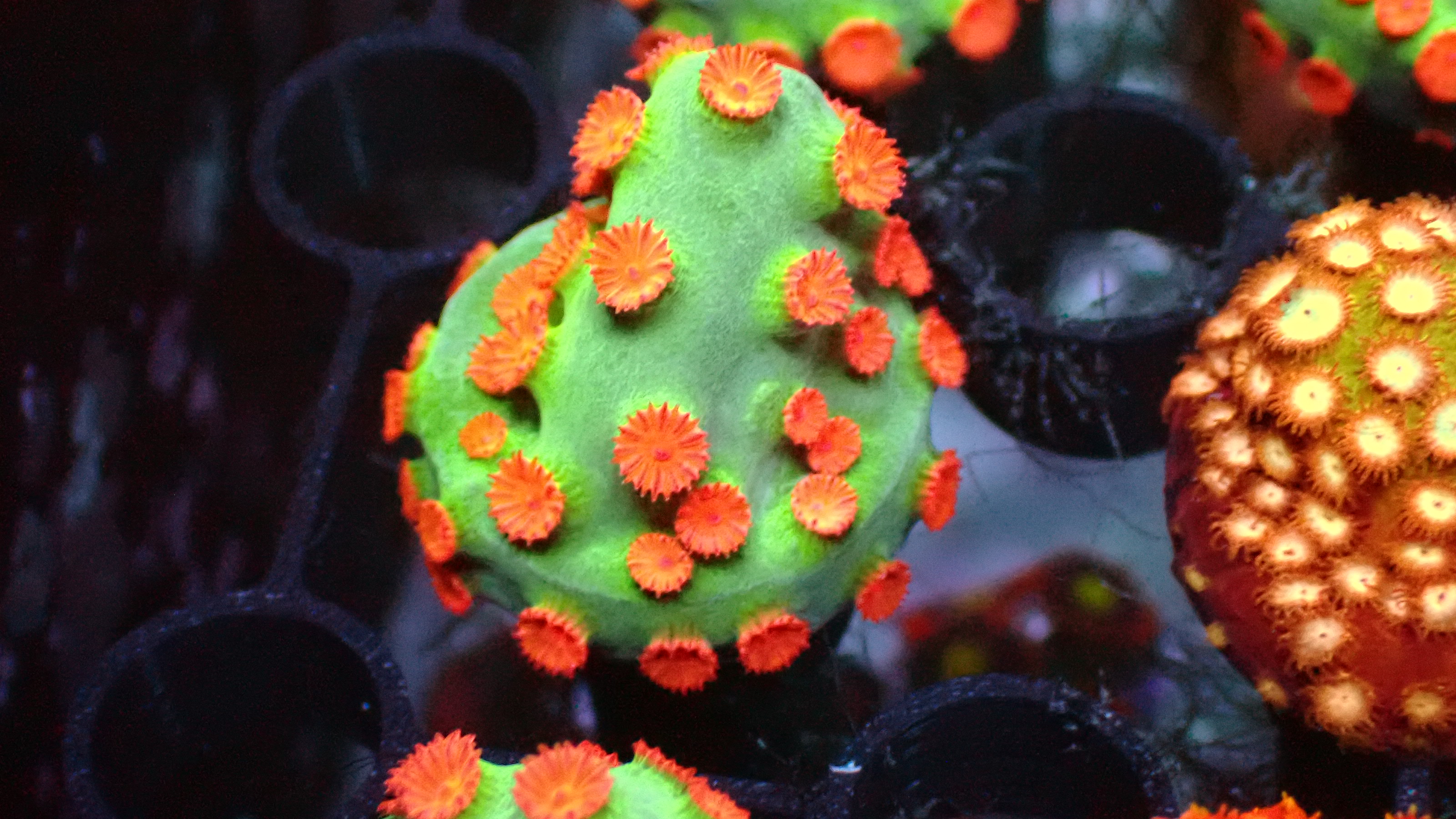
Meteor shower cyphastrea
Cyphastrea sp

Neon green hairy mushroom
Discosoma sp

Neon green Wellsophyllia
Wellsophyllia
Recommended from the shop


Love this species? No tank needed.
Reef art from the shop — for the wall, not the tank.


Get notified when Reef To Go has Blue mouth Duncan in stock or up for auction. One email when it's in — no spam.