Gallery
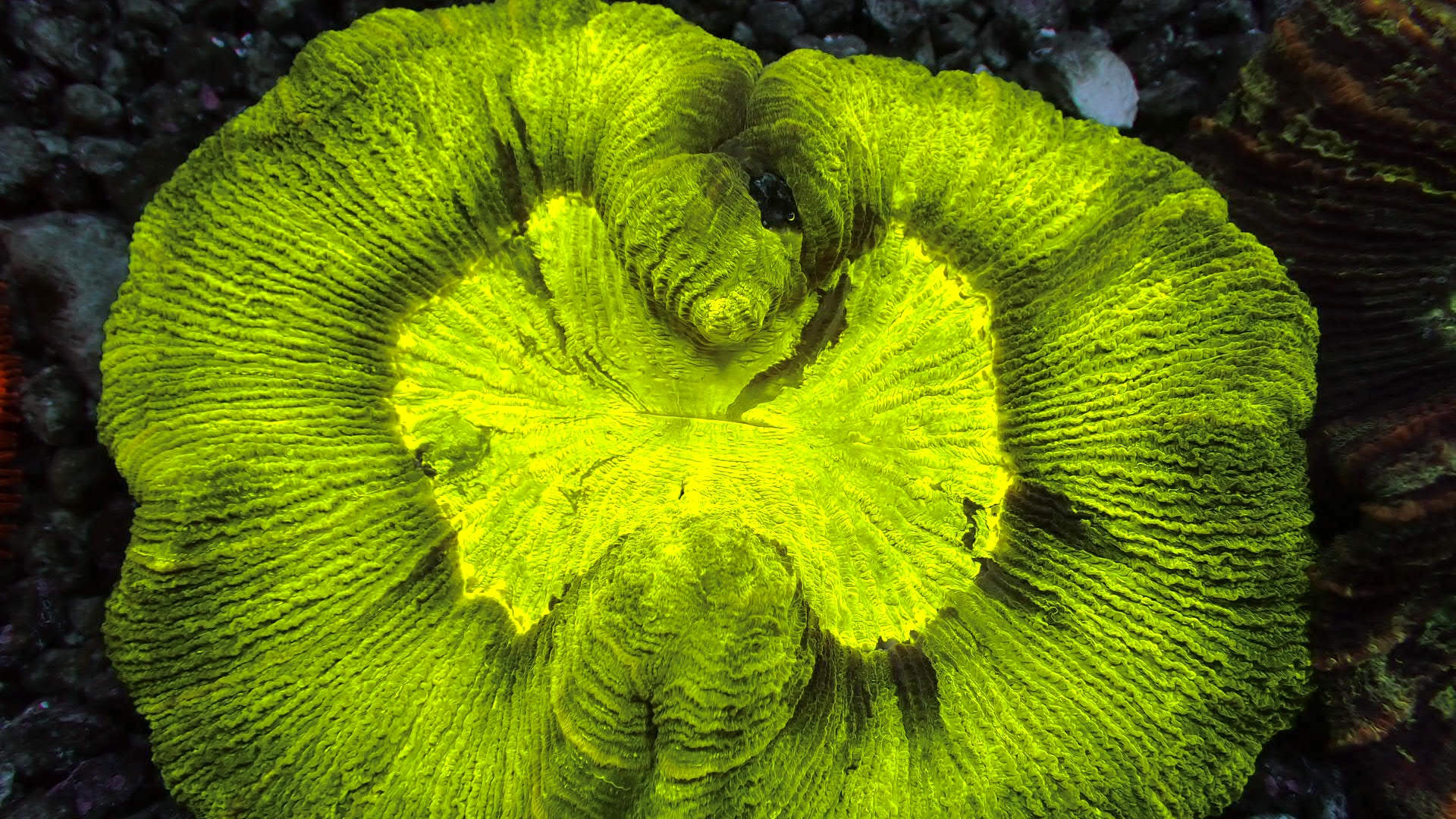
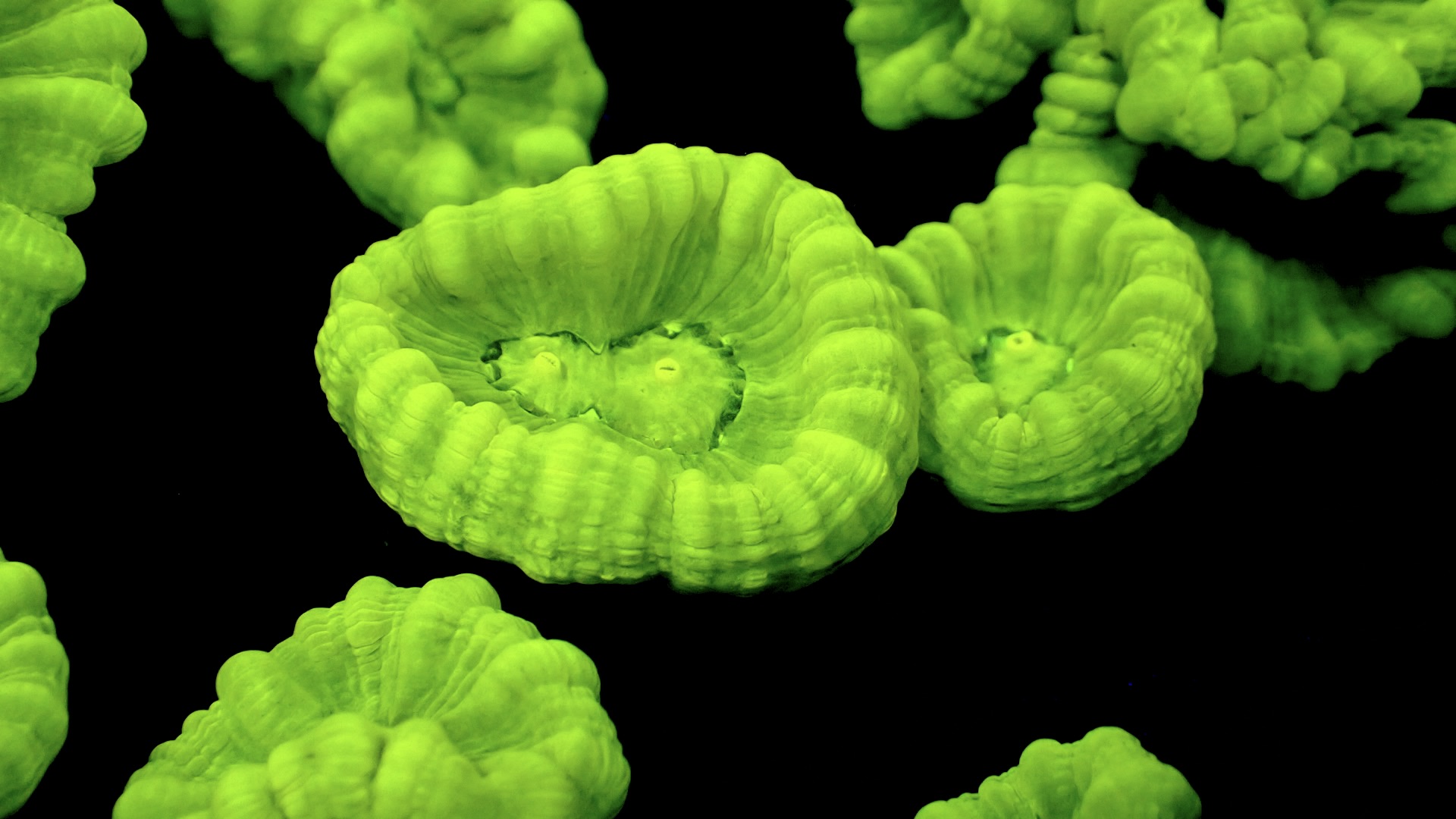
Neon green Wellsophyllia is a vivid green form of Wellsophyllia, the open brain coral now often grouped with Trachyphyllia. A single large polyp, or a small group of polyps, sits over a cone-shaped skeleton and inflates into deep folds and valleys of fleshy tissue, with the mouth or mouths hidden in the central groove. The neon green name follows the intense green tissue this form shows when fully inflated, a color that glows strongly under blue light and fills a wide footprint at the bottom of the tank.
The entry lists advanced care, low light, low flow, bottom placement, peaceful behavior, and slow growth. Advanced reflects how unforgiving this coral can be of rough handling, harsh flow, and unstable conditions, rather than any special equipment need. Place it on the sand bed or on a flat, smooth base at the bottom, with room for the tissue to expand in every direction without rubbing rock. Never wedge the skeleton into rockwork, because inflated tissue pressed against sharp rock tears, and those tears are a common start of decline. Low light at that bottom placement protects the green color and keeps inflation full through the day.
Low flow is equally important. The folds should move only slightly. Flow that pushes tissue to one side, lifts an edge off the base, or keeps part of the polyp folded through the day is too strong for that spot. Still water that lets detritus settle into the valleys is also a problem, so aim for a calm drift that carries waste away without pressing on the flesh. Handle the coral by the skeleton base only, and support it from below when moving it.
This coral is peaceful and has no sweeper reach worth planning around. Spacing is mainly protection for its own tissue. Leave several inches of clear sand around the colony so the inflated folds touch nothing abrasive, and keep LPS with sweepers well away, because Wellsophyllia tissue loses contact fights and heals slowly. Fish that nip fleshy LPS are a risk worth watching in the first weeks.
Feeding supports fullness and recovery. The polyp will take small meaty foods such as mysis, chopped seafood, or LPS pellets placed near the mouths when feeder tentacles show, often in the evening. Offer food once or twice a week with flow lowered for a short window. Light supplies much of the energy, so feeding supports the coral rather than replacing calm placement, and uneaten food sitting in the folds should be removed.
Growth is slow. The polyp adds skeleton beneath the tissue gradually, and daily inflation is the clearest health read. A colony that inflates wide and smooth each day, with color even across the folds, is settled. Tissue that stays shrunken on one side, a fold that develops a tear, or recession at the base usually traces back to rubbing, harsh flow, a nip from a fish, or a chemistry swing, and early correction matters more for this coral than for hardier LPS.
Common pitfalls include placing the skeleton on sharp rock, setting it where flow presses the folds all day, and handling the inflated tissue directly. Set it on smooth sand, keep the surroundings clear, and let full daily inflation confirm the spot before considering any change.
Field notes — what keepers report
- Inflation reports are consistent as the health signal. Keepers describe wide, smooth folds in a calm sand-bed spot as the settled state, and one-sided shrinkage linked to flow, rubbing, or a recent move. Recovery after a correction gets described as gradual, over days to weeks of undisturbed calm.
- Placement reports strongly favor sand. Keepers who set the coral on smooth sand describe fewer tissue injuries, while keepers who wedged it into rockwork describe tears in the folds that were slow to heal. Both sides treat the base surface as a care decision, not a detail.
- Feeding reports lean positive. Keepers who offer regular small meals describe fuller inflation and steadier color, while keepers who rely on light alone describe colonies that hold but grow slowly. Reports agree that food left sitting in the folds should be cleared, because it draws pests and fouls the tissue surface.
Field Notes
Related species

Blue mouth Duncan
Duncanopsammia axifuga
Similar care · LPS

Cat's Eye Coral
Cynarina lacrymalis
Similar care · LPS
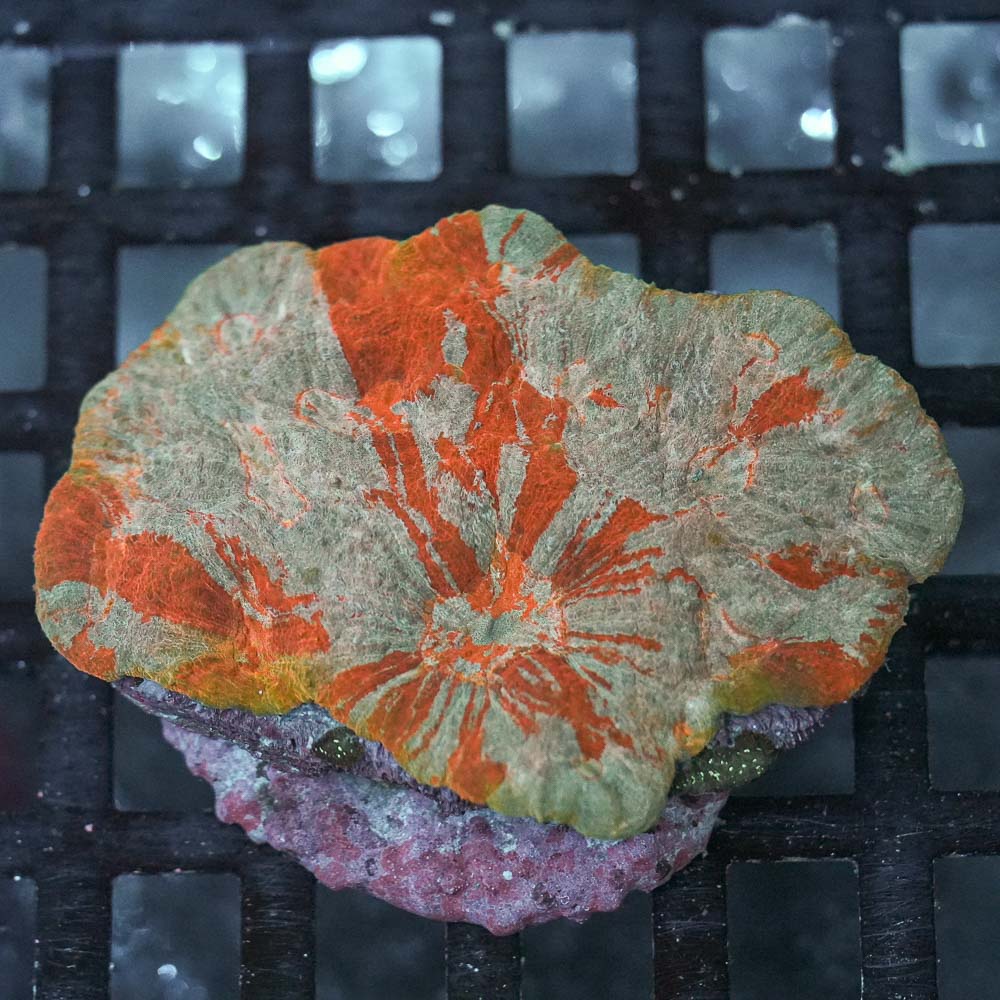
Lobophyllia rowleyensis
Lobophyllia rowleyensis
Similar care · LPS
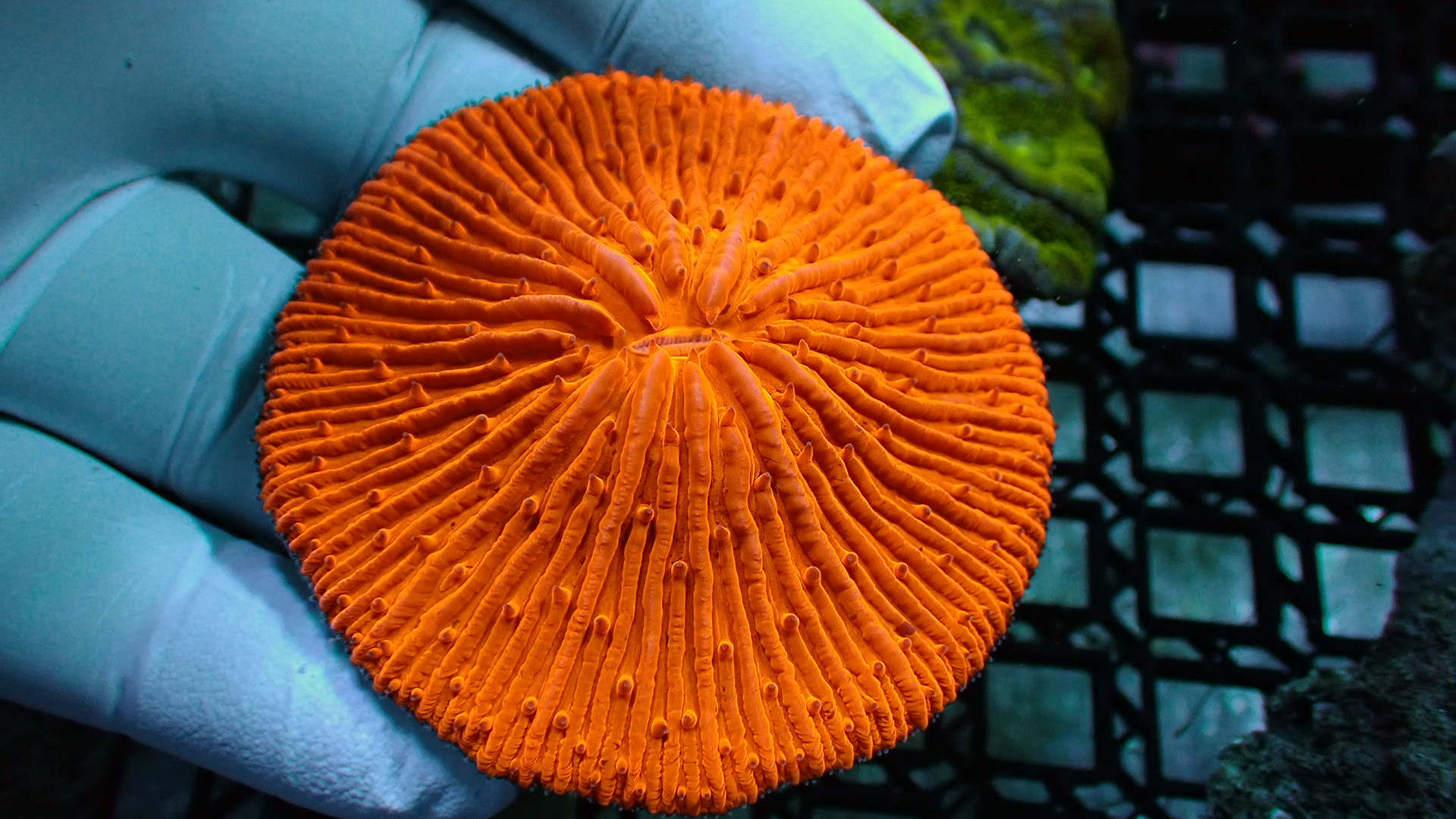
Orange plate coral
Fungia sp.
Similar care · LPS

Pineapple Coral
Blastomussa merleti
Similar care · LPS
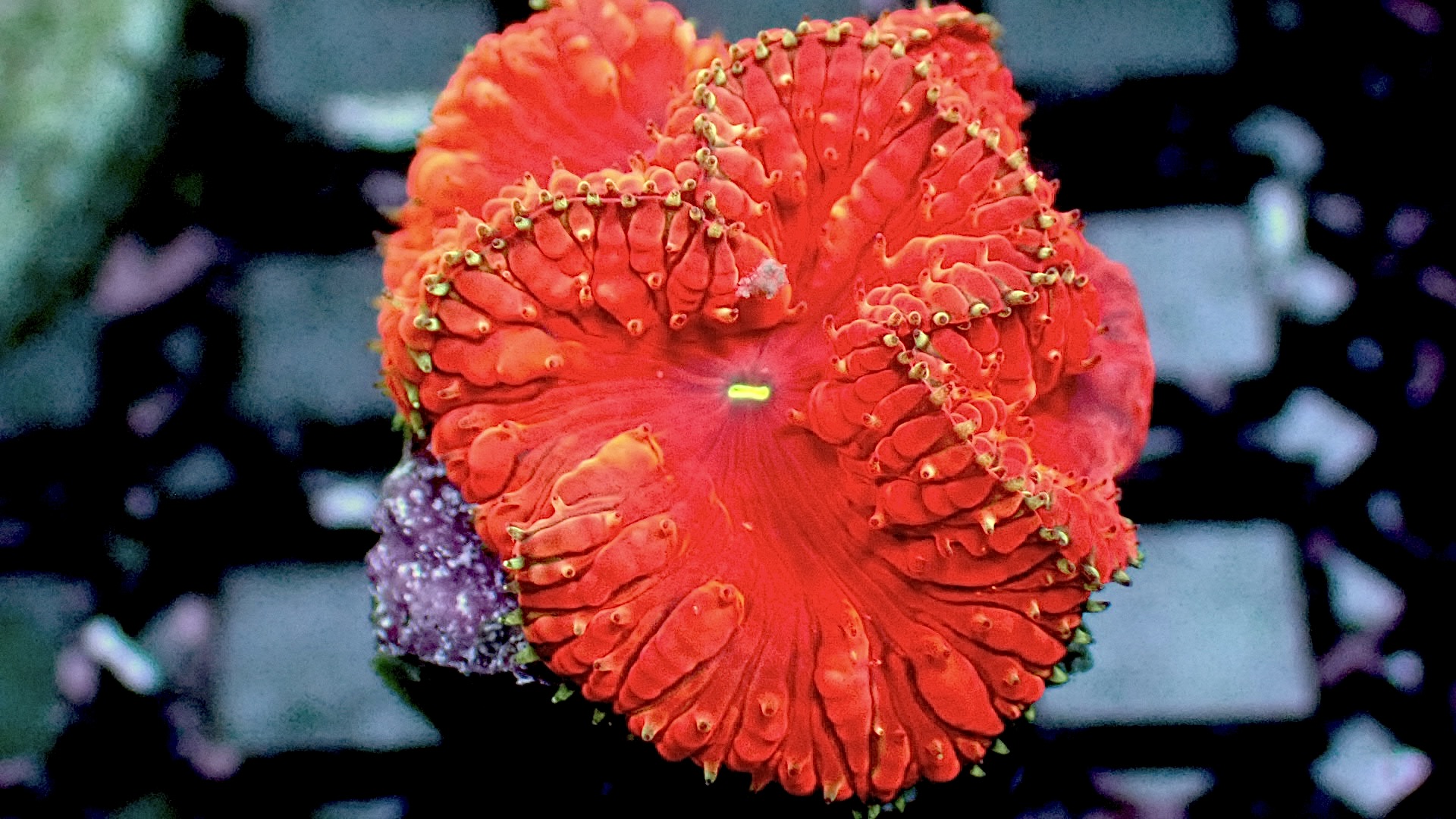
Red Scarlet blastomussa
Blastomussa wellsi
Similar care · LPS

Stomping Grounds Blasto
Blastomussa merletti
Similar care · LPS
Kryptonite candy cane
Caulastrea sp
Similar care · LPS